吉利汽车

Search documents
全球首款量产固态电池已诞生在芬兰,中国企业为何不怕?
3 6 Ke· 2026-01-12 01:44
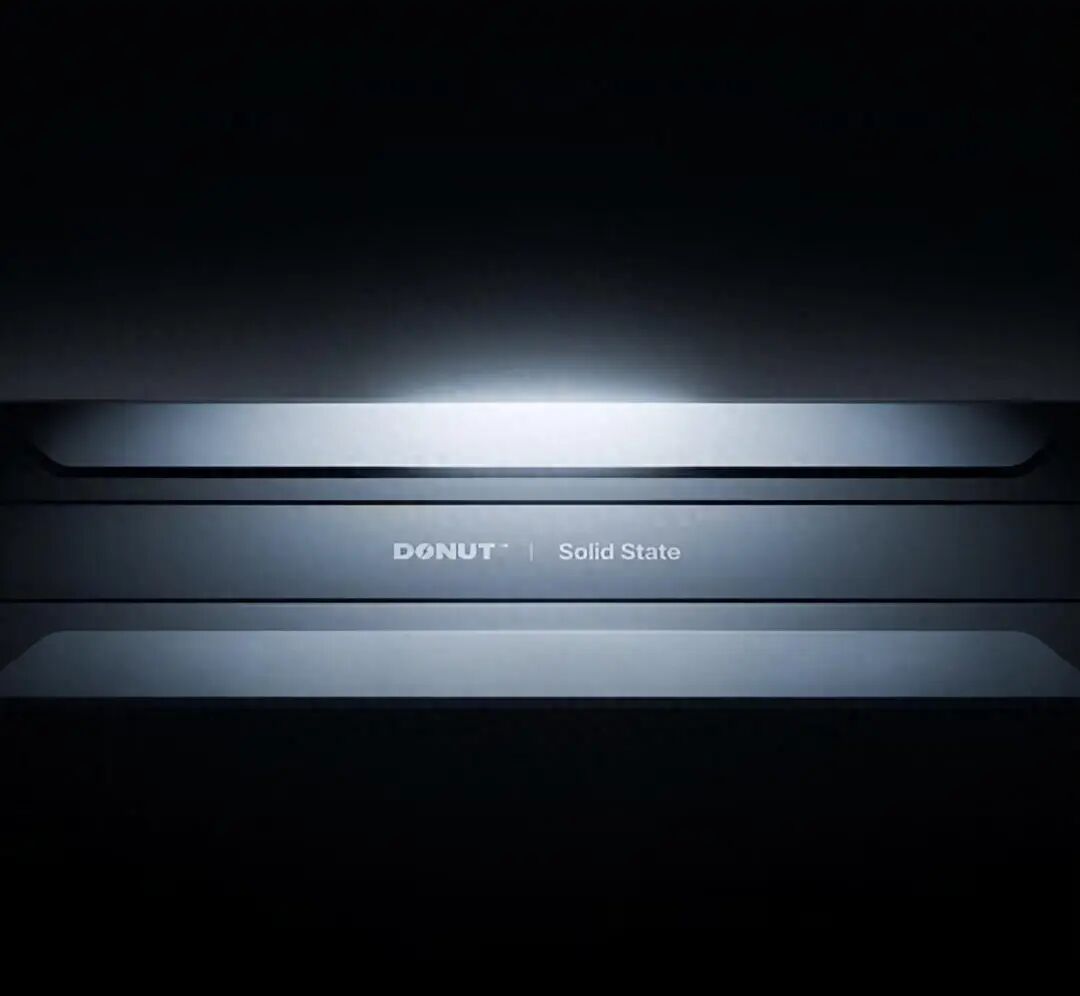
Core Viewpoint - The Finnish startup Donut Lab has announced the release of a solid-state battery, claiming it has a cycle life of up to 100,000 times, an energy density of 400 Wh/kg, and a rapid charging capability of 5 minutes, which has surprised the market and raised questions about the competitive landscape in solid-state battery technology [1][3][5]. Group 1: Donut Lab's Solid-State Battery - Donut Lab's solid-state battery is claimed to have a cycle life of 100,000 times and an energy density of 400 Wh/kg, with a charging time of just 5 minutes [3][5]. - The company asserts it has the capability for gigawatt-hour level mass production and can supply globally [3]. - The announcement has caused concern among investors, questioning whether the solid-state battery's "D-Day" has arrived while others remain passive [5]. Group 2: Market Reactions and Competitor Responses - Despite the significant announcement, the response from global battery and automotive manufacturers, particularly Chinese companies, has been muted [5][6]. - Chinese companies may not be worried due to previous announcements of breakthroughs in solid-state battery technology by other firms like Nissan and Toyota, which have not yet materialized into market-ready products [6][10]. - The lack of immediate reaction from Chinese firms suggests confidence in their existing technology and market position [21][29]. Group 3: Challenges and Skepticism - There are doubts about the feasibility of Donut Lab's claims, particularly regarding the cycle life and cost of solid-state batteries, which are traditionally much higher than lithium-ion batteries [14][16]. - The solid-state battery industry faces significant challenges, including interface resistance, slow ion transport, high manufacturing costs, and low yield rates [18][20]. - The skepticism is further fueled by the lack of detailed specifications and pricing information from Donut Lab [20]. Group 4: China's Position in Solid-State Battery Development - China has a comprehensive and robust supply chain for electric vehicle batteries, with significant advancements in solid-state battery technology expected in the coming years [27][29]. - Major Chinese companies like CATL and BYD are planning to launch solid-state batteries with competitive energy densities and production timelines, indicating a strong domestic market focus [25][26]. - The Chinese market's scale and the established supply chain provide a competitive advantage, making it less likely for Chinese firms to be intimidated by new entrants like Donut Lab [22][29].





电力设备与新能源行业1月第1周周报:动储电池推进反内卷,光伏出口退税取消-20260112
Bank of China Securities· 2026-01-12 01:05
Investment Rating - The report maintains an "Outperform" rating for the power equipment and new energy industry [1]. Core Insights - The global sales of new energy vehicles are expected to grow rapidly in 2026, driving demand for batteries and materials [1]. - The Ministry of Industry and Information Technology is working to regulate competition in the power and energy storage battery industry, which is likely to improve profitability across the supply chain [1]. - Sodium batteries are anticipated to enter large-scale applications, while solid-state battery industrialization is progressing, highlighting the importance of related materials and equipment companies [1]. - The photovoltaic sector is focusing on "anti-involution" as a key investment theme, with regulatory discussions aimed at controlling upstream silicon material prices and enhancing profitability in downstream battery components [1]. - The demand for wind power is expected to continue growing, supported by government initiatives for new photovoltaic and wind power projects [1]. - The energy storage sector remains robust, with recommendations to focus on energy cell and large-scale integration manufacturers [1]. - Hydrogen energy is projected to open new demand avenues, particularly in green hydrogen applications, with a focus on equipment and operational segments [1]. - Nuclear fusion is identified as a long-term energy development direction, with recommendations to monitor core suppliers in this area [1]. Summary by Sections New Energy Vehicles - Expected sales in 2025 for new energy passenger vehicles in China are projected at 12.809 million units, a year-on-year increase of 17.6% [2]. Battery Technology - CATL announced plans for large-scale sodium battery applications in 2026, while solid-state battery prototypes are entering real vehicle testing [2]. Photovoltaic Industry - The cancellation of VAT export rebates for photovoltaic products is set to take effect from April 1, 2026, impacting market dynamics [2]. - The photovoltaic industry is experiencing price adjustments, with silicon material prices rising and a focus on maintaining profitability in the supply chain [15][19]. Wind Power - The wind power sector saw significant growth, with a 22.06% increase in stock prices for wind energy companies [10][13]. Energy Storage - The price of lithium carbonate has risen significantly, with current prices around 115,000-119,000 RMB per ton, reflecting a 19.1% increase [27]. - Energy cell prices for various models have also increased, with the average price for 100 Ah cells at 0.403 RMB per watt-hour, up from previous levels [28]. Market Trends - The overall power equipment and new energy sector saw a 5.02% increase in stock prices, outperforming the broader market indices [10][13].
「死了么」爆红:付费人数翻了200倍,估值达1000万;曝DeepSeek V4大模型春节前后发布;马斯克宣布将开源X最新算法
雷峰网· 2026-01-12 00:27
Key Points - The article discusses various technological advancements and market developments in the AI and automotive sectors, highlighting significant achievements and emerging trends in these industries. Group 1: AI Developments - Qianxun Intelligent's Spirit v1.5 model has surpassed the previous top model pi0.5 in the RoboChallenge rankings, showcasing superior 3D positioning and task handling capabilities [4][6] - DeepSeek is set to release its V4 model, which reportedly outperforms existing models like Claude in code generation, with a launch expected around the Lunar New Year [11][12] - The app "Did You Die?" has gained immense popularity, with its paid user count increasing by 200 times, leading to a valuation of 10 million yuan [8][9] Group 2: Automotive Industry - BYD has introduced a new automotive brand called Linghui, which includes four new models aimed at the B2B market, indicating a strategic move towards high-end market positioning [18][19] - Former BYD executive Zhao Changjiang is rumored to have joined Zhijie, further indicating shifts in leadership within the automotive sector [16] - Xiaomi's recent public relations efforts have successfully reversed negative perceptions regarding its vehicle performance claims, demonstrating the importance of effective communication in the automotive industry [13][14] Group 3: Data Security and Regulatory Issues - Instagram has experienced a significant data breach affecting nearly 17.5 million users, raising concerns about data security and the implications for user privacy [45][46] - The U.S. Department of Commerce has withdrawn a proposal to restrict imports of Chinese-made drones, reflecting ongoing regulatory dynamics in the tech sector [36][37] - India is considering new security measures requiring smartphone manufacturers to share source code with the government, which has faced pushback from major tech companies [48]
8点1氪:“死了么”APP估值已达1000万元;霍启刚主动公开个人财产;iPhone 4需求激增近1000%
36氪· 2026-01-11 23:56
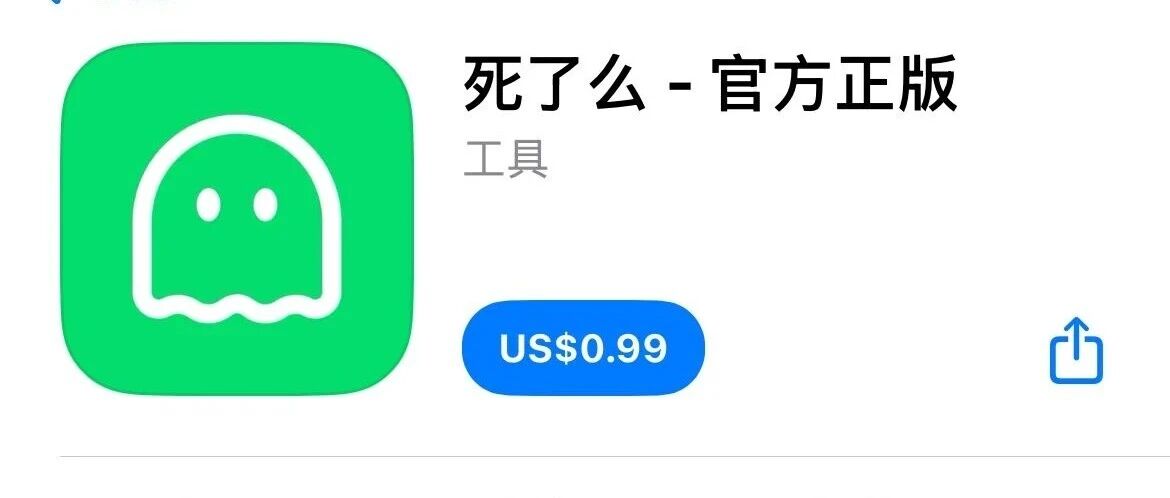
Core Viewpoint - The "Is It Dead?" app has gained significant attention, achieving a valuation of 10 million RMB, with the founder planning to sell 10% of the company for 1 million RMB, indicating a rapid rise in interest and user engagement [2][4]. Summary by Sections App Overview - The "Is It Dead?" app is designed as a lightweight safety tool for individuals living alone, requiring users to set emergency contacts and check in regularly. If a user fails to check in for several days, an email is automatically sent to their emergency contacts [3][4]. Development and Costs - The app was initiated around mid-2025, with actual development taking less than a month and initial costs reported to be just over 1,000 RMB [3][4]. User Growth - The app's user downloads surged over 100 times in a short period, reflecting a significant increase in popularity and usage [4]. Valuation Insights - The founder, Mr. Guo, acknowledged the varying perceptions of the app's value during its explosive growth phase, with the current valuation set at 10 million RMB based on the planned sale of shares [4].


8点1氪丨“死了么”APP估值已达1000万元;霍启刚主动公开个人财产;iPhone 4需求激增近1000%
3 6 Ke· 2026-01-11 23:53
Group 1 - The "Is it dead?" app has gained significant attention, achieving a valuation of 10 million yuan, with initial development costs of only over 1,000 yuan and a user growth rate exceeding 100 times in just a few days [2][3] - The app is designed for individuals living alone, requiring users to set emergency contacts and check in regularly, with automatic notifications sent if users fail to check in for consecutive days [2] - The app's creator expressed surprise at its rapid popularity and is currently working on server expansion to accommodate the increased traffic [2] Group 2 - Hong Kong legislator Ho Kwan-kit has publicly declared his personal assets, owning 35 properties, including 7 for personal use and 28 for rental, across various locations including Hong Kong, Macau, and mainland China [3] - The properties are part of a broader trend where many legislators in Hong Kong hold significant real estate assets, reflecting the investment landscape in the region [3] Group 3 - The demand for the 15-year-old iPhone 4 has surged nearly 1,000% due to its unique photo qualities, despite its outdated technology compared to newer models [3] - The resurgence in interest is largely driven by social media platforms like TikTok, where discussions around the iPhone 4 have proliferated [3] - Experts have warned about potential digital security risks associated with using the iPhone 4, as it only supports an outdated version of iOS [3] Group 4 - The Myanmar government has demolished 635 illegal buildings associated with online scams and gambling, emphasizing its commitment to eradicating such activities [5] - This action reflects a broader governmental strategy to combat cybercrime and improve national security [5] Group 5 - The price of second-hand Xiaomi vehicles has significantly dropped, with the average price now at 412,000 yuan, and some models seeing declines of over 150,000 yuan [6] - Dealers are cautious in acquiring used cars due to rapid market fluctuations, indicating a volatile automotive market [6] Group 6 - The price of memory modules has outperformed gold, with reports indicating that 100 memory sticks could purchase a house in Shanghai, highlighting the strong demand driven by AI and data center needs [7] - The memory market is experiencing a boom due to supply shortages following production cuts in previous years, with expectations of continued price increases in the near future [7] Group 7 - Lei Jun, CEO of Xiaomi, expressed confidence in competing with Tesla, noting that the SU7 model has outperformed the Model 3 in sales, showcasing the competitive landscape in the electric vehicle market [8] - The announcement of Tesla's plans to open-source its algorithm within a week indicates a shift towards transparency in social media platforms [8] Group 8 - The Hainan duty-free shopping market reported a strong start to the year, with sales reaching 1.21 billion yuan in the first week of January, marking significant year-on-year growth [8] - This trend reflects the increasing consumer interest in duty-free shopping in the region [8] Group 9 - OpenAI and SoftBank have jointly invested 1 billion USD in SB Energy to support the development of AI data centers in the U.S., indicating a strong push towards infrastructure for AI technologies [14] - The investment aims to enhance the operational capacity of SB Energy, which is set to build a 1.2 GW data center [14]

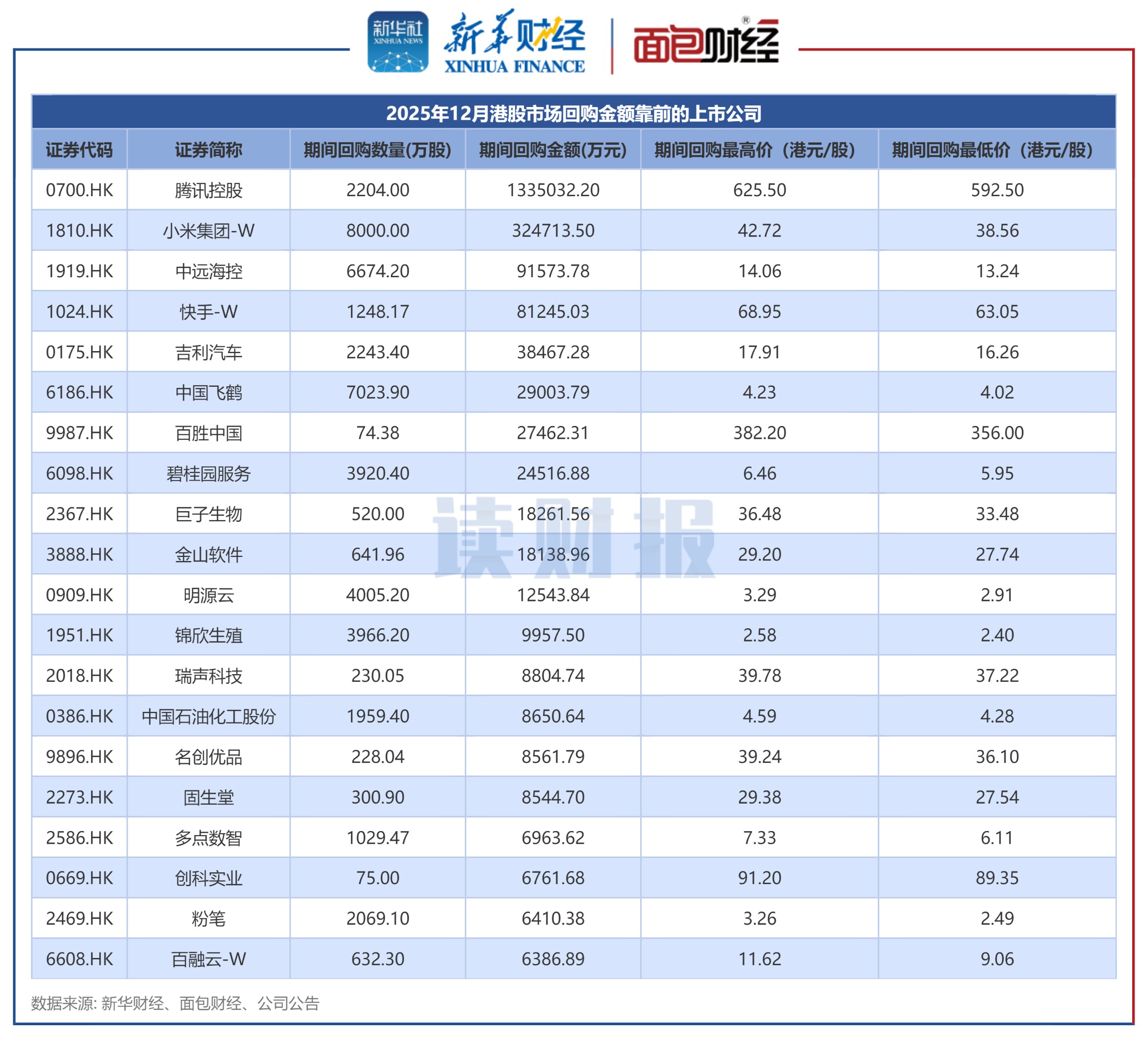
【读财报】港股12月回购透视:合计回购超219亿港元 吉利汽车等年内首度回购
Xin Hua Cai Jing· 2026-01-11 23:31
Summary of Key Points Core Viewpoint - In December 2025, a total of 122 Hong Kong-listed companies initiated share buybacks, repurchasing 786 million shares for a total amount of 21.93 billion HKD, representing a 2.63% decrease from 22.52 billion HKD in the same period last year [1][2]. Company-Specific Insights - Tencent Holdings, Xiaomi Group, and China COSCO Shipping were among the top companies in terms of buyback amounts in December [2]. - Xiaomi Group repurchased shares worth 3.25 billion HKD, acquiring 80 million shares at prices ranging from 38.56 HKD to 42.72 HKD per share, and has repurchased a total of 6.28 billion HKD in 2025 [5]. - Geely Automobile conducted its first buyback of the year in December, repurchasing shares worth 385 million HKD, totaling 22.43 million shares at prices between 16.26 HKD and 17.91 HKD [6]. Industry Insights - The majority of buybacks in December 2025 were concentrated in the software services and other healthcare sectors [7]. - The software services industry led in both buyback amounts and the number of companies participating, with a total buyback amount of 138.81 billion HKD from 19 companies, including companies like Multi-Point Intelligence and BaiRong Cloud [8]. - The other healthcare sector had 16 companies participating in buybacks, with notable companies like Giant Bio conducting their first buyback of the year, amounting to 183 million HKD [11].

FINE2026火热招展中!六大主题展集结:智能终端+轻量化与可持续+先进电池+半导体+热管理+科技创新成果
DT新材料· 2026-01-11 23:28
Core Viewpoint - The 2026 Future Industries New Materials Expo (FINE 2026) aims to lead global innovation in new materials, serving as a pivotal platform for showcasing advancements in high-tech industries and facilitating collaboration and procurement in the sector [2][3]. Group 1: Event Overview - FINE 2026 will take place from June 10-12, 2026, at the Shanghai New International Expo Center, featuring a 50,000 square meter exhibition area and over 300 strategic and cutting-edge technology reports [3][13]. - The expo will focus on key industries such as artificial intelligence, aerospace, smart vehicles, and renewable energy, addressing five common needs in future industries: advanced semiconductors, advanced batteries, lightweight materials, low-carbon sustainability, and thermal management [3][11]. Group 2: Participation and Audience - The previous events, including the 9th International Carbon Materials Expo and the 6th Thermal Management Expo, attracted over 35,000 professional visitors from 27 countries, showcasing the growing interest and participation in the new materials sector [8][36]. - FINE 2026 is expected to draw over 100,000 professional attendees, including representatives from major companies like BYD, Huawei, and Tesla, as well as over 5,000 industry investors [36][11]. Group 3: Exhibition Highlights - The expo will feature six specialized thematic exhibition areas, including advanced semiconductors, advanced batteries, thermal management, lightweight materials, new materials technology innovation, and future smart terminals, with an anticipated participation of over 800 exhibitors and 200 research institutions [13][36]. - FINE 2026 will host more than 30 forums and 300 expert presentations, focusing on trends in technology, investment strategies, and advanced manufacturing techniques related to new materials [22][24]. Group 4: Organizer and Support - The event is organized by DT New Materials, a well-known consulting brand in the new materials industry, which has established a vast network of over 200,000 contacts across various sectors [11][53]. - The expo is supported by multiple associations and institutions, including the China Productivity Promotion Center Association and various new materials industry associations, enhancing its credibility and outreach [5][6].
美国消费者技术协会首席执行官夏皮罗:期待在CES看到中国科技创新成果
Xin Lang Cai Jing· 2026-01-11 21:22
Core Insights - The 2026 CES in Las Vegas will prominently feature Chinese companies showcasing innovations in AI, robotics, smart mobility, and immersive entertainment [1][2] - The event will attract thousands of exhibitors from over 155 countries, focusing on transformative trends in AI, robotics, digital health, mobile transportation, and energy [1] - AI will remain a central theme at CES 2026, driving advancements in personalized health diagnostics, autonomous driving, industrial automation, and creative tools [1][2] Industry Highlights - Chinese companies such as Geely, Hisense, Lenovo, TCL, and Yushu Technology will participate, representing both leading firms and dynamic startups [1] - Lenovo will host an innovation technology summit during the event, while other Chinese firms will conduct discussions on innovation and leadership [1] - Digital twin technology is expected to enhance decision-making by simulating real systems before actions are taken, contributing to smarter and safer outcomes [2] Robotics and AI Developments - Robotics will be a key focus at CES, with advancements making homes smarter, agriculture more efficient, and factories safer [2] - Future developments in robotics will emphasize improving mobility and enhancing the ability to perform multiple tasks [2] - The introduction of the "CES Innovation Workshop" will provide a platform for showcasing the latest in AI and quantum technology through live demonstrations and forums [2]
商业航天迎来开门红资本抢滩太空新赛道
Zhong Guo Zheng Quan Bao· 2026-01-11 20:49
□本报记者 郝健 2024年,"商业航天"写入政府工作报告。2025年11月,《国家航天局推进商业航天高质量安全发展行动 计划(2025—2027年)》出台,不仅从资本端着力,提出"设立国家商业航天发展基金";还在准入端松 绑,明确"研制商业卫星的企业无需办理武器装备科研生产许可证"。2025年12月26日,上交所发布商业 火箭企业适用科创板第五套上市标准审核指引,商业火箭企业通往资本市场的"最后一公里"也被打通。 政策红利的持续释放,推动产业与资本共振。《中国商业航天产业研究报告》显示,2025年,我国商业 航天市场规模已增长至2.5万亿元-2.8万亿元区间。在投融资方面,商业航天领域2025年的融资总额达到 186亿元,同比增长32%,共计完成67笔融资。 中国工程院院士、商业航天产业技术创新联盟理事长赫晓东表示,商业航天已从传统国家任务的补充, 跃升为驱动技术创新、拓展应用边界、重塑产业生态的核心引擎,是科技制高点竞争前沿,也是孕育新 质生产力的蓝海。 2026年开年以来,中国商业航天领域的资本热潮强势爆发,A股相关概念板块迎来开门红。与此同时, 一级市场投融资与IPO进程按下快进键,商业航天产业正加速 ...
新款小米SU7涨价增配,4月上市!宝马集团2025年全球交付246.3万台!小鹏、比亚迪多款新车密集上市!丨一周大事件
电动车公社· 2026-01-11 16:05
Core Viewpoint - The article highlights the recent developments in the electric vehicle (EV) market, focusing on new model launches, company collaborations, and government initiatives to promote green consumption in the automotive sector [2][3][111]. New Car Launches - The new XPeng P7+ was launched with a price range of 186,800 to 198,800 yuan, offering both pure electric and extended range versions [3][11]. - The XPeng G6 was introduced at a price of 176,800 to 186,800 yuan, maintaining the design of its predecessor [13][20]. - The XPeng G7 extended range version is priced between 195,800 and 205,800 yuan, featuring upgraded technology and design [21][30]. - The XPeng G9 was launched with a price range of 248,800 to 278,800 yuan, showcasing new color options and advanced features [32][39]. - BYD's new Qin PLUS DM-i is priced at 79,800 to 99,800 yuan, maintaining its design while enhancing battery capacity [42][57]. - The BYD Qin L DM-i was launched at 96,800 to 126,800 yuan, featuring improved battery specifications [48][55]. - The BYD Song Pro DM-i was introduced at a price of 99,800 to 127,800 yuan, focusing on battery upgrades [59][65]. - The new Xiaomi SU7 is available for pre-sale at 229,900 to 309,900 yuan, with significant upgrades in technology and design [66][75]. - The Geely Galaxy V900 is set for pre-sale at 319,800 to 389,800 yuan, featuring a spacious interior and advanced powertrain [76][86]. Company Dynamics - BAIC Arcfox has partnered with Sinopec Kunlun Network Electric to enhance charging network services, with the first batch of charging stations already operational in Beijing [87][91]. - BMW Group announced a target of delivering 2,463,715 vehicles globally by 2025, with a focus on increasing electric vehicle sales [92][93]. - Porsche and Bentley have announced recalls for specific models due to safety concerns, highlighting ongoing quality control measures in the luxury automotive sector [97][100]. - NIO celebrated the production of its one millionth vehicle, marking a significant milestone in its growth trajectory [107][110]. Government Initiatives - The Ministry of Commerce and nine other departments have issued a notice to promote green consumption in the automotive sector, supporting the purchase of new energy vehicles [111][114]. - The initiative aims to strengthen the automotive industry chain and explore potential in the used car market, car rentals, and other related sectors [112][114].