
浦发银行

Search documents
搭建起全球资源联动的桥梁 从进博会看供应链上的金融“枢纽”
Shang Hai Zheng Quan Bao· 2025-11-09 17:28
Core Insights - The role of finance is evolving from merely supporting trade to becoming a key player in global supply chain value discovery and resource allocation [1][2] - The integration of advanced technologies such as artificial intelligence, big data, and blockchain is enhancing the efficiency of cross-border financial services [2][3] - Financial institutions are increasingly acting as bridges for global trade, facilitating cooperation between domestic and foreign entities [3][4] Financial Infrastructure Development - The launch of the "交银航贸通" platform by Bank of Communications integrates various digital functions to support small and micro foreign trade enterprises, addressing issues like financing difficulties and high hedging costs [1] - Shanghai Pudong Development Bank introduced a comprehensive financial service plan that includes ten digital cross-border financial products, achieving near-instantaneous cross-border settlement and financing [2] Cross-Border Financial Solutions - The emergence of credit reporting solutions for cross-border enterprises is providing small and medium-sized enterprises with a "credit passport," significantly reducing approval times for cross-border loans by 35% [2] - Standard Chartered Bank's participation in the expo highlights its commitment to providing comprehensive cross-border financial solutions, emphasizing the importance of China as a strategic market [3] Global Trade Financial Network - The financial institutions are depicted as a "highway" for data flow and a "dispatch center" for capital circulation, enhancing the support for cross-border trade [4] - The collaboration between various financial institutions during the expo aims to create a more seamless global trade financial network, reflecting the growing importance of multinational financial institutions in facilitating international economic exchanges [3][4]


年内存单供给冲击还会再现吗?
Xinda Securities· 2025-11-09 15:03
Group 1: Report Industry Investment Rating - Not provided in the content Group 2: Report's Core View - In October, the net financing of certificates of deposit (CDs) turned positive, and there was a phenomenon where primary market price increases led to a slight rise in secondary market interest rates. The increase in CD supply pressure in October may be due to the decline in the NSFR of some joint - stock banks and preparations for the "good start" at the beginning of next year [3][7][19]. - The pressure on the NSFR of joint - stock banks may have decreased with the significant increase in their net CD financing. The probability of a significant increase in the overall supply pressure of bank CDs this year, which could lead to a situation similar to that in Q1 where primary market price increases drive a sharp rise in secondary market interest rates, is relatively limited [4][43][45]. - In the baseline scenario, the central range of DR001 in November may be similar to that in October, remaining between 1.3% - 1.4%. Further decline in funding rates may require a policy rate cut [4][50]. - The central bank's resumption of bond purchases reflects that the current fundamental environment still requires monetary easing support. The central bank's interest - rate cut cycle is not over, and it is only a matter of time before the interest - rate cut is implemented. It is expected that the CD interest rate will fluctuate between 1.55% - 1.65% this year [4][52][53]. Group 3: Summary by Related Catalogs I. Q3 CD Supply - Demand Environment was Favorable, and the Widening Spread with Funds may be Disturbed by the Rise in Short - Term Interest Rates - In 2025, CD interest rates first rose, then fell, and finally stabilized. After the interest - rate cut in May, the 1Y AAA - rated CD interest rate basically fluctuated within the range of 1.6% - 1.7% [7]. - From May to September, banks' liability pressure was relatively limited. Asset - side credit growth slowed down, and the liability - side funding was loose. The central bank increased medium - term liquidity injection, resulting in negative net CD financing [10]. - Since Q2, non - bank institutions' demand for CDs has remained high. The spread between CDs and funds has widened, which is related to the weakening of the central bank's "timely reserve - requirement ratio and interest - rate cut" statement and the rise in short - term policy - financial bond yields [12][14]. - CDs are more resilient than policy - financial bonds. In the current supply - demand environment, the 30BP spread between CDs and funds may be at the upper limit of the fluctuation range, and it may be difficult to break through the 1.7% high in September [18]. II. The Increase in the Net Financing of Joint - Stock Bank CDs in October may be Affected by the Decline in NSFR and Preparations for the "Good Start" - In October, the net financing of CDs turned positive again, especially for joint - stock banks. From the perspective of asset - liability matching, commercial banks may not have significant liability pressure [19][20]. - The view that banks increase CD issuance at the end of the year to preserve next year's issuance quota may not be the main reason for the increase in CD issuance scale [23]. - Although the central bank's monetary policy tools were tilted towards large - scale banks in Q3, from the overall asset - liability perspective, the liability gap of small and medium - sized banks was not significantly higher than that of large - scale banks [31][33]. - In Q3, the NSFR of large - scale banks improved, while that of joint - stock banks declined. The decline in the NSFR of some joint - stock banks may be an important reason for the increase in their CD issuance scale in October. Some banks with relatively stable NSFR indicators may also be preparing for the "good start" at the beginning of next year [35][36]. III. The Decline in the NSFR of Joint - Stock Banks may be Affected by Deposit Migration and Increased Bond Investment, but the Related Pressure may have Gradually Eased after October - The increase in the NSFR of large - scale banks is due to the decline in the growth rate of required stable funds and the increase in the growth rate of available stable funds, which is related to the change in deposit structure [38]. - For small and medium - sized banks, the growth rate of required stable funds increased, while the growth rate of available stable funds decreased. Deposit migration may have reduced their liability costs but also put pressure on their NSFR [40]. - With the significant increase in the net CD financing of joint - stock banks, the pressure on their NSFR may have decreased, which is reflected in the increase in their reverse - repurchase scale [43]. - It is expected that the net financing scale of government bonds in November will rise but still be lower than that in the first three quarters. The central bank's possible purchase of treasury bonds is beneficial to the alleviation of bank liability pressure and the improvement of NSFR [45]. IV. CD Interest Rates may Remain Volatile and Decline at the End of the Year, with a Slight Downward Shift in the Central Range - In October, the spreads between DR001, DR007, and OMO reached new lows, and the funding volatility remained low. The current funding relaxation is the central bank's response to the fundamental environment [46]. - DR001 still has 10BP of downward space, but even if the lower limit drops to 1.2%, its central range may not decline significantly, and the volatility may increase. In the baseline scenario, the central range of DR001 will remain between 1.3% - 1.4% [50]. - The central bank's resumption of bond purchases reflects the need for monetary easing. Although there is uncertainty about the timing of the interest - rate cut, it is expected that the CD interest rate will fluctuate between 1.55% - 1.65% this year [4][52][53].



私人银行客户数两位数增长,“10万户俱乐部”扩容至7家
Di Yi Cai Jing· 2025-11-09 12:37
Core Insights - The domestic private banking sector continues to experience robust growth, with major banks reporting double-digit increases in private banking client numbers and assets under management (AUM) [1][2][3] Group 1: Client Growth and Market Dynamics - As of the end of Q3 2025, several banks, including Ping An Bank and China Merchants Bank, have seen their private banking client numbers grow significantly, with Ping An Bank surpassing 100,000 clients for the first time [1][2] - China Merchants Bank reported a 13.20% increase in private banking clients, reaching 191,418, while Ping An Bank's client base grew by 6.7% to 103,300 [2] - The total number of private banking clients exceeding 100,000 in China has reached seven, indicating a growing trend in the high-net-worth individual (HNWI) segment [1][3] Group 2: High-Net-Worth Individual Trends - The increase in private banking clients is attributed to the expanding base of high-net-worth individuals in China, which has reached 470,000, accounting for 20% of the global total [3] - New economic groups, particularly entrepreneurs and mid-level managers in technology, manufacturing, and pharmaceuticals, are contributing to the growth of private banking clients [3] Group 3: Service Evolution and Technology Integration - The private banking sector is shifting from a product-centric approach to a client-centric model, focusing on comprehensive wealth management and long-term client relationships [6][7] - Banks are enhancing their digital capabilities, with initiatives like AI-driven wealth management tools and 24/7 intelligent advisory services, which are increasing online transaction rates [5][6] Group 4: Competitive Landscape and Future Outlook - The competition among private banks is intensifying, with a shift in focus from the number of clients to the average AUM per client and overall client lifetime value [7] - Some banks are expected to streamline their client bases, concentrating on high-potential clients while reducing low-contribution clients [7]

上海国际金融中心一周要闻回顾(11月3日—11月9日)
Guo Ji Jin Rong Bao· 2025-11-09 04:50
Group 1 - The eighth Hongqiao International Economic Forum held multiple sub-forums focusing on financial support for global trade, supply chain stability, and cross-border trade development, highlighting the importance of financial cooperation in international markets [1][2][3] - China Bank and the Hong Kong Trade Development Council signed a strategic cooperation memorandum to assist enterprises in expanding into international markets [1] - The launch of the "Digital Trade" ecological alliance by the Bank of Communications aims to enhance cross-border trade quality [2] Group 2 - The Shanghai Futures Exchange revised its guidelines for using government bonds as margin, facilitating futures companies in managing collateral [7] - Shanghai banks are innovating in financial services, such as the launch of the "Xinyu" cross-border products by Shanghai Rural Commercial Bank to support enterprises in global markets [11] - The signing of a strategic cooperation framework agreement between Shanghai United Assets and Macau Financial Assets Exchange aims to enhance cross-border asset trading and technological collaboration [9] Group 3 - The China Export-Import Bank introduced a tailored financial service plan for the eighth China International Import Expo, focusing on providing efficient cross-border financial services [14] - The Shanghai Financial Regulatory Bureau reported a total asset balance of 28.59 trillion yuan in the banking sector as of September 2025, reflecting a year-on-year growth of 6.25% [30] - The Shanghai Stock Exchange successfully recorded the first cross-border share pledge registration, enhancing the efficiency of cross-border transactions [20]

每周股票复盘:华银电力(600744)完成5亿元中期票据发行
Sou Hu Cai Jing· 2025-11-08 18:05
截至2025年11月7日收盘,华银电力(600744)报收于6.81元,较上周的6.63元上涨2.71%。本周,华银 电力11月6日盘中最高价报7.22元。11月5日盘中最低价报6.41元。华银电力当前最新总市值138.32亿 元,在电力板块市值排名47/102,在两市A股市值排名1392/5166。 本周关注点 大唐华银电力股份有限公司于2024年12月30日召开2024年第二次临时股东大会,审议通过注册发行中期 票据的议案,发行规模总额不超过10亿元。公司近日已完成2025年度第一期中期票据的发行,发行额为 5亿元人民币,期限2年,单位面值100元,发行利率1.9%。本期中期票据由上海浦东发展银行股份有限 公司作为主承销商和簿记管理人,中信银行股份有限公司作为联席主承销商,通过集中簿记建档方式在 全国银行间债券市场公开发行,募集资金将用于偿还存量有息债务。 以上内容为证券之星据公开信息整理,由AI算法生成(网信算备310104345710301240019号),不构成 投资建议。 公司公告汇总:华银电力完成2025年度第一期中期票据发行,金额为5亿元人民币。 公司公告汇总 ...

为熊猫“穿上”千年宋锦 浦发银行携非遗亮相进博会新闻中心
Guo Ji Jin Rong Bao· 2025-11-08 12:18
Core Insights - The collaboration between SPDB and Shangjiukai Company showcases the integration of finance and intangible cultural heritage, specifically the Song brocade, at the 8th China International Import Expo [2][6] - Song brocade is recognized as one of China's three major brocades and was listed as a national intangible cultural heritage in 2006 and as a UNESCO intangible cultural heritage in 2009 [3] - Shangjiukai Company, established in December 2012, is a pioneer in the inheritance and innovation of Song brocade products, expanding its application beyond traditional clothing to include bags, home textiles, and crafts [4] Company Overview - Shangjiukai Company is located in Suzhou, known as the "Silk Capital," and has developed two brands, "Roma Family" and "Shangjiukai," while collaborating with institutions and designers for continuous innovation [5] - The partnership with SPDB began in 2014, providing financial support during a critical transformation period for the textile industry in Wujiang, leading to a doubling of credit support for Shangjiukai [4][7] Financial Support and Innovation - SPDB emphasizes cross-border finance as a key area for digital transformation, launching the "Puying Cross-Border" brand to assist cultural enterprises in going global [6] - The Song brocade products have been featured in significant international events, including the APEC meeting in 2014 and the Belt and Road Forum in 2017, enhancing China's cultural confidence on the global stage [6] - SPDB has tailored financial solutions to meet the needs of Shangjiukai, significantly reducing financing costs and alleviating cash flow pressures, thus supporting the company's focus on heritage skills [7] Future Outlook - SPDB aims to continue leveraging financial innovation to connect global resources and promote China's intangible cultural heritage and innovation to the world [8]


新华财经丨向新而行!进博会上的跨境金融创新趋势观察
Xin Hua Wang· 2025-11-08 06:19
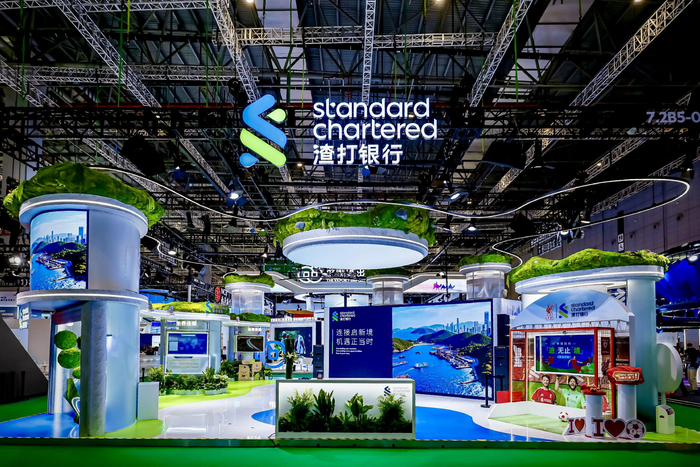
Core Insights - The eighth China International Import Expo (CIIE) serves as a platform showcasing China's expanding openness to the world, with financial institutions presenting innovative cross-border financial solutions to meet the diverse needs of global exhibitors [1] Group 1: Financial Institutions' Participation - Standard Chartered Bank has evolved from a first-time participant to a regular attendee, showcasing products like the upgraded "Outreach" service for SMEs and the "Global Chain" one-stop cross-border financial solution [2] - The bank's support for Chinese enterprises going global is highlighted by its facilitation of a €800 million sustainable development bond for Bright Food Group [2] - Lixin Accounting Firm, participating for the second year, signed a strategic cooperation agreement with Frank Technology to support the latter's overseas business expansion [4] Group 2: Cross-Border Mergers and Acquisitions - Cross-border mergers and acquisitions are becoming essential for Chinese companies to expand markets, acquire technology, and enhance brand influence, with financial due diligence being a complex and critical process [4][6] Group 3: Digital Infrastructure and Financial Services - Financial institutions are focusing on digital RMB applications, upgraded cross-border financial services, and digital infrastructure to facilitate trade [7] - Shanghai Pudong Development Bank has launched an upgraded version of its comprehensive financial service plan, emphasizing "smart-driven, ecological integration, and full-chain coverage" [7] - The Bank of Communications introduced a one-stop cross-border financial service platform, "Jiaoyin Hangmaotong," aimed at supporting foreign trade enterprises [9] Group 4: Insurance Sector Innovations - Mitsui Sumitomo Insurance has been participating in CIIE for seven consecutive years, emphasizing the integration of digital platforms into trade insurance services [9] - The company aims to provide comprehensive, customized insurance and risk management services by linking various critical flows in the trade and shipping industry [9] Group 5: Overall Impact on Global Trade - The innovations in cross-border finance showcased at CIIE reflect the active role of financial institutions in supporting the real economy and global trade, highlighting China's commitment to financial market openness and deep integration with the world [10]
新华财经|向新而行!进博会上的跨境金融创新趋势观察
Xin Hua She· 2025-11-08 05:59
Core Viewpoint - The eighth China International Import Expo (CIIE) serves as a platform showcasing China's expanding openness and the innovative cross-border financial services provided by financial institutions to meet the diverse needs of global exhibitors [1][9]. Group 1: Cross-Border Financial Services - Standard Chartered Bank has transformed from a "first-time visitor" to a "returning guest" at the CIIE, showcasing products like the upgraded "Outreach" for SMEs and the "Global Chain" as a one-stop cross-border financial solution [1][3]. - The bank's support for Bright Food Group in issuing an 800 million euro sustainable development bond highlights its commitment to facilitating Chinese enterprises' overseas expansion [1]. Group 2: Strategic Partnerships and Market Expansion - Lixin Accounting Firm signed a strategic cooperation agreement with Frank Technology to promote the latter's overseas business expansion, emphasizing the growing need for cross-border comprehensive services as Chinese companies internationalize [3][6]. - The complexity of cross-border mergers and acquisitions necessitates thorough financial due diligence, which is more challenging than domestic mergers due to unique risks associated with cross-border transactions [3]. Group 3: Digital Infrastructure and Innovation - Financial institutions are actively participating in the CIIE, with a focus on digital RMB applications, upgraded cross-border financial services, and digital infrastructure to enhance trade efficiency [6][8]. - Shanghai Pudong Development Bank has upgraded its comprehensive financial service plan to version 8.0, emphasizing "smart-driven, ecological integration, and full-chain coverage" [6]. - The Bank of Communications launched a one-stop cross-border financial service platform, "Jiaoyin Hangmaotong," aimed at facilitating key processes for foreign trade enterprises [8]. Group 4: Insurance and Risk Management - Mitsui Sumitomo Insurance has been exploring digital transformation and aims to integrate its services into the shipping trade industry, providing customized insurance and risk management solutions [8]. Group 5: Overall Impact on Global Trade - The innovations in cross-border finance showcased at the CIIE reflect the active role of financial institutions in supporting the real economy and global trade, while also indicating China's ongoing financial market openness and integration with the world [9].
上市银行净息差悬于1.3%,银行传统盈利模式或宣告终结
Tai Mei Ti A P P· 2025-11-08 00:44
Core Insights - The A-share banking sector reported a total operating income exceeding 4.3 trillion yuan for the first three quarters, with the six major state-owned banks achieving a profit scale of 1.07 trillion yuan, indicating strong performance despite underlying structural issues [1][2] - The net interest margin (NIM) has shown signs of stabilization, yet remains at historically low levels, with retail loan delinquency rates continuing to rise, highlighting potential long-term challenges for the banking industry [1][4] Group 1: Net Interest Margin Trends - The banking sector's NIM showed a slight recovery in Q3 2025, with Jiangyin Bank reporting a NIM of 1.56%, up 2 basis points from Q2, and Ruifeng Bank at 1.49%, up 3 basis points, contributing to a 6.12% year-on-year increase in net interest income [1][2] - Despite short-term stabilization, the long-term trend of declining NIM persists, with the average NIM for commercial banks at 1.42% in Q2 2025, down 0.12 percentage points year-on-year [2][3] Group 2: Asset Quality and Retail Loan Risks - The overall asset quality of the banking sector appears stable, with most banks maintaining non-performing loan (NPL) ratios below 1.5%, but retail loans are becoming a high-risk area, with consumer loan NPL rates rising to 1.29% as of Q2 2025 [4][5] - The increase in retail loan delinquency is attributed to employment pressures affecting borrowers' income stability, leading to heightened "co-borrowing" risks, where clients with multiple loans face significantly higher delinquency rates [4][5] Group 3: Business Structure and Revenue Sources - Traditional lending remains a dominant revenue source for banks, but there is a growing need for diversification into intermediary services, as evidenced by a 4.60% year-on-year increase in net fee and commission income for A-share listed banks [6][7] - The shift towards a dual-driven model of "lending + wealth management" is essential for improving profitability in retail banking, requiring long-term customer cultivation and ecosystem development [6][7] Group 4: Non-Performing Loan Management - The improvement in NPL ratios is largely driven by increased asset disposal efforts, with a significant rise in the volume of bad debt write-offs and transfers, indicating a proactive approach to managing asset quality [7][8] - However, the reduction in NPLs does not eliminate long-term risks, particularly in the real estate sector, where NPL rates remain elevated, and smaller banks face greater challenges due to concentrated lending practices [8][9]
爱玛科技集团股份有限公司 关于与专业投资机构共同投资基金的进展公告
Zhong Guo Zheng Quan Bao - Zhong Zheng Wang· 2025-11-08 00:23
Group 1 - The company has signed a partnership agreement with Xiamen Zongheng Jinding Private Fund Management Co., Ltd. and other limited partners to establish a venture capital partnership named "Qiongqing City Yizhang Wangchao Venture Capital Partnership (Limited Partnership)" with a total fundraising scale of 108.05 million RMB, where the company contributes 32.4 million RMB, accounting for 29.9861% of the total [1] - The partnership aims to invest primarily in equity, specifically targeting Shanghai Wolant Aviation Technology Co., Ltd., which focuses on the research and production of manned electric vertical take-off and landing aircraft [1] - The partnership has completed business registration changes and obtained a new business license, and has also completed the registration with the Asset Management Association of China, receiving a private fund registration certificate [3] Group 2 - The investment will utilize the company's own funds and is not expected to impact the company's normal production and operational activities, nor will it significantly affect the company's financial and operational status [4] - The investment is intended to explore development opportunities in the low-altitude economy sector while ensuring the company's main business remains unaffected, potentially broadening investment channels and enhancing shareholder returns [3][4] - The company will continue to monitor the implementation of the investment fund and fulfill its information disclosure obligations in accordance with relevant laws and regulations [4]
