
腾讯

Search documents
AI云计算时代,百度智能云终于不再被腾讯云、华为云压着?
Sou Hu Cai Jing· 2025-11-04 02:16
Core Insights - The Chinese cloud computing market is experiencing intense competition among major tech giants, with Alibaba Cloud leading the market with a 30.2% share, followed by Baidu Smart Cloud at 22.5%, together accounting for over 50% of the market by mid-2025 [2][14] - Baidu Smart Cloud, despite its strong AI capabilities, faces significant challenges in establishing a robust market presence compared to its competitors [8][9] Market Dynamics - The cloud computing landscape in China has evolved from server leasing in the PC internet era to a more complex ecosystem driven by mobile internet demands, where companies like Alibaba and Tencent have established strong footholds [4][5] - The emergence of AI has shifted the competitive landscape, with companies like Alibaba Cloud and Baidu Smart Cloud positioning themselves as key players in the AI-driven cloud services market [6][14] Competitive Landscape - Alibaba Cloud has a significant advantage in terms of ecosystem and channel depth, leveraging its extensive partnerships and customer relationships to penetrate the market effectively [9][11] - Baidu Smart Cloud, while technologically advanced, struggles with market penetration and customer acquisition due to its relatively weaker ecosystem and channel strategies [9][10] Financial Performance - Baidu's AI new business revenue reached 19.4 billion yuan in the first half of 2025, marking a 36% year-on-year growth, the highest among listed cloud vendors [14] - The stock market has responded positively to Baidu's AI and autonomous driving initiatives, with a notable increase in share price [14] Future Outlook - The AI cloud market in China is projected to grow significantly, with estimates of 20.83 billion yuan in 2024 and 51.8 billion yuan in 2025, indicating a period of explosive growth [14] - Baidu Smart Cloud must navigate substantial challenges, including Alibaba's planned investment of over 380 billion yuan in cloud and AI infrastructure over the next three years [15]


机构称游戏行业利润加速释放,游戏ETF(159869)现涨近3.5%
Mei Ri Jing Ji Xin Wen· 2025-11-03 14:11
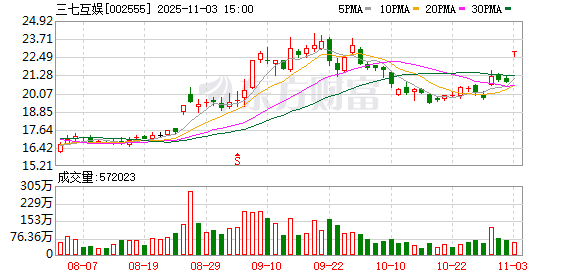
Group 1 - The gaming sector showed strong performance with the gaming ETF (159869) rising nearly 3.5%, driven by stocks like 37 Interactive Entertainment hitting the daily limit and Xinghui Entertainment increasing over 7% [1] - As of October 31, the gaming ETF (159869) had a product scale of 11.168 billion, facilitating investors to easily invest in leading A-share gaming companies [1] - Tencent's mobile game "Light and Night Love" launched its HarmonyOS version, marking a significant step in supporting the Harmony ecosystem and showcasing Tencent's strategy to embrace domestic operating systems [1] Group 2 - Guojin Securities predicts accelerated profit release in the gaming industry, with an optimistic outlook for future valuation adjustments [2] - By Q3 2025, the overall revenue of the gaming industry is expected to reach 30.36 billion, a year-on-year increase of 28.61%, outpacing the overall media industry's growth of 8.20% [2] - The net profit attributable to the parent company is projected to be 5.78 billion, with a year-on-year growth of 111.65%, also exceeding the media industry's growth of 59.35% [2] - The number of game licenses issued in 2025 has already reached 1,440, surpassing the total for 2024, indicating a rich product pipeline that is likely to drive continued industry growth [2]
证监会重磅处罚!三七互娱因七年信披违法领罚 现任董事长李卫伟个人被罚1400万
Guo Ji Jin Rong Bao· 2025-11-03 13:55
Core Viewpoint - The recent administrative penalty notice from the China Securities Regulatory Commission (CSRC) against 37 Interactive Entertainment reveals multiple violations related to false shareholder records, undisclosed related party transactions, and misleading announcements from 2014 to 2021 [2][3] Summary by Sections Regulatory Actions - The CSRC has proposed to order 37 Interactive Entertainment to rectify its actions and issue warnings, with a total fine of 32.55 million yuan imposed on the company and six related individuals, including 14 million yuan on the current chairman Li Weiwei [3] Violations Details - The violations include false records of shareholder holdings in annual reports from 2014 to 2020, failure to disclose related party transactions in the 2018 annual report, and omissions in the 2020 interim announcement and annual report regarding related party transactions [2][4] Company Background - 37 Interactive Entertainment transitioned from an automotive parts company to a gaming company after acquiring 100% of the game company "Shanghai 37 Play" in 2014 and subsequently changing its name [3][4] Financial Performance - In the first three quarters of the year, the company reported revenue of 12.461 billion yuan, a year-on-year decrease of 6.59%, while net profit attributable to shareholders was 2.345 billion yuan, an increase of 23.57% [5] - The third quarter alone saw revenue of 3.975 billion yuan, down 3.23%, but net profit rose by 49.24% to 944 million yuan [5] Game Performance and Market Reception - The company attributed its performance growth to effective long-term operations of existing products and the successful launch of new games such as "Time Explosion" and "Douluo Dalu: Soul World" [5] - However, player ratings on TapTap for these games were relatively low, with scores of 4.5, 6.1, and 6.8, indicating dissatisfaction with aspects like server management and monetization strategies [6] Cost Management - Despite a 19.53% decrease in sales expenses to 6.199 billion yuan, these costs still accounted for nearly 50% of total revenue, while research and development investment was only 512 million yuan [6]

证监会重磅处罚!三七互娱因七年信披违法领罚,现任董事长李卫伟个人被罚1400万
Guo Ji Jin Rong Bao· 2025-11-03 13:32
Core Viewpoint - The recent administrative penalty notice from the China Securities Regulatory Commission (CSRC) reveals multiple violations by 37 Interactive Entertainment from 2014 to 2021, including false shareholder records and undisclosed related party transactions [1][3]. Summary by Sections Regulatory Actions - 37 Interactive Entertainment received an administrative penalty notice from the CSRC, which has been pending for over two years [1]. - The violations include false records of shareholder holdings from 2014 to 2020, failure to disclose related party transactions in the 2018 annual report, and omissions in the 2020 temporary announcements and annual report [3][5]. - The CSRC plans to impose a fine totaling 32.55 million yuan on the company and its key executives, with the chairman facing a personal fine of 14 million yuan [3][5]. Company Background - The company's issues trace back to its transformation from an automotive parts company to a gaming company after acquiring "Shanghai 37 Play" in 2014 and 2015 [5]. - Key executives utilized funds from the acquisition to purchase shares, leading to undisclosed shareholding arrangements that violated disclosure requirements [5]. Financial Performance - In the first three quarters of the year, the company reported revenue of 12.461 billion yuan, a year-on-year decrease of 6.59%, while net profit attributable to shareholders increased by 23.57% to 2.345 billion yuan [6]. - The third quarter alone saw revenue of 3.975 billion yuan, down 3.23%, but net profit rose by 49.24% to 944 million yuan [6]. Game Performance and Market Position - The company has launched several successful games, including "Time Explosion" and "Douluo Continent: Soul World," which contributed to revenue growth [6]. - Despite the financial performance, the games received mixed reviews, with ratings of 4.5, 6.1, and 6.8 on TapTap, indicating potential issues with player satisfaction [6][7]. - Players have expressed dissatisfaction with game mechanics, including server management and low drop rates for in-game items [7]. Cost Management - Sales expenses decreased by 19.53% to 6.199 billion yuan, accounting for nearly 50% of total revenue, while research and development investment was only 512 million yuan [8].
被罚3255万、董事长李卫伟等“一个不落 ”,三七互娱公信力会崩塌吗?
3 6 Ke· 2025-11-03 12:58
Core Viewpoint - The recent administrative penalties imposed on 37 Interactive Entertainment due to multiple violations over six years have raised concerns about trust and credibility in the gaming industry, highlighting the need for compliance and ethical operations to sustain long-term growth [1][2][4]. Group 1: Violations and Penalties - 37 Interactive Entertainment and its chairman Li Weiwei received a notice from the China Securities Regulatory Commission (CSRC) detailing four major violations, including false disclosures of shareholder holdings and undisclosed related party transactions from 2014 to 2021 [1][2]. - The penalties include a fine of 9 million yuan for the company, 14 million yuan for Li Weiwei (5 million yuan for direct responsibility and 9 million yuan as the actual controller), and fines for other executives totaling 3.25 million yuan [2][3]. Group 2: Industry Context and Implications - The incident reflects a broader trend in the gaming industry, where financial manipulation is prevalent, and may serve as a turning point for regulatory scrutiny, prompting companies to rethink their growth strategies [3][4]. - The gaming sector, characterized by light asset models and high valuations, is particularly vulnerable to financial misconduct, as evidenced by the recent penalties against 37 Interactive Entertainment and its competitor Century Huatong [3][4]. Group 3: Company Performance and Strategy - Despite the penalties, 37 Interactive Entertainment reported a revenue of 12.461 billion yuan for the first three quarters of 2025, a year-on-year decline of 6.59%, while net profit increased by 23.57% to 2.345 billion yuan [6]. - The company’s R&D investment for the same period was 512 million yuan, representing 4.5% of its revenue, significantly lower than competitors like Tencent and NetEase, which invest over 10% of their revenue in R&D [6][7]. Group 4: Market Reaction and Future Outlook - Following the announcement of penalties, the company's stock price experienced a slight decline but later achieved a record one-day limit-up, indicating mixed market sentiment and speculation about potential recovery [5]. - The company aims to enhance its competitive edge through AI technology, which may help it navigate compliance challenges and expand in overseas markets [9].
科技与文化交汇:赋能广告产业,链接亚洲机遇 第32届中国国际广告节&第34届亚洲广告大会在京圆满闭幕
Jing Ji Guan Cha Wang· 2025-11-03 11:32
Core Insights - The 32nd China International Advertising Festival and the 34th Asian Advertising Congress successfully concluded in Beijing, emphasizing the theme "Intelligent Advertising New Chapter: China as the Main Stage, Asia in Sync" [1][2] - The event attracted over 10,000 representatives from more than 30 countries and regions, establishing an international advertising exchange platform that integrates technology and culture [1][2] Group 1: Event Overview - The dual event format marked a significant step in the integration of China's advertising industry with the international stage, showcasing a "dual main stage" model that included over 220 foreign representatives [2] - The event created a complete ecosystem for "display, communication, release, and cooperation," enhancing the global reach of Chinese advertising [2] - The "dual event linkage" mechanism resulted in unexpected synergistic effects, significantly boosting the international influence of China's advertising industry, reaching over 1 billion people through multi-channel communication [2][3] Group 2: Industry Insights - Key industry leaders from companies like WPP, Tencent, and Haier discussed topics such as AI-driven brand transformation, showcasing the forefront of China's advertising industry under technological influence [3][4] - The event featured various awards and forums, including the Yellow River Award and the Great Wall Award, covering hot topics like AI advertising development and brand innovation [4] - The presence of major media and well-known companies at the exhibitions highlighted the diverse ecosystem and innovative vitality of the advertising industry [4] Group 3: Regional Impact - Haidian District, as the event's host, provided a rich cultural and technological foundation, aligning with the event's theme of "innovation-driven, technology-enabled" [5][6] - The region's strong AI research capabilities are seen as a driving force for advertising innovation, while the advertising industry can enhance the branding process of local universities and tech companies [5][6] Group 4: Future Outlook - The successful hosting of the Asian Advertising Congress in China symbolizes a win-win situation, with Beijing set to host the event again in 2025, reinforcing its position as a hub for international exhibitions and technological integration [7][8] - The event is viewed as a starting point for future collaborations and resource expansion, with participants gaining valuable insights into AI, branding, and cross-industry integration [8]
2025年中国大模型行业发展研究报告 | 36氪研究院
36氪· 2025-11-03 09:34
Core Insights - The article emphasizes that the Chinese large model industry is undergoing a significant transformation driven by technological iteration and ecological restructuring, with the market expected to reach 29.416 billion yuan in 2024 and exceed 70 billion yuan by 2026 [4][41]. - The CBDG four-dimensional ecosystem (Consumer, Business, Device, Government) is identified as a new paradigm for the development of large models in China, shifting competition from single-point technology to comprehensive ecosystem building [3][9]. Industry Overview - The large model is positioned as a strategic core and key engine for the development of artificial intelligence, facilitating the transition from isolated algorithm innovations to a holistic intelligent ecosystem [28][30]. - The Chinese large model industry is characterized by a complex competitive landscape, with participants categorized into five main types: internet/technology giants, model-focused newcomers, vertical industry players, AI 1.0 transformers, and research institutions [13][14]. CBDG Four-Dimensional Ecosystem - The CBDG model reveals that the four dimensions (Consumer, Business, Device, Government) are deeply interconnected, forming an organic whole that drives the growth of the large model industry [59]. - Consumers are seen as the source of demand and innovation, providing vast data and feedback that accelerate the transition from usable technology to practical products [59]. - Businesses serve as the core of value creation and implementation, with strong market demand driving the integration of large model technology with industry-specific knowledge [59]. Competitive Landscape - The competitive dynamics in the large model sector are shifting towards a comprehensive capability contest, focusing on ecosystem building, technological research and development, industry empowerment, commercial monetization, and innovation expansion [9][12]. - The article outlines a framework for evaluating the competitiveness of large model enterprises, which includes ecological construction, technological research and development, industry empowerment, commercial monetization, and innovation expansion [11]. Future Trends - The article predicts that the future of large models will lead to advancements from multimodal cognition to embodied intelligence, becoming a crucial link between the virtual and physical worlds [20][36]. - The market for multimodal large models is expected to grow significantly, with applications in digital humans, gaming, and other scenarios showing strong growth potential [4][41]. Policy Framework - China's large model industry policies are evolving towards a four-pronged development framework: innovation-driven, foundational strengthening, scenario-driven, and safety governance [6][36]. - The article highlights the importance of a supportive policy environment that fosters continuous evolution and addresses the need for responsible governance alongside innovation [36][37].


港股速报|港股市场小幅反弹 彻底走稳了吗?
Mei Ri Jing Ji Xin Wen· 2025-11-03 09:16
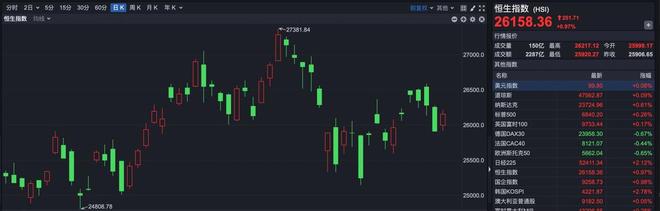
Core Viewpoint - The Hong Kong stock market experienced a rebound on November 3, with various indices showing slight gains, although the Hang Seng Tech Index remained weak [1][3]. Group 1: Market Performance - The Hang Seng Index closed at 26,158.36 points, up 251.71 points, a rise of 0.97% [1]. - The Hang Seng Tech Index closed at 5,922.48 points, increasing by 14.40 points, a gain of 0.24% [3]. Group 2: Sector Performance - The rebound in the Hong Kong stock market was primarily driven by cyclical stocks, with coal stocks leading the gains. Yanzhou Coal Mining (01171.HK) and China Coal Energy (01898.HK) rose over 4%, while China Shenhua Energy (01088.HK) and Shougang Resources (00639.HK) increased by over 2% [5]. - Oil stocks also performed strongly, with several reaching recent highs. China Petroleum & Chemical Corporation (00386.HK) and Sinopec Engineering (02386.HK) rose over 2%, while China National Offshore Oil Corporation (00883.HK) increased by over 3% [5]. - In the tech sector, Xiaomi rose over 3% and NetEase increased by over 1%, while Alibaba fell over 1% and Tencent slightly decreased by 0.16% [6]. - Financial stocks were active, with China Construction Bank rising over 3% and AIA Group increasing by over 5% [6]. - Automotive stocks showed strength, with NIO and Xpeng rising over 4% and Li Auto increasing by over 1% [6]. - Gold stocks weakened, with Zijin Mining falling over 1% [6]. Group 3: Capital Flow and Future Outlook - As of the market close, southbound funds net bought over 5.4 billion HKD in Hong Kong stocks [6]. - CICC forecasts that profit growth in Hong Kong stocks will become a major driving force by 2026, with non-financial offshore Chinese stocks expected to see a profit growth rate of 15%, up from 10% in 2025 [8]. - The overall market valuation is expected to remain stable with a slight increase, and liquidity may peak in the first half of the year, necessitating attention to fundamental recovery [8]. - The inflow of southbound funds may slow to between 750 billion and 980 billion HKD, but foreign capital is expected to continue to increase due to stabilization in China's fundamentals and RMB appreciation [8]. - According to Guotai Junan, the tech sector in Hong Kong is expected to become a main theme in 2026, driven by the AI wave, with a focus on AI applications and semiconductor manufacturing [8].
每日投资策略-20251103
Zhao Yin Guo Ji· 2025-11-03 05:22
Market Overview - Global markets showed mixed performance, with the Hang Seng Index down 1.43% and the Shanghai Composite Index down 0.81%, while the US markets saw slight gains, particularly the Nasdaq which rose by 0.61% [1][3] - Southbound capital saw a net inflow of HKD 8.719 billion, with Xiaomi, Meituan, and 3SBio leading in net purchases, while Tencent and SMIC experienced significant net sales [3] Economic Insights - China's manufacturing PMI fell to its lowest level since 2008, indicating a further slowdown in economic activity for Q4, with expectations of policy easing from the central bank [4] - The real estate sector continues to face challenges, with a 16.3% year-on-year decline in sales for the top 100 property companies from January to October, and a further drop in second-hand housing prices [4] Industry Analysis - The CIS market is expected to grow by 6.4% in 2024, reaching USD 23 billion, driven by the adoption of automotive ADAS and emerging applications like smart glasses [4][5] - The competitive landscape in the CIS industry is becoming more concentrated, with leaders like Sony pushing technological boundaries while competitors like Samsung focus on high-resolution solutions [5] Company Performance - Amazon reported Q3 2025 revenue of USD 180.2 billion, a 13.4% year-on-year increase, with AWS revenue exceeding expectations [6] - Coinbase's Q3 2025 revenue grew by 59% year-on-year to USD 1.79 billion, driven by strong trading performance [6] - Zhongji Xuchuang achieved record quarterly revenue of RMB 10.2 billion, a 57% year-on-year increase, supported by strong demand for 800G optical modules [7]


