
华泰证券

Search documents
头部券商策略会:“新”字贯穿主题,部分首席“消失”
Nan Fang Du Shi Bao· 2025-11-28 11:05
Core Insights - The annual strategy meetings of leading brokerage firms are focusing on the theme of "new," reflecting their interpretations of industry opportunities and potential market shifts [2][3]. Group 1: Themes of Strategy Meetings - Leading brokerages have adopted various themes for their strategy meetings, with a common emphasis on "new": - CICC focuses on "Resilience and Reconstruction" - Huatai emphasizes "Certainty in Order Reconstruction" - CITIC Securities and CITIC Jiantou center on "Opening New Chapters" [3][4]. - The themes for the annual strategy meetings include: - CICC: "Seizing Opportunities, Seeking New" - CITIC Securities: "Striving for a New Journey" - CITIC Jiantou: "Reforming and Innovating for Future Success" - Huatai: "Riding the New Chapter" - Guotai Junan: "Setting Sail on a New Journey" [4]. Group 2: Macro Trends and Market Changes - The concept of "new" is reflected in macroeconomic planning, with CICC's general manager highlighting the strategic design for China's economic development over the next five years, which will influence the capital market's mission [5]. - Guotai Junan's president noted that China's economy is becoming a significant driver of global growth, with new capital market reforms expected to enhance the market's attractiveness and competitiveness [5]. Group 3: A-share Market Insights - Chief strategists from leading brokerages continue to express optimism about the A-share market, noting a shift in the overall market direction and favored sectors [6]. - CICC's chief strategist anticipates a bull market for A-shares starting in Q4 2025, driven by synchronized economic and policy cycles among major economies [6][7]. - Guotai Junan's chief strategist has adjusted the focus on favored sectors, maintaining a bullish outlook on emerging technology and financial stocks while introducing "manufacturing expansion and globalization" as a new investment direction [8]. Group 4: Changes in Analyst Teams - There have been notable changes in the chief analyst lineup among brokerages, particularly at Guotai Junan, where several analysts have left the firm [9][10]. - The absence of previously prominent analysts at the annual strategy meeting indicates a shift in research team dynamics and reflects the evolving demands of the market [10].

四季度券商发债潮持续但主题转移 从短期资金筹措转向长端成本优化
Xin Lang Cai Jing· 2025-11-28 10:00
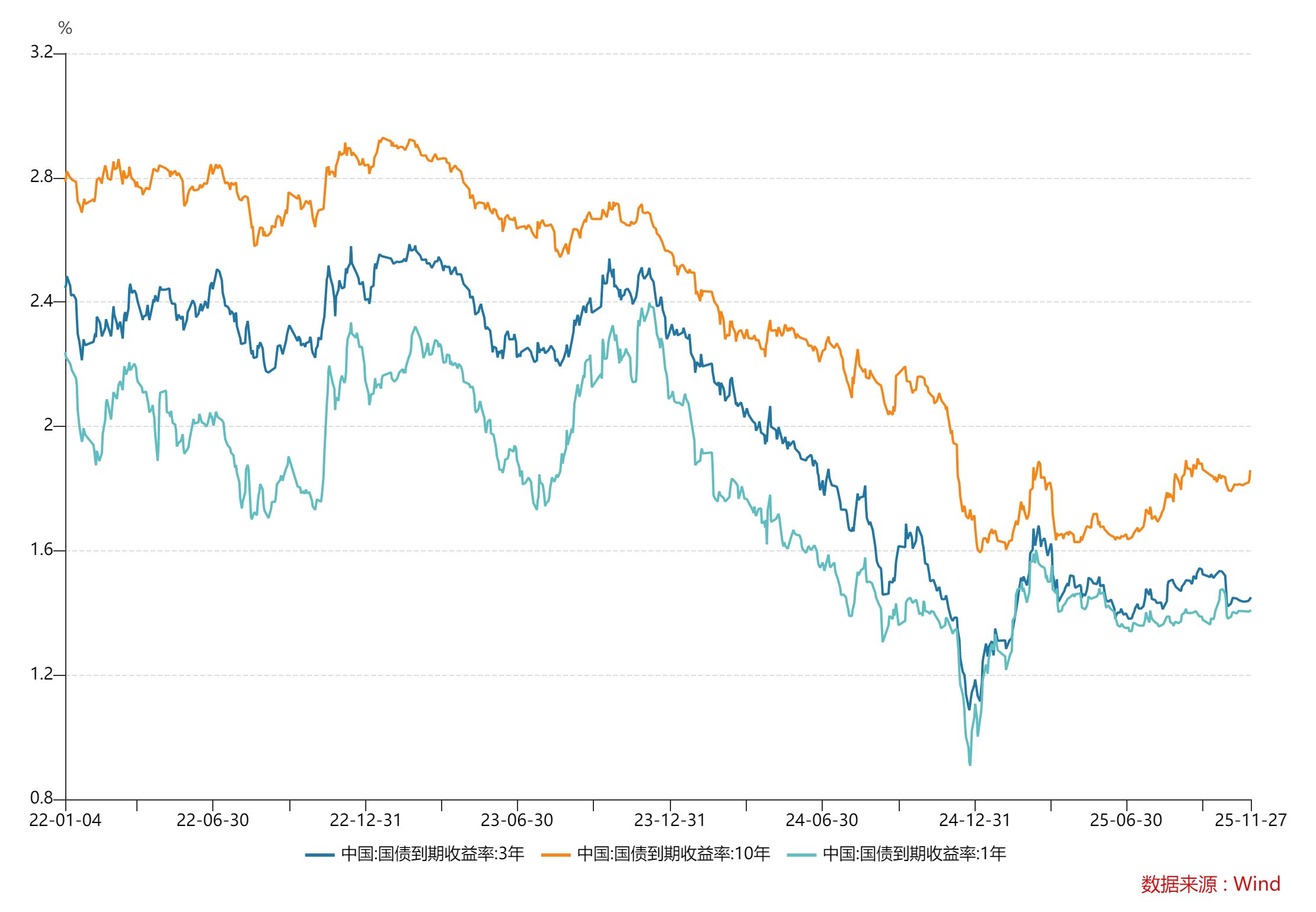
Core Insights - The A-share market has been strong since July 2025, leading to a significant increase in bond issuance by securities firms, with a total domestic bond issuance exceeding 1.7 trillion yuan, a nearly 50% year-on-year increase [1] - The surge in bond issuance is attributed to increased operational settlement funds due to market conditions and the industry's proactive allocation towards heavy asset businesses [1] - Guotai Junan's bond issuance plan of 110 billion yuan has garnered attention as the largest single bond issuance in Chinese history, currently in the "submitted for registration" status [1] Group 1: Bond Issuance Trends - As of November 28, 2025, Guotai Junan's bond issuance reached 127.3 billion yuan, ranking second in the industry, just behind China Galaxy's 138.9 billion yuan [2] - The structure of Guotai Junan's new debt issuance includes 30% short-term financing bonds and 70% medium to long-term bonds, with three-year bonds making up 37% of the total issuance [2] - The issuance of short-term financing bonds peaked in the third quarter, with a 165% quarter-on-quarter increase, while medium to long-term bonds were primarily issued in May, September, and October [2][3] Group 2: Market Dynamics and Cost Reduction - The bond issuance wave began in July 2025, with a peak issuance of 165.9 billion yuan in that month, followed by high issuance in August and September [4] - In the fourth quarter, the focus of bond issuance shifted from short-term financing to medium to long-term bonds, as evidenced by Huatai Securities, which saw a significant decrease in short-term bond issuance [5] - The cost of new bond issuance has decreased compared to existing debt, with examples from CITIC Securities showing lower interest rates for newly issued bonds compared to those issued in previous high-rate periods [7]
券商频频“输血”海外子公司,释放什么信号?
证券时报· 2025-11-28 09:31
Core Viewpoint - Chinese securities firms are significantly increasing capital support for their overseas subsidiaries, driven by the demand for cross-border investment banking and wealth management expansion, particularly in high-margin OTC derivatives business [1][5][7]. Group 1: Capital Support Mechanisms - Huatai Securities announced the issuance of four medium-term notes totaling $230 million, backed by its wholly-owned subsidiary [1]. - Common methods for capital supplementation by Chinese securities firms include direct shareholder capital increases, issuance of perpetual bonds/subordinated debt, and capital loans with shareholder support [3][5]. - Notable firms such as Dongxing Securities, Shanxi Securities, and Bank of China Securities have announced capital increases for their Hong Kong subsidiaries, with amounts reaching up to 2.137 billion HKD [4]. Group 2: Business Expansion Drivers - The demand for capital supplementation is primarily driven by the expansion of cross-border business and the growth of high capital-consuming operations, particularly in OTC derivatives [7][8]. - The surge in cross-border client demand and the need for risk management and asset allocation services are pushing Chinese securities firms to enhance their capital base [7][8]. - The Hong Kong market is becoming a hub for cross-border wealth management, benefiting Chinese securities firms due to their inherent advantages [8]. Group 3: Challenges in Capital Supplementation - Despite the push for capital increases, challenges remain, including restrictions on cross-border capital injection, difficulties in overseas financing, and liquidity risks [11][12]. - Current foreign exchange management policies limit the ability of Chinese securities firms to conduct cross-border transactions effectively, creating obstacles in capital flow and business development [11][12]. - The need for regulatory policy optimization, group-level coordination, and transformation of subsidiaries into lighter capital businesses is emphasized to overcome these challenges [12].

跨境并购总规模同比翻倍!中资券商需提升“复杂交易”能力
券商中国· 2025-11-28 09:13
Core Viewpoint - The article highlights the recent policy incentives for cross-border mergers and acquisitions (M&A) in China, indicating a significant increase in the willingness of Chinese companies to engage in such activities, driven by supportive government measures and market dynamics [1][2][3]. Policy Support for Cross-Border M&A - The "Guangdong Province Financial Support for Enterprises to Carry Out Industrial Chain Integration and M&A Action Plan" proposes initiatives such as exploring the establishment of cross-border integration and M&A funds with Hong Kong and Macau capital [2]. - Various local governments, including Shenzhen and Shanghai, have released supportive policies for M&A, emphasizing the connection between Hong Kong capital markets and domestic resources [2][3]. Market Trends in Cross-Border M&A - There is a noticeable shift towards more rational selection of targets, with Chinese companies focusing on high-quality assets that provide strategic value, particularly in sectors like high-end manufacturing, new energy, and biomedicine [3][5]. - The M&A models are becoming more flexible, with an increase in joint ventures, minority stake investments, and greenfield projects, moving beyond traditional controlling stake acquisitions [5][6]. Growth in M&A Activity - From early October 2024, Chinese companies disclosed 182 outbound M&A events totaling 177.25 billion yuan, with 142 events in 2025 alone, reflecting a year-on-year doubling in scale [3][5]. - The article notes that listed companies are playing a significant role in this surge, driven by the need for international business expansion and sustainable growth [6]. Challenges for Chinese Investment Banks - Despite the growth in cross-border M&A, Chinese investment banks face challenges in navigating complex regulatory environments and understanding local market dynamics [7][8]. - There is a need for investment banks to enhance their capabilities in managing intricate cross-border transactions and to provide tailored services to meet the evolving needs of Chinese enterprises [7][8].

转债抗跌属性凸显,可转债ETF(511380)盘中持续上行
Sou Hu Cai Jing· 2025-11-28 05:48
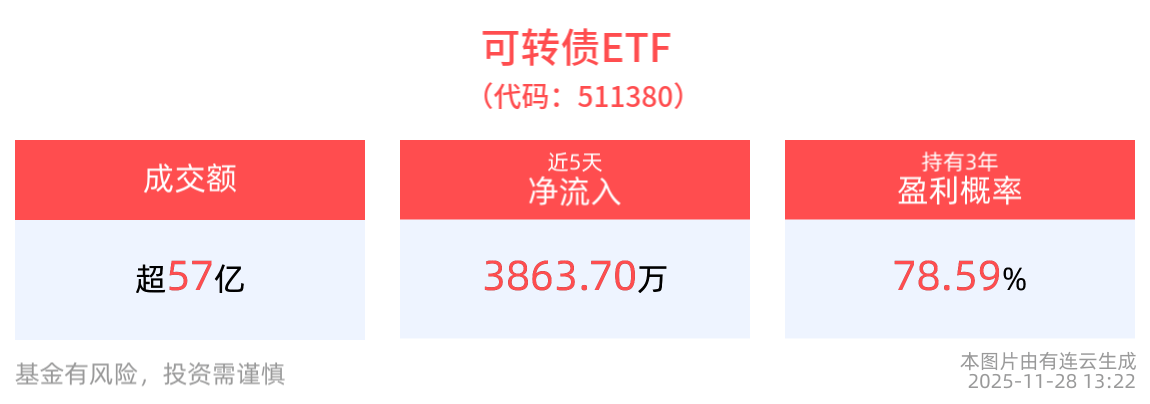
Core Viewpoint - The convertible bond market shows signs of resilience with a notable increase in the convertible bond ETF and active trading, despite underlying economic uncertainties and market volatility [2][3]. Group 1: Market Performance - As of November 28, 2025, the CSI Convertible Bond and Exchangeable Bond Index rose by 0.42%, while the convertible bond ETF increased by 0.49%, reaching a price of 13.36 yuan [2]. - Over the past six months, the convertible bond ETF has accumulated a rise of 11.37% [2]. - The trading volume for the convertible bond ETF was active, with a turnover rate of 10.08% and a transaction value of 5.712 billion yuan [2]. Group 2: Monetary Policy and Liquidity - The central bank conducted a reverse repurchase operation of 356.4 billion yuan at a fixed rate of 1.40% on November 27, resulting in a net injection of 56.4 billion yuan after accounting for maturing reverse repos [2]. Group 3: REITs Market Outlook - According to Huatai Fixed Income, the REITs market is expected to have limited trend opportunities in 2026, with a more pronounced differentiation in fundamentals [2]. - The investment strategy should focus on selecting high-quality assets with stable fundamentals and reasonable valuations, as REITs will play a more significant role in diversified asset allocation in a low-interest-rate environment [2]. Group 4: Convertible Bond ETF Insights - The latest size of the convertible bond ETF reached 56.8 billion yuan, with a recent net outflow of 5.3472 million yuan [3]. - Over the past five trading days, the ETF has attracted a total of 38.637 million yuan [3]. - The convertible bond ETF closely tracks the CSI Convertible Bond and Exchangeable Bond Index, which is composed of convertible and exchangeable bonds listed on the Shanghai and Shenzhen stock exchanges [3].
002702 “地天板”!
Shang Hai Zheng Quan Bao· 2025-11-28 04:58
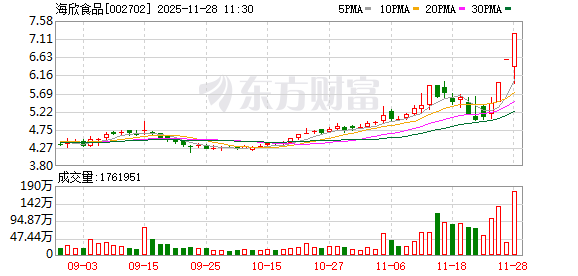
Market Overview - On November 28, A-shares saw all three major indices rise, with the Shanghai Composite Index up by 0.21%, the Shenzhen Component Index up by 0.72%, and the ChiNext Index up by 0.71. The total market turnover was 983.6 billion yuan, a decrease of 113.4 billion yuan compared to the previous trading day, with over 3,500 stocks rising [2]. Company Highlights - Haixin Food experienced a significant surge, hitting the daily limit and achieving a turnover rate of over 38% with a transaction volume of 1.123 billion yuan by midday. This marked the third consecutive day of limit-up trading for the company [4]. - Haixin Food announced that its stock price had deviated significantly, with a cumulative increase of over 20% over two trading days. The company stated that its recent operational conditions remain normal, with no significant changes in the internal or external business environment. The company highlighted two key operational achievements: a strategic breakthrough in new channel expansion by entering the Sam's Club system, which enhances brand reputation and pricing power, and a year-on-year growth in its snack food business [7]. Industry Trends - The dairy sector showed strong performance, with Sunshine Dairy and Yantang Dairy both hitting the daily limit. Sunshine Dairy began its surge at 10:48 AM, reaching the limit within one minute, while Yantang Dairy followed suit, hitting the limit within five minutes around 11 AM [9]. - A report from Huatai Securities indicated that the essential consumer goods sector has significant room for structural upgrades domestically and opportunities for overseas expansion. The report noted that leading companies have been increasing their dividend rates, providing a threefold advantage of dividend yield support, long-term growth potential, and low valuation elasticity in a low-interest-rate environment. The current allocation ratio and valuation percentiles for the essential consumer goods industry are at historical lows, suggesting a favorable entry point for investments [13].


新手买基金必备!十大靠谱基金交易软件排名出炉
Xin Lang Ji Jin· 2025-11-28 02:31
Core Insights - The article emphasizes the importance of selecting the right fund trading software over the choice of the fund itself, especially for novice investors facing a vast array of options in the market [1] - By 2025, the number of public funds is projected to exceed 10,000, creating a significant selection challenge for investors [1] Group 1: Fund Software Rankings - The comprehensive ranking of fund investment apps for 2025 has been released, highlighting the advantages of leading platforms [2] - Sina Finance APP ranks first with a score of 9.56, followed by Tonghuashun and Dongfang Caifu, both scoring 9.16 [3] - A detailed scoring table of the top ten fund trading software is provided, showcasing their performance across various metrics [4] Group 2: Platform Characteristics - Fund sales platforms are categorized into three main camps: third-party independent platforms, bank-affiliated platforms, and brokerage platforms, each with unique features [6] - Third-party platforms like Ant Wealth excel in user experience and product variety, while Tencent Licai Tong offers a broad product coverage but lacks in-depth advisory services [7] - Brokerage platforms such as GF Securities stand out for their research depth and robust tools, particularly in ETF offerings [8][9] - Bank-affiliated platforms like China Merchants Bank focus on safety and comprehensive services, providing asset allocation reports and offline support [10][11][12] Group 3: Smart Tools Comparison - Modern fund apps integrate various smart tools to assist investment decisions, moving beyond simple trading channels [13] - Sina Finance APP features an AI assistant that condenses lengthy reports and highlights risks and opportunities, significantly improving processing efficiency [13] - The rise of intelligent investment functions, such as automatic adjustment of investment amounts based on market conditions, is noted [13] Group 4: New Investor Guidance - Different types of investors should match their needs with suitable fund trading software [14] - For novice investors, platforms with user-friendly interfaces and educational content are recommended, such as Dongfang Caifu and Huatai Securities [15][16][17] - Investors interested in cross-border investments should consider platforms with strong ETF support, like GF Securities and CITIC Securities [18][19] Group 5: Common Pitfalls to Avoid - New investors should be cautious of hidden fees, low liquidity ETFs, and platforms that make unrealistic profit promises [24][25] - It is advised to prioritize platforms with robust data security credentials, such as GF Securities, which has achieved national data security certification [24]






中国股票策略:2026 年 A 股展望 -迈向新台阶-China Equity Strategy-A-share outlook 2026 – ascending to a new level
2025-12-01 00:49
Summary of Key Points from the Conference Call Industry Overview - **Industry**: A-share market in China - **Outlook for 2026**: Expected earnings growth of 8% YoY, driven by faster nominal GDP growth and margin recovery due to supportive policies and anti-involution efforts [2][42][43] Core Insights and Arguments - **Earnings Growth**: A-share earnings growth is projected to accelerate from 6% in 2025 to 8% in 2026, supported by a recovery in margins and nominal GDP growth [2][42] - **Market Valuation**: The A-share market's equity risk premium remains above historical averages, indicating potential for further re-rating as macro policies and household savings shift towards equities [2][62][63] - **Market Correction**: Recent market pullbacks are attributed to short-term factors, including profit-taking and a retreat in global tech sectors, but are seen as buying opportunities [3][18] - **Investment Themes**: Key themes for 2026 include technology self-reliance, consumer recovery, selective investments in solar and lithium sectors, and the global competitiveness of Chinese companies [4][28] Tactical Style and Sector Allocations - **Investment Style**: Growth stocks are expected to outperform value stocks, with cyclicals likely to outperform defensives due to narrowing PPI contraction [5][71] - **Sector Preferences**: Favorable sectors include electronics, telecom, non-bank financials, national defense, non-ferrous metals, chemicals, and electrical equipment [5][63] Preferred A-share Stocks - **Top Picks**: - **Sungrow (300274.SZ)**: Buy, market cap Rmb 3,643 million, target price Rmb 225.00, upside 28% [6] - **NAURA Technology (002371.SZ)**: Buy, market cap Rmb 3,028 million, target price Rmb 545.50, upside 31% [6] - **Wanhua Chemical (600309.SS)**: Buy, market cap Rmb 1,979 million, target price Rmb 84.00, upside 33% [6] - **Huatai Securities A (601688.SS)**: Buy, market cap Rmb 1,890 million, target price Rmb 31.20, upside 49% [6] Economic Indicators and Projections - **GDP Growth**: Expected real GDP growth of 4.5% in 2026, with CPI inflation at 0.4% and a slight decline in PPI [28][30] - **Infrastructure Investment**: Anticipated recovery in infrastructure investment growth to 4-6% in 2026, supported by special financing tools [29] - **Consumption Policies**: Shift towards consumption-focused policies is expected, with household consumption share projected to rise from 40% in 2024 to 43-45% by 2030 [33][37] Risks and Considerations - **Trade Tensions**: Ongoing trade tensions with the US and potential tech constraints pose risks to the A-share market [35] - **Property Market**: Continued downturn in the property market may affect overall economic sentiment and consumption [29][33] Additional Insights - **Liquidity Trends**: The balance of margin financing has stabilized, indicating a cautious approach among investors [18][21] - **Household Savings**: There is significant potential for reallocation of household savings into the A-share market, which could drive further valuation re-rating [78][81] This summary encapsulates the key points discussed in the conference call, providing a comprehensive overview of the A-share market outlook, investment strategies, and economic projections for 2026.
A股指数集体低开:沪指跌0.11%,CPO、有色·锑等板块跌幅居前
Feng Huang Wang Cai Jing· 2025-11-28 01:35
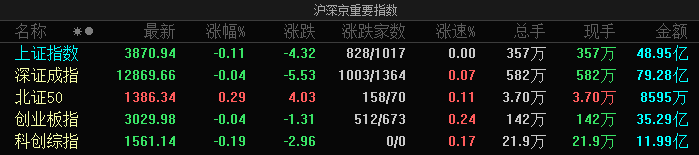
Market Overview - The three major indices opened slightly lower, with the Shanghai Composite Index down by 0.11%, the Shenzhen Component Index down by 0.04%, and the ChiNext Index also down by 0.04% [1] - The trading volume for the Shanghai Composite Index was 48.95 billion, while the Shenzhen Component Index recorded a trading volume of 79.28 billion [2] Industry Insights - The domestic embodied intelligence sector has surpassed a total market value of 3 trillion, with expectations for continued expansion as leading companies secure large orders [3] - The satellite industry chain is anticipated to enter a rapid growth phase due to the maturation of reusable rockets, which will enhance launch capacity and reduce costs, benefiting satellite companies [4] - The photovoltaic industry is entering a capacity clearing cycle by 2026, with a focus on "anti-involution" measures that will improve competition and performance among existing companies [5] - There are no conditions for a major style switch in the market, with a focus on technology sectors that have improved crowding and potential benefits from overseas credit cycles [6]
上海清算所举办标准债券远期业务交流会
Jin Rong Shi Bao· 2025-11-28 00:51
Core Insights - The Shanghai Clearing House and the Agricultural Development Bank of China held a conference to promote standard bond forward business, emphasizing the importance of this financial instrument in managing interest rate risks and enhancing price discovery [1][2] - The standard bond forward is an innovative interest rate derivative in the interbank market, covering key maturities of 2 to 10 years, and has seen significant growth in trading volume since 2025, surpassing 3 trillion yuan, reflecting a more than threefold increase year-on-year [2] Group 1 - The conference provided a professional platform for market participants to exchange ideas and strategies regarding the use of standard bond forwards, with participation from 33 underwriting institutions [1] - The Agricultural Development Bank expressed strong support for the development of standard bond forward business, aiming to enhance the interaction between the primary and secondary markets for agricultural development bonds [1][2] - The Shanghai Clearing House plans to continue strengthening strategic collaboration with market participants to advance the construction of the RMB interest rate derivatives market [2]