
格力电器

Search documents
家用电器行业11月7日资金流向日报
Zheng Quan Shi Bao Wang· 2025-11-07 09:29
Market Overview - The Shanghai Composite Index fell by 0.25% on November 7, with 14 out of the 28 sectors rising, led by basic chemicals and comprehensive sectors, which increased by 2.39% and 1.45% respectively [1] - The computer and electronics sectors experienced the largest declines, with drops of 1.83% and 1.34% respectively [1] - Overall, the main funds in the two markets saw a net outflow of 40.396 billion yuan, with 6 sectors experiencing net inflows [1] Sector Performance - The basic chemicals sector had the highest net inflow of funds, totaling 5.943 billion yuan, coinciding with its 2.39% increase [1] - The power equipment sector also saw a positive performance, with a 1.01% increase and a net inflow of 4.253 billion yuan [1] - In contrast, the electronics sector faced the largest net outflow of funds, amounting to 10.212 billion yuan, followed closely by the computer sector with a net outflow of 10.005 billion yuan [1] Home Appliance Industry - The home appliance sector declined by 1.17%, with a net outflow of 2.290 billion yuan [2] - Out of 94 stocks in this sector, 31 rose while 61 fell [2] - The top three stocks with the highest net outflow included Sanhua Intelligent Control, Hanyu Group, and Ecovacs, with outflows of 1.567 billion yuan, 279 million yuan, and 914 million yuan respectively [2] Notable Stocks in Home Appliance Sector - Midea Group had the highest net inflow in the home appliance sector, with 63.618 million yuan [5] - Tianyin Electromechanical and Kangsheng Co. followed with net inflows of 58.216 million yuan and 28.8816 million yuan respectively [5] - The stocks with significant outflows included Sanhua Intelligent Control, Hanyu Group, and Ecovacs, which saw outflows of 1.567 billion yuan, 279 million yuan, and 914 million yuan respectively [2]





京东11.11暖暖惊喜日开启:1分钱抢千万份暖冬好物,百亿补贴低至5折
Cai Fu Zai Xian· 2025-11-07 04:46
Core Insights - JD.com launched its "Warm Surprise Day" on November 7, coinciding with the start of winter, offering significant discounts and promotions to enhance consumer shopping experiences during the cold season [1][7] Group 1: Promotions and Discounts - The event features a "100 billion subsidy" with discounts as low as 50% on various winter products, including a down jacket originally priced at 1899 yuan now available for 1496.9 yuan, and SK-II cream reduced to 1598.6 yuan [4][6] - Consumers can participate in a "1 penny invitation" event to claim millions of winter essentials from top brands, including heating appliances and clothing [4][5] Group 2: Special Offers and Auctions - JD.com is hosting auctions for rare winter supplements starting at 1 yuan, including high-value items like wild ginseng and premium seafood, enhancing the shopping experience with unique offerings [5][6] - The platform is also giving away 50,000 "lucky vinegar" bottles for just 0.01 yuan during specific times throughout the day, encouraging user engagement [5][6] Group 3: Comprehensive Winter Solutions - The event addresses the essential needs for winter warmth with a wide range of products, including down jackets, air conditioners, and heaters, all available at unprecedented subsidy levels [6][7] - Additional promotions include substantial discounts on clothing and home goods, such as "1000 off 300" vouchers for apparel and significant savings on heating appliances [6][7]



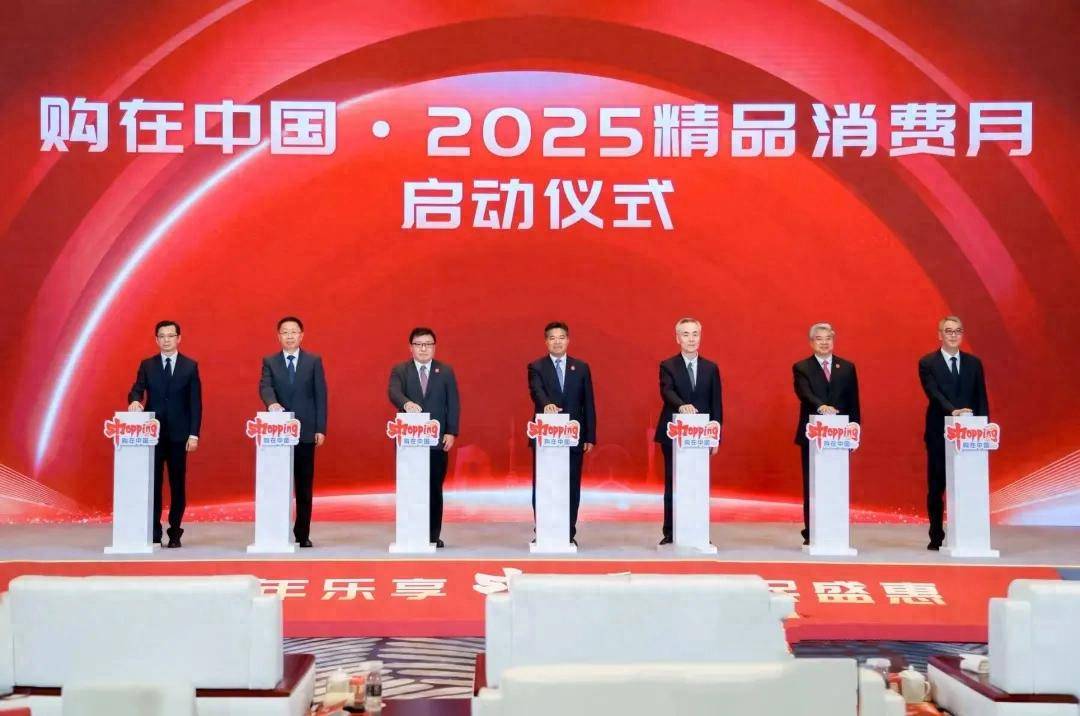
聚焦 | “购在中国·2025精品消费月暨2025上海迎进博消费嘉年华”活动今日启幕!
Sou Hu Cai Jing· 2025-11-07 03:40
Core Points - The Ministry of Commerce launched the "Buy in China · 2025 Boutique Consumption Month" from November 1 to 30, focusing on four key areas: boutique shopping, exquisite food, exciting tourism, and exquisite performances [1][3] Group 1: Event Overview - The launch ceremony took place in Shanghai, co-hosted by the Ministry of Commerce and several municipal governments, highlighting the collaborative effort to boost consumption [3] - The event aims to leverage the influence of the China International Import Expo (CIIE) and integrate it with the "Double 11" shopping festival to enhance consumer engagement [3] Group 2: Key Activities - "New Trends from CIIE" series will feature the launch of new products from brands like L'Oréal and IKEA, with a focus on creating a vibrant shopping atmosphere in key commercial districts [4] - "Boutique Shopping New Scene" includes the establishment of a tax refund point at the CIIE venue and promotional activities across over 1,600 tax refund stores [5] - "Global Cuisine New Flavors" will promote popular dishes from local restaurants, creating a seamless connection between online and offline dining experiences [6][7] Group 3: E-commerce and Supply Chain - "Cloud Products and Sea Purchases" will focus on e-commerce activities, featuring products from over 30 countries and offering exclusive online promotions [8] - The event will also include a live streaming month, engaging various e-commerce platforms to promote local brands and products [8] Group 4: Tourism and Experience - "Leisure and Travel New Experiences" will introduce special offers for tourists during the CIIE, including free rides on designated buses for attendees [9] - The initiative aims to enhance the overall experience of visitors through themed activities and partnerships with local attractions [9] Group 5: Consumer Insights - The collaboration with Gaode to launch the "Love Shopping Shanghai" consumption list aims to capture the latest consumer trends across five core dimensions: new trends, new scenes, new flavors, new supplies, and new experiences [10]
双十一空调战场观察:美的用“技术普惠”回应市场新周期
Xin Lang Cai Jing· 2025-11-07 03:20
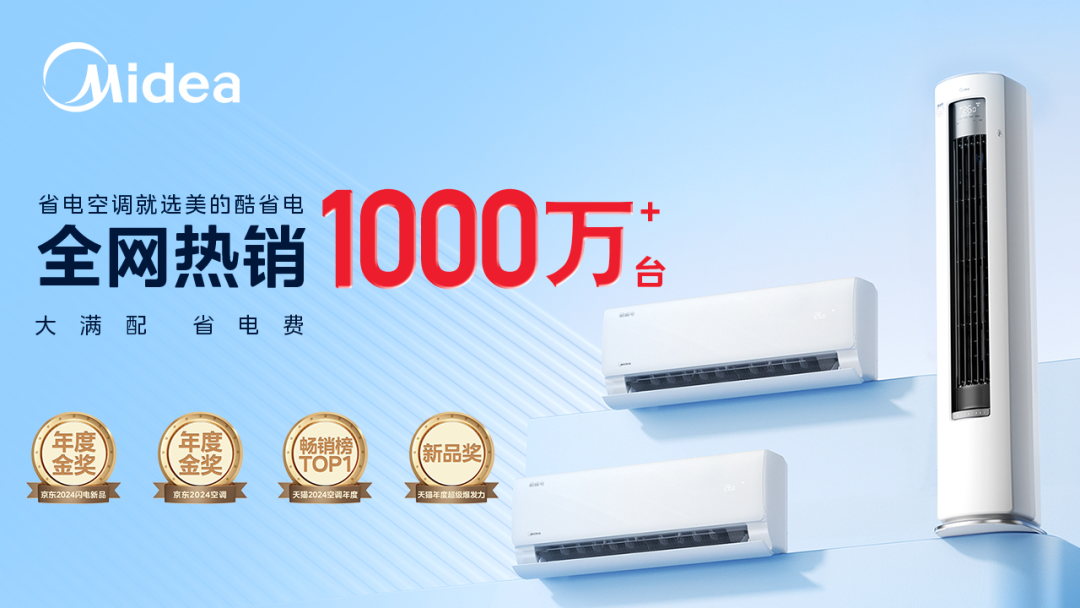
Core Insights - The air conditioning market is experiencing intense competition during the 2025 Double Eleven shopping festival, with domestic brands like Gree, Xiaomi, and Midea leading the charge through innovative strategies and product offerings [1][2][3] - Midea stands out with its "Cool Energy Saving" series, which emphasizes long-term value over short-term price cuts, reflecting a shift in consumer preferences towards energy efficiency and comfort [2][8] - The industry is moving away from price-based competition to a focus on value, with brands leveraging technology and innovation to meet consumer needs [3][4][21] Market Dynamics - Major brands are adopting differentiated strategies: Gree is using a dual-brand approach, Xiaomi is pushing aggressive pricing, and Haier is focusing on health and smart features [1][2] - Midea's performance is bolstered by its technology-driven products that address user pain points, such as energy savings and comfort [2][12] - The traditional reliance on low prices for sales is diminishing as consumers prioritize overall product value, including long-term costs and user experience [3][7][8] Competitive Strategies - Gree has shifted from discounting to a collaborative model with platforms like JD.com, focusing on customization and supply chain efficiency [4] - Haier is enhancing brand competitiveness through service and scenario-based marketing rather than just price reductions [4] - Midea is replacing the low-price focus with a strategy centered on technology accessibility, allowing more consumers to benefit from high-efficiency products [4][15] Product Innovation - Midea's "Cool Energy Saving" series exemplifies the company's approach to making energy-efficient technology accessible at a reasonable price, projecting savings of approximately 4,500 yuan over ten years for users [5][16] - The "No Wind" series addresses consumer discomfort with traditional air conditioning, showcasing Midea's commitment to enhancing user experience through innovative technology [12][14] - Midea's extensive R&D capabilities, with over 38 research centers and 25,000 patents, support its ability to deliver high-quality, innovative products across various price segments [19][20] Industry Trends - The air conditioning sector is witnessing a transition from price wars to value-driven competition, emphasizing the importance of addressing real consumer needs through technology [15][21] - Midea's success during the Double Eleven festival reflects a broader market trend where consumer choices are increasingly influenced by perceived value rather than just price [20][21] - The industry's future will depend on companies that can innovate and provide genuine value, moving away from the detrimental effects of price competition [16][21]
指数三连涨实现稳稳的幸福,自由现金流ETF基金(159233)投资机会受关注
Sou Hu Cai Jing· 2025-11-07 02:26
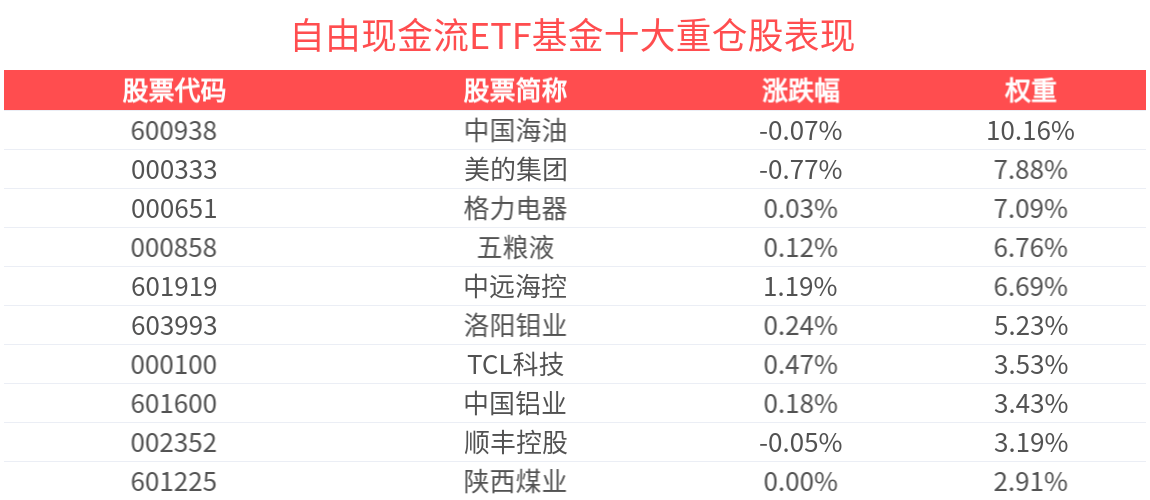
Core Viewpoint - The Zhongzheng All Index Free Cash Flow Index (932365) has shown positive performance, with notable increases in constituent stocks and the Free Cash Flow ETF Fund (159233) achieving significant gains and inflows [1][2]. Group 1: Performance Metrics - As of November 6, 2025, the Free Cash Flow ETF Fund has seen a weekly increase of 1.69%, ranking 1st among comparable funds [1]. - The fund's latest price is reported at 1.21 yuan, with a recent trading volume of 38.23 million yuan and an average daily trading volume of 20.24 million yuan over the past year [1]. - The fund's total size has reached 414 million yuan, marking a three-month high, with the latest share count at 346 million shares [1]. Group 2: Fund Inflows and Returns - The Free Cash Flow ETF Fund has experienced continuous net inflows over the past week, totaling 53.12 million yuan, with a peak single-day inflow of 10.59 million yuan [1]. - Since its inception, the fund has recorded a maximum monthly return of 7.80% and a longest consecutive monthly gain of 5 months, with an average monthly return of 3.35% [2]. Group 3: Risk and Tracking - The maximum drawdown for the Free Cash Flow ETF Fund since inception is 3.76%, with a recovery period of 35 days [2]. - The fund closely tracks the Zhongzheng All Index Free Cash Flow Index, which includes 100 high free cash flow rate listed companies [2]. Group 4: Top Holdings - As of October 31, 2025, the top ten weighted stocks in the Zhongzheng All Index Free Cash Flow Index account for 56.53% of the index, including China National Offshore Oil Corporation and Midea Group [3].
成长、价格风格跷跷板再现,中证A500红利低波ETF(561680)的投资机会受关注
Sou Hu Cai Jing· 2025-11-07 02:20
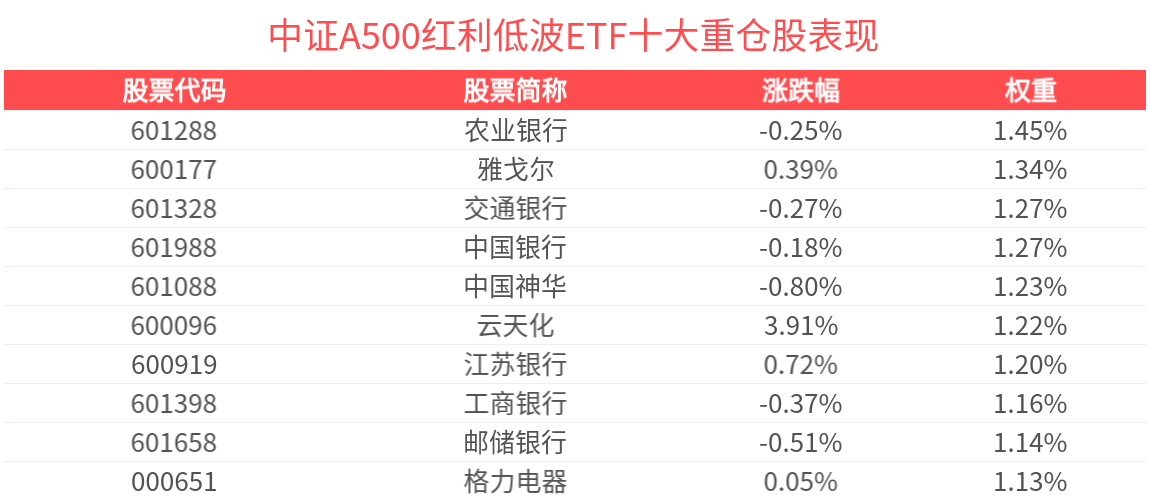
Core Viewpoint - The Zhongzheng A500 Dividend Low Volatility Index and its corresponding ETF have shown positive performance, with significant gains in constituent stocks and increasing leverage investments, indicating strong market interest and potential for continued growth [1][2]. Performance Summary - As of November 7, 2025, the Zhongzheng A500 Dividend Low Volatility Index rose by 0.60%, with notable increases in constituent stocks such as Jiangsu Guotai (10.01%) and Yuntianhua (3.91%) [1]. - The Zhongzheng A500 Dividend Low Volatility ETF (561680) has experienced a 1.07% increase, marking its fifth consecutive rise, with a latest price of 1.04 yuan [1]. - Over the past week, the ETF has accumulated a total increase of 1.28% [1]. Liquidity and Trading Activity - The ETF recorded a turnover rate of 1.85% during the trading session, with a total transaction volume of 3.7497 million yuan [1]. - The average daily trading volume over the past year was 27.316 million yuan [1]. - Leverage funds have been actively investing in the ETF, with net purchases for four consecutive days, peaking at 665,900 yuan in a single day, leading to a current financing balance of 56,200 yuan [1]. Return and Risk Metrics - Since its inception, the ETF has achieved a maximum monthly return of 3.37%, with an average monthly return of 3.37% and a winning probability of 73.91% [1]. - The maximum drawdown since inception is 3.42%, with a relative benchmark drawdown of 0.23% and a recovery period of 30 days [2]. Fee Structure and Tracking Accuracy - The management fee for the ETF is 0.50%, and the custody fee is 0.10% [2]. - The tracking error for the ETF year-to-date is 0.098%, which is the highest among comparable funds [2]. Index Composition - The Zhongzheng A500 Dividend Low Volatility Index is composed of 50 securities selected from the Zhongzheng A500 Index, focusing on those with high dividend yields and low volatility [2]. - As of October 31, 2025, the top ten weighted stocks in the index include Agricultural Bank of China (601288) and China Shenhua (601088), collectively accounting for 31.82% of the index [2].
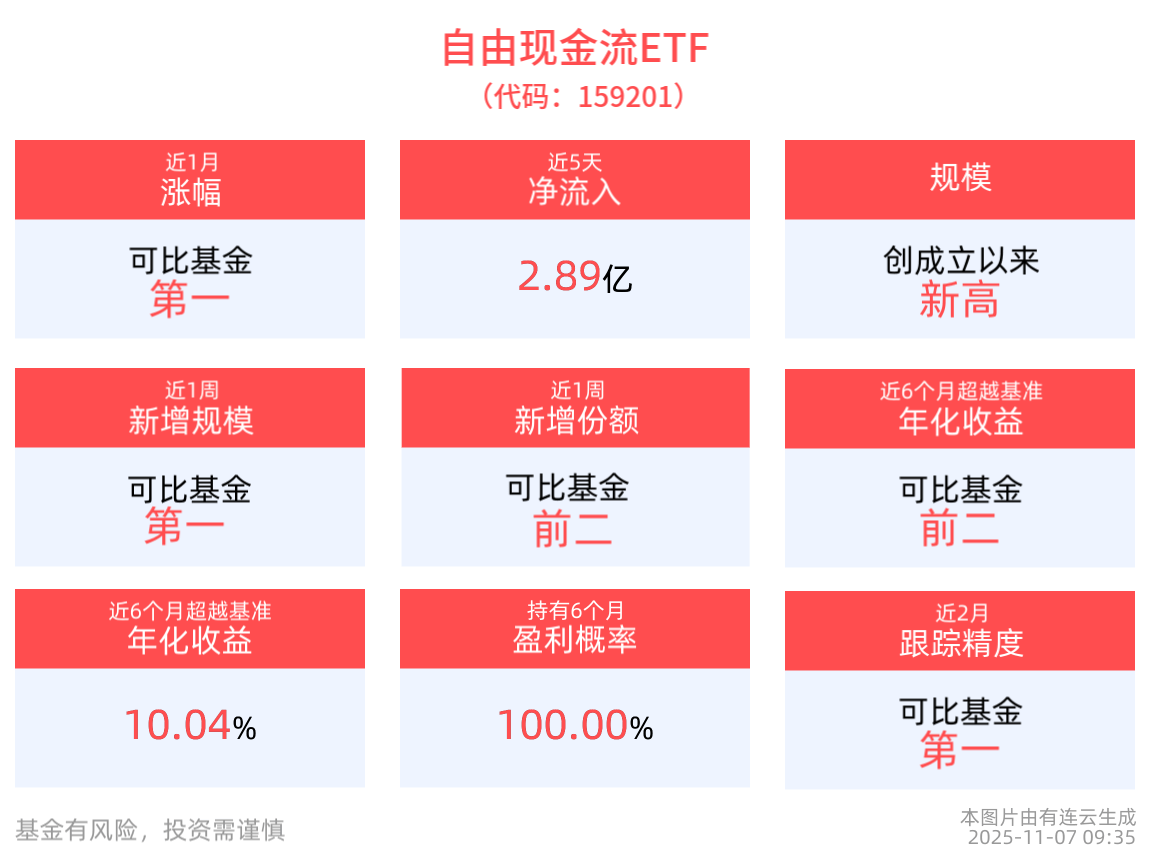
自由现金流ETF(159201)最新规模达55.98亿元,创成立以来新高,位居同类产品第一
Sou Hu Cai Jing· 2025-11-07 02:08
Core Insights - The Guozheng Free Cash Flow Index has decreased by 0.13% as of November 7, 2025, with mixed performance among constituent stocks [1] - The Free Cash Flow ETF (159201) has seen a decline of 0.33%, currently priced at 1.2 yuan [1] - The Free Cash Flow ETF has experienced significant inflows, with a total of 289 million yuan over the past five trading days [1] Performance Metrics - The Free Cash Flow ETF has increased by 24.49% in net value over the past six months [3] - The ETF's highest monthly return since inception is 7%, with an average monthly return of 3.2% during the rising months [3] - The maximum drawdown in the last six months is 3.65%, the smallest among comparable funds [3] Fund Characteristics - The Free Cash Flow ETF has a management fee of 0.15% and a custody fee of 0.05%, the lowest among comparable funds [3] - The tracking error over the past two months is 0.052%, indicating the highest tracking precision among similar funds [3] Top Holdings - As of October 31, 2025, the top ten weighted stocks in the Guozheng Free Cash Flow Index account for 54.79% of the index, including China National Offshore Oil Corporation and SAIC Motor [4] - The top ten stocks include: - China National Offshore Oil Corporation (9.87%) - SAIC Motor (8.71%) - Wuliangye (7.32%) - Gree Electric Appliances (6.54%) [6]
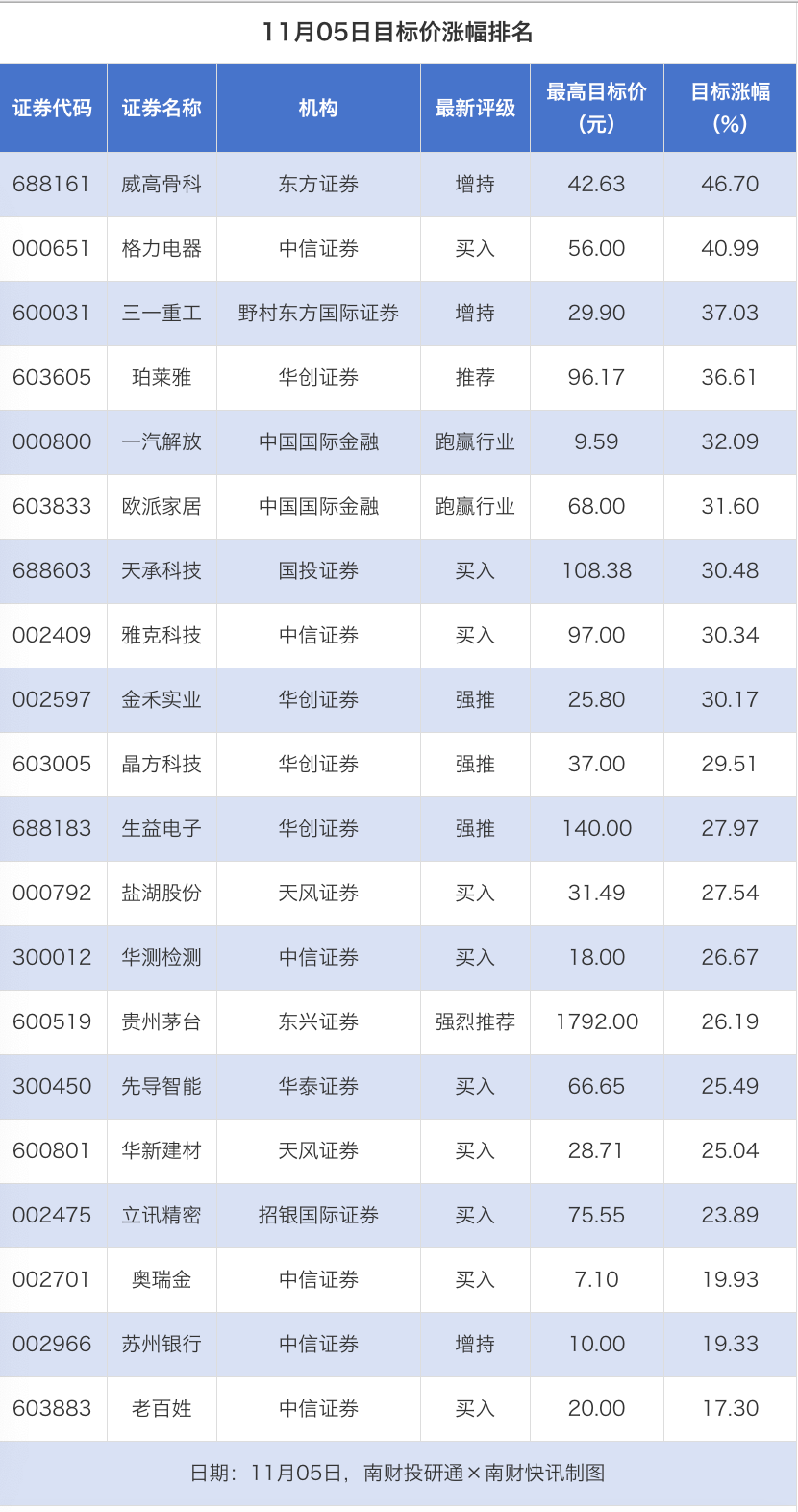
威高骨科、格力电器目标价涨幅超40%,上海沿浦评级被调低
2 1 Shi Ji Jing Ji Bao Dao· 2025-11-07 02:00
Core Viewpoint - The report highlights the target price increases for several listed companies, indicating strong potential growth in various sectors, particularly in medical devices, home appliances, and engineering machinery [2][4]. Group 1: Target Price Increases - Weigao Orthopedics, Gree Electric Appliances, and Sany Heavy Industry have the highest target price increases of 46.70%, 40.99%, and 37.03% respectively, indicating strong market confidence in these companies [2][4]. - The target prices for Gree Electric Appliances and Sany Heavy Industry are set at 56.00 yuan and 29.90 yuan respectively [4]. Group 2: Rating Adjustments - On November 5, Citic Securities upgraded the rating of Trina Solar from "Hold" to "Buy," reflecting increased optimism about the company's future performance [5][6]. - Additionally, the rating for Nengke Technology was also upgraded from "Hold" to "Buy" by Industrial Securities [5][6]. Group 3: New Coverage - Salt Lake Co. received a "Buy" rating from Tianfeng Securities, marking its first coverage, indicating a positive outlook for the agricultural chemical sector [7][8]. - Haoyang Co. was also newly covered with an "Increase" rating by Industrial Securities, suggesting potential growth in the specialized equipment industry [7][8].





China Consumer Durables_ White goods 3Q25 wrap_ Tough domestic comps well recognized by market, growth to be increasingly sup...
2025-11-07 01:28
Summary of Key Points from the Conference Call Industry Overview - **Industry**: China Consumer Durables, specifically the white goods sector - **Key Players**: Midea, Haier, Gree, Hisense Core Insights and Arguments 1. **Divergent Performance in 3Q25**: - Midea and Haier reported approximately 10% revenue and profit growth, exceeding expectations - Gree and Hisense experienced significant declines in profits, with Gree reporting a year-over-year profit decline of SD% [1][10] 2. **Domestic Market Dynamics**: - Split AC growth showed notable divergence, with Gree facing a sequential revenue decline while Midea, Haier, and Hisense reported revenue growth [1] - The market anticipates a deceleration in domestic growth into 4Q25 and 2026 due to a higher base, with expected shipment declines of 10% and 5% for major white goods [2][16] 3. **Pricing and Margins**: - Competition remains a key focus, particularly in the AC industry, with less competitive pricing observed compared to previous periods - Despite demand pressures, significant price cuts are not expected due to leading players' focus on profitability and lean inventory [3] 4. **Overseas Growth as a Key Driver**: - Overseas markets, particularly APAC and Europe, are expected to drive growth for Chinese white goods companies, supported by past investments in manufacturing and branding [4][6] 5. **Shareholder Returns**: - Current share prices imply an average dividend yield of 5% to 6% for covered white goods stocks, providing downside protection amid growth concerns [7] 6. **Future Outlook for Key Players**: - Midea and Haier are expected to continue leading the sector with positive growth, while Gree faces persistent pressure due to high domestic market exposure [8] Additional Important Insights 1. **Earnings Revisions**: - Earnings forecasts for Midea and Haier have been raised, while estimates for Gree and Hisense have been lowered to reflect recent performance [14] 2. **Management's Strategic Focus**: - Midea's management aims for revenue growth of MSD-HSD% CAGR from 2026 to 2028, with a focus on market share gains in refrigerators and washing machines, and margin improvements in AC [33][34] 3. **Investment in Technology**: - Midea plans to invest in AI and robotics, focusing on robotic home appliances and humanoid robots, indicating a strategic shift towards automation and advanced technology [34] 4. **Valuation Adjustments**: - Target prices for Midea and Haier have been adjusted based on updated earnings forecasts, reflecting a positive outlook for these companies [35] 5. **Market Sentiment**: - Consumer sentiment has pulled back, but property indicators in the US have shown improvement, suggesting a mixed outlook for consumer durables [31] This summary encapsulates the key points discussed in the conference call, highlighting the performance of major players in the white goods sector, market dynamics, and future growth strategies.
格力电器(000651):2025Q3收入端阶段性承压,盈利能力保持韧性
Tianfeng Securities· 2025-11-07 00:13
Investment Rating - The investment rating for Gree Electric Appliances is "Buy" with a 6-month outlook maintained [5]. Core Views - Gree Electric Appliances reported a revenue of 39.86 billion yuan in Q3 2025, a year-on-year decrease of 15.1%, and a net profit attributable to shareholders of 7.049 billion yuan, down 9.9% [1]. - The company is experiencing pressure in its air conditioning business, particularly in the central air conditioning segment, which saw a decline in sales due to decreased real estate activity [2]. - Gree is diversifying its product offerings to align with market trends towards health, comfort, energy efficiency, and smart appliances, including innovations in washing machines and refrigerators [3]. - Despite challenges, Gree's gross margin for Q3 2025 was 28.3%, with a net profit margin of 17.7%, indicating resilience in profitability [4]. Financial Summary - For the first three quarters of 2025, Gree achieved a total revenue of 137.18 billion yuan, down 6.5% year-on-year, and a net profit of 21.46 billion yuan, a decrease of 2.3% [1]. - The company has adjusted its net profit forecasts for 2025 to 30.37 billion yuan, reflecting a cautious outlook amid market conditions [4]. - Key financial metrics for 2023 to 2027 include projected revenues decreasing from 205.02 billion yuan in 2023 to 178.18 billion yuan in 2025, with a gradual recovery expected thereafter [10].