
地平线

Search documents
中国话语权获最强认可:美国认了,俄罗斯也点头了
Sou Hu Cai Jing· 2025-12-23 00:59
Core Viewpoint - The article discusses the transformation of global power dynamics over the past seven years, culminating in the recognition of China's central role in international affairs by both traditional adversaries and allies [2][35][46]. Group 1: Trade War and Economic Impact - The U.S. initiated tariffs on China in 2018 under the pretext of correcting trade imbalances and protecting intellectual property, but the actual outcome was counterproductive [6][7]. - China's exports did not collapse; instead, they accelerated transformation under pressure, while U.S. consumers bore most of the additional costs, leading to inflation and supply chain disruptions [8][9]. - By 2024, the U.S. economy faced significant challenges, including high fiscal deficits and slowing growth, prompting discussions within the White House to ease trade tensions with China [10][11][12]. Group 2: China's Industrial and Technological Advancements - China has developed a comprehensive, autonomous industrial and technological system, which has allowed it to emerge as a central player on the world stage [3][4]. - In 2024, China recorded a trade surplus exceeding $1 trillion, the highest in history, driven by robust manufacturing capabilities and technological innovation [22][23]. - China dominates the production of critical components, with over 80% of solar panels, 70% of lithium batteries, and 60% of electric vehicles manufactured domestically [24][25]. Group 3: Global Recognition and Strategic Partnerships - The acknowledgment of China's role in global governance has been reinforced by statements from leaders of both Russia and the U.S., indicating a shift in international attitudes towards China [35][46]. - Russia's reliance on China for economic stability amid Western sanctions highlights the strategic partnership that has developed, with China playing a crucial role in supporting the Russian economy [41][42]. - The need for cooperation with China has been recognized even by U.S. officials who previously held anti-China stances, indicating a pragmatic shift in U.S. foreign policy [46][47]. Group 4: China's Role in Global Governance - The article emphasizes that global issues cannot be effectively addressed without China's participation, as seen in various international negotiations and crisis management efforts [48][49]. - China's increasing influence is reflected in its growing share of global payments and its role in international financial stability, with the RMB becoming the third-largest payment currency by 2025 [82]. - The article concludes that China's sustained efforts in production, research, negotiation, and cooperation have led to a significant shift in global power dynamics, establishing it as an indispensable player in international affairs [87][88].

专访地平线副总裁吕鹏:做不好端到端就做不好VLA
2 1 Shi Ji Jing Ji Bao Dao· 2025-12-23 00:45
Core Insights - The domestic market for passenger cars priced above 200,000 yuan accounts for 30% of the market share, while those below 130,000 yuan hold a significant 50% share, indicating a vast opportunity for companies like Horizon and Momenta to capture market share in the autonomous driving sector [1][13] - Horizon has launched its Horizon SuperDrive (HSD) solution based on the Journey 6 series chip, entering mass production with significant activation numbers shortly after the launch of new models [1][14] - The company aims to make urban assisted driving technology accessible to vehicles priced at 100,000 yuan, targeting a production scale of 10 million units within the next 3-5 years [2][14] Market Dynamics - The market for vehicles priced below 130,000 yuan is largely untapped in terms of urban assisted driving features, attracting various autonomous driving companies to accelerate their market strategies [1][13] - Horizon's HSD solution has seen rapid adoption, with over 12,000 activations within two weeks of launching two new models, indicating strong market demand [1][14] Technological Development - Horizon is focusing 90% of its R&D resources on end-to-end technology, which is seen as crucial for the future of autonomous driving [2][14] - The company believes that a solid end-to-end foundation is essential for integrating new modalities and enhancing product performance [15][21] Competitive Landscape - Companies lacking chip development capabilities are increasingly collaborating with Horizon, highlighting the company's strong position in the market [2][14] - Horizon's commitment to an end-to-end approach distinguishes it from competitors who are exploring various models, such as VLA [2][21] Technical Insights - The end-to-end system developed by Horizon is one of the few complete systems available, with a focus on seamless information transfer and high-dimensional feature integration [16][17] - The distinction between one-stage and two-stage end-to-end systems is critical, with the former providing a more cohesive and intuitive driving experience [18][19] Future Directions - Horizon plans to enhance its product experience and safety, emphasizing the importance of market acceptance over new terminologies and concepts [11][22] - The company is open to integrating VLA technology in the future but maintains that a robust end-to-end system is foundational for success [24]
智能驾驶行业专题:Robo-X的产业趋势、市场空间和产业链拆解
2025-12-22 15:47
Summary of Robo-X Industry Trends and Market Analysis Industry Overview - The L4 autonomous driving market has significant potential, with a projected global market size reaching trillions by 2030. The domestic market for Robot Taxi and Robot Van is estimated at 236 billion yuan and 164.5 billion yuan, respectively. Other segments like unmanned trucks, buses, and sanitation vehicles also show promise [1][2] Core Insights and Arguments - Government policies worldwide are easing restrictions on autonomous driving and establishing regulatory frameworks, which is accelerating the development of smart driving technologies. Cities like Beijing, Shanghai, Guangzhou, and Shenzhen have initiated ROS services, with Wuhan and Chongqing also opening related services [1][6] - Reinforcement learning and world models are foundational technologies for L4 autonomous driving, addressing issues of data scarcity and module dependency in traditional imitation learning, thereby enhancing the system's generalization and decision-making capabilities [1][8] - The operational cost advantage of Robotaxi is notable, with costs as low as 0.81 yuan per kilometer without a safety driver, which is lower than traditional fuel and electric ride-hailing services. Profitability is expected when the fleet size reaches 1,000 vehicles [1][14] Market Segmentation and Key Players - In the RoboTaxi sector, key players include WeRide, Pony.ai, and Loong Air. The RoboVan segment features companies like 90 Smart, New Stone Age, and others, focusing on last-mile delivery efficiency [3][4] - The Robotruck market is projected to reach 90 billion yuan by 2030, with significant collaboration between manufacturers, autonomous driving companies, and logistics firms [3][22] - The RoboBus segment is being developed by companies like WeRide and Qizhou Zhihang, with potential market sizes of 15-35 billion yuan based on current bus sales [23] - The Robot Sweeper market, addressing labor shortages, is also expanding, with a potential market size of 11.3-22.5 billion yuan [24] Investment Opportunities - Recommended companies in vehicle sales and operations include Pony.ai, WeRide, and XPeng Motors. In the components sector, companies like Sutong Juchuang and Hesai Technology are highlighted, along with data processing firms such as Coboda and Horizon Robotics [5][25] Policy Support and Technological Advancements - Global regions, including the Middle East and Southeast Asia, are progressively relaxing regulations on autonomous driving, which is crucial for industry growth. The development of L4 technology is supported by advancements in reinforcement learning and world models, leading to reduced component costs [2][10] Economic Viability and Future Projections - The Robotaxi market is expected to grow significantly, with a projected fleet size of 7,000 vehicles by 2025, capturing a 0.6% market share in shared mobility. The potential for Robotaxi to enhance urban traffic efficiency and provide a safer driving experience is substantial [11][12] - The cost structure of Robotaxi shows that while manufacturing costs are about three times that of traditional ride-hailing vehicles, the operational costs are significantly lower, leading to a favorable economic outlook [13] Conclusion - The autonomous driving industry is on the cusp of commercialization, driven by supportive policies, technological advancements, and cost reductions. The market for various segments, including Robotaxi, RoboVan, Robotruck, and others, presents numerous investment opportunities as companies continue to innovate and expand their services [10][20]
大停电后自动驾驶现出原形?Waymo趴窝,马斯克贴脸嘲讽
Sou Hu Cai Jing· 2025-12-22 14:22
Core Viewpoint - The recent power outage in San Francisco exposed significant vulnerabilities in autonomous driving technology, particularly highlighting the shortcomings of Waymo's Robotaxi service during a traffic light failure [1][2][3]. Group 1: Incident Overview - A widespread power outage caused all traffic lights in San Francisco to fail, leading to a chaotic traffic situation [1]. - Waymo's Robotaxi, known as Waymo Driver, failed to adapt to the situation, resulting in multiple vehicles stopping and becoming obstacles on the road [2][3]. Group 2: Public Reaction and Criticism - The inability of Waymo Driver to respond appropriately to the traffic light failure drew widespread criticism, with many mocking the service for its lack of basic driving rule comprehension [5][10]. - Waymo's response included halting operations in San Francisco and collaborating with municipal authorities to restore service [10]. Group 3: Competitive Landscape - The incident provided an opportunity for competitors like Tesla to highlight their own autonomous driving capabilities, with Tesla's Full Self-Driving (FSD) reportedly handling the situation more effectively [10][14]. - Elon Musk leveraged the incident to promote Tesla's technology, contrasting it with Waymo's failures and suggesting that Waymo's approach is less effective [14][19]. Group 4: Technical Approaches - Waymo's technology relies heavily on high-definition maps and a rule-based system, which limits its flexibility in unexpected scenarios [17][23]. - In contrast, Tesla employs a more adaptable AI-based approach, allowing for better handling of atypical driving situations, as demonstrated during the power outage [19][23]. Group 5: Future Implications - The incident raises questions about the future of the Robotaxi market, with Tesla potentially poised to challenge Waymo's lead as it prepares to deploy its own autonomous taxi service without a safety driver [21][24]. - Industry experts suggest that the reliance on AI for autonomous driving is crucial for achieving true safety and flexibility, indicating a potential shift in the technological paradigm [23][26].

地平线吕鹏:端到端是基石,做不好端到端就做不好VLA
2 1 Shi Ji Jing Ji Bao Dao· 2025-12-22 13:23
Core Viewpoint - The article emphasizes the importance of end-to-end technology in the development of autonomous driving solutions, highlighting Horizon's commitment to this approach as a foundation for future advancements in the industry. Market Overview - In the first three quarters of this year, the market share for passenger cars priced above 200,000 yuan accounted for 30%, while those below 130,000 yuan reached 50%, with many lower-priced models lacking urban auxiliary driving features [1]. - This gap in the market is attracting companies like Horizon and Momenta to accelerate their strategies to capture market opportunities [1]. Product Development - Horizon launched its Horizon SuperDrive (HSD) solution based on the Journey 6 series chips in April, entering mass production by November with the launch of the Exeed ET5 and Deep Blue L06 models, achieving over 12,000 activations within two weeks [1][2]. - The company aims to make urban auxiliary driving features available in vehicles priced around 100,000 yuan, targeting a production scale of ten million units in the next 3-5 years [2]. Technological Strategy - Horizon is one of the few companies firmly committed to the end-to-end approach in autonomous driving, believing that a solid end-to-end foundation is essential for integrating new modalities and enhancing product performance [3][7]. - The company has invested 90% of its R&D resources into developing and implementing end-to-end technology since the end of 2024 [2]. Technical Insights - Horizon's end-to-end system is described as a complete solution, contrasting with two-stage systems that may lose information during processing [4][5]. - The company believes that a robust end-to-end model is crucial for achieving high performance and seamless driving experiences, akin to human driving instincts [6][9]. Future Directions - Horizon's future plans include enhancing its end-to-end technology while exploring the integration of world models and reinforcement learning as auxiliary components to improve overall system performance [9][10]. - The focus remains on product experience and safety, with an emphasis on market acceptance rather than getting caught up in new terminologies or concepts [9].
硅谷停电干崩谷歌Robotaxi,马斯克贴脸热嘲:特斯拉就没事
3 6 Ke· 2025-12-22 09:09
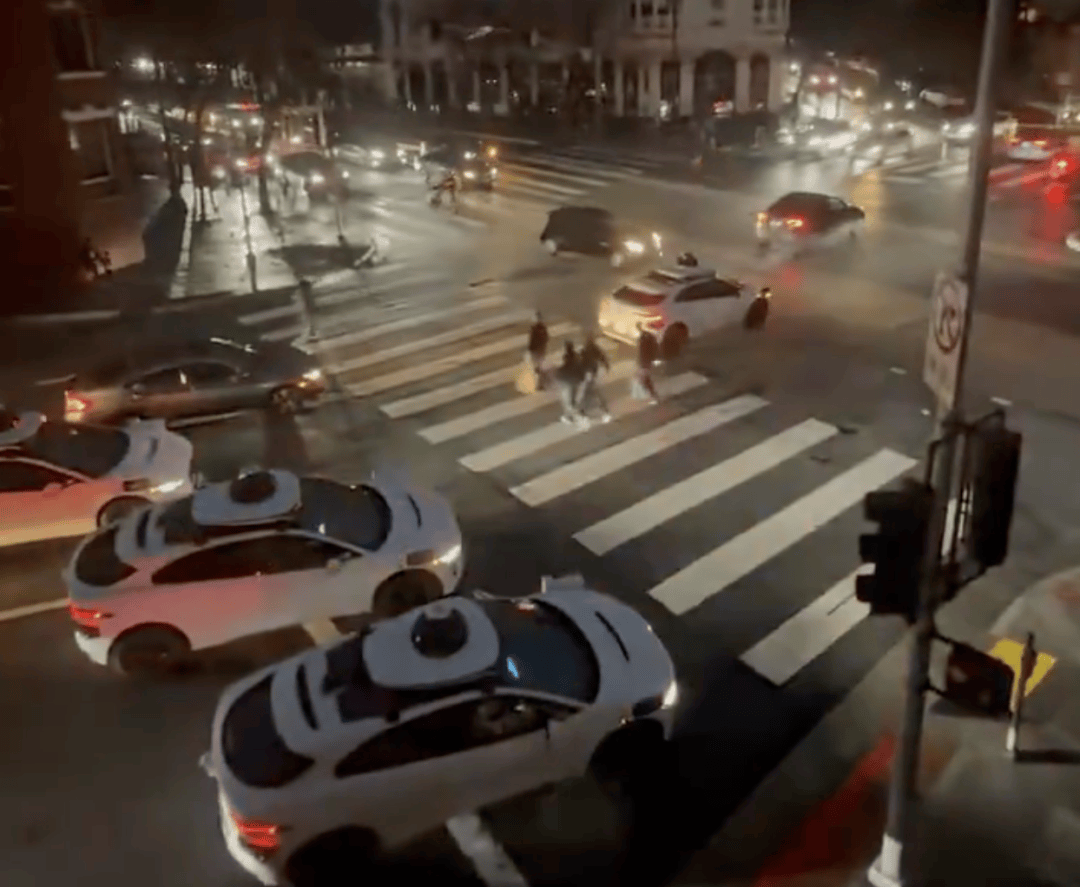
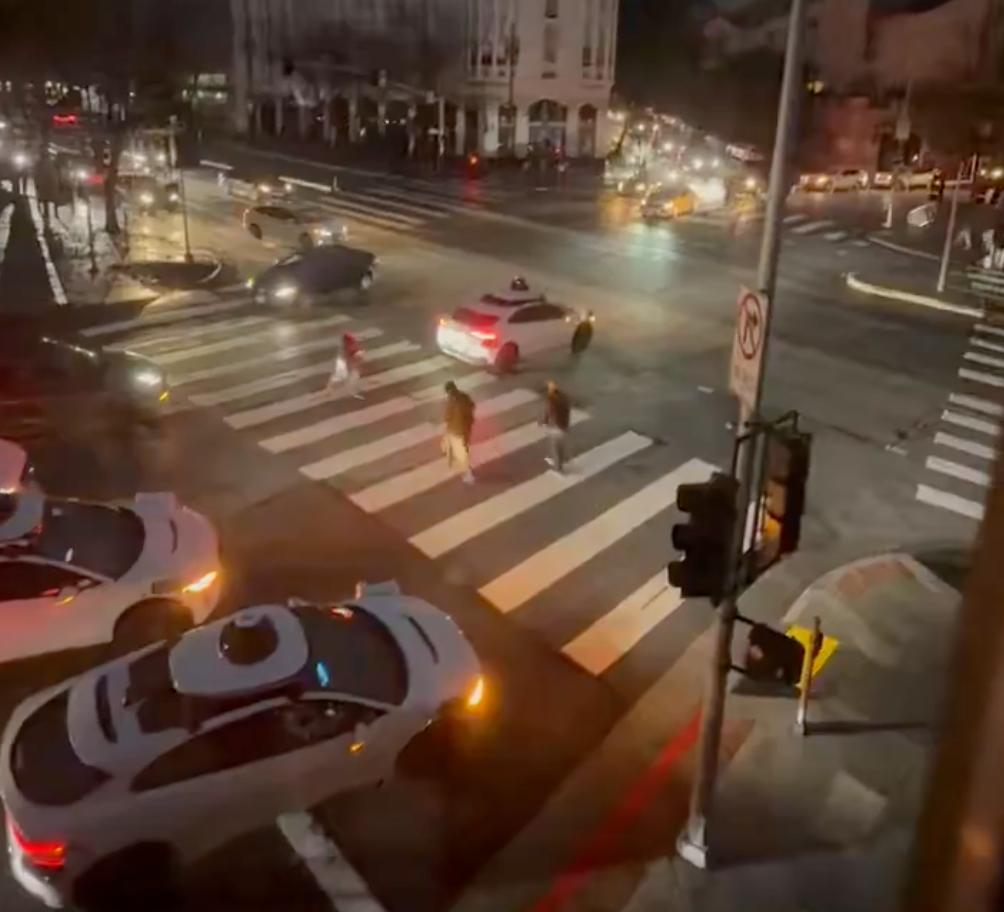
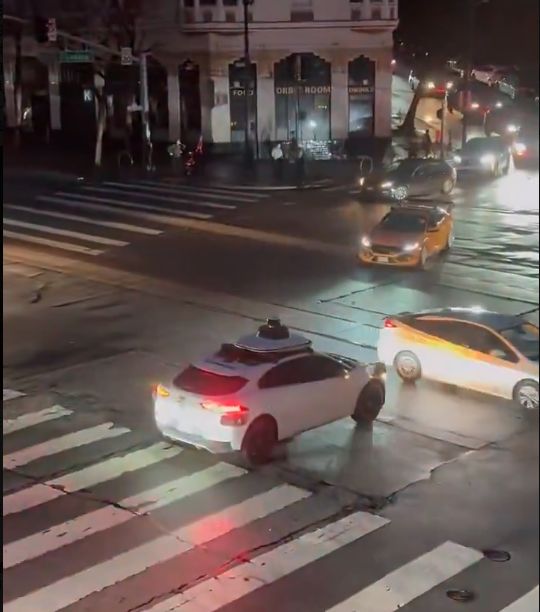
一次大规模停电,暴露了全球无人车一哥的短板。 被曝估值冲上千亿美元没几天,Waymo就因为当地停电全面停摆了,挡在路中间,造成城市拥堵,相关视频疯传。 马斯克第一时间"补刀",表示自家Robotaxi就没受到影响。看上去,特斯拉代表的L2渐进式路线,似乎小胜了一局……反正马哥认为这就是彰显优越性的 时刻。 在Robotaxi战场上,今年马斯克的一举一动,都把自动驾驶之争推向了新的高潮,大洋两岸更多玩家开始入场,沿着「特斯拉路线」前进,与「Waymo路 线」争夺自动驾驶圣杯。 所以问题是,停电是如何影响Waymo Robotaxi的? 当地停电,Waymo停工 Waymo停摆源自一场火灾,旧金山变电站失火,导致当地大规模停电,据说直接影响到13万居民用电。 更要命的是,因为大范围停电,马路上的红绿灯都不亮了,引发Waymo无人车全面停摆。 真是屋漏偏逢连夜雨,本就混乱的交通,这下因为无人车挡在路上变得更堵了。Waymo只好连夜找拖车运走了无人车,同时宣布在当地停运,目前还不 清楚什么时候重新上线。 所以为啥停电会导致Waymo停运?首先是官方回应暴露的运营漏洞。 Waymo在官方声明中解释称,Waymo的Rob ...
中尾部智驾玩家,困在“赢者通吃”的焦虑里
Di Yi Cai Jing· 2025-12-22 09:03
Core Viewpoint - The sudden shutdown of Haomo Zhixing highlights the intense competition and market consolidation in the autonomous driving industry, where leading companies are rapidly advancing while mid-tier players struggle to survive [1][2][3]. Group 1: Company Developments - Haomo Zhixing announced a complete shutdown on November 22, 2025, due to its poor operational status, despite previously being valued over $1 billion [2]. - The company faced multiple failures, including hardware selection issues, outdated software algorithms, and indecisive management, leading to delays in its urban advanced driving solutions compared to competitors [2]. - Long-term partnerships with major automotive manufacturers have shifted, with Haomo Zhixing losing support from Great Wall Motors, which has turned to other suppliers for its advanced driving solutions [2]. Group 2: Industry Dynamics - The autonomous driving sector is witnessing a significant divide, with leading companies like Huawei and Momenta rapidly gaining market share, while mid-tier firms face existential threats [3][5]. - Huawei's autonomous driving system has surpassed 1 million units, with a market share of 27.8% in the NCA segment, indicating strong demand for its technology [5]. - The industry is moving towards a "winner-takes-all" scenario, with predictions that only a few players will remain by 2027, emphasizing the need for data-driven approaches and collaboration among companies [7][10]. Group 3: Competitive Strategies - Mid-tier companies are exploring differentiated survival strategies, including diversifying into sectors like unmanned delivery and agriculture, as well as seeking international partnerships [4][5]. - There is a trend among mid-tier firms to form deep partnerships with ecosystem players, as seen with significant investments and acquisitions aimed at strengthening their market positions [9][10]. - The competitive landscape is evolving, with a consensus that while some consolidation is inevitable, the final outcome may not lead to a complete monopoly, especially in software solutions where differentiation remains crucial [10].
旧金山突发大停电,红绿灯熄灭致大量Waymo趴窝
Guan Cha Zhe Wang· 2025-12-22 08:57
Core Viewpoint - Multiple companies have publicly questioned Waymo's technological approach to Robotaxi following a significant incident in San Francisco where a power outage caused traffic disruptions and highlighted the limitations of Waymo's system [1][3][4]. Group 1: Incident Overview - On December 20, a fire at a PG&E substation led to a power outage affecting over 30% of San Francisco, impacting more than 130,000 residents [1]. - The outage caused traffic lights to go dark, resulting in Waymo's Robotaxis becoming immobilized in the streets, contributing to traffic chaos [1][3]. Group 2: Industry Reactions - Executives from companies like Tesla, Horizon, and Xpeng have raised concerns about Waymo's reliance on high-definition maps and pre-programmed rules, suggesting that this approach is inadequate for handling unexpected situations [3][6][8]. - Elon Musk stated that Tesla's Robotaxi was unaffected during the power outage, contrasting it with Waymo's performance [4][6]. Group 3: Technological Critique - Waymo's L4 Robotaxi technology is criticized for its rigid response to unforeseen events, as evidenced by a previous incident where it failed to stop for a school bus [6]. - In contrast, Tesla and other companies advocate for AI-driven models that learn from vast amounts of data, aiming for a more adaptable and robust autonomous driving solution [6][8]. Group 4: Future Directions - Horizon's CEO emphasized the need for AI advancements to achieve true safety in autonomous driving, arguing that relying on rules and infrastructure is insufficient [8][10]. - Xpeng's senior director highlighted the importance of developing vehicles that can understand and react to real-world scenarios like a human driver, indicating a shared vision with Tesla regarding the future of Robotaxi technology [10][13].

中尾部智驾玩家,困在“赢者通吃”的焦虑里
第一财经· 2025-12-22 08:53
Core Viewpoint - The article discusses the significant challenges faced by mid-tier autonomous driving companies in the context of a rapidly consolidating industry, highlighted by the sudden shutdown of a once-promising unicorn, Haomo Zhixing, and the contrasting success of leading players like Huawei and Momenta [4][5][7]. Group 1: Industry Dynamics - In 2025, the autonomous driving industry experienced a harsh competitive landscape, with leading companies aggressively pursuing market share, leaving little room for smaller players [3][4]. - The industry is witnessing a "winner-takes-all" scenario, where top players are expected to dominate, while mid-tier companies struggle to find their place [9][11]. - The market is increasingly favoring companies that can integrate their technologies and maintain control over their intellectual property, as seen in the shift towards "white box" solutions [5][6][12]. Group 2: Company-Specific Insights - Haomo Zhixing, founded in 2019 and once valued over $1 billion, faced operational failures due to poor hardware choices, outdated software algorithms, and indecisive management, leading to its abrupt halt in operations [4][5]. - Mid-tier companies, like the one represented by Zhang Li, are exploring alternative markets and applications, such as unmanned delivery vehicles and international collaborations, to differentiate themselves [6][12]. - Leading companies like Huawei and Momenta are achieving significant milestones, with Huawei's autonomous driving technology being integrated into over 100,000 vehicles and Momenta collaborating with more than 160 models [7][9]. Group 3: Future Outlook - The consensus among industry experts is that the autonomous driving sector will continue to consolidate, with predictions that only a few key players will remain by 2027 [11][12]. - There is a debate on whether the industry will ultimately see a "winner-takes-all" outcome, with some arguing for a more diversified ecosystem to mitigate risks associated with having too few dominant players [12][13]. - The potential for standardization in hardware, particularly in autonomous driving chips, is recognized, while software solutions may retain diversity as companies seek to maintain competitive advantages [13].

中尾部智驾玩家,陷在“赢者通吃”的焦虑里 | 智驾中场战事
Di Yi Cai Jing Zi Xun· 2025-12-22 07:19
Core Viewpoint - The sudden shutdown of Haomo Zhixing highlights the intense competition and market consolidation in the autonomous driving industry, where leading companies are rapidly advancing while mid-tier players struggle to survive [1][2][3]. Group 1: Company Developments - Haomo Zhixing announced a complete shutdown on November 22, 2025, due to its poor operational status, despite previously being valued at over $1 billion [2]. - The company faced multiple failures, including hardware selection issues, outdated software algorithms, and indecisive management, leading to delays in its urban advanced driving solutions compared to competitors [2]. - Long-term partnerships with major automotive manufacturers have shifted, with Haomo Zhixing losing support from Great Wall Motors, which has turned to other suppliers for its advanced driving solutions [2]. Group 2: Market Dynamics - The autonomous driving industry is experiencing a significant divide, with leading companies like Huawei and Momenta rapidly gaining market share, while mid-tier firms face existential threats [3][5]. - Huawei's autonomous driving system has surpassed 1 million units, with a market share of 27.8% in the NCA segment, indicating strong demand for advanced driving technologies [5]. - The competitive landscape is shifting towards a "winner-takes-all" scenario, where only a few players are expected to survive, as highlighted by predictions from industry leaders [7][10]. Group 3: Strategic Responses - Mid-tier companies are seeking differentiation by exploring new markets and applications, such as autonomous delivery vehicles and international collaborations [4][5]. - There is a trend among mid-tier firms to form strategic partnerships and investments to enhance their competitive positioning, as seen with companies like Aito and their acquisitions [9][10]. - Despite the prevailing narrative of consolidation, some mid-tier executives believe there is still room for diverse survival strategies within the industry, suggesting that the market is not yet fully consolidated [9][10].