拜耳

Search documents
新起点、新动能、新机遇——国际人士瞩目中央经济工作会议为世界注入确定性
Jing Ji Ri Bao· 2025-12-14 22:30
Core Viewpoint - The recent Central Economic Work Conference in Beijing has set the direction for China's economy, aiming to provide stability and opportunities for the global economy amidst uncertainties [1][2]. Economic Outlook - The conference highlighted that the main economic and social development goals for 2025 will be successfully completed, marking a strong start for the new "15th Five-Year Plan" [2]. - International organizations have raised China's economic growth forecasts for 2025 by 0.4, 0.2, 0.1, and 0.1 percentage points respectively, reflecting growing confidence in China's economic resilience [3]. Policy Focus - The conference emphasized the need to fully tap into economic potential, combining policy support with reform and innovation, and focusing on both material and human investment [3]. - Key tasks for the upcoming year include innovation-driven development, expanding domestic demand, and enhancing the quality of life for citizens [4][9]. New Growth Drivers - The conference underscored the importance of innovation and the establishment of international technology innovation centers in major regions like Beijing, Shanghai, and the Guangdong-Hong Kong-Macau Greater Bay Area [7]. - A strong domestic market is identified as a strategic foundation for modernization, with specific actions to boost consumption and stabilize investment [9]. Global Cooperation - The launch of the Hainan Free Trade Port is a significant step towards high-level opening up and promoting an open world economy [10]. - The conference outlined eight key tasks for the next year, with a strong emphasis on expanding international cooperation and optimizing free trade zones [10][11]. Market Potential - China's expanding market access in various sectors, including finance, automotive, and digital services, is creating a more predictable and transparent environment for foreign investment [11]. - The growth of e-commerce and logistics in China is facilitating easier access for international products, enhancing opportunities for global businesses [11][12].
寻找未被满足的临床需求(4):FXI抑制剂有望成为下一代抗凝药物
Guoxin Securities· 2025-12-14 15:01
Investment Rating - The report maintains an "Outperform" rating for the industry [1] Core Insights - The global anticoagulant market exceeds $20 billion, primarily driven by stroke prevention in atrial fibrillation patients, with other indications including VTE prevention after knee/hip replacement and prevention of ischemic complications in myocardial infarction [2][5] - FXI/FXIa inhibitors are expected to become safer anticoagulants, as they target the intrinsic pathway of coagulation, potentially reducing bleeding risks while maintaining efficacy [2][21] - Several FXI/FXIa inhibitors are in clinical stages, with promising safety profiles demonstrated in various indications, including Bayer's asundexian achieving key clinical endpoints in secondary stroke prevention [2][26] - FXI small nucleic acid drugs may offer differentiated competitive advantages, with early-stage clinical data showing effective FXI activity suppression and potential for improved patient compliance [2][26] Summary by Sections Anticoagulant Drugs: Applications and Market Size - Anticoagulants are used in various medical scenarios, with a global market size exceeding $20 billion, driven by stroke prevention in atrial fibrillation patients [5][7] - Current anticoagulants include DOACs and low molecular weight heparins, with existing drugs presenting bleeding risks alongside their efficacy [5][21] FXI Inhibitors as Next-Generation Anticoagulants - FXI inhibitors are positioned to challenge standard treatments, with clinical trials indicating superior safety profiles compared to existing DOACs [2][26] - Notably, Bayer's asundexian has shown efficacy in secondary stroke prevention, marking a significant advancement in the field [2][69] Domestic FXI Small Nucleic Acid Drug Development Progress - Domestic companies are advancing in FXI small nucleic acid drug development, with promising early clinical results indicating effective FXI suppression and potential for improved dosing schedules [2][26] Investment Recommendations - FXI/FXIa inhibitors are projected to represent an upgrade and complement to existing anticoagulants, with a potential market space exceeding $10 billion [2][26] - The report suggests focusing on companies like HengRui Medicine, which is leading in domestic FXI monoclonal antibody development [2][26]





新华全媒头条|新起点、新动能、新机遇——国际人士瞩目中央经济工作会议为世界注入确定性
Xin Hua She· 2025-12-14 14:38
Core Insights - The Central Economic Work Conference in Beijing has set a clear direction for China's economy, aiming to provide stability and growth opportunities for both domestic and global markets [1][2][3] Group 1: Economic Outlook - The conference highlighted that China's economic goals for 2025 are on track, with a successful conclusion to the "14th Five-Year Plan" and a promising start to the "15th Five-Year Plan" [2] - International organizations have raised China's economic growth forecasts for 2025 by 0.4, 0.2, 0.1, and 0.1 percentage points, reflecting growing confidence in China's economic resilience [3] - The emphasis on expanding domestic demand is seen as a key strategy to stabilize the economy amid external uncertainties [3][7] Group 2: Innovation and New Growth Drivers - The conference underscored the importance of innovation and talent development, with specific plans to establish international technology innovation centers in major regions [5] - New growth drivers are expected to emerge from high-tech and green industries, with a focus on sustainable development and enhanced international competitiveness [5][6] - The commitment to a green transition is evident, with initiatives aimed at energy efficiency and carbon reduction, positioning China as a leader in global climate action [6] Group 3: Global Cooperation and Market Expansion - The upcoming launch of the Hainan Free Trade Port is a significant step in China's commitment to high-level opening up and global economic cooperation [8] - The conference outlined eight key tasks for the coming year, with a strong focus on expanding foreign cooperation and optimizing trade agreements [9] - China's growing domestic market and digital infrastructure are creating new opportunities for international businesses, enhancing access to Chinese consumers [10]
德国企业,正在疯狂涌入中国
Xin Lang Cai Jing· 2025-12-13 07:49
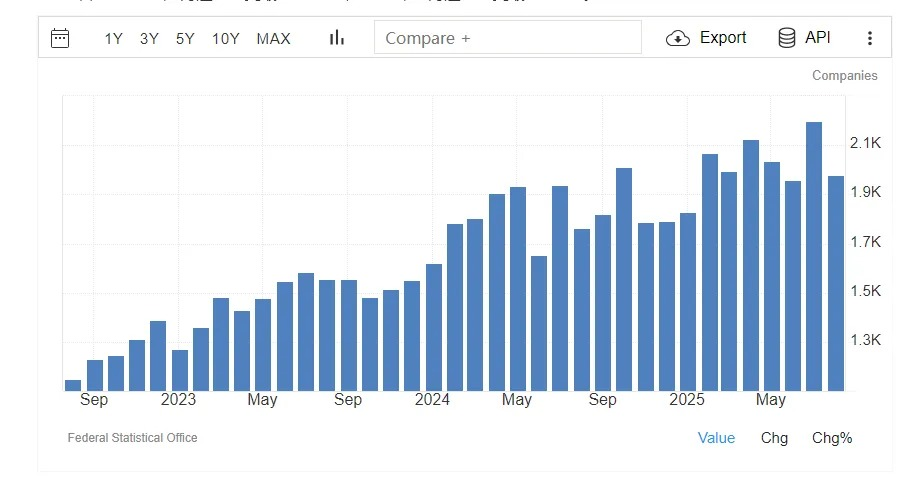
Core Viewpoint - German companies are increasingly relocating to China, marking a significant industrial migration that is accelerating over time [1][28]. Group 1: German Companies in China - Over 560 German companies have gathered in Taicang, Jiangsu, with more than 60 being renowned "hidden champions," accounting for over 10% of the total [2][29]. - The first 100 German companies took 14 years to establish in Taicang, while the next 100 (from 400 to 500) only took two years [3][30]. - German investments in Taicang exceed $6 billion, with annual industrial output surpassing 67 billion yuan [4][30]. Group 2: Major Investments and Developments - Notable investments include Volkswagen's announcement of a €2.5 billion investment to expand its production and innovation center in Hefei [5]. - Bayer plans to invest 600 million yuan in a new supply center in Jiangsu [5]. - Mercedes-Benz is investing €1 billion in a new autonomous driving research institute in Beijing [5]. - Volkswagen is investing ¥16.8 billion to establish a new smart electric vehicle R&D center in China while closing three factories in Germany [5]. Group 3: Challenges Faced by German Companies - In 2024, the number of bankruptcies in Germany reached 22,000, the highest in a decade, with a 12% year-on-year increase in the first half of 2025 [7][32]. - Major companies like Gerhard, Flabeg, and Webasto have declared bankruptcy, while others like Porsche are closing divisions to cut costs [9][34]. - The IFO Institute's survey indicates that German industrial companies' self-assessed competitiveness has hit a 31-year low, with 36.6% of respondents feeling disadvantaged compared to non-EU competitors [35]. Group 4: Factors Driving Migration - Rising energy costs, particularly due to the Green Party's policies, have led to a 148% increase in industrial electricity prices in Germany, making it 3.8 times higher than in China [37][41]. - The closure of nuclear and coal power plants has forced German industries to rely on imported electricity, resulting in soaring energy costs [41][40]. - The U.S. tariffs on EU goods have further impacted German exports, with a 6.5% decline in exports to the U.S. in the first eight months of the year [43][44]. Group 5: Strategic Advantages of Relocation - The migration of German companies to China is not merely a cost-driven relocation but a strategic choice to integrate into a more dynamic "super ecosystem" [45]. - The "innovation cost" advantage in China allows for faster technology iteration cycles, crucial for the electric vehicle market [15][48]. - The "system cost" advantage in China provides access to a complete supply chain, skilled labor, and efficient logistics, reducing overall operational costs [18][49]. - The "future cost" advantage positions China as a leader in global manufacturing, with a 31% share of global manufacturing value added [50][52]. Group 6: Future Outlook - German companies are not just relocating but are actively participating in shaping the future of industrial standards in China, as seen with BMW's investment in hydrogen fuel cell technology [52]. - The bilateral trade between Germany and China reached €185.9 billion in the first nine months of the year, with Germany accounting for 50% of EU investments in China over the past five years [24][53]. - The ongoing migration of German companies is viewed as a long-term strategic choice rather than a temporary measure, with many planning further investments in China [25][53].

X @Bloomberg
Bloomberg· 2025-12-12 11:50
A huge rally in Bayer shares extended this week as investors pounce on signs the long-running weedkiller litigation could be largely resolved in 2026 https://t.co/SBFzjpwAeU ...

创制农药行业专题:中国创制农药有望迎来“Me too ”到“Me better ”跨越
Guoxin Securities· 2025-12-12 11:21
Investment Rating - The report rates the pesticide industry as "Outperform the Market" [1][5] Core Insights - The Chinese pesticide industry is expected to transition from "Me too" to "Me better" in terms of innovation and product development [1][2] - The global pesticide market is projected to reach approximately $77.2 billion in 2024, with a compound annual growth rate (CAGR) of 2.35% over the next decade [1][13] - Non-patented pesticides dominate the market, accounting for 93% of the global pesticide market share, while patented pesticides hold only 7% [1][14] Summary by Sections Pesticide Market Overview - The global pesticide market is expected to be approximately $77.2 billion in 2024, with agricultural pesticides making up $70.1 billion and non-agricultural pesticides $7.1 billion [1][13] - The market share of herbicides, fungicides, and insecticides in the global crop protection market is 47.20%, 24.96%, and 24.97% respectively [1][13] New Pesticide Development Challenges - The difficulty of developing new pesticides has increased significantly, with the average cost of bringing a new pesticide to market now around $300 million and taking approximately 12 years [1][45] - The number of new active ingredients introduced globally every decade has decreased, indicating a growing challenge in pesticide innovation [1][43] China's Pesticide Industry Strength - China has become the world's largest pesticide producer and exporter, with nearly 70% of global active ingredient production and 90% of its production being exported [2][2] - From 2020 to 2024, China accounted for 51.61% of the new pesticides developed globally, establishing itself as a key player in pesticide innovation [2][2] Investment Recommendations - The report recommends focusing on domestic pesticide companies that are actively advancing new pesticide development, including: - Yangnong Chemical: Holds 12 new pesticides with complete independent intellectual property rights [3][4] - Lier Chemical: Promoting patented plant immune activator [3][4] - Limin Chemical: Collaborating with BASF to apply AI in pesticide development [3][4] - Jiangshan Chemical: Preparing for the industrialization of a new herbicide [3][4] Key Company Profit Forecasts - Yangnong Chemical: Rated "Outperform the Market" with an estimated EPS of 3.33 in 2025 and a PE ratio of 19.7 [4] - Lier Chemical: Rated "Outperform the Market" with an estimated EPS of 0.62 in 2025 and a PE ratio of 21.0 [4] - Limin Chemical: Rated "Outperform the Market" with an estimated EPS of 1.26 in 2025 and a PE ratio of 12.7 [4] - Jiangshan Chemical: Rated "Outperform the Market" with an estimated EPS of 1.41 in 2025 and a PE ratio of 16.1 [4]


特朗普神助攻!欧洲终于做出选择,马克龙之后,又有欧洲政要访华
Sou Hu Cai Jing· 2025-12-12 05:32
Group 1 - The recent U.S. national security strategy document sharply criticizes Europe, stating that the continent faces a more severe threat of "civilizational decline" rather than just economic recession, which is unacceptable to traditional European powers [3] - The U.S. has been applying pressure on Europe through tariffs, compelling European nations to seek closer ties with China, as evidenced by recent high-level visits from French President Macron and German Foreign Minister Baerbock [5][12] - The EU's economic report indicates that the U.S. tariffs will negatively impact the Eurozone's growth, particularly in the automotive and chemical sectors, potentially reducing growth by 0.5 percentage points [8] Group 2 - The trade relationship between China and Germany has strengthened, with Germany's trade volume with China reaching €185.9 billion, making China Germany's largest trading partner [8] - French and Chinese companies have engaged in significant collaborations, including joint aircraft development and energy projects, with bilateral trade increasing by 4.1% year-on-year [10] - The shift in European focus towards China is characterized by a desire for equal dialogue and mutual benefits, contrasting with the U.S. approach of threats and sanctions [14]
药械创新“山东速度”:审评时限缩7成,1类创新药获批量增10倍
Qi Lu Wan Bao· 2025-12-11 12:18
Group 1 - The core viewpoint of the article highlights Shandong's efforts to promote high-quality development in the pharmaceutical industry during the "14th Five-Year Plan" period through various supportive policies and measures [3][4]. - Shandong has introduced a series of policies, including a maximum funding subsidy of 30 million yuan for clinical trials of Class 1 innovative drugs, and has implemented 133 high-value supporting measures to enhance the research and development capabilities of innovative drugs and medical devices [3][4]. - Since the beginning of the "14th Five-Year Plan," Shandong has approved 10 Class 1 innovative drugs, which is ten times the number approved during the "13th Five-Year Plan," and has seen a compound annual growth rate of nearly 40% in new drug approvals [3][4]. Group 2 - In terms of drug regulation reform, Shandong is focused on creating a flat service system that connects various levels of governance, actively integrating into the Beijing-Tianjin-Hebei national strategy [4]. - The province has been approved as a pilot for the national drug supplementary application review and approval process reform, significantly reducing review times for innovative technology applications and major process changes from 200 working days to 60 working days, a reduction of 70% [4]. - The establishment of provincial drug regulatory review and inspection sub-centers in cities like Jinan, Yantai, and Heze has led to the efficient handling of over 5,000 items, with average processing times reduced by more than 50% [4]. Group 3 - Shandong is committed to both "going out" and "bringing in" strategies to enhance cooperation in the pharmaceutical industry [5]. - The province has organized pharmaceutical industry promotion events in Europe and Central Asia, resulting in 26 signed cooperation projects, leveraging its complete pharmaceutical industry chain and strong manufacturing capabilities [5]. - By building a comprehensive platform for innovation and regulatory services, Shandong has attracted high-profile international pharmaceutical projects from companies like AstraZeneca, Bayer, and Bausch & Lomb, establishing itself as a new highland for the openness of the pharmaceutical industry [5].
AI 正在重塑医疗与制药业:领先者如何抢占未来优势
3 6 Ke· 2025-12-11 06:21
Core Insights - The healthcare and pharmaceutical industry is undergoing a profound transformation driven by artificial intelligence (AI), enhancing market competition and improving clinical outcomes [2] - The IMD AI Maturity Index highlights effective practices of industry leaders such as Bayer, Medtronic, and AstraZeneca, providing a reference path for organizations looking to enhance their AI capabilities [2] Leadership-Driven Transformation - Key to achieving AI maturity in healthcare is decisive action at the board level and commitment from executives, with successful companies positioning AI as a core strategic element [3] - Bayer announced a $1.4 billion investment in digital transformation in 2022, establishing AI and data science as foundational technologies [3] - Medtronic's CEO emphasizes AI as a strategic differentiator and has established an AI Center of Excellence to coordinate AI projects across the company [3] Advanced Technologies - AstraZeneca has developed an AI-driven knowledge graph to integrate complex biological relationships, enabling the identification of disease mechanisms and potential drug targets [6] - Medtronic's GI Genius™ module is an AI-assisted colonoscopy tool that enhances diagnostic accuracy, while their Live Stream technology provides real-time guidance during surgeries [7] - Bayer has created a computational platform for simulating biological systems to predict treatment outcomes, showcasing its strategic focus on innovative medical diagnostic technologies [7] Operational Integration - Leading companies have deeply embedded AI into their operational processes, focusing on efficiency, cost reduction, and business performance optimization [10] - AstraZeneca has reformed clinical trial design using machine learning to analyze historical data, improving trial efficiency and reducing patient exposure to placebos [10] - Medtronic has integrated AI across its operations, establishing a Center of Excellence to standardize data governance and model deployment [10] Talent Development - Medtronic is expanding its IT center in India with a $60 million investment, planning to hire 300 employees focused on advanced technologies including AI [13] - AstraZeneca is building multidisciplinary teams that combine medical expertise with data science capabilities to enhance collaboration in AI implementation [13] - Bayer's digital transformation investment includes resources to enhance employee AI capabilities across its pharmaceutical and agricultural sectors [13] Collaborative Innovation Ecosystem - Industry leaders are expanding capabilities through specialized partnerships to accelerate innovation while respecting the collaborative research traditions of the medical field [15] - Bayer collaborates with clinical research institutions and technology experts to develop AI platforms for cancer target identification [15] - AstraZeneca partners with academic and biotech firms to enhance its innovation ecosystem, investing in projects that combine clinical trial expertise with immune system modeling [15] Ethical Governance - The need for a dedicated governance framework for medical AI is emphasized, addressing unique issues such as patient safety and diagnostic accountability [17] - Medtronic's AI Compass guides ethical AI application, ensuring patient safety and transparency [17] - AstraZeneca's ethical framework focuses on sensitive issues related to early disease prediction and informed consent [17] AI Maturity Roadmap - The healthcare and pharmaceutical industry demonstrates how systematic development of AI capabilities can create sustainable competitive advantages, improving patient outcomes and accelerating innovation cycles [18] - Organizations excelling in the five dimensions of AI maturity consistently outperform peers in treatment innovation and regulatory compliance [18]



期刊撤回25年前孟山都支持的除草剂论文
Xin Lang Cai Jing· 2025-12-11 04:24
Core Viewpoint - A significant paper published in 2000, which claimed that glyphosate, a herbicide widely used by Monsanto, does not cause cancer, has been retracted due to serious ethical issues and questions regarding the validity of its conclusions [2][5] Group 1: Retraction and Ethical Concerns - The retraction was prompted by internal emails from Monsanto that revealed employees assisted in writing the influential paper, raising doubts about its integrity [2] - The retraction statement highlighted "serious ethical issues" and the questionable validity of the research conclusions [2] - The authors of the paper primarily reviewed unpublished research from Monsanto while neglecting external studies, potentially leading to biased conclusions [6] Group 2: Impact and Ongoing Controversy - The paper was cited in the top 0.1% of glyphosate-related academic research, and its citation rate remained largely unchanged even after the connection to Monsanto was revealed [3] - Despite the International Agency for Research on Cancer (IARC) classifying glyphosate as "probably carcinogenic," the U.S. Environmental Protection Agency (EPA) and the European Chemicals Agency (ECHA) have not adopted this conclusion, with the EPA stating glyphosate is "unlikely" to be carcinogenic [6] - Bayer, which now owns Monsanto, stated that the retracted study is just one of many studies on glyphosate's safety, asserting that major regulatory agencies agree on its safety when used as directed [6]