
联瑞新材

Search documents
最快40天!沪市再融资审核提速,“高研发投入”标准撬动351亿活水
Di Yi Cai Jing· 2025-12-22 08:17
Core Insights - The refinancing review process has been significantly expedited, with an average approval cycle of around 2 months, marking a reduction from previous timelines [1][2][3] - The "light asset, high R&D investment" standard has become a primary choice for companies on the Sci-Tech Innovation Board for refinancing, with 14 companies adopting this standard since its introduction in October 2024, aiming to raise a total of 35.12 billion yuan [1][6] Group 1: Refinancing Review Process - A total of 37 refinancing projects were approved in the Shanghai market from the fourth quarter of 2025 to December 19, with the fastest project taking only 40 days for approval [1][3] - The simplified refinancing procedure allows companies to autonomously decide on fundraising uses, enhancing efficiency by eliminating the need for exchange review inquiries [2][3] - The implementation of the simplified procedure has been extended from the Sci-Tech Innovation Board to the main board, further facilitating refinancing processes [2] Group 2: Adoption of New Standards - The "light asset, high R&D investment" standard has been adopted by 14 companies, with the total proposed financing amounting to 35.12 billion yuan, representing 38% of the number of companies and 76% of the financing amount in 2025 [1][6] - Companies like Zhimin Da have successfully issued new shares under this standard, significantly shortening the review time and addressing urgent financing needs [1][6][8] - The standard has allowed companies to exceed the previous 30% limit on liquidity ratios, thereby increasing R&D investment and innovation capabilities [6] Group 3: Impact on Companies - Companies such as Microchip Biotech and Lianrui New Materials have reported that rapid approval of their refinancing projects will enhance their funding sources and accelerate innovation in drug development [4][3] - The successful adoption of the "light asset, high R&D investment" standard has enabled companies to align their fundraising efforts with national economic development strategies [6][7] - The focus on real business and funding needs has been emphasized by companies to ensure the success of their refinancing applications [8]


俄乌和平协议谈判进展顺利,油价回吐地缘溢价
Ping An Securities· 2025-12-21 09:32
Investment Rating - The report maintains a "Strong Buy" rating for the oil and petrochemical sector [1]. Core Viewpoints - Progress in peace negotiations between Russia and Ukraine has led to a decrease in oil prices, reflecting a retreat from geopolitical premiums [6]. - The U.S. labor market shows signs of weakness, with a reduction of 41,000 jobs in October and November combined, and the unemployment rate rising to 4.6%, the highest since October 2021 [6]. - The CPI for November recorded a year-on-year increase of 2.7%, below market expectations, suggesting potential easing of inflationary pressures [6]. - In the fluorochemical sector, the 2026 refrigerant quotas are set to increase, and government subsidies for home appliances are expected to continue, supporting demand [6]. - The automotive sector is experiencing sustained growth due to government incentives for vehicle scrappage and replacement [6]. Summary by Sections Oil and Petrochemicals - The report highlights the successful progress in peace talks between Russia and Ukraine, which has contributed to a decline in oil prices, with WTI and Brent crude futures dropping by 1.67% and 1.09% respectively [6]. - The U.S. refining capacity is recovering post-maintenance, with a slight reduction in commercial crude oil inventories, while gasoline and jet fuel stocks are increasing [6]. - The report notes that domestic oil companies are diversifying their oil and gas sources to reduce sensitivity to international oil price fluctuations [7]. Fluorochemicals - The 2026 production quotas for HFCs have been announced, with a total of 797,845 tons, an increase of 5,963 tons from the previous year [6]. - The demand for refrigerants is expected to improve due to ongoing government subsidies and a strong automotive market [6]. Semiconductor Materials - The semiconductor materials sector is experiencing a positive inventory destocking trend, with improving fundamentals in the end market [7]. - The report suggests that the upward cycle in semiconductor materials, combined with domestic substitution, may lead to further price increases [7].



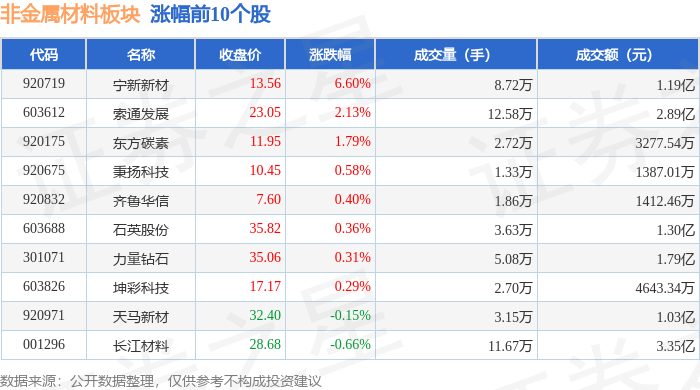
非金属材料板块12月19日涨0.11%,宁新新材领涨,主力资金净流出5354.1万元
Zheng Xing Xing Ye Ri Bao· 2025-12-19 09:03
Market Overview - The non-metal materials sector increased by 0.11% compared to the previous trading day, with Ningxin New Materials leading the gains [1] - The Shanghai Composite Index closed at 3890.45, up by 0.36%, while the Shenzhen Component Index closed at 13140.22, up by 0.66% [1] Stock Performance - Ningxin New Materials (code: 920719) closed at 13.56, with a rise of 6.60% and a trading volume of 87,200 shares, amounting to a transaction value of 119 million yuan [1] - Suotong Development (code: 603612) closed at 23.05, up by 2.13% with a trading volume of 125,800 shares [1] - Other notable stocks include: - Dongfang Huizhen (code: 920175) at 11.95, up by 1.79% [1] - Bingyang Technology (code: 920675) at 10.45, up by 0.58% [1] - Qilu Huaxin (code: 920832) at 7.60, up by 0.40% [1] - Quartz Shares (code: 603688) at 35.82, up by 0.36% [1] Capital Flow - The non-metal materials sector experienced a net outflow of 53.54 million yuan from institutional investors, while retail investors saw a net inflow of 43.71 million yuan [2] - The capital flow for individual stocks shows: - Longao Co. (code: 605086) had a net outflow of 13.07 million yuan from institutional investors [3] - Ningxin New Materials had a net inflow of 13.25 million yuan from institutional investors [3] - Strength Diamond (code: 301071) had a net inflow of 7.36 million yuan from retail investors [3]


联瑞新材跌2.05%,成交额4884.72万元,主力资金净流出424.37万元
Xin Lang Cai Jing· 2025-12-18 02:30
Core Viewpoint - Lianrui New Materials experienced a stock price decline of 2.05% on December 18, with a current price of 57.81 yuan per share and a market capitalization of 13.959 billion yuan [1] Group 1: Stock Performance - Year-to-date, Lianrui New Materials' stock price has increased by 17.61%, with a slight decline of 0.05% over the last five trading days, a rise of 4.35% over the last 20 days, and an increase of 6.17% over the last 60 days [2] - As of September 30, 2025, the number of shareholders for Lianrui New Materials reached 11,000, an increase of 42.50% compared to the previous period, while the average circulating shares per person decreased by 29.82% to 22,029 shares [2] Group 2: Financial Performance - For the period from January to September 2025, Lianrui New Materials achieved operating revenue of 824 million yuan, representing a year-on-year growth of 18.76%, and a net profit attributable to shareholders of 220 million yuan, reflecting a year-on-year increase of 19.01% [2] Group 3: Shareholder and Dividend Information - Since its A-share listing, Lianrui New Materials has distributed a total of 381 million yuan in dividends, with 242 million yuan distributed over the past three years [3] - As of September 30, 2025, Hong Kong Central Clearing Limited is the eighth largest circulating shareholder with 1.6654 million shares, while Guoshou Anbao Smart Life Stock A is the ninth largest with 1.3406 million shares, having decreased by 11,000 shares from the previous period [3]
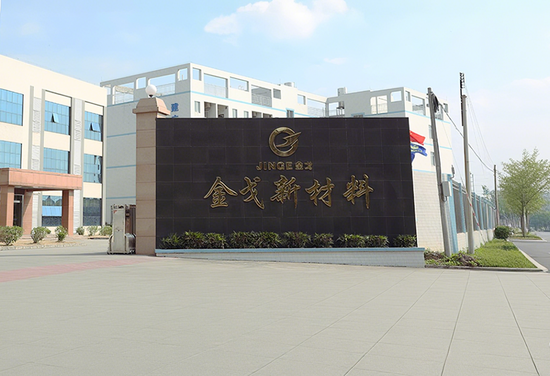
“材料组装厂”金戈新材IPO来了:核心技术是用5万块买来的,核心原材料竟也是从“友商”买来的!
Xin Lang Cai Jing· 2025-12-17 10:12
Group 1 - The core focus of Guangdong Jinge New Materials Co., Ltd. is on thermal interface materials, specifically in the field of thermal conductive fillers, which are essential for improving heat transfer efficiency in electronic devices [3][4] - The company is preparing for an IPO on the Beijing Stock Exchange, with CICC as the sponsor [3][4] - Jinge New Materials' product range includes thermal conductive powders, flame retardant powders, and wave-absorbing powders, with thermal conductive powders being the most significant contributor to revenue [4][6] Group 2 - In 2024, the company expects to achieve revenue of 320 million yuan from thermal conductive powders, accounting for 68.4% of total revenue, with a gross profit margin of 83.5% [6][40] - The revenue from flame retardant powders is projected at 129 million yuan, representing 27.7% of total revenue, but with a low gross margin of 6.8% [6][40] - The revenue from wave-absorbing powders is limited, expected to be only 17.81 million yuan in 2024 [6][41] Group 3 - The company primarily focuses on aluminum oxide as its thermal conductive filler, which, while not as effective as advanced materials like aluminum nitride or silicon carbide, is favored for its cost-effectiveness [10][45] - The main application areas for Jinge's products include consumer electronics, new energy vehicles, and 5G communication bases, which collectively contribute over 80% of revenue [12][46] Group 4 - In 2024, Jinge New Materials achieved a revenue of 467 million yuan, a year-on-year increase of 21.6%, with a net profit of 47.39 million yuan, up 14.8% [13][48] - The company has been facing a decline in product prices across all categories, particularly thermal conductive powders, which saw a price drop from 15,600 yuan per ton in 2022 to 12,900 yuan in the first half of 2025 [14][50] - To counteract declining prices, the company has increased its production capacity from 28,600 tons per year to 56,400 tons, effectively doubling its output [17][51] Group 5 - The IPO plans to raise 205 million yuan, primarily for expanding production capacity, with an expected addition of 30,000 tons [18][53] - Jinge's strategy contrasts with competitors like Lianrui New Materials, which focuses on high-end products and has maintained higher gross margins [20][55] - Jinge's R&D expenditure has been low, with a rate below 5%, and a further decline to 3.6% in the first three quarters of 2025, indicating a lack of investment in innovation [21][58] Group 6 - The company relies heavily on external suppliers for key raw materials, particularly spherical aluminum oxide, with 90% of its procurement coming from competitors [29][32] - This dependency on suppliers poses a significant risk to Jinge's business model, as it may affect the company's ability to maintain competitive pricing and profitability [32][34] - The company's workforce includes a significant number of employees without relevant academic backgrounds in materials science, raising concerns about its R&D capabilities [61][62]
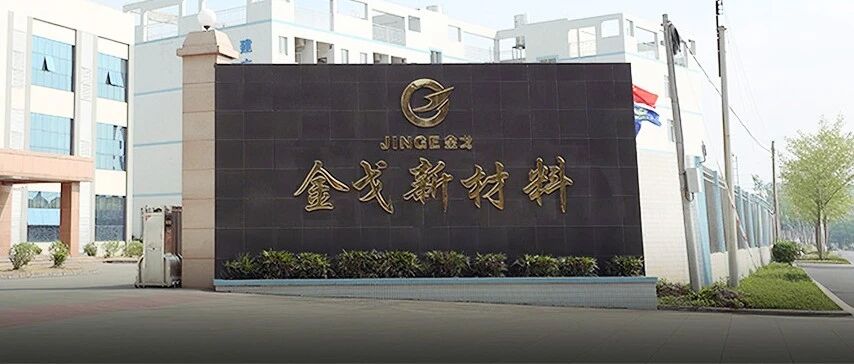
“材料组装厂”金戈新材IPO来了:核心技术是用5万块买来的,核心原材料竟也是从“友商”买来的!
市值风云· 2025-12-17 10:07
Core Viewpoint - The article discusses the performance and challenges of Guangdong Jinge New Materials Co., Ltd. as it approaches its IPO on the Beijing Stock Exchange, focusing on its product offerings in thermal interface materials and the competitive landscape in the industry [5][6]. Group 1: Company Overview - Guangdong Jinge New Materials Co., Ltd. specializes in functional materials, particularly thermal interface materials, which enhance heat transfer efficiency and provide electrical insulation [4][7]. - The company primarily focuses on aluminum oxide-based thermal fillers, which are crucial for its product performance [15][17]. Group 2: Financial Performance - In 2024, Jinge New Materials is projected to achieve revenues of 467 million, a year-on-year increase of 21.6%, with a net profit of 47.39 million, reflecting a 14.8% growth [20]. - The revenue breakdown shows that thermal powder materials contribute 68.4% to total revenue, while flame-retardant materials account for 27.7% [11][14]. Group 3: Market Dynamics - The company faces declining prices across all product categories, particularly thermal powder materials, which have seen a price drop from 15,600 yuan/ton in 2022 to 12,900 yuan/ton in 2025, a cumulative decline of one-third [22]. - The competitive landscape in the electric vehicle sector has intensified, leading to increased cost pressures that affect upstream suppliers like Jinge [23]. Group 4: Production Capacity and Strategy - Jinge plans to increase its production capacity from 28,600 tons/year to 56,400 tons/year by mid-2025, aiming to offset price declines through increased sales volume [24][25]. - The IPO aims to raise 205 million yuan, primarily for expanding production capacity by an additional 30,000 tons [27]. Group 5: R&D and Innovation - The company has a low R&D expenditure rate, consistently below 5%, which is below the industry average, and it has further decreased to 3.6% in the first three quarters of 2025 [30]. - Jinge's reliance on externally acquired patents for core technologies raises concerns about its innovation capabilities [32][36]. Group 6: Supply Chain Vulnerabilities - Approximately 90% of Jinge's core raw material, spherical aluminum oxide, is sourced from three main competitors, creating a significant supply chain risk [44][46]. - The company's business model heavily depends on the procurement of high-priced raw materials, which could jeopardize its profitability if supply conditions change [41][43].
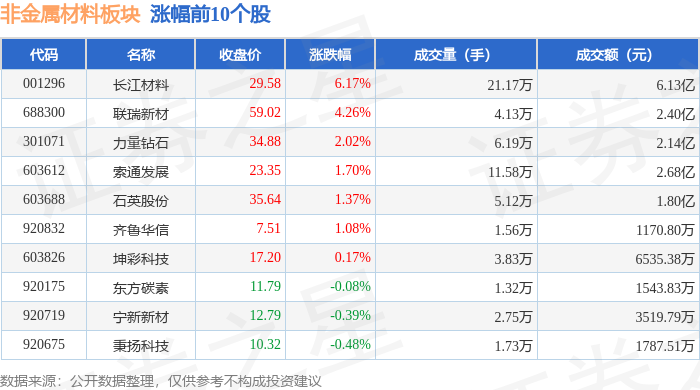
非金属材料板块12月17日涨1.8%,长江材料领涨,主力资金净流出277.78万元
Zheng Xing Xing Ye Ri Bao· 2025-12-17 09:00
Market Performance - The non-metal materials sector increased by 1.8% on December 17, with Changjiang Materials leading the gains [1] - The Shanghai Composite Index closed at 3870.28, up 1.19%, while the Shenzhen Component Index closed at 13224.51, up 2.4% [1] Stock Performance - Changjiang Materials (001296) closed at 29.58, up 6.17% with a trading volume of 211,700 shares and a transaction value of 613 million yuan [1] - Other notable performers include: - Lianrui New Materials (688300) at 59.02, up 4.26% [1] - Power Diamond (301071) at 34.88, up 2.02% [1] - Suotong Development (603612) at 23.35, up 1.70% [1] - Quartz Shares (603688) at 35.64, up 1.37% [1] Capital Flow - The non-metal materials sector experienced a net outflow of 2.78 million yuan from institutional investors and 18.25 million yuan from speculative funds, while retail investors saw a net inflow of 21.02 million yuan [2] - Detailed capital flow for individual stocks shows: - Changjiang Materials had a net outflow of 34.14 million yuan from institutional investors [3] - Lianrui New Materials saw a net outflow of 5.64 million yuan from institutional investors but a net inflow of 16.07 million yuan from retail investors [3] - Power Diamond experienced a net outflow of 6.60 million yuan from institutional investors but a net inflow of 11.11 million yuan from retail investors [3]
国际油价、蛋氨酸价格下跌,TDI价格上涨 | 投研报告
Zhong Guo Neng Yuan Wang· 2025-12-15 02:01
Core Insights - The chemical industry report indicates a mixed performance in chemical product prices, with 42 products increasing in price, 37 decreasing, and 21 remaining stable during the week of December 8-14 [1][2] - The report suggests focusing on undervalued leading companies, the impact of "anti-involution" on supply in related sub-industries, and the importance of self-sufficiency in electronic materials and certain new energy materials amid price increases [1][6] Industry Dynamics - In the week of December 8-14, 47% of tracked chemical products saw a month-on-month price increase, while 44% experienced a decrease, and 9% remained unchanged [2] - The top price increases were noted in nitric acid, sulfuric acid, raw salt, bisphenol A, and TDI, while the largest declines were in PVA, LLDPE, trichloroethylene, and NYMEX natural gas [2] Oil Market Overview - International oil prices fell, with WTI crude oil futures closing at $57.44 per barrel (down 2.45%) and Brent crude at $61.12 per barrel (down 2.19%) [3] - The U.S. oil production averaged 13.853 million barrels per day, an increase of 38,000 barrels from the previous week and 222,000 barrels from the same period last year [3] - U.S. oil demand rose to an average of 21.082 million barrels per day, with gasoline demand increasing to 8.456 million barrels per day [3] TDI Market Analysis - TDI prices increased to an average of 14,713 yuan/ton, up 2.49% week-on-week and 5.51% month-on-month [4] - TDI production decreased, with an overall operating rate of approximately 58.55%, and various factories experiencing operational issues [4] - Average costs for TDI were 11,819 yuan/ton, down 0.92% week-on-week, while average gross profit rose by 31.79% week-on-week [4] Methionine Market Analysis - Methionine prices decreased to an average of 17,900 yuan/ton, down 2.45% week-on-week and 9.14% month-on-month [5] - The production remained stable at 18,350 tons, with an operating rate of 89.42% [5] - The cost of methionine was 13,853.73 yuan/ton, with a gross profit margin of 23.67% [5] Valuation Metrics - As of December 12, the TTM price-to-earnings ratio for the SW basic chemical sector was 24.14, and the price-to-book ratio was 2.19 [6] - The SW oil and petrochemical sector had a TTM price-to-earnings ratio of 12.85 and a price-to-book ratio of 1.24 [6] Investment Recommendations - The report recommends focusing on undervalued leading companies, sectors benefiting from policy support, and emerging fields such as semiconductor materials and new energy materials [6] - Specific companies highlighted for investment include Wanhua Chemical, Hualu Hengsheng, and others [6][7]




行业行深业度周报告:伊拉克恢复油田产量,原油供应过剩担忧较大-20251214
Ping An Securities· 2025-12-14 14:09
Investment Rating - The report maintains a "Strong Buy" rating for the oil and petrochemical sector [1]. Core Viewpoints - Iraq has restored production at the West Qurna 2 oil field, raising concerns about oversupply in the crude oil market. WTI crude futures fell by 4.33% and Brent crude futures by 4.13% during the specified period [6]. - Geopolitical tensions continue, particularly regarding the Russia-Ukraine situation and U.S.-Venezuela relations, which may impact oil prices [6]. - The U.S. Federal Reserve has lowered the federal funds rate target range by 25 basis points to between 3.50% and 3.75%, marking the third rate cut of the year [6]. - In the fluorochemical sector, the 2026 refrigerant quotas are expected to increase, with downstream demand in home appliances likely to continue due to government subsidies [6]. Summary by Sections Oil and Petrochemicals - Iraq's oil production has returned to approximately 460,000 barrels per day, and U.S. refinery utilization rates have increased following seasonal maintenance [6][7]. - The report suggests that domestic oil companies are diversifying their oil and gas sources to mitigate sensitivity to international oil price fluctuations [7]. Fluorochemicals - The 2026 HFC production quota has been announced, totaling 797,845 tons, which is an increase of 5,963 tons from the previous year. Notable increases include HFC-134a by 3,242 tons and HFC-245fa by 2,918 tons [6]. - The demand for refrigerants is expected to grow, supported by government policies and subsidies, particularly in the automotive sector [6][7]. Investment Recommendations - The report recommends focusing on the oil and petrochemical, fluorochemical, and semiconductor materials sectors. It highlights the resilience of major oil companies in the face of price volatility and suggests monitoring companies like China National Petroleum, Sinopec, and CNOOC [7]. - In the fluorochemical sector, companies leading in third-generation refrigerants and upstream fluorite resources are recommended for investment [7]. - The semiconductor materials sector is also highlighted for its upward cycle and potential for domestic substitution, with specific companies suggested for consideration [7].
转债周度跟踪 20251212:机构普遍欠配,转债韧性较强-20251213
Shenwan Hongyuan Securities· 2025-12-13 14:43
Report Industry Investment Rating - Not provided in the given content Core Viewpoints of the Report - This week, the equity and convertible bond markets remained in a volatile trend. Micro - cap stocks in major stock indices declined significantly, but the convertible bond market showed relative insensitivity. The negative impact of micro - cap stock declines on convertible bonds was less than that in late August and late November. The valuation of convertible bonds fluctuated in tandem with the market. The 100 - yuan premium rate fluctuated around 30%. Structurally, the valuation of the equity - biased area was better than that of the debt - biased area. Despite multiple negative factors, the convertible bond market showed unexpected resilience, likely due to the under - allocation pressure of institutional investors and the consistent expectation of the "Spring Rally" next year. The convertible bond market is expected to have upside potential [4][5]. Summary by Relevant Catalogs 1. Weekly Outlook - The equity and convertible bond markets continued to fluctuate. Micro - cap stocks fell sharply, but convertible bonds were less affected. The convertible bond valuation oscillated, with the 100 - yuan premium rate around 30%. The equity - biased area's valuation was better, and the convertible bond market showed resilience, with potential upside due to institutional under - allocation and "Spring Rally" expectations [4][5]. 2. Convertible Bond Valuation - This week, the underlying stocks declined slightly, and the convertible bond market was roughly flat with volatile valuations. After excluding outliers, the market - wide convertible bond 100 - yuan premium rate was 29.8%, down 0.1% week - on - week, and at the 99.1% percentile since 2017. The equity - biased area's valuation was better than the debt - biased area. The high - parity area's valuation showed resilience. The debt - biased area's valuation was weak but showed structural differentiation. The median convertible bond price was 130.90 yuan, down 0.71 yuan, and the yield to maturity was - 6.56%, unchanged, at the 97.30% and 1.40% percentiles since 2017 respectively [4][6][13]. 3. Clause Tracking 3.1 Redemption - This week, Hugong and Yingbo Convertible Bonds announced redemptions, while Bojun Convertible Bond announced no redemption, with a forced - redemption rate of 67%. There are currently 20 convertible bonds that have issued forced - redemption or maturity - redemption announcements but have not delisted, with a potential conversion or maturity balance of 4.9 billion yuan. There are 22 convertible bonds in the redemption process, 6 are expected to meet redemption conditions next week, 10 are expected to issue potential redemption announcements, and 9 are expected to enter the forced - redemption counting period within the next month [4][18][20]. 3.2 Downward Revision - This week, Bengang, Jinlangzhuan 02, and Hongchuan Convertible Bonds proposed downward revisions. As of now, 107 convertible bonds are in the non - downward - revision period, 20 cannot be revised due to net - asset constraints, 1 has triggered the condition but has not announced, 29 are accumulating downward - revision days, and 5 have issued board proposals for downward revision but have not gone to the shareholders' meeting [4][23]. 3.3 Put Option - This week, Wanqing Convertible Bond issued a conditional put - option announcement, and Huahai Convertible Bond has triggered the put - option clause but has not announced. As of now, 4 convertible bonds are accumulating put - option trigger days, 1 of which proposed a downward revision, and 3 are in the non - downward - revision period [4][25]. 4. Primary Issuance - This week, Aohong, Shenyu, and Tianzhun Convertible Bonds were issued, and Dingjie Convertible Bond will be issued next week. As of now, Puxian, Aohong, Shenyu, and Tianzhun Convertible Bonds have been issued but not listed. There are 5 convertible bonds at the registration - approved stage, with a to - be - issued scale of 5.1 billion yuan, and 9 at the listing - committee - approved stage, with a to - be - issued scale of 10 billion yuan [4][27].