
铠侠

Search documents
DRAM价格,还要涨!
半导体行业观察· 2026-01-03 03:40
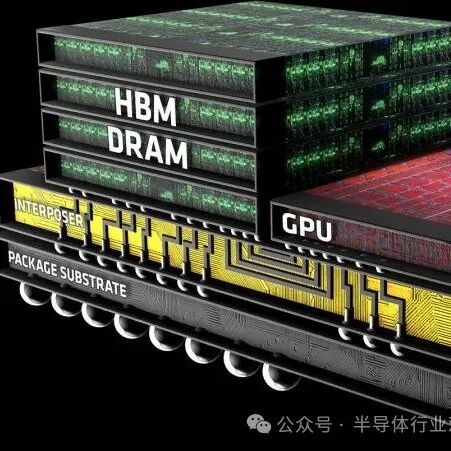
Core Viewpoint - The global memory market is expected to remain in a state of supply-demand imbalance through 2026, driven by high investments from cloud service providers in AI infrastructure, leading to rising product prices [1][9]. Group 1: Market Dynamics - The supply of DRAM is projected to increase by 15% to 20% in 2026, while demand is expected to grow faster, at 20% to 25% [1]. - NAND flash supply is forecasted to grow by 13% to 18%, with demand increasing by 18% to 23% [1]. - In the server application sector, DRAM and NAND flash consumption is anticipated to surge by 40% to 50% in 2026 due to increased AI training and inference investments [2]. Group 2: Product Transition and Pricing - The phase-out of DDR4 is intensifying supply pressures, with major suppliers reallocating capacity to higher-margin products, leading to a significant reduction in DDR4 supply [3]. - By the second half of 2026, DDR4 wafer utilization is expected to drop to single-digit percentages, causing prices to remain elevated due to a projected 10% supply shortfall [3]. - The average contract price of Samsung's 64GB DDR5 RDIMM memory is expected to rise from approximately $265 in Q3 2025 to around $480 in Q1 2026, indicating strong price momentum [4]. Group 3: Supply Chain Challenges - The production of high bandwidth memory (HBM) is consuming more capacity, further straining the supply of standard DDR5 [4]. - NAND flash production is also facing constraints, with new capacity from Kioxia and Yangtze Memory Technologies expected to contribute significantly only by Q2 2026 [6]. - The demand for enterprise SSDs is rapidly increasing, particularly for large-capacity drives, prompting a shift from TLC to QLC NAND flash technology [7]. Group 4: Manufacturer Strategies and Market Outlook - Memory module manufacturers are adopting limited shipment strategies to prioritize strategic customers, while facing rising raw material costs that pressure profit margins [8]. - The market is expected to see a polarization, with some manufacturers securing stable chip supplies while others struggle with shortages [8]. - Analysts predict that the supply-demand imbalance in the memory market will persist for several years, with pricing power remaining with memory chip manufacturers due to strong AI-driven demand and structural supply constraints [9].


美韩芯片联合抬价,意外让中国存储芯片大赚80亿,国产芯片崛起了
Xin Lang Cai Jing· 2026-01-01 00:24
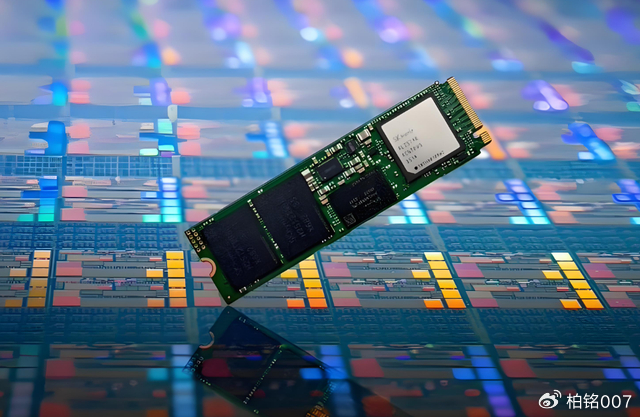
Core Viewpoint - Chinese memory chip companies are expected to achieve profits exceeding 2 billion yuan this year, a significant turnaround from a loss of nearly 6 billion yuan in the previous three quarters, primarily due to price increases driven by a collaboration between American and South Korean chip manufacturers [1] Group 1: Market Dynamics - The global memory chip market is dominated by the US and South Korea, with Japanese company Kioxia holding a secondary position in NAND flash storage, while US and South Korean companies monopolize the DRAM market [3] - The collaboration between US and South Korean chip manufacturers has historically led to price manipulation, resulting in substantial profits, as evidenced by past penalties imposed on them for such practices [3] Group 2: Impact of AI and Production Shifts - The rise of NVIDIA's dominance in AI chips has significantly impacted the memory chip market, as NVIDIA's demand for high-bandwidth memory (HBM) has led many manufacturers to shift production towards HBM chips, causing a sharp decline in DRAM production capacity [5] - As DRAM production capacity decreased, prices for DRAM memory modules nearly doubled, resulting in substantial profits for US and South Korean memory chip companies, while also benefiting Chinese memory chip firms, which are projected to achieve profitability for the first time since their establishment in 2016 [5] Group 3: Development of Chinese Memory Chip Industry - The Chinese memory chip industry has faced challenges since its inception in 2016, with one company facing lawsuits from US chip firms, while the other two have successfully developed their technologies [7] - Chinese NAND flash memory companies have focused on building their technology and patents from the ground up, achieving significant milestones such as mass production of 128-layer NAND flash chips and being the first to produce 232-layer NAND flash chips [7] - Despite facing obstacles due to restrictions on advanced chip equipment and materials from the US and its allies, Chinese memory chip companies have invested heavily, amounting to approximately 46 billion yuan, and are now beginning to see returns on their investments, moving towards independence from foreign memory chip reliance [9]
全球芯片产能分布,仅供参考
半导体行业观察· 2025-12-29 01:53
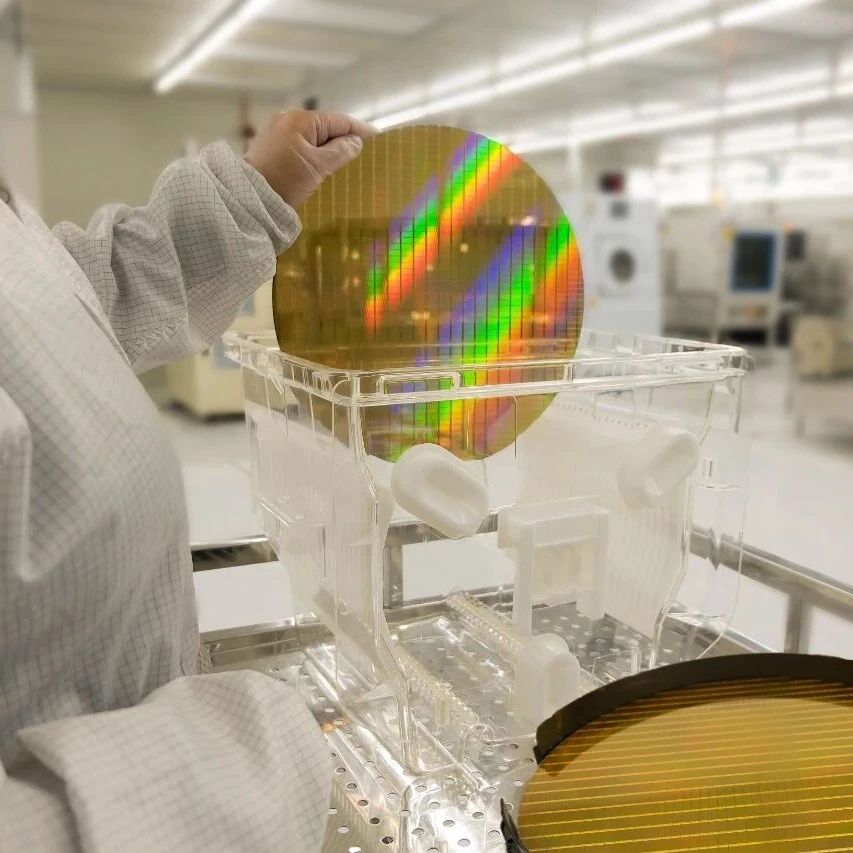
Core Insights - The OECD report highlights the geographical distribution of wafer fabrication capacity, indicating that five major economies (China, Taiwan, South Korea, Japan, and the USA) account for 87% of global wafer production capacity as of September 2025 [2][6]. Geographical Distribution of Production Capacity - The report illustrates the concentration of production capacity by technology node, with South Korea having nearly 80% of its capacity in the 6nm to less than 22nm range, primarily due to investments from major suppliers like SK Hynix and Samsung [5][6]. - In contrast, the USA's wafer production capacity is more diversified across various technology nodes [6]. Concentration of Production Capacity Among Companies - The top ten semiconductor companies account for approximately 50% of global wafer production capacity [7]. - In Japan, five companies dominate with over 3 million wafer production capacity, representing 58% of the country's total [7]. Planned and Under Construction Capacity Growth - The majority of capacity investments are concentrated in the largest semiconductor-producing economies, driven by major companies operating in those regions [10]. - The USA, China, South Korea, Taiwan, Japan, Germany, and Singapore are identified as the countries with the largest expected capacity growth [10]. Wafer Capacity by Chip Type - The report emphasizes that assessing wafer capacity distribution requires considering both technology nodes and chip types, revealing significant differences in production capabilities [12][19]. - China and Taiwan rank among the top five producers for all six chip types analyzed, with the USA and Japan following closely [19]. Expansion Potential by Chip Type - Capacity expansion potential varies significantly across chip types and economies, with notable growth in power chips and analog chips primarily occurring in China [21][22]. - The USA leads in advanced logic chip capacity growth, while South Korea shows the largest increase in general storage chip capacity [22]. Mixed Manufacturing Capabilities - Many fabs can produce multiple chip types, complicating the analysis of geographical distribution based on chip types [25][28]. - The prevalence of mixed-capacity fabs, especially in the analog and mature logic chip sectors, presents challenges in evaluating market capacity [28]. Average Wafer Fab Size by Chip Type - The average size of fabs varies by chip type, with power, analog, and mature logic chips averaging between 30,000 to 50,000 WSPM, while advanced logic and general storage fabs are significantly larger [31]. Ownership and Wafer Capacity - Most wafer production capacity in the top five economies is owned by domestic companies, although foreign investment is increasing in some regions [34]. - The report notes the complexity of ownership structures in the semiconductor industry, which can affect capacity assessments [34]. Wafer Capacity by Business Model - The semiconductor manufacturing business model is evolving, with some integrated device manufacturers (IDMs) also providing foundry services [38][39]. - The report categorizes wafer capacity into IDM, pure foundry, and IDM-foundry capacities, highlighting the importance of understanding these distinctions in capacity distribution [39].
华泰证券今日早参-20251226
HTSC· 2025-12-26 02:41
Group 1: Macroeconomic Insights - The offshore RMB/USD exchange rate has surpassed the important threshold of 7.00, with onshore RMB also breaking 7.01, indicating a potential for further appreciation of the RMB [2] - The report anticipates a 4-5% annualized appreciation of the RMB, which will not adversely affect China's export competitiveness [2] - Factors such as the peak in foreign exchange settlements and improved US-China trade relations are expected to support the RMB's appreciation, enhancing foreign investment interest in RMB assets [2] Group 2: Fixed Income Market - The total government bond supply for 2025 is projected to reach 14.4 trillion, with both national and local bonds nearing 99% supply completion as of December 25, 2025 [3] - The market is currently focused on the supply-demand dynamics of interest rate bonds and the structure of bond issuance [3] - The report highlights the potential for REITs to recover from recent price declines, with the REITs total return index having dropped 4.28% recently but showing signs of recovery [4] Group 3: Technology Sector - Insights from the SEMICON Japan conference indicate three key investment opportunities for 2026: AI-driven storage cycles, semiconductor process upgrades, and price increases in technology commodities [5] - There is significant debate among investors regarding the competitive positioning of OpenAI against Google and the sustainability of NAND price increases [5] Group 4: Non-Ferrous Metals Industry - The report suggests that high metal prices may drive exploration and service companies to transition towards mining development, utilizing models such as equity participation and EPC+O [6] - This transition is expected to be significant as smaller mining owners seek external support for development due to limited capital and technical capabilities [6] Group 5: Banking Sector Dynamics - A wave of deposit maturities is anticipated, with approximately 50 trillion in term deposits maturing in the coming year, primarily concentrated in the 2-5 year range [8] - This situation is expected to alleviate pressure on banks' net interest margins but may lead to increased volatility in the funding landscape [8]
日经指数收涨1.8% 芯片股领涨
Xin Lang Cai Jing· 2025-12-22 06:57
日本股市收高,此前在日本央行周五进行市场普遍预期的加息后,日元大幅走软。芯片相关股领涨。软 银集团上涨4.1%,铠侠上涨8.4%,东京电子上涨6.3%。投资者正密切关注首相高市早苗提振该国经济 的政策措施进展。 MACD金叉信号形成,这些股涨势不错! 责任编辑:王永生 日经225指数收涨1.8%,报50402.39点,芯片股领涨。 日本国债进一步下跌,因市场担心日元走软可能会迫使日本央行以比先前预期更快的速度加息。此前日 本央行将基准利率上调至30年来最高水平。SMBC日兴证券的Ataru Okumura在评论中称,投资者似 乎"持这样一种看法,即日元贬值最终将促使日本央行加快加息步伐"。 日本10年期国债收益率上涨7.5个基点至2.095%,为1999年2月以来最高水平。对货币政策预期敏感的两 年期国债收益率攀升3个基点至1.12%,创1997年以来新高。此次主权债再度遭遇抛售源于日本央行上 周五的加息行动。然而,交易员对日本央行未就何时可能再次收紧政策提供明确指引感到失望。与此同 时,在日本财务大臣片山皋月和日本最高外汇事务官员三村淳对近期货币走软发出警告后,日元兑美元 汇率一度上涨0.3%,至157.2 ...
AI热度不减,存储及光通信需求两旺
2025-12-22 01:45
AI 热度不减,存储及光通信需求两旺 20251221 摘要 存储行业预计在 2026 年仍处于超级周期,DRAM 和 NAND 业务强劲增 长,美光科技一季度营收同比增长 57%,non-GAAP 毛利率达 57%, 净利润同比增三倍以上,预计资本支出将增至 200 亿美元,用于 HBM 及 E8 纳米产能扩张。 全球 NAND 市场自 2025 年初需求活跃,价格已翻倍以上上涨,由 AI 驱动的结构性需求爆发是主要因素,AI 服务器出货量增加及企业级固态 硬盘需求倍增,导致 9 纳米产品结构性短缺并大幅涨价。 美光科技预计 2028 年全球 HBM 市场规模将达 1,000 亿美元,未来三 年复合年增长率达 40%,预计下一季度收入为 187 亿美元,环比增长 38%,毛利率预期为 68%,海外原厂有望迎来周期股估值重构。 利基型存储如 DDR4 DRAM 和 SLC NAND 受益于网通设备需求增加及 大厂退出,价格呈现双位数以上环比上涨趋势,光通信板块也因 AI 影响 而火热,部分料号的光纤光缆价格出现一定幅度上涨。 AI 训练和推理场景对存储设备提出超大容量、低成本、高随机写入、高 耐久性及极快接口 ...
日经指数上涨1.5% 芯片股领涨
Xin Lang Cai Jing· 2025-12-22 00:40
日本股市早盘走高,此前在日本央行周五进行市场普遍预期的加息后,日元大幅走软。日经指数上涨 1.5%,报50,257.94点。芯片相关股领涨。软银集团上涨6.7%,铠侠上涨5.7%,东京电子上涨5.1%。 美元兑日元报157.56日元,高于周五东京股市收盘时的155.95日元。投资者正密切关注首相高市早苗提 振该国经济的政策措施进展。 责任编辑:王永生 日本股市早盘走高,此前在日本央行周五进行市场普遍预期的加息后,日元大幅走软。日经指数上涨 1.5%,报50,257.94点。芯片相关股领涨。软银集团上涨6.7%,铠侠上涨5.7%,东京电子上涨5.1%。 美元兑日元报157.56日元,高于周五东京股市收盘时的155.95日元。投资者正密切关注首相高市早苗提 振该国经济的政策措施进展。 MACD金叉信号形成,这些股涨势不错! MACD金叉信号形成,这些股涨势不错! 责任编辑:王永生 ...
中金 • 联合研究 | AI存储新周期:NAND的攻城与HDD的守疆
中金点睛· 2025-12-21 23:36
Core Viewpoint - The report analyzes the recent doubling of NAND contract prices since Q1 2025, assessing the sustainability of this cycle through historical NAND cycles, supply-demand calculations under AI scenarios, and the impact on the HDD industry [2] Demand Side - The resonance between cloud and edge AI is driving a significant increase in SSD demand, with higher requirements for write speed, IOPS, capacity, and durability due to AI model training and inference [4] - Global NAND Flash shipments are expected to approach 2000EB by 2028, maintaining nearly 30% high growth over the next three years [4][19] Supply Side - Cautious capacity expansion is expected to support prolonged price increases, with a stable yet evolving oligopoly in the NAND market [4] - Major manufacturers are adopting a cautious approach to NAND capacity expansion, focusing on high-density and high-capacity technology transitions [21] - Supply tightness is anticipated to last at least until the end of 2026, with NAND prices likely to remain high [22][23] HDD Market - HDD remains a cost-effective choice for cold storage in cloud computing, with a projected market growth rate of approximately 15% over the next three years [5] - The cost advantage of HDDs is expected to diminish as NAND technology advances, with current price differences between HDDs and SSDs ranging from 4 to 6 times [5] NAND Cycle Review - The NAND market exhibits long cycles with significant price volatility, characterized by severe supply-demand mismatches and differentiated expansion strategies among manufacturers [8] - The current cycle is marked by a supply contraction driving price recovery, followed by structural demand growth driven by AI [14][23] AI Demand - AI is significantly boosting SSD demand, with specific requirements for high-speed writing, IOPS, and large capacity in various training and inference scenarios [15][16] - The anticipated growth in AI applications is expected to sustain high demand for SSDs over an extended period [16] Current Cycle Position - NAND prices are expected to remain elevated in 2026, with data centers and enterprise-level applications showing the highest price tolerance [22] - The demand from data centers is projected to be the largest source of future SSD demand, with long-term supply agreements already in place with major cloud service providers [22][23]
美光财报超预期点评
Xin Lang Cai Jing· 2025-12-18 12:01
来源:市场资讯 (来源:君实财经) 美光财报全面超预期,存储高景气度再获验证【东北计算机】 #业绩、指引全面超预期: ◦ 当期业绩超预期:FY26Q1调整后营收136.4亿美元(同比+57%,环比+24%),远超预期的129.5亿美 元;非GAAP 营业利润达64.19亿美元,大幅高于预期的53.7亿美元。 ◦ 前瞻指引超预期:公司预计FY26Q2营收中值将达187亿美元,较市场共识(143.8亿美元)高出30%; 非GAAP EPS指引中值8.42美元,近乎市场预期(4.71美元)的两倍。该指引预示环比增长将持续加 速。 ◦ FY26Q1非GAAP毛利率已达56.8%,显示强劲定价能力。 ◦ FY26Q2毛利率指引中值进一步提升至68%,较市场预期的55.7%高出超12个百分点,清晰指向产品结 构优化与供应紧缺下的强定价权。 ◦ 公司将FY26资本支出从180亿美元上调至200亿美元。逆势扩张明确管理层判断行业供应短缺将持续至 2026年以后,旨在抢占AI带来的长期需求窗口。 ◦ 数据中心业务:营收23.79亿美元(同比+3.7%,环比+50.87%),毛利率51%。 ◦ 云存储业务:营收达52.84亿美元 ...
中金:算力强势打开SSD需求天花板 2026年NAND价格或将维持高位
Zhi Tong Cai Jing· 2025-12-18 07:56
Core Viewpoint - NAND contract prices have more than doubled since Q1 2025, driven by increased demand from AI model training and inference, which require higher write speeds, IOPS, capacity, and durability for enterprise SSDs [1][2] Demand Side - The convergence of cloud and edge AI is significantly boosting SSD demand, with expectations for substantial growth in storage capacity for mobile devices and PCs [2] - Global NAND Flash shipment volume is projected to approach 2000 EB by 2028, maintaining nearly 30% high growth over the next three years [2] Supply Side - Cautious capacity expansion by NAND manufacturers is expected to support prolonged price increases, with the current market dominated by a few key players [2] - The new joint factory by Kioxia and Western Digital has commenced production in Q3 2025, utilizing the advanced BiCS8 technology, which will contribute to revenue in the first half of 2026 [2] - Supply tightness is anticipated to last at least until the end of 2026, with NAND manufacturers likely to maintain price support through supply control [2] - Yangtze Memory Technologies' capacity expansion and its Xtacking architecture are expected to reshape the domestic NAND supply landscape [2] HDD Market - HDD remains a cost-effective choice for cloud computing vendors for cold storage, with advantages in unit storage cost and total cost of ownership (TCO) [3] - As NAND technology advances, the cost advantage of HDDs is expected to diminish, with current price differences ranging from 4 to 6 times [3] - Future HDD applications will focus on large-scale data lakes and cold data archiving, with a market growth rate of approximately 15% over the next three years [3]