零跑

Search documents
信音电子拟收购汽车连接器线束制造商国联电子80%股权
Zhi Tong Cai Jing· 2025-10-23 15:01
Core Viewpoint - Xinyin Electronics (301329.SZ) plans to use part of its raised funds, totaling 220 million yuan, to acquire 80% equity of Dongguan Guolian Electronics Co., Ltd. from Shenzhen Guotian Electronics Co., Ltd. [1] Group 1: Acquisition Details - The target company, Guolian Electronics, specializes in the manufacturing, research, and sales of automotive connector harnesses [1] - In the past year, Guolian Electronics achieved a revenue growth rate of 169.06%, indicating a strong operational performance [1] - The acquisition aligns with Xinyin Electronics' business expansion strategy and is expected to enhance its revenue and provide long-term growth momentum [1] Group 2: Market Position and Clientele - Guolian Electronics has established stable partnerships with downstream clients such as Luxshare Precision (002475), Tyco Electronics, Zhengye Electronics, and Zhejiang Dahua Technology [1] - The end automotive brands served by Guolian Electronics include BYD (002594), Leap Motor, and Xiaomi, showcasing its strong market presence [1] - The positive business development trend of Guolian Electronics suggests a promising market outlook, which is beneficial for Xinyin Electronics' future growth [1]
信音电子:拟2.2亿元收购国联电子80%股权
Xin Lang Cai Jing· 2025-10-23 13:03
信音电子(301329.SZ)公告称,计划使用部分超募资金2.2亿元购买国天电子所持有的国联电子80%股 权。国联电子从事汽车线束的生产及销售,主要涉及摄像头线束及后盖产品,目前主要客户包括泰科电 子、浙江大华、亳州联滔电子等客户,对应的下游主机厂包括比亚迪、零跑、小米等。 ...
禾赛已连续7个月车载主激光雷达市占率第一
Zheng Quan Ri Bao Zhi Sheng· 2025-10-23 11:11
Core Insights - The report from Gaishi Automotive Research Institute indicates that Hesai Technology has maintained its position as the leading supplier of automotive LiDAR systems, achieving a market share of 46% as of August 2025, which is 1.5 times that of the second place and 2.4 times that of the third place [1][2] Group 1: Market Performance - In the period from January to August 2025, the cumulative installation of main LiDAR systems in China's front-mounted production reached 1.31 million units, with Hesai's contribution being 510,000 units [1] - Hesai's monthly installation volume of LiDAR systems has surged from 33,485 units to 97,583 units, nearly tripling [1] - The penetration rate of LiDAR in new energy passenger vehicles reached 19% by August 2025, indicating that nearly one in five new cars is equipped with this technology [1] Group 2: Production and Strategic Developments - Hesai plans to achieve an annual production capacity exceeding 2 million units in 2025, with expected deliveries ranging from 1.2 million to 1.5 million units [2] - As of the end of September 2025, Hesai became the first company globally to produce over 1 million LiDAR units in a year, marking the entry into a "million-unit" mass production era [2] - Hesai has officially listed on the Hong Kong Stock Exchange, becoming the first company in the industry to achieve dual listing on both US and Hong Kong markets, reflecting international market recognition of Chinese LiDAR technology [2] Group 3: Client Base and Product Applications - This year, Hesai's LiDAR technology has supported the launch of several popular vehicle models, including Li Auto's i6, Xiaomi's YU7, and Leap Motor's B10 [2] - Hesai has secured mass production contracts with over 24 OEMs for more than 120 vehicle models, with planned deliveries from 2025 to 2027 [2] - Key clients include top-tier automotive manufacturers such as a leading European OEM, a global champion in new energy vehicle sales, and major Chinese brands like Geely, Great Wall, and Changan [2]
零跑B10:用户多数是男性,优惠6000还有5000免息额度
车fans· 2025-10-23 00:30
Core Viewpoint - The sales performance of the Leap B10 has significantly declined since its launch, with a notable drop in customer interest and sales figures compared to the initial hype [2][4]. Sales Performance - In a four-tier city, only 8 units of the B10 were sold last month, with a total of 41 vehicles sold in the store [2]. - The current inventory includes only 5 units of the B10, with most being mid-range configurations [2]. Customer Demographics - The primary buyers of the B10 are males aged 22 to 50, including young professionals and small business owners, with many being first-time car buyers [3]. - Customers often compare the B10 with competitors like the Deep Blue S05 and Galaxy E5, with a significant focus on value for money [6]. Competitive Landscape - The B10 is frequently compared to the Deep Blue S05, with 25% of customers considering it as an alternative [6]. - Customers express concerns about brand reliability, often favoring established brands like Geely over newer entrants like Leap [9]. Pricing and Discounts - The B10 has recently introduced discounts, with cash incentives up to ¥6,000 available [11][22]. - Financing options are attractive, with the possibility of interest-free loans for amounts up to ¥75,000 [14]. Customer Preferences - The most popular configuration is the mid-range 510 Joy Edition, with 60% of sales coming from this model [17]. - The color preference leans towards the free "Xilu Purple," chosen by 40% of customers [17]. Customer Feedback - Common complaints include minor software bugs and battery range issues, which are typical in the industry [19][21]. - Maintenance costs are relatively low, averaging ¥150 per service in smaller cities [21]. Buying Considerations - Customers are advised to take advantage of current discounts and promotions, as the combined savings can reach up to ¥6,000 [22].

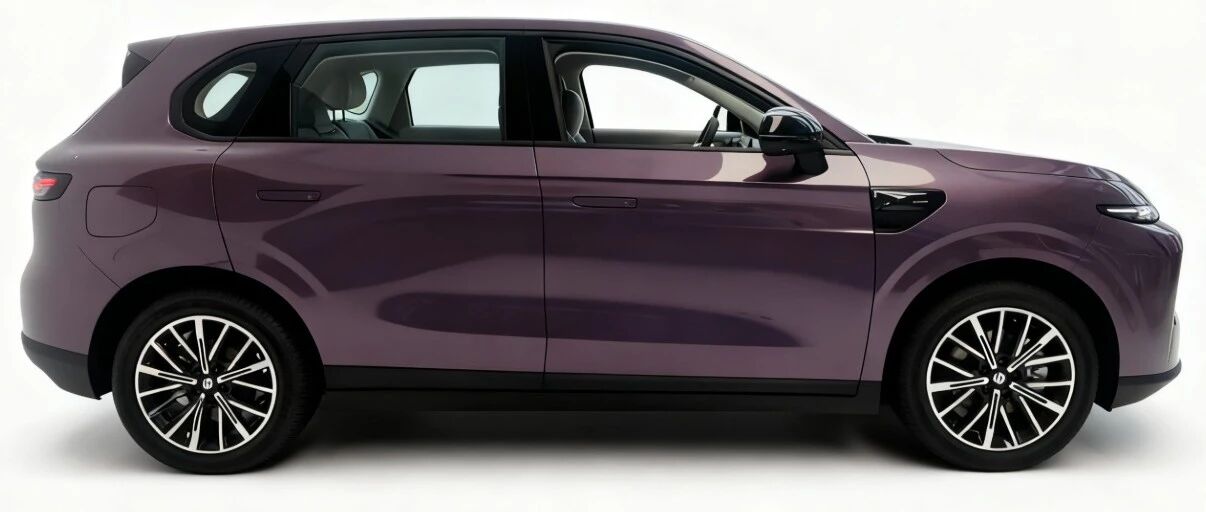
“不做豪华”的零跑称D系列还是立足“规模”
Guan Cha Zhe Wang· 2025-10-21 01:36
Core Viewpoint - The article discusses the strategic shift of Leap Motor as it aims to establish itself in the high-end market with the launch of its D series, despite its previous positioning as a cost-effective brand. The company emphasizes maintaining its "good but not expensive" philosophy while expanding its product offerings [1][3]. Group 1: Company Strategy - Leap Motor's chairman, Zhu Jiangming, asserts that the D series does not alter the brand's positioning and aims to provide high-end products without pursuing high profits [3][16]. - The company has set a five-year strategic plan and sales targets, expecting to continue significant growth after achieving its initial goal of 500,000 units for the year [3][17]. - Leap Motor's D series is designed to compete in the full-size SUV market, with the first model, D19, showcasing advanced technology and spacious dimensions [5][11]. Group 2: Market Performance - Leap Motor achieved a milestone with the production of its one-millionth vehicle in September, becoming the second new force in the domestic market to reach this sales volume [3][17]. - The company reported a 129% year-on-year increase in cumulative sales for the first nine months of the year, totaling 395,000 units [3][17]. - In September alone, Leap Motor's sales reached a record high of 66,000 units [3]. Group 3: Product Innovation - The D19 model features an 80.3 kWh range extender battery, providing over 500 km of pure electric range, showcasing Leap Motor's technological capabilities [9][11]. - The D series aims to incorporate unique technologies, such as an integrated drive generator and an onboard oxygen generator, to differentiate itself in the competitive SUV market [11][16]. - Leap Motor's strategy focuses on leveraging its self-developed technologies to meet user demands while maintaining cost-effectiveness [13][16]. Group 4: Financial Outlook - Despite significant revenue growth of 174% in the first half of the year, Leap Motor's profit was only 30 million yuan, indicating challenges in scaling profitability [16][17]. - The company plans to adjust its annual sales target to between 580,000 and 650,000 units, reflecting confidence in its market position despite competitive pressures [17].
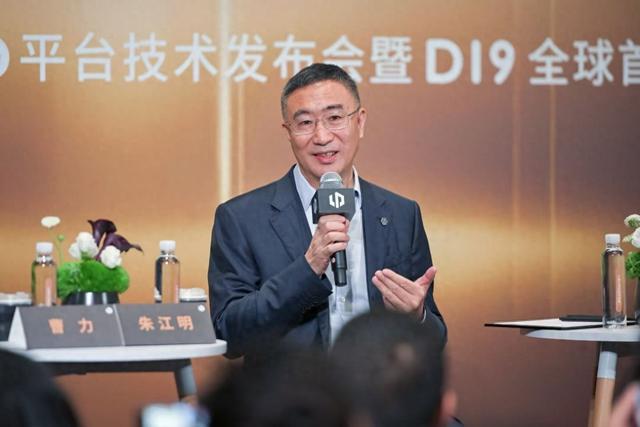
纯电千伏快充+增程80度大电池,零跑D19硬刚百万级旗舰
Hu Xiu· 2025-10-20 11:30
Core Insights - Leapmotor's flagship D platform aims to redefine industry standards with a million-level experience and several pioneering technologies [1] Group 1 - The focus is on the core technologies of Leapmotor, highlighting their advanced features [1]
北交所科技成长产业跟踪第四十七期(20251019):国家政策层面推动充电基础设施建设提速,关注北交所充电设施产业链企业
Hua Yuan Zheng Quan· 2025-10-20 08:14
Investment Rating - The report focuses on the charging infrastructure industry, highlighting investment opportunities in companies involved in the charging facilities supply chain [1]. Core Insights - The Chinese government has launched the "Three-Year Doubling Action Plan for Electric Vehicle Charging Facilities (2025-2027)" to enhance the charging infrastructure network and promote electric vehicle adoption [3][7]. - As of mid-2025, there are 4.096 million public charging facilities and 12.004 million private charging facilities in China, reflecting a year-on-year growth of 36.7% and 63.3% respectively, indicating a rapid release of demand in residential areas [3][17]. - The report identifies 10 companies listed on the Beijing Stock Exchange that are involved in the charging facilities supply chain, including WanYuanTong and JuXing Technology [3][41]. Summary by Sections 1. National Policy Driving Charging Infrastructure - The "Three-Year Doubling Action Plan" aims to improve the electric vehicle charging service network and enhance consumer quality [3][7]. - The integration of electric vehicles and charging stations is accelerating, with a significant increase in fast charging adoption [3][8]. 2. Current Status of Charging Facilities - Public charging facilities reached 4.096 million, with a 36.7% increase year-on-year, while private facilities grew by 63.3% [3][17]. - The demand for public charging stations is primarily driven by ride-hailing and taxi services, while residential charging facilities cater to private vehicle owners [3][17]. 3. Industry Trends - The emergence of the 800V high-voltage fast charging system is driving technological innovation across the supply chain [3][28]. - Liquid cooling technology is crucial for achieving high-power charging (over 600kW) [3][31]. 4. Company Performance - The report notes a median price change of -5.11% for technology growth stocks on the Beijing Stock Exchange, with only 12 companies showing an increase [3][43]. - The median TTM price-to-earnings ratio for the new energy industry is reported at 35.2X, down from 38.7X [3][47].
造了一辈子半价理想,零跑决定造台问界 | 10月新车快报
Hu Xiu· 2025-10-20 07:03
Core Insights - The article discusses the latest developments in the automotive industry for October, highlighting new vehicle launches and advancements from various companies [1] Group 1: New Vehicle Launches - Leap Motor has introduced a new model priced at half the cost of the AITO brand, indicating a competitive pricing strategy in the electric vehicle market [1] - Xpeng Motors has added a mysterious liquid to its vehicles, suggesting potential innovations in technology or performance enhancements [1] - Audi is accelerating its localization efforts in China, which may enhance its market presence and competitiveness in the region [1]
雅葆轩、民士达业绩双增北交所三季报披露拉开帷幕
Zhong Guo Zheng Quan Bao· 2025-10-19 20:13
Core Insights - The financial reports of Yabo Xuan and Minshida for the third quarter of 2025 show significant revenue and profit growth, indicating strong business performance and market demand [1][3]. Group 1: Yabo Xuan Performance - Yabo Xuan achieved a revenue of 419 million yuan for the first three quarters of 2025, a year-on-year increase of 55.90%, with a net profit of 48.72 million yuan, up 36.59% [1]. - In Q3 2025, Yabo Xuan's revenue reached 169 million yuan, marking an 86.75% year-on-year increase and a 10.38% quarter-on-quarter increase, with a net profit of 19.45 million yuan, up 72.42% year-on-year [1]. - The company reported a significant increase in inventory, totaling 125 million yuan, a 44.78% increase year-on-year, attributed to expanded sales and increased raw materials [1]. Group 2: Business Segments and Market Outlook - Yabo Xuan provides integrated PCBA services across various sectors, including automotive electronics, consumer electronics, and industrial control, with a focus on automotive display control boards and battery management systems [2]. - The global PCB market is projected to grow from 73.5 billion USD in 2024 to 93.7 billion USD by 2029, indicating a favorable market environment for Yabo Xuan's business segments [2]. Group 3: R&D and Capacity Expansion - Yabo Xuan's R&D expenses for the first three quarters of 2025 amounted to 11.92 million yuan, a 35.98% increase year-on-year, reflecting the company's commitment to enhancing its technological capabilities [3]. - The company is accelerating capacity expansion with a new factory expected to be operational before the end of 2025, which will enhance production capacity and support future growth [4]. Group 4: Institutional Support and Market Sentiment - Yabo Xuan has received positive ratings from multiple institutions, with recommendations to focus on the potential impact of new capacity releases on the company's performance [4]. - Minshida also saw institutional support, with significant share increases from various funds, indicating growing investor confidence in both companies [4].
桩数全球第一的中国,还在“叫号充电”
汽车商业评论· 2025-10-17 23:08
Core Viewpoint - The article discusses the evolving anxieties of electric vehicle (EV) owners, particularly focusing on the "charging anxiety" experienced during peak travel times, such as holidays, despite significant advancements in charging infrastructure in China [4][7][10]. Infrastructure and Demand - As of August 2025, China has 17.348 million electric vehicle charging points, a 53.5% increase year-on-year, with public charging facilities reaching 4.316 million, up 37.8% [10][11]. - The coverage rate of charging points in highway service areas reached 98% by the end of 2024, indicating a robust infrastructure [10]. - Despite the high number of charging points, the average ratio of EVs to charging points is approximately 2.5:1, which suggests a sufficient supply under normal conditions [10][11]. Holiday Charging Demand - During the 2025 National Day and Mid-Autumn Festival, there were 5.169 million charging sessions, with a total charging volume of 12.28732 million kWh, marking a 2.59 times increase compared to regular days [13]. - The proportion of EVs in daily traffic during the holiday reached 20%, a 30% increase from the previous year, leading to a surge in charging demand [13][15]. Supply-Demand Imbalance - The number of charging points in highway service areas is only 66,000, which is insufficient to meet the needs of 12.4 million EVs, resulting in a staggering ratio of 186:1 [15]. - The average utilization rate of highway charging points is only 5.44%, indicating a significant mismatch between peak demand and everyday usage [20][23]. Operational Challenges - The high demand during holidays leads to average waiting times of 1.5 hours for charging, compared to just 15 minutes for traditional fuel vehicles [20]. - The operational model of charging stations faces challenges due to the "tidal" usage pattern, where demand spikes during holidays but remains low during regular days, complicating investment and profitability [20][23]. Technical and Infrastructure Issues - Many existing service areas were designed for traditional fuel needs, limiting their capacity to support high-power charging stations [24]. - The cost of upgrading electrical infrastructure to support high-capacity charging is significant, often requiring extensive modifications [24][26]. Solutions and Innovations - Short-term measures such as "number calling" systems and charging efficiency improvements have been implemented to alleviate congestion [28][30]. - The government plans to build over 100,000 high-power charging stations by the end of 2027, aiming to reduce charging times significantly [31][33]. - The article highlights the potential of battery swapping technology as a viable solution for long-distance travel, with NIO providing over 1.9 million battery swap services during the holiday [35]. Conclusion - The article emphasizes the need for a multi-faceted approach to address the charging infrastructure challenges, including technological advancements, policy support, and consumer education to fully realize the potential of electric vehicles in transforming transportation [35][39].