光大证券

Search documents
鼎锋优配股票杠杆“慢牛”一直都在这根K线里!周末,大消息扎堆
Sou Hu Cai Jing· 2025-09-14 14:41
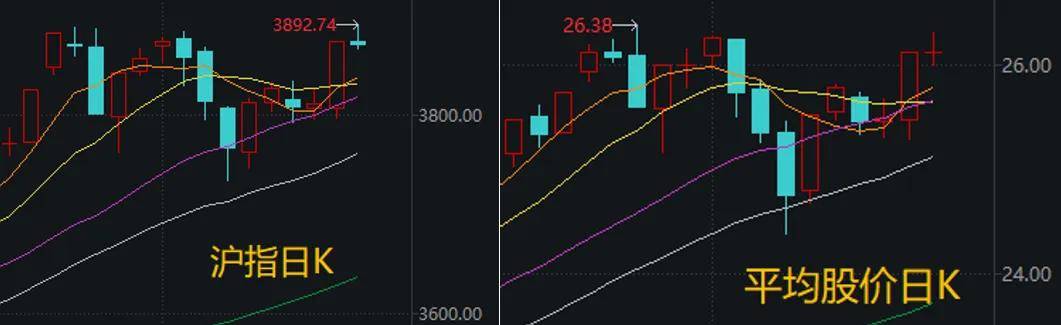
Core Viewpoint - The A-share market has entered a "slow bull" phase, with fluctuations in trading volume observed during the week of September 8-12, indicating a stabilization and potential upward trend in the market. Market Trends - The market has shown signs of stabilization and recovery since early August, with major indices reaching new highs before a slight pullback, forming a doji candlestick pattern [1] - The 5-week moving average has continued to provide support since late June, indicating a sustained upward trend [2] Investment Strategy - Investors are encouraged to adopt a longer-term perspective, reducing sensitivity to daily fluctuations and focusing on overall market trends [4] - Those with confidence in the medium to long-term trends are more likely to engage in "bottom-fishing" during market corrections, as evidenced by positive feedback for those who bought during recent dips [5] Short-term Market Outlook - A report from Huajin Securities suggests that the A-share market may continue to experience fluctuations while maintaining a slow bull trend [6] - Key factors influencing this outlook include: - Ongoing positive policies and limited external risks [7] - Market sentiment indicators have not fully adjusted, with the Shanghai Composite Index's valuation percentile at 65.7% and turnover rate at 75.6%, indicating room for further adjustment [7] - Industry rotation is still incomplete, with only the agriculture sector showing signs of recovery [8] Economic Indicators - The economy and corporate earnings are in a weak recovery phase, with August export growth slowing and credit growth rebounding, suggesting continued economic improvement [9] - The Producer Price Index (PPI) decline has narrowed, indicating potential recovery in industrial profits [9] Liquidity Conditions - Short-term liquidity remains accommodative, with expectations of a Federal Reserve rate cut in September, which may support market liquidity [9] - Historical trends suggest that during bull market corrections, foreign capital tends to flow in, while domestic financing may face outflow risks [9] Sector Performance - Recent market performance has shown a divergence in styles, with small-cap stocks performing well and sectors such as electronics, real estate, and agriculture showing relative strength [9] - The market is expected to continue its upward trajectory, supported by reasonable valuations and emerging positive factors, including a potential Fed rate cut and a rebound in public fund issuance [11] Industry Focus - In September, sectors such as power equipment, telecommunications, computers, electronics, automotive, and media are recommended for attention [12] - The TMT (Technology, Media, and Telecommunications) sector is highlighted as a potential mainline focus due to ongoing industry trends and catalysts, with recent performance indicating its strength [12]

光大证券9月五维行业比较:预计市场风格主要偏向成长与均衡
Zhi Tong Cai Jing· 2025-09-14 00:55
Group 1 - The core viewpoint of the report indicates that the market style is expected to lean towards growth and balance, with high valuation sectors being relatively more attractive for investment [1][4] - The "Five-Dimensional Industry Comparison Framework" is introduced, which analyzes multiple factors affecting stock prices, emphasizing the need for a comprehensive judgment on various influences [1] - Historical backtesting shows that industries with higher scores in the framework tend to perform better, with annualized returns of 11.8% for the top group and -10.5% for the bottom group, indicating a strong correlation between score and performance [2] Group 2 - In September, subjective judgments suggest that market sentiment may remain high, leading to a rotation between growth and balanced styles, with financing and public funds expected to drive future capital [3] - The report highlights that sectors such as electric equipment, communication, computer, electronics, automotive, and media scored high and are recommended for future investment focus [4]

【固收】继续高位压缩估值——可转债周报(2025年9月8日至2025年9月12日)(张旭/李枢川)
光大证券研究· 2025-09-14 00:05
Market Overview - The China Convertible Bond Index increased by 0.4% during the week of September 8 to September 12, 2025, marking two consecutive weeks of gains, while the overall index rose by 2.1% [7] - Year-to-date, the China Convertible Bond Index has risen by 16.0%, compared to a 21.2% increase in the overall index, indicating that the convertible bond market has underperformed relative to the equity market [7] Performance by Rating - High-rated bonds (AA+ and above) decreased by 0.05%, while medium-rated bonds (AA) increased by 2.06%, and low-rated bonds (AA- and below) rose by 0.99%, showing that high-rated bonds underperformed compared to others [8] Performance by Size - Large-scale convertible bonds (over 5 billion) fell by 0.06%, medium-scale bonds (between 500 million and 5 billion) increased by 1.0%, and small-scale bonds (under 500 million) rose by 1.3%, indicating that larger bonds did not perform as well as smaller ones [8] Performance by Par Value - Ultra-high par value bonds (over 130 yuan) increased by 2.66%, high par value bonds (between 110 and 130 yuan) rose by 0.72%, and medium par value bonds (between 90 and 110 yuan) increased by 1.37%, while low and ultra-low par value bonds saw slight declines [8] Average Metrics - As of September 12, 2025, the average price of convertible bonds was 132.0 yuan, the average par value was 105.10 yuan, and the average conversion premium rate was 26.0% [9] - The number of outstanding convertible bonds decreased to 437, with a total balance of 607.83 billion yuan [9] Market Dynamics - The convertible bond market is currently experiencing high valuation levels, with all valuation metrics approaching or exceeding historical highs [10] - Since August 25, 2025, convertible bonds have not outperformed their underlying stocks, indicating a phase of high valuation compression [10] - Despite the strong demand for convertible bonds, the overall market remains in a high valuation phase, suggesting a need for strategic adjustments in asset allocation [10]

券商首席经济学家及核心研究员“转会”持续升温
Zheng Quan Ri Bao Zhi Sheng· 2025-09-12 16:12
Core Viewpoint - The recent recruitment of chief economists by securities firms highlights the ongoing talent movement in the brokerage research sector, driven by multiple factors including policy guidance, industry mergers, fee reforms, and AI empowerment [1][3]. Group 1: Talent Movement in Brokerage Research - There has been a high frequency of personnel changes in key research positions within brokerage firms this year, with notable figures such as Xun Yugen and Yan Xiang switching firms [2]. - The movement of prominent research talents reflects not only personal career choices but also the dynamic adjustments in the brokerage research business landscape [2]. Group 2: Influencing Factors - The deepening reform of public fund fee structures is a key variable triggering talent movement and restructuring within the brokerage research industry, with brokerage commission rates dropping by 33.98% year-on-year in the first half of the year [3]. - Policy guidance has provided direction for the development of brokerage research businesses and talent flow, with new evaluation indicators introduced to encourage positive contributions from chief economists [4]. Group 3: Talent Acquisition Strategies - The demand for research talent is increasing, leading to a clear differentiation in talent acquisition paths, with smaller brokerages relying more on public recruitment to attract top research talent [5]. - Larger brokerages prefer internal cultivation or targeted recruitment to build their research talent pool, ensuring continuity in research style and team stability [6]. Group 4: Future Outlook - The transition of chief economists and core researchers is seen as an inevitable result of changes in industry development stages and competitive landscapes, with expectations for further professional orientation and value creation in brokerage research [6].
中科驭数聚焦自研DPU核心技术 构建低时延网络方案与产业生态
Zheng Quan Ri Bao Wang· 2025-09-12 13:26
Core Insights - The evolution of securities trading technology focuses on enhancing trading efficiency and speed, transitioning from manual trading to electronic, and now to AI and big data-driven smart trading, supported by robust network infrastructure [1] - The Chinese government is emphasizing the need for self-controllable core systems in the financial industry, with a mandate for domestic production of key financial infrastructure by 2027 [1] Group 1: Company Developments - Zhongke Yushu Technology Co., Ltd. has launched the SWIFT series of low-latency network DPU products, marking a significant achievement in China's financial infrastructure innovation [1][2] - The SWIFT-2200N DPU card has demonstrated a latency of only 0.98 microseconds in testing, which is a 20% improvement over the Solarflare X2522 [2] - The SWIFT series products are compatible with various domestic CPUs and operating systems, showcasing their comprehensive self-controllable capabilities and open ecosystem collaboration [2] Group 2: Market Applications - The SWIFT series products are already deployed in core trading systems of multiple domestic securities firms and exchanges, supporting hundreds of billions in daily trading volume [2] - A case study with Everbright Securities demonstrated that the SWIFT-2200N Pro outperformed the Intel + X2522 solution in terms of latency and stability, leading to zero faults during long-term operation [3] Group 3: Future Prospects - The company plans to produce the K3 chip by 2026, which will support 200 Gbps processing and nanosecond-level latency, aiming to cover over 80% of core trading scenarios in China [3] - Zhongke Yushu is actively participating in industry standard-setting and has contributed to over 50 standards, positioning itself as a key player in the financial IT market [4] - The market potential for the SWIFT series products is significant, with plans to expand into other sectors requiring low-latency networks, such as IoT, 5G/6G, and defense [5]
收评:沪指震荡微跌,金融、酿酒等板块走低,存储芯片概念等活跃
Zheng Quan Shi Bao Wang· 2025-09-12 07:57
Market Performance - The three major stock indices experienced a rebound after hitting lows, but weakened again towards the end of the trading session, with the ChiNext Index falling over 1% while the Sci-Tech 50 Index rose against the trend [1] - As of the market close, the Shanghai Composite Index fell by 0.12% to 3870.6 points, the Shenzhen Component Index decreased by 0.43% to 12924.13 points, and the ChiNext Index dropped by 1.09% to 3020.42 points, while the Sci-Tech 50 Index increased by 0.9% [1] - The total trading volume in the Shanghai and Shenzhen markets reached 25,486 billion yuan [1] Sector Performance - Sectors such as insurance, banking, brokerage, and liquor saw declines, while sectors like non-ferrous metals, real estate, semiconductors, and steel experienced gains [1] - Active sectors included storage chips, gold concepts, and rare earth concepts [1] Market Analysis - According to Everbright Securities, the current bull market is primarily driven by liquidity and may be in its mid-term phase [1] - The performance of the economic fundamentals has not significantly influenced this market trend, indicating that liquidity is the main driving force [1] - Since the market's rise on April 8, the Shanghai Composite Index has shown minimal overall pullback, although recent adjustments have occurred [1] - Historically, bull markets do not develop instantaneously, and the current adjustment has not exceeded past levels [1] - The TMT (Technology, Media, and Telecommunications) sector may become the main focus in the mid-term of the bull market, with financial sectors to be monitored as the market transitions to its later stages [1] - If the bull market shifts towards being driven by fundamentals, advanced manufacturing will be a key area of interest, with real estate also being a focus in the later stages of the market [1]
资金越跌越买,证券ETF龙头(159993)盘中净申购4800万份,连续11天获资金净流入
Xin Lang Cai Jing· 2025-09-12 07:49
Group 1 - The core viewpoint indicates that the securities sector is experiencing a decline, with major stocks like Dongfang Securities and Guotai Haitong leading the drop, while the Securities ETF is seeing significant net inflows [1][2] - The market has shown a collective downturn, with the three major indices closing lower and a trading volume of 2.52 trillion yuan, which is an increase of 832 billion yuan compared to the previous trading day [1] - East China Securities suggests that the reduction in sales service fees and the differentiated commission structure will promote long-term investment behaviors, positively impacting the growth of brokerage businesses [1] Group 2 - The Securities ETF closely tracks the Guozheng Securities Leader Index, reflecting the performance of quality listed companies in the securities theme within the Shanghai and Shenzhen markets [2] - As of August 29, 2025, the top ten weighted stocks in the Guozheng Securities Leader Index account for 79.16% of the index, with Dongfang Wealth and CITIC Securities being the top two [2]






资本市场聚焦(八):公募费改三阶段启动,销售费率优化助推长期投资和权益类发展
Donghai Securities· 2025-09-12 06:55
Investment Rating - The industry investment rating is "Overweight," indicating that the industry index is expected to outperform the CSI 300 index by 10% or more over the next six months [11]. Core Insights - The third phase of the public fund sales fee reform has officially started, aiming to optimize sales fee rates and reduce investor transaction costs. This reform is projected to benefit investors by over 50 billion yuan annually [4][6][7]. - The adjustments in redemption fees and sales service fees are expected to enhance fund stability and promote long-term investment behaviors among investors [5][6][7]. - The report emphasizes the importance of differentiated commission structures to encourage sales institutions to focus more on individual investors and equity funds, fostering a positive cycle of sales and institutional investment [7]. Summary by Sections Sales Fee Reform - The new regulations will lower subscription and redemption fee rates across various fund types, with maximum rates set at 0.8% for equity funds, 0.5% for mixed funds, and 0.3% for bond funds [4]. - Redemption fees will now be fully included in fund assets, simplifying the fee structure and reducing the incentive for rapid trading, which enhances fund stability [5][10]. - Sales service fees for non-money market funds will only be charged in the first year, significantly lowering investor costs and encouraging long-term investment habits [6]. Market Impact - The report notes that the first two phases of the fee reform have already shown positive results, with a total annual benefit to investors exceeding 500 billion yuan expected from all three phases combined [7]. - The commission rate for trading has decreased significantly, with a projected drop of 34% year-on-year for the first half of 2025, indicating a more favorable trading environment for investors [8]. Recommendations - The report suggests that the public fund industry is poised for high-quality development under the new regulations, which will positively stimulate brokerage business growth. It recommends focusing on opportunities in mergers and acquisitions, wealth management transformation, and innovative licensing [7].
光大证券跌2.05%,成交额10.08亿元,主力资金净流出1.92亿元
Xin Lang Zheng Quan· 2025-09-12 06:29
Company Overview - Everbright Securities is located in Shanghai and was established on April 23, 1996, with its listing date on August 18, 2009 [1] - The company primarily engages in four main business areas: securities brokerage, investment banking, securities investment, and asset management [1] - The revenue composition of the company includes wealth management (51.86%), investment trading (12.07%), institutional clients (11.34%), asset management (11.06%), other (8.81%), and corporate financing (7.48%) [1] Stock Performance - As of September 12, Everbright Securities' stock price decreased by 2.05%, trading at 19.15 CNY per share, with a total market capitalization of 882.97 billion CNY [1] - Year-to-date, the stock price has increased by 6.38%, with a slight decline of 0.78% over the last five trading days and a marginal decrease of 0.05% over the last 20 days [1] - Over the past 60 days, the stock has appreciated by 13.31% [1] Financial Performance - As of June 30, the company reported a net profit of 1.683 billion CNY for the first half of 2025, representing a year-on-year growth of 21.03% [2] - The company had zero operating revenue for the same period [2] Shareholder Information - As of June 30, the number of shareholders decreased to 156,700, a reduction of 5.68% from the previous period [2] - The average number of circulating shares per shareholder increased by 6.03% to 24,951 shares [2] - Cumulative cash dividends paid by the company since its A-share listing amount to 16.56 billion CNY, with 3.179 billion CNY paid out in the last three years [3] Institutional Holdings - As of June 30, the top ten circulating shareholders include Hong Kong Central Clearing Limited, which increased its holdings by 29.02 million shares to 108 million shares [3] - Other notable shareholders include Huatai-PB CSI 300 ETF and GTJA CSI All Share Securities Company ETF, with varying changes in their holdings [3]
孚能科技上市5年累亏45亿 实控人变更后营收下滑存货上升
Xin Lang Cai Jing· 2025-09-12 06:28
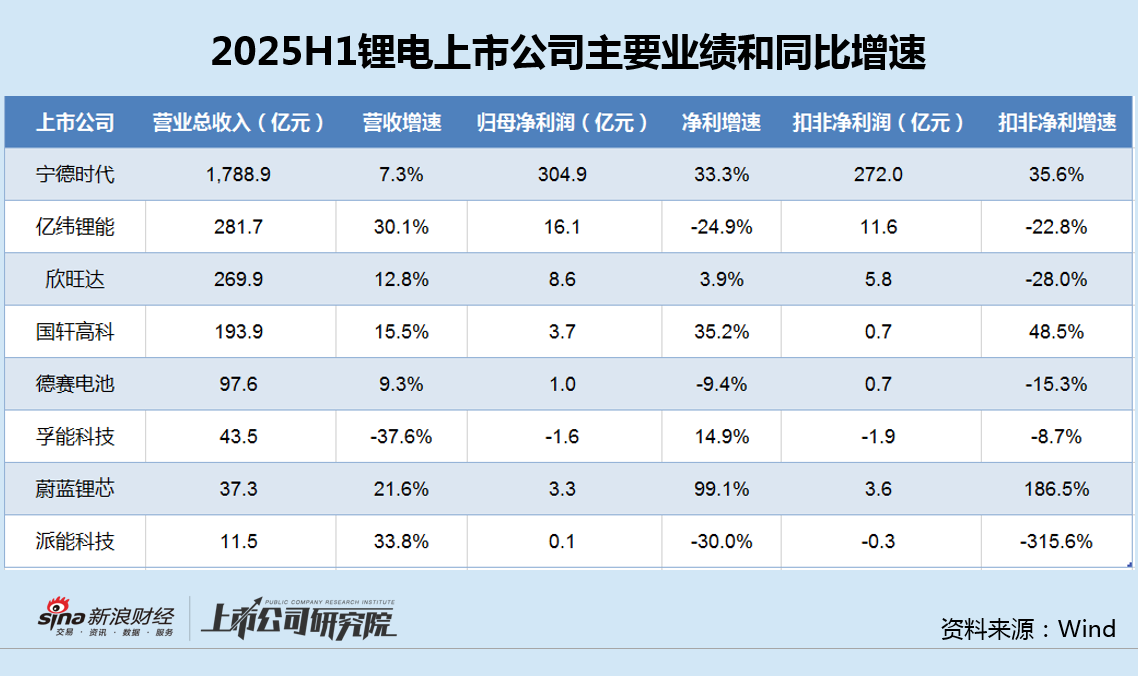
Core Viewpoint - The performance of lithium battery companies listed on the A-share market shows a significant divergence in net profits, with most companies experiencing revenue growth while net profits reveal a stark contrast, particularly for Funeng Technology, which continues to face operational challenges [1][4]. Group 1: Company Performance - Funeng Technology reported a revenue of 4.35 billion yuan in the first half of the year, a year-on-year decline of 37.6%, making it the only major lithium battery company to experience a revenue drop [1][3]. - The company's net profit attributable to shareholders was -160 million yuan, although this loss was reduced by 14.92% compared to the previous year, marking the fifth consecutive year of losses [1][4]. - In contrast, other companies like CATL and EVE Energy showed positive revenue growth, with CATL achieving 178.89 billion yuan in revenue, a 7.3% increase, and a net profit of 30.49 billion yuan, up 33.3% [3]. Group 2: Inventory and Production Issues - Funeng Technology's inventory increased to 3.565 billion yuan, a 58% year-on-year rise, with inventory turnover days extending to 149.27 days, up 71% [4][7]. - Despite the inventory buildup, the company is expanding production capacity, with a projected output of 20 GWh for 2023 and a capacity of 55 GWh by the end of the year [7]. - The company acknowledged that its new production capacity is still in the ramp-up phase, indicating potential underutilization of capacity [7]. Group 3: Ownership and Strategic Changes - In January 2023, Funeng Technology underwent a significant change in control, with the major shareholder shifting to Guangzhou Industrial Investment Holding Group, which is now the actual controller [7][8]. - Following this change, the company received support in terms of funding, financial coordination, and research collaboration, but faces challenges in balancing technological investment with profitability [8]. - The new shareholders have plans to reduce their stakes, indicating a potential shift in strategic focus as the company navigates its financial and operational hurdles [8].