
小米

Search documents
从技术开源到文化融合:AI大模型如何重塑全球创新生态与人文温度
Huan Qiu Wang· 2025-09-23 02:53
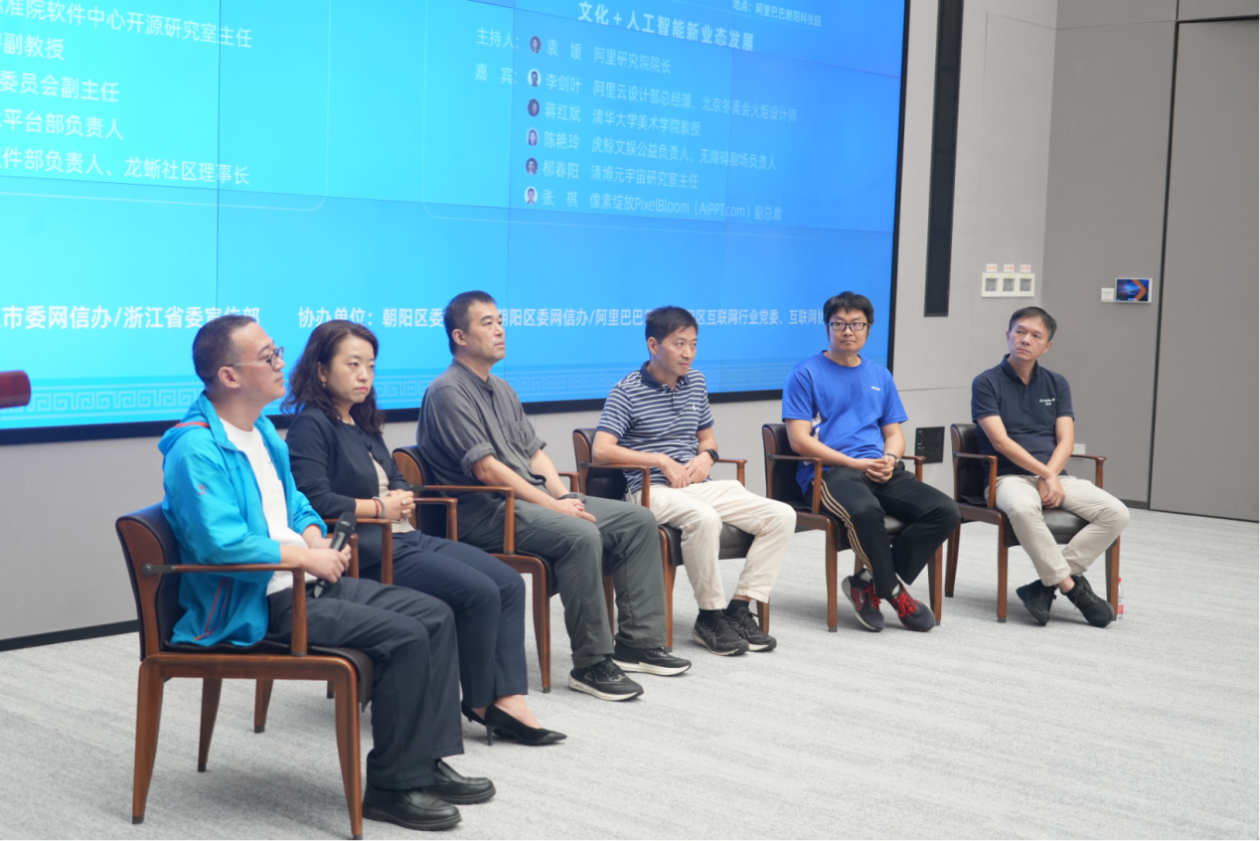
Core Insights - The event "Cultural Intelligence New Business Forms: Industry Empowerment and Innovation Pathways" was held to explore the integration of open-source AI technology with cultural industry innovation [1] - China has made significant progress in the open-source ecosystem, now leading globally in open-source large models [3][4] - The discussion emphasized the need for a governance framework addressing data quality, copyright, and ethical considerations in AI development [5][9] Group 1: Open Source Development - China has transitioned from being a user of open-source technology to a contributor, with major companies like Alibaba, Baidu, and Tencent leading this change [1][3] - The number of Chinese developers has surpassed that of the U.S., providing a strong foundation for a thriving open-source ecosystem [3] - Chinese companies are adopting a more open strategy in AI development compared to U.S. firms, which tend to keep core models closed [4] Group 2: AI and Cultural Integration - AI is transforming cultural creation and dissemination, moving from being a mere tool to becoming a creative partner [7][10] - Examples include the collaboration between Alibaba Cloud and the Paris Olympic Committee to restore historical images using AI [7] - AI is enhancing accessibility in cultural services, allowing for tailored experiences for visually and hearing-impaired audiences [7] Group 3: Governance and Ethical Challenges - The current lack of standardized licensing frameworks for AI models poses challenges for transparency and data quality [5] - Experts suggest that AI should be recognized as a co-creator in copyright discussions, with proposals for blockchain to document contributions [9] - Balancing model capabilities with safety and regulatory oversight is crucial for fostering innovation while ensuring ethical standards [9][10] Group 4: Future Directions - The synergy between technology and culture is essential for societal progress, with a focus on both innovation and humanistic values [10] - China's dual development path of "technological inclusivity + cultural integration" serves as a model for AI advancement [10] - The potential for China to lead in various fields, including mobile and consumer electronics, is highlighted as a significant opportunity for global influence [10]


碳陶刹车盘专家交流
2025-09-23 02:34
Summary of Key Points from the Conference Call Industry and Company Involved - The discussion revolves around the **carbon-ceramic brake disc** technology in the **electric vehicle (EV)** industry, specifically focusing on **Li Auto** and its collaboration with **Jinbo Technology** [1][2][5][18]. Core Insights and Arguments - **Application of Carbon-Ceramic Brake Discs**: Li Auto plans to implement carbon-ceramic brake discs in its high-end L series models starting in **2026**, aiming for **20%** of these models to feature this technology by **2027**. This shift is driven by the need for weight reduction and improved braking performance, potentially increasing the vehicle's range by **10-20 km** and reducing the braking distance to approximately **36 meters** [1][5][17]. - **Weight Reduction Benefits**: Carbon-ceramic brake discs can reduce weight by about **50%** compared to traditional cast iron discs. Although there are no national subsidies, local governments provide research and development subsidies for companies adopting lightweight materials, typically around **10%** of the lightweight component cost [1][3]. - **Cost and Supplier Dynamics**: The cost of domestic carbon-ceramic brake discs has decreased to around **20,000 yuan** per set, significantly lower than international counterparts. Jinbo Technology, the main supplier, boasts a production capacity of **4 million discs per year** and offers products that are **two-thirds cheaper** than similar foreign products [1][9][8]. - **Technological Maturity and Market Trust**: The introduction of carbon-ceramic brake discs in models like the **Xiaomi Su Qi** has marked a significant advancement in domestic technology, enhancing market trust and prompting other EV manufacturers to upgrade their configurations [1][6][7]. - **R&D and Supplier Selection Process**: Li Auto's selection of Jinbo Technology was based on its cost control, process optimization, and service responsiveness. The collaboration began in **2023**, with a focus on material stability and cost management [2][18]. Other Important but Potentially Overlooked Content - **Impact on Braking Performance**: The use of carbon-ceramic brake discs not only improves the vehicle's range but also enhances braking performance, with a more stable friction coefficient and better initial braking force, leading to a smoother driving experience [4][6]. - **Government Support for R&D**: Local government initiatives, such as the **New Energy Vehicle Industry Development Special Fund**, are crucial in supporting R&D efforts, allowing companies like Li Auto to secure additional resources for technology advancement [2][14]. - **Competitive Landscape**: While domestic suppliers are making strides in hardware development, they still lag behind established companies like Brembo in software development and overall project experience. This gap presents both a challenge and an opportunity for growth in the domestic market [11][10]. - **Future Market Trends**: The market for carbon-ceramic brake discs is expected to grow, particularly in the EV sector, as manufacturers seek to enhance vehicle performance and efficiency while reducing costs [6][7]. - **Collaboration with Established Brands**: Li Auto's partnership with Brembo focuses on developing comprehensive braking solutions, although Brembo does not provide hardware due to increasing competition from domestic manufacturers [10][12]. This summary encapsulates the key points discussed in the conference call, highlighting the strategic direction of Li Auto in the context of the evolving EV market and the implications of adopting carbon-ceramic brake technology.


耐世特20250922
2025-09-23 02:34
Key Points Summary of the Conference Call Company Overview - The conference call discusses the performance and strategic direction of **Nexteer Automotive** in the context of the automotive industry, particularly focusing on steering technologies and electric power steering (EPS) systems. Core Insights and Arguments - **New Product Launch**: Nexteer plans to begin mass production of new products in the first half of 2026, which is among the company's top ten key projects. The production volume is expected to be flexible, depending on technological reliability and regulatory environment. The unit value is projected to be at least 3,000 yuan [2][6] - **Market Dynamics**: The advancement of steer-by-wire technology is progressing rapidly in North America and Europe, with significant developments from T Company and other major automakers like Volkswagen, Mercedes-Benz, Stellantis, and Toyota. However, due to a slowdown in electrification, many projects are delayed by at least two years. In the short term, large-scale commercialization is primarily focused on the Chinese market [2][10] - **Strategic Partnerships**: Nexteer has become a strategic supplier for several Chinese automakers, including Geely, Great Wall, Chery, GAC, BYD, and new energy vehicle companies like Li Auto, Xpeng, and Xiaomi. The new energy vehicle companies are moving faster than traditional manufacturers, indicating continued opportunities in the existing customer base [2][11] - **Product Solutions**: To address price competition in the Chinese market for C-EPS, Nexteer offers various product solutions, including brushed and brushless motor EPS, as well as high-output versions of C-EPS. The company maintains an advantage in the high-end R-EPS sector and is expanding into DPEPS, having secured orders from four domestic clients [2][12] Additional Important Content - **Cost Management**: Nexteer has achieved a 20% cost reduction through modular design and autonomous motor production, with plans to gradually expand this initiative from the Chinese market to the Asia-Pacific and Western markets [4][16] - **Revenue Growth**: The revenue increase in 2025 is expected to primarily come from DP EPS, although overall growth will still rely on C EPS and R EPS. Strong customer growth was noted in the first half of the year, particularly with BYD and Xiaomi [4][15] - **Market Performance**: The North American market is expected to perform better than anticipated in the second half of the year, driven by improved production efficiency and demand. The European market is also projected to enhance profitability through operational improvements [17][19] - **Future Orders**: Nexteer anticipates securing its first EMB order from a traditional Chinese OEM by the end of 2025 or early 2026, with ongoing efforts to establish a foothold in overseas markets [23] - **Technological Advancements**: The rear-wheel steering technology is rapidly commercializing in China, with expectations of a demand for approximately 1 million units in the coming years. This technology is gaining traction among overseas clients due to effective cost control [25][26] This summary encapsulates the key points discussed in the conference call, highlighting Nexteer's strategic initiatives, market dynamics, and future outlook in the automotive industry.

罗永浩否认跑路:确实正常出差;贾国龙否认向罗永浩道歉;比亚迪李云飞回应巴菲特清仓;淘宝将首次在20国同步启动双11丨邦早报
创业邦· 2025-09-23 00:14
Group 1 - Luo Yonghao responded to debt issues, stating that his frozen equity totals approximately 17.58 million yuan, with 17.1395 million yuan related to Chengdu Smart Technology Group [3] - Luo Yonghao clarified that he is not "running away" but is on a normal business trip, and he expressed his love for Shanghai [6] - The founder of Xibei, Jia Guolong, denied reports of apologizing to Luo Yonghao, calling the claims false [4] Group 2 - BYD's public relations manager commented on Warren Buffett's gradual sell-off of shares, emphasizing that buying and selling stocks is normal [4] - The automotive industry saw a 13.6% year-on-year increase in domestic passenger car sales from January to August 2025, totaling 14.747 million units [18] - The global PC gaming hardware market is projected to grow by 35% in 2025, reaching $44.5 billion [19] Group 3 - SHEIN launched the "SHEIN Xcelerator" brand incubation and support program for emerging designers and brands globally [12] - TetherIA.ai completed a multi-million dollar angel round of financing, with funds aimed at team expansion and product development [13] - The new Mercedes-AMG GT 50 sports car was launched at a price of 998,000 yuan, featuring a high-performance engine [14]
小米汽车的“必修课”迎来大考
Hu Xiu· 2025-09-22 13:35
Core Viewpoint - Xiaomi Auto's recall of 116,887 SU7 electric vehicles highlights safety concerns related to L2 autonomous driving features, particularly in extreme scenarios, prompting a software update via OTA to enhance system reliability [1][2][11]. Group 1: Recall Details - Xiaomi Auto has initiated a recall for certain SU7 standard version electric vehicles produced between February 6, 2024, and August 30, 2025, totaling 116,887 units [1]. - The recall includes two specific models: 98,462 units of XMA7000MBEVR2 and XMA7000MBEVR5, and 18,425 units of BJ7000MBEVR2 [2]. - The recall is due to insufficient recognition and response capabilities of the L2 highway navigation assistance system in extreme scenarios, which may increase collision risks if the driver does not intervene promptly [2][10]. Group 2: Software Update and Safety Measures - The recall will not require vehicles to return to the factory; instead, it will be addressed through an OTA software update that optimizes speed control strategies and enhances the reliability of the highway navigation assistance feature [2][21]. - The recall is classified under safety defect codes, indicating it is a passive recall influenced by regulatory investigations rather than a proactive software upgrade by the company [2][4]. Group 3: Industry Context and Standards - The recall reflects broader industry challenges regarding the marketing and technical realities of L2 autonomous driving features, emphasizing the gap between consumer expectations and actual system capabilities [11][12]. - New national standards for intelligent connected vehicles are being proposed, which will set comprehensive safety requirements for various driving assistance functions, including those relevant to the recent recall [7][17]. - The recent tragic accident involving a Xiaomi vehicle under autonomous driving conditions has underscored the need for improved safety measures and clearer definitions of driving assistance capabilities [5][15]. Group 4: Future Implications - The recall signifies a shift in the automotive industry towards prioritizing safety alongside technological innovation, with an emphasis on responsible marketing and accurate consumer information [25][26]. - As the industry moves towards stricter regulations and standards, companies must enhance their technical capabilities, including cloud services and software development, to remain competitive [22][24].
星闪+开源鸿蒙生态,迎来传统家电巨头
Guan Cha Zhe Wang· 2025-09-22 13:28
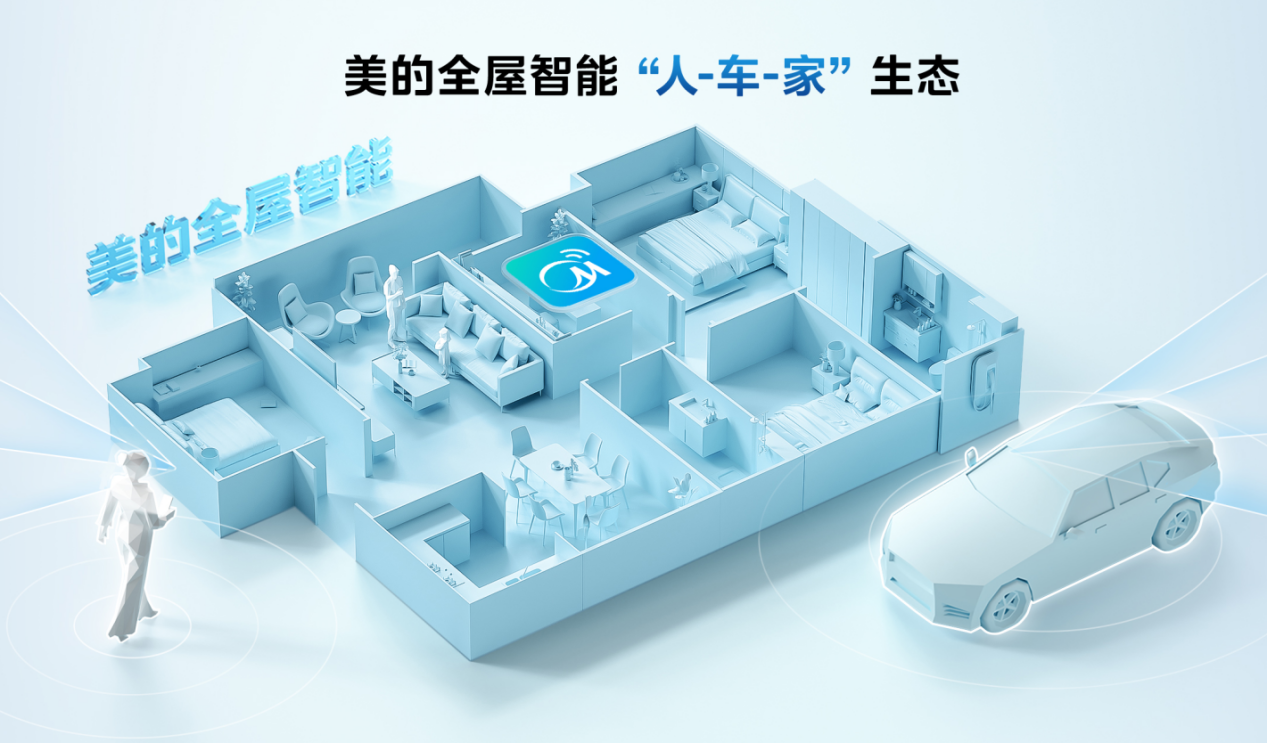
Core Viewpoint - Midea has established a strategic partnership with Huawei to enhance its open ecosystem strategy, particularly focusing on the integration of "people-vehicle-home" connectivity, marking a significant development in the home ecosystem [1][3]. Group 1: Strategic Cooperation - The collaboration will focus on multiple key areas including enterprise management, AIGC, ICT infrastructure, green low-carbon initiatives, cloud services, product development, and internationalization [2]. - Midea aims to leverage Huawei's technology to accelerate the construction of its open ecosystem, particularly filling the gap of "automobiles" in the home ecosystem to counter Xiaomi's invasion in the traditional home appliance sector [3]. Group 2: AI and Smart Home Integration - The partnership will involve comprehensive cooperation in AI, with a focus on "technology empowerment + scenario implementation," establishing a special task force to tackle challenges in multi-modal AI algorithms, edge computing, and AI security [7]. - Midea and Huawei will work together to create integrated smart home solutions, enhancing product innovation and user experience through cross-brand device collaboration and scenario linkage [8]. Group 3: Broader Industry Impact - The cooperation will also encompass areas such as "people-vehicle-home" connectivity, digital energy temperature control products, and the digital transformation of medical imaging equipment [9]. - Midea's chairman emphasized the importance of connectivity and computing technology in their core layout of smart homes, smart factories, smart buildings, and smart hospitals, aiming to provide replicable "AI + industry" solutions for clients [9].

46亿封单,引爆整条赛道
3 6 Ke· 2025-09-22 11:11
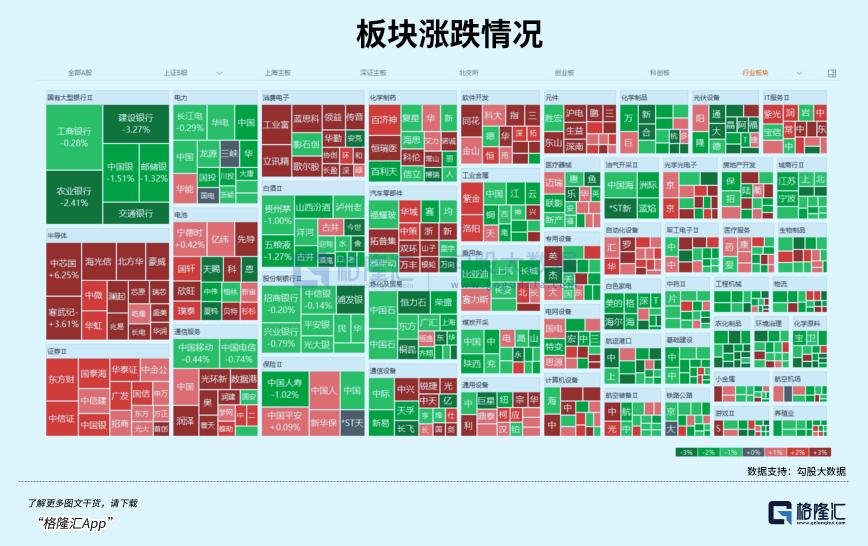
Core Viewpoint - The surge in the consumer electronics sector, particularly driven by Lixun Precision and its connection to Apple, indicates a strong market trend supported by multiple positive catalysts [6][12][20]. Market Performance - Major A-share indices collectively rose, with the Shanghai Composite Index up 0.22%, Shenzhen Component Index up 0.67%, and ChiNext Index up 0.55% [1]. - The consumer electronics sector showed significant strength, with a notable increase in the consumption electronics ETF (159732) by 4.47% [1][3]. Company Developments - Lixun Precision's stock hit a limit-up, with a maximum order amount exceeding 4.6 billion yuan, reflecting strong market interest [8]. - Reports indicate that OpenAI has signed an agreement with Lixun Precision to develop a consumer-grade device, which is currently in the prototype stage [6]. - Apple has requested Lixun Precision to increase the daily production of the standard iPhone 17 by approximately 40% due to better-than-expected pre-sale performance [6][7]. Industry Trends - The consumer electronics sector is entering a new growth cycle, driven by AI technology and product innovation, with expectations of significant demand for new products [15][17]. - The upcoming product launches from major companies like Huawei, Meta, and Xiaomi are expected to further stimulate the market [13][14]. Investment Opportunities - The consumer electronics ETF (159732) is highlighted as a suitable investment vehicle, with a high concentration of Apple-related stocks (48.1%) and a total fund size of 3.944 billion yuan [23][24]. - Historical trends suggest that companies positioned in key segments of the supply chain, such as Lixun Precision, are likely to benefit significantly from the ongoing innovation cycle [21][22].

华尔街观察|美资兴趣回升,中国科网巨头迎估值重估2.0
Di Yi Cai Jing· 2025-09-22 10:13
Core Viewpoint - The resurgence of interest in Chinese tech stocks is driven by advancements in AI and the push for self-sufficiency in chip production, leading to significant stock price increases for major companies like Alibaba and Tencent [1][2][3] Group 1: Market Performance - The Hang Seng Tech Index has surged 41% year-to-date, outperforming the Nasdaq's 17% increase, with a notable 13% rise in the current month [1] - Alibaba, Tencent, and Baidu have seen substantial stock price increases this year, with Alibaba up 96%, Tencent up 55%, and Baidu up 59% [2] - AI-related companies, including Alibaba and Bilibili, are experiencing short squeezes, indicating heightened investor interest [1] Group 2: Valuation and Investment Sentiment - Chinese tech stocks are perceived as significantly cheaper than their U.S. counterparts, attracting speculative investments amid improving market sentiment following U.S.-China talks [2] - The anticipated return of capital to emerging markets, particularly in China, is bolstered by a weaker U.S. dollar and the Federal Reserve's potential interest rate cuts [2] Group 3: AI and Cloud Computing Developments - AI advancements are expected to enhance profitability for Chinese tech giants, with Alibaba's cloud business projected to grow 30%-32% year-on-year in the upcoming fiscal quarters [3] - Alibaba's new AI model, Qwen-3-Max-Preview, boasts a tenfold performance improvement and a significant reduction in construction costs [3] - Baidu's focus on its Kunlun chip has drawn attention, with analysts noting its low valuation despite recent stock price increases [3] Group 4: Semiconductor Industry Outlook - The shift towards a multi-chip strategy among Chinese cloud service providers reduces reliance on foreign chip supplies, positively impacting market sentiment [4] - Goldman Sachs expresses optimism about the Chinese semiconductor industry's growth, driven by a large domestic market and ongoing technological advancements [4] - Morgan Stanley forecasts a 62% year-on-year increase in capital expenditures for top Chinese firms, reaching 373 billion yuan [4]

汽车周报:科技外溢,智驾与华为有望承接热情-20250922
Shenwan Hongyuan Securities· 2025-09-22 09:11
Investment Rating - The report maintains a positive outlook on the automotive industry, particularly driven by technology and state-owned enterprise reforms [4]. Core Viewpoints - The automotive sector is expected to benefit from a bull market, with technology-driven segments like robotics and low-altitude economy likely to follow the lead of TMT [4]. - The report highlights the performance of new energy vehicles (NEVs), which saw a retail volume of 268,000 units, a month-on-month increase of 22.94% and a year-on-year increase of 4.69%, resulting in a penetration rate of 59.56% [4]. - The report recommends focusing on domestic leading manufacturers such as NIO, Xiaomi, and Xpeng, as well as component companies with strong growth potential [4]. Industry Situation Update - In the 37th week of 2025, the total retail volume of passenger cars reached 450,000 units, with traditional energy vehicles accounting for 182,000 units and new energy vehicles for 268,000 units [4]. - The report notes a decrease in raw material price indices for both traditional and new energy vehicles over the past week [4]. - The automotive industry recorded a total transaction value of 922.739 billion yuan, with an industry index increase of 2.95% [4][12]. Market Situation Update - The automotive industry index outperformed the CSI 300 index, ranking 4th among primary industries in terms of weekly growth [12]. - A total of 151 stocks in the automotive sector rose, with the largest gainers being Junsheng Electronics, Shanzigao Technology, and Kaiter Co., which saw increases of 44.2%, 39.7%, and 33.8% respectively [18]. - Key events included the release of the national standard for intelligent assisted driving and the launch of NIO's new ES8 model [4][5][7]. Investment Analysis Recommendations - The report suggests focusing on two main lines: technology and state-owned enterprise reforms, recommending strong domestic manufacturers and component companies with robust performance growth [4]. - Specific recommendations include NIO, Ideal Auto, and companies involved in robotics and overseas expansion [4]. - The report emphasizes the importance of monitoring high-quality blue-chip stocks that are still at the bottom of the market [4].




X @外汇交易员
外汇交易员· 2025-09-22 07:51
Recall Information - Xiaomi is recalling 116,887 SU7 vehicles due to safety concerns related to the L2 high-speed navigation assisted driving function's ability to identify, warn, or handle extreme special scenarios [1] - The recall is classified as a safety defect (S) and an investigation-influenced recall (I), indicating it was initiated following a defect investigation by the State Administration for Market Regulation [1] - The issue is planned to be resolved through an OTA (Over-The-Air) upgrade [1]