京东方

Search documents
上市公司耐心资本数据(2007-2025年)
Sou Hu Cai Jing· 2025-10-07 04:20
Core Insights - Patience capital is reshaping the value assessment system in capital markets during a critical period of economic transformation towards "new productive forces" [2] - The article reveals the quantitative characteristics and strategic value of patience capital data from 2007 to 2025, providing insights for investors, policymakers, and enterprises [2] Definition and Quantitative Revolution - Patience capital is defined through a dynamic evaluation system based on the ratio of relational debt and the stability of strategic equity, moving beyond traditional financial metrics [3] - The relational debt ratio reflects the proportion of long-term liabilities in total liabilities, indicating a company's ability to support strategic innovation through debt financing [3] - Strategic equity stability is quantified by the ratio of institutional investors' shareholding and the standard deviation of their holdings over the past three years, indicating stronger strategic commitment [3] Data Innovations - A dual-factor model combining "debt structure + equity stickiness" provides a multidimensional portrayal of capital attributes [4] - Time series standard deviation analysis captures changes in investor behavior patterns, revealing the dynamic evolution of capital patience [4] Industry Distribution and Hard Technology Preference - Patience capital shows significant industry clustering effects, particularly in strategic emerging industries like semiconductors, biomedicine, and new energy [4] - Shenzhen's unicorn enterprises exhibit an average relational debt ratio of 41%, with 13 new unicorns receiving long-term funding from the National Integrated Circuit Industry Investment Fund [4] Regional Competition and Patience Capital Density - The Yangtze River Delta and Pearl River Delta form a dual-core driving pattern for the development of patience capital, with Shenzhen's model centered around industrial funds exceeding one trillion yuan [5] - The high density of patience capital supports the growth of hard technology benchmarks like DJI and BYD, creating a virtuous cycle of "capital-technology-industry" [5] Generational Evolution of Investor Structure - The investor group for patience capital exhibits distinct generational characteristics, with the first generation focusing on absolute returns and risk control, while the second emphasizes industrial synergy and strategic value [6] - The third generation incorporates ESG considerations into long-term investment perspectives, blending value investment with social responsibility [6] Capital Strategic Upgrades - Companies should enhance the efficiency of patience capital allocation through "technological credibility + governance transparency" [8] - Institutional investors need to innovate long-term value assessment models that include non-financial indicators like "technology maturity curve" and "industry ecological niche" [8] - Local governments should implement policies such as tax incentives to lower the participation costs of patience capital [9] Future Outlook - The strategic value of patience capital will become more prominent with the emergence of disruptive technologies like AI and quantum computing [10] - Companies receiving patience capital support in technology fields with R&D cycles exceeding five years have a success rate 2.3 times higher than the market average [10] - Capital markets must leverage this historical opportunity through institutional innovations to attract global patience capital [10]


国产OLED屏幕,距离领跑还有多远?
3 6 Ke· 2025-10-06 03:02
Core Insights - The article highlights the transformation of China's OLED industry from a follower to a parallel player and now aiming to become a leader in the global market, with significant contributions from companies like BOE, Visionox, Tianma, and TCL Huaxing [1][21]. Group 1: Historical Development - The development of domestic OLED technology began in the 1990s, with Tsinghua University establishing an OLED project group in 1996, laying the groundwork for the industry [2]. - In 2001, Visionox was founded, focusing on key technologies that would later support the production of flexible OLED screens [2][4]. - The early 2010s saw companies like BOE and OLED companies facing challenges due to weak technology accumulation and reliance on imports for critical components [4][6]. Group 2: Market Evolution - The global display market experienced a technological revolution in 2017, significantly improving OLED yield rates, which accelerated the mainstream adoption of OLED screens, particularly after the launch of the iPhone X [7][9]. - Government policies and capital investments supported the domestic OLED industry, with local governments providing incentives for companies like BOE and Visionox to establish production lines [9][11]. - Domestic manufacturers began to gain more influence, with Visionox leading the establishment of international standards in flexible displays [11]. Group 3: Current Challenges - Despite achieving over 45% market share, domestic OLED manufacturers still face significant gaps in high-end markets compared to Samsung and LG [18]. - The industry is characterized by long cycles, high leverage, and substantial R&D investments, leading to revenue growth but profit pressures [18][20]. - Key materials and equipment for OLED production remain heavily reliant on imports, particularly in high-performance organic materials and deposition equipment [16][18]. Group 4: Future Directions - Domestic OLED companies are encouraged to focus on high-value segments such as high-end laptops, automotive displays, and innovative products like foldable screens to avoid price wars in saturated markets [20]. - There is a need for enhanced collaboration between upstream material suppliers and downstream panel manufacturers to improve innovation and reduce dependency on foreign products [16][21]. - The article emphasizes that true leadership in the OLED market will require mastering next-generation display technologies and establishing control over standards and patents [22][23].


Sora登顶苹果App Store;阿里云升级全栈AI体系;英伟达拟投1000亿助OpenAI建数据中心|一周AI要闻回顾
36氪· 2025-10-04 13:22
Core Insights - OpenAI launched the AI video generation app Sora, which quickly became the top free app on the Apple App Store, surpassing competitors like Google’s Gemini and ChatGPT [2] - Alibaba Cloud announced a significant investment of 380 billion yuan over the next three years to enhance its cloud and AI infrastructure, showcasing its commitment to AI development [5][10] - Nvidia plans to invest up to $100 billion to assist OpenAI in building data centers, which could lead to substantial revenue growth for Nvidia [9] Group 1: OpenAI and AI Applications - OpenAI's Sora app allows users to create and share AI-generated videos, raising discussions about the safety and legality of content generation [2] - The Sora2 model behind the app generates highly realistic scenes and sounds, indicating advancements in AI technology [2] - OpenAI's investment in robotics company 1X Technologies aims for a valuation of $10 billion, reflecting the growing interest in AI-driven robotics [14] Group 2: Alibaba and AI Infrastructure - Alibaba Cloud's CTO introduced seven new models at the Yunqi Conference, covering various AI fields, including language and visual processing [3] - The flagship model Qwen3-Max has over one trillion parameters and outperforms competitors in programming and tool usage tests [3] - Alibaba's stock rose over 7% following the announcement of its AI investment plans, indicating positive market reception [5] Group 3: Other AI Developments - Kuaishou launched the Keling 2.5 Turbo video generation model, which reduces costs by 30% while improving output quality [7] - JD.com introduced the "He She It" digital assistant capable of answering questions and facilitating various tasks, showcasing advancements in AI personal assistants [8] - SenseTime's AI video agent Seko attracted over 100,000 creators within a month, highlighting the demand for user-friendly AI content creation tools [8] Group 4: Market Trends and Investments - BlueFocus invested in PureblueAI, marking its first strategic investment in AI following its "All in AI" strategy [13] - Fivetran is in talks to acquire DBT Labs, indicating a trend of consolidation in the data technology sector [15] - The rapid rise of the Neon-Money Talks app, which allows users to earn money through voice calls, raises concerns about data privacy in the AI era [9]

面板大厂三季度出货量大幅回升
Ju Chao Zi Xun· 2025-10-03 09:02
Core Insights - The OLED display market is experiencing significant growth driven by increased shipments of flexible OLED panels from Samsung Display, particularly due to the launch of Apple's iPhone 17 and Samsung's Galaxy S25 series [2] - LG Display's panel shipments surged from 10.8 million units in Q2 to 20 million units in Q3, effectively doubling its output [2] - Chinese panel manufacturers also reported growth in Q3, with BOE's shipments increasing by approximately 5.4 million units and Visionox's shipments rising by about 6.7 million units [2] Company Highlights - LG Display is a key supplier for Apple's smartphones, accounting for about 60% of the panels used in the iPhone 17 Pro Max [2] - BOE's main clients include Chinese smartphone brands such as OPPO and Apple, while Visionox primarily supplies panels to brands like Honor, Xiaomi, and Vivo [2] Market Outlook - UBI Research's Vice President, Han Chang-wook, predicts a significant recovery in shipments from Korean panel manufacturers since Q3, with a key challenge being the stability of supply for major client Apple [2]


艺术与网球完美融合,“中网嘉年华·超现场”在798盛大启幕
Bei Jing Ri Bao Ke Hu Duan· 2025-10-01 02:38
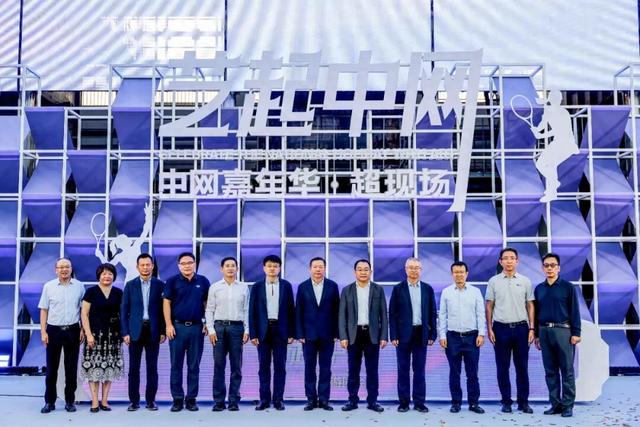
观赛派对:13个特色点位打造沉浸式体验 转自:北京日报客户端 9月30日下午,"艺起中网·国庆游园会"暨"中网嘉年华·超现场"开幕仪式在北京798·751园区动力广场隆 重举行。活动以艺术与体育跨界融合为特色,为国庆假期的市民和游客奉上一场别开生面的节日盛宴。 本次活动是由北京七九八文化科技有限公司、首创集团中网公司、京东方中联超清联合主办。 2025中国网球公开赛组委会执行副主任兼秘书长陈杰,首创集团党委副书记、总经理秘勇,北京电控党 委副书记、总经理李前,北京市广电局党组成员、副局长王志,朝阳区委常委、区委宣传部部长冯志 明,七九八文科党委书记、董事长郭华平,京东方集团高级副总裁、中联超清董事长兼CEO荆林峰,中 网公司副总经理周博等领导和嘉宾出席了开幕式。 在创意表演与领导致辞后,嘉宾们共同在动力广场的巨幕上观看了梅德韦杰夫与勒纳·钱的中网男单半 决赛直播,现场氛围十分热烈。整个嘉年华活动期间,这块400㎡超大户外巨幕会实时转播2025中国网 球公开赛,为观众打造沉浸式观赛体验。 此次在北京798·751园区举行的"艺起中网·国庆游园会",是2025中国网球公开赛推出的"中网嘉年华 OpenLive第二 ...
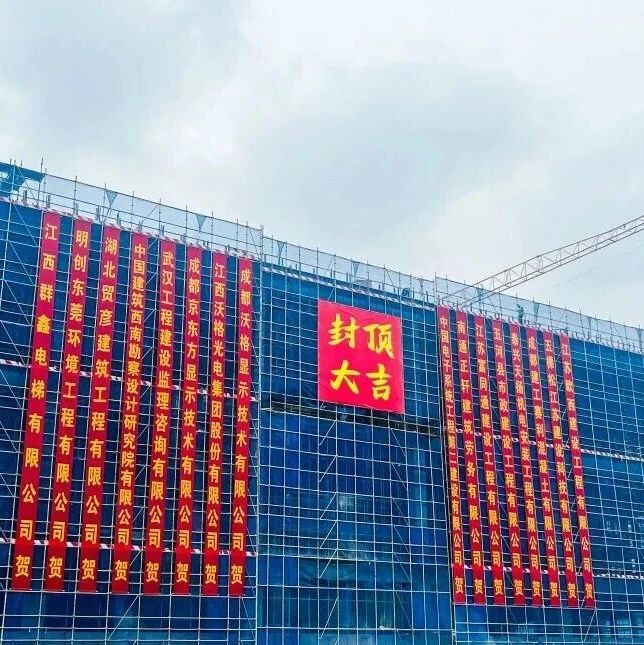
国内首条8.6代AMOLED玻璃基光刻蚀精加工项目封顶
WitsView睿智显示· 2025-10-01 02:11
Core Viewpoint - Wog Glass announced the completion of the main building for the world's first and China's first 8.6-generation AMOLED glass-based lithography precision processing project in Chengdu High-tech Zone, with a total investment exceeding 628 million yuan [2][4]. Group 1: Project Overview - The project includes the main production building, auxiliary production facilities, power facilities, and warehouses, covering an area of approximately 56 acres [4]. - The completed main building has three floors and a total construction area of 59,000 square meters [4]. - Upon completion, Chengdu Wog will become the world's first intelligent production line capable of mass production of 8.6-generation AMOLED thinning, providing core support for leading companies like BOE [4]. Group 2: Future Plans - In the next three months, the company will accelerate the renovation of the factory, installation of power facilities, and procurement and debugging of production equipment [4]. - The goal is to complete the first batch of thinning wafer testing by mid-January 2026, ensuring seamless integration with BOE's 8.6-generation AMOLED production line [4]. Group 3: Financial Performance - In the first half of 2025, the company's operating income was approximately 1.19 billion yuan, a year-on-year increase of 14.2%, while the net profit attributable to shareholders was a loss of approximately 54.15 million yuan [5]. - In the same period of 2024, the operating income was about 1.04 billion yuan, with a net profit loss of approximately 30.42 million yuan [5].

超颖电子(603175):注册制新股纵览:汽车电子PCB核心供应商
Shenwan Hongyuan Securities· 2025-09-30 13:26
Investment Rating - The report assigns a rating of "Neutral" to the company based on its AHP score of 1.95, which places it in the 26.4% percentile of the non-innovation board AHP model [9][10]. Core Insights - The company is a core supplier of automotive electronic PCBs, benefiting from its advanced capabilities to meet the demands of complete vehicles. It ranks among the top ten globally and top five in China, having established stable partnerships with major automotive component suppliers and well-known electric vehicle manufacturers like Tesla [4][10]. - The company has successfully diversified its business into multiple sectors, including display, storage, consumer electronics, and communication, with a focus on high-end AI server production in Thailand [4][20]. - The demand for server PCBs is expected to grow significantly, driven by data volume and cloud computing, with a projected CAGR of 11.3% from 2024 to 2028. The automotive electronics sector is also anticipated to see increased demand due to the rise of intelligent driving technologies [22][23]. - The company's revenue from high-layer boards has increased from 39% in 2022 to 53% in 2024, indicating a shift towards higher-value products [13][27]. Summary by Sections AHP Score and Expected Allocation Ratio - The AHP score for the company is 1.95, indicating a mid-to-upper level performance in the non-innovation board context, with expected allocation ratios for different investor classes being 0.0167% for Class A and 0.0145% for Class B under neutral conditions [9][10]. Company Fundamentals and Highlights - The company has a strong foothold in the automotive PCB market, with a market share ranking in the top ten globally and top five in China. It has developed capabilities for high-layer and HDI boards, essential for various automotive applications [10][11]. - The company has expanded its operations into high-end AI server production in Thailand, with the new factory expected to enhance its production capacity significantly [20][21]. - The communication sector's revenue share is projected to grow from 3.95% in 2022 to 7.20% in 2024, reflecting the increasing demand for advanced circuit boards [20]. Comparable Company Financial Metrics - The company's revenue for 2022, 2023, and 2024 was 35.14 billion, 36.56 billion, and 41.24 billion respectively, with a CAGR of 8.32%. The net profit for the same years was 1.41 billion, 2.66 billion, and 2.76 billion, showing a CAGR of 40.05% [12][27]. - The sales gross margin improved from 17.44% in 2022 to 23.54% in 2023, although it slightly decreased to 22.36% in 2024 due to initial production costs at the new factory [30]. Fundraising Projects and Development Vision - The company plans to raise funds through the issuance of up to 52.5 million new shares, with a total investment of 660 million yuan aimed at enhancing its high-layer and HDI project capabilities [38][41].
上海电影:9月29日召开业绩说明会,投资者参与
Sou Hu Cai Jing· 2025-09-30 11:37
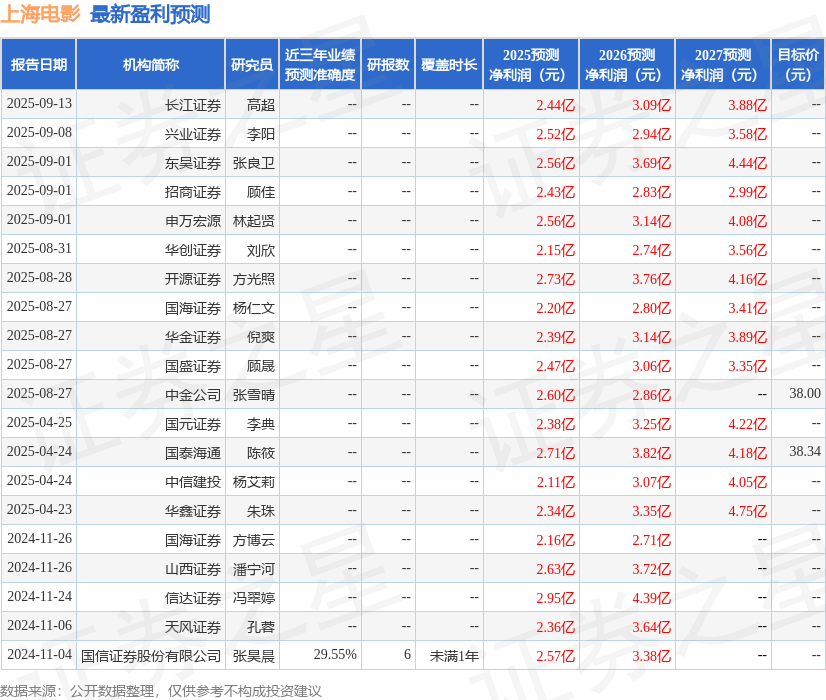
Core Viewpoint - Shanghai Film (601595) is actively implementing a "quality enhancement and return" action plan to improve operational quality and shareholder returns, while also focusing on innovative service models and product systems to enhance value creation capabilities [2][3]. Group 1: Company Performance and Strategy - The company reported a total revenue of 362 million yuan for the first half of 2025, a year-on-year decrease of 4.96%, and a net profit attributable to shareholders of 53.76 million yuan, down 22.18% year-on-year [8]. - The company plans to distribute a cash dividend of 0.48 yuan per 10 shares, totaling 21.51 million yuan, which accounts for 40.02% of the net profit attributable to shareholders [2]. - The company has increased its market share in the cinema sector to 7.57% and has successfully launched a new retail model called "Lianhe Wanshu" [2]. Group 2: Content and IP Development - The animated film "Wang Wang Shan Xiao Yao Guai" has become the highest-grossing 2D animated film in Chinese history, with a box office exceeding 1.65 billion yuan and over 45 million viewers [4][5]. - The company has established over 800 SKUs for IP derivative products in collaboration with more than 40 well-known companies, enhancing the conversion of content influence into consumer power [4]. - The company is focusing on integrating content investment, distribution, and IP operation to create a comprehensive commercial model [4]. Group 3: Technological Innovation and Market Position - The company has partnered with BOE Technology Group to explore the application of LED film screens, aiming to innovate in immersive experiences and smart display terminals [7]. - The introduction of new technologies such as I/XR/MLED is expected to enhance the cinema experience and improve audience engagement [3][7]. - The company is actively participating in government-supported mergers and acquisitions to optimize its market position and enhance investment value [7].

夏普8月面板出货量持续下滑 产线接连易主,“百年巨人”怎么了?
Xi Niu Cai Jing· 2025-09-30 11:10
Group 1 - The global shipment of large-sized LCD TV panels is projected to reach 21.3 million units in August 2025, representing a year-on-year growth of 9.3% [2] - Sharp's market share in panel shipments was only 4.8% in August 2025, with approximately 1 million units shipped, continuing a downward trend [2] - Sharp has experienced a year-on-year decline in shipments for two consecutive months, with a drop exceeding 20% in July 2025, making it the only major panel manufacturer to report negative growth at that time [2] Group 2 - Sharp's panel business struggles are partly due to its strategic adjustments, including the sale of several panel production lines and a reduction in its display panel business scale [4] - In 2024, Sharp closed its Sakai 10th generation line, which had cost 430 billion yen to build, after 11 years of net losses [4] - In April 2025, Sharp sold its first factory in Mie to Aoi Electronics and later sold its second factory in Kameyama to its parent company, Foxconn, indicating a retreat from the LCD panel sector [4] Group 3 - Chinese panel manufacturers are rapidly consolidating their production capacity, with TCL Huaxing completing the acquisition of LGD's Guangzhou factory in April 2025, strengthening China's dominance in the global LCD TV panel market [4] - By August 2025, Chinese panel manufacturers held a record 74.6% share of the global market, with BOE leading at approximately 5.9 million units shipped [4] - Huaxing's shipments reached about 5.5 million units, marking a year-on-year increase of 36%, while HKC shipped around 3.4 million units, ranking third [4] Group 4 - Sharp's competitiveness in large-sized and high-end products is significantly lacking, making it difficult to compete effectively with major Chinese panel manufacturers [5] - The structural disadvantages in product offerings have exacerbated Sharp's loss of market share [5] Group 5 - Sharp's failure to timely adjust its strategy in response to the rise of Chinese panel companies has led to a continuous decline in market share, dropping from 28% in 2009 to just 12% in 2015 [6] - The acquisition by Foxconn in 2016 raised hopes for revitalization, but strategic disagreements on technology and market approaches hindered effective integration [6] - Sharp is attempting to pivot towards high-value sectors like automotive displays and medical equipment panels, but faces challenges due to competition and the small scale of the medical panel market [6]

亿道信息双并购背后,一场AIoT赛道的时间竞赛与战略豪赌
Tai Mei Ti A P P· 2025-09-30 11:00
Core Viewpoint - Yidao Information (001314.SZ) announced a significant acquisition plan to acquire controlling stakes in Guangzhou Langguo Electronic Technology Co., Ltd. and Shenzhen Chengwei Information Co., Ltd., while also planning to raise matching funds. This move is seen as a strategic effort to open new growth avenues amid a competitive landscape in the AI and consumer electronics sectors [2][4]. Group 1: Acquisition Details - The acquisition targets, Langguo Technology and Chengwei Information, have previously attempted independent IPOs but were unsuccessful. Langguo Technology specializes in interactive control and device interconnection solutions, with a product line that includes various TV technologies and partnerships with major brands globally [3][4]. - Chengwei Information focuses on AIDC (Automatic Identification and Data Capture) with products like handheld terminals and RFID readers, serving over 5,000 enterprise clients across more than 150 countries [3][4]. Group 2: Strategic Rationale - The acquisition reflects a strategic pivot for Yidao Information, aiming to enhance its capabilities in AIoT (Artificial Intelligence of Things) and XR (Extended Reality) to address growth challenges. The company reported a revenue of 1.52 billion yuan in the first half of 2025, with a year-on-year growth of 19.24%, but still relies heavily on traditional hardware, which contributes over 70% of its revenue [5][6]. - Yidao Information has identified "AI+" as a top-level strategy, emphasizing the need to strengthen its XR and AIoT product development to capture opportunities in digital transformation and industrial advancements [5][6]. Group 3: Market Context and Challenges - The current IPO environment poses challenges for tech companies, as evidenced by the failed attempts of the acquisition targets to go public. This acquisition is seen as a response to the harsh market conditions and a way to leverage complementary strengths in human-machine interaction and data collection [4][6]. - Despite the clear strategic logic behind the acquisition, uncertainties remain regarding the specific valuation, profit commitments, and integration effectiveness of the acquired companies, which have not yet been disclosed [6].