智谱

Search documents
智通港股解盘 | AI+再度爆发成新引擎 海外矿业巨头拟合并或刺激资源再起
Zhi Tong Cai Jing· 2026-01-09 12:57
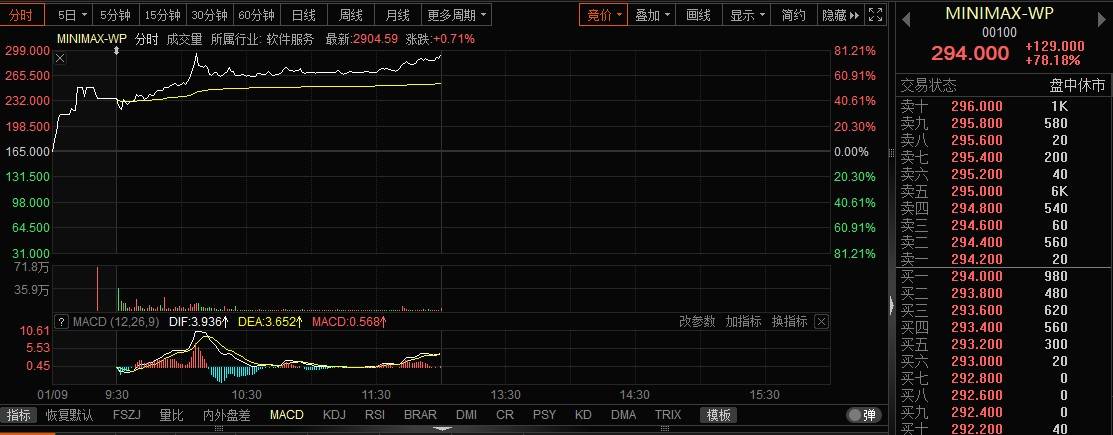
Market Overview - A-shares showed strong performance with the Shanghai Composite Index breaking through 4100 points, closing at 4120.43 points, and trading volume exceeding 31,523 billion yuan, marking the sixth occurrence in history of trading volume surpassing 30 trillion yuan [1] - Hong Kong stocks lagged behind, with a slight increase of 0.32% [1] International Developments - The U.S. government is considering a cash incentive for Greenland residents to encourage their potential inclusion in the U.S., with discussions around distributing between 10,000 to 100,000 USD per person, totaling nearly 6 billion USD [1] - A joint military exercise named "Peace Intent-2026" involving China, Russia, and South Africa will take place in mid-January, highlighting a new security cooperation model among BRICS nations [1] Commodity and Metal Market - The U.S. dollar index surpassed 99, and the LMEX index for major base metals is expected to record its fourth consecutive week of gains, with copper and aluminum prices rising over 1% [2] - Companies like Luoyang Molybdenum (03993) and China Aluminum (02600) reached historical highs [2] AI and Technology Sector - MiniMax (00100) made a significant debut on the Hong Kong Stock Exchange, opening at 235.4 HKD, a 42.67% increase from its issue price of 165 HKD [2] - AI applications are thriving, with companies like Zhizhu (02513) seeing over a 20% increase in stock price, reaching a market cap of 720 billion HKD [2] Healthcare Innovations - OpenAI launched ChatGPT Health, a dedicated space for health-related conversations, which can integrate with electronic medical records [3] - Companies like iFlytek Medical Technology (02506) reported a significant increase in stock price, with their medical deep reasoning model achieving a 94% accuracy rate in diagnostic assistance [3] Aerospace and Automotive Sector - JunDa Co. (02865) and Goldwind Technology (02208) experienced initial surges in stock prices, while CIMC Anrui (03899) continues to perform well, with over 100 million RMB in revenue from aerospace-related business [4] - Black Sesame Intelligence (02533) secured a strategic investment of 500 million RMB, boosting its stock price by nearly 5% [4] Market Trends and Stock Movements - The price of crab-eating macaques has surged to 140,000 yuan each, leading to a 7% increase in shares of Zhaoyan New Drug (06127) due to market expectations [5] - Youjia Innovation (02431) repurchased 3,004,800 shares for approximately 44.88 million HKD, indicating confidence from cornerstone investors [5] Employment Data and Legal Decisions - The U.S. Labor Department is set to release December employment data, which is anticipated to be more reliable following the longest government shutdown in history [6] - The U.S. Supreme Court will make a final decision on the legality of tariffs imposed by former President Trump, which may have limited impact on the market [6] Mining Sector Developments - Rio Tinto and Glencore are in preliminary discussions regarding a potential merger, which could create the largest mining company with a market value exceeding 200 billion USD [7] - If the merger occurs, it may lead to increased concentration in the global resources sector, impacting companies like Luoyang Molybdenum (03993) and China Aluminum (02600) [7] Company Performance and Projections - Sanhua Intelligent Control (02050) expects a net profit of 3.87 to 4.65 billion yuan for 2025, representing a year-on-year increase of 25% to 50% [8] - The company is benefiting from growing demand for cooling components in data centers and is set to produce humanoid robots, with significant revenue contributions expected starting in 2026 [9]
MiniMax对决智谱,谁才算“六小虎”领军者?
3 6 Ke· 2026-01-09 12:27
Core Insights - The large model market is experiencing significant activity with the IPOs of Zhipu and MiniMax, highlighting a shift in market dynamics towards consumer-oriented models [1][3] - MiniMax's stock surged by 109.09% on its first trading day, outperforming Zhipu, which indicates a market preference for consumer-facing applications [1][3] - The current competitive landscape shows a divergence from previous AI companies focused on B2B, with MiniMax representing a new wave of consumer engagement [1][3] Company Performance - MiniMax's revenue for the first nine months of the previous year exceeded $50 million, indicating a willingness among overseas consumers to pay for its services [10] - The company has a small team of over 400 employees, with only about 20 working overseas, yet it has managed to innovate and reach international markets [6][7] - MiniMax's business model includes enterprise services and consumer applications, with a focus on balancing profitability across its offerings [20] Market Trends - The shift towards consumer applications is evident as MiniMax embraces new market opportunities, contrasting with previous AI companies that primarily targeted B2B [5][15] - The competitive environment is intensifying, with rising costs leading to potential price increases for AI services, as seen with ChatGPT's Pro version pricing [13] - The market is witnessing a bifurcation where companies are either focusing on B2B or C2D models, with MiniMax preparing to target Southeast Asian enterprise clients [15][19] Legal and Regulatory Challenges - MiniMax faces legal challenges, including lawsuits from major entertainment companies over copyright issues, which could impact its financial stability [23][25] - The company must navigate a complex landscape of content regulation and copyright enforcement, which poses risks to its business model [25] Financial Outlook - The financial performance of MiniMax and Zhipu is under scrutiny, with concerns about their ability to sustain growth amidst rising operational costs and competitive pressures [19][27] - The IPOs of both companies have attracted significant investment, but there are questions about whether their stock performance will mirror that of previous AI companies like SenseTime [27]

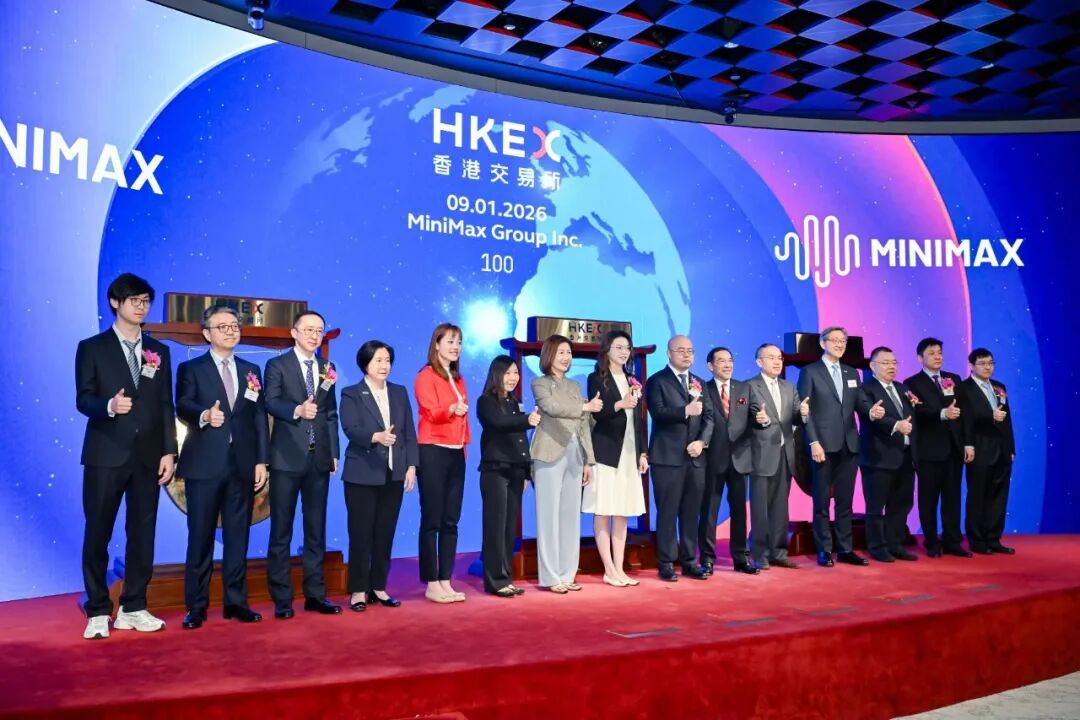
押中千亿MiniMax,米哈游的“VC帝国”藏不住了
Huan Qiu Lao Hu Cai Jing· 2026-01-09 12:17
Core Insights - MiniMax has set a record for the fastest IPO in the global AI industry, completing its listing on the Hong Kong Stock Exchange just five years after its establishment in late 2021 [1][2] - The IPO was highly successful, with a subscription rate of 1209 times and total margin financing exceeding 253.3 billion HKD, reflecting a strong demand for tech stocks in Hong Kong [1][2] - The company reported a significant revenue increase from 346 thousand USD in 2023 to 3,052.3 thousand USD in 2024, and further to 5,433.7 thousand USD in the first three quarters of 2025 [2][3] Company Performance - MiniMax's business spans over 200 countries, with more than 70% of its revenue coming from international markets [2] - Despite impressive growth figures, the company has incurred a net loss of 1.32 billion USD from 2022 to the first three quarters of 2025, indicating challenges in achieving profitability [2][3] - The marketing expenses for 2024 are projected to reach 87 million USD, which is 2.8 times the expected revenue for that year [3] Market Position - MiniMax's IPO coincided with a surge in AI company listings in Hong Kong, creating a competitive landscape with other firms like Zhizhu [2][4] - The company's stock price surged by 109% on its first trading day, pushing its market capitalization beyond 100 billion HKD, distinguishing it from competitors [2][4] Investment and Financing - MiniMax's funding history shows consistent valuation growth with significant investments from major players like Tencent and Alibaba, raising 2.5 billion USD and 6 billion USD in A and B rounds respectively [5][6] - The company plans to allocate 90% of the IPO proceeds towards R&D for large models and AI-native development, with the remaining 10% for operational funding [3] Strategic Backing - MiHoYo, a significant investor in MiniMax, has increased its stake to 6.4% and has provided strategic support, enhancing the company's operational capabilities [6][7] - MiHoYo's investment strategy has evolved from focusing solely on gaming to diversifying into AI and other high-tech sectors, reflecting a broader investment vision [7][8]
AI大模型公司上市潮,量化数据帮你看懂本质
Sou Hu Cai Jing· 2026-01-09 12:08
Group 1 - The core viewpoint is that the capital market's willingness to invest in AI companies, despite their current losses, is driven by their "trading behavior" rather than just stock price fluctuations [1][2] - MiniMax and Zhiyu, two AI companies, have seen significant stock price increases, with MiniMax's market value reaching HKD 90.9 billion and Zhiyu's surpassing HKD 66.5 billion, indicating strong investor interest [1] - The backing of these companies by major stakeholders such as Alibaba, Tencent, and top investment firms highlights the confidence in their business models and future potential [1] Group 2 - "Trading behavior" is emphasized as more important than price movements, as it reflects institutional investment activity and market sentiment [2][3] - Quantitative data, such as "institutional inventory," provides insights into whether institutional investors are actively participating in trading, which can indicate the strength of a stock's price movement [6] - The ability to understand "trading behavior" can help investors reduce anxiety related to market fluctuations and make more informed decisions [8] Group 3 - AI companies like MiniMax and Zhiyu demonstrate clear "trading behavior" through their user base and revenue growth, which are critical factors for attracting investment [8] - The growth of AI model usage, projected to increase by 363% by mid-2025, signifies a shift from pilot projects to large-scale applications, reinforcing the importance of trading behavior in determining value [9] - The essence of both the AI industry and stock market is that value is determined by trading behavior, with quantitative data helping to reveal these previously hidden dynamics [8][9]
智谱、MiniMax港股上市狂飙,谁在IPO中收割红利?
Sou Hu Cai Jing· 2026-01-09 12:08
Core Insights - The recent IPOs of Zhipu AI and MiniMax mark a significant milestone for the Hong Kong stock market, highlighting the entry of major AI players into the capital market [1] - Zhipu AI, as the first global large model company to go public, raised HKD 4.348 billion with a market capitalization of HKD 57.89 billion at IPO, while MiniMax saw a 109% increase in its stock price on the first day of trading [1] - Despite the excitement surrounding these IPOs, Zhipu AI faces challenges such as an imbalanced revenue structure, high computing costs, and a debt exceeding HKD 10 billion, raising questions about its future sustainability [1] IPO Performance - Zhipu AI's IPO was characterized by a strong demand, with a subscription rate of 910 times, indicating intense investor interest [6] - The stock opened at HKD 131.5, a 13.17% increase from its IPO price, and closed at HKD 158.6, with a market cap of HKD 698 billion [6] - Early investors in Zhipu AI, including major firms like Meituan and Ant Group, have seen substantial returns, with valuations skyrocketing from HKD 800 million in Series A to HKD 26 billion before the IPO [7][8] Financial Performance - Zhipu AI's revenue is projected to grow from HKD 57.41 million in 2022 to HKD 312 million in 2024, reflecting a compound annual growth rate of 130% [11] - However, the company is experiencing increasing adjusted net losses, projected to reach HKD 2.466 billion by 2024, primarily due to high R&D expenditures [11][12] - The company's gross margins are fluctuating, with 2022 at 54.6%, 2023 at 64.6%, and a drop to 56.3% in 2024, indicating potential profitability concerns [11] Revenue Structure - The majority of Zhipu AI's revenue comes from localized deployment, which accounted for 84.8% of total revenue in the first half of 2025, maintaining a gross margin of 59% [12] - In contrast, the cloud deployment segment is struggling with negative margins, attributed to aggressive pricing strategies to capture market share [13] - High customer concentration poses a risk, with the top five clients contributing 45.5% of revenue, indicating a need for diversification [13] Debt and Financial Health - Zhipu AI's debt has surged from HKD 542 million in 2022 to HKD 11.252 billion by mid-2025, resulting in a negative net asset position of HKD 6.151 billion [14] - The recent IPO proceeds of HKD 4.3 billion may alleviate short-term debt pressures, but long-term sustainability hinges on effective commercialization strategies [14] Industry Context - The IPO of Zhipu AI serves as a valuation benchmark for the large model industry, with a price-to-sales ratio of approximately 147 times based on 2024 revenue projections [15] - The Chinese large language model market is expected to grow significantly, from HKD 5.3 billion in 2024 to HKD 101.1 billion by 2030, with increasing market concentration favoring established players [15] - The future of Zhipu AI will be closely watched as it navigates the competitive landscape against global giants like OpenAI, emphasizing the importance of technological advancement and sustainable business models [16]
北京跑出“全球大模型第一股”,中国AI初创企业是否要迎来“上市潮”?
AI研究所· 2026-01-09 11:18
Core Viewpoint - Beijing Zhiyu Huazhang Technology Co., Ltd. (stock code: 02513.HK), known as "Zhiyu," has become the world's first publicly listed company focused on general artificial intelligence (AGI) models, marking a significant milestone for both the company and the Chinese AI industry [1][4]. Group 1: Company Overview - Zhiyu's stock price surged by a maximum of 16.18% after its debut, reaching a market capitalization of nearly 60 billion HKD [1]. - The company was established in 2019, leveraging technology from Tsinghua University's KEG laboratory, and aims to launch its GLM-4.7 model by the end of 2025, which is expected to surpass GPT-5.2 on global rankings [5][6]. Group 2: Business Model - Zhiyu's primary revenue model is based on "Model as a Service" (MaaS), allowing the company to monetize its large model capabilities through API interfaces and subscription services [8]. - In the first half of 2025, the MaaS business accounted for 84.8% of total revenue, with three main segments: localized deployment for high-security clients, API access for global developers, and a "model supermarket" for small and medium-sized clients [9]. Group 3: Financial Performance - Zhiyu's revenue grew from 57.4 million CNY in 2022 to 312 million CNY in 2024, with an average annual growth rate of 130%. In the first half of 2025, revenue reached 191 million CNY, a 325% increase year-over-year [12]. - The company's gross margin has remained stable at over 50%, and by June 2025, the model's token consumption reached 4.6 trillion times daily, indicating high-frequency usage in real production environments [12]. Group 4: Competitive Advantages - Zhiyu's core competitive advantage lies in its self-developed GLM series models, which utilize a unique "autoregressive fill-in-the-blank" pre-training method, enabling better information understanding and efficient content generation [14]. - The GLM-4.7 model has received recognition in global evaluations, outperforming GPT-5.2 in user blind tests and ranking first among open-source models in the AA Intelligence Index [15]. Group 5: Ecosystem Support - Zhiyu's growth is significantly supported by its location in Haidian, a hub for AI talent and resources, with a high concentration of universities and research institutions [17]. - The company has benefited from favorable policies and support from the Haidian district, which has facilitated its transition from laboratory technology to market products [19]. - In addition, the Zhangjiang area has provided capital and commercialization opportunities, with strategic investments and partnerships enhancing Zhiyu's market presence [23]. Group 6: Industry Implications - Zhiyu's successful IPO has opened the door for other Chinese AI companies to pursue capital markets, providing a reference model for future listings [26]. - The listing signifies a shift in the Chinese AI industry from pure technology competition to a comprehensive competition involving technology, capital, and ecosystem [27].

霸王茶姬还没做成“东方星巴克”,先得了星巴克的病
3 6 Ke· 2026-01-09 10:24
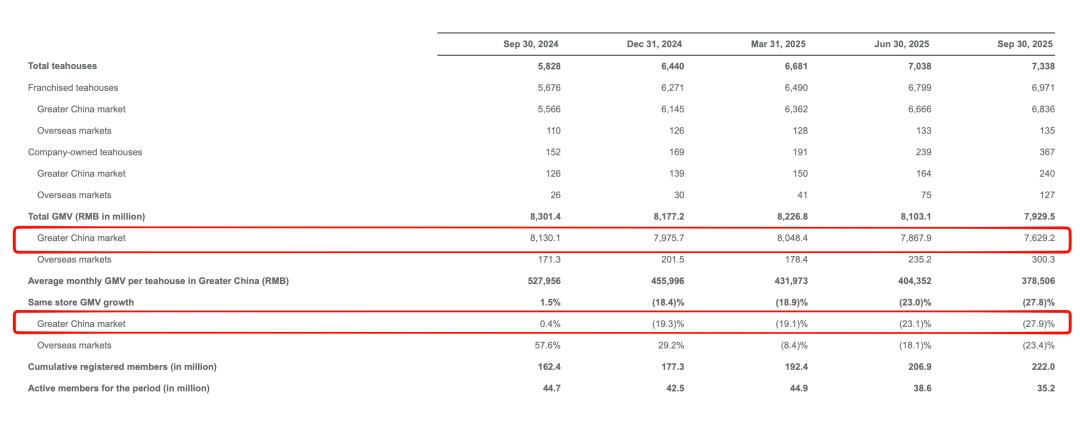
Core Viewpoint - The company BaWang Tea Ji, which went public on NASDAQ less than a year ago, is reportedly considering a secondary listing in Hong Kong, although it has denied these rumors. The company is experiencing a significant slowdown in revenue and profit growth, raising concerns about its market position and brand image [1][3][4]. Financial Performance - BaWang Tea Ji's revenue and profit growth have noticeably slowed over the past year, with growth rates declining for three consecutive quarters. In Q3 of the previous year, the company reported a revenue decline of 9.4% year-over-year and a nearly 40% drop in net profit, marking the first time its quarterly GMV turned negative [1][5]. - The average monthly GMV per teahouse in Greater China has been declining for seven consecutive quarters, with the same-store GMV growth rate falling into negative territory for four quarters, reaching a decline of nearly 28% in Q3 [1][2]. Market Position and Brand Image - BaWang Tea Ji has faced multiple public relations crises that have damaged its high-end brand image, including controversies over product ingredients and employee behavior. The company is known for its significant marketing expenditures, which have helped it establish a premium position in the market [3][4][11]. - The company has refrained from participating in the aggressive food delivery subsidy wars that have benefited competitors, which has contributed to its revenue decline. While other brands like MiXue Ice City and GuMing have seen substantial growth, BaWang Tea Ji's revenue growth has sharply decreased since Q2 of the previous year [5][6][7]. Expansion and Future Strategy - BaWang Tea Ji has expanded its store count significantly, from 1,087 in 2022 to 6,440 in 2024, but the pace of new store openings is expected to slow in 2025 [8][10]. - The company is exploring overseas markets, where it has seen better performance, with GMV in international markets exceeding 300 million RMB, reflecting a year-over-year growth of 75.3% [22]. Stock Performance - Since its peak market valuation of over $7 billion, BaWang Tea Ji's stock price has dropped by more than 60%, with a current market cap of approximately $2.366 billion [23].
智谱成功IPO,中国AI推出“全球大模型第一股”
Sou Hu Cai Jing· 2026-01-09 09:53
Core Viewpoint - The successful IPO of "Zhipu," one of the "Six Little Tigers" in China's AI sector, marks a significant milestone for the industry, raising approximately 4.348 billion HKD (around 38.985 billion RMB) and shifting global attention towards Hong Kong from Silicon Valley and London [1][3]. Company Overview - Zhipu, founded in 2019 from Tsinghua University's technology transfer, is a technology-driven unicorn and the world's first publicly listed company focused on self-developed general artificial intelligence (AGI) base models [3][4]. - The company ranks first among independent general model developers in China and second globally, with a market share of 6.6% and projected annual revenue of 312.4 million RMB in 2024 [4]. Financial Performance - Zhipu has invested approximately 4.4 billion RMB in R&D, with a projected R&D expenditure of 1.59 billion RMB in the first half of 2025, and 74% of its workforce dedicated to R&D [5]. - The company aims to allocate 70% of the IPO proceeds to the development of the next generation of general models [5]. Market Position and Challenges - The IPO signifies a transition from a technology idealism phase to a capitalized operational model, amidst increasing competition and pressure for profitability in the AI sector [6][7]. - Zhipu faces significant challenges, including the need to demonstrate a healthy and scalable economic model, manage high training and inference costs, and maintain technological leadership against global competitors [7][8]. Industry Impact - Zhipu's listing is a pivotal moment for China's AI industry, showcasing the capability of Chinese tech teams to reach world-class levels in core model development and engage in global capital and business dialogues [9]. - The company is expanding its international presence, establishing foundational infrastructure in countries like Malaysia, Singapore, UAE, and Saudi Arabia, and aims to increase its API business revenue share [9]. Competitive Landscape - Zhipu is not the only player in the market; its competitor MiniMax is also pursuing an IPO, highlighting the competitive dynamics within the Chinese AI sector [10][11]. - The emergence of Zhipu and MiniMax represents a shift towards a more transparent and competitive environment in the AI industry, where both companies are seen as leaders in the global AI landscape [11].
港股收盘 | 恒指收涨0.32% MiniMax上市首日翻倍 AI应用方向多数走强
Zhi Tong Cai Jing· 2026-01-09 09:25
Market Overview - The Hong Kong stock market experienced fluctuations today, with all three major indices closing higher. The Hang Seng Index rose by 0.32% to 26,231.79 points, with a total trading volume of HKD 245.13 billion. The Hang Seng China Enterprises Index increased by 0.1% to 9,048.53 points, while the Hang Seng Tech Index gained 0.15% to 5,687.14 points. For the week, the Hang Seng Index fell by 0.41%, the China Enterprises Index dropped by 1.31%, and the Tech Index decreased by 0.86% [1] Blue Chip Performance - Cheung Kong Holdings (00001) was active, rising by 3.72% to HKD 57.15, contributing 8.75 points to the Hang Seng Index. Reports indicate that Cheung Kong has selected Goldman Sachs and UBS to advance the IPO of its Watsons Group, with discussions ongoing regarding a dual listing in Hong Kong and London [2] - Other notable blue chips included Alibaba Health (00241), which rose by 4.72% to HKD 5.77, contributing 2.71 points, and Shenzhou International (02313), which increased by 4.39% to HKD 64.2, contributing 3.56 points. Conversely, Xinyi Solar (00968) fell by 3.72% to HKD 3.11, detracting 0.87 points from the index [2] Sector Highlights - The technology sector saw most stocks in the green, with Kuaishou rising by 3.89% and Alibaba increasing by 2.73%. AI-related stocks surged following the listing of MiniMax, with iFlytek Medical soaring over 20% and Huya Technology rising over 13%. Gold mining companies also reported positive earnings forecasts, leading to a rise in gold stocks [3] - AI concept stocks performed strongly, with Zhipu (02513) up by 20.61% to HKD 158.6, iFlytek Medical Technology (02506) up by 20.58% to HKD 97.55, and Huya Technology (01860) up by 13.21% to HKD 17.48 [3][4] Gold Sector - Gold stocks generally rose, with Shandong Gold (600547) increasing by 6.12% to HKD 39.9, Zhaojin Mining (01818) up by 4.1% to HKD 35.58, and Lingbao Gold (03330) up by 3.07% to HKD 19.5. The recent geopolitical risks and expectations of interest rate cuts are supporting gold prices, with Morgan Stanley predicting gold prices could reach USD 4,800 per ounce by Q4 2026 [5][6] Commercial Aerospace - The commercial aerospace sector remained active, with Asia Pacific Satellite (01045) rising by 3.96% to HKD 4.46 and CIMC Enric (03899) up by 3.9% to HKD 10.65. The Guangzhou government has announced plans to accelerate the development of the commercial aerospace industry, which is expected to boost related companies' performance and valuations [6] Regulatory Developments - The market regulatory authority in Beijing has held discussions with major players in the photovoltaic industry, including Tongwei Co. and GCL-Poly Energy, regarding monopoly risks and required corrective actions. Companies are expected to submit written rectification measures by January 20 [7]
破千亿,MiniMax 也创造了属于自己的时刻
3 6 Ke· 2026-01-09 09:21
过去两天中,港交所交易大厅的敲钟声与中国AI产业紧密联结在一起。 截至今日收盘,上市首日的MiniMax,股价一路高歌来到345港元、涨幅接近110%,市值突破1000亿港元。 01 两条路径,但被同一市场认可 如果只看业务结构,智谱与MiniMax并不是同一种公司。 而上市仅两天的智谱,股价同样来到158港元,市值接近700亿港元。曾经的两家AI"小龙",如今已成为资本对中国大模型资产业评估的核心样本。 这是中国AI创业公司第一次在公开市场接受考验,而且是在如此短的时间窗口内,同时迎来两家以通用大模型研发与商业化为核心的企业。从融资角度 看,MiniMax市值破千亿,就和DeepSeek横空出世一样,创造了一个令行业和市场难以忘记的标志性时刻。 据了解,在上市之前,这两家AI独角兽已经完成了一轮高度结构化的资本配置。公开资料显示,智谱引入11家基石投资者,合计认购约29.8亿港元,占发 售股份约68.63%;MiniMax则引入14家基石投资者,合计认购约3.5亿美元,占比约67.88%。知名机构的背书下,这种配置更像是为长期样本预留席位。 从结果看,基石投资者的作用可以稳定交易结构:大比例锁定筹码叠加禁售 ...