三星

Search documents
光互联的市场图谱
傅里叶的猫· 2026-02-21 14:13
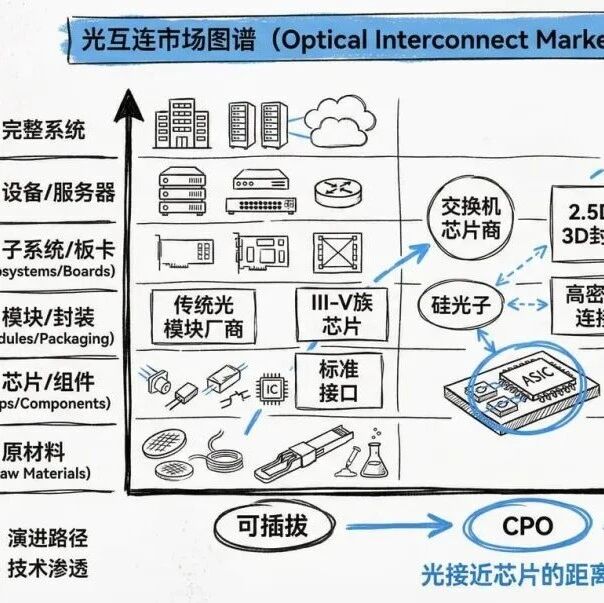
Core Insights - The article discusses the evolution of optical interconnect technology, highlighting three key structural patterns in the market: vertical integration vs. specialization, the scarcity of light generation, and the rise of SiPho foundries [5][6][10]. Group 1: Market Structure - Vertical integration offers structural advantages during technological transitions, as companies that can design across multiple layers can optimize the entire tech stack [9]. - Companies like Broadcom exemplify vertical integration, appearing across multiple layers of the value chain, while most others focus on specific segments [8]. - The semiconductor industry has historically shown that such advantages may not be permanent, as standardization can lead to the emergence of fabless models [9]. Group 2: Scarcity of Light Generation - The difficulty of producing light sources (Layer 1 and Layer 0) is highlighted, with InP and GaAs materials requiring specialized technology and equipment [12][13]. - Companies capable of mass-producing high-performance InP lasers are few, creating a concentrated market [13][14]. Group 3: Rise of SiPho Foundries - Layer 2, which focuses on SiPho foundries, is gaining attention as traditional semiconductor manufacturers like TSMC and GlobalFoundries enter the photonics space [17]. - TSMC's potential to optimize both AI chips and optical interconnects within the same ecosystem could disrupt existing vertical integration advantages [17]. Group 4: Layer Analysis - Layer 0 involves substrate supply, with companies like AXT benefiting from increased demand for III-V substrates, although geopolitical risks exist due to production in China [21][22]. - Layer 1 is dominated by Coherent and Lumentum, both of which manufacture InP lasers and are expanding production amid high demand [24][25]. - Layer 2 focuses on SiPho foundries, with companies like GlobalFoundries and TSMC leading in manufacturing photonic integrated circuits [27][29]. - Layer 3, represented by DSPs, faces potential obsolescence as CPO technology advances, with companies like Broadcom and Marvell adapting to this shift [33][36]. - Layer 4 sees companies like Innolight and Eoptolink currently leading in the pluggable module market, but their positions may be challenged as the industry shifts towards CPO [40][42]. Group 5: Future Signals - Key indicators to watch include pJ/bit energy consumption metrics, which reflect technological advancements and efficiency [56]. - The ongoing standardization efforts, such as OIF and UCIe, will shape the future market landscape and influence competitive dynamics [57][59]. - Recent mergers and acquisitions signal strategic directions in the industry, with notable deals like Marvell's acquisition of Celestial AI [60][62]. - The choices made by major cloud service providers like Google and AWS regarding their technology partnerships will ultimately determine market trajectories [63][64].




模拟芯片,机会在哪里?
3 6 Ke· 2026-02-21 02:14
他停顿了一下,问我叫什么名字。我觉得这并非因为这个问题展现了他什么独到的见解。或许只是因为 这个问题在课堂上比较少见——大多数学生都不会问这种问题。但现在回想起来,那一刻标志着我长达 十年观察这个领域悄然变革的开始。 十年过去了,模拟电路设计发生了翻天覆地的变化。但这种变化究竟代表"衰落"还是"重组",则取决于 你的视角。在本文中,我想探讨一下实际情况,并挖掘其中的机遇。 变革的现实 劳动力结构的转变 十年过去了,我可以肯定地说,模拟电路设计领域确实已经由亚裔和印度裔工程师主导。这并非我个人 的看法。根据美国国家科学基金会 (NSF) 2024 年的报告,美国超过 55% 的博士级工程师是外国出生 的,美国大学工程学博士生中超过 60% 是国际学生。STEM OPT 签证统计数据显示,印度籍申请人占 48%,中国籍申请人占 20%。 日前,美国一个博主nutty写一篇名为《The Future of Analog Circuit Design — Finding Opportunity in a Changing Landscape》的文章。在文章中,他探讨了模拟芯片的机会以及模拟芯片。 以下为文章正文: 大 ...
2025年,哪些芯片最火?(附全年热门料号汇总)
芯世相· 2026-02-21 02:07
Core Insights - The chip market in 2025 is showing signs of recovery compared to the lows of previous years, driven by tariffs, market events, and a sustained demand for storage chips [3][4] - Monthly tracking of popular chip models has revealed both transient and stable demand patterns, with certain models consistently appearing in the market [3][4] Summary by Sections Annual Stable Chip Model - The W25Q128JVSIQ, a 128M-bit SPI NOR Flash from Winbond, has been a standout model, applicable across various sectors including wearables and automotive [5][7] - Its price surged from 1.8 RMB in July to around 6 RMB by December, with a notable increase to 9-10 RMB in January 2026, indicating strong market demand [7] Consistent Presence in Market - The ICM-42688-P, a 6-axis MEMS motion tracker from TDK InvenSense, has maintained a strong market presence, with prices rising from around 9 RMB to nearly 30 RMB by December, and further escalating to 50-60 RMB in January 2026 [9][11] - The KLM8G1GETF-B041, an 8GB eMMC chip from Samsung, has also seen significant price increases, from approximately 20 RMB in April to around 120 RMB in January 2026, following a product lifecycle end notification [13][15] Power Module Performance - The LTM4644, a highly integrated DC/DC buck converter, has been consistently featured in popular models, with prices peaking at 450 RMB in April before stabilizing around 150-160 RMB [19][20][21] MCU Market Stability - The STM32F103 and STM32F407 series from STMicroelectronics have shown consistent demand, appearing frequently in popular models despite a less volatile market for MCUs [23][24][25] Impact of Market Events - The Nexperia BAV99 series, particularly the automotive-grade BAV99-Q, experienced a price spike following a market event in October, with prices reaching close to 10 RMB, reflecting the volatility in the automotive chip sector [27][28] Summary of Popular Chip Models - A comprehensive list of popular chip models for 2025 includes various types such as NOR Flash, eMMC, and IMUs, indicating diverse applications and ongoing demand across sectors [29][30][34]

华尔街见闻早餐FM-Radio | 2026年2月21日
Hua Er Jie Jian Wen· 2026-02-20 23:35
Market Overview - The US Q4 GDP growth was only 1.4%, significantly below expectations, with government shutdown dragging down growth by 1 percentage point [11] - The December core PCE inflation exceeded expectations, rising to 3% year-on-year, prompting market reactions [11] - Major US stock indices experienced volatility but closed higher, with the S&P 500 up 0.7% and the Nasdaq leading gains [2][4] - Gold prices surged over 2% to exceed $5100 per ounce, while silver rose by 8% [2][4] Key News - The US Supreme Court ruled that Trump's global tariffs were illegal, potentially leading to refunds of over $175 billion in tariffs [8] - Trump announced plans to impose a 10% global tariff using alternative legal tools, indicating that previously collected tariffs may not be refunded [9][10] - The US Treasury Secretary stated that tariff revenues are expected to remain "basically unchanged" this year [9] - The US manufacturing and services PMIs for February fell short of expectations, reaching multi-month lows [12] Company and Industry Insights - Anthropic launched the Claude security tool, which caused a significant sell-off in cybersecurity stocks, with the Global X cybersecurity ETF dropping 4.9% [13] - Google announced a doubling of its cloud backlog to $240 billion, emphasizing the rapid growth and importance of AI technologies [12] - The Hong Kong stock market saw a divergence in tech stocks, with AI companies experiencing significant gains while traditional internet giants faced outflows [15]
两大AI龙头,股价创新高
Shang Hai Zheng Quan Bao· 2026-02-20 09:56
Market Overview - The Hong Kong stock market opened on February 20, 2023, with the Hang Seng Index closing at 26,413.35 points, down 1.1%, and the Hang Seng Tech Index at 5,211.5 points, down 2.91% [1][2] - Despite the overall decline, sectors such as AI, humanoid robots, biotechnology, and oil and petrochemicals showed strong performance, indicating a structural market trend [1][4] AI Sector - AI concept stocks continued to rise, with significant gains observed in the afternoon trading session, marking them as a key highlight of the market [4] - Zhizhu and MINIMAX-WP both surpassed a market capitalization of 300 billion HKD, with Zhizhu's stock price increasing by 42.72% to 725 HKD per share and MINIMAX-WP rising by 14.52% to 970 HKD per share [3][7] - The AI industry is entering a critical development phase, transitioning from a focus on computing power infrastructure to a collaborative model involving "computing power + hardware + applications," broadening the investment landscape [6][8] Humanoid Robots - The humanoid robot sector experienced significant growth, driven by the high-profile appearance of robots during the Lunar New Year Gala, with stocks like Yujian and UBTECH showing notable increases [9] - Specific stock performances included Yujian rising by 21.4% to 48.44 HKD, UBTECH increasing by 4.71% to 144.5 HKD, and SUTENG rising by 9.24% to 37.58 HKD [9] Oil and Petrochemicals - The oil and petrochemical sector also performed well, with the Hong Kong oil and petrochemical index rising by 2.39%, driven by geopolitical tensions leading to higher oil prices [12] - Notable stock performances included Jixing New Energy and Zhonggang Petroleum, both rising over 7% [12] Storage Sector - The storage sector showed active performance, with stocks like Lanke Technology and Zhaoyi Innovation experiencing significant gains, indicating a positive market sentiment towards semiconductor hardware [12]

Flickr公布2025年度相机使用排行榜
Xin Lang Cai Jing· 2026-02-20 04:11
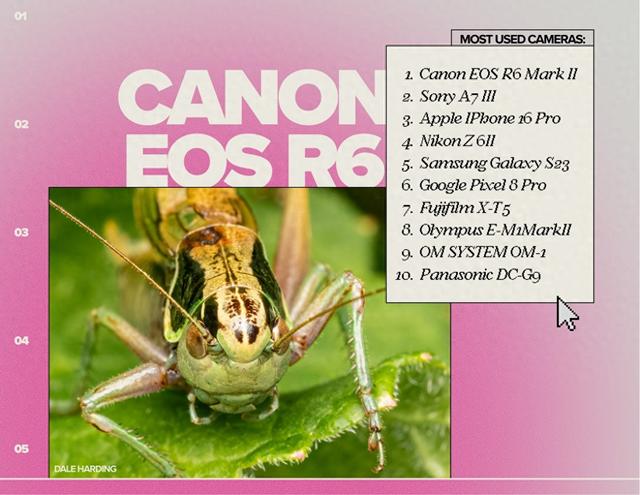
知名图片分享社区Flickr近日发布2025年用户最常用相机TOP10,佳能EOS R6 Mark II登顶榜首,2018年 发布的索尼α7III仍居第二。以下为完整榜单: 佳能 EOS R6 Mark II 索尼 α7 III 苹果 iPhone 16 Pro 尼康 Z 6II 三星 Galaxy S23 Ultra 谷歌 Pixel 8 Pro 富士 X-T5 奥林巴斯 E-M1 Mark II OM SYSTEM OM-1 松下 DC-G9 (11362450) ...


下一个HBM:HBF,能行吗?
半导体行业观察· 2026-02-20 03:46
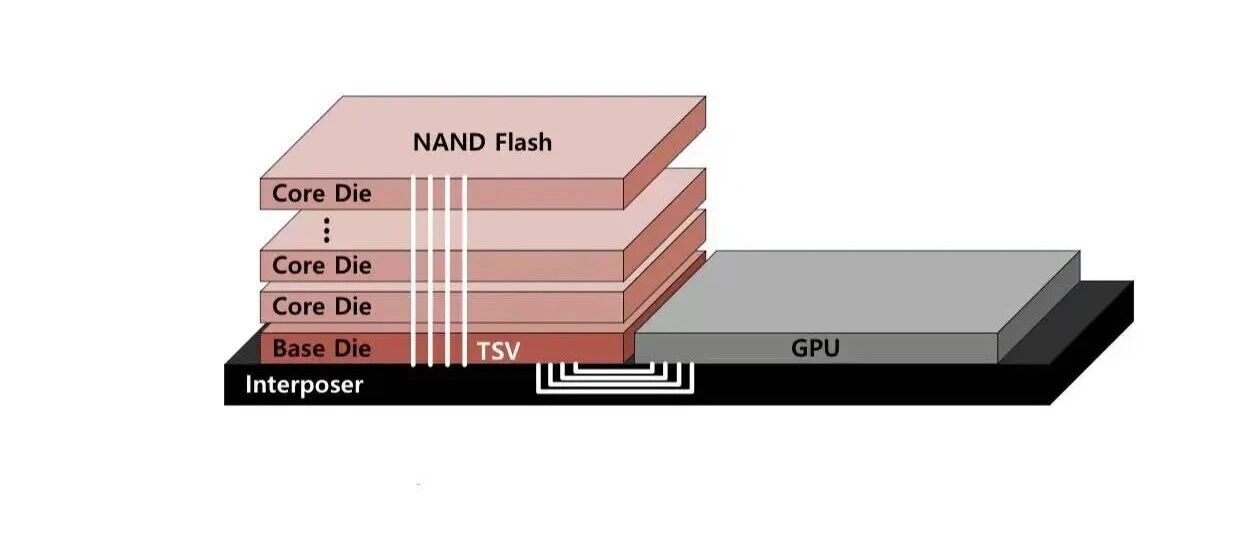
Core Viewpoint - The emergence of High Bandwidth Flash (HBF) aims to address the memory bottleneck in artificial intelligence by stacking NAND flash to provide HBM-level bandwidth while achieving a 16-fold capacity increase. However, the practical application of HBF faces significant challenges that may hinder its initial promise [2][30]. Group 1: Background and Challenges - The AI workload bottleneck is no longer computational performance but rather the need for memory to provide data at speeds comparable to NVIDIA's H100, which has a computational capability of 989 TFLOPS. HBM3 meets this requirement with a bandwidth of 819GB/s but has a critical weakness in capacity, with a maximum of 192GB per GPU [5][6]. - The key-value cache (KV cache) for large models like Llama 3.1 405B requires substantial memory, with pre-computed caches needing approximately 540GB for 1 million tokens and 5.4TB for 10 million tokens, making HBM insufficient for such demands [6][11]. - HBF's advantages include a capacity of about 3TB at the same bandwidth of 8TB/s, with NAND costs being approximately one-fifth of HBM, suggesting significant economic benefits [6][8]. Group 2: H³ Architecture and Assumptions - The H³ architecture combines HBM and HBF, acknowledging the limitations of HBF when used alone. It connects HBM directly to the GPU for maximum bandwidth while linking HBF through a daisy chain [8][9]. - The core assumptions of H³ include that most LLM inference data is read-only, the access pattern is deterministic, and a 40MB SRAM buffer can effectively hide the latency of HBF [9][10]. - Simulation results indicate that under ideal conditions, H³ can achieve a throughput increase of 1.25 times for 1 million tokens and 6.14 times for 10 million tokens compared to HBM alone, with a maximum power efficiency improvement of 2.69 times [10][11]. Group 3: Limitations of Assumptions - The assumption that model weights and shared KV caches are read-only is limited in practical LLM services, where frequent updates and model version control are common [11][12]. - The physical limitations of NAND flash, with access delays significantly higher than DRAM, present a fundamental challenge that cannot be overcome by architectural design alone [13][30]. - The cost structure of HBF is complicated by the need for additional components like SRAM and DRAM, which increases the overall system cost despite the lower price of NAND chips [15][16]. Group 4: Alternative Solutions and Market Dynamics - HBF is set to undergo sample testing in 2026-2027, while alternative technologies like HBM4 and CXL memory are rapidly maturing, offering different approaches to memory capacity expansion [20][23][24]. - HBM4 is expected to provide a bandwidth of 1.5TB/s and capacities of 32-48GB, potentially diminishing HBF's capacity advantage [23]. - CXL memory allows for scalable memory pooling across multiple servers, offering significant flexibility and resource utilization improvements, with major industry players already beginning production [24][26]. Group 5: Strategic Importance of HBF - Despite the challenges, HBF represents a strategic shift in the memory industry from commodity supply to platform-based solutions, allowing for greater collaboration with customers and the potential for higher profit margins [28][29]. - The collaboration between SK Hynix and SanDisk in developing HBF technology is a strategic move to explore the integration of storage technologies and platform solutions beyond single product success [29].
氧化铟芯片,突然走红
半导体行业观察· 2026-02-20 03:46
Core Insights - The semiconductor industry is increasingly focusing on monolithic 3D integration, with indium-based oxide semiconductors gaining attention for their potential advantages in device performance [2] - Research indicates that adjusting the composition of indium gallium oxide can optimize the trade-off between threshold voltage (Vt) and carrier mobility, achieving significant performance metrics [2] - The complexity of bias temperature instability (BTI) in indium oxides presents challenges, particularly in memory applications where even minor voltage drifts can lead to data loss [3] Group 1: Research Findings - A study from Purdue University found that increasing gallium content in indium gallium oxide reduces carrier mobility, while fluorine doping at lower gallium levels yields better results, achieving a switching current ratio of approximately 10¹¹ and a subthreshold swing of 85 mV/dec [2] - Duke University researchers replaced traditional HfO₂ with ZrO₂ in top-gate and dual-gate indium tin oxide (ITO) devices, achieving positive threshold voltages at temperatures up to 125°C, predicting a drive current of 1.25 mA/μm in 20nm channels with a subthreshold swing below 100 mV/dec [2] - The impact of annealing conditions on ITO channel components was evaluated, with optimal results observed in a 90:10 argon/oxygen atmosphere, attributed to the optimal concentration of oxygen vacancies [3] Group 2: Hydrogen Doping and Stability - Hydrogen doping is crucial, as it appears to accumulate in the HfO₂ dielectric layer, affecting BTI behavior. Research indicates that nitrogen annealing has a minimal impact compared to forming gas annealing [4] - In dual-gate ITO devices, hydrogen near the top gate helps passivate oxygen vacancies, while hydrogen near the bottom gate forms covalent OH bonds with free oxygen [4] - Studies on IGZO FETs show that under positive DC stress, hydrogen passivates electron traps, enhancing carrier concentration and reducing threshold voltage, with optimal stability observed at a channel thickness of approximately 4nm [4] Group 3: Temperature Effects and Device Reliability - In thinner channel layers, electron trap effects dominate, while in thicker layers, hydrogen effects prevail. Research indicates that PBTI behavior is temperature-dependent, with electron traps causing positive voltage drift at low temperatures and hydrogen effects causing negative drift at higher temperatures [5] - Under negative bias conditions, the behavior of hydrogen is complex, with net movement of H⁺ ions leading to negative voltage drift. However, under AC stress, the net effect is negligible, and threshold voltage remains stable over time [5] - Concerns regarding the reliability of accelerated testing arise from the observed changes in hydrogen behavior at high temperatures, which may not accurately reflect device performance under standard conditions [6][8] Group 4: Commercialization Challenges - The complexity of indium-based oxide semiconductor systems is attractive for research, allowing for tailored device studies on the interactions between oxygen, hydrogen, and metal components [9] - Companies like Samsung and Applied Materials are focused on commercial applications, requiring materials that can consistently deliver stable performance across thousands of wafers and millions of transistors, with ongoing efforts to identify such materials [9]
华创证券:首予TCL电子(01070)“强推”评级 目标价16港元
Zhi Tong Cai Jing· 2026-02-20 02:33
Group 1 - The core viewpoint is that TCL Electronics is expected to enhance its competitiveness and increase its overseas market share due to industry chain empowerment and structural upgrades in the television market [1][2] - The global television industry is transitioning into a phase of structural competition driven by upgrades, with increasing consumer demand for larger screens and advancements in display technology [1][2] - The average size of televisions has increased from 42.5 inches in 2017 to 52 inches in 2023, with Mini LED technology becoming a mainstream upgrade direction [1][2] Group 2 - The concentration of the upstream LCD panel industry in China has strengthened the competitive position of Chinese companies, with domestic panel manufacturers controlling over 70% of the market share by 2024 [2] - The global television market demand remains stable at around 200 million units, but the concentration among leading manufacturers has increased, with the CR4 rising from 45% in 2018 to 57% in the first half of 2025 [2] - TCL Electronics has seen its market share in the high-end segment increase from 10% to 20% in less than two years, indicating a successful encroachment on the market share of Korean competitors [3] Group 3 - TCL Electronics is transforming into a global leader driven by both profit and market share, with the average size of its television shipments increasing from 52.4 inches in 2021 to 63.3 inches in 2024 [3] - The share of TCL's shipments for televisions 65 inches and above has risen from 11.1% in 2021 to 29% in 2025, showcasing its focus on larger screen products [3] - TCL's Mini LED television market share is projected to reach 28.7% in the first half of 2025, making it the market leader [3] Group 4 - The company is leveraging its brand influence and global distribution network to foster innovation and growth in new business areas, such as distributed photovoltaic business, which is expected to grow by 104% to 12.87 billion HKD in 2024 [4] - The all-category marketing business is creating synergies with core black goods, becoming a stable growth point for the company [4] - The AI+AR glasses business has achieved a market share of 45% in the domestic market, positioning it as the industry leader [4]
从“猎奇”到“信赖”:折叠屏手机用户发展洞察报告
艾瑞咨询· 2026-02-20 00:04
本报告利用定量问卷调研、专家访谈及桌面研究多种研究方法,综合分析了折叠屏手机行业的发展现状、市 场竞争格局、用户行为及需求,预测产品未来趋势。报告指出,全球折叠屏手机市场持续增长,尤其是中国 市场表现突出,技术进步和产业链完善推动了产品形态的多样化。在竞争格局方面,中国成为全球折叠屏手 机的主要增长引擎,市场份额呈现集中趋势,华为以较高的份额持续引领行业。用户对折叠屏手机购买意愿 不断提高,对产品功能和体验有更高要求。展望未来,折叠屏手机产品将实现从小众市场向大众市场过渡, 市场需求持续增长,硬件优化创新和软件协同生态构建和智能交互体验的提升将是关键发展方向。随着消费 者对折叠屏手机认可度提升,购买意愿增强,折叠屏手机消费将逐步实现从"猎奇尝鲜"到"信赖常用"的转 变。 全球智能手机市场已全面进入存量竞争 2014年-2017年期间,智能手机市场仍处于增量发展阶段,全球出货量由12.4亿部增长至14.6亿部的 峰值。自2017年起,市场进入存量竞争阶段,年均出货量下降约2.52%,至2024年全球智能手机出 货量已降至12.2亿部。 折叠屏手机 丨洞察 报告 摘要: 折叠屏手机成为突破市场增长瓶颈的战略方向 ...