
国家开发银行

Search documents
绿色金融资产表现如何?“绿色溢价”在这些品类已初步显现
和讯· 2025-11-19 09:07
Core Insights - The report highlights the overall stability and quality improvement of China's green finance system in October 2025, driven by policy support and market deepening, with green credit being the main growth driver and a rational price adjustment in carbon markets [2][11]. Group 1: Green Credit - Green credit continues to be the main driver of credit growth, with a new addition of 6.47 trillion yuan in the first three quarters of 2025, accounting for 43.9% of the total loan increase during the same period [3][22]. - As of the end of Q3 2025, the total balance of green loans reached 43.51 trillion yuan, reflecting a 17.5% increase from the beginning of the year [3][22]. - The main sectors benefiting from green loans include infrastructure upgrades, energy transition, and ecological restoration, with a combined balance of 32.62 trillion yuan [25][26]. Group 2: Green Bonds - In October 2025, 62 new green bonds were issued, totaling approximately 53.30 billion yuan, representing a significant decline of 41.35% in quantity and 48.13% in total issuance compared to September [4][29]. - The structure of green bond issuance has become more balanced, with asset-backed securities (ABS) becoming the largest category, accounting for over 54% of the total issuance [5][33]. Group 3: Carbon Market - The carbon market in October 2025 showed a "volume increase and price decrease" trend, with a total trading volume of approximately 41.56 million tons, a 27.09% increase from the previous month, while the total transaction value slightly decreased to 1.99 billion yuan [6][35]. - The average price of carbon allowances fell to 47.84 yuan per ton, indicating a rational market adjustment despite increased trading volume [6][37]. - Cumulatively, the carbon market has seen a total trading volume of approximately 769.9 million tons since its inception, with a total transaction value of about 51.82 billion yuan [6][37]. Group 4: Green Certificate Market - The issuance of green certificates saw a decline in October 2025, with approximately 229 million certificates issued, a decrease of 15.5% from August, while the proportion of tradable certificates increased to 69% [7][39]. - The total trading volume for green certificates in September reached about 65.12 million, with a significant portion being directly related to electricity trading [7][39]. Group 5: Market Data and Trends - The overall trend in green finance indicates a stable increase in volume and quality, with green credit leading the way, while the carbon market and green certificate market exhibit a "volume increase and price decrease" pattern [21][22]. - The green finance sector is becoming a crucial engine for stable growth and transformation in the economy, supported by various policies and market mechanisms [11][21]. Group 6: Corporate Dynamics - Various enterprises are actively engaging in green finance initiatives, such as issuing green bonds and developing innovative financial products linked to carbon footprints, demonstrating their role as key players in the market [45][46]. - Notable activities include the issuance of green financial bonds by the National Development Bank and the launch of a new green low-carbon card by China UnionPay [46][47].


金融活水助力畅通乡村物流
Jing Ji Ri Bao· 2025-11-18 22:21
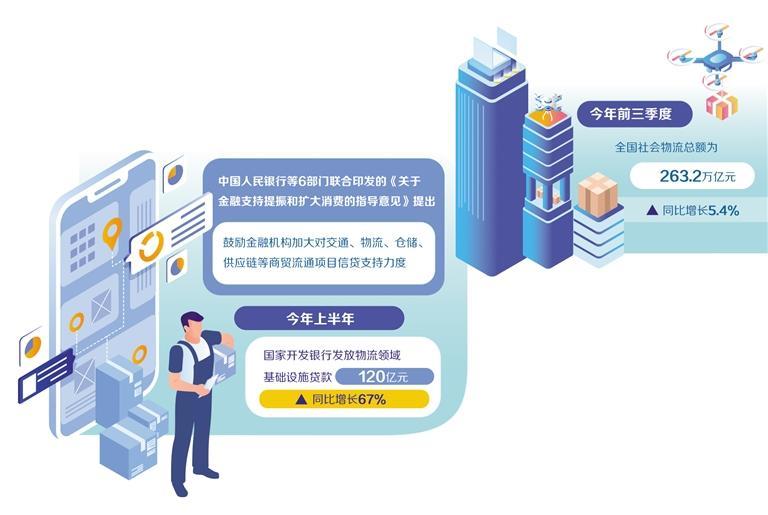
Core Viewpoint - The logistics sector plays a crucial role in facilitating domestic circulation and developing a modern industrial system, with financial support being essential for its growth [2] Financial Support for Infrastructure - Infrastructure construction is fundamental for logistics development, particularly in rural areas where the "first mile" and "last mile" challenges persist. Financial resources can effectively bridge funding gaps in rural logistics infrastructure [3] - In the first half of the year, the China Development Bank issued 12 billion yuan in loans for logistics infrastructure, marking a 67% year-on-year increase [3] - Financial backing for rural logistics can enhance agricultural modernization and rural revitalization, promoting the flow of agricultural products and industrial goods [3] Tailored Financial Products - Many rural logistics enterprises are small or startup companies that lack effective collateral, making traditional loan models less suitable. There is a need for tailored financial products such as credit loans and order financing [4] - Banks can design specialized credit products targeting key logistics segments, focusing on infrastructure development for storage and cold chain transport [4] Operational Support and Sustainability - Financial institutions should extend their support from construction to operational phases, ensuring projects not only get built but also operate sustainably [5] - Recommendations include providing liquidity support for initial operations and maintenance, as well as introducing professional management resources [5] Cold Chain Logistics Importance - Cold chain logistics is vital for balancing seasonal supply and demand of agricultural products, reducing circulation losses [6] - The Hebei Tianhuan Modern Commerce Smart Logistics Plaza is a significant cold chain logistics base, receiving 15 million yuan in project loans to support its operations [6] Rural Logistics Development - Since 2022, 1,285 county-level logistics centers and 1,457 township express logistics stations have been built, achieving a 95% coverage rate for express services in administrative villages [7] - Financial resources should be directed to support rural logistics, enhancing employment and living standards in rural areas [7] Comprehensive Financial Services - Financial services should focus on the entire logistics chain, with banks creating dedicated teams to address the unique needs of logistics enterprises [8] - Banks can leverage core enterprises in the supply chain to provide comprehensive financing services to small and medium-sized logistics companies [8] Growth of the Logistics Sector - The logistics industry in China is expanding, with a total social logistics volume of 263.2 trillion yuan in the first three quarters, reflecting a 5.4% year-on-year growth [9] - The ratio of total logistics costs to GDP has decreased by 0.1 percentage points compared to the previous year [9] Digital and Intelligent Transformation - Financial institutions are encouraged to promote the digital and intelligent transformation of rural logistics, utilizing technologies like big data and blockchain to enhance efficiency [10] - Collaborative efforts among government, enterprises, and financial institutions are essential to build a sustainable rural logistics ecosystem [10]
划重点!国有企业银行融资与社会融资新增政府隐性债务防控研究
Sou Hu Cai Jing· 2025-11-18 16:13
2025年商业银行不良资产处置最新政策、清收创新技巧、处置中的合规性与贷后管理专题研修班 个贷及小额贷款业务逾期清收技巧及诉讼清收、资产处置、破产中的常见法律问题专题研修班 农信金融人-仝金贝 一、国有企业融资与政府隐性债务的关联机制 1.1 政府隐性债务的内涵与特征 根据《中共中央 国务院关于防范化解地方政府隐性债务风险的意见》,政府隐性债务的核心界定标准为 "法定预算外、财政资金偿还、违法担保"。具体而言,隐性债务是指地方政府在法定债务限额之外,直接 或间接以财政资金偿还,以及违法提供担保等方式举借的债务。 隐性债务具有以下显著特征:一是隐蔽性,未纳入政府预算体系,通过融资平台、PPP 项目、政府购买服 务等多种形式存在;二是刚性兑付压力,虽未纳入预算管理,但其本质是地方政府对公共项目资金需求的 延伸,市场普遍预期政府会在债务违约时介入;三是风险累积性,脱离预算约束的债务扩张容易形成 "债 务利息→新增债务→利息叠加" 的恶性循环。 从债务规模看,财政部数据显示,截至 2024 年末,我国政府全口径债务总额为 92.6 万亿元,其中地方政 府法定债务为 47.5 万亿元,隐性债务为 10.5 万亿元,政府 ...
百万级项目频现!银行业密集启动科技招标,数字化转型驶入深水区
Xin Lang Cai Jing· 2025-11-17 12:24
Core Insights - Recent trends show multiple banks accelerating their technology procurement efforts, with significant budgets allocated for projects in areas such as large model development, computing infrastructure, and intelligent risk control [1][3][6] - The banking industry's IT investment is projected to reach 169.315 billion yuan in 2024, marking a 3.6% increase from 2023, and is expected to exceed 266.227 billion yuan by 2028 [7] Group 1: Technology Procurement Trends - Major banks are shifting from fragmented IT equipment purchases to systematic and ecological strategic layouts, with policy banks leading through large-scale tenders and framework agreements [3][4] - State-owned banks and national joint-stock banks dominate the technology procurement market, focusing on high-budget, long-cycle projects [3][4] - Smaller banks are adopting a more targeted approach, focusing on regional needs and core requirements with flexible budget scales [4] Group 2: Drivers of Technology Investment - The narrowing net interest margin and pressure on traditional lending businesses are pushing banks to leverage technology for competitive differentiation and cost control [6] - Regulatory policies are also driving technology projects, with over 30 "one-table" related projects initiated or completed across the industry since October [6][9] - External competition from fintech companies and internet platforms is compelling banks to accelerate their transformation efforts [6][9] Group 3: Challenges and Risks - The rapid pace of technology procurement presents challenges such as unclear risk responsibilities in outsourcing partnerships and compliance with regulatory requirements [9][10] - A notable case involving Guizhou Bank highlights issues with contract clarity and risk assessment in technology procurement [9] - The fast iteration of technology poses adaptation risks, as banks may face additional costs for upgrades if algorithms become outdated [10] Group 4: Future Considerations - The banking industry needs to establish a more systematic technology governance framework, including lifecycle management of suppliers and risk assessment mechanisms [10] - Balancing technological innovation with risk management will be crucial for banks to transform technology investments into core competitive advantages [10]




政府投融资2025|9-10月投融资政策动态速览:多措并举,新型政策性金融工具完成投放
Sou Hu Cai Jing· 2025-11-17 07:17
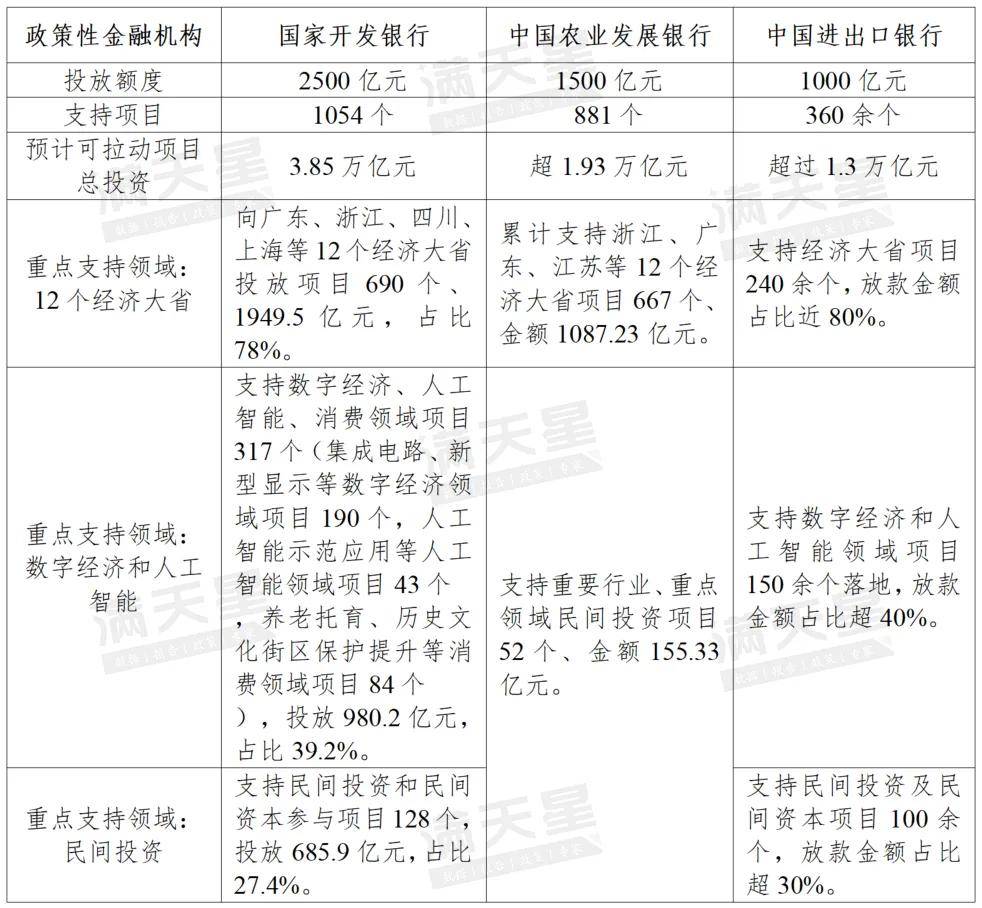
Policy Financial Tools Dynamics - New policy financial tools have been established with a total issuance of 500 billion yuan, focusing on key areas such as technological innovation, consumption expansion, and stabilizing foreign trade [2][3] - The issuance breakdown includes 250 billion yuan from the China Development Bank, 150 billion yuan from the Agricultural Development Bank, and 100 billion yuan from the Export-Import Bank, supporting over 2,000 projects [3] Local Government Debt Issuance - From January to September 2025, local governments issued a total of 36,857 billion yuan in new special bonds, with Guangdong province alone exceeding 400 billion yuan [6][7] - The remaining quota for new special bonds nationwide is less than 1 trillion yuan, with an issuance progress of 83.8% against the planned 4.4 trillion yuan for the year [6][7] New Policies Released - The Central Committee has published recommendations for the 15th Five-Year Plan, emphasizing the need to expand effective investment and improve investment efficiency [13][14] - The Ministry of Commerce and nine other departments have released measures to boost service consumption and expand domestic demand, focusing on financial support [13][15] - The National Development and Reform Commission has issued measures to strengthen the cultivation of innovative enterprises in the digital economy [13][16] Pilot Applications - The Ministry of Finance and the Ministry of Commerce have initiated pilot projects for new consumption formats and international consumption environment construction, targeting major cities for support [17][18] - Financial support for pilot cities includes subsidies of up to 4 billion yuan for super-large cities and 2 billion yuan for other cities, distributed in two batches based on performance evaluations [18][19]
广汽集团(02238):中期票据获注册
智通财经网· 2025-11-14 09:59
Core Viewpoint - GAC Group has received approval for the registration of its technology innovation bonds, allowing it to raise funds through medium-term notes totaling 15 billion yuan [1] Group 1: Registration Details - The registration amount for the medium-term notes is set at 15 billion yuan [1] - The validity of the registration is effective for two years from the date of the notice [1] Group 2: Underwriters - A consortium of banks including China Merchants Bank, Industrial and Commercial Bank of China, and others will act as joint lead underwriters for the bond issuance [1]

国开行:投贷联动 助力中欧班列高质量发展
Ren Min Wang· 2025-11-14 06:11
Group 1 - The National Development Bank (NDB) has issued 7.59 billion yuan in loans to support the China-Europe Railway Express projects in the first three quarters of this year, playing a key role in promoting high-quality development [1] - NDB has focused on enhancing the infrastructure capabilities of the China-Europe Railway Express, utilizing various financial products and services to support the smooth operation of the railway backbone corridor and improve the capacity of key ports [1] - The Zhengzhou gathering center for the China-Europe Railway Express was officially launched in June, supported by NDB's funding for its international warehousing and distribution center, which is crucial for transforming Henan from an "inland hinterland" to an "open hub" [1] Group 2 - NDB's Ili branch has provided financing for the construction of indoor transshipment warehouses in the Alashankou Comprehensive Bonded Zone, which will enhance transshipment efficiency and storage capacity for bulk goods [2] - A loan of 255 million yuan was issued to support the procurement of 200 locomotives by Kazakhstan's state railway company, which are designed to meet local environmental conditions and improve railway transport capacity [2] - The locomotives have been delivered and are operational, significantly contributing to the high-quality development of the China-Europe Railway Express and the construction of the international transport corridor across the Caspian Sea [2] Group 3 - NDB is actively using new policy-based financial tools to support projects related to the China-Europe Railway Express, including infrastructure projects in Jiangmen and Shenyang [3] - The bank aims to enhance financial services and contribute to the high-quality construction of the "Belt and Road" initiative by focusing on the construction of key railway corridors, hub nodes, and important ports [3] - NDB's initiatives are guided by eight actions for high-quality co-construction of the "Belt and Road," emphasizing connectivity as a main line [3]
每日债市速递 | 央行公开市场单日净投放1300亿
Wind万得· 2025-11-12 22:32
Market Overview - The central bank conducted a reverse repurchase operation of 195.5 billion yuan for 7 days at a fixed rate of 1.40%, with a net injection of 130 billion yuan after accounting for 65.5 billion yuan maturing that day [3][4]. Funding Conditions - The interbank market saw a balanced improvement in funding conditions, with overnight repurchase rates dropping by 9 basis points to around 1.41%. The overnight quotes on the anonymous X-repo system also fell to 1.43% [5][6]. Interbank Certificates of Deposit - The latest transaction rate for one-year interbank certificates of deposit among major banks remained stable at approximately 1.63% [7]. Government Bond Futures - The closing prices for government bond futures showed slight increases: 30-year contracts rose by 0.09%, 10-year by 0.02%, 5-year by 0.03%, and 2-year by 0.01% [11]. Government Procurement - The Ministry of Finance announced that the national government procurement scale for 2024 is projected to be 3,375.043 billion yuan, with goods, engineering, and services accounting for 23.54%, 41.01%, and 35.45% respectively [12]. Global Macro Developments - Japan's Prime Minister is set to propose a significant economic stimulus plan, indicating potential substantial spending to support the economy [14]. - South Korea's M2 money supply reached 4,430.5 trillion won (approximately 3.02 trillion USD) in September, marking a 0.7% month-on-month increase and an 8.5% year-on-year surge [14]. Bond Issuance Events - The China Development Bank plans to issue up to 19 billion yuan in three phases of fixed-rate bonds on November 13 [16]. - The Japanese Ministry of Finance will auction 800 billion yen of 20-year government bonds on November 19 [16]. Negative Events in Bond Market - Several companies, including Aerospace Hongtu and Zhejiang Yitian, have seen downgrades in their credit ratings or outlooks, indicating potential risks in the bond market [17]. Non-Standard Asset Risks - Various non-standard assets have been flagged for risk, including trust plans and private equity funds, highlighting ongoing concerns in the investment landscape [18].

两年来我省已发放超千亿贷款惠及5000多家企业财政贴息,“贴一贴”换来发展“好消息”
Xin Hua Ri Bao· 2025-11-09 23:47
Core Insights - Jiangsu province is implementing a financial interest subsidy policy starting in 2024 to support small and micro enterprises, enhancing the quality and efficiency of the real economy [1][6] - By September 30, 2023, various interest subsidy products have issued loans totaling 1,434.05 billion yuan, with over 1 billion yuan in subsidies benefiting 5,212 enterprises [1] Manufacturing Sector Support - The manufacturing sector, identified as the "ballast stone" of Jiangsu's economy, has received significant support, with loans amounting to 1,015.29 billion yuan, accounting for approximately 70% of the total issued loans [1] - Companies like Zhongcai Lithium Membrane (Nanjing) Co., Ltd. have benefited from these policies, receiving 880 million yuan in loans to accelerate project development [1] Financial Collaboration - Large-scale financing projects are often challenging for single banks; thus, a consortium led by China Construction Bank has been formed to facilitate loans and subsidies for enterprises [2] - Since the implementation of the manufacturing loan interest subsidy policy in June 2024, 450 million yuan in subsidies have been allocated, benefiting 2,027 enterprises [2] Urban Renewal Financing - The "Chengxin Loan" has issued 179.13 billion yuan, focusing on urban renewal projects, including infrastructure upgrades and old community renovations [3] - By September 30, 2023, the "Chengxin Loan" has provided 329 million yuan in subsidies, benefiting 183 enterprises [3] Diverse Financial Products - The "Suzhi Loan" has issued 131.92 billion yuan, benefiting the highest number of enterprises at 2,203 [5] - Other financial products like "Jiaoyun Loan" and "Technology Innovation First Loan" have also contributed significantly, with respective loans of 73.9 billion yuan and 31.19 billion yuan [5] Policy Effectiveness and Long-term Strategy - Jiangsu has introduced over 10 special interest subsidy policies, streamlining the application process to enhance enterprise access to funds [6] - The policies are designed to address the challenges of traditional industries facing equipment aging and technological lag, ensuring financial support for critical sectors [6][7] Economic Resilience - The interest subsidy policies aim to lower financing costs for enterprises while directing social capital towards key areas such as manufacturing upgrades and infrastructure development [7] - The effectiveness of these policies is evident in their ability to convert "policy dividends" into tangible economic outcomes, fostering long-term growth [7]
财政贴息,“贴一贴”换来发展“好消息”
Sou Hu Cai Jing· 2025-11-09 23:12
Core Insights - Jiangsu province is implementing a financial interest subsidy policy starting in 2024 to support small and micro enterprises, enhancing the quality and efficiency of the real economy [1][6] - By September 30, 2023, various interest subsidy products have issued loans totaling 1,434.05 billion yuan, with over 1 billion yuan in subsidies benefiting 5,212 enterprises [1] Manufacturing Sector Support - The manufacturing sector, identified as a cornerstone of Jiangsu's economy, has received the most substantial support, with loans amounting to 1,015.29 billion yuan, accounting for approximately 70% of the total issued loans [1] - Companies like Zhongcai Lithium Membrane (Nanjing) Co., Ltd. have benefited significantly from these policies, receiving 880 million yuan in loans to accelerate project implementation [1] Financial Collaboration - The construction of large-scale projects often requires significant financing, leading to collaborations among banks, such as the joint efforts of China Construction Bank, the National Development Bank, and the Transportation Bank to form external syndicates [2] - Since the launch of the manufacturing loan interest subsidy policy in June 2024, 450 million yuan in subsidies have been allocated, benefiting 2,027 enterprises [2] Urban Renewal Financing - The "Chengxin Loan" has issued 179.13 billion yuan, focusing on urban renewal projects, including the renovation of old neighborhoods and infrastructure upgrades [3] - By September 30, 2023, the "Chengxin Loan" has allocated 329 million yuan in subsidies, benefiting 183 enterprises [3] Broad Coverage of Subsidies - The "Su Quality Loan" has issued 131.92 billion yuan, benefiting the highest number of enterprises at 2,203, despite not being the largest in total funding [4][5] - Other loans such as "Jiaoyun Loan" and "Technology Innovation First Loan" have also contributed significantly, with respective amounts of 73.9 billion yuan and 31.19 billion yuan issued [5] Policy Effectiveness and Long-term Strategy - Jiangsu has introduced over 10 special interest subsidy policies since last year, streamlining the application process to enhance accessibility for enterprises [6][7] - The policies aim to address the challenges of traditional industries facing equipment aging and technological lag, ensuring financial support reaches critical areas [6][7] - The province's approach reflects a proactive stance in response to external and internal economic challenges, aiming to stimulate investment in key sectors [7]