
宝钢股份

Search documents
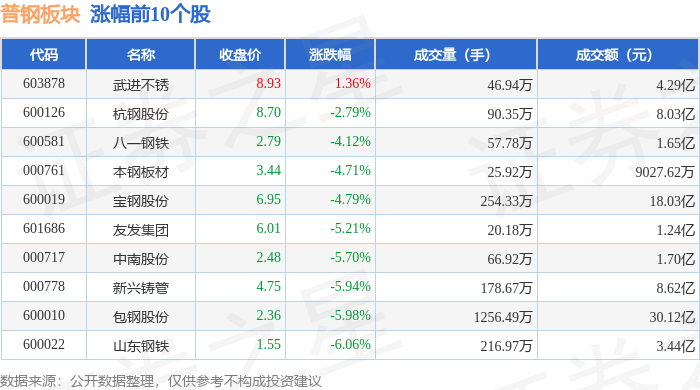
普钢板块2月2日跌6.25%,柳钢股份领跌,主力资金净流出12.21亿元
Zheng Xing Xing Ye Ri Bao· 2026-02-02 09:07
Market Overview - On February 2, the general steel sector experienced a decline of 6.25%, with Liugang Co., Ltd. leading the drop [1] - The Shanghai Composite Index closed at 4015.75, down 2.48%, while the Shenzhen Component Index closed at 13824.35, down 2.69% [1] Individual Stock Performance - Notable declines in individual stocks include: - Liugang Co., Ltd. (601003) down 10.07% to 4.82 [2] - Sijiang Steel (600808) down 9.79% to 3.78 [2] - Hualing Steel (000932) down 8.77% to 5.72 [2] - Other significant declines include: - Anyang Steel (600569) down 8.66% to 2.32 [2] - Ansteel (000898) down 8.33% to 2.42 [2] Trading Volume and Capital Flow - The total net outflow of main funds in the general steel sector was 1.221 billion yuan, while retail funds saw a net inflow of 622 million yuan [2] - The trading volume for individual stocks varied, with Wujin Stainless Steel (603878) having a trading volume of 469,400 shares and a closing price of 8.93, reflecting a 1.36% increase [1] Capital Inflow Analysis - Major capital inflows were observed in: - Ma Steel (600808) with a net inflow of 28.97 million yuan [3] - Sansteel Mingguang (002110) with a net inflow of 27.76 million yuan [3] - Conversely, significant outflows were noted in: - Wujin Stainless Steel (603878) with a net outflow of 33.45 million yuan [3] - Ansteel (000898) with a net outflow of 11.08 million yuan [3]


做“难而正确的选择”,华为云产业智能化的“深潜”逻辑
Jing Ji Wang· 2026-02-02 07:11
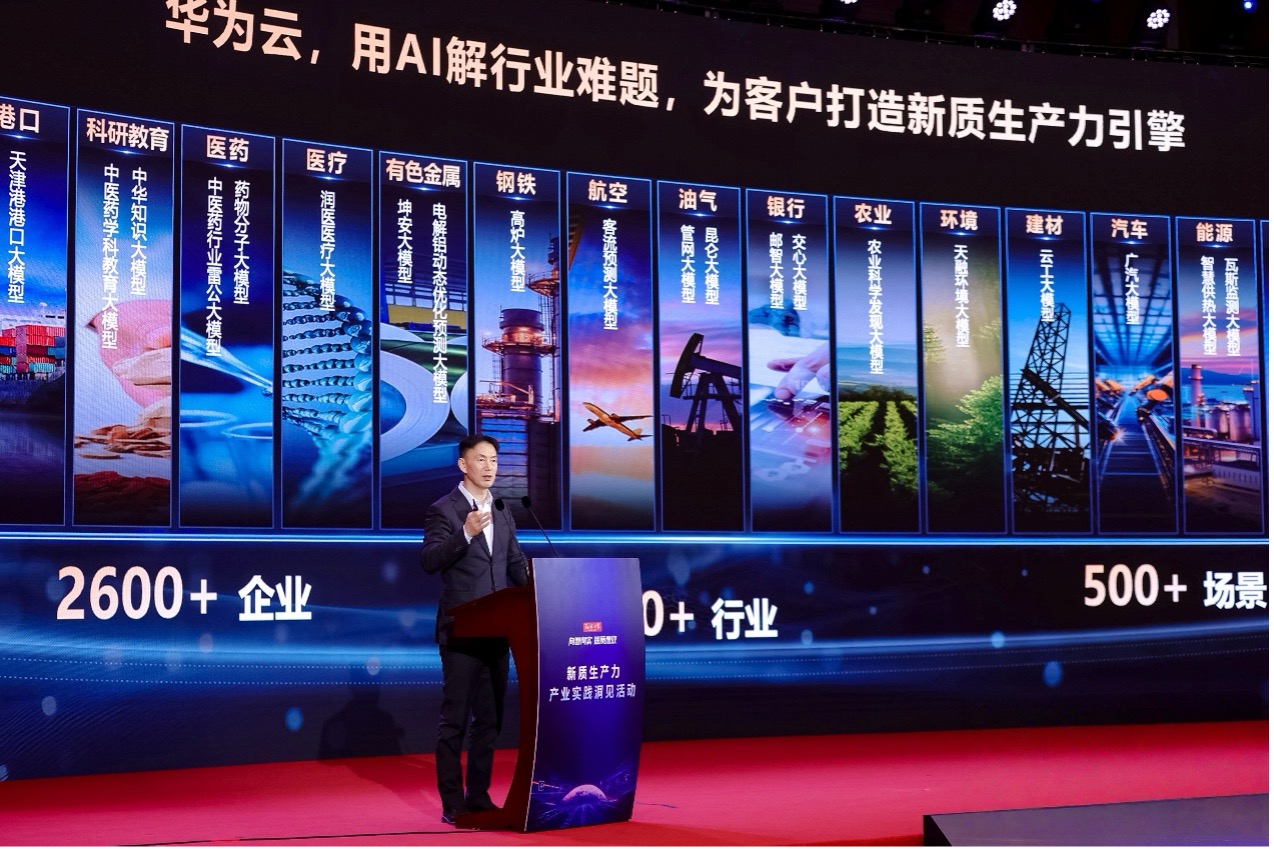
Core Insights - Artificial intelligence (AI) has transitioned from a topic of discussion to a strategic focus for industries, especially following the Chinese government's endorsement of AI integration into various sectors [1][3] - Huawei Cloud has been recognized for its AI infrastructure and industry integration, showcasing its role in transforming AI from a conceptual tool to a practical business engine [1][7] Group 1: AI Integration and Industry Transformation - AI technology is systematically reshaping various industries, with Huawei Cloud emphasizing the importance of combining computational power with industry-specific scenarios [3][7] - The collaboration between Huawei Cloud and Nanjing Steel has led to the development of the "Yuanye Steel Model," which has implemented 20 intelligent applications across four business areas, enhancing production processes [4] - In Inner Mongolia, Huawei Cloud's partnership has resulted in the world's first fleet of 100 autonomous electric mining trucks, demonstrating significant operational efficiency and safety improvements [4] Group 2: Achievements and Impact - Huawei Cloud has enabled substantial efficiency gains across multiple sectors, such as reducing inspection times from 6 hours to 20 minutes in industrial inspections, achieving over 98% accuracy in fault detection [5] - In the steel industry, AI has improved temperature prediction accuracy in blast furnaces to 80%, leading to a fuel saving of approximately 7,800 tons per furnace annually [5] - The company has developed over 30 industry-specific AI models, serving more than 500 scenarios and 2,600 enterprises across various fields, contributing to high-quality industrial development in China [9] Group 3: Strategic Approach and Future Directions - Huawei Cloud aims to tackle complex industry challenges by focusing on three key areas: understanding physical environments, managing specialized data, and ensuring effective implementation of AI solutions [8] - The company positions itself as a "technical partner," providing comprehensive AI services that include not only computational power but also development frameworks and industry solutions [8] - Looking ahead, Huawei Cloud is committed to continuous innovation in core technologies and collaborative efforts with industry partners to embed AI deeply into core business processes, thereby creating new industrial value [9]
2025年中国中厚宽钢带产量为22268万吨 累计增长4.2%
Chan Ye Xin Xi Wang· 2026-02-02 03:56
2020-2025年中国中厚宽钢带产量统计图 数据来源:国家统计局,智研咨询整理 知前沿,问智研。智研咨询是中国一流产业咨询机构,十数年持续深耕产业研究领域,提供深度产业研 究报告、商业计划书、可行性研究报告及定制服务等一站式产业咨询服务。专业的角度、品质化的服 务、敏锐的市场洞察力,专注于提供完善的产业解决方案,为您的投资决策赋能。 上市企业:宝钢股份(600019),鞍钢股份(000898),首钢股份(000959),华菱钢铁(000932),太钢不 锈(000825),马钢股份(600808),包钢股份(600010),柳钢股份(601003),本钢板材(000761),酒 钢宏兴(600307) 相关报告:智研咨询发布的《2026-2032年中国中厚宽钢带行业市场研究分析及产业需求研判报告》 根据国家统计局数据显示:2025年12月中国中厚宽钢带产量为1708万吨,同比下降4.8%;2025年1-12月 中国中厚宽钢带累计产量为22268万吨,累计增长4.2%。 ...

自由现金流ETF(159201)连续11天净流入,合计“吸金”22.59亿元
Sou Hu Cai Jing· 2026-02-02 02:38
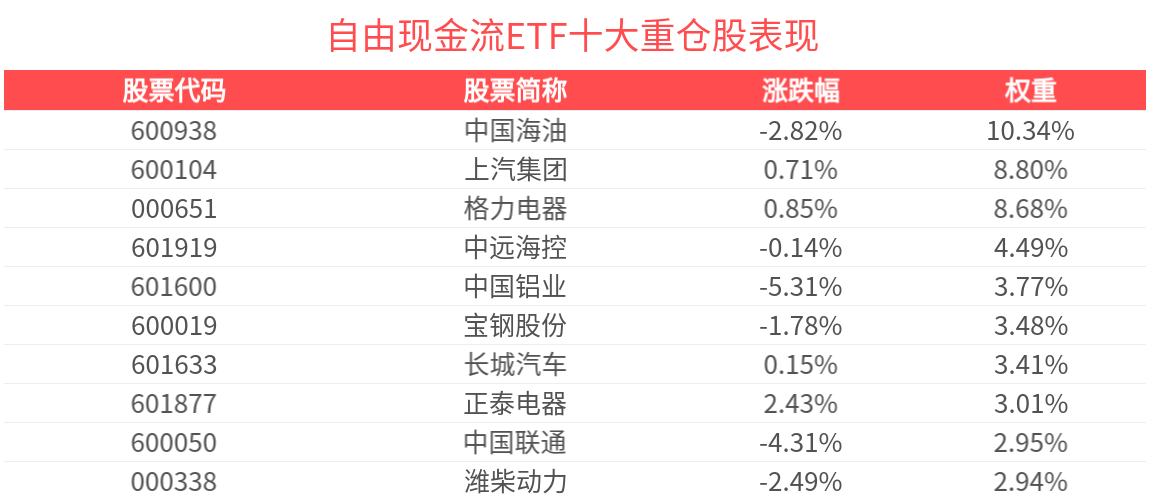
Core Viewpoint - The National Index of Free Cash Flow has experienced a decline of 2.01% as of February 2, 2026, with mixed performance among constituent stocks, indicating a volatile market environment [1]. Group 1: ETF Performance - The Free Cash Flow ETF (159201) has decreased by 2.03%, with the latest price at 1.3 yuan [1]. - The ETF has seen a turnover of 2.06% during the trading session, with a total transaction volume of 250 million yuan [1]. - Over the past week, the average daily transaction volume of the ETF has been 685 million yuan [1]. - The ETF has recorded a net inflow of 2.259 billion yuan over the last 11 days, reaching a total share count of 9.357 billion and a total scale of 12.409 billion yuan, marking a new high since its inception [1]. - The leverage funds have been actively investing, with a net financing purchase of 4.1325 million yuan on the previous trading day and a current financing balance of 141 million yuan [1]. - The net value of the ETF has increased by 24.49% over the past six months [1]. - The highest monthly return since inception was 9.25%, with the longest consecutive monthly gain being 6 months and a maximum increase of 22.69% [1]. - The ETF has a monthly profit percentage of 81.82% and a historical holding period profit probability of 100% [1]. Group 2: Top Holdings - As of January 30, 2026, the top ten weighted stocks in the National Index of Free Cash Flow include China National Offshore Oil Corporation, Gree Electric Appliances, SAIC Motor, China Aluminum, COSCO Shipping Holdings, Weichai Power, Silver Holdings, Baosteel, Chint Electric, and Great Wall Motors, collectively accounting for 50.3% of the index [2]. - The individual weightings of these stocks vary, with China National Offshore Oil Corporation holding the highest at 10.34% and Weichai Power at 2.94% [4].
碳中和政策深化,如何展望钢铁行业的投资机遇?
Changjiang Securities· 2026-02-02 01:05
Investment Rating - The investment rating for the steel industry is Neutral, maintained [6] Core Insights - The steel industry accounts for approximately 15% of the national carbon emissions, making it the highest carbon-emitting manufacturing sector. The implementation of low-carbon steelmaking is a significant challenge for Chinese steel companies [2][4] - The "carbon peak" target was first proposed in 2020, evolving into a policy of stabilizing crude steel production. The current deepening of carbon neutrality policies may accelerate the elimination of outdated production capacity in the steel industry [2][4] - As the Spring Festival approaches, demand and production are slowing down, leading to a low inventory and low expectation state in the steel market. The overall market is characterized by low production, low inventory, and low expectations, awaiting macro or industrial catalysts [4] Summary by Sections Section 1: Market Dynamics - Demand continues to weaken with a year-on-year decrease of 2.02% and a month-on-month decrease of 0.67% in apparent consumption of major steel products [4] - Steel production has slightly increased, with a year-on-year rise of 2.19% and a month-on-month rise of 0.48% in total steel output [4] - Total steel inventory has increased by 1.57% month-on-month and 13.05% year-on-year [4] Section 2: Policy and Regulatory Environment - The carbon intensity reduction target has been a binding indicator since the 12th Five-Year Plan, with a projected reduction of about 7.8% by the end of 2024, which is below expectations [4] - The Ministry of Ecology and Environment has released a carbon emission trading market allocation plan for the steel, cement, and aluminum industries, marking a significant step towards operationalizing carbon control policies [4] Section 3: Investment Opportunities - Short-term focus on energy-saving and carbon-reduction modifications in existing blast furnace-converter processes is a practical choice for steel companies [5] - Long-term investment opportunities may arise in electric arc furnace steelmaking and hydrogen metallurgy as the dual carbon policy deepens [5]
钢铁行业利润迎来爆发式反弹 首钢、山钢扭亏突围 鞍钢预计减亏超40%
Mei Ri Jing Ji Xin Wen· 2026-02-01 22:05
2025年,中国钢铁行业上演了充满张力的"冰与火之歌"。在需求连续第五年下滑、市场供强需弱的背景 下,行业整体利润却迎来爆发式反弹。国家统计局数据显示,2025年黑色金属冶炼和压延加工业实现利 润总额1098.3亿元,同比增长高达299.2%。然而,A股上市钢企的悲欢并不相通。 《每日经济新闻》记者梳理发现,截至1月30日晚间,多家A股钢铁类上市公司披露业绩预告:一方 面,首钢股份、山东钢铁凭借产品结构优化和降本增效,业绩强势扭亏或实现大增;另一方面,尽管原 材料成本大幅下移助推全行业减亏,但鞍钢股份、重庆钢铁等老牌巨头依然未能爬出亏损泥潭。 值得注意的是,业绩分化的背后,不仅是企业经营策略的较量,更是中国钢铁行业从建筑用钢主导向制 造业用钢主导的历史性跨越。当房地产红利退潮,高端化转型已不再是选择题,而是关乎企业生死的必 答题。 谁在寒冬中突围? 2025年的钢铁市场,原材料价格的显著下行成为企业减亏的最强助攻。据中国钢铁工业协会披露,进口 粉矿、炼焦煤、冶金焦采购成本同比分别下降8%、27%和24%,均为近3年最大降幅。 这股成本端的"暖风",吹暖了部分头部钢企的财务报表。在已经披露业绩预告的企业中,山东 ...





钢铁行业周度更新报告:25Q4板块预披业绩总亏约119亿
GUOTAI HAITONG SECURITIES· 2026-02-01 13:30
Investment Rating - The report maintains an "Overweight" rating for the steel industry [5]. Core Insights - Demand is expected to gradually stabilize, while supply-side constraints are anticipated to continue, leading to a potential recovery in the steel industry's fundamentals. If supply policies are implemented, the contraction in supply may accelerate, facilitating a quicker industry upturn [3][4]. Summary by Sections Steel Market Overview - Steel prices have decreased, with the Shanghai rebar price dropping by 20 CNY/ton to 3240 CNY/ton, a decline of 0.61%. The total inventory of steel has increased by 1.70% to 12.7851 million tons [8][12]. - Apparent consumption of five major steel products was 8.0174 million tons, down 0.96% week-on-week but up 28.96% year-on-year [21]. - The production of five major steel products was 8.2317 million tons, an increase of 0.44% week-on-week [12][37]. Supply and Demand Dynamics - Approximately 60% of steel companies are currently operating at a loss, indicating a market-driven supply clearance is beginning to occur [4]. - The construction sector's demand for steel is expected to stabilize, while demand from infrastructure and manufacturing is projected to grow steadily [4]. Profitability and Production Margins - The average gross profit for rebar was 196.9 CNY/ton, down 11.7 CNY/ton from the previous week, while hot-rolled coil profit increased by 2.3 CNY/ton to 46.9 CNY/ton [39]. - The profitability rate of 247 steel companies was 39.39%, a decrease of 1.3% from the previous week [28]. Recommendations - The report recommends focusing on companies with leading technology and product structures, such as Baosteel and Hualing Steel, as well as low-cost firms like Fangda Special Steel and New Steel [4]. - It also highlights the potential of upstream resource companies like Hebei Resources and Erdos, which may benefit from a recovery in demand [4].





金属、新材料行业周报:资金博弈加剧,金属板块波动放大-20260201
Shenwan Hongyuan Securities· 2026-02-01 13:10
Investment Rating - The report maintains a "Positive" outlook on the metals and new materials industry [3]. Core Insights - The report highlights increased volatility in the metals sector due to intensified capital competition, with the non-ferrous metals index outperforming the broader market indices [2][5]. - The report suggests that the precious metals sector is poised for recovery, driven by central bank gold purchases and a favorable long-term outlook for gold prices [4][24]. - Industrial metals, particularly copper and aluminum, are expected to see price increases due to stable supply-demand dynamics and significant infrastructure investments [4][48]. Weekly Market Review - The Shanghai Composite Index fell by 0.44%, while the Shenzhen Component Index dropped by 1.62%. In contrast, the non-ferrous metals index rose by 3.37%, outperforming the CSI 300 Index by 3.29 percentage points [5][8]. - Year-to-date, the non-ferrous metals index has increased by 22.59%, surpassing the CSI 300 Index by 20.94 percentage points [9]. Price Changes - The report details price fluctuations for various metals, with copper prices increasing by 0.32% and aluminum prices decreasing by 0.79% week-on-week [16]. - Precious metals saw significant price changes, with gold prices down by 1.52% and silver prices down by 17.44% [16]. Inventory Changes - Copper inventories in domestic markets decreased by 0.7 million tons, while exchange inventories increased by 2.5 million tons [33]. - Aluminum social inventories totaled 102.55 million tons, reflecting a week-on-week increase of 6.05 million tons [49]. Sector-Specific Insights - **Precious Metals**: The report emphasizes the potential for gold prices to rise due to increased central bank purchases and a favorable economic outlook [24]. - **Industrial Metals**: Copper demand is expected to remain strong, supported by infrastructure investments and a stable supply chain [4][33]. - **Aluminum**: The report notes a decrease in the operating rates of downstream processing enterprises, indicating potential supply constraints [48]. Growth Cycle Investment Analysis - The report recommends focusing on stable supply-demand dynamics in the new energy manufacturing sector, highlighting companies such as Huafeng Aluminum and Baowu Magnesium [4].




钢铁行业利润迎来爆发式反弹 首钢、山钢扭亏突围,鞍钢预计减亏超40%
Mei Ri Jing Ji Xin Wen· 2026-02-01 12:54
Core Viewpoint - In 2025, despite a continuous decline in demand for the fifth consecutive year, the overall profit of China's steel industry experienced a significant rebound, with profits reaching 109.83 billion yuan, a year-on-year increase of 299.2% [1] Group 1: Industry Performance - The steel industry is witnessing a divergence in performance among A-share listed companies, with some like Shougang Co. and Shandong Steel turning losses into profits due to product optimization and cost reduction, while others like Ansteel and Chongqing Steel remain in the loss zone [1][3] - The significant drop in raw material costs, including an 8% decrease in imported iron ore and a 27% drop in coking coal, has aided some leading steel companies in reducing losses [2] - The shift from construction steel to manufacturing steel marks a historic transition in the industry, driven by the retreat of real estate profits and the necessity for high-end transformation [1][5] Group 2: Company-Specific Insights - Shandong Steel is projected to achieve a net profit of approximately 100 million yuan in 2025, a turnaround from a loss of 2.891 billion yuan the previous year, aided by deep collaboration with China Baowu and cost-saving measures [2] - Shougang Co. expects a net profit between 920 million and 1.06 billion yuan, reflecting a significant growth of 95.29% to 125.01% year-on-year, driven by a high-end and differentiated product strategy [3] - Ansteel anticipates a loss of around 4.077 billion yuan, a reduction of 42.75% from the previous year's loss, while Chongqing Steel expects a loss between 2.5 billion and 2.8 billion yuan, indicating ongoing challenges despite some improvements [4] Group 3: Market Dynamics - The demand structure in the steel industry has fundamentally reversed, with the proportion of steel used in construction dropping from 53% in 2020 to 36% in 2025, while manufacturing steel usage rose from 42% to 53% [6] - The export of steel reached 119 million tons in 2025, a year-on-year increase of 7.5%, although the average export price fell by 8.1% to 694 USD per ton, indicating a competitive "volume for price" scenario [7] - The industry faces a challenging market environment, with domestic steel demand declining for five consecutive years and a strong supply-demand imbalance [7][8]
钢铁行业周度更新报告:25Q4板块预披业绩总亏约119亿-20260201
GUOTAI HAITONG SECURITIES· 2026-02-01 11:28
Investment Rating - The report maintains an "Overweight" rating for the steel industry [5] Core Viewpoints - Demand is expected to gradually stabilize, while supply-side constraints are anticipated to continue, leading to a potential recovery in the steel industry's fundamentals [3][5] - The industry has been experiencing prolonged micro-profit conditions, and market-driven supply adjustments have begun to emerge [3][5] - The report highlights that approximately 60% of steel companies are currently operating at a loss, indicating ongoing supply-side challenges [5] Summary by Sections Steel - Steel prices have decreased week-on-week, with the Shanghai rebar price dropping by 20 CNY/ton to 3240 CNY/ton, a decline of 0.61% [8] - The apparent consumption of five major steel products was 8.0174 million tons, down 0.96% week-on-week but up 28.96% year-on-year [21] - The total inventory of steel reached 12.7851 million tons, increasing by 1.70% week-on-week, maintaining a low level [5][12] - The operating rate of blast furnaces among 247 steel mills rose to 79%, an increase of 0.32 percentage points from the previous week [28] - The average gross profit for rebar was 196.9 CNY/ton, down 11.7 CNY/ton from the previous week, while hot-rolled coil profit increased by 2.3 CNY/ton to 46.9 CNY/ton [39] Raw Materials - Iron ore spot prices decreased, with the price for PB powder (61.5% iron content) at 792 CNY/ton, down 9 CNY/ton [46] - The port inventory of iron ore rose to 17.022 million tons, an increase of 1.53% [50] - The total shipment volume of major iron ore producers increased, with Brazil's shipment at 4.852 million tons, up 1.06% week-on-week [51] Investment Recommendations - The report recommends focusing on companies with leading technology and product structures, such as Baosteel and Hualing Steel, as well as low-cost firms like Fangda Special Steel and New Steel [5] - It also highlights the potential of upstream resource companies benefiting from demand recovery trends, recommending Hebei Resources and Erdos among others [5]