晶澳科技

Search documents
【电新】渠道与场景加持,光伏组件企业大举进入储能领域——储能行业跟踪报告(殷中枢/郝骞/和霖)
光大证券研究· 2026-01-18 12:03
Group 1 - Leading photovoltaic module companies are accelerating their entry into the energy storage sector, with companies like Canadian Solar, Trina Solar, Jinko Solar, JA Solar, and LONGi Green Energy making significant moves in this area [3][4] - The energy storage market is a key focus for photovoltaic companies, with both commercial and residential storage sectors being targeted for development [3] Group 2 - Photovoltaic companies have two main advantages in entering the energy storage field: strong customer and channel alignment, and established global sales and service systems that facilitate market expansion [4] - The trend of integrating photovoltaic and energy storage projects is becoming more prevalent, especially in countries with underdeveloped electricity markets and in mature markets where bundled projects can secure higher Power Purchase Agreement (PPA) prices [4] Group 3 - The growth potential for photovoltaic companies in the energy storage sector is significant, with three key indicators to assess their success: commitment to entering the storage market, expansion in overseas markets over the next 1-2 years, and the ability to convert channel, brand, and service advantages into profit contributions [5]






多晶硅急速遇冷:会成为下一个动力煤期货吗?
经济观察报· 2026-01-18 10:02
Core Viewpoint - The article discusses the significant decline in polysilicon futures prices entering 2026, with a year-to-date drop of 13.92% as of January 16, 2026, erasing gains since August 2025 and repeatedly falling below the critical threshold of 50,000 yuan/ton [2][4]. Market Dynamics - The trading volume and open interest for polysilicon have sharply decreased, with the weighted index's open interest falling below 90,000 contracts, only about 20% of last year's peak of 444,400 contracts [2][12]. - The recent price drop is attributed to weak supply and demand dynamics, alongside panic selling triggered by rumors of antitrust actions affecting major polysilicon producers [2][4][6]. Policy Impact - A new policy from China's Ministry of Finance and State Taxation Administration, effective April 1, 2026, will eliminate VAT export rebates for photovoltaic products, which may lead to short-term export demand but is expected to benefit the photovoltaic industry in the long run [4][10]. - In anticipation of this policy, prices for various photovoltaic products have increased, but polysilicon futures have not followed suit, indicating market disruptions [4][8]. Supply and Demand Analysis - January 2026 polysilicon production is estimated at around 107,000 tons, while demand is projected to be less than 80,000 tons, indicating a continued oversupply situation [6][10]. - The production of downstream components, such as battery cells and modules, has also decreased, further exacerbating the supply-demand imbalance [6][10]. Market Sentiment and Speculation - Market rumors regarding antitrust measures have amplified market volatility, leading to a rapid exit of long positions and contributing to the price decline [5][6]. - Analysts suggest that market participants should verify the authenticity of such rumors and consider the fundamental supply-demand conditions before making investment decisions [6][9]. Industry Challenges - The article highlights that regardless of market rumors, polysilicon prices were likely to decline due to the unsustainable price increases seen in 2025, which have not been matched by price increases in other segments of the photovoltaic supply chain [8][9]. - Companies in the downstream photovoltaic sector, such as TCL Zhonghuan, have reported significant losses due to the rising costs of polysilicon, which have not been adequately passed down the supply chain [9][10]. Regulatory Environment - The recent tightening of trading regulations by the exchange aims to curb speculative trading, which has contributed to the decline in trading volume and open interest in polysilicon futures [12][13]. - There are concerns that polysilicon futures could become marginalized, similar to the fate of coal futures, but analysts believe that the strategic importance of the photovoltaic industry will prevent this outcome [12][13].


亏损大幅缩窄!隆基、爱旭预告2025年业绩,拐点来了?
Bei Jing Shang Bao· 2026-01-18 09:58
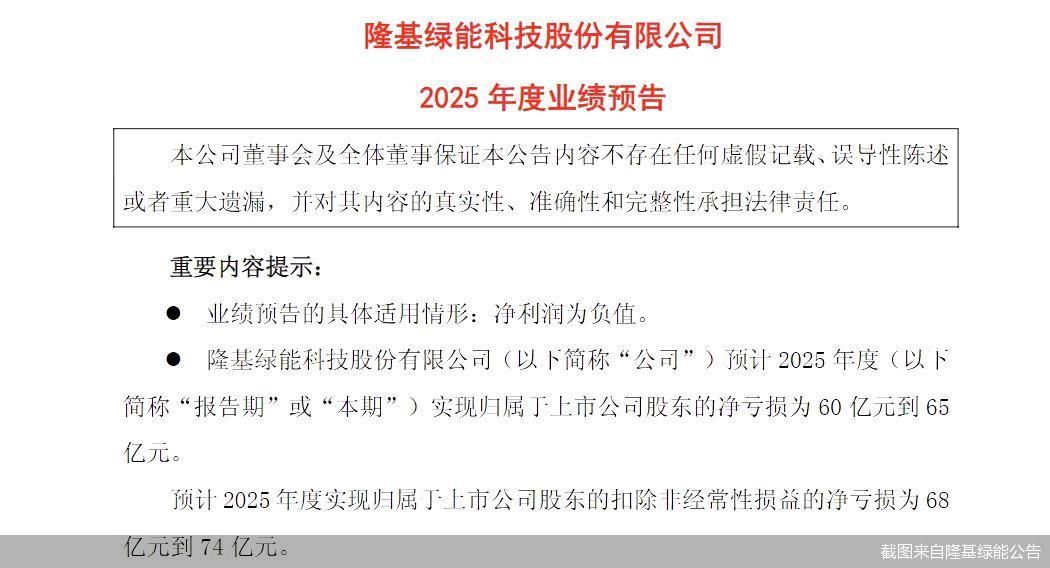
Core Viewpoint - The performance forecasts of leading A-share photovoltaic companies, Longi Green Energy and Aiko Solar, indicate a significant reduction in losses for 2025, suggesting potential industry recovery amidst supply-demand imbalances and price competition [1][4]. Group 1: Company Performance - Longi Green Energy expects a net loss of 6 billion to 6.5 billion yuan for 2025, a decrease from a loss of 8.618 billion yuan in the previous year [4]. - Aiko Solar anticipates a net loss of 1.2 billion to 1.9 billion yuan for 2025, significantly improved from a loss of approximately 5.319 billion yuan in the prior year [4]. - The performance of these leading companies reflects structural changes within the photovoltaic industry [4]. Group 2: Industry Dynamics - The photovoltaic industry is facing supply-demand imbalances and intensified low-price competition, compounded by rising raw material costs and trade barriers [4]. - The cancellation of export tax rebates for photovoltaic products, effective April 1, is expected to shift competition from price-based to value-based, benefiting larger manufacturers [5]. - There are indications of a potential "export rush" before the rebate cancellation, with some manufacturers reportedly raising prices [5]. Group 3: Technological Advancements - Longi Green Energy emphasizes product leadership with its HPBC 2.0 modules, which are noted for their high efficiency and commercial viability, establishing a competitive edge in the distributed high-end market [4]. - The industry is witnessing a trend where leading companies leverage technological advancements to improve profitability amidst competitive pressures [5]. Group 4: Strategic Moves - Longi Green Energy is optimizing its global business layout in response to international trade conditions and is enhancing its system solution capabilities through collaboration in energy storage [5]. - The company has recently acquired a stake in Suzhou Jingkong Energy Technology Co., marking its entry into the energy storage sector [5][6].

多晶硅急速遇冷:会成为下一个动力煤期货吗?
Jing Ji Guan Cha Bao· 2026-01-18 09:25
Core Viewpoint - The recent decline in polysilicon prices and trading volumes is attributed to weak supply-demand dynamics and market rumors regarding antitrust issues, leading to panic selling among investors [1][2][4]. Group 1: Market Dynamics - As of January 16, polysilicon futures have seen a year-to-date decline of 13.92%, erasing gains since August and frequently falling below the critical threshold of 50,000 yuan/ton [1]. - The trading volume and open interest for polysilicon have significantly decreased, with open interest dropping to around 84,296 contracts, only 20% of last year's peak [9]. - The recent market sentiment has been exacerbated by rumors of antitrust actions against leading polysilicon companies, causing further panic among investors [2][3]. Group 2: Supply and Demand - The supply of polysilicon remains high, with January production estimated at around 107,000 tons, while demand is projected to be less than 80,000 tons, indicating a continued oversupply [4]. - Downstream production rates for solar cells and modules have also decreased, reflecting weak end-user demand [4]. - The overall market is experiencing a supply-demand imbalance, which is pressuring prices and leading to inventory accumulation [4]. Group 3: Policy Impact - The Chinese government announced the cancellation of VAT export rebates for photovoltaic products starting April 1, 2026, which may create short-term export demand but is expected to benefit the industry in the long run [2]. - The "anti-involution" policy aims to alleviate price competition within the photovoltaic industry, but the recent price surge in polysilicon has not been matched by increases in other segments, leading to operational pressures on downstream companies [6][7]. Group 4: Trading Regulations - The recent decline in trading volumes is partly due to the exchange implementing stricter risk control measures to curb speculative trading, which has raised transaction costs and reduced arbitrage opportunities [9][10]. - Concerns have been raised about the potential for polysilicon futures to become a "zombie product" similar to coal futures if trading continues to cool [9]. - Despite current challenges, the futures market is expected to remain relevant due to the strategic importance of the photovoltaic industry in China [10].
电力设备与新能源行业1月第2周周报:固态电池迈向工程化验证关键期-20260118
Bank of China Securities· 2026-01-18 08:17
Investment Rating - The report maintains an "Outperform" rating for the power equipment and new energy industry [1] Core Insights - The global sales of new energy vehicles are expected to grow rapidly in 2026, driving demand for batteries and materials [1] - The solid-state battery technology is entering a critical phase of engineering validation, with a focus on related materials and equipment companies [1] - The photovoltaic sector is expected to benefit from regulatory oversight on polysilicon prices, which may enhance profitability in downstream battery components [1] - The demand for wind power is projected to continue growing, with government initiatives supporting significant new projects [1] - The energy storage sector remains highly prosperous, with recommendations to focus on energy cell and large-scale storage integration manufacturers [1] - Hydrogen energy is anticipated to open new demand avenues, particularly in green hydrogen applications [1] Industry Dynamics - The power equipment and new energy sector saw a 0.79% increase this week, outperforming the Shanghai Composite Index [10] - The automotive industry anticipates 16.49 million new energy vehicle sales in 2025, a 28.2% year-on-year increase, with projections of 19 million units in 2026 [23] - The domestic power battery cumulative installation is expected to reach 769.7 GWh by 2025, reflecting a 40.4% year-on-year growth [23] - The second-generation high-power components from Longi Green Energy have entered the delivery phase, achieving a peak power of 680W and a conversion efficiency of 25.2% [23] Company Updates - Tianji Co. expects a net profit of 70 million to 105 million yuan in 2025, marking a turnaround [25] - Siyuan Electric anticipates a net profit of 3.163 billion yuan in 2025, a 54.35% increase year-on-year [25] - TCL Zhonghuan forecasts a net loss of 8.2 to 9.6 billion yuan in 2025 and plans to invest in new energy to accelerate its integration strategy [25] - Rongbai Technology signed a procurement agreement with CATL for lithium iron phosphate cathode materials, with a total sales amount exceeding 120 billion yuan [25]
350亿龙头官宣重磅收购,看上曾与宁德时代传绯闻的光伏黑马
21世纪经济报道· 2026-01-18 06:39
Core Viewpoint - TCL Zhonghuan announced a significant equity acquisition of Yida New Energy Technology Co., aiming to enhance its integration strategy and optimize its photovoltaic cell and module production capacity [1][4]. Group 1: Investment Details - TCL Zhonghuan plans to invest in Yida New Energy through share transfer, voting rights delegation, and capital increase, with specific terms to be determined later [4]. - The investment is seen as a strategic move to align with TCL Zhonghuan's long-term goals and improve its competitive edge in the photovoltaic market [4][7]. - Yida New Energy has established a production capacity of 30GW for high-efficiency batteries and modules in 2023, projected to increase to 40GW by the end of 2025, surpassing TCL Zhonghuan's current capacity of 24GW [4][5]. Group 2: Market Context - The investment is viewed as a market-driven response to the current challenges in the photovoltaic industry, where consolidation and restructuring are seen as necessary for reducing excess capacity [5][6]. - The move follows a trend in the industry, with other companies like Tongwei Co. also engaging in similar market consolidation efforts [5][6]. - Local governments are supporting industry consolidation, as seen in Yunnan Province's action plan to enhance the photovoltaic supply chain [6]. Group 3: Future Implications - The investment could significantly bolster TCL Zhonghuan's capabilities in new technologies, such as BC batteries, enhancing its position in the global photovoltaic sector [7]. - The transaction's specifics, including the price, remain uncertain, and TCL Zhonghuan has indicated potential risks associated with the deal [7]. - As of January 16, TCL Zhonghuan's stock price was 8.84 CNY per share, with a market capitalization of 35.7 billion CNY [8].

国家电网“十五五”投资4万亿元,固态电池近期催化密集落地




GOLDEN SUN SECURITIES· 2026-01-18 06:32
Investment Rating - The report indicates a positive outlook for the power equipment industry, particularly in the renewable energy sector, with significant investments and technological advancements expected to drive growth [1][2][4]. Core Insights - The report highlights that the State Grid's investment during the "14th Five-Year Plan" period is projected to reach 4 trillion yuan, marking a 40% increase compared to the previous plan [2]. - The report emphasizes the stability in polysilicon prices and the continuous rise in battery component prices, with N-type battery prices increasing to 0.40 yuan per watt [15][16]. - The report identifies three key areas of focus: supply-side reform leading to price increases in the industry chain, long-term growth opportunities from new technologies, and industrialization opportunities from perovskite GW-level layouts [16]. Summary by Sections 1. New Energy Generation 1.1 Photovoltaics - Polysilicon prices remain stable, while battery component prices are on the rise, with N-type battery prices reaching an average of 0.40 yuan per watt [15]. - The report notes that leading component companies are responding to industry self-discipline by raising component prices, with distributed sales prices reaching 0.72 yuan per watt [15][16]. - Key companies to watch include Tongwei Co., GCL-Poly, LONGi Green Energy, JA Solar, and Trina Solar [16]. 1.2 Wind Power & Grid - The UK AR7 offshore wind auction results exceeded expectations, with a total scale of approximately 8.4GW, validating the upward trend in European offshore wind [17]. - The State Grid's investment is expected to enhance transmission capacity significantly, addressing bottlenecks in renewable energy delivery [18]. - Companies to focus on include Goldwind, Yunda Wind Power, Mingyang Smart Energy, and Sany Heavy Energy [18]. 1.3 Hydrogen & Energy Storage - By 2025, the production and sales of fuel cell vehicles in China are projected to reach 7,797 units, reflecting a 44% year-on-year increase [20]. - The report anticipates that new energy storage installations will reach 58.6GW/175.3GWh by 2025, with significant growth expected in the energy storage sector [21]. - Key players in the hydrogen sector include Shuangliang Energy, Huadian Heavy Industries, and Shenghui Technology [20]. 2. New Energy Vehicles - Solid-state batteries are gaining traction, with several automakers making progress towards mass production by 2026 [29]. - Companies such as BYD, Changan Automobile, and Chery are expected to achieve significant milestones in solid-state battery technology [29]. - The report suggests monitoring companies like Xiamen Tungsten, Hailiang Co., and Nanjing Advanced Lithium Battery [29]. 3. Industry Trends - The report notes a 0.4% increase in the new energy equipment sector from January 12 to January 16, 2026, with a cumulative increase of 5.3% since the beginning of the year [12]. - The photovoltaic equipment sector saw a 3.52% increase, while the wind power equipment sector experienced a decline of 1.28% during the same period [13].
毁约式涨价,光伏组件上演“最后的疯狂”
Ge Long Hui· 2026-01-17 13:22
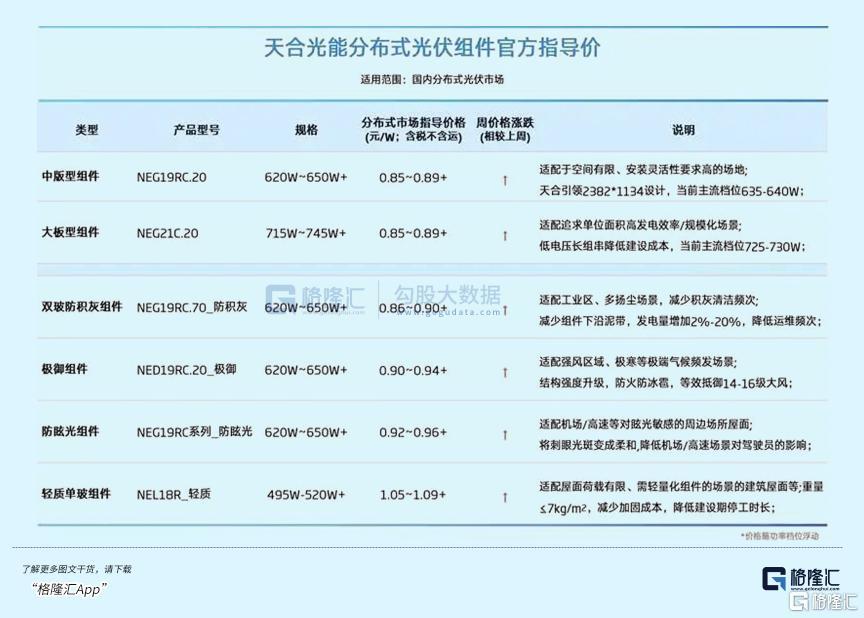
Core Viewpoint - The photovoltaic (PV) module industry is experiencing an unexpected price surge at the beginning of 2026, driven by factors such as the impending cancellation of export tax rebates and rising costs of key materials like silver and aluminum, leading to significant profit compression and potential industry-wide consolidation [1][13][20]. Price Surge and Contract Violations - Several distributed PV investment companies have reported sudden price increases on previously agreed contracts, with some major manufacturers raising prices from 0.73 yuan/W to 0.8 yuan/W [3]. - On January 13, Trina Solar announced collective price increases for various product models, with distributed PV module prices ranging from 0.85 to 0.89+ yuan/W [3]. - A total of 12 module manufacturers raised their prices this week, with increases of 0.04 to 0.15 yuan/W, and some companies have raised prices multiple times within a week [5]. - Reports indicate that some companies are delaying deliveries or demanding price increases, causing significant disruptions in the supply chain for terminal power station installations [5][6]. Causes of Price Increases - The cancellation of export tax rebates, effective April 1, 2026, is a major catalyst for the price surge, as manufacturers rush to ship products before the policy takes effect [6][7]. - The price of silver has skyrocketed, increasing from 7,600 yuan/kg at the beginning of 2025 to 23,688 yuan/kg by the end of the year, resulting in a cost increase of at least 0.16 yuan per watt for PV modules [8][10]. Industry Challenges and Overcapacity - The PV industry is facing severe challenges due to overcapacity, with silicon material production capable of covering more than double the global demand from 2025 to 2027, while actual demand is below 600 GW [13][14]. - Despite the overcapacity, over 40 billion yuan is still being invested in new PV projects, exacerbating supply-demand imbalances [14]. - The cancellation of export tax rebates is expected to be a turning point for the industry, as it has historically provided significant cash flow support to manufacturers [15][16]. Financial Impact on Companies - The removal of export tax rebates will reduce profits for manufacturers significantly, with estimates indicating a loss of 46-51 yuan per 210R module exported [17]. - Many companies are already experiencing negative cash flow, with 41% of listed firms reporting losses, leading to a potential wave of bankruptcies among smaller firms [17][20]. - Major companies like JA Solar and TCL Zhonghuan are reporting substantial losses, with JA Solar expected to lose between 4.5 to 4.8 billion yuan in 2025 [19]. Future Outlook and Industry Consolidation - The anticipated industry consolidation may eliminate over 30% of inefficient capacity, concentrating resources among leading firms with integrated capabilities and advanced technologies [22]. - The industry is expected to emerge healthier post-consolidation, with a focus on identifying valuable investment opportunities in robust companies with strong cash flow and competitive advantages [22].
毁约式涨价!光伏组件上演“最后的疯狂”
Ge Long Hui A P P· 2026-01-17 11:23
Core Viewpoint - The photovoltaic (PV) module industry is experiencing an unexpected price surge in early 2026, driven by the impending cancellation of export tax rebates and rising costs of key materials like silver and aluminum, leading to significant profit compression and potential industry-wide upheaval [1][7][19]. Price Surge and Market Dynamics - Several distributed PV investment companies have reported sudden price increases on previously agreed contracts, with one leading manufacturer raising prices from 0.73 yuan/W to 0.8 yuan/W [2]. - On January 13, Trina Solar announced a collective price increase for various distributed PV module models, with official guidance prices ranging from 0.85 to 0.89+ yuan/W [2][3]. - A total of 12 module manufacturers raised their prices this week, with increases ranging from 0.04 to 0.15 yuan/W [4]. Cost Factors - The cancellation of export tax rebates, effective April 1, 2026, is a significant catalyst for the price increases, as companies rush to fulfill orders before the policy takes effect [7][8]. - The price of silver has surged over 150% in 2025, increasing its cost share in PV modules from approximately 17% to around 30%, making it the largest cost component [10][13]. - The rising prices of aluminum and other materials have further exacerbated cost pressures, with aluminum's cost share increasing from 8-12% to 12-15% [14][16]. Industry Overcapacity and Challenges - The PV industry is facing severe overcapacity, with silicon production capacity expected to cover more than double the global demand from 2025 to 2027, while actual demand is below 600 GW [17]. - Despite the overcapacity, over 40 billion yuan is still being invested in new PV projects, worsening the supply-demand imbalance [18]. - The cancellation of export tax rebates is anticipated to trigger a brutal industry-wide clearing, with many companies lacking competitive advantages likely to exit the market [19][24]. Financial Impact and Future Outlook - The removal of export tax rebates will significantly reduce profit margins for PV companies, with estimates indicating a profit reduction of 46-51 yuan per 210R module exported [24]. - Many companies are already reporting substantial losses, with projections indicating that the entire PV silicon industry could face losses amounting to hundreds of billions in 2025 [27][28]. - The industry is expected to undergo a significant consolidation, with over 30% of inefficient capacity being eliminated, allowing leading companies with strong technology and global presence to capture over 80% of the market share [29].
毁约式涨价!光伏组件上演“最后的疯狂”
格隆汇APP· 2026-01-17 11:23
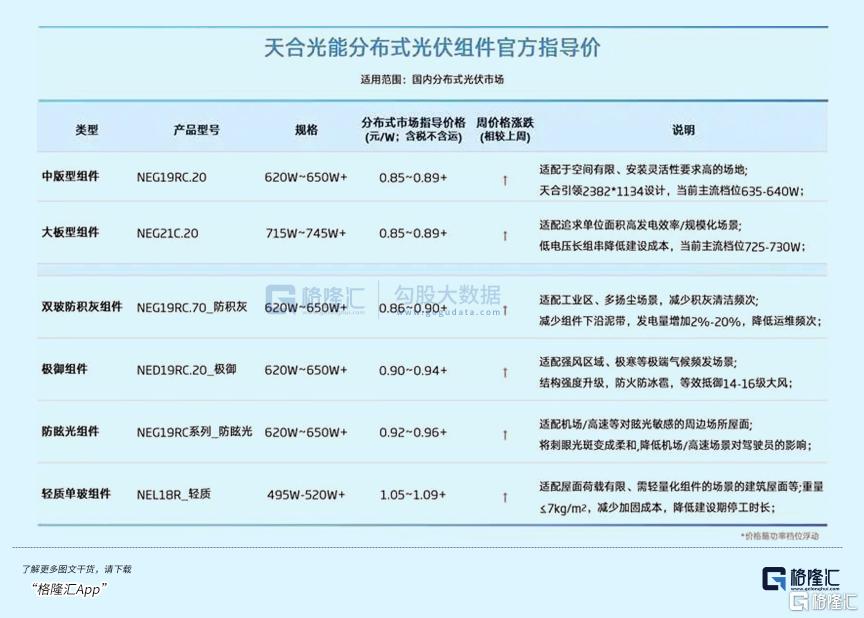
Core Viewpoint - The photovoltaic (PV) module industry is experiencing an unexpected price surge at the beginning of 2026, driven by factors such as the impending cancellation of export tax rebates and rising costs of key materials like silver and aluminum, leading to significant profit compression in the industry [2][9][18]. Price Surge and Market Dynamics - Several PV module manufacturers have announced price increases, with some companies raising prices from 0.73 yuan/W to 0.8 yuan/W, and the official guidance price for distributed PV modules now ranges from 0.85 to 0.89 yuan/W [4][6]. - A total of 12 module manufacturers raised their prices this week, with increases ranging from 0.04 to 0.15 yuan/W [6][7]. - Reports indicate that some companies are delaying deliveries and demanding price hikes, causing significant disruptions for downstream companies [7][18]. Reasons for Price Increases - The cancellation of export tax rebates is a major catalyst for the price surge, with the Ministry of Finance announcing the phased removal of VAT export rebates for PV products starting April 1, 2026 [9][10]. - The price of silver has skyrocketed, increasing from 7,600 yuan/kg at the beginning of 2025 to 23,688 yuan/kg by the end of the year, resulting in a cost increase of at least 0.16 yuan per watt for PV cells [11][13]. - The cost share of silver in PV modules has risen from approximately 17% to around 30%, surpassing silicon as the largest cost component [13]. Industry Challenges and Overcapacity - The PV industry is facing severe overcapacity, with silicon production capacity expected to cover more than double the global demand from 2025 to 2027, while actual demand is below 600 GW [19][20]. - The cancellation of export tax rebates is expected to trigger a violent market clearing in 2026, as many companies will struggle with cash flow and rising costs [21][27]. - The industry is projected to experience significant losses, with estimates suggesting that the entire PV silicon industry could face losses amounting to hundreds of billions in 2025 [28][29]. Future Outlook and Investment Strategy - The anticipated market clearing in 2026 is expected to eliminate over 30% of inefficient capacity, concentrating resources among leading companies with vertical integration and core technologies [31]. - Investors are advised to avoid high-debt, non-competitive small and medium enterprises, focusing instead on companies with stable cash flow, strong technology, and global presence [32].