毕马威

Search documents
嘉创地产(02421.HK)委任富睿玛泽为公司新任核数师
Ge Long Hui· 2025-10-24 08:50
Core Points - 嘉创地产 announced the resignation of KPMG as the company's auditor, effective from October 24, 2025, due to a failure to reach an agreement on the audit fees for the financial statements for the fiscal year ending March 31, 2026 [1] - The board of directors approved the appointment of Mazars as the new auditor to fill the vacancy left by KPMG, effective from October 24, 2025, until the conclusion of the next annual general meeting [1]
城记|“重点项目+总部经济”双轮驱动 “大虹桥” 连签大单跑出加速度
Xin Hua Cai Jing· 2025-10-23 14:03
Core Insights - The Hongqiao International Central Business District is experiencing rapid development, with significant investment and project attraction [1][2][3] Economic Growth - The GDP of the Hongqiao International Central Business District reached 200.24 billion yuan in 2024, a 67.4% increase compared to the end of the 13th Five-Year Plan [2] - Tax revenue surpassed 50 billion yuan for the first time, with an average annual growth of 16.9% over four years [2] - The total import and export value reached 85.6 billion yuan, with an average annual growth rate of 37.3% over four years [2] - In the first three quarters of 2025, the foreign trade import and export value was 73.63 billion yuan, a year-on-year increase of 15.6% [2] Project and Investment Highlights - A total of 616 key projects with investments exceeding 10 million yuan were introduced in the first three quarters of 2025, amounting to 34.6 billion yuan [2][3] - The district has seen a significant increase in headquarters enterprises, with 56 new city-level headquarters established in the past year, generating over 280 billion yuan in annual revenue [3] Industry Development - Eight characteristic industrial parks were officially launched, focusing on emerging sectors such as health, biomedicine, artificial intelligence, and low-altitude economy [4] - The Hongqiao Low Altitude Economy Industrial Park aims to facilitate industry demonstration and cooperation, enhancing service capabilities [4] Innovation and Technology Transfer - The InnoMatch platform, launched in August 2022, has gathered extensive data on technology and innovation, supporting the transformation of technological achievements [5][6] - The district has accumulated over 700 specialized and innovative enterprises and more than 1,300 high-tech companies, indicating a robust industrial cluster development [6] Internationalization and Service Ecosystem - The Hongqiao International Central Business District is positioned as a key hub for international trade and resource flow, facilitating cross-border movement of goods, capital, talent, and technology [7][8] - The establishment of the Hongqiao International Legal Zone and National Human Resources Service Industrial Park enhances the international service ecosystem for enterprises [8]
毕马威:资本市场已成为创新药企研发资金的重要来源
Sou Hu Cai Jing· 2025-10-20 14:41
Core Insights - Efficient operation of capital markets has become a crucial source of funding for innovative pharmaceutical companies [1] - Systematic policy optimization has improved financing efficiency and established a multi-layered, sustainable capital support system for the industry [1] - The policy issued in May 2025 emphasizes enhancing capital market support for technology innovation enterprises, particularly those with key core technologies, providing broader financing channels for biopharmaceutical companies [1] Industry Developments - Continuous optimization of the Sci-Tech Innovation Board system has been noted, with the China Securities Regulatory Commission releasing opinions to enhance institutional inclusiveness and adaptability [1] - As of now, 20 companies in the biopharmaceutical sector have successfully listed on the Sci-Tech Innovation Board under the fifth set of standards, with 19 of them achieving product launches, showcasing the system's inclusiveness for high-tech and high-growth enterprises [1]
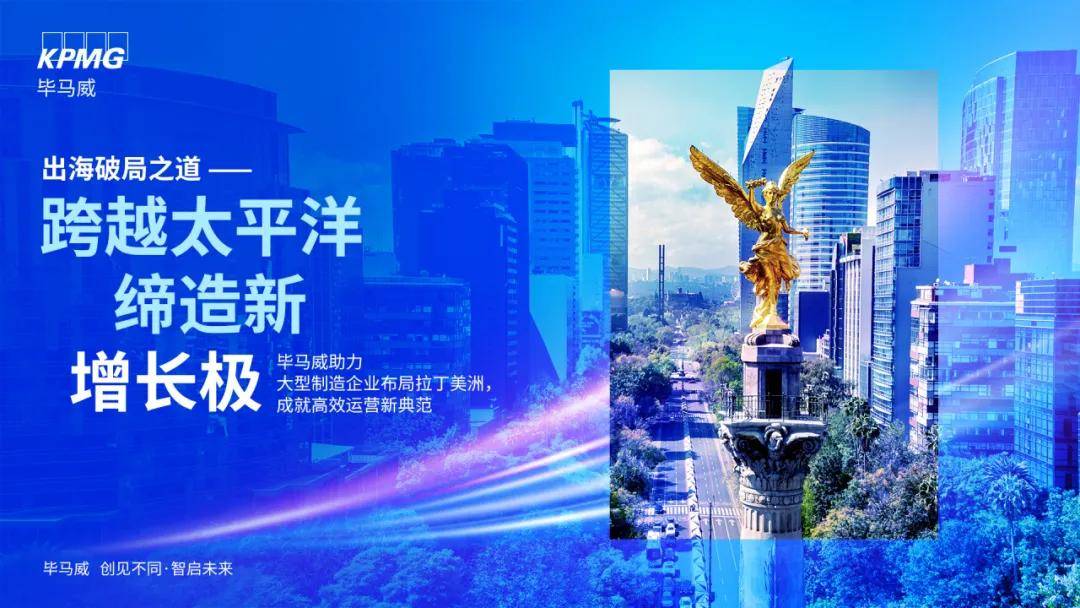
企业出海启示录:拉丁美洲投资在即,您的企业是否已做好避开暗礁的万全之策?
Sou Hu Cai Jing· 2025-10-20 02:11
Group 1 - The core challenge of expanding into the Latin American market includes navigating complex tax environments and supply chain issues, which can significantly impact global supply chain efficiency and profitability [2] - Companies face specific dilemmas such as designing holding structures, pricing internal transactions, and optimizing supply chains while managing tax planning [2] - KPMG offers comprehensive tax solutions to empower global supply chains for businesses entering the Latin American market [3] Group 2 - KPMG provides actionable recommendations for designing efficient holding structures by comparing the advantages and disadvantages of direct and indirect investments [4] - The firm emphasizes the importance of optimizing transfer pricing strategies to effectively manage tax risks and ensure compliance [5] - KPMG integrates tax considerations into supply chain optimization from the outset, helping companies achieve cost reduction, efficiency, and compliance [6]

祝贺!毕马威助力云迹科技完成香港上市!
Xin Lang Cai Jing· 2025-10-17 04:03
Group 1 - Beijing Yunji Technology Co., Ltd. (referred to as "Yunji Technology") completed its initial public offering and listing on the main board of the Hong Kong Stock Exchange on October 16, 2025, with the stock code 2670.HK [3] - Yunji Technology primarily provides robotic products and their functional suites, supplemented by AI digital system services, to meet customer demands for adaptable and scalable robotic products and services [6]
三季度宏观数据下周发布,政策适时加力必要性上升
Di Yi Cai Jing Zi Xun· 2025-10-17 01:15
Economic Growth and Forecasts - China's GDP growth in the first half of the year was 5.3%, exceeding expectations, with third-quarter GDP growth forecasted at 4.8% [1][2] - The International Monetary Fund (IMF) maintained its 4.8% growth forecast for China, despite global economic challenges [2] - Economic indicators suggest a potential slowdown in investment and consumption, with third-quarter GDP growth possibly declining to 4.9% [2] Industrial Production and Demand - Industrial production showed resilience in September, with a manufacturing PMI of 49.8%, indicating slight improvement [3] - Predictions for September's industrial value-added growth are around 5.1%, slightly lower than the previous month [3] - Some sectors, such as automotive, are experiencing production slowdowns, while others like coal consumption have shown declines [3] Consumer Spending Trends - The forecast for September's retail sales growth is 3.1%, down from 3.4% in the previous month, indicating a slowdown in consumer spending [4][5] - The "old-for-new" policy has positively impacted certain consumer goods, with significant sales growth in home appliances and smart home products [5][6] - The automotive sector remains a significant contributor to retail sales, with production and sales figures showing strong year-on-year growth [6] Investment and Infrastructure - Fixed asset investment growth is predicted to be flat at 0% for September, reflecting ongoing economic challenges [6] - Infrastructure investment remains supported by strong excavator sales, which increased by 25.4% year-on-year in September [7] - The government is expected to enhance fiscal policies to support infrastructure and manufacturing investments in the fourth quarter [8][10] Policy Measures and Economic Outlook - There is an increasing necessity for timely policy adjustments to sustain economic growth, particularly in light of rising risks in key economic indicators [8][9] - The government plans to issue more bonds and enhance fiscal support for various sectors, including technology and infrastructure [9][10] - The overall macroeconomic policy is expected to remain accommodative, with a focus on stabilizing expectations and boosting confidence in the economy [10]
新一轮十大行业稳增长方案背后透露哪些信号——破局内卷式竞争 构建“智造+”新生态
Zheng Quan Shi Bao· 2025-10-16 18:57
Core Insights - A new round of growth stabilization plans for ten key industries has been launched after two years, focusing on structural optimization and long-term high-quality development [1][2] - The plans emphasize the importance of artificial intelligence and its integration into various industries to enhance efficiency and drive digital transformation [5][6] Industry Growth Plans - The ten key industries targeted include steel, non-ferrous metals, petrochemicals, chemicals, building materials, machinery, automotive, power equipment, light industry, and electronic information manufacturing, which collectively account for about 70% of the industrial value added in large-scale industries [2] - Quantitative growth targets have been set for these industries, such as an average growth rate of around 7% for the computer, communication, and other electronic equipment manufacturing sectors from 2025 to 2026, and a target of approximately 32.3 million vehicle sales in the automotive sector for 2025, with a 20% increase in new energy vehicle sales [2] Industry Governance - The new growth stabilization plans include measures to strengthen industry governance and regulate competition, particularly addressing irrational "involution" competition [3][4] - Specific governance strategies vary by industry; for example, the automotive sector will focus on cost investigations and price monitoring, while the electronic information sector will guide orderly capacity layout and support self-regulatory mechanisms [4] Role of Artificial Intelligence - Artificial intelligence is highlighted as a key driver in the new plans, with initiatives to promote its application across all stages of industrial processes [5] - The automotive industry will leverage AI in research, design, and production, while light industry will focus on generative AI for product design and manufacturing [5][6]
破局内卷式竞争 构建“智造+”新生态
Zheng Quan Shi Bao· 2025-10-16 18:44
Core Viewpoint - A new round of growth stabilization plans for ten key industries has been launched, focusing on structural optimization and long-term high-quality development while addressing supply and demand dynamics [1][2] Group 1: Industry Growth Plans - The Ministry of Industry and Information Technology (MIIT) has released growth stabilization plans for steel, non-ferrous metals, petrochemicals, chemicals, building materials, machinery, automobiles, power equipment, light industry, and electronic information manufacturing [1][2] - The combined added value of these ten industries accounts for approximately 70% of the industrial output above a designated size [2] - Quantitative growth targets have been set for various industries, including an average growth rate of around 7% for the computer, communication, and other electronic equipment manufacturing sectors from 2025 to 2026, and a target of 32.3 million automobile sales in 2025, with a 20% increase in new energy vehicle sales [2] Group 2: Industry Governance - The new growth stabilization plans emphasize strengthening industry governance and regulating enterprise competition [3][4] - Specific measures include addressing irrational "involution" competition in the machinery, automotive, and electronic information manufacturing sectors, with a focus on cost investigation and price monitoring in the automotive industry [5] Group 3: Role of Artificial Intelligence - Artificial intelligence (AI) is highlighted as a key component in the new plans, with an emphasis on its integration into all aspects of industrial development [6][7] - The automotive industry will promote AI applications in research, design, production, and operations, while light industry will focus on generative AI for product design and manufacturing [7] - The deep integration of AI into these ten key industries aims to facilitate the digital, networked, and intelligent transformation of traditional industries, enhancing efficiency and reducing costs [6][7]

三季度宏观数据下周发布 政策适时加力必要性上升
Sou Hu Cai Jing· 2025-10-16 17:24
Group 1: Economic Growth and Forecasts - China's GDP growth in the first half of the year was 5.3%, exceeding expectations, with third-quarter GDP growth forecasted at 4.8% [1] - The International Monetary Fund (IMF) maintained its 4.8% growth forecast for China, despite global economic challenges [2] - Economic indicators suggest a potential decline in GDP growth to 4.9% in the third quarter due to slowing investment and consumption [2] Group 2: Industrial Production and Demand - Industrial production showed resilience in September, with the manufacturing PMI at 49.8%, indicating slight improvement [3] - Predictions for September's industrial value-added growth are around 5.1%, slightly lower than the previous month [3] - Net exports are expected to support economic growth, while domestic demand continues to slow [2][3] Group 3: Consumer Spending Trends - The forecast for September's retail sales growth is 3.1%, down from 3.4% in the previous month, influenced by subsidy policy changes [4] - Significant growth in consumer electronics sales was noted, with home appliance sales up 48.3% year-on-year [5] - The automotive sector remains a major contributor to retail sales, with production and sales figures showing strong growth [5] Group 4: Investment Trends - Fixed asset investment growth is predicted to be flat at 0% for September, reflecting ongoing economic challenges [6] - Investment growth across major categories is expected to decline, with infrastructure investment remaining under pressure [6] - The real estate sector continues to show weakness, with significant declines in land transaction values [6] Group 5: Policy Measures and Economic Support - The necessity for timely policy adjustments has increased, with expectations for enhanced fiscal measures in the fourth quarter [7] - New policy tools totaling 500 billion yuan are aimed at supporting manufacturing and infrastructure investment [8] - The government is focusing on targeted monetary policies to stimulate consumption and support key sectors [8]
普华永道再陷审计风波:王朝酒业案罚款160万港元,“四大”光环失色
Guan Cha Zhe Wang· 2025-10-16 16:00
Core Viewpoint - PwC Hong Kong has been reprimanded and fined a total of HKD 1.6 million for significant deficiencies in its audit work for Dynasty Fine Wines, highlighting a severe trust crisis facing the firm amid multiple regulatory penalties in recent years [1][5]. Group 1: Audit Failures and Penalties - PwC failed to obtain sufficient and appropriate audit evidence regarding revenue recognition during the audits of Dynasty Fine Wines for the years 2010 and 2011, despite issuing an unqualified opinion [1][3]. - The firm faced a record penalty of RMB 441 million from the Ministry of Finance and the China Securities Regulatory Commission for its role in Evergrande's financial misstatements, marking the most severe punishment in Chinese auditing history [5][6]. - The internal investigation into Dynasty Fine Wines revealed that a significant amount of claimed sold wine products had not been delivered and remained in third-party warehouses [1][3]. Group 2: Financial Performance and Client Loss - PwC's revenue in the Chinese market dropped from CNY 7.925 billion in 2022 to CNY 7.137 billion in 2023, reflecting a broader decline in its financial performance [2][8]. - Since the penalty related to Evergrande was imposed in March 2024, all eight of PwC's major A-share audit clients have announced their termination of contracts, collectively contributing CNY 478 million in audit fees, which accounted for over half of its audit revenue [2][7]. - The firm has seen a 5.6% decline in revenue in the Asia-Pacific region for the fiscal year 2024, amounting to USD 9.3 billion, attributed to a slowdown in demand in mainland China [2][8]. Group 3: Industry Impact and Competitive Landscape - The exposure of the Dynasty Fine Wines case coincides with a period of unprecedented client attrition for PwC, leading to significant restructuring within the firm, including layoffs across multiple offices [7][8]. - Over 60% of clients lost by PwC have shifted to other "Big Four" firms, with significant numbers moving to Ernst & Young, KPMG, and Deloitte [8]. - Domestic accounting firms such as Lixin, Tianjian, and Xinyongzhonghe have begun to benefit from this reshuffling, breaking the long-standing dominance of the "Big Four" in securing high-quality clients [9].