海信视像

Search documents
家电行业 2025Q4 基金重仓分析:重仓家电比例略有回升,白电、黑电及两轮车获增配
Huachuang Securities· 2026-01-30 09:31
Investment Rating - The report maintains a recommendation for the home appliance industry, specifically for white goods, black goods, and two-wheeled vehicles [1]. Core Insights - The proportion of actively managed equity funds holding home appliance stocks has slightly increased, with a Q4 holding ratio of 3.14%, up by 0.04 percentage points from the previous quarter. The over-allocation ratio for home appliances is 0.74%, an increase of 0.15 percentage points [10][9]. - The report anticipates that the continuation of national subsidy policies in 2026 will support domestic sales, while leading home appliance companies are expected to accelerate penetration into emerging markets such as Europe, the Middle East, and Latin America, leading to steady growth in export revenues [10][9]. - The white goods sector has seen an increase in fund holdings, with a Q4 market value accounting for 1.58% of total fund holdings, up by 0.23 percentage points. The number of funds holding white goods stocks has increased by 79 [18][17]. - The report suggests that leading companies in the white goods sector, such as Midea Group, Gree Electric, and Haier Smart Home, are expected to benefit from stable performance and high dividend yields, making them attractive investment options [63][64][65]. Summary by Sections Home Appliance Sector - The report indicates a slight recovery in the proportion of actively managed equity funds holding home appliance stocks, with a Q4 holding ratio of 3.14% and an over-allocation ratio of 0.74% [10][9]. - The white goods sector has seen a recovery in fund holdings, with a market value of 1.58% of total fund holdings, and an increase in the number of funds holding these stocks [18][17]. - The black goods sector has also experienced a slight increase in fund holdings, with a market value of 0.22%, up by 0.03 percentage points [28][29]. - The two-wheeled vehicle sector has seen an increase in fund holdings, with a market value of 0.74%, up by 0.08 percentage points [32][35]. Investment Recommendations - For white goods, the report recommends Midea Group, Gree Electric, Haier Smart Home, and Hisense Home Appliances due to their strong performance and high dividend yields [63]. - In the black goods sector, companies like Hisense Visual and TCL Technology are highlighted for their technological leadership in the MiniLED field [63]. - For two-wheeled vehicles, the report suggests focusing on Ninebot, Aima Technology, and Yadea Holdings, as market demand is expected to concentrate on leading companies [63]. - In the kitchen small appliances sector, companies like Supor, Bear Electric, and Beiding Co. are recommended for their growth potential through brand expansion [63]. - The report also highlights electric tools companies such as Techtronic Industries and Greebo for their expected order growth due to rising market demand [63].





黑色家电板块1月30日跌1.46%,四川长虹领跌,主力资金净流出6.56亿元
Zheng Xing Xing Ye Ri Bao· 2026-01-30 08:54
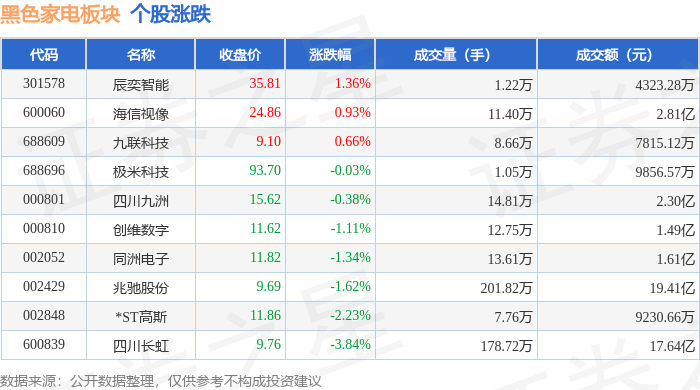
Market Overview - The black home appliance sector experienced a decline of 1.46% on January 30, with Sichuan Changhong leading the drop [1] - The Shanghai Composite Index closed at 4117.95, down 0.96%, while the Shenzhen Component Index closed at 14205.89, down 0.66% [1] Stock Performance - Notable stock performances in the black home appliance sector included: - Chenyiy Smart (301578) rose by 1.36% to close at 35.81 [1] - Hisense Visual (600060) increased by 0.93% to 24.86 [1] - Sichuan Changhong (600839) fell by 3.84% to 9.76, with a trading volume of 178.72 million shares [1] - The overall trading volume for the black home appliance sector was significant, with Sichuan Changhong contributing 1.76 billion yuan in transaction value [1] Capital Flow - The black home appliance sector saw a net outflow of 656 million yuan from institutional investors, while retail investors contributed a net inflow of 534 million yuan [1] - Detailed capital flow for specific stocks included: - Hisense Visual had a net inflow of 32.48 million yuan from institutional investors, but a net outflow of 31.61 million yuan from retail investors [2] - Sichuan Changhong experienced a significant net outflow of 414 million yuan from institutional investors, while retail investors contributed a net inflow of 36.91 million yuan [2]


新京报2025“智慧生活”年度案例揭晓,20家企业和产品入选
Xin Jing Bao· 2026-01-30 08:09
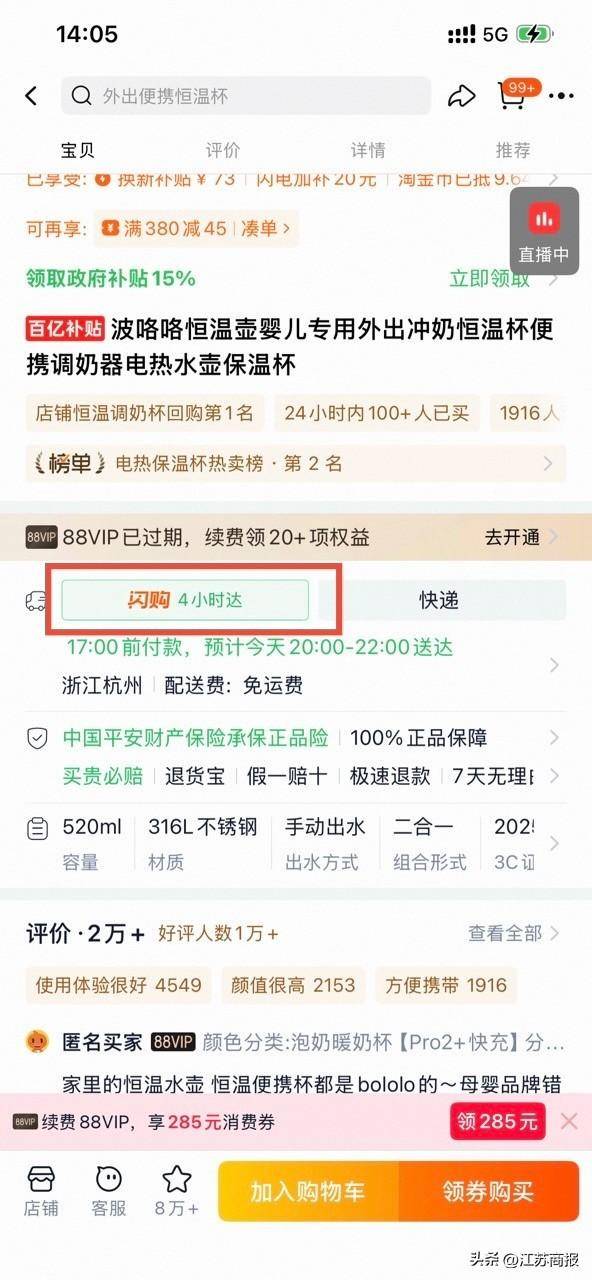
Core Insights - The 2025 "Smart Life" annual case event revealed 20 companies and products, highlighting the deep integration of technology and daily life, with a focus on AI products that enhance empathy and user experience [1] - The event emphasizes the importance of practical applications of smart technology in addressing real-life issues and improving user convenience, showcasing a shift from tool-based to ecosystem-based technology [1] Group 1: Key Trends in Smart Technology - The integration of AI products is becoming more pronounced, with a focus on empathy and user-centric solutions [1][3] - Future products are expected to deeply incorporate large model capabilities from the design phase, leading to a new generation of AI-native applications that transform user habits [2] Group 2: Notable Award Winners - Taobao Flash Purchase was recognized as the annual instant retail innovation platform [5] - Ant Financial's "Afu" was awarded as the annual family health guardian AI butler [5] - Kuaishou's "wow" intelligent agent was named the annual commercial AI assistant [6] - Hisense's AI Life Butler received recognition as the annual smart appliance innovation case [12] - DJI's Osmo Action 6 was awarded for its contribution to smart imaging accessibility [13]

掘金顺周期-多行业系列联合会议
2026-01-30 03:11
Summary of Key Points from Conference Call Records Industry Overview - **General Economic Outlook**: The Chinese economy shows signs of stabilization, with nominal GDP growth expected to enhance corporate profits. Supply contraction outpacing demand may improve industry prices and corporate earnings, highlighting opportunities in cyclical industries [1][2][3]. Real Estate Sector - **Investment Value**: The real estate sector is deemed to have high investment value, with significant growth in second-hand housing transaction volumes and a narrowing decline in listing prices. Major cities like Beijing and Shanghai have seen listing volumes drop by over 15% [1][3]. - **Policy Catalysts**: Continuous policy support for real estate investment trusts (REITs) and other measures are expected to catalyze the market. The valuation of real estate stocks is considered to have a sufficient margin of safety, with many leading companies trading at a price-to-book (PB) ratio significantly below 1 [1][3][11]. - **Market Dynamics**: The short-term data indicates positive changes in the real estate market, with a notable decrease in listings for older urban properties, as owners prefer renting or waiting for redevelopment rather than selling at lower prices [4][5]. Travel and Transportation Sector - **Positive Outlook**: The travel industry is expected to benefit from government policies promoting tourism, with signs of recovery in duty-free and hotel sectors. The airline industry anticipates strong growth in passenger traffic, with ticket prices expected to be higher than last year [1][8][9]. - **Airline Performance**: During the 2026 Spring Festival travel period, the airline industry is projected to see a 5-6% increase in passenger traffic, with improved ticket pricing compared to 2025. The industry is entering a positive development phase, with a supply growth rate of about 4% and demand growth of approximately 5.5% [9]. Home Appliance Sector - **Investment Opportunities**: The home appliance sector is currently undervalued, presenting good investment opportunities across various segments, including kitchen appliances and white goods. Leading companies are expected to maintain stable performance and high dividend payouts [1][10][11]. Coal Industry - **Market Conditions**: The coal industry is experiencing a marginal improvement in supply-demand dynamics, with a stable price recovery expected. Supply constraints are anticipated to reduce domestic coal supply by 70 million to 100 million tons in 2026, while demand remains resilient [2][19][20]. Chemical Industry - **Future Trends**: The chemical industry is gaining attention due to increased market liquidity and expectations of positive producer price index (PPI) trends. Supply-side constraints and improved demand from global markets are expected to drive price increases [17][18]. Consumer Healthcare Sector - **Recovery Signs**: The consumer healthcare sector is showing early signs of stabilization, particularly in ophthalmology and dental services. Key players in these segments are expected to benefit from a recovering market environment [16]. Food and Beverage Sector - **Market Performance**: The food and beverage sector has seen significant price increases, particularly for premium brands like Moutai. However, potential risks include the release of pent-up supply post-holiday, which could impact prices [21][22]. Construction and Building Materials - **Market Changes**: The construction materials sector is adapting to a shift in demand from new housing to renovations of existing properties. Recent data indicates a recovery in demand for glass and other materials, with expectations of price stabilization and potential increases [24][25]. Conclusion - **Investment Strategy**: Overall, the cyclical industries, particularly real estate, travel, and home appliances, present promising investment opportunities. The focus should be on companies with strong fundamentals and favorable market conditions as the economy stabilizes [1][3][8][11].
Dolby Laboratories(DLB) - 2026 Q1 - Earnings Call Transcript
2026-01-29 23:02
Financial Data and Key Metrics Changes - Revenue for Q1 2026 was $347 million, exceeding the high end of guidance, driven by earlier-than-expected deal closures and a $7 million favorable true-up for Q4 shipments [14][17] - Non-GAAP earnings per share was $1.06, also above guidance, attributed to higher revenue and lower operating expenses [14][17] - Operating cash flow generated was approximately $55 million, with $70 million of common stock repurchased [15][16] Business Line Data and Key Metrics Changes - Licensing revenue was $320 million, while product and services revenue was $27 million [14] - Mobile revenue grew over 20% year-over-year, while broadcast revenue declined in the mid-teens year-over-year [16] Market Data and Key Metrics Changes - The automotive sector is a major focus, with partnerships increasing from 20 OEMs last year to over 35 this year [7][12] - Dolby Vision 2 received positive feedback at CES, with support from content providers like Peacock and TP Vision [9][54] Company Strategy and Development Direction - The company is focused on expanding its presence in automotive entertainment and enhancing the in-car experience with Dolby Atmos and Dolby Vision [5][6] - Dolby Vision 2 aims to meet evolving viewer expectations and unlock the potential of modern televisions [8][9] - The company is confident in growing Dolby Atmos, Dolby Vision, and Imaging Patents at 15%-20% per year over the next few years [13] Management's Comments on Operating Environment and Future Outlook - Management noted that while some deals came in earlier than expected, it does not indicate a broader change in the macro environment [21] - The company raised its full-year revenue guidance to $1.4 billion-$1.45 billion, reflecting strong Q1 performance and true-up adjustments [17][19] - Management remains optimistic about growth opportunities despite potential impacts from memory pricing and macroeconomic factors [60][61] Other Important Information - A dividend of $0.36 was declared, representing a 9% increase from the previous year [16] - The company ended the quarter with cash and investments of approximately $730 million [16] Q&A Session Summary Question: Impact of deal timing on revenue - Management indicated that earlier deal closures de-risk the outlook for the year but do not suggest a general change in the macro environment [21] Question: Details on the $7 million true-up - The true-up was primarily in gaming and broadcast sectors [23] Question: Growth in mobile revenue - Mobile growth is influenced by the timing of new deals and renewals, with expectations for slight growth for the full year [24] Question: Update on patent monetization strategy - The company aims for 10% of revenue from content service providers within three years, with Roku as a significant new licensee [32] Question: Guidance for Q1 performance - The guidance was positively influenced by the $7 million true-up and earlier-than-expected deals [35][44] Question: Feedback from CES - The event showcased strong interest in automotive experiences and Dolby Vision 2, with positive responses from partners and customers [50][52]

Dolby Laboratories(DLB) - 2026 Q1 - Earnings Call Transcript
2026-01-29 23:02
Financial Data and Key Metrics Changes - Revenue for Q1 2026 was $347 million, exceeding the high end of guidance, driven by earlier-than-expected deal closures and a $7 million favorable true-up for Q4 shipments [14][17] - Non-GAAP earnings per share was $1.06, also above guidance, attributed to higher revenue and lower operating expenses [14][17] - Operating cash flow generated was approximately $55 million, with $70 million of common stock repurchased [15][16] Business Line Data and Key Metrics Changes - Licensing revenue reached $320 million, while product and services revenue was $27 million [14] - Mobile revenue grew over 20% year-over-year, while broadcast revenue declined in the mid-teens year-over-year [16] Market Data and Key Metrics Changes - The automotive sector is a major focus, with partnerships increasing from 20 OEMs to over 35 OEMs year-over-year [7] - Dolby Vision 2 received positive feedback at CES, with support from content providers like Peacock and TP Vision [9][53] Company Strategy and Development Direction - The company is raising its full-year fiscal 2026 revenue guidance to $1.4 billion-$1.45 billion, reflecting strong Q1 performance and earlier deal closures [17] - Dolby aims to grow Dolby Atmos, Dolby Vision, and imaging patents at 15%-20% per year, which now comprise nearly half of licensing revenue [13][18] Management's Comments on Operating Environment and Future Outlook - Management expressed confidence in growth opportunities despite macroeconomic uncertainties, noting that the timing of deals has improved [21][58] - The company is optimistic about the adoption of Dolby Vision 2 and the expansion of its addressable market through new partnerships and technologies [26][32] Other Important Information - A dividend of $0.36 was declared, representing a 9% increase from the previous year [16] - The company ended the quarter with cash and investments of approximately $730 million [16] Q&A Session Summary Question: Impact of deal timing on the environment - Management noted that while some deals came in earlier than expected, it should not be generalized to indicate a broader change in the macro environment [21] Question: Details on the large true-up - The $7 million true-up was primarily in gaming and broadcast sectors [23] Question: Growth in mobile revenue - Mobile growth was attributed to a combination of new deals and renewals, with expectations for slight full-year growth [24] Question: Update on patent monetization strategy - The company aims for 10% of revenue from content service providers within three years, with Roku as a significant new licensee [32] Question: Guidance for the quarter - The guidance was influenced by a combination of favorable true-up and strong deal timing, with overall performance aligning closely with expectations [44][46] Question: Feedback from CES - Positive feedback was received regarding the automotive experience and Dolby Vision 2, with significant interest from partners and customers [50][51]
Dolby Laboratories(DLB) - 2026 Q1 - Earnings Call Transcript
2026-01-29 23:00
Financial Data and Key Metrics Changes - Revenue for Q1 2026 was $347 million, exceeding the high end of guidance, driven by earlier-than-expected deal closures and a $7 million favorable true-up for Q4 shipments [11][12] - Non-GAAP earnings per share was $1.06, also above guidance, attributed to higher revenue and lower operating expenses [11] - Licensing revenue reached $320 million, while product and services revenue was $27 million [11] - Operating cash flow generated was approximately $55 million, with $70 million of common stock repurchased [11][12] Business Line Data and Key Metrics Changes - Mobile revenue grew over 20% year-over-year, while broadcast revenue declined in the mid-teens year-over-year, primarily due to timing of deals [12] - The automotive sector is a major focus, with partnerships increasing from 20 OEMs last year to over 35 this year [6][10] - Dolby Vision 2 was well-received at CES, with support from partners like Peacock and TP Vision, enhancing revenue opportunities from TVs [7][8] Market Data and Key Metrics Changes - The mobile market is expected to see mid-single-digit growth for the full year, despite quarterly fluctuations [12] - The automotive market remains the highest growth area, with diversification geographically, including partnerships with major manufacturers like Mercedes and Audi [60][62] Company Strategy and Development Direction - The company is focused on expanding its addressable market through new growth initiatives, including Dolby OptiView and video distribution programs [10][29] - Dolby Vision 2 aims to enhance viewer experience across various content types, with plans to launch new TVs by the end of the fiscal year [7][10] - The company is optimistic about growth in Dolby Atmos, Dolby Vision, and imaging patents, projecting a growth rate of 15%-20% per year [10][15] Management's Comments on Operating Environment and Future Outlook - Management noted that the early closure of deals does not indicate a broader change in the macro environment but provides confidence in the outlook for the year [18] - The company remains cautious about potential impacts from memory pricing and geopolitical factors but has not seen significant adjustments in guidance [58][59] - The automotive sector continues to thrive, with no immediate impacts from U.S. policy changes observed [62] Other Important Information - A dividend of $0.36 was declared, representing a 9% increase from the previous year [12] - The company ended the quarter with cash and investments of approximately $730 million [12] Q&A Session Summary Question: Impact of deal timing on revenue - Management indicated that earlier deal closures do not suggest a macro trend but help de-risk the outlook for the year [18] Question: Details on the $7 million true-up - The true-up was primarily in gaming and broadcast sectors [19] Question: Growth in mobile revenue - Growth was attributed to new deals and renewals, with expectations for slight increases over the full year [21] Question: Potential market share gains from Sony's spin-off - Management expressed optimism about strong relationships with both TCL and Sony, focusing on increasing TV attach rates [22][23] Question: Cash flow generation comparison - Cash flow can fluctuate based on deal timing, but it typically tracks closely with non-GAAP net income [24] Question: Update on patent monetization strategy - The company aims for 10% of revenue from content service providers within three years, with progress in the video distribution program [29][30] Question: OEM responses to macro issues - Management noted that while there are adjustments, they are not material, and the mobile market is most affected [58][59] Question: Adoption of in-car offerings amid policy changes - No significant impact observed; the automotive sector remains a high-growth area [62]
10城覆盖、4小时送达!天猫联手50家电品牌开启“闪购时代”
Sou Hu Cai Jing· 2026-01-29 17:24
Group 1 - The Tmall New Year Festival offers significant discounts on home appliances, with official reductions starting at 8.8% and additional coupons available, allowing prices to drop to as low as 50% after combining various promotions [1] - Major home appliance brands such as Philips, Joyoung, Gree, Midea, Hisense, Siemens, and others are participating in the Tmall event, providing fast delivery services [1] - The "4-hour delivery" service is now available in ten major cities, including Shanghai, Guangzhou, and Beijing, enhancing consumer convenience and satisfaction [4] Group 2 - The integration of Tmall brands into Taobao Flash Sale reflects a growing trend in instant retail, with approximately 3,500 Tmall brands connecting their offline stores to the service [5] - The collaboration has resulted in a significant increase in consumer orders, with daily orders for instant retail on Tmall seeing a 198% month-over-month growth compared to September [5] - The fast delivery service has led to a notable increase in sales for participating brands, with some products experiencing over a 30% rise in sales due to improved logistics and delivery efficiency [4]

二大国际消费电子展览会对比:德国IFA、美国CES
Sou Hu Cai Jing· 2026-01-29 14:20
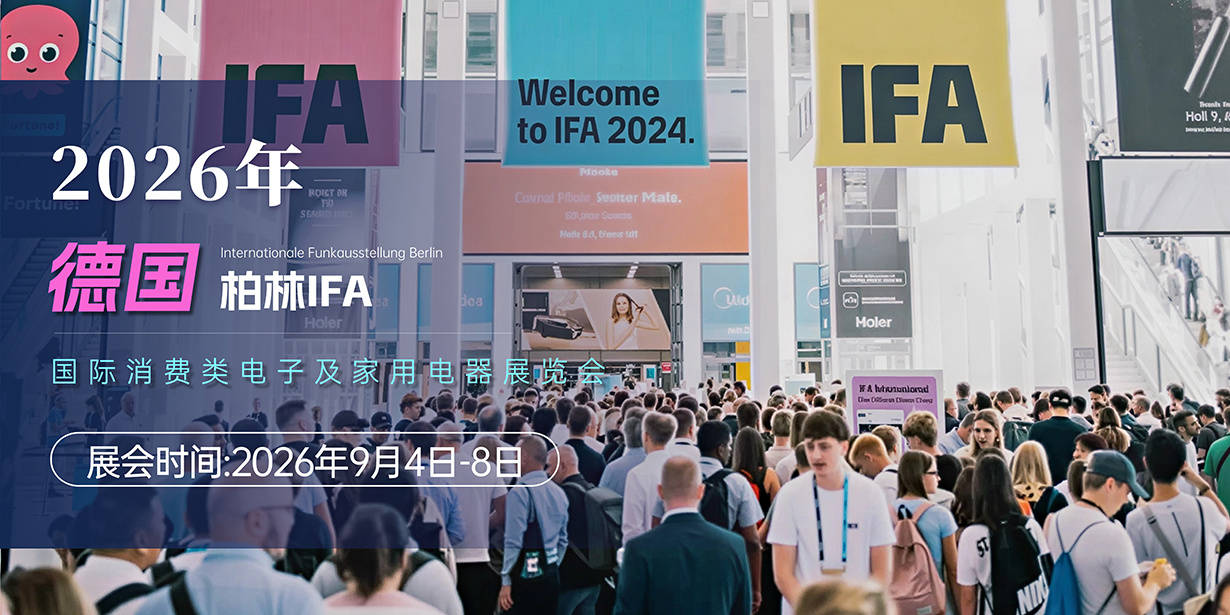
提到全球消费电子展会,很多人会脱口而出两个名字:美国的CES和德国的IFA。它们一个在年初点燃科技火种,一个在夏末收集成果;一个聚焦未来趋 势,一个紧贴市场落地。但对中国企业而言,选哪个,怎么去,背后其实是两种出海逻辑。 时间与节奏:一前一后,错峰布局 CES每年1月在美国拉斯维加斯举办,是全年科技行业的"开年大戏"。它像一场先锋实验——AI PC、空间计算、机器人原型……很多产品甚至还没量产,就 先在这里试水风向。 而IFA则在8月底至9月初于柏林举行,更像一场"成果验收"。此时企业已根据CES反馈调整策略,把可量产、可上市的产品带到欧洲,直接对接零售商和消 费者。 中国企业参与现状:从围观到引领 对希望抢占技术话语权的企业,CES是必争之地;若目标是拿下秋季订单、进入欧洲渠道,IFA可能更务实。 观众构成:专业闭环 vs 大众开放 CES严格限定为B2B展会,仅对行业人士开放——包括品牌高管、采购决策者、投资人、媒体。普通观众无法入场。这种封闭性保证了高浓度的专业对话, 但也意味着你需要提前预约、精准邀约。 IFA则不同。前几日面向专业买家,最后一天向公众开放。这意味着你既能谈大单,也能直接感知终端用户反 ...
小红书藏着生活经济的什么信号?
财联社· 2026-01-29 10:22
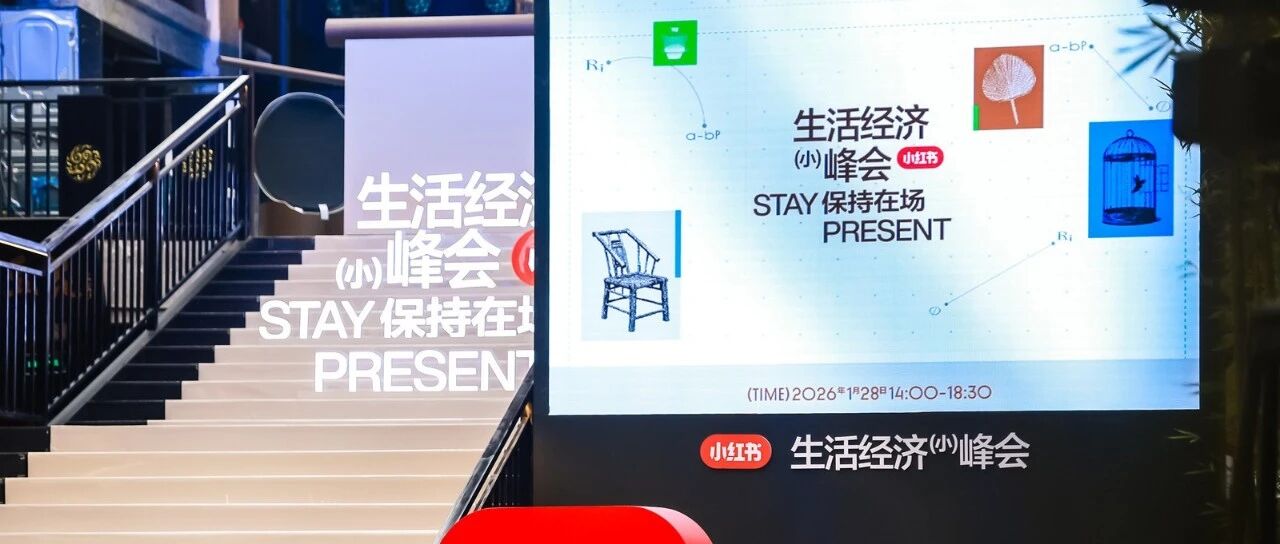
Core Viewpoint - The article emphasizes the significance of the "life economy" in boosting domestic demand and promoting high-quality development, as highlighted in the "2026 Life Economy Report" released by Peking University [3][4]. Group 1: Definition and Importance of Life Economy - The life economy is defined as an economic form where individual life needs are expressed, connected, and activated through digital technology, leading to a positive interaction between supply and demand [3][9]. - The life economy is seen as a key strategy for addressing the structural contradiction of strong supply and weak demand in China's economy, especially in the context of challenges posed by the international environment [3][4]. Group 2: Mechanisms and Practices - The life economy's value lies in activating demand through micro-level scenarios while being supported by macro-level policies, with platforms like Xiaohongshu exemplifying this logic [6][17]. - Xiaohongshu's community ecosystem allows for the rapid connection of niche demands, transforming them into consumable market potential through user-generated content [8][11]. Group 3: Case Studies and Examples - The report illustrates how traditional brands, such as Hisense, have successfully utilized Xiaohongshu's data to identify and target specific consumer segments, leading to significant sales growth [12][13]. - The rise of Citywalk as a consumer trend showcases how user-shared experiences can activate local consumption, creating a mutually reinforcing ecosystem of supply and demand [13][14]. Group 4: Individual and Entrepreneurial Growth - The life economy promotes a new paradigm that focuses on individual needs rather than traditional scale-driven competition, allowing small brands and entrepreneurs to thrive without succumbing to price wars [14][16]. - Xiaohongshu's decentralized algorithm and community reputation mechanisms enable niche suppliers to reach target audiences effectively, significantly lowering the barriers to entrepreneurship [15][16].