国信证券

Search documents
行情催生“补血”需求 年内券商发债规模超万亿元
Zhong Guo Ji Jin Bao· 2025-09-28 23:34
Core Viewpoint - The surge in bond issuance by securities firms in China reflects a strong demand for capital, driven by increased market activity, expansion of capital-intensive businesses, and favorable financing conditions in a low-interest-rate environment [1][4]. Group 1: Bond Issuance Scale - As of September 28, 2023, the total bond issuance by securities firms has exceeded 1.18 trillion yuan, marking an 83.27% year-on-year increase, with 616 bonds issued compared to 366 in the same period last year [2]. - Monthly issuance saw a significant increase, with July reaching 142.99 billion yuan and August further rising to 275.5 billion yuan, setting new records for both volume and scale [2]. - Leading firms dominate the issuance, with seven firms surpassing 50 billion yuan in bond issuance, including China Galaxy, which issued over 100 billion yuan [2]. Group 2: Use of Funds - The bond issuance is characterized by a diverse allocation of funds, including debt repayment, liquidity support, and targeted investments, particularly in margin trading and derivatives [3]. - A significant portion of the funds is used for refinancing high-interest debt, optimizing debt structures, and enhancing operational capital for business expansion [3]. Group 3: Factors Driving Demand - The increase in bond issuance is attributed to multiple factors, including a strong A-share market, lower financing costs, and a supportive regulatory environment [4]. - The A-share market's performance, particularly the Shanghai Composite Index surpassing key thresholds, has led to a surge in trading activity, boosting demand for capital [4]. Group 4: Issuance Costs - The average interest rates for bond issuance have decreased compared to the previous year, with company bonds averaging 1.89%, subordinate bonds at 2.25%, and short-term financing bonds at 1.77% [5]. - Debt financing is favored over equity financing due to its larger funding capacity, lower costs in the current environment, and flexibility in meeting different business funding cycles without diluting equity [5]. Group 5: Future Outlook - The demand for capital among securities firms is expected to remain strong, with projections indicating continued high bond issuance in the fourth quarter [6]. - Leading firms are likely to strengthen their competitive positions due to capital and cost advantages, potentially intensifying the "Matthew Effect" in the industry [6].



开源晨会-20250928
KAIYUAN SECURITIES· 2025-09-28 14:42
Macro Economic Insights - The cumulative profit of national industrial enterprises from January to August 2025 showed a year-on-year increase of 0.9%, improving from a previous decline of 1.7% [4] - In August, the revenue of industrial enterprises improved slightly with a year-on-year increase of approximately 2.3%, which is an improvement of 1.2 percentage points from the previous value [5] - The profit growth rate in August saw a significant recovery of 21.9 percentage points to 20.4%, marking three consecutive months of marginal improvement [5] Industry Performance - The profit structure indicates an increase in the proportion of public utilities, with the profit share of upstream mining, midstream equipment, downstream consumption, and public utilities being 28.4%, 39.2%, 21%, and 11.4% respectively [7] - The cumulative profit of upstream industries improved by 3.8 percentage points to -9.1% year-on-year, with significant improvements in black metallurgy and non-ferrous metallurgy [7] - The "anti-involution" industries saw a larger profit improvement, with cumulative profit growth of 3.8 percentage points to -4.3% year-on-year, while non-anti-involution industries improved by 2.8 percentage points to 0.9% [7] Real Estate Sector - New housing transaction area increased month-on-month, with 20 cities showing a rise in second-hand housing transaction area [44] - The Shanghai "Good House" regulation was implemented to enhance residential quality through 17 specific measures [44][45] - The land transaction area increased year-on-year, with a decrease in premium rates, indicating a stabilizing real estate market [46] Coal Industry - The price of thermal coal rebounded above 700 yuan per ton, with a peak price of 706 yuan per ton [52] - Coking coal prices have shown a significant rebound, with a cumulative increase of 66.48% from the low of 719 yuan [52] - The report predicts that thermal coal prices will continue to recover, with a target price of around 750 yuan, while coking coal prices are expected to follow a market-driven model [53] Gaming and AI Applications - The gaming industry is experiencing a high growth cycle, with stable issuance of game licenses and a rich reserve of new games [49] - The upcoming National Day holiday is expected to boost game revenue and rankings due to promotional activities [49] - Major tech companies are increasing investments in AI infrastructure, which is anticipated to accelerate the commercialization of AI applications across various sectors [50] M&A Activity - The "M&A Six Guidelines" have led to a significant increase in merger and acquisition activities, with 163 new transactions disclosed since its implementation [38][39] - The focus of M&A activities has shifted towards industrial integration and new productivity acquisitions, particularly in the hard tech sector [39] - The report highlights that the new M&A projects have shown profitability effects, with several companies experiencing significant stock price increases post-merger [39] Small and Mid-Cap Stocks - Companies such as Tianyouwei, Hongjing Optoelectronics, and Huaxin Precision are highlighted as key players in their respective fields, with strong growth potential [33][34][36] - Tianyouwei is noted for its high gross margin of 37.19% and strong international sales growth [33] - Hongjing Optoelectronics is expanding into new markets such as AI hardware and industrial inspection, with a significant portion of revenue coming from new business areas [34][35]
新棉丰产,郑棉承压
Guo Xin Qi Huo· 2025-09-28 13:47
Report Summary 1) Report Industry Investment Rating No information provided. 2) Core Viewpoints of the Report - Domestically, in the fourth quarter, with new cotton hitting the market, the expected output is over 7.3 million tons, subjecting Zhengzhou cotton futures to significant hedging pressure. Consumption during the "Golden September and Silver October" period was lackluster, but the overall industrial chain showed slight improvement with gradually decreasing finished - product inventories. The price range is expected to be between 12,500 - 15,000 yuan/ton [1][38]. - Internationally, macro - factors still bring great uncertainty to the cotton market. The Fed may cut interest rates within the year, potentially supporting US cotton prices. Fundamentally, the supply of cotton in the Northern Hemisphere will gradually increase in the fourth quarter, while consumption remains stable, with no major fundamental contradictions. The operating range of US cotton is expected to be between 60 - 75 cents/pound [2][38]. - The recommended operation strategy for Zhengzhou cotton is mainly band trading [3][39]. 3) Summaries by Relevant Catalogs a) Market Review - In the third quarter of 2025, Zhengzhou cotton futures showed a trend of weakening in a range and then breaking down. The price of the main contract was roughly between 13,450 - 14,350 yuan/ton. Influenced by factors such as good cotton growth in Xinjiang, extension of the Sino - US tariff suspension period, and Fed's interest - rate cut expectations, the price fluctuated [5]. - In the third quarter of 2025, ICE US cotton showed a weakening trend in a range, with the main contract price between 65.8 - 69.50 cents/pound. Affected by factors like high Brazilian cotton exports, Indian tariff exemptions, and changes in US weather and USDA reports, the price fluctuated [6]. b) Domestic Market Analysis - **Supply**: Most institutions predict an increase in the cotton planting area in the 2024/25 season, mainly driven by the expansion in Xinjiang. The comprehensive meteorological conditions in the cotton - growing areas were favorable, laying a good foundation for an increase in yield. Different institutions have different yield forecasts, with the report's estimate ranging from 7.3 - 7.7 million tons. The final yield depends on the weather during the harvest period, but a bumper harvest is likely [8][10][11]. - **Seed - cotton Purchase Price**: As of September 22, 2025, the average boll - opening rate in Xinjiang was about 83.2%. The expected purchase price of machine - picked seed cotton is 6.2 - 6.4 yuan/kg, and the current purchase price of hand - picked seed cotton is around 7.2 yuan/kg. Zhengzhou cotton futures above 14,000 yuan/ton face significant hedging pressure [14]. - **Imports**: In August 2025, China imported 70,000 tons of cotton, a 40% increase from the previous month but a 51.6% decrease year - on - year. From January to August 2025, the cumulative import was 590,000 tons, a 72.6% year - on - year decrease. Future imports are expected to show a short - term month - on - month slow increase and a long - term low - level oscillation, with an annual import volume of about 1.2 - 1.4 million tons [19]. - **Industrial Chain Operation**: Since September, the decline of Zhengzhou cotton futures has affected textile enterprises' sentiment, with cotton yarn prices dropping by 100 - 200 yuan/ton. However, the decline in cotton yarn prices was smaller than that of cotton, widening the cotton - yarn price spread and slightly improving textile enterprises' profits. The operating rate of textile enterprises did not rise significantly during the peak season, while that of weaving enterprises increased relatively significantly. Since August, the finished - product inventories of both types of enterprises have been decreasing [21][25][27]. c) International Market Analysis - **Global Supply and Demand**: According to the USDA's September cotton supply - demand report, in the 2025/26 season, global cotton production, consumption, and trade volume are expected to increase, while the beginning and ending inventories will decrease. The ending inventory will reach a four - year low [30]. - **Fed's Interest - rate Policy**: The Fed cut interest rates by 25 basis points as expected. There are still two interest - rate meetings in 2025, and most Fed members expect two more interest - rate cuts totaling 50 basis points within the year. The expectation of interest - rate cuts may lead to a weaker US dollar, which may support US cotton prices [34].

国信证券保荐博隆技术IPO项目质量评级B级 上市首年营收扣非净利润双降
Xin Lang Zheng Quan· 2025-09-28 08:04
Company Overview - Full Name: Shanghai Bolong Equipment Technology Co., Ltd [1] - Abbreviation: Bolong Technology [1] - Stock Code: 603325.SH [1] - IPO Application Date: September 30, 2022 [1] - Listing Date: January 10, 2024 [1] - Listing Board: Shanghai Stock Exchange Main Board [1] - Industry: General Equipment Manufacturing [1] - IPO Sponsor: Guosen Securities [1] - IPO Underwriters: Guosen Securities [1] - IPO Legal Advisor: Guohao Law Firm (Shanghai) [1] - IPO Audit Firm: Shanghai Huahui Certified Public Accountants [1] Performance Evaluation - Disclosure Situation: Required to improve the specificity and relevance of risk factor disclosures and to accurately represent the company's industry position and competitive landscape [1] - Regulatory Penalties: No deductions [2] - Public Supervision: No deductions [2] - Listing Cycle: Bolong Technology's listing cycle is 467 days, shorter than the average of 629.45 days for 2024 A-share listings [2] - Multiple Applications: Not applicable, no deductions [3] Financial Metrics - Issuance Costs: Underwriting and sponsorship fees amount to 76.64 million, with a commission rate of 6.34%, lower than the average of 7.71% [3] - First Day Performance: Stock price increased by 17.21% on the first day of listing [3] - Three-Month Performance: Stock price decreased by 3.33% compared to the issuance price [4] - Issuance Price-Earnings Ratio: The issuance P/E ratio is 20.78 times, which is 68.97% of the industry average of 30.13 times [5] - Actual Fundraising Ratio: Expected fundraising of 1.11 billion, actual fundraising of 1.208 billion, with an oversubscription ratio of 8.85% [6] Short-Term Performance - Revenue for 2024 decreased by 5.43% year-on-year, while net profit attributable to shareholders increased by 3.32% year-on-year, and non-recurring net profit decreased by 6.48% year-on-year [7] - Abandonment Rate: 1.66% [8] Overall Score - Bolong Technology's IPO project received a total score of 89.5, classified as B-level. Negative factors affecting the score include the need for improved disclosure quality, a decline in stock price over three months, and a decrease in revenue and non-recurring net profit in the first accounting year [8]

中证1000增强组合本周超额0.91%,年内超额17.72%【国信金工】
量化藏经阁· 2025-09-28 07:08
Group 1: Weekly Index Enhanced Portfolio Performance - The CSI 300 index enhanced portfolio recorded an excess return of -0.17% for the week and 16.49% year-to-date [1][6] - The CSI 500 index enhanced portfolio achieved an excess return of 0.26% for the week and 8.94% year-to-date [1][6] - The CSI 1000 index enhanced portfolio had an excess return of 0.91% for the week and 17.72% year-to-date [1][6] - The CSI A500 index enhanced portfolio reported an excess return of -0.21% for the week and 9.06% year-to-date [1][6] Group 2: Stock Selection Factor Performance Tracking - In the CSI 300 component stocks, factors such as quarterly earnings surprises, year-on-year revenue growth, and quarterly ROE performed well [1][9] - In the CSI 500 component stocks, factors like three-month turnover, quarterly revenue year-on-year growth, and EPTTM one-year percentile showed strong performance [1][9] - For the CSI 1000 component stocks, factors including three-month institutional coverage, quarterly ROE, and executive compensation performed well [1][9] - In the CSI A500 index component stocks, factors such as quarterly revenue year-on-year growth, EPTTM one-year percentile, and quarterly ROE were notable [1][9] - Among publicly offered fund heavy stocks, factors like executive compensation, quarterly ROE, and three-month institutional coverage performed well [1][9] Group 3: Public Fund Index Enhanced Product Performance Tracking - The CSI 300 index enhanced products had a maximum excess return of 0.91%, a minimum of -1.54%, and a median of -0.17% for the week [1][22] - The CSI 500 index enhanced products recorded a maximum excess return of 1.63%, a minimum of -1.35%, and a median of -0.01% for the week [1][23] - The CSI 1000 index enhanced products achieved a maximum excess return of 1.66%, a minimum of -0.37%, and a median of 0.44% for the week [1][24] - The CSI A500 index enhanced products had a maximum excess return of 0.53%, a minimum of -0.76%, and a median of -0.11% for the week [1][26]


大类资产月度策略(2025.09):贵金属一枝独秀-20250928
Guoxin Securities· 2025-09-28 06:05
Group 1 - The report highlights a transition from a "loose monetary + tight credit" environment to a "loose monetary + marginal credit recovery" scenario, indicating a positive outlook for the economy and equity markets in the next 1-3 quarters [1][12] - The A-share market is showing a positive trend driven by liquidity release and policy support, with significant performances from the Growth and ChiNext indices [2] - The bond market is expected to regain its allocation value due to deflationary pressures and declining interest rates, supported by a favorable monetary policy environment [3][12] Group 2 - The report suggests a focus on large-cap growth stocks due to the current economic recovery and favorable conditions for larger enterprises amid external uncertainties [17][19] - The domestic asset allocation model recommends aggressive positioning in stocks (50%), bonds (25%), oil (8.3%), and gold (16.7%) under an optimistic scenario, while a conservative scenario suggests 15% in stocks and 85% in bonds [22][23] - The report indicates that the performance of domestic assets in August was led by growth stocks, with significant returns compared to other sectors [27][34] Group 3 - The report emphasizes the importance of monitoring trade negotiations and policy directions as the market operates in a relatively high position, suggesting a stable upward trend [2] - The report provides a global asset allocation model, indicating specific allocation percentages for major global markets, with a notable emphasis on emerging markets like India and Vietnam [22][23] - The report notes that the stock-bond valuation ratio in China has been declining, suggesting a shift in investment attractiveness between these asset classes [40][43]
多因子选股周报:中证1000增强组合本周超额0.91%,年内超额17.72%-20250927
Guoxin Securities· 2025-09-27 08:40
Quantitative Models and Construction Methods - **Model Name**: Maximized Factor Exposure Portfolio (MFE) **Model Construction Idea**: The MFE portfolio is designed to maximize the exposure of a single factor while controlling for various constraints such as industry exposure, style exposure, stock weight deviation, and turnover rate. This approach ensures that the factor's predictive power is tested under realistic constraints, making it more applicable in actual portfolio construction [42][43][44] **Model Construction Process**: The MFE portfolio is constructed using the following optimization model: $ \begin{array}{ll} max & f^{T} w \\ s.t. & s_{l} \leq X(w-w_{b}) \leq s_{h} \\ & h_{l} \leq H(w-w_{b}) \leq h_{h} \\ & w_{l} \leq w-w_{b} \leq w_{h} \\ & b_{l} \leq B_{b}w \leq b_{h} \\ & \mathbf{0} \leq w \leq l \\ & \mathbf{1}^{T} w = 1 \end{array} $ - **Objective Function**: Maximize single-factor exposure, where \( f \) represents factor values, \( f^{T}w \) is the weighted exposure of the portfolio to the factor, and \( w \) is the stock weight vector - **Constraints**: 1. **Style Exposure**: \( X \) is the factor exposure matrix, \( w_b \) is the benchmark weight vector, and \( s_l, s_h \) are the lower and upper bounds for style factor exposure 2. **Industry Exposure**: \( H \) is the industry exposure matrix, and \( h_l, h_h \) are the lower and upper bounds for industry deviation 3. **Stock Weight Deviation**: \( w_l, w_h \) are the lower and upper bounds for stock weight deviation 4. **Constituent Stock Weight**: \( B_b \) is a 0-1 vector indicating whether a stock is a benchmark constituent, and \( b_l, b_h \) are the lower and upper bounds for constituent stock weights 5. **No Short Selling**: Ensures non-negative weights and limits individual stock weights to \( l \) 6. **Full Investment**: Ensures the portfolio is fully invested with \( \mathbf{1}^{T}w = 1 \) - **Implementation**: 1. Set constraints for style, industry, and stock weights 2. Construct MFE portfolios for each factor at the end of each month 3. Backtest the MFE portfolios, calculate historical returns, and adjust for transaction costs (0.3% on both sides) [42][43][46] **Model Evaluation**: The MFE portfolio approach is effective in testing factor validity under realistic constraints, ensuring that factors deemed "effective" can contribute to actual portfolio performance [42][43] Quantitative Factors and Construction Methods - **Factor Name**: Single-Quarter ROE **Factor Construction Idea**: Measures the return on equity for a single quarter to capture profitability trends [17] **Factor Construction Process**: $ \text{Single-Quarter ROE} = \frac{\text{Net Income (Quarterly)} \times 2}{\text{Average Shareholders' Equity}} $ - **Net Income (Quarterly)**: Quarterly net income attributable to shareholders - **Average Shareholders' Equity**: Average of beginning and ending equity for the quarter [17] - **Factor Name**: Single-Quarter Revenue Growth (YoY) **Factor Construction Idea**: Tracks the year-over-year growth in quarterly revenue to identify growth trends [17] **Factor Construction Process**: $ \text{Single-Quarter Revenue Growth (YoY)} = \frac{\text{Revenue (Current Quarter)} - \text{Revenue (Same Quarter Last Year)}}{\text{Revenue (Same Quarter Last Year)}} $ [17] - **Factor Name**: Analyst Coverage (3-Month) **Factor Construction Idea**: Measures the number of analysts covering a stock over the past three months to gauge market attention [17] **Factor Construction Process**: $ \text{3-Month Analyst Coverage} = \text{Number of Analysts Covering the Stock in the Last 3 Months} $ [17] Factor Backtesting Results - **Single-Quarter ROE**: - **CSI 300**: Weekly excess return: 0.42%, monthly: 2.94%, YTD: 15.41%, historical annualized: 4.92% [19] - **CSI 500**: Weekly excess return: 0.47%, monthly: 0.89%, YTD: 4.43%, historical annualized: 5.85% [21] - **CSI 1000**: Weekly excess return: 1.20%, monthly: 1.70%, YTD: -0.61%, historical annualized: 7.62% [23] - **CSI A500**: Weekly excess return: 0.30%, monthly: 1.68%, YTD: 13.78%, historical annualized: 3.35% [25] - **Single-Quarter Revenue Growth (YoY)**: - **CSI 300**: Weekly excess return: 0.48%, monthly: 2.34%, YTD: 17.35%, historical annualized: 4.94% [19] - **CSI 500**: Weekly excess return: 1.28%, monthly: 2.58%, YTD: 15.18%, historical annualized: 3.81% [21] - **CSI 1000**: Weekly excess return: 0.69%, monthly: 2.73%, YTD: 15.73%, historical annualized: 5.17% [23] - **CSI A500**: Weekly excess return: 0.47%, monthly: 1.15%, YTD: 15.65%, historical annualized: 2.96% [25] - **3-Month Analyst Coverage**: - **CSI 300**: Weekly excess return: 0.17%, monthly: 0.90%, YTD: 10.33%, historical annualized: 3.07% [19] - **CSI 500**: Weekly excess return: 0.29%, monthly: 0.07%, YTD: 4.10%, historical annualized: 5.56% [21] - **CSI 1000**: Weekly excess return: 1.30%, monthly: 0.52%, YTD: 5.98%, historical annualized: 7.22% [23] - **CSI A500**: Weekly excess return: -0.21%, monthly: 0.97%, YTD: 8.12%, historical annualized: 3.93% [25]
超预期精选组合年内满仓上涨 52.02%
量化藏经阁· 2025-09-27 07:08
Group 1 - The core viewpoint of the article is to track the performance of various active quantitative strategies developed by GuoXin JinGong, which aim to outperform the median returns of actively managed equity funds [2][3][5] - The report includes four main strategies: Excellent Fund Performance Enhancement Portfolio, Super Expected Selection Portfolio, Broker Golden Stock Performance Enhancement Portfolio, and Growth Stability Portfolio [2][3][5] Group 2 Excellent Fund Performance Enhancement Portfolio - This strategy aims to benchmark against the median returns of actively managed equity funds, utilizing quantitative methods to enhance performance based on the holdings of top-performing funds [6][36] - As of this week, the portfolio achieved an absolute return of 0.35% and a relative excess return of -0.12% compared to the mixed equity fund index [10][38] - Year-to-date, the portfolio has an absolute return of 28.00% and ranks in the 54.37th percentile among active equity funds [10][39] Super Expected Selection Portfolio - This strategy selects stocks based on super expected events and analyst profit upgrades, focusing on both fundamental and technical criteria to build a portfolio [12][42] - This week, the portfolio recorded an absolute return of 0.70% and a relative excess return of 0.23% compared to the mixed equity fund index [20][44] - Year-to-date, it has achieved an absolute return of 46.54%, ranking in the 20.61st percentile among active equity funds [20][44] Broker Golden Stock Performance Enhancement Portfolio - This strategy utilizes a stock pool from broker recommendations, optimizing the portfolio to minimize deviations from the stock pool while aiming to outperform the ordinary equity fund index [17][46] - This week, the portfolio had an absolute return of -0.54% and a relative excess return of -1.01% compared to the mixed equity fund index [21][49] - Year-to-date, it achieved an absolute return of 33.26%, ranking in the 43.07th percentile among active equity funds [21][49] Growth Stability Portfolio - This strategy focuses on growth stocks, prioritizing those with upcoming earnings announcements to capture excess returns during favorable market conditions [27][50] - This week, the portfolio achieved an absolute return of 0.26% and a relative excess return of -0.22% compared to the mixed equity fund index [30][51] - Year-to-date, it has an absolute return of 51.84%, ranking in the 15.31st percentile among active equity funds [30][51]

券业合并潮向纵深演进 湘财大智慧“券商+科技”联姻树新标杆
Shang Hai Zheng Quan Bao· 2025-09-26 19:36
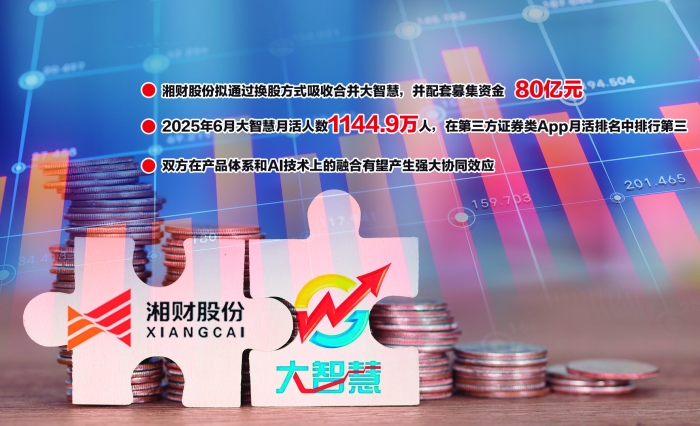
Core Viewpoint - The merger between Xiangcai Co. and Dazhihui marks a significant advancement in the integration of the securities and fintech sectors, highlighting the shift towards strategic synergy through various paths such as regional complementarity and technological integration [2][3]. Group 1: Merger Details - Xiangcai Co. plans to absorb Dazhihui through a share swap and raise 8 billion yuan, focusing on the fintech sector [3]. - Post-merger, the surviving company will expand its services to include domestic and international securities information services, big data, and data engineering services [3]. - The raised funds will be allocated to projects such as financial modeling, digital securities construction, big data engineering, and integrated wealth management [3]. Group 2: Market Context - The pace of mergers and acquisitions in the brokerage industry has accelerated, with recent approvals for major transactions such as Guosen Securities acquiring Wanhua Securities and Western Securities completing the acquisition of Guorong Securities [5]. - The integration of Guolian Minsheng is also progressing, with the migration of Minsheng Securities' investment banking projects to Guolian Minsheng Securities [5]. Group 3: Strategic Paths of Integration - The current mergers reflect a shift from simple scale expansion to a more diversified and precise approach, categorized into three main paths: cross-regional expansion, strengthening regional market control, and enhancing specific business capabilities [6]. - For instance, the merger of Western Securities and Guorong Securities exemplifies effective regional complementarity, enhancing competitive strength through combined resources and market presence [6]. - The integration of Minsheng Securities into Guolian Minsheng has helped establish a comprehensive securities financial holding group structure, showcasing the benefits of combining distinct business strengths [6]. Group 4: Future Outlook - The long-term success of the merged entities will require time to evaluate, but integration is seen as a necessary step for high-quality development in the brokerage industry [7]. - The demand for differentiation among smaller brokerages and the ambition of leading firms to become international investment banks are expected to drive further mergers, leading to a reshaping of the competitive landscape in China's securities industry [7].


券业合并潮向纵深演进 湘财大智慧"券商+科技"联姻树新标杆
Shang Hai Zheng Quan Bao· 2025-09-26 18:27
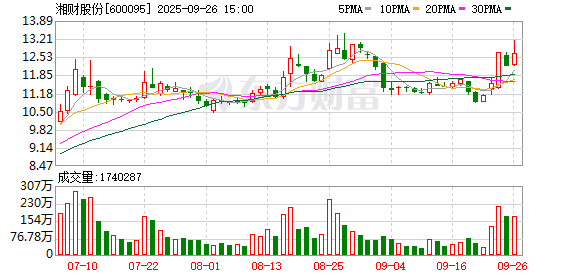
Group 1 - The core point of the article is the significant progress in the merger between Xiangcai Co. and Dazhihui, marking a shift towards strategic synergy in the securities and fintech sectors through various paths such as regional complementarity and technological integration [2][3] - Xiangcai Co. plans to absorb Dazhihui through a share swap and raise 8 billion yuan, focusing on financial technology, which will enhance its service offerings in both domestic and international securities information and big data services [3] - The merger aims to leverage Dazhihui's extensive user base and AI technology to enhance Xiangcai's customer scale and overall financial service capabilities, creating a competitive advantage through collaboration [3] Group 2 - The pace of mergers and acquisitions in the brokerage industry has accelerated, with recent approvals for major share acquisitions, indicating a trend towards consolidation [4][5] - The integration strategies observed in recent mergers highlight a shift from mere size expansion to more diversified and precise approaches, including geographic expansion, regional market control, and enhancement of specific business capabilities [6] - The long-term outlook suggests that mergers will be essential for high-quality development in the brokerage sector, with expectations for more combinations of "brokerage + technology" and "leading + regional" firms to reshape the competitive landscape of China's securities industry [7]