伊利股份

Search documents
白酒关注中秋国庆动销,大众品把握结构性机会
Dongguan Securities· 2025-09-26 09:40
Investment Rating - The report maintains an "Overweight" rating for the food and beverage industry, expecting the industry index to outperform the market index by over 10% in the next six months [53]. Core Viewpoints - The report highlights the focus on liquor sales during the Mid-Autumn Festival and National Day, suggesting that consumer demand remains under pressure, particularly for high-end liquor brands like Kweichow Moutai [4][48]. - The report indicates a structural opportunity in mass-market products, with varying performance across different sub-sectors, emphasizing the importance of monitoring demand and cost indicators in the beer sector and consumption recovery in the condiment sector [4][48]. Summary by Sections Market Review - From September 12 to September 25, 2025, the SW food and beverage industry index fell by 5.76%, underperforming the CSI 300 index by approximately 6.76 percentage points [11]. - All sub-sectors underperformed the CSI 300 index during this period, with the baking sector experiencing the largest decline at -7.80% [13][14]. - Approximately 7% of stocks in the industry recorded positive returns, with notable gainers including Qianwei Yangchu (+21.90%) and Yangyuan Beverage (+16.80%) [15] . Industry Important Data Tracking Liquor Sector - As of September 25, 2025, the price of Feitian Moutai decreased to 1,765 RMB per bottle, while the price of Guojiao 1573 increased to 840 RMB per bottle [22]. Condiment Sector - As of September 25, 2025, the price of soybean meal was 2,988 RMB per ton, down 72 RMB from September 11, while the price of white sugar was 5,780 RMB per ton, down 110 RMB [25]. Beer Sector - As of September 25, 2025, the average price of barley was 2,230 RMB per ton, while the price of aluminum ingots was 20,710 RMB per ton, down 100 RMB [30]. Dairy Sector - The average price of fresh milk remained stable at 3.03 RMB per kilogram as of September 19, 2025 [37]. Meat Products Sector - The average wholesale price of pork was 19.44 RMB per kilogram as of September 25, 2025, down 0.49 RMB from September 11 [39]. Industry News - The report notes a slight decline in the national liquor price index in early September 2025, indicating ongoing market adjustments [41]. - The number of registered beer-related enterprises increased by 10.83% year-on-year from January to August 2025, reflecting a growing market [42]. Weekly Industry Perspective - The report emphasizes the importance of monitoring liquor sales during the upcoming holidays and suggests focusing on high-certainty liquor brands and mass-market products that benefit from policy catalysts [48].





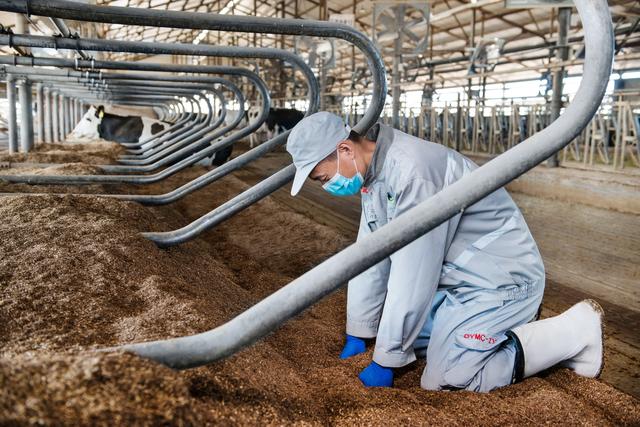
牧场技术人员跪下来感受奶牛卧床舒适度
Xin Lang Cai Jing· 2025-09-26 09:08
Core Insights - The article highlights the innovative practices at Yili's dairy farms, focusing on the comfort and well-being of cows to enhance milk production and quality [2][3][10] Group 1: Cow Comfort and Production - Cows at Yili's farms sleep approximately 12-14 hours a day, with each additional hour of rest leading to an increase of 1.7 kilograms in milk production [3] - Farm staff regularly kneel and even lie down on the cows' bedding to ensure it is soft and comfortable, which is essential for the cows' rest [3][10] Group 2: Bedding Management - Each cow has a dedicated bed that is kept dry, soft, clean, and comfortable, with staff cleaning and maintaining the bedding at least three times a day [7] - The farm has adopted a "cow dung recycling bedding" technology, transforming cow dung into ecological bedding through a series of processes, resulting in a moisture content below 50% [8] Group 3: Quality of Milk - The comfortable sleeping conditions for cows lead to better rest and rumination, which in turn improves the quality of milk produced, with Yili's raw milk exceeding EU standards in key quality indicators [10]

伊利股份(600887) - 内蒙古伊利实业集团股份有限公司关于2024年度第一、二期短期融资券兑付完成的公告
2025-09-26 09:03
月成功发行了 2024 年度第一、二期短期融资券,具体情况如下: | 名称 | | | 发行总额 | | 发行利率 | 发行期限 | | | 起息日 | | | | 兑付日 | | | | 公告编号 | | --- | --- | --- | --- | --- | --- | --- | --- | --- | --- | --- | --- | --- | --- | --- | --- | --- | --- | | 公司 期短期融资券 | 2024 | 年度第一 | 50 | 亿元 | 2.01% | 310 | 天 | 2024 | 年 11 | 月 | 18 日 | 2025 | 年 9 | 月 | 24 日 | 临 | 2024-107 | | 公司 期短期融资券 | 2024 | 年度第二 | 50 | 亿元 | 2.01% | 311 | 天 | 2024 | 年 11 | 月 | 18 日 | 2025 | 年 9 | 月 | 25 日 | 临 | 2024-107 | 2025 年 9 月 24 日,公司完成了 2024 年度第一期短期融资券的兑付 工作,本息兑付总额为人民币 5,085 ...
宜品营养赴港IPO:产能利用率骤降、库存积压、销售费用激增 上市前连续大额分红
Xin Lang Zheng Quan· 2025-09-26 08:53
Core Viewpoint - The Chinese milk powder market is entering a phase of segmented competition, with goat milk powder and special medical purpose formula foods becoming new focal points for capital attention. Yipin Nutrition Technology (Qingdao) Group Co., Ltd. has submitted its prospectus for an IPO on the Hong Kong Stock Exchange, attracting significant market interest. However, underlying issues such as profit volatility, underutilized production capacity, and high inventory levels pose multiple risks for the company [1]. Financial Performance - Yipin Nutrition's revenue has shown steady growth over the past three years, with figures of 1.402 billion yuan, 1.614 billion yuan, and 1.762 billion yuan from 2022 to 2024. However, net profit has experienced significant fluctuations, with net profits of 227 million yuan, 168 million yuan, and 172 million yuan during the same period, showing a notable decline in 2023. In the first half of 2025, revenue was 806 million yuan, down over 10% year-on-year, and net profit was only 57 million yuan, a decrease of over 40% [2]. - Despite a high gross margin of nearly 50% in 2023 and 2024, the company has struggled to convert this into stable profits due to rising production costs, increased sales and distribution expenses, expanded administrative costs, and asset impairment losses [2]. Sales and Expenses - Sales expenses have outpaced revenue growth, with figures of 240 million yuan, 371 million yuan, and 432 million yuan from 2022 to 2024, and growth rates of 54.58% and 16.44% in 2023 and 2024, respectively. In the first half of 2025, sales expenses continued to grow by 5.9% to 233 million yuan, despite a 10.36% decline in revenue [3]. - The increase in sales expenses is particularly driven by e-commerce platform service fees, which have become the company's largest supplier since 2023, surpassing the procurement of raw materials like fresh cow and goat milk [3]. Business Structure and Market Challenges - Yipin Nutrition's business structure is highly concentrated, with infant formula goat milk powder contributing 58.6% of revenue in 2024. The company faces challenges from declining birth rates affecting market demand for infant formula and increasing competition from established brands like Yili, Feihe, Mengniu, and Junlebao [4]. - The special medical purpose formula food segment has shown growth, with revenues of 23.76 million yuan, 130 million yuan, and 219 million yuan from 2022 to the first half of 2025, increasing its share of total revenue from 1.7% in 2022 to 16.1% in the first half of 2025. However, as a latecomer in this market dominated by international brands, Yipin Nutrition faces significant challenges in brand building and market education [4]. Operational Efficiency - The company has experienced a decline in production capacity utilization and an increase in inventory turnover days, with inventory turnover days rising from 276 days in 2022 to 361 days in the first half of 2025. Inventory value increased from 600 million yuan at the end of 2022 to 800 million yuan in mid-2025, indicating decreased inventory turnover efficiency [5]. - The net cash flow from operating activities in the first half of 2025 was 44 million yuan, a decline of approximately 61.7% compared to the same period in 2024, primarily due to increased inventory funding. The company also recognized inventory impairment losses of 12 million yuan, a 50% increase from 2024 [6]. Governance and Dividend Policy - Concerns regarding corporate governance have arisen due to the ownership structure, with the founder and associated entities holding approximately 75.11% of the shares. The company has also made several large dividend payouts prior to the IPO, including 211 million yuan in February 2023, which exceeded net profit for that period, raising questions about cash flow management and the motivations behind the IPO [7].
饮料乳品板块9月26日涨0.97%,养元饮品领涨,主力资金净流出1.19亿元
Zheng Xing Xing Ye Ri Bao· 2025-09-26 08:42
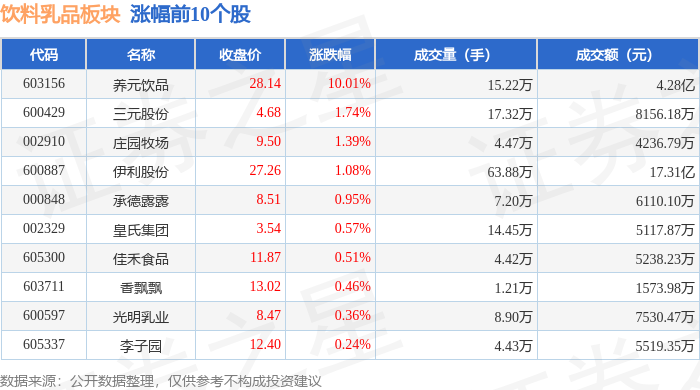
Market Overview - The beverage and dairy sector increased by 0.97% on September 26, with Yangyuan Beverage leading the gains [1] - The Shanghai Composite Index closed at 3828.11, down 0.65%, while the Shenzhen Component Index closed at 13209.0, down 1.76% [1] Key Performers - Yangyuan Beverage (603156) closed at 28.14, up 10.01% with a trading volume of 152,200 shares and a transaction value of 428 million [1] - Other notable performers include: - San Yuan (600429) at 4.68, up 1.74% [1] - Zhuangyuan Pasture (002910) at 9.50, up 1.39% [1] - Yili (600887) at 27.26, up 1.08% with a transaction value of 1.731 billion [1] Decliners - The sector also saw some declines, with: - Pinwu Food (300892) down 1.65% to 34.50 [2] - Panda Dairy (300898) down 1.13% to 27.03 [2] - Beiyinmei (002570) down 0.48% to 6.17 with a transaction value of 204 million [2] Capital Flow - The beverage and dairy sector experienced a net outflow of 119 million from institutional investors, while retail investors saw a net inflow of 42.55 million [2] - Notable capital flows include: - Yili (600887) with a net inflow of 17.0855 million from institutional investors [3] - Light Industry (600597) with a net inflow of 2.1462 million from institutional investors [3] Summary of Trading Activity - The trading activity in the beverage and dairy sector reflects mixed performance, with significant gains from leading companies like Yangyuan Beverage and Yili, while some companies faced declines [1][2][3]

外卖补贴大战频现,乳企的日子是好过了还是更难了?
东京烘焙职业人· 2025-09-26 08:33
Core Viewpoint - The article discusses the intense competition in the food delivery market, particularly focusing on the impact of this competition on the dairy industry, highlighting the challenges faced by traditional dairy companies due to the rise of ready-to-drink beverages and the ongoing subsidy wars among major platforms [1][4][27]. Group 1: Market Competition - Since February, the competition among major food delivery platforms like Meituan, JD, and Alibaba has intensified, leading to a surge in consumer demand for takeout [1][2]. - On peak subsidy days, Meituan's daily order volume exceeded 150 million, while Taobao's flash sales also broke records, indicating a significant increase in consumer engagement with food delivery services [1][2]. - The current competitive landscape is characterized by a three-way standoff among these platforms, suggesting that the subsidy wars have become a normalized aspect of the market [4]. Group 2: Impact on Dairy Companies - The growth of the food delivery market has negatively impacted traditional dairy companies, with liquid milk revenues showing declines in mid-2025 compared to the previous year [5][6]. - Major dairy companies like Yili and Mengniu reported revenue drops of 2.15% and 11.22%, respectively, indicating the financial strain caused by the competitive environment [6][8]. - The rise of ready-to-drink beverages, particularly tea and coffee, is expected to further erode the market share of packaged liquid milk, with estimates suggesting a potential 10% market share loss to these alternatives [9]. Group 3: Opportunities for Suppliers - The influx of orders in the food delivery sector has led to a significant increase in demand for dairy raw materials, benefiting suppliers in the B2B space [11][12]. - During promotional events, substantial subsidies were allocated to beverages, resulting in a 20% growth in the milk tea industry, which in turn increased the demand for dairy ingredients [11][12]. - Smaller beverage brands have also experienced rapid growth, with order volumes increasing by 70% compared to earlier in the year, allowing them to negotiate better terms with suppliers [12]. Group 4: Trends in Ready-to-Drink Beverages - The ready-to-drink beverage segment is gaining traction, with non-tea dairy products accounting for 15.1% of the market, becoming a significant category among beverage brands [13]. - Companies like Yiming Foods are shifting towards a franchise model, which has led to rapid revenue growth despite the competitive pricing environment [14][17]. - The profitability of companies with a strong supply chain focus, such as Yiming Foods, has remained stable, as they benefit from increased order volumes and economies of scale [17][18]. Group 5: Consumer Behavior Changes - The ongoing competition has shifted consumer preferences towards ready-to-drink beverages, diminishing reliance on packaged drinks [23][24]. - The proliferation of similar products in the market has led to a dilution of brand value, with price becoming a more significant factor in consumer purchasing decisions [24][25]. - Concerns are rising about the sustainability of current pricing strategies, as consumers may resist returning to higher prices once subsidies are reduced [25]. Group 6: Future Outlook - The article suggests that dairy companies need to adapt to the changing landscape by exploring opportunities in the ready-to-drink segment and leveraging the growth of food delivery services [27]. - Engaging in the ready-to-drink beverage market could provide a pathway for dairy companies to navigate the challenges posed by external competition and changing consumer habits [27].


2025年中国消费型育儿产品行业市场深度分析及投资战略咨询报告
Sou Hu Cai Jing· 2025-09-26 08:11
Group 1 - The core viewpoint of the article highlights the significant growth of the consumption-oriented parenting products market in China, driven by the "three-child policy" and consumption upgrades, with the market size expected to reach 87.2 billion yuan in 2024 [1][12] - Consumption-oriented parenting products are characterized by their consumable nature, high-frequency usage, and the need for regular replenishment or updates, distinguishing them from durable parenting products [5][6] - The industry chain of consumption-oriented parenting products includes upstream raw material supply, midstream production and brand operation, and downstream sales and distribution, with each segment closely interconnected [8][9] Group 2 - The competitive landscape of the consumption-oriented parenting products industry is intense, with international brands like Huggies and Pampers historically holding significant market shares, but local brands such as Babycare are rapidly gaining ground due to their cost-effectiveness and understanding of the local market [2] - The market structure for consumption-oriented parenting products in 2024 shows that baby care products dominate with a 76.6% share, followed by bedding products at 12.2% and feeding products at 11.2% [14][15] - The report utilizes various analytical models such as SCP, SWOT, PEST, and regression analysis to comprehensively assess the market environment, industry policies, competitive landscape, technological innovations, and market risks [2]
光明乳业,如何保卫上海市场?丨消费参考
2 1 Shi Ji Jing Ji Bao Dao· 2025-09-26 05:05
Core Viewpoint - Bright Dairy is experiencing a decline in revenue and profit, particularly in its home market of Shanghai, amid a broader contraction in the dairy industry [1][2][3]. Financial Performance - In the first half of 2025, Bright Dairy's revenue decreased by 1.9% year-on-year to 12.47 billion yuan, while net profit attributable to shareholders fell by 22.5% to 220 million yuan [1]. - Revenue from liquid milk, other dairy products, and livestock products was 6.61 billion yuan, 4.45 billion yuan, and 520 million yuan, with year-on-year growth rates of -8.6%, +8.8%, and -13.8% respectively [1]. - Regionally, revenue in Shanghai, other regions, and overseas was 3.49 billion yuan, 4.99 billion yuan, and 3.94 billion yuan, with year-on-year growth rates of -6.9%, -1.5%, and +1.9% respectively [1]. Industry Context - The overall demand for dairy products is shrinking, with Nielsen IQ reporting a 9.6% year-on-year decline in dairy sales across all channels as of June 2025 [3]. - Competitors like Mengniu and Yili also reported revenue declines, with Mengniu's revenue down 6.9% to 41.57 billion yuan and Yili's liquid milk revenue down 2.1% to 36.13 billion yuan in the first half of 2025 [3]. Competitive Landscape - Bright Dairy is intensifying efforts to defend its market share in Shanghai by launching new products and enhancing its distribution channels [5][6]. - New Dairy, a competitor, reported a revenue increase of 3.01% to 5.526 billion yuan in the first half of 2025, indicating a more proactive approach in its core markets [4].
2025年1-8月全国酒、饮料和精制茶制造业出口货值为154.9亿元,累计下滑0.1%
Chan Ye Xin Xi Wang· 2025-09-26 03:47
Core Insights - The article discusses the performance of China's beverage industry, highlighting a decline in export value for the sector in 2025 compared to previous years [1] Industry Overview - In August 2025, the export value of the national wine, beverage, and refined tea manufacturing industry was 1.65 billion, representing a year-on-year decrease of 15.6% [1] - From January to August 2025, the cumulative export value for the same industry was 15.49 billion, showing a slight year-on-year decline of 0.1% [1] Company Insights - The article lists several companies in the beverage sector, including Chengde Lulule (000848), Sunshine Dairy (001318), Huangshi Group (002329), and others, indicating a broad range of players in the market [1] - The report by Zhiyan Consulting provides insights into the operational landscape and future prospects of the beverage industry in China from 2025 to 2031 [1]

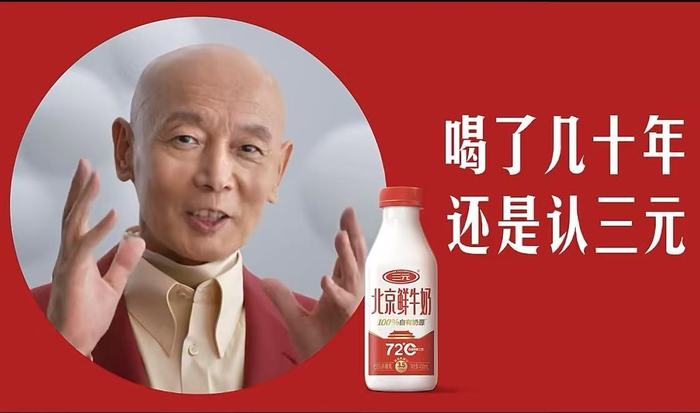
三元擦亮“北京鲜牛奶”招牌,想错位竞争
Xin Lang Cai Jing· 2025-09-26 02:57
Core Viewpoint - Sanyuan Foods has reintroduced its brand ambassador Ge You for its fresh milk products after 19 years, launching the upgraded "Sanyuan Beijing Fresh Milk," which emphasizes 100% self-owned milk sources and increased protein content [1][5] Group 1: Market Position and Strategy - Sanyuan Foods is focusing on low-temperature fresh milk and core regional markets to establish competitive barriers through differentiation, following two consecutive years of declining revenue [5][9] - In the Beijing fresh milk market, Sanyuan holds a leading sales share of 58.3%, outperforming competitors like Yili, Mengniu, and Guangming [5][9] - The company has optimized its product offerings by reducing nearly 20% of its SKUs and increasing the proportion of high-end products, while also enhancing operational efficiency [7][9] Group 2: Product and Channel Development - Sanyuan has strengthened its channel development, with a significant presence in retail locations like Hema, where its upgraded products occupy nearly half of the shelf space [3][5] - The company has launched a new product line tailored for new retail channels, which has performed better than expected despite initial controversies [7] - Sanyuan has also revitalized its brand by opening tea shops that offer fresh milk and beverages sourced from its nearby organic farms, enhancing customer experience [8][9] Group 3: Financial Performance - In 2024, Sanyuan reported a revenue of 7.012 billion yuan, a decrease of 10.73% year-on-year, with a net profit of 54.81 million yuan, down 77.44% [7] - For the first half of the year, the company achieved total revenue of 3.331 billion yuan, a decline of 13.77%, but net profit increased by 43.33% to 183 million yuan [7]