
吉利汽车

Search documents
吉利携最新智能汽车AI技术正式亮相CES2026!
Yang Zi Wan Bao Wang· 2026-01-07 03:22
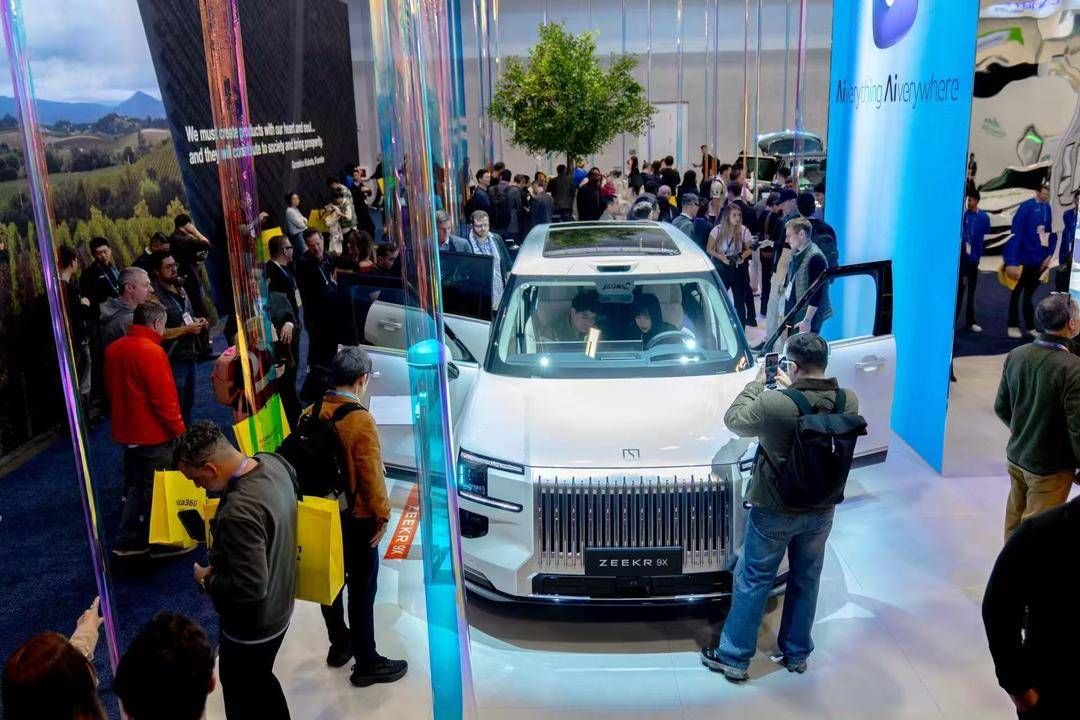
Group 1 - The 2026 International Consumer Electronics Show (CES2026) is being held in Las Vegas from January 5 to 9, showcasing the latest smart automotive AI technologies from Geely Auto Group [1] - Geely's exhibition is located at LVCC West Hall G6201, where it officially launched the AI 2.0 technology system based on the WAM (World Action Model), achieving cross-domain integration of AI technology across various vehicle domains [4] - Key innovations presented include the Eva super-human emotional intelligence agent, the G-ASD (Global Advanced Driving System) for assisted driving, and the latest vehicle models such as Zeekr 9X and Geely Galaxy M9, along with the Shendun Jinzhang battery technology, highlighting the technological strength of a leading Chinese automotive brand [4] Group 2 - The event invites global audiences to visit Geely's booth for discussions on the future trends of smart mobility [4]


25年中美科技股复盘-多行业联合人工智能1月报
2026-01-07 03:05
Summary of Key Points from Conference Call Records Industry Overview - **Chinese Technology Stocks**: Benefiting from hard technology and domestic substitution policies, sectors like semiconductors, AI computing power, hardware, and optical modules are thriving. AI is identified as the core theme for the year, with companies like Shenghong Technology, New Yisheng, and Zhongji Xuchuang gaining from this trend [1][4]. - **US Technology Stocks**: A concentrated market structure is evident, with only Google and Nvidia outperforming the Nasdaq index in 2025. The S&P 500 profits are overly concentrated among seven major companies, accounting for 26% of total profits [1][4]. Core Insights and Arguments - **Market Performance**: In 2025, Chinese technology stocks entered a structural bull market, with the ChiNext Index and STAR Market Index rising nearly 50% and the Hang Seng Tech Index increasing by 23.5%, outperforming the Nasdaq's 20% gain [2][4]. - **AI Industry Chain**: The AI sector is driving growth in the electronics industry, with a surge in storage demand leading to price increases. Companies like Industrial Fulian and Huanxu Electronics are showing strong performance due to their product offerings [1][5]. - **Capitalization of AI Applications**: The acceleration of AI application commercialization is expected in 2026, with significant valuation opportunities in the internet sector and related A-share companies [6][7]. Notable Events and Developments - **Key Events in December**: OpenAI's collaboration with Disney and the release of GPT-5.2 Codex are significant milestones that will influence market dynamics and drive demand for domestic computing power [10][11]. - **Ding Tai Gao Ke's Performance**: The company anticipates a net profit increase of 81% to 103% in 2025, driven by surging demand in servers and data centers [12][13]. Investment Opportunities - **Recommended Companies**: Investors are advised to focus on Baidu, Alibaba, Kuaishou, Tencent, Meitu, and others, as these companies are expected to benefit from the ongoing trends in AI and technology [9]. Additional Insights - **AI Application Growth**: The rise of AI applications, such as ChatGPT, is expected to significantly enhance productivity and market expansion, with user engagement metrics indicating strong growth [7][8]. - **Automotive Industry Policy Changes**: New subsidy policies for the automotive sector are anticipated to stimulate demand, particularly for electric vehicles, with companies like Geely and BYD recommended for investment [14][15].
港股异动丨汽车股普跌 机构预计2026年车市销量下滑+车圈开年狂打价格战
Ge Long Hui· 2026-01-07 03:04
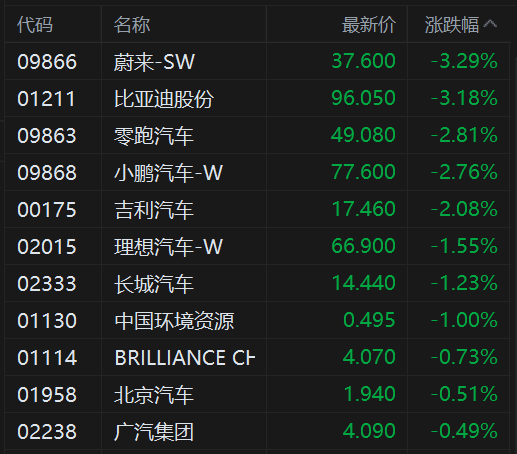
Group 1 - The core viewpoint of the news is that Hong Kong automotive stocks have experienced a significant decline, with major players like NIO and BYD dropping over 3% due to reduced subsidies and a weak outlook for the Chinese auto market in Q4 [1] - Multiple institutions predict a 7% decline in China's auto sales by 2026, marking the first anticipated annual drop since 2020 [1] - A price war has commenced in the Chinese auto market, with over 76 models from various brands, including both domestic and foreign manufacturers, launching promotional policies at the start of the year [1] Group 2 - Specific stock performance shows NIO down 3.29% at 37.600, BYD down 3.18% at 96.050, and other companies like Leap Motor and Xpeng also experiencing declines of around 2.8% [2] - The decline in stock prices is widespread among major automotive companies, including Geely down 2.08%, Li Auto down 1.55%, and Great Wall Motors down 1.23% [2] - The overall sentiment in the market reflects concerns over the sustainability of growth in the automotive sector, influenced by changing subsidy policies and market conditions [1][2]



国补\降价\购置税兜底全堆上,新车咋还卖不动?
3 6 Ke· 2026-01-07 02:55
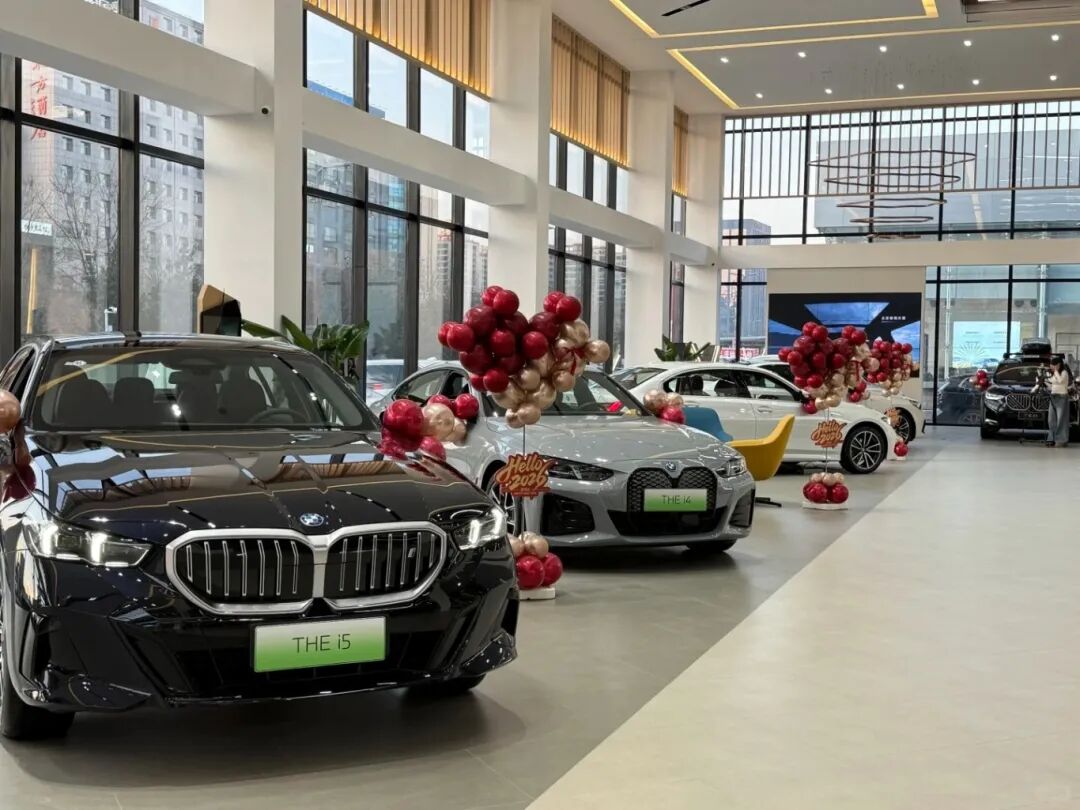
Core Viewpoint - The domestic passenger car market is experiencing a significant decline in demand, with consumer sentiment remaining cautious despite government subsidies. Major brands are facing substantial order drops, while only a few have managed to maintain order volumes through temporary incentives [1][3][4]. Group 1: Market Performance - The overall customer traffic in the domestic passenger car market has decreased significantly compared to the same period last year, indicating a contraction in market demand [1]. - Major brands like BYD, Leap Motor, and Chery have seen order volumes drop by over 50% in the first three days of January compared to the last weekend of December, primarily due to unmet policy expectations and reduced brand subsidies [1]. - In contrast, Geely Galaxy has shown resilience with orders reaching 8-10 units per store, while Tesla maintained orders at 15-18 units, albeit down over 30% from December [1]. Group 2: Pricing Strategies - BMW has initiated a price war by reducing the prices of 31 models, with discounts reaching up to 301,000 yuan for the flagship 7 Series, marking a significant shift for a luxury brand that rarely engages in large-scale price cuts [3][4]. - Following BMW's lead, numerous automakers have introduced various incentives, including tax rebates and cash discounts, in an attempt to stimulate demand, although these measures have not effectively countered the market's cold reception during the New Year period [3][4]. Group 3: Subsidy Policies - The automotive industry is witnessing a surge in subsidy policies across various brands, with a focus on counteracting the reduction of national subsidies and adjusting purchase tax incentives [4][6]. - Luxury brands are adopting aggressive subsidy strategies, with BMW and Volvo offering substantial direct discounts and additional benefits such as free maintenance and financing options [4][6]. - Domestic brands are implementing targeted subsidies for mid-to-low-end models, with Geely Galaxy and Wuling providing significant purchase tax rebates and trade-in bonuses to attract budget-conscious consumers [6][7]. Group 4: Consumer Behavior - The market is experiencing a clear divide in consumer response, with luxury brands facing a relatively stable order decline due to lower price sensitivity among their target customers, while mass-market vehicles under 150,000 yuan are seeing the most significant drops in orders [10][12]. - The anticipated reduction in national subsidies for 2026 has led to increased consumer hesitance, particularly among mid-to-low-end buyers, who are now facing higher costs for vehicle purchases [17][19]. - The reliance on subsidies has created a false sense of demand, leading to a market correction as consumers delay purchases in anticipation of better deals [19][20].
英伟达发布Alpamayo平台,关注智能汽车ETF(159889)
Mei Ri Jing Ji Xin Wen· 2026-01-07 02:53
Core Viewpoint - The smart driving sector experienced a significant surge, with the smart car ETF (159889) rising by 4.16% following the announcement of Nvidia's Alpamayo platform at CES, which enables cars to perform "reasoning" in real-world scenarios [1][2]. Group 1: Nvidia's Alpamayo Platform - Nvidia's CEO Jensen Huang introduced the Alpamayo platform, which integrates open-source models, simulation frameworks, and datasets to create a comprehensive open ecosystem for automotive developers and research teams [1]. - Alpamayo 1 is the first VLA model designed for the autonomous driving research community, capable of processing complex driving scenarios using human-like reasoning, aimed at addressing unexpected situations like traffic signal failures [1]. Group 2: Market Implications and Collaborations - The first vehicle equipped with Nvidia's technology is expected to hit the roads in the U.S. in the first quarter, with the Alpamayo platform set to debut in the Mercedes CLA model in Europe in Q2 2025 [2]. - Nvidia is building a global L4-level autonomous driving and Robotaxi ecosystem, collaborating with major software companies, OEMs, and Tier 1 component manufacturers [2]. - The entry of major players into the market, along with anticipated developments such as Tesla's FSD entering China and the rollout of L3 policies, is expected to accelerate the adoption of autonomous driving technologies by 2026 [2].

地通工业:20 亿加码车谷!武汉新能源汽车零部件基地签约落地
Zhong Guo Qi Che Bao Wang· 2026-01-07 02:52
Group 1 - The core viewpoint of the news is the collaboration between Wuhan Economic Development Zone and DITONG Industrial Holdings to establish an automotive parts production and R&D base, focusing on lightweight components for new energy vehicles [1][2] - DITONG Industrial is a leading player in the domestic passenger vehicle parts sector, specializing in stamping, welding, and mold development, with a robust R&D capability and a comprehensive supply chain [1] - The total investment for the DITONG Wuhan base project is approximately 2 billion yuan, located in the intelligent connected and electric vehicle industrial park, aiming to produce key components such as body covers and battery boxes for new energy vehicles [1] Group 2 - The project will adopt a flexible model of "leasing first, then self-building, and phased production" to quickly respond to market demands, with the welding production line already operational through leased facilities [2] - Once fully operational, the project is expected to achieve an annual output value of 1.2 billion yuan, addressing critical gaps in the local automotive supply chain for lightweight body and chassis modules [2] - The Wuhan Economic Development Zone has improved its automotive industry collaboration, with the local automotive supply ratio increasing from 0.68:1 to 0.8:1, highlighting the ongoing synergy in the industry [3]



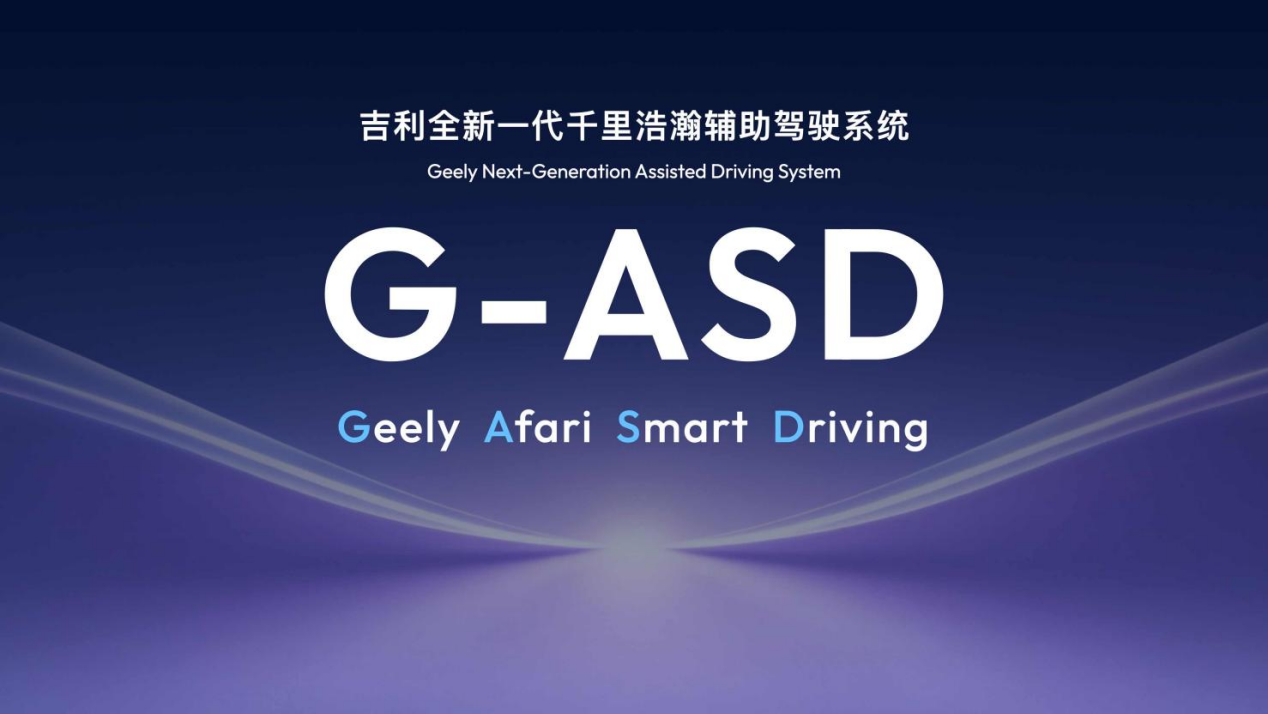
全域AI 2.0发布 吉利产品智舱及智驾体验将全面升级
Yang Shi Wang· 2026-01-07 02:44
Core Insights - Geely Auto Group announced the evolution of its AI technology system to version 2.0, integrating AI across various vehicle domains and introducing the Eva hyper-personalized emotional intelligence agent and the G-ASD advanced driving assistance system [1][4][7] Group 1: AI Technology Advancements - The World Action Model (WAM) was unveiled at CES, establishing a unified "vehicle brain" with a layered design that utilizes a multi-modal model for macro task planning and integrates action experts and world models for detailed decision-making [3] - WAM enables two key breakthroughs: "agentification," allowing different domain agents to communicate and collaborate, and "engineification," which extracts foundational AI capabilities into public technology engines for efficient access [3] Group 2: Eva Intelligent Agent - The Eva agent is evolving into the central intelligence of the vehicle, featuring upgraded voice models and dynamic memory for high emotional intelligence and human-like dialogue capabilities [4] - Eva will possess autonomous decision-making abilities to understand and execute complex travel needs, completing the entire planning and execution chain [4] Group 3: G-ASD Advanced Driving Assistance System - The G-ASD system, developed in collaboration with Qianli Zhijia, represents a high-capacity intelligent driving solution, leveraging the WAM model and advanced AI architecture [7] - The system utilizes a cloud-based multi-modal model with parameters reaching hundreds of billions, enhancing environmental understanding and driving realism [7] - G-ASD is equipped with leading perception hardware, including Thor and Orin chips, and multiple lidar units, supporting L2 to L4 driving capabilities [9] Group 4: Sales and Future Plans - Geely aims to achieve over 3.02 million vehicle sales by 2025, with nearly 1.69 million being new energy vehicles, reflecting a 90% year-on-year growth [9] - In 2026, Geely plans to launch approximately 10 new models, targeting an annual sales goal of 3.45 million vehicles, supported by the full implementation of AI 2.0 [9]
港股汽车股震荡走低
Jin Rong Jie· 2026-01-07 02:23
本文源自:金融界AI电报 港股汽车股震荡走低,比亚迪股份(01211.HK)跌超3%,蔚来汽车(09866.HK)、小鹏汽车(09868.HK)跌超 2%,吉利汽车(00175.HK)、长城汽车(02333.HK)、赛力斯(09927.HK)、理想汽车(02015.HK)跌超1%。 ...
国海证券晨会纪要-20260107
Guohai Securities· 2026-01-07 02:13
Group 1 - The Brunei Refinery Phase II project has been fully launched, with the controlling shareholder's increase in holdings reflecting long-term confidence in development. The project aims for an optimized design capacity of 12 million tons per year, primarily producing diesel, PX, benzene, polypropylene, and other high-value-added products, with completion targeted by the end of 2028 [3][5][9] - The total capacity of the Brunei refinery will reach 20 million tons per year upon completion of both phases, enhancing the company's integrated industrial chain and scale advantages, which will help reduce production costs and stabilize raw material supply [5][6] - The controlling shareholder, Hengyi Group, plans to increase its holdings in the company with a total investment of no less than 1.5 billion yuan and no more than 2.5 billion yuan, with the price range adjusted to not exceed 15 yuan per share [4][9] Group 2 - The automotive industry is set to continue implementing vehicle scrapping and replacement subsidies in 2026, with the Ministry of Industry and Information Technology and other departments issuing a plan to support digital transformation in the automotive sector [11][13] - The automotive sector index outperformed the Shanghai Composite Index in late December 2025, with significant sales variations among major automakers, indicating a mixed performance in the market [11][15] - The report highlights the expected growth in high-end passenger vehicles, particularly for domestic brands, as they capitalize on opportunities in the market [15] Group 3 - The report indicates that the primary market is progressing smoothly, with a total of 20 public REITs issued in 2025, although this is a decrease from the previous year [17][18] - The secondary market for REITs has seen a decline, with the index dropping by 2.93% in December 2025, reflecting reduced market activity [18][19] - The report notes that the average cash distribution rate for property-type REITs is lower than that of concession-type REITs, indicating a potential investment opportunity in the latter [20] Group 4 - The coal industry is expected to see a tightening supply-demand relationship in 2026, with projected average prices for thermal coal and coking coal rising to 750 yuan and 1550 yuan per ton, respectively [21][23][25] - The report discusses the V-shaped price recovery of thermal coal in 2025, driven by production constraints and resilient demand from the power and metallurgical sectors [21][22] - Investment recommendations focus on coal companies with strong cash flow and high dividend yields, suggesting a favorable outlook for the sector [25] Group 5 - The credit bond market has shown strong performance, with yields declining across various maturities, particularly in the short-term segment, driven by increased demand for stable assets [26][27][29] - The report highlights the impact of government bond supply on market liquidity, suggesting that institutions may favor short-duration credit bonds to mitigate volatility [27][28] - The overall market sentiment has improved, with expectations of economic data recovery contributing to a more favorable investment environment [28]

50家港股公司回购 腾讯控股回购6.36亿港元
Zheng Quan Shi Bao Wang· 2026-01-07 01:53
Summary of Key Points Core Viewpoint - On January 6, 50 Hong Kong-listed companies conducted share buybacks, totaling 19.62 million shares and an aggregate amount of 861 million HKD [1]. Group 1: Major Companies Involved in Buybacks - Tencent Holdings repurchased 1.003 million shares for 636 million HKD, with a highest price of 638.000 HKD and a lowest price of 626.500 HKD, bringing its year-to-date buyback total to 1.907 billion HKD [1]. - Xiaomi Group-W repurchased 3.85 million shares for 150 million HKD, with a highest price of 38.900 HKD and a lowest price of 38.860 HKD, accumulating a year-to-date buyback total of 299 million HKD [1]. - Genscript Biotech repurchased 400,000 shares for 13.67 million HKD, with a highest price of 34.480 HKD and a lowest price of 33.840 HKD, totaling 27.25 million HKD in year-to-date buybacks [1]. Group 2: Buyback Amounts and Quantities - The highest buyback amount on January 6 was from Tencent Holdings at 636 million HKD, followed by Xiaomi Group-W at 150 million HKD [1]. - In terms of buyback quantity, Xiaomi Group-W led with 3.85 million shares, followed by Jieli Trading and Weigao Group with 2 million shares and 1.5948 million shares, respectively [1]. Group 3: Additional Companies and Their Buybacks - Weigao Group repurchased 1.5948 million shares for 8.22 million HKD, with a highest price of 5.230 HKD and a lowest price of 5.010 HKD [1]. - Geely Automobile repurchased 423,000 shares for 749.94 million HKD, with a highest price of 17.810 HKD and a lowest price of 17.570 HKD [1]. - Other notable companies include Tsugami Machine Tool, which repurchased 150,000 shares for 511.53 million HKD, and China National Chemical Corporation, which repurchased 150,000 shares for 446.94 million HKD [1].

