
微软

Search documents
周末,利好来袭!国常会,重磅部署!证监会,最新发布!黄金,大消息!影响一周市场的十大消息
券商中国· 2025-11-02 10:04
Group 1 - The State Council, led by Premier Li Qiang, is focusing on deepening reforms in key areas and expanding institutional openness, aiming to enhance the level of market openness and optimize service market access rules [2] - The China Securities Regulatory Commission (CSRC) and the Asset Management Association of China (AMAC) have released important draft guidelines to enhance the stability of public fund investment behavior and clarify product investment styles [3] - The Ministry of Finance and the State Taxation Administration announced tax policies regarding gold transactions, including exemptions from value-added tax for certain transactions involving standard gold [4] Group 2 - A significant breakthrough in the nuclear energy sector was reported, with China achieving the conversion of thorium-uranium nuclear fuel based on molten salt reactors, which could lead to industrial applications of thorium-based molten salt reactors [5] - The high-end equipment manufacturing sector has seen major advancements, including the acceptance of the world's largest skin-stretching machine, marking a significant step in domestic production capabilities in aviation and high-speed rail [6] - The latest holdings of the "national team" in ETFs show a substantial increase in average returns, with an average gain of over 20% in the third quarter [7] Group 3 - The U.S. Treasury Secretary indicated that a U.S.-China trade agreement may be signed soon, with both countries expressing a willingness to enhance economic cooperation [8] - Major U.S. stock indices closed higher, with the Nasdaq achieving a seven-month consecutive increase, driven by significant gains in tech stocks like Amazon [9] - Upcoming economic data releases include October import and export figures, as well as CPI and PPI data, which are expected to provide insights into economic trends [10] Group 4 - The eighth China International Import Expo is scheduled to take place from November 5 to 10, showcasing China's commitment to opening up its market [11] - The CSRC has approved IPO registrations for two companies, indicating ongoing activity in the capital markets [12] - A total of 36 companies will have their restricted shares unlocked this week, with a total market value of approximately 205.46 billion yuan [15][16]


微软CEO纳德拉:电力短缺成AI算力扩张新瓶颈
Sou Hu Cai Jing· 2025-11-02 09:13
Core Insights - Microsoft CEO Satya Nadella highlighted that despite the high demand for AI chips, the company is facing limitations in power supply and physical space in data centers, leading to a backlog of AI chips that cannot be powered on [1][3][5] - The industry is experiencing a new phase where companies like Microsoft have reached the physical and energy limits of their data centers, hindering the deployment of new hardware [5] Industry Challenges - Nadella emphasized that the real bottleneck is not the supply of chips but rather the shortage of power supply, indicating that without sufficient electricity, even abundant chips will remain idle [3][5] - The competition for computational infrastructure has intensified, with companies needing to address the energy network's capacity to support further expansion of data centers [5] Future Implications - The increasing power density of systems, such as NVIDIA's, is expected to rise significantly, which could exacerbate the existing infrastructure bottlenecks [5] - Nadella noted that the short-term demand for NVIDIA chips is difficult to predict and will heavily depend on the overall progress of the supply chain, suggesting that ongoing energy constraints could impact actual purchasing decisions [5]


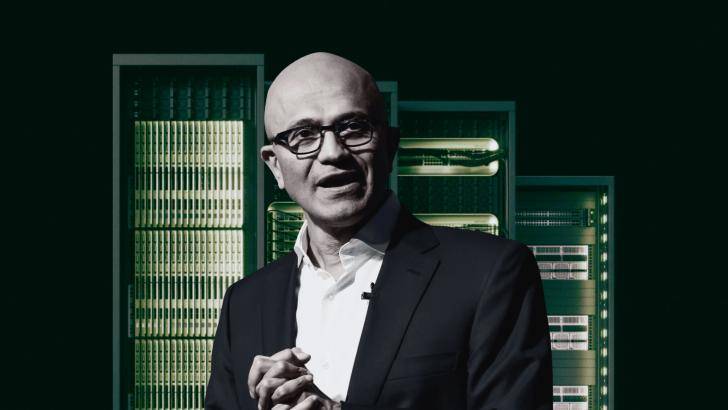
AWS增速被微软甩开一倍,亚马逊急了:1.4万人成AI转型祭品?
Tai Mei Ti A P P· 2025-11-02 06:19
Core Insights - Amazon announced a new round of layoffs, cutting approximately 14,000 employees, which is 4% of its total workforce of 350,000, despite strong financial performance [1] - The layoffs reflect a broader structural transformation in the global tech industry, moving from "scale expansion" to "lean growth" [1][2] Group 1: Industry Trends - The tech industry is undergoing a collective shift towards cost reduction and efficiency amid post-pandemic demand adjustments and the disruptive impact of AI technology [2] - The global e-commerce market is expected to exceed $6.8 trillion in 2025, but growth rates have declined from 25% during the pandemic to 8.7% [2] - In the U.S., online retail penetration has reached 18.3%, with growth rates below 10% for four consecutive quarters, indicating a shift from impulsive to rational consumer behavior [2] Group 2: Cost Pressures - Cost pressures are a common challenge across the industry, exacerbated by high tariffs on Chinese goods, which could lead to an annual profit loss of up to $10 billion for Amazon [3] - The net profit margin for leading platforms has decreased from 4.2% in 2021 to 2.8% in 2025, pushing companies to enhance efficiency to maintain profitability [3] Group 3: AI and Cloud Computing - AI has become a core variable in cloud computing competition, with enterprise demand shifting towards high-performance computing for AI training and inference [4] - AWS leads the global cloud infrastructure market with a 29% share, but its growth rate of 17.5% lags behind competitors like Microsoft Azure and Google Cloud [4] Group 4: Strategic Restructuring - The layoffs are part of a strategic restructuring aimed at enhancing efficiency and reallocating resources towards AI and cloud computing [7] - Over 80% of the laid-off employees are from retail and logistics, indicating a focus on optimizing non-core business areas [7][8] Group 5: Financial Performance - Amazon's Q1 2025 revenue reached $155.67 billion, a 9% year-over-year increase, with AWS contributing significantly to operating profit [13] - Despite a 64% increase in net profit, the growth rate is primarily due to a low base effect from the previous year, with profit growth lagging behind revenue growth [14] Group 6: Long-term Outlook - The company plans to increase capital expenditures to $100 billion in 2025, with a significant portion allocated to AI infrastructure [16] - The success of Amazon's transformation into an AI-driven platform will depend on its ability to commercialize AI technology effectively and manage competitive pressures [29]

史上最猛AI财报,市值却蒸发2000亿:微软到底哪里不对劲?
Tai Mei Ti A P P· 2025-11-02 06:19
Core Insights - Microsoft's Q1 FY2026 earnings report showed total revenue of $77.7 billion, an 18% year-over-year increase, and earnings per share of $3.72, exceeding Wall Street expectations [1] - Despite strong performance, Microsoft's stock fell 3.7% post-earnings, reflecting market concerns over rising infrastructure costs amid AI-driven growth opportunities [1][22] - The report highlights the ongoing transformation in the tech industry, particularly in cloud computing and AI, where demand is outpacing supply capabilities [2] AI Reshaping Cloud Computing Landscape - The global cloud computing market is transitioning from rapid growth to quality competition, with AI demand disrupting previous balance [2] - In Q1 2025, AWS, Azure, and GCP generated a combined revenue of $68.3 billion, a 20% increase year-over-year, but growth is limited by supply constraints [2] - Azure's market share is 22% with a 39% year-over-year growth, significantly outpacing AWS's 16.89% growth [2][5] AI Infrastructure as a Competitive Barrier - AI infrastructure, including GPU and CPU shortages, is a major bottleneck for industry growth, prompting top cloud providers to accelerate capacity investments [4] - In Q1 2025, Microsoft, Amazon, Meta, and Google collectively spent $77.1 billion on capital expenditures, a 64% increase year-over-year [4] Three Pillars Driving AI Transformation - Microsoft's Q1 performance is attributed to its "AI-first" strategy, with intelligent cloud, business applications, and personal computing working in synergy [4] - The intelligent cloud segment generated $30.9 billion in revenue, with Azure cloud services growing 39% year-over-year, exceeding market expectations [4][5] Financial Health and Growth Quality Assessment - Microsoft's Q1 gross profit reached $53.63 billion, maintaining a gross margin of approximately 69% [9] - Net profit grew 12% year-over-year to $27.747 billion, lagging behind revenue growth due to increased capital expenditures and losses from OpenAI investments [9][10] Strategic Choices in AI Dividend Period - Microsoft is in a critical window for AI growth, with a $400 billion RPO balance expected to convert into revenue over the next two years [20] - The company aims to optimize capital expenditure structure and deepen industry solutions to enhance customer value [20][21] Competitive Landscape and Regulatory Challenges - Microsoft faces increasing competition from AWS and Google, both ramping up AI infrastructure investments [19] - Regulatory scrutiny, particularly in the EU regarding bundling practices, poses risks to revenue growth [18] Conclusion - Microsoft's Q1 FY2026 results reflect both the potential and challenges of AI-driven growth, emphasizing the need for a balance between investment intensity and profitability quality [22]
AI周报:英伟达成全球首家市值破5万亿美元公司 OpenAI IPO完成重组
Di Yi Cai Jing· 2025-11-02 03:20
Group 1: Nvidia's Market Milestone - Nvidia's market capitalization reached $5.13 trillion, making it the first company to surpass the $5 trillion mark [1] - The company's market value fluctuated, closing at $4.93 trillion on October 30, 2023, after briefly exceeding $5 trillion [1] - Nvidia's rapid growth is attributed to advancements in chip architecture, significant investments in companies like OpenAI and Intel, and expansion into new product lines [1] Group 2: OpenAI's IPO Preparations - OpenAI is preparing for an IPO, potentially reaching a valuation of $1 trillion, with plans to submit an application as early as the second half of 2026 [2] - The company recently completed a capital restructuring to streamline its operations and establish control over its profit-making ventures [2] - Initial discussions set a fundraising target of at least $60 billion, with the actual amount likely to be higher [2] Group 3: Alphabet's Strong Financial Performance - Alphabet reported Q3 2025 earnings that exceeded market expectations, with revenue surpassing $100 billion for the first time [3] - Growth was driven by strong performance in cloud computing, AI, advertising, and subscription services, with cloud revenue increasing by 35% year-over-year [3] - The company anticipates continued growth in cloud revenue, supported by a backlog of $155 billion in orders [3] Group 4: Amazon's Workforce Reduction and AI Focus - Amazon announced plans to lay off approximately 14,000 employees to streamline operations and accelerate AI deployment [5][6] - This move is part of a broader strategy to reallocate resources towards priority areas, particularly in AI, where Amazon has lagged behind competitors like Microsoft [6] Group 5: AI Infrastructure Expansion - OpenAI, Oracle, and Related Digital announced plans to build a data center in Michigan with over 1 gigawatt of computing power as part of the "Stargate" project [7] - The project aims to expand AI infrastructure capacity in the U.S., with total planned capacity exceeding 8 gigawatts and investments surpassing $450 billion [7] Group 6: AI-Driven Startups and Investments - AI generative engine optimization startup Zhitu Times raised seed funding in the millions, focusing on developing SaaS products and global market expansion [8] - The AI search market is emerging as a significant opportunity, attracting investments and new entrants [8] Group 7: Nvidia's Investment in Nokia - Nvidia announced a $1 billion investment in Nokia, acquiring 166 million new shares to strengthen its position in the telecommunications sector [9] - This investment aims to accelerate innovations in AI-driven wireless access networks and facilitate the transition from 5G to 6G [9] Group 8: Performance of Optical Module Companies - Major optical module manufacturers reported significant year-over-year revenue growth, driven by AI-related infrastructure investments [10] - Despite the growth, some companies experienced a decline in revenue compared to the previous quarter, indicating potential volatility in the market [10] Group 9: Industrial Fulian's Record Earnings - Industrial Fulian reported record revenue and net profit for Q3, with revenue reaching 243.17 billion yuan, a 42.81% increase year-over-year [11] - The company's growth is linked to strong demand for AI cabinet products in large-scale data centers [11]
2026年中国光路交换机行业产业链全景、市场规模、企业布局及未来发展趋势研判:头部企业加速技术验证与规模化部署,引领光路交换产业爆发【图】
Chan Ye Xin Xi Wang· 2025-11-02 00:01
Core Insights - The Optical Circuit Switch (OCS) technology enables direct optical signal switching, achieving nanosecond-level switching, low latency, and high energy efficiency, with significant market growth expected in the coming years [1][10][12] Industry Overview - OCS operates entirely in the optical domain, avoiding the delays and power consumption associated with optical-electrical-optical conversions, making it suitable for high-performance applications [2][3] - The OCS market is projected to exceed $2 billion globally by 2031, with China's market expected to surpass 2 billion yuan by 2025, driven by policy support and increasing computational demands [1][12] Technology Development - Three main technological routes for OCS are MEMS, DLC, and DLBS, with DLBS gaining traction due to its low loss and fast switching capabilities, making it a focus for major companies like Google [5][6] - The integration of OCS with other technologies such as CPO and SDN is becoming a core direction for enhancing performance and reducing latency [15] Policy Support - The Chinese government has introduced multiple policies to promote the development of OCS, establishing a comprehensive support system that includes planning, standardization, infrastructure development, and innovation support [6][8] Market Dynamics - The OCS industry chain in China is characterized by reliance on imported core components, intense competition in equipment integration, and explosive growth in application scenarios, particularly in data center interconnections [8][10] - The data center market in China is expected to reach 318 billion yuan by 2025, with OCS playing a crucial role in enhancing energy efficiency and performance [10][12] Competitive Landscape - The competitive landscape of the OCS industry in China is stratified, with leading companies like Huawei and ZTE dominating the high-end market, while other firms focus on AI data centers and international markets [13][14] Future Trends - The OCS industry is expected to evolve along the lines of technology integration, ecosystem standardization, and expansion into various application scenarios, including industrial internet and smart grids [15][16][17]





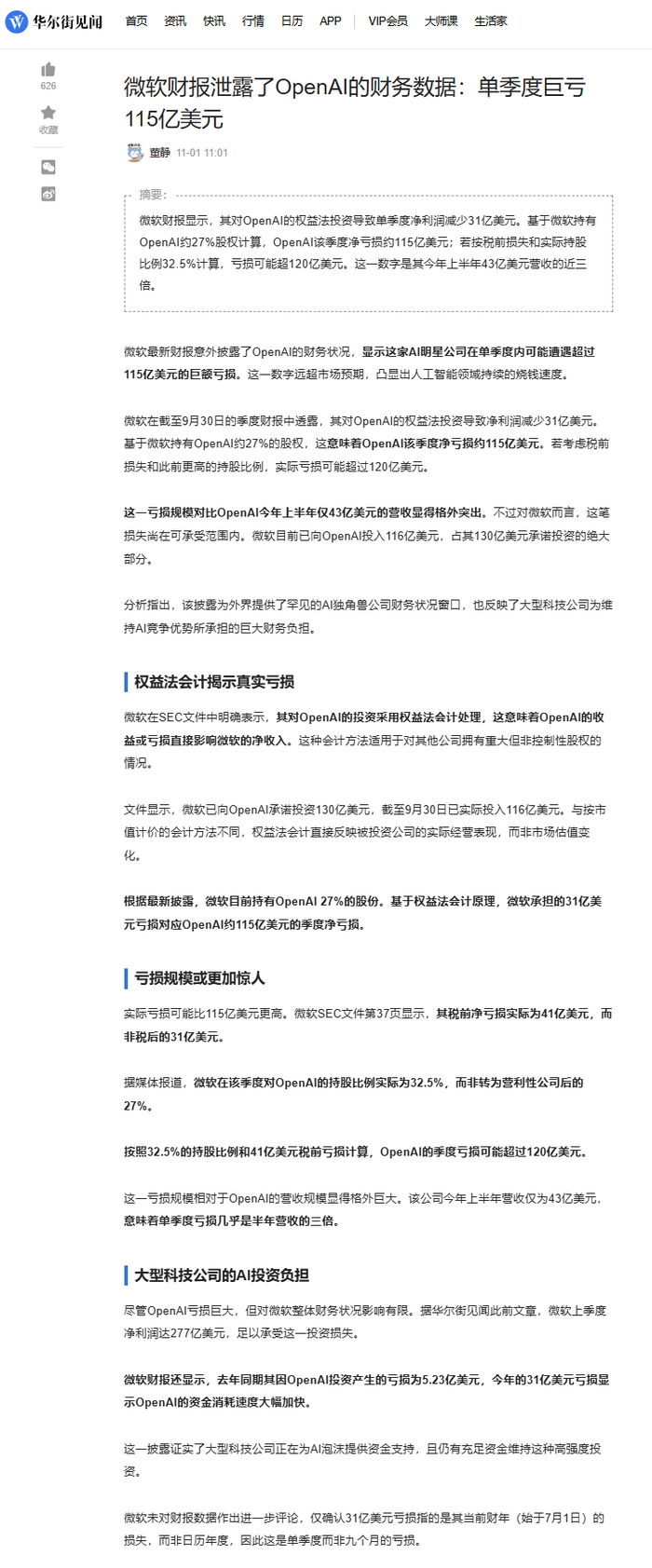
微软财报披露OpenAI单季度巨亏115亿美元
Cai Jing Wang· 2025-11-01 11:17
Core Insights - OpenAI reported a staggering quarterly loss of over $11.5 billion, significantly exceeding market expectations and highlighting the ongoing cash burn in the AI sector [1][4]. Financial Performance - Microsoft's latest financial report revealed that its equity investment in OpenAI resulted in a net profit reduction of $3.1 billion, reflecting a 27% ownership stake in OpenAI, which translates to an estimated quarterly net loss of approximately $11.5 billion for OpenAI [1][2]. - The actual loss could be even higher, with pre-tax losses reported at $4.1 billion, suggesting that the quarterly loss might exceed $12 billion when accounting for a higher ownership stake of 32.5% [3][4]. Revenue Context - OpenAI's revenue for the first half of the year was only $4.3 billion, making the quarterly loss nearly three times its half-year revenue, underscoring the scale of its financial challenges [4]. Investment Implications - Despite OpenAI's massive losses, the impact on Microsoft's overall financial health is limited, as the company reported a net profit of $27.7 billion in the previous quarter, indicating its capacity to absorb such investment losses [5]. - The disclosed figures illustrate the substantial financial burden that large tech companies are shouldering to maintain competitive advantages in the AI space, with Microsoft's investment in OpenAI totaling $11.6 billion out of a committed $13 billion [1][5].
美政府“停摆”满月,4200万人或挨饿;吃炸鸡、喝啤酒,黄仁勋在韩国拿下100亿美元大单;史上最大IPO要来了 | 一周国际财经
Mei Ri Jing Ji Xin Wen· 2025-11-01 10:48
Group 1: Nvidia's Market Milestone - Nvidia's market capitalization surpassed $5 trillion, making it the first company to achieve this milestone, driven by increased investments in the global AI industry [4][5][7] - The increase in Nvidia's valuation from $3 trillion to $4 trillion took 410 days, while the jump to $5 trillion occurred in just 113 days [7] - The overall enthusiasm for AI has significantly contributed to the rise in stock prices across the US market since October 2022 [7] Group 2: Financial Pressures on Tech Giants - Despite strong revenue growth, the "Magnificent Seven" tech companies are experiencing a decline in available cash, as indicated by the rising ratio of capital expenditure to operating cash flow [9][13] - The capital expenditure of major tech firms is projected to reach unprecedented levels, with companies like Google and Meta significantly increasing their spending forecasts [8][9] - Harris Kupperman from Praetorian Capital highlighted that the AI industry requires approximately $1 trillion in revenue to break even, while current monthly revenues are just over $10 billion, suggesting a payback period of about 83 years [5][19] Group 3: Financing Strategies and Risks - Major tech companies are increasingly resorting to external financing methods, including equity, bonds, and private credit, to support their capital expenditures [13][14] - Meta is reportedly preparing to issue $25 billion in bonds to fund data center construction, which has raised concerns about the sustainability of such financing strategies [13][14] - The shift from relying on internal cash flow to seeking external funding could pose risks to the AI industry's future development [17] Group 4: Broader Economic Context - The US government has been in a state of shutdown for over a month, affecting food assistance programs for approximately 42 million Americans [21][23] - The upcoming vote on Elon Musk's $1 trillion compensation plan for Tesla has garnered significant attention, with major shareholders expressing opposition [25][27] - The KOSPI index in South Korea has surged 71% this year, driven by strong performances from key companies like Samsung and SK Hynix [40][42][43]

微软和OpenAI CEO罕见同场对话:OpenAI重组、AI泡沫质疑、算力需求......
Hua Er Jie Jian Wen· 2025-11-01 09:48
Core Insights - OpenAI and Microsoft CEOs discussed the AI industry's key issues, including the partnership's structure and future growth potential [1][2][3] - The conversation highlighted the importance of computational power and the challenges related to energy supply and infrastructure development [1][4][22] - Both CEOs addressed concerns about an AI investment bubble, using data to demonstrate the viability of their business models [2][16][18] Partnership Structure - OpenAI's exclusive "stateless API" will remain on Azure until 2030, while other products like ChatGPT will be distributed across multiple platforms [1][12] - Microsoft has invested approximately $13.5 billion in OpenAI, with the investment primarily directed towards training rather than revenue [2][10] - The partnership is framed as one of the greatest tech collaborations, with both companies benefiting from shared goals and resources [9][41] Computational Power and Infrastructure - Nadella emphasized that the current challenge is not a surplus of computational power but rather issues related to energy supply and infrastructure development [1][4][22] - Altman noted that OpenAI's computational capacity has increased tenfold in the past year, and further growth could significantly impact revenue [3][18] - Both leaders anticipate that computational surplus will eventually occur, but the timeline remains uncertain, potentially within 2-6 years [1][23] Addressing Investment Bubble Concerns - Altman responded to skepticism about OpenAI's ability to support a $1.4 trillion spending commitment with a projected revenue of $13 billion, asserting that revenue growth will follow computational capacity growth [16][17] - Nadella supported this by stating that OpenAI's business plans have not only been met but exceeded expectations, reinforcing the demand-driven nature of their growth [2][18] - The discussion included the potential for AI to automate scientific research, which could lead to significant breakthroughs in various fields [3][11] Future Outlook - Altman expressed excitement about the potential for AI to conduct scientific research, which he views as a step towards achieving superintelligence [3][11] - The CEOs discussed the importance of developing new computing devices that can operate efficiently and independently, enhancing user interaction with AI [25][36] - Both leaders acknowledged the need for a unified regulatory framework to support AI development and mitigate the risks associated with fragmented state laws [29][31]

微软财报泄密:OpenAI一颗大雷将引爆
Hua Er Jie Jian Wen· 2025-11-01 06:56
Core Insights - OpenAI reported a staggering quarterly loss of over $11.5 billion, significantly exceeding market expectations, highlighting the ongoing cash burn in the AI sector [1] - Microsoft’s investment in OpenAI, which is accounted for using the equity method, resulted in a net income reduction of $3.1 billion for the quarter [2] - The actual pre-tax loss for OpenAI could exceed $12 billion when considering Microsoft's higher ownership percentage of 32.5% [4][5] Financial Performance - OpenAI's revenue for the first half of the year was only $4.3 billion, making the quarterly loss nearly three times its half-year revenue [5] - Microsoft has committed a total of $13 billion to OpenAI, with $11.6 billion already invested, indicating a substantial financial commitment [2][6] - Despite the significant loss from OpenAI, Microsoft’s overall financial health remains strong, with a net profit of $27.7 billion in the last quarter, allowing it to absorb the investment loss [6][7] Accounting Methodology - Microsoft uses the equity method for accounting its investment in OpenAI, meaning OpenAI's losses directly impact Microsoft's net income [2] - The equity method reflects the actual operational performance of the invested company rather than market valuation changes [2] Industry Implications - The disclosure of OpenAI's financial status provides a rare glimpse into the financial burdens large tech companies face to maintain competitive advantages in AI [1][7] - The rapid increase in OpenAI's cash consumption is evident, with losses accelerating compared to the previous year's $0.523 billion loss [6]