
百利天恒

Search documents
百利天恒:持股6.91%股东拟减持不超1%股份
Xin Lang Cai Jing· 2026-01-16 11:27
Core Viewpoint - The shareholder OAPIII (HK) Limited, holding 6.91% of the company, plans to reduce its stake by up to 4,128,738 shares, which is not more than 1% of the total share capital, due to funding needs [1] Group 1 - As of the announcement date, OAPIII (HK) Limited holds 28,527,171 shares of the company [1] - The planned reduction will occur from February 9 to May 8, 2024, through a centralized bidding method [1] - The reduction price will not be lower than the company's initial public offering price, and the implementation of the reduction plan carries uncertainties [1]
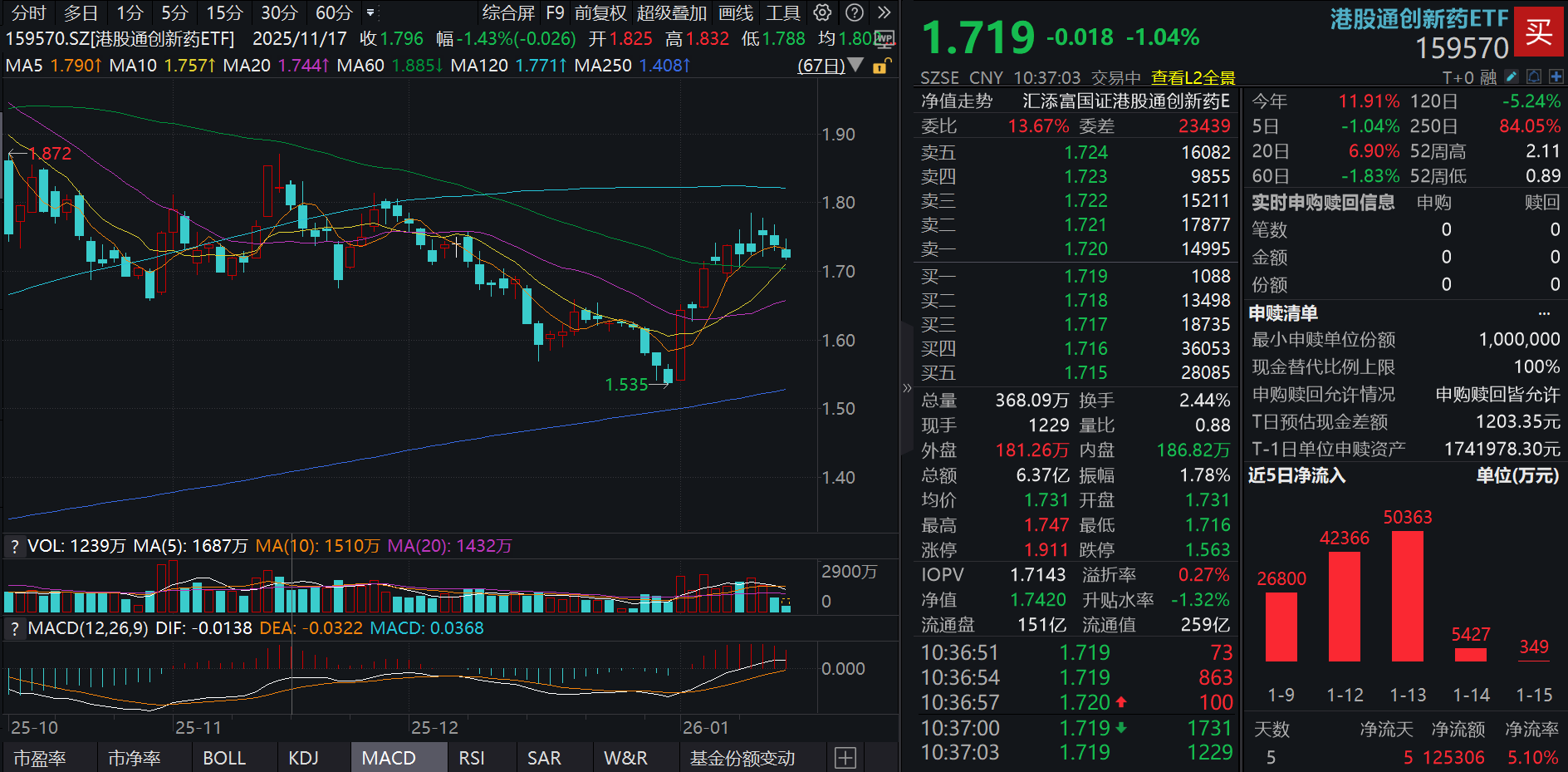
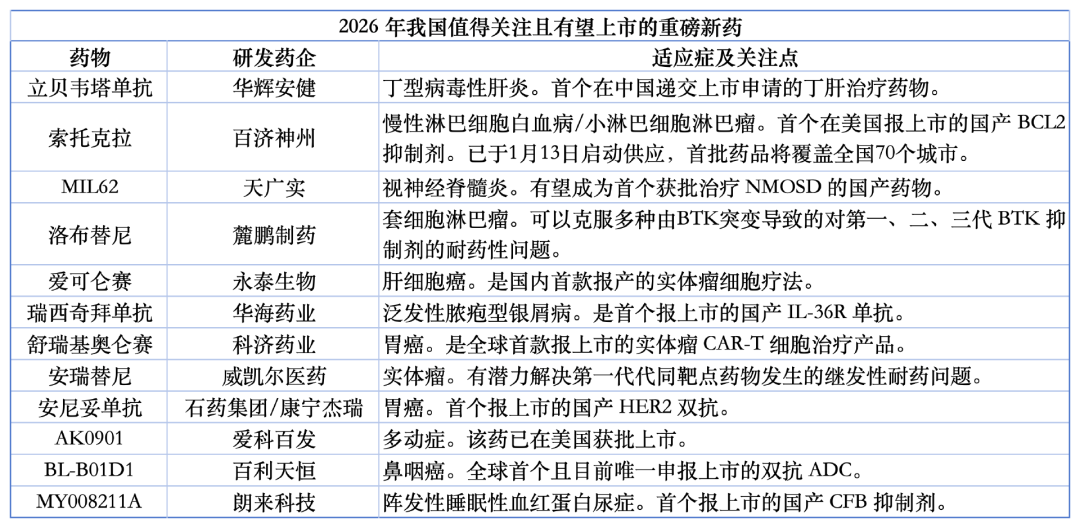
中国创新药企闪耀JPM大会,哪些新药值得关注?港股通创新药ETF(159570)跌逾1%,资金快速涌入,近5日“吸金”超12亿元!
Xin Lang Cai Jing· 2026-01-16 02:54
Group 1 - The core viewpoint of the news highlights the performance and trends of the Hong Kong innovative drug sector, particularly focusing on the Hong Kong Stock Connect Innovative Drug ETF (159570), which has seen significant capital inflow and is leading in scale among similar funds [1][2] - The 44th JPMorgan Healthcare Conference showcased several Chinese innovative pharmaceutical companies, emphasizing trends in gene and cell therapy, as well as AI in medicine, indicating a shift from "assets being bought" to "global value" for Chinese innovations [1][2] - The innovative drug sector is expected to reach new highs due to various catalysts, including the significant valuation gap between China and the US, ongoing business development (BD) transactions, and low current allocation of pharmaceutical theme funds in the market [2] Group 2 - Major stocks within the Hong Kong Stock Connect Innovative Drug ETF mostly experienced declines, with notable drops exceeding 1% for companies like BeiGene, China Biologic Products, and others, while CSPC Pharmaceutical showed a slight increase [2][3] - Key innovative drugs presented at the JPMorgan Conference include BeiGene's CDK4 products and the first BCL2 inhibitor approved in China, which highlights the competitive landscape and advancements in treatment options for various cancers [5][6] - The collaboration between Rongchang Biopharmaceutical and AbbVie on the PD-1/VEGF dual antibody RC148 is a significant development, with potential milestone payments and royalties, showcasing the growing internationalization of Chinese innovative drugs [9][10]

JPM医疗年会Day1-2回顾:从中国管线到全球竞争格局
GLP1减重宝典· 2026-01-15 15:45
Core Insights - The JPM Healthcare Conference 2026 highlighted a significant shift in the narrative surrounding Chinese innovation assets, which are increasingly recognized as critical components for multinational pharmaceutical companies' long-term growth strategies [4][5][24] - The conference emphasized the importance of clinical advancement efficiency and global development pace for Chinese pharmaceutical companies, marking the entry of their innovation pipelines into the core narratives of multinational firms as just the beginning [24] Group 1: Chinese Companies' Innovations - Chinese companies are now being integrated into the core strategies of multinational pharmaceutical firms, moving beyond previous "single-point licensing" narratives to being key contributors in oncology, neuroscience, and metabolic diseases [5][9] - Notable collaborations include SystImmune's BL-B01D1, which has a potential total deal value of $800 million with Bristol-Myers Squibb, and the KarXT project, which is prioritized for development in the psychiatric pipeline [5][7] - The partnership between 3SBio and Pfizer on the PD-1 and VEGF bispecific antibody SSGJ-707 is highlighted as a significant transaction, indicating its strategic importance in the next-generation oncology immunotherapy landscape [7][9] Group 2: Multinational Companies' Strategies - Multinational companies are focusing on a 2030 pricing framework, with strategic decisions revolving around which assets will shape the next industry reshuffle [10][24] - Bristol-Myers Squibb plans to launch 10 new drugs by 2030, emphasizing a multi-pillar approach to mitigate risks associated with patent cliffs [10][12] - Vertex Pharmaceuticals and Madrigal Pharmaceuticals are adopting a focused strategy on single disease areas, with Madrigal positioning itself as a leader in the MASH field and Vertex concentrating on cystic fibrosis and gene therapy [12][15] Group 3: Market Dynamics and Challenges - The second day of the conference shifted focus to practical execution challenges, including competition in metabolic diseases, patent expirations, and supply chain management [16][24] - Eli Lilly expressed uncertainty regarding the market performance of its oral GLP-1 candidate, while Novo Nordisk acknowledged significant competitive pressures and emphasized direct patient channel management [16][18] - Bayer updated its assessment of patent expirations for Xarelto and Eylea, indicating a gradual approach to managing revenue impacts while relying on new product launches for future growth [18][19] Group 4: Supply Chain and Manufacturing - The importance of local manufacturing capabilities was underscored, with Samsung Biologics discussing its U.S. production capacity to meet growing demand [21][24] - Companies like Teva and Sandoz are focusing on the strategic value of biosimilars in light of upcoming patent expirations, indicating a long-term structural adjustment rather than a short-term fix [19][21]

智谱CEO谈DeepSeek冲击;字节正研发新一代豆包AI耳机;携程回应涉嫌垄断被立案调查;传一加手机CEO刘作虎遭通缉...
Sou Hu Cai Jing· 2026-01-15 02:24
Group 1 - The Chinese government has extended the personal income tax refund policy for home purchases until December 31, 2027, which aims to stimulate the real estate market by allowing tax refunds based on the sale and purchase amounts of properties [3][3][3] - The U.S. State Department announced a suspension of visa processing for 75 countries, effective January 21, as part of a reevaluation of screening and review processes [3][3][3] - The U.S. has imposed a 25% tariff on certain imported semiconductors and related products, effective January 15, as part of its trade policy [4][4][4] Group 2 - OpenAI has signed a three-year agreement with Cerebras to procure up to 750 megawatts of computing power, with the total deal exceeding $10 billion, focusing on AI chip technology [7][8][8] - Skild AI has completed a $1.4 billion financing round, raising its valuation to over $14 billion, with participation from major investors including SoftBank and Nvidia [25][25] - Proxima, an AI biotechnology company, has secured $80 million in seed funding, led by DCVC, to advance its research and development efforts [26][26][26] Group 3 - The Chinese smartphone market is projected to see Huawei regain the top position by 2025, with an estimated total shipment of 285 million units, reflecting a slight decline of 0.6% year-on-year [22][22][22] - The private equity firm, Huanfang Quantitative, reported a 56.6% average return in 2025, with assets under management exceeding 70 billion yuan, making it one of the leading quantitative hedge funds in China [6][6][6] - Ctrip is under investigation for alleged monopolistic practices, with the company stating it will cooperate fully with regulatory authorities [13][13][13]

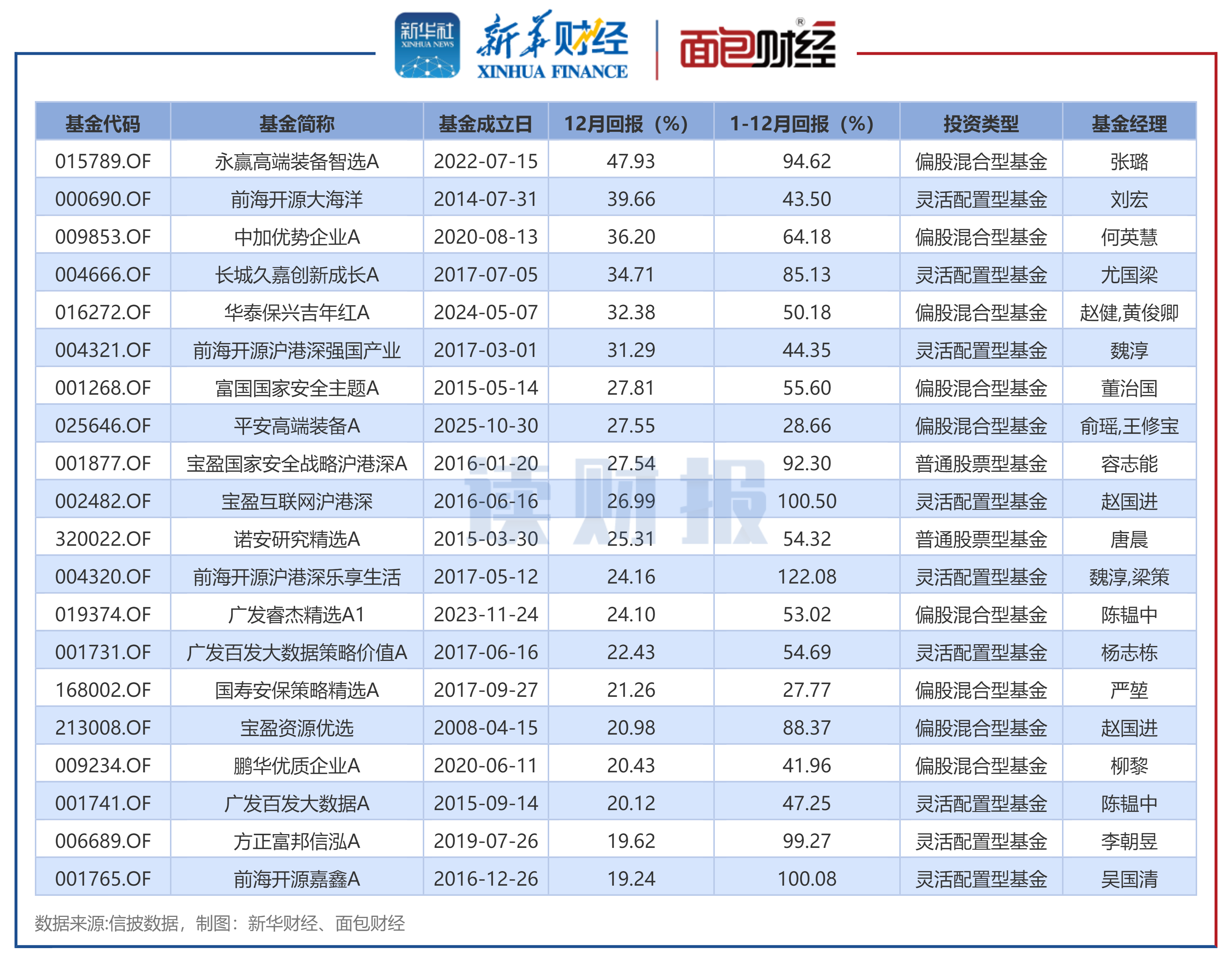
【读财报】主动权益基金12月表现:6只产品净值上涨超30% 永赢基金、前海开源基金等旗下产品表现靠前
Zhong Guo Jin Rong Xin Xi Wang· 2026-01-14 23:36
Core Insights - The average return of over 4,600 active equity funds established before December 2025 was 3.18%, with a median return of 2.92%, outperforming the CSI 300 and Shanghai Composite Index returns of 2.28% and 2.06%, respectively [1] - In December, the performance gap between the best and worst performing funds exceeded 60 percentage points, with 18 funds achieving returns over 20% [1] - Notable funds with significant returns included those from Yongying Fund and Qianhai Kaiyuan Fund, while funds from Baoying Fund and Huafu Fund saw declines exceeding 10% [1][6] Fund Performance - The top-performing fund, Yongying High-end Equipment Select A, achieved a net value increase of 47.93% in December 2025, leading among active equity funds [3][4] - The fund's strategy focuses on high-value, high-barrier investments in the satellite internet industry, with significant holdings in China Satellite and Aerospace Electronics, which saw stock price increases over 90% in December [4] - In total, 18 funds recorded returns exceeding 20% in December, with 6 funds achieving over 30% [1][6] Underperforming Funds - Baoying Fund and Huafu Fund had over 50 active equity funds with net value declines exceeding 10% in December, primarily in the medical and pharmaceutical sectors [6][10] - Baoying Innovation Medical A, established in June 2025, reported a net value drop of 14.14% in December, with a cumulative decline of approximately 11.14% since inception [10]
最高447%!这些药企净利润翻倍,药明康德、康辰药业…
Xin Lang Cai Jing· 2026-01-14 11:44
Group 1 - The pharmaceutical industry in A-shares is showing a recovery trend, with some companies exceeding performance expectations for 2025 [1][14] - WuXi AppTec expects revenue of approximately 45.456 billion yuan for 2025, a year-on-year increase of about 15.84%, and a net profit of approximately 19.151 billion yuan, a year-on-year increase of about 102.65% [1][15] - WuXi AppTec's performance is driven by stable growth in its main business and the sale of equity in three companies, generating nearly 5.6 billion yuan in revenue [1][15] Group 2 - WoHua Pharmaceutical anticipates a net profit between 80 million and 115 million yuan for 2025, representing a year-on-year increase of 119.76% to 215.90% [2][16] - The growth in WoHua's performance is attributed to the price-volume trade-off trend after the entry of its product into centralized procurement and the extension to outpatient markets [3][17] Group 3 - Kangchen Pharmaceutical expects a net profit between 14.5 million and 17.5 million yuan for 2025, a year-on-year increase of 243% to 315% [4][19] - The company attributes its performance to the absence of goodwill impairment provisions for 2025, following a decline in revenue from a previously acquired business [5][19] Group 4 - Baiaosaitu is projected to achieve a net profit growth of 249.5% in 2025, with expected revenue of 1.31 billion yuan, a year-on-year increase of 37.75% [6][20] - The company began to achieve commercial profitability in 2024, successfully turning around its financial performance [6][20] Group 5 - The Chinese pharmaceutical market is expected to see significant developments in 2026, with a focus on innovative drug research and business development (BD) [7][21] - China has become the second-largest market for innovative drug launches globally, with leading pharmaceutical companies showing R&D intensities close to global averages [7][21] Group 6 - The total value of innovative drug licensing transactions from China is expected to exceed 130 billion USD in 2025, indicating strong recognition of Chinese pipelines by overseas buyers [9][23] - The CXO service industry is recovering, with predictions that the market size will approach 100 billion USD in 2026, driven by increased demand from innovative drug development [9][23] Group 7 - The AI pharmaceutical sector is becoming increasingly active, with significant transactions and the listing of AI companies on stock exchanges [11][25] - The global market for AI solutions in healthcare is projected to grow from 13.7 billion USD in 2022 to 155.3 billion USD by 2030, highlighting the potential for companies in this space [13][27]

医疗AI加速十万亿级医药市场重构,科创医药ETF嘉实(588700)一键布局AI医药发展机遇
Sou Hu Cai Jing· 2026-01-14 06:13
Group 1 - The Shanghai Stock Exchange Sci-Tech Innovation Board Biopharmaceutical Index decreased by 1.00% as of January 14, 2026, with Tianzhihang leading the gain at 18.97% and Rongchang Biopharmaceuticals experiencing the largest drop at 9.83% [1] - Eight departments jointly issued the "Implementation Opinions on the Special Action of 'Artificial Intelligence + Manufacturing'," emphasizing the promotion of intelligent equipment iteration and supporting AI applications in high-end medical equipment and telemedicine [1] - Nvidia and Eli Lilly announced the establishment of an AI joint laboratory, planning to invest up to $1 billion over the next five years to accelerate drug development, indicating increased investment from leading overseas companies in domestic related fields [1] Group 2 - CITIC Securities reported that the medical AI sector is expected to accelerate the restructuring of the trillion-yuan pharmaceutical market, with a fundamental change in the payment logic for AI medical services anticipated in 2026 [2] - The top ten weighted stocks in the Shanghai Stock Exchange Sci-Tech Innovation Board Biopharmaceutical Index accounted for 48.85% as of December 31, 2025, including companies like United Imaging Healthcare and BeiGene [2] Group 3 - The Jiashi Sci-Tech Medical ETF closely tracks the Shanghai Stock Exchange Sci-Tech Innovation Board Biopharmaceutical Index, providing an opportunity for investors to easily access the biopharmaceutical sector [3]
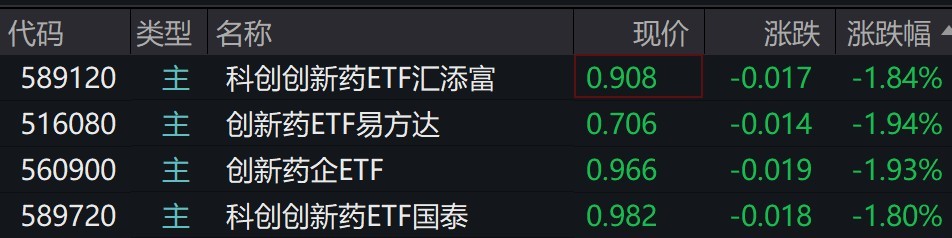
创新药概念股走低,多只创新药相关ETF跌近2%
Mei Ri Jing Ji Xin Wen· 2026-01-14 05:42
Core Viewpoint - The innovative drug sector is experiencing a decline, with several key stocks and ETFs showing significant drops in value, indicating a potential shift in market sentiment towards this industry [1][2]. Group 1: Stock Performance - Rongchang Biopharmaceutical has seen a decline of over 10% in its stock price [1]. - Other companies such as Baile Tianheng, Xinlitai, and Maiwei Biopharmaceutical-U have also dropped more than 3% [1]. - Multiple innovative drug-related ETFs have decreased nearly 2% in value [1]. Group 2: Market Analysis - Some brokerages suggest that core assets in the innovative drug sector will continue to appreciate, highlighting emerging opportunities in small nucleic acids and in vivo CAR technologies [2]. - The long-term trend of innovative drug business development (BD) is seen as a pathway for Chinese innovative drug capabilities to gain recognition on the global stage [2]. - Core assets that have been licensed to multinational corporations (MNCs) are expected to realize their value as clinical progress continues [2]. - Future focus should remain on cutting-edge technology platforms and closely monitor advancements in clinical data [2].


科创综指ETF鹏华(589680)涨超3.5%,半导体设备与AI应用走强共振
Xin Lang Cai Jing· 2026-01-14 03:52
Group 1 - Semiconductor equipment stocks showed strong gains in early trading, driven by a recovery in domestic wafer fab capacity utilization and a strong willingness to expand production, indicating a "super cycle" phase in the global memory chip industry driven by AI [1] - The AI application sector is gaining strength again, with companies like Alibaba expected to release new generations of large models, indicating continuous catalysis in the AI industry and broad commercial development potential [1] - The STAR Market Index and its constituent stocks saw significant increases, likely driven by accelerated domestic semiconductor equipment production and multiple benefits from the AI industry chain [1] Group 2 - The STAR Market is clearly positioned to primarily serve innovative enterprises in key areas such as semiconductors, biomedicine, and high-end equipment, representing an investment in China's technological breakthroughs and domestic substitution frontiers [2] - In the context of changing external environments, technological self-sufficiency has become a top priority for national development, particularly in AI chips and semiconductor equipment, accelerating the domestic production process and providing significant growth opportunities for STAR Market companies [2] Group 3 - Related products include the STAR Market Index ETF Penghua (589680) and linked funds (Class A 023757, Class C 023758, Class I 024141) [3] - Related individual stocks include Cambricon-U (688256), Haiguang Information (688041), SMIC (688981), Zhongwei Company (688012), Kingsoft Office (688111), Lanke Technology (688008), Baile Tianheng (688506), United Imaging Healthcare (688271), Yingshi Innovation (688775), and Tuojing Technology (688072) [3]
科创板收盘播报:科创50指数跌2.8% 生物制药股表现活跃
Xin Hua Cai Jing· 2026-01-13 07:38
Core Viewpoint - The Sci-Tech Innovation 50 Index experienced a significant decline on January 13, closing at 1469.57 points, down 2.8%, with a trading volume of approximately 104.4 billion yuan [1]. Group 1: Index Performance - The Sci-Tech Innovation Composite Index also fell by 2.66%, closing at 1806.02 points, with a total trading volume of about 375.2 billion yuan [1]. - The average decline for the 600 stocks on the Sci-Tech Board was 1.79%, with an average turnover rate of 4.95% and an average volatility of 6.22% [1]. Group 2: Stock Performance - Rongchang Biopharmaceuticals reached the daily limit, showing the highest increase [2]. - Aerospace Hanyu experienced the largest drop, falling by 18.33% [2]. Group 3: Trading Volume - Cambrian's trading volume was 14.47 billion yuan, ranking first [3]. - ST Pava had the lowest trading volume at 867,000 yuan [3]. Group 4: Turnover Rate - Jianxin Superconducting had the highest turnover rate at 25.97% [4]. - Baile Tianheng recorded the lowest turnover rate at 0.26% [4].