
东风股份

Search documents
以前看不上的面包车,现在是中产最爱的“宝宝巴士”
Hu Xiu· 2025-09-01 13:17
Core Insights - The rise of the "baby bus" phenomenon reflects a shift in consumer preferences towards family-oriented vehicles, emphasizing comfort and space over traditional notions of luxury and speed [40][50][51] - The demand for seven-seat MPVs has surged due to the two-child and three-child policies, leading to a significant increase in family-oriented vehicle purchases [30][31][33] Group 1: Market Trends - The popularity of seven-seat MPVs, referred to as "baby buses," has evolved from a niche market to a mainstream choice among middle-class families [50][51] - Sales data indicates that in July, the top five MPVs were all new energy vehicles, collectively selling over 35,000 units, which accounted for more than 40% of the market share [41][42] - The price range of 300,000 to 400,000 yuan has become the most attractive segment for consumers, balancing comfort, quality, and practicality [42] Group 2: Consumer Behavior - Middle-class consumers are increasingly prioritizing family comfort and safety in their vehicle choices, viewing cars as tools for enhancing family life rather than mere status symbols [50][51] - The concept of the "baby bus" has transcended its original purpose of transporting children, becoming a versatile space for family activities and social gatherings [48][49] - Consumers are willing to invest in features that enhance the family experience, such as spacious interiors and advanced safety technologies, rather than focusing solely on performance metrics [50][51] Group 3: Vehicle Features and Preferences - New energy MPVs are favored for their practicality, with features like hybrid capabilities and spacious interiors becoming essential for family use [31][41] - The design and configuration of these vehicles have evolved to include flexible seating arrangements and amenities that cater to both children and adults, enhancing the overall travel experience [34][36] - The shift towards family-oriented vehicles has led to a redefinition of luxury in the automotive market, where comfort and functionality take precedence over traditional luxury features [50][51]

20万的满血华为纯电SUV来了
Hua Er Jie Jian Wen· 2025-09-01 12:05
Core Viewpoint - Huawei's technological empowerment is becoming a key strategy for automakers to break through in a competitive market, exemplified by the launch of the new Lantu Zhiyin electric SUV at a starting price of 202,900 yuan, featuring Huawei's advanced intelligent driving system [1][2]. Group 1: Product Launch and Features - The Lantu Zhiyin offers three configurations with a price range of 202,900 to 242,900 yuan, emphasizing its intelligent driving capabilities, including 29 sensors such as a 192-line lidar and three 4D millimeter-wave radars [2]. - The vehicle incorporates 5C ultra-fast charging technology, achieving a peak charging power of 440 kW, allowing for over 400 km of range to be added in just 10 minutes, addressing user range anxiety [2]. - Lantu Zhiyin aims to challenge industry norms by emphasizing "high configuration from the start," positioning high-end features as standard rather than optional upgrades [2]. Group 2: Market Positioning and Strategy - The launch of Lantu Zhiyin is a critical move for Lantu to seek market breakthroughs, targeting the highly competitive 200,000 to 250,000 yuan segment of family-oriented electric SUVs [3]. - The combination of "Huawei technology" and "cost performance" is expected to create a potential "hit product," significantly boosting sales and providing a stronger performance report for Lantu's planned Hong Kong IPO [3]. - However, the aggressive pricing strategy may compress profit margins per vehicle, testing Lantu's cost control and supply chain management capabilities, while facing direct competition from established models like Tesla Model Y and Xpeng G6 [3].
天山电子(301379) - 2025年09月01日投资者关系活动记录表
2025-09-01 10:22
Group 1: Financial Performance - In the first half of 2025, the company achieved operating revenue of 856 million yuan, a year-on-year increase of 29.66%, surpassing the growth rate for the entire year of 2024 [2] - Net profit increased by 15.46% year-on-year, while the net profit after deducting non-recurring gains and losses grew by 29.66% [2] - The slower growth in net profit compared to revenue is attributed to increased expenses and reduced government subsidies and investment income [2] Group 2: Business Segments - The automotive business showed rapid revenue growth in the first half of 2025, primarily focusing on dashboard products, with key clients including BYD, Dongfeng, Wuling, and Changan [3] - The complex module business, categorized under material sales, has begun small-scale supply, marking a breakthrough from zero to one compared to 2024 [4] - The company is expanding its complex module production lines, with new facilities under construction to meet future capacity needs [4] Group 3: Product and Market Strategy - The company maintains a stable gross margin around 20%, supported by a strong customer base, efficient production, product differentiation, and supply chain advantages [6] - The company is extending its product line from display modules to storage modules, focusing on enterprise-level SSDs and other storage solutions, with ongoing development of its first enterprise SSD hybrid disk [8] - The dual-base strategy involves the Tanwei base for monochrome LCD modules and the Lingshan base for larger TFT automotive and complex modules, enhancing production capacity and product upgrades [7]
“大象转身”,自主大集团打响反击战
Zhong Guo Qi Che Bao Wang· 2025-09-01 10:04
Core Viewpoint - The 28th Chengdu International Auto Show highlights the significant progress of domestic automotive groups in the new energy sector, showcasing their collaboration with technology companies like Huawei and their internal reforms to enhance competitiveness in the rapidly evolving market [2][8]. Group 1: Growth in New Energy Sector - From January to July 2023, the top 15 automotive groups in China sold a total of 7.82 million new energy vehicles (NEVs), marking a 41.1% year-on-year increase and accounting for 95.1% of total NEV sales [3]. - China FAW's NEV sales reached 28,500 units in July, a staggering increase of 129.03% year-on-year, contributing significantly to overall growth [4]. - SAIC Motor's NEV sales for the first seven months of 2023 reached 763,600 units, up 43.49% year-on-year, positioning it third in sales after BYD and Geely [5]. Group 2: Strategic Collaborations - Major automotive groups are increasingly collaborating with technology firms, particularly Huawei, to enhance their product offerings and market competitiveness [8][9]. - SAIC and Huawei signed a deep cooperation agreement to develop new energy smart vehicles, leading to the launch of the "Shangjie" brand [9]. - FAW has also partnered with the new energy vehicle startup Leap Motor, indicating a trend of strategic alliances within the industry [9]. Group 3: Internal Restructuring - Automotive groups are undergoing internal restructuring to optimize resources and enhance efficiency in their new energy vehicle segments [11][12]. - Dongfeng Motor has consolidated its brands into Dongfeng Yipai Technology, focusing on new energy products and streamlining operations [12]. - Changan Automobile has improved resource integration efficiency significantly after its restructuring, enhancing decision-making and capital allocation [13]. Group 4: International Expansion - From January to July 2023, China's NEV exports reached 1.308 million units, reflecting an 84.6% year-on-year increase, as companies look to expand into overseas markets [15]. - Changan has launched its "Haina Baichuan" global strategy, aiming to export various models to over 90 countries by 2025 [15]. - Dongfeng Yipai Technology plans to introduce over 30 overseas models by 2027, indicating a strong focus on international market penetration [16].





雪域高原 车轮滚滚
Zhong Guo Qi Che Bao Wang· 2025-09-01 09:49
Core Insights - The 60th anniversary of the Tibet Autonomous Region highlights significant economic and infrastructural development under the leadership of the Communist Party of China, transforming from a state of poverty to prosperity [3][12] - The development of transportation infrastructure, particularly roads and electric vehicles, has been pivotal in enhancing connectivity and promoting economic growth in Tibet [4][5][9] Transportation Infrastructure - The total length of roads in Tibet is projected to reach 124,900 kilometers by the end of 2024, with rural roads accounting for 94,800 kilometers [4] - As of 2024, the number of motor vehicles in Tibet exceeds 1.067 million, with over 1.008 million drivers, indicating a growing automotive market [4] - The promotion of electric vehicles is supported by government subsidies and initiatives, contributing to an increase in the number of electric cars on the roads [4][5] Electric Vehicle Development - The introduction of electric taxis and buses in cities like Lhasa is part of a broader initiative to establish a green transportation system [5][6] - The construction of charging infrastructure is accelerating, with plans to establish a balanced and advanced charging network by the end of the year [6] Lithium Resource Development - Tibet holds over 20 million tons of lithium resources, accounting for more than 50% of China's total, presenting significant opportunities for the domestic lithium battery industry [7] - The Zabuye Salt Lake lithium project is expected to produce 10,000 tons of battery-grade lithium carbonate annually, with projections of reaching 270,000 tons by 2030 [7] Automotive Industry Growth - The establishment of local automotive manufacturing projects, such as the Dongfeng Motor collaboration, signifies the growth of the automotive industry in Tibet [8] - Commercial vehicles are crucial for logistics in Tibet, with a significant portion of goods transported by road, especially in areas lacking railway coverage [9] Economic Impact - The construction of large infrastructure projects, such as the world's largest hydropower station, is anticipated to boost demand for heavy-duty vehicles and stimulate the local economy [10] - The integration of smart technologies, including autonomous vehicles, is enhancing operational efficiency in high-altitude environments [11][12] Economic Performance - Tibet's GDP surpassed 1 trillion yuan in 2015 and is projected to exceed 3 trillion yuan in 2023, reflecting rapid economic growth [12]


英搏尔:2025年上半年公司业绩的增长主要集中在前五大客户
Zheng Quan Ri Bao· 2025-09-01 09:43
Core Viewpoint - The company, Yingboer, announced on September 1 that its performance growth in the first half of 2025 will be primarily driven by its top five clients, including major automotive groups such as SAIC, Geely, and Dongfeng [2] Group 1 - The core clients, including SAIC, Geely, and Dongfeng, are expected to significantly contribute to the company's revenue growth [2] - The company has achieved breakthrough growth in its export business, particularly with Southeast Asian electric vehicle clients, indicating a substantial increase in delivery scale [2] - The company is accelerating its penetration into diverse scenarios such as eVTOL and joint modules, which solidifies its multi-dimensional growth foundation [2]
东风股份上半年营收50.31亿元,销售汽车6.89万辆
Ju Chao Zi Xun· 2025-09-01 09:21
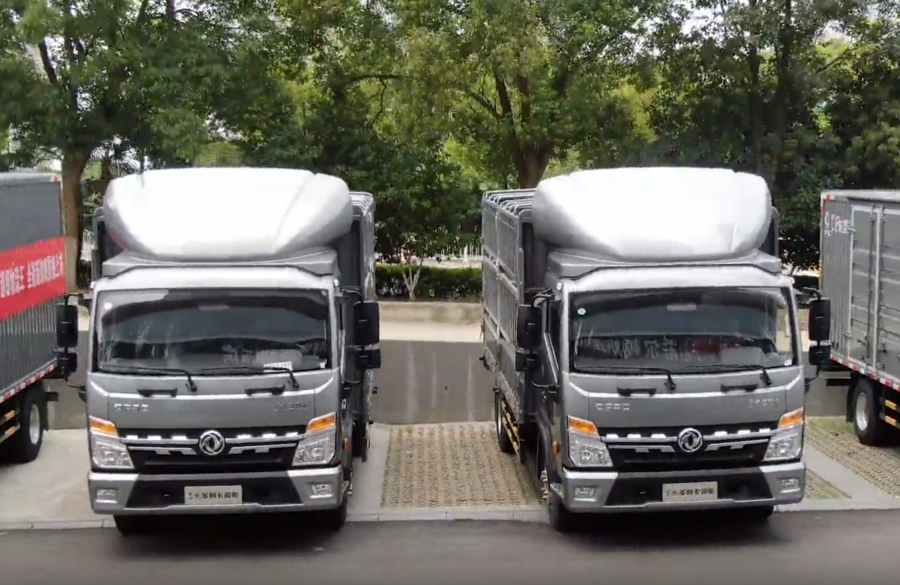
Financial Performance - In the first half of the year, the company achieved operating revenue of 5.03 billion yuan, a decrease of 13.22% compared to the same period last year [1][3] - The net profit attributable to shareholders was 97.21 million yuan, an increase of 48.66% year-on-year [1][3] - The total profit amounted to 919.10 million yuan, reflecting a growth of 21.94% compared to the previous year [1][3] - The net cash flow from operating activities was -576.97 million yuan, indicating a significant decline [1] - The net assets attributable to shareholders at the end of the reporting period were 8.36 billion yuan, up 1.05% from the end of the previous year [1] Sales Performance - The company sold 68,900 vehicles during the reporting period, representing an 18% decline year-on-year [2] - Domestic sales accounted for 61,800 units, down 13% year-on-year, primarily due to adjustments in the new energy network and unmet sales expectations for new products [2] - Exports totaled 7,100 units, a significant drop of 45.7%, mainly due to reduced inventory risks among overseas dealers and declining sales in key markets [2] Strategic Initiatives - The company integrated domestic fuel and new energy marketing resources to enhance resource and management efficiency [2] - Focused on terminal retail and strengthened regional marketing management to ensure timely delivery of marketing orders [2] - Enhanced risk control in the export market and concentrated on cultivating key overseas markets and product layout for exports [2]
曙光股份H1营收8.66亿元,同比增长32.64%
Ju Chao Zi Xun· 2025-09-01 09:20
Core Viewpoint - The company reported a significant increase in revenue but continued to face net losses, indicating challenges in profitability despite growth in sales volume for certain products [3][4]. Financial Performance - The company achieved operating revenue of 866.67 million yuan in the first half of 2025, representing a year-on-year increase of 32.64% [3]. - The net profit attributable to shareholders was -145.24 million yuan, a decrease compared to -136.64 million yuan in the same period last year [3]. - The net cash flow from operating activities was 17.44 million yuan, a recovery from -33.37 million yuan in the previous year [3]. - The net assets attributable to shareholders decreased by 10.62% to 1.20 billion yuan compared to the end of the previous year [3]. Sales Performance - The company sold 726 complete vehicles in the first half of 2025, a decline of 43.06% year-on-year [3]. - The sales of non-complete passenger vehicles increased by 400 units, while the sales of axles rose by 84.84% to 703,500 units [3]. Product Development and Market Strategy - The company continued to strengthen its sales in traditional markets with major clients like GAC Group, Dongfeng Motor, and Changan Automobile, while also exploring new markets with Geely and Chery [2]. - Focus on the new energy vehicle market, collaborating with companies like Xpeng Motors and Li Auto to boost axle sales [2]. - The company enhanced its vehicle product development, introducing new technologies and materials, and launched several new vehicle models including the "Sweet Berry V8" bus and various types of pickups [2]. Future Outlook - The company plans to maintain its operational strategy of "focus, breakthrough, innovation, and efficiency," targeting both domestic and international markets while enhancing product quality and competitiveness [4].

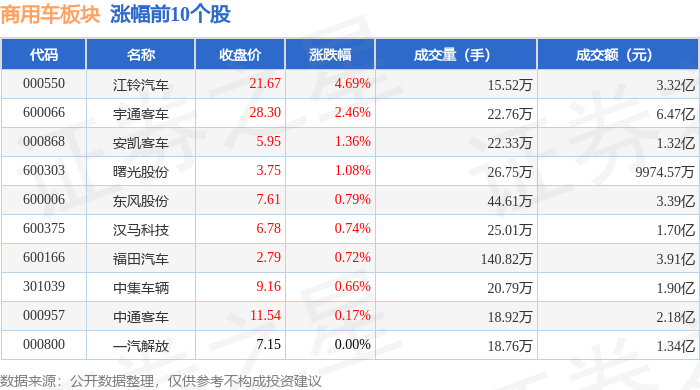
商用车板块9月1日涨0.54%,江铃汽车领涨,主力资金净流出2.6亿元
Zheng Xing Xing Ye Ri Bao· 2025-09-01 08:39
Group 1 - The commercial vehicle sector increased by 0.54% on September 1, with Jiangling Motors leading the gains [1] - The Shanghai Composite Index closed at 3875.53, up 0.46%, while the Shenzhen Component Index closed at 12828.95, up 1.05% [1] - Jiangling Motors' stock price rose by 4.69% to 21.67, with a trading volume of 155,200 shares and a transaction value of 332 million yuan [1] Group 2 - The commercial vehicle sector experienced a net outflow of 260 million yuan from institutional investors, while retail investors saw a net inflow of 154 million yuan [2] - Yutong Bus had a net inflow of 48.89 million yuan from institutional investors, but a net outflow of 6.81 million yuan from speculative funds [3] - Foton Motor saw a net inflow of 8.75 million yuan from institutional investors, while retail investors had a net outflow of 12.02 million yuan [3]


“易中天”强势上攻!先导智能领涨超15%,20CM高弹性——双创龙头ETF(588330)盘中拉升2.7%刷新阶段高点!
Xin Lang Cai Jing· 2025-09-01 07:40
Group 1 - The core viewpoint of the news highlights the significant rise in the ChiNext Index and the STAR Market Index, with the Double Innovation Leader ETF (588330) reaching its highest point since December 2021, driven by positive developments in the solid-state battery sector [1] - The Double Innovation Leader ETF (588330) includes 50 constituent stocks from the ChiNext and STAR markets, featuring major players like Ningde Times and other leading companies in the hard technology sector [1] - Recent positive news for the solid-state battery sector includes the launch of the world's first semi-solid battery electric vehicle, the BMW i7 road testing with large solid-state batteries, and a collaboration between Huazhong University of Science and Technology and Dongfeng Motor for research projects in solid-state battery technology [1] Group 2 - The technology sector is experiencing a surge in trading activity, with TMT (Technology, Media, and Telecommunications) accounting for 40.8% of total trading volume as of August 28, indicating a potential upward cycle for the tech sector [2] - Artificial intelligence is identified as a core growth driver for the technology industry, with domestic models like DeepSeek contributing to cost reduction and efficiency, which may accelerate the growth of the A-share market [2] - The Double Innovation Leader ETF (588330) is characterized by cross-market diversification, focusing on strategic emerging industries, and offers a low-threshold investment opportunity to capture the tech market's potential [2]
