奇瑞汽车

Search documents
【联合发布】一周新车快讯(2025年8月16日-8月22日)
乘联分会· 2025-08-22 13:23
Core Viewpoint - The article provides an overview of new vehicle models set to launch in August 2025, highlighting specifications, market segments, and pricing strategies for various manufacturers in the automotive industry [2][5][13]. Group 1: Vehicle Launches - Geely Auto is set to launch the Panda Karting on August 15, 2025, targeting the A00 HB segment with a price of 50,900 CNY and a range of 210 km [8]. - Chery Auto will introduce the Fengyun X3 and Fengyun X3 PLUS on August 16, 2025, with prices ranging from 89,900 to 139,900 CNY and electric ranges of 401 to 520 km [16][24]. - Dongfeng Passenger Vehicle will launch the Mengshi M817 on August 17, 2025, in the D SUV segment, priced between 319,900 and 349,900 CNY [32]. - Tesla China will release the Model Y L on August 19, 2025, priced at 339,000 CNY with a range of 751 km [56]. - Great Wall Motors will launch the Haval Menglong on August 19, 2025, with prices from 173,800 to 208,800 CNY and a range of 105 to 200 km [61]. Group 2: Specifications and Features - The Geely Panda Karting features a pure electric engine with a power output of 30 kW and a torque of 110 N·m, equipped with a 17.03 kWh battery [8]. - The Chery Fengyun X3 has a power output of 185 kW and a torque of 300 N·m, with battery capacities of 50.79 kWh and 68.36 kWh [16]. - The Dongfeng Mengshi M817 is powered by a 1.5T plug-in hybrid engine, offering a power output of 145 kW and a torque of 290 N·m [32]. - Tesla's Model Y L boasts a power output of 340 kW and is equipped with an 82 kWh battery [56]. - The Haval Menglong features a 1.5T plug-in hybrid engine with a power output of 115 kW and an electric motor output of 220 kW [61]. Group 3: Market Segmentation - The new models are categorized into various segments, including A00 HB, A SUV, C SUV, and D SUV, indicating a diverse range of offerings to cater to different consumer preferences [2][16][32]. - Pricing strategies vary significantly across manufacturers, with entry-level models starting around 39,900 CNY and premium models reaching up to 349,900 CNY [8][32][56].





氪星晚报 | 东方甄选:2025财年总营收43.92亿元;阿里官网重新归纳四大业务板块;OpenAI首席人事官将离职,转投AI普及事业
3 6 Ke· 2025-08-22 12:51
Group 1: Company Updates - Dongfang Zhenxuan announced a total revenue of 4.392 billion yuan for the fiscal year 2025, with a profit attributable to owners of 5.735 million yuan [1] - Alibaba has restructured its business segments from six major groups to four: Alibaba China E-commerce Group, Alibaba International Digital Commerce Group, Cloud Intelligence Group, and all other businesses [2] - Sunyu Optical Technology signed a memorandum of understanding with GoerTek and GoerTek Optical to negotiate a final agreement regarding equity subscription, with Ningbo Aolai expected to hold approximately 33.33% of GoerTek Optical post-subscription [2] Group 2: Market Trends - JD.com is re-entering the community group buying sector with multiple new stores launched in Beijing, and has applied for several related trademarks [3] - Li Ning's CEO expressed awareness of the pressure from reduced offline foot traffic, while maintaining a target gross margin of 50% and emphasizing the absence of inventory pressure [5][6] - NIO's founder stated that the pricing strategy for their new ES8 model is aligned with the average price range of luxury brands like Mercedes-Benz, BMW, and Audi [7] Group 3: Financing Activities - Ying Shi Bio completed over 34 million USD in Series C financing, led by Rehabilitation Capital, with participation from other investors [8] - Montong Intelligent secured several million yuan in Pre-A round financing, with funds allocated for product development and team expansion [9] Group 4: New Products and Technologies - Lantu Motors launched its Lanhai Intelligent Super Hybrid Technology, integrating advanced battery and charging technologies [10] - Tencent Cloud released the DeepSeek-V3.1 model API, allowing enterprises and developers to access improved services [11] Group 5: Industry Insights - AI data centers are expected to adopt liquid cooling technology at a penetration rate exceeding 30% by 2025, driven by the release of NVIDIA's GB200 NVL72 servers [12][13] - CITIC Construction's report indicates that the consumption peak season is approaching, with strong fundamental support for energy metal prices, as demand begins to recover [14] Group 6: Noteworthy News - Long-term funds have made significant investments in over 100 A-shares, with social security and pension funds entering the top ten shareholders of approximately 160 listed companies [15] - Rare earth prices have surged, with an average increase of over 100,000 yuan per ton since August, leading to a performance turnaround in the rare earth sector [15]



【2025年半年报点评/ 松原安全】2025Q2业绩符合预期,自主被动安全龙头持续成长
东吴汽车黄细里团队· 2025-08-22 12:30
Core Viewpoint - The company reported strong financial performance for the first half of 2025, with significant year-on-year growth in both revenue and net profit, indicating a positive outlook for the business and potential investment opportunities [2][3]. Financial Performance - In the first half of 2025, the company achieved revenue of 1.148 billion yuan, a year-on-year increase of 42.87%, and a net profit attributable to shareholders of 161 million yuan, up 30.85% [2]. - For Q2 2025, the company reported revenue of 612 million yuan, reflecting a year-on-year growth of 40.77% and a quarter-on-quarter increase of 14.30%. The net profit for the same quarter was 88 million yuan, with a year-on-year growth of 41.03% and a quarter-on-quarter increase of 19.52% [2][3]. Margin and Cost Management - The gross margin for Q2 2025 improved significantly, reaching 29.15%, an increase of 1.21 percentage points from the previous quarter, attributed to economies of scale and ongoing cost reduction efforts [3]. - The company’s expense ratio for Q2 2025 was 11.45%, down 2.91 percentage points from the previous quarter, mainly due to reductions in management and R&D expense ratios [3]. Business Segments - The safety belt business is expected to see both volume and price increases, driven by competitive advantages in technology, cost, and service responsiveness, with a focus on high-performance safety belts [4][6]. - The steering wheel and airbag segments are identified as a second growth curve for the company, with production having commenced in 2021 and gaining traction with major clients [4][6]. Profit Forecast and Investment Rating - The company maintains profit forecasts for 2025-2027, estimating net profits of 392 million yuan, 521 million yuan, and 699 million yuan respectively, with corresponding EPS of 1.24 yuan, 1.65 yuan, and 2.20 yuan [7]. - The projected P/E ratios for the same period are 25.83x, 19.44x, and 14.51x, with a "buy" rating maintained [7].

易明医药实控人变更
Guo Ji Jin Rong Bao· 2025-08-22 12:20
Core Viewpoint - The recent share transfer of 43.86 million shares (23% of total shares) from Gao Fan to Beijing Fuhai marks a significant change in control for Yiming Pharmaceutical, with the new controller being internet entrepreneur Yao Jinbo, founder of 58.com [1][3] Company Summary - Yiming Pharmaceutical, established in 2007, focuses on drug wholesale and specializes in treatments for chronic diseases such as diabetes and cardiovascular diseases, with key products included in the national medical insurance directory [7] - The company went public in 2016 and has seen its core product, Miglitol tablets, maintain a leading position in the market for type 2 diabetes treatments in China [7] Industry Trends - The healthcare sector is experiencing a wave of cross-industry mergers and acquisitions, with companies from various sectors such as home appliances, technology, and logistics increasingly investing in healthcare [4] - Notable examples include Midea establishing a healthcare division, Huawei forming a medical team, and various companies exploring smart healthcare solutions [4] New Management Impact - Yao Jinbo's entry into Yiming Pharmaceutical could leverage the extensive service network of 58.com to enhance the company's market penetration in chronic disease management [5] - The integration of 58.com's logistics capabilities may address Yiming Pharmaceutical's cold chain and storage cost challenges [5] - Yiming Pharmaceutical's reliance on traditional offline marketing may be transformed through Yao's internet-driven strategies, aligning with the industry's shift towards digitalization [5] Performance Commitments - The previous controlling shareholder, Gao Fan, has made stringent performance commitments for the company, requiring a minimum annual net profit of 30 million yuan and revenue of at least 600 million yuan from 2025 to 2027 [6][8] - Concerns exist regarding the company's ability to meet these commitments, especially given recent declines in revenue and net profit [8]
激光雷达VS纯视觉 两年后迎来终极对决?
Zhong Guo Qi Che Bao Wang· 2025-08-22 10:32
Core Viewpoint - The debate between pure vision and LiDAR technology for autonomous driving continues, with no clear resolution expected by 2027, as both technologies gain supporters and evolve in capabilities and costs [2][5][10] Group 1: Technology Adoption - Both pure vision and LiDAR technologies have gained significant traction, with various automakers adopting either approach. New entrants and established companies are increasingly choosing sides, with some switching from LiDAR to pure vision [2][3] - Recent models like the Tank 500 and Li Auto i8 have adopted LiDAR, while companies like Xiaomi and Audi are also integrating LiDAR into their vehicles [2][3] - Conversely, companies like Xiaopeng and NIO are firmly committed to pure vision technology, with Xiaopeng's models like the MONA M03 and the new P7 exclusively using this approach [4][5] Group 2: Market Trends - The market for LiDAR-equipped vehicles is expanding, with significant growth in the number of LiDAR units delivered in China, reaching 1.0439 million units in the first half of the year, a year-on-year increase of 83.14% [3] - LiDAR is no longer limited to high-end models, as companies like Leap Motor and Changan are introducing LiDAR-equipped versions in the lower price segments [3] Group 3: Cost and Safety Debate - The ongoing debate between the two technologies centers on cost and safety. Pure vision systems are seen as more cost-effective and easier to scale, while LiDAR is favored for its superior performance in extreme conditions [5][6] - The cost of LiDAR has significantly decreased, with prices for L2-level LiDAR now around $200, down from previous prices of $20,000 to $30,000, representing a reduction of over 99.5% [5][9] Group 4: Future Outlook - Experts suggest that both technologies will likely coexist, with pure vision being sufficient for urban commuting and LiDAR providing safety redundancy in complex scenarios [10] - The advancement of computing power and algorithms is expected to enhance the capabilities of pure vision systems, potentially making them the preferred choice for many automakers [8][9]


近年新能源汽车补贴情况公布:额度逐步缩减、行业领头羊受益
Guan Cha Zhe Wang· 2025-08-22 07:38
Core Insights - The transition of subsidy allocation for new energy vehicles in China has shifted from state-owned enterprises to leading automotive manufacturers and emerging startups [1][4] - The total subsidy amount for the 2016-2020 period reached 1.655 billion yuan, with Beijing New Energy receiving the highest share of 556 million yuan [1][3] - For the 2021-2022 period, a total of 168 million yuan in subsidies will be pre-allocated, significantly lower than the peak amounts in previous years [3][4] Subsidy Distribution - The top recipients of the 2016-2020 subsidies included Beijing New Energy (556 million yuan), Chery Automobile (34.66 million yuan), Dongfeng Motor (25.59 million yuan), and Geely Automobile (16.43 million yuan) [1][3] - BYD received only 15.74 million yuan, while Tesla, which applied for subsidies for the first time in 2020, received 3.59 million yuan [3][4] Market Dynamics - The total number of new energy vehicles reported by domestic manufacturers during 2016-2020 was approximately 75,800, with a verified promotion number of 54,100, resulting in a reduction of 21,700 vehicles [3] - The 2021-2022 subsidies primarily favored traditional automakers, with companies like FAW-Volkswagen and SAIC Volkswagen receiving subsidies in the 1 million yuan range [4] Future Outlook - Experts suggest that the changes in subsidy distribution indicate a transition towards a more diversified market for new energy vehicles in China, favoring industry leaders and new entrants [4] - The subsidy policy for 2023-2024 has not yet been announced, but it is anticipated that subsidies will gradually decrease, with a potential phase-out by around 2027, contingent on new energy vehicle sales maintaining or exceeding 50% of total vehicle sales [4] Industry Performance - Data from the China Association of Automobile Manufacturers indicates that from January to July this year, the production and sales of new energy vehicles reached 8.232 million and 8.22 million units, respectively, representing year-on-year growth of 39.2% and 38.5%, with new energy vehicle sales accounting for 45% of total vehicle sales [5]

文远知行发布一段式端到端辅助驾驶方案;华晨宝马大东工厂产量突破350万辆
Mei Ri Jing Ji Xin Wen· 2025-08-22 00:34
Group 1: WeRide and Bosch Collaboration - WeRide has launched an end-to-end assisted driving solution called "WePilot AiDrive" in collaboration with Bosch, marking a significant advancement in L2+ level assisted driving technology [1] - The solution has completed core functionality validation and is expected to achieve mass production within 2025, contributing to the global assisted driving industry's transition towards smarter and more efficient applications [1] - This collaboration enhances expectations for technological synergy within the autonomous driving supply chain, benefiting smart driving solution providers and high-precision sensor sectors [1] Group 2: Chery Automobile's New Company - Chery Automobile has established a new sales service company, Hefei Yingzhida Automobile Sales Service Co., Ltd., with a registered capital of 10 million RMB, focusing on new energy vehicle sales and related services [2] - This move reflects Chery's strategic commitment to accelerating its transition towards new energy and intelligent services, positively impacting its supply chain and channel partners [2] - The establishment of this company may enhance market expectations for the integration of the automotive industry ecosystem [2] Group 3: Tuhu Car Maintenance Performance - Tuhu Car Maintenance reported a revenue of 7.88 billion RMB for the first half of 2025, representing a year-on-year growth of 10.5%, with adjusted net profit increasing by 14.6% to 410 million RMB [3] - The number of trading users reached 26.5 million, showing a significant year-on-year growth of 23.8%, indicating accelerated user base expansion [3] - The strong performance underscores Tuhu's resilience in its platform service model, reinforcing its leading position in the automotive after-service sector and boosting investor confidence in the consumer services segment [3] Group 4: BMW Brilliance's Production Milestone - BMW Brilliance announced that its Dadong plant has surpassed a cumulative production of 3.5 million vehicles, with over 2 million units of the locally produced BMW 5 Series [4] - This milestone highlights the resilience of its high-end manufacturing system and the effectiveness of its localization strategy, strengthening BMW's position in the luxury car market in China [4] - The achievement may attract capital interest in industrial automation and lean production sectors, providing fundamental support for the high-end manufacturing segment [4]

新能源乘用车周度销量报告2025 年第 33 周(8月11日-8月17日)-20250821
Dong Zheng Qi Huo· 2025-08-21 15:24
1. Report Industry Investment Rating No relevant content provided. 2. Core Viewpoints of the Report - In the 33rd week of 2025 (August 11 - August 17), the sales of domestic passenger cars and new energy passenger cars increased month - on - month. The new energy penetration rate reached 57.0%, at a historically high level [2][13]. - The market pattern of new energy vehicles is constantly changing. Traditional car companies such as Geely, Changan, and Chery are achieving excellent new energy sales, and new brands like Xiaomi are bringing new variables to the market [3][22]. 3. Summary According to the Directory 3.1 Passenger Car Market Weekly Overview - In the 33rd week of 2025, passenger car retail sales were 432,000 units, a year - on - year increase of 7.6%; new energy passenger car retail sales were 246,000 units, a year - on - year increase of 13.7%. The cumulative new energy penetration rate this year was 51.4% [2][13]. - By power type, in passenger cars, traditional fuel, hybrid, and new energy vehicles retailed 171,000, 15,000, and 246,000 units respectively, with year - on - year changes of 1.6%, - 10.0%, and 13.7%. In new energy passenger cars, pure - electric, plug - in hybrid, and extended - range vehicles retailed 157,000, 69,000, and 21,000 units respectively, with year - on - year changes of 26.2%, - 2.6%, and - 5.5% [16]. - By production attribute, in passenger cars, self - owned and joint - venture brands retailed 289,000 and 144,000 units respectively, with year - on - year changes of 12.0% and - 0.3%. In new energy passenger cars, self - owned and joint - venture brands retailed 220,000 and 26,000 units respectively, with year - on - year changes of 15.0% and 3.4% [16]. 3.2 Key New Energy Vehicle Companies' Sales Analysis 3.2.1 BYD - Weekly sales were 71,000 units, with consecutive weeks of year - on - year negative growth. The cumulative sales this year were 2 million units, with a year - on - year growth rate of 6.7%. The sales of pure - electric and plug - in hybrid (including extended - range) models were basically half and half [25]. - From January to July this year, the global cumulative sales were 2.49 million units, and the overseas cumulative sales of passenger cars and pickups were 550,000 units. There were reports that BYD might slow down production and capacity expansion plans, and the annual sales target of 5.5 million units might be lowered [25]. 3.2.2 Geely Automobile - Weekly sales were 51,000 units, including 33,000 new energy vehicles. The electrification rate of the company was about 66%. The cumulative sales this year were 1.391 million units, a year - on - year increase of 50.2%, and the cumulative new energy sales were 813,000 units, doubling year - on - year [27]. - The company's 2025 sales target was raised from 2.71 million units to 3 million units [27]. 3.2.3 SAIC - GM - Wuling - Weekly sales of passenger cars were 18,000 units, including 17,000 new energy vehicles. The electrification rate was about 90%. The cumulative sales this year were 496,000 units, with a growth rate of 21.6%, and the new energy cumulative sales were 421,000 units, with a growth rate of 42.4% [29]. 3.2.4 Changan Automobile - Weekly sales of passenger cars were 22,000 units, including 12,000 new energy vehicles. The electrification rate was about 53%. The cumulative sales this year were 731,000 units, a year - on - year increase of 2.1%, and the new energy cumulative sales were 357,000 units, a year - on - year increase of 20.3% [34]. - The sales of its new energy brands Shenlan and Qiyuan were about 4,000 and 3,000 units respectively, and the sales of Avita were about 2,000 units [34]. 3.2.5 Chery Automobile - Weekly sales of passenger cars were 23,000 units, including 9,000 new energy vehicles. The electrification rate was about 37%. The cumulative sales this year were 750,000 units, a year - on - year increase of 27.4%, and the new energy cumulative sales were 263,000 units, a year - on - year increase of 71.2% [40]. - The sales of its new energy brands iCAR and Chery New Energy were both over 1,000 units [40]. 3.2.6 Tesla - The sales in China that week were 13,000 units. The cumulative sales this year were 342,000 units, a year - on - year negative growth of - 5.5%. Tesla has launched multiple promotional activities this year [45]. - On August 19, Tesla China launched the Model Y L, priced at 339,000 yuan. In the new energy vehicle countryside campaign in 2025, Tesla Model 3 and Model Y entered the countryside catalog for the first time [45][46]. 3.2.7 Hongmeng Zhixing - Weekly sales were 9,000 units, including about 8,000 units of Wenjie. The new Zunjie S800 started large - scale mass delivery in mid - August, aiming for a monthly production capacity of 3,000 units in September and 4,000 units by the end of the year [48]. 3.2.8 New Car - making Forces - In new car - making forces, Leapmotor sold 10,000 units, Wenjie and XPeng sold 8,000 units each, NIO and Xiaomi sold 7,000 units each, and Li Auto sold 6,000 units. XPeng, NIO, Leapmotor, Xiaomi, and Voyah maintained good year - on - year growth rates. The launch of NIO's new car LeDao L90 drove the sales recovery in the past three weeks [54].

毅昌科技上半年营收稳增 研发持续加码 业务转型见成效
Quan Jing Wang· 2025-08-21 12:26
Core Insights - The company reported a revenue of 1.391 billion yuan for the first half of 2025, marking a year-on-year growth of 16% [1] - The new energy business segment showed remarkable performance with a revenue of 402 million yuan, a staggering increase of 177.09% year-on-year, becoming the main growth driver [1] - The automotive business generated 507 million yuan in revenue, reflecting a year-on-year increase of 24.30%, with both segments accounting for over 60% of total revenue [1] Business Development - The company is a significant player in the precision structural components sector, with products spanning new energy, automotive, home appliances, and healthcare [1] - In the new energy sector, the company is actively entering emerging fields such as robotics, collaborating with several humanoid robot companies to develop lightweight structural components, currently preparing for mass production [1] - Progress has been made in the validation of new materials for energy storage and capacity expansion, with multiple new energy projects secured [1] Automotive and Healthcare Initiatives - The automotive segment has innovated with the application of IML technology in exterior components, including complex parts like translucent grilles [1] - The first lightweight tailgate project has received PESO certification, and multiple development projects are underway [1] - In the healthcare sector, several new projects have been initiated, focusing on the medical consumables market with a clear path to mass production [1] Client and Market Position - The company has made significant breakthroughs in acquiring new clients, successfully securing four home appliance-related projects from Xiaomi [1] - R&D investment has increased, with expenses reaching 56.879 million yuan, a year-on-year growth of 22.55%, showcasing a strong technical transformation advantage [2] - The company benefits from a solid client base, including major players like Haier, Foxconn, CATL, BYD, Chery, EVE Energy, and Mindray, across four major industries [2] Future Outlook - Looking ahead, the company anticipates a favorable performance in the second half of the year, driven by the increasing penetration of new energy vehicles and the orderly implementation of supportive policies [2] - Expectations for project implementation, capacity expansion, and market development remain positive, indicating a stable and improving performance outlook [2]

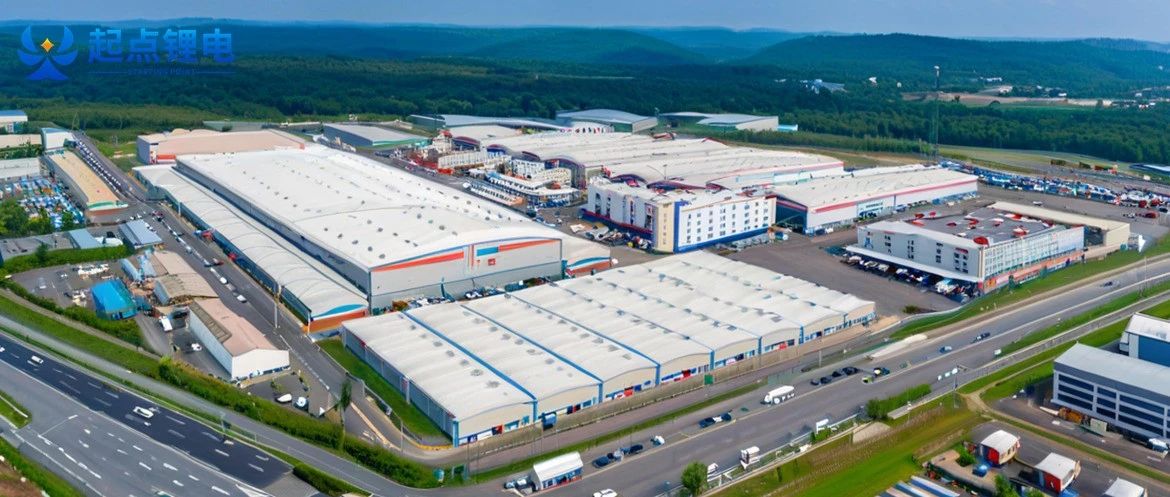
20GWh电池项目落地!奇瑞投资数百亿造电池
起点锂电· 2025-08-21 10:15
Core Viewpoint - Chery Group has signed a cooperation agreement with Suzhou City to build a 20GWh lithium-ion battery production base, marking a significant investment in battery production as part of its strategy to stabilize supply chains and reduce costs in the electric vehicle sector [3][4][5]. Investment in Battery Production - Chery Group is investing hundreds of billions in battery production in Anhui, with plans for three major battery bases aiming for a total capacity of 80GWh [10]. - The newly signed project in Daxian County is the third battery factory for Chery's subsidiary, De Yi Energy, which was established in March 2022 with a registered capital of 1.8 billion yuan [3][6]. Battery Production Capacity and Projects - The first project in Zongyang Economic Development Zone has a total investment of 10 billion yuan and aims for a capacity of 20GWh, with the first phase expected to reach full production by October 2024 [7]. - The Wuhu project will focus on high-performance battery development with an initial investment of 2.81 billion yuan [8]. Self-Sufficiency and Market Position - Chery aims for a battery self-supply rate exceeding 40% by 2025, with De Yi Energy expected to rank among the top 15 in domestic power battery installations [8]. - In 2024, Chery's new energy vehicle sales are projected to reach 580,000 units, a year-on-year increase of 232.7% [15]. Supplier Expansion and Strategic Partnerships - Chery has expanded its battery supplier base, with CATL remaining the largest supplier, followed by Guoxuan High-Tech, which has significantly increased its share in Chery's supply chain [17]. - Chery has entered into strategic partnerships with multiple battery suppliers, including LG Energy, to enhance its battery technology and production capabilities [18][19]. Technological Advancements - Chery is developing solid-state batteries with a target energy density of 600Wh/kg by 2027, with the first model featuring this technology expected to launch in late 2024 [11][12]. - The company has successfully passed stringent safety certifications for its batteries, demonstrating a commitment to high safety standards [10].