
长安汽车

Search documents
官方:“全网最低价”可能构成垄断
21世纪经济报道· 2025-12-17 08:41
刘健介绍,近年来市场监管总局已依法查处多起平台企业"二选一"垄断案件,指引总结执法经 验,提示具有市场支配地位的平台企业避免通过惩罚性或者激励性措施实施"二选一"行为。 据新华社从市场监管总局获悉,平台要求商家"全网最低价",可能构成滥用市场支配地位或者 垄断协议行为。 当日,市场监管总局举行新闻发布会,介绍民生领域反垄断执法相关情况。市场监管总局反垄 断执法一司副司长刘健介绍,近期发布的《互联网平台反垄断合规指引(征求意见稿)》提出 了8个新型垄断风险,为平台企业提供务实管用的合规指导。 例如,有的平台企业要求平台内商家销售商品价格不得高于其他竞争性平台。指引提示,平台 要求商家"全网最低价",可能构成滥用市场支配地位或者垄断协议行为。 又如,有的平台算法不公开、不透明,"算法黑箱"损害平台内商家和消费者利益。指引将实现 算法向善作为平台企业重要的合规目标,并列举"算法共谋"等风险示例,同时鼓励平台企业开 展算法筛查,构建算法垄断识别防控体系,从源头上防范垄断行为的发生。 刘健表示,平台经济具有独特的商业逻辑和行为模式,涉及多方主体利益,如何科学划定行为 边界较为复杂。监管部门要引导平台企业加强风险识别、风 ...


【周度分析】车市扫描(2025年12月8日-12月14日)
乘联分会· 2025-12-17 08:38
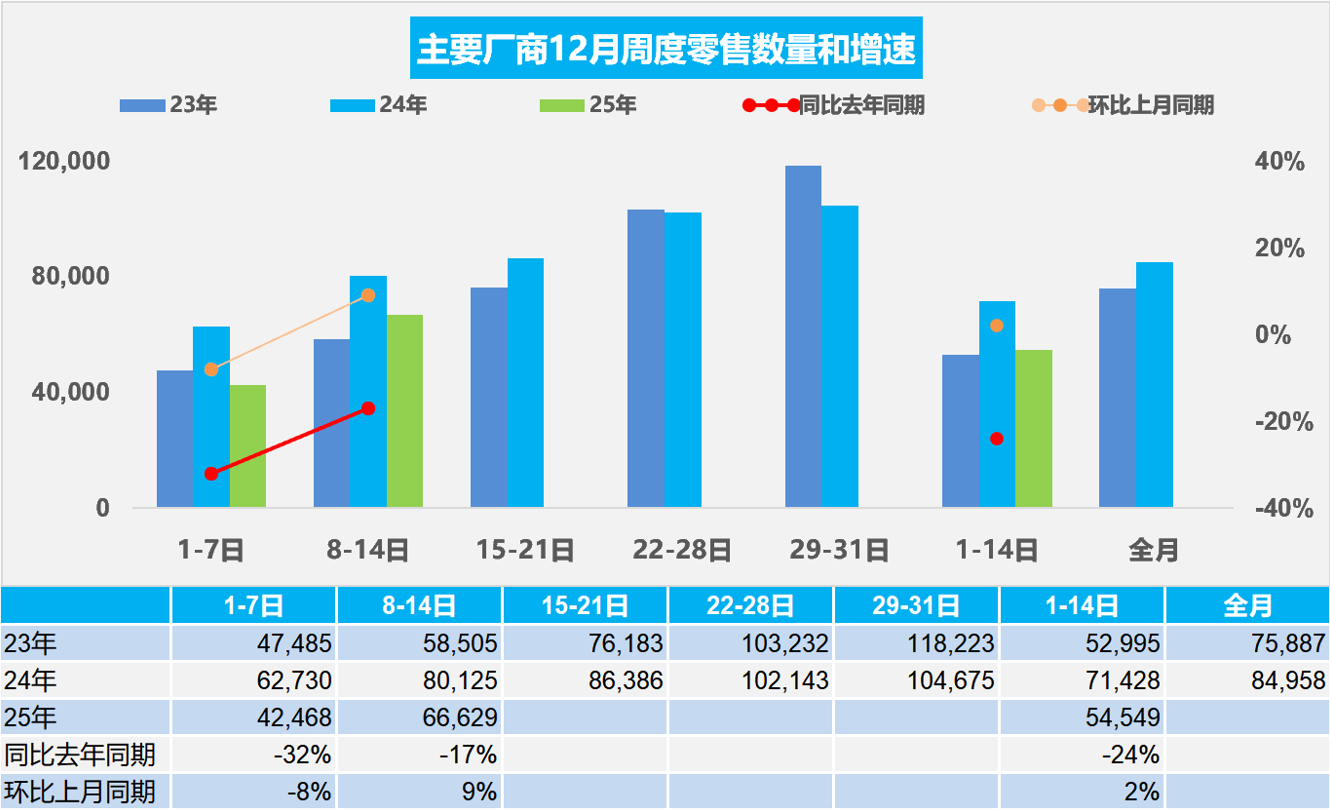
Group 1: Market Overview - From December 1 to 14, the national retail sales of passenger cars reached 764,000 units, a year-on-year decrease of 24%, but a month-on-month increase of 2%. Cumulative retail sales for the year reached 22.247 million units, a year-on-year increase of 5% [2][5] - During the same period, wholesale sales of passenger cars were 734,000 units, down 31% year-on-year and down 15% month-on-month. Cumulative wholesale sales for the year reached 27.499 million units, a year-on-year increase of 9% [2][9] - The retail penetration rate of new energy vehicles (NEVs) in the passenger car market reached 62.3% in the first two weeks of December, with retail sales of NEVs at 476,000 units, a year-on-year decrease of 4% [2][6] Group 2: Production and Sales Trends - In the first two weeks of December, production of pure fuel light vehicles was 457,000 units, down 24% year-on-year, while production of hybrid and plug-in hybrid vehicles was 275,000 units, down 14% year-on-year [3] - The average daily retail sales in the first week of December were 42,000 units, down 32% year-on-year, while in the second week, it increased to 67,000 units, down 17% year-on-year [5][6] - The production of passenger cars in November was 3.52 million units, a year-on-year increase of 2%, with NEVs accounting for 1.84 million units, a year-on-year increase of 17% [11] Group 3: Economic and Policy Impact - The macroeconomic environment remains stable, but the tightening of trade-in and scrapping subsidy policies has led to a decline in retail sales in November [6][10] - The expectation of a strong year-end sales push is influenced by the expiration of tax exemptions for NEVs, prompting consumers to purchase vehicles before the end of the year [6][10] - The government is expected to announce new trade-in policies for 2026, which could stimulate demand and support sales in early 2026 [7] Group 4: Industry Challenges and Compliance - The automotive industry faces intensified competition and price disorder, with 52.6% of dealers reporting losses and 74.4% experiencing price discrepancies [12] - The introduction of the "Automotive Industry Price Behavior Compliance Guidelines" aims to stabilize the market and protect the interests of dealers and suppliers [12][13] - The industry is encouraged to adopt measures to reduce price wars and ensure fair competition, which is crucial for the sustainability of dealerships [12][13] Group 5: Pickup Truck Market Analysis - In November 2025, the pickup truck market saw sales of 56,000 units, a year-on-year increase of 18.8%, with a cumulative sales of 537,000 units for the year, up 12.1% [14][15] - The export of pickups reached 32,000 units in November, a year-on-year increase of 54%, with exports accounting for 57% of total sales in November [14][15] - The market for new energy pickups is growing rapidly, with sales increasing by 152% year-on-year in November [15]

汽车视点 | AI加速“上车” 智能汽车操作系统迈向千亿级市场
Xin Hua Cai Jing· 2025-12-17 08:16
Group 1 - Major automotive companies are increasingly adopting AI as a core strategy, with significant investments in AI technologies, such as Xiaopeng's annual investment of 4.5 billion yuan in AI [1] - The 2025 China Automotive Software Conference highlighted the irreversible trend of software-defined vehicles and AI-driven design, marking the transition to the AIDV (AI Defined Vehicle) era [1] Group 2 - The automotive software industry is experiencing structural changes, with the value focus shifting from hardware manufacturing to software and services, and profit structures evolving from "one-time delivery" to "full-cycle services" [2] - In 2020, hardware accounted for 79% of automotive profits, while software only represented 6%. By 2025, hardware's share is expected to drop to 69%, with software rising to 17%, and by 2030, hardware is projected to be 59% and software 25% [2] Group 3 - Software is becoming a bridge for industry integration, connecting various stakeholders such as automakers, chip manufacturers, and research institutions, facilitating resource optimization [3] - The commercial value of in-vehicle operating systems is increasing, with the market expected to reach approximately 60 billion yuan by 2025 and exceed 100 billion yuan by 2030 [3] Group 4 - The future trend of automotive software development is expected to be integration, moving towards highly adaptive intelligent operating systems that support resource scheduling and sharing across vehicles, roads, clouds, and edge [4] - AI capabilities are anticipated to be deeply integrated into operating systems, evolving from simple application-level integration to native AI fusion that understands user intent [4] Group 5 - Open-source development is recognized as a vital technical pathway, with companies like Li Auto and Dongfeng actively participating in open-source projects to address cross-enterprise collaboration challenges [5] Group 6 - The market for software-based autonomous driving solutions in China is projected to grow from 350 million yuan in 2024 to over 1.9 billion yuan in 2025, and surpass 6 billion yuan by 2030 [6] - Challenges related to AI systems, such as their "black box" nature and difficulties in safety verification, need to be addressed for effective development [7] Group 7 - The automotive software ecosystem faces challenges, including the lack of a unified, open hardware-software platform, which complicates collaboration and development processes [7] - Cross-enterprise collaboration mechanisms are often inefficient, leading to difficulties in achieving consensus on costs, timelines, and technical directions [7] Group 8 - The establishment of a unified standard and interface is crucial for accelerating technology implementation and shortening development cycles, with a focus on defining standards for chips, operating systems, and middleware [10] - The integration of forward-looking safety features into the ecosystem is essential for building sustainable competitive advantages [11] Group 9 - The industry is encouraged to explore the integration of satellite technology into the existing vehicle-road-cloud system to enhance data and computing networks, expanding application scenarios [12] - The automotive industry is seen as a significant platform for AI applications, with the potential for AI to evolve through interaction with the physical world [12]
乘联分会:12月前两周全国乘用车新能源市场零售47.6万辆 同比下降4%
智通财经网· 2025-12-17 08:15
Group 1: New Energy Vehicle Market Performance - From December 1 to December 14, the retail sales of new energy vehicles in the passenger car market reached 476,000 units, a year-on-year decrease of 4%, but a month-on-month increase of 1% [1] - Cumulative retail sales for the year reached 11.948 million units, representing an 18% year-on-year growth, with a penetration rate of 62.3% in the new energy segment [1] - Wholesale figures for new energy vehicles during the same period were 457,000 units, down 15% year-on-year and 14% month-on-month, with a cumulative wholesale of 14.213 million units for the year, up 26% [1] Group 2: Overall Passenger Car Market Trends - Total retail sales of passenger cars from December 1 to December 14 were 764,000 units, down 24% year-on-year but up 2% month-on-month, with cumulative retail sales for the year at 22.247 million units, a 5% increase [4][5] - Wholesale sales for the same period were 734,000 units, a 31% year-on-year decline and a 15% month-on-month decrease, with cumulative wholesale for the year at 27.499 million units, up 9% [9] Group 3: Market Dynamics and Consumer Behavior - The market is experiencing a cautious sentiment among dealers due to tightened trade-in and scrapping subsidy policies, leading to a negative growth in retail sales in November [5] - The end of the year is marked by a strong urgency among consumers to purchase vehicles due to the impending expiration of tax exemptions for new energy vehicles [5] - The expectation of a new trade-in policy for 2026 could stimulate demand, but the current retail growth is considered weak compared to the previous year [4][5] Group 4: Production and Export Trends - In the first two weeks of December, production of pure fuel light vehicles was 457,000 units, down 24% year-on-year, while production of hybrid and plug-in hybrid vehicles was 275,000 units, down 14% year-on-year [1] - The export market for Chinese vehicles has shown positive trends, particularly in the new energy segment, with significant growth in overseas markets [10] - The overall production of vehicles in November was 3.52 million units, with new energy vehicle production at 1.84 million units, reflecting a 17% year-on-year increase [11]

CPO概念涨幅居前,14位基金经理发生任职变动
Jin Rong Jie· 2025-12-17 08:07
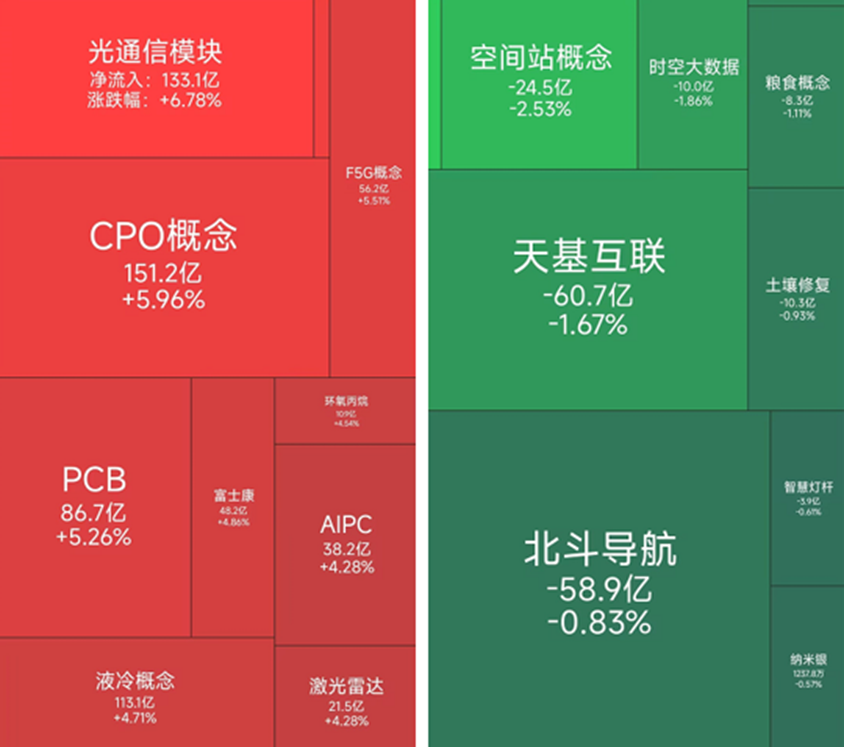
12月17日,A股三大指集体上涨,截至收盘,沪指涨1.19%报3870.28点,深成指涨2.4%报13224.51点,创业板指涨3.39%报 3175.91点。从板块行情上来看,今日表现较好的是光通信模块、CPO概念和PCB,而空间站概念、天基互联和北斗导航等 板块下跌。 基金经理是一只基金产品最核心的成员,能决定一只基金的投资方向、投资策略以及投资风格,基金经理出色的择时选股 能力和调研预测能力是基金业绩的有力保证,所以基金经理是投资者在选择基金产品时的重要依据。基金经理的变动很大 程度上会影响到基金产品未来的表现,是一个需要特别关注的信息。12月17日共有14位基金经理发生任职变动。 根据巨灵统计的数据,近30天(11.17-12.17)共有654只基金产品的基金经理发生离职。其中今天(12.17)有17只基金产品 发布基金经理离职公告,涉及6名基金经理。从变动原因上来看,有2位基金经理是由于工作变动而从管理的3只基金产品中 离职。有1位基金经理是由于个人原因而从管理的8只基金产品中离职。有3位基金经理是由于产品到期而从管理的6只基金 产品中离职。 | | 近一个月套金调研总量排行 | | | 近一周基金 ...
小鹏汽车获得广州L3自动驾驶测试牌照,进入常态化验证阶段【附自动驾驶行业市场分析】
Qian Zhan Wang· 2025-12-17 07:18
Group 1 - The core viewpoint of the news is that China's L3-level conditional autonomous driving has officially transitioned from testing to commercial application, with two models set to conduct road trials in designated areas of Beijing and Chongqing [2] - Xiaopeng Motors has obtained an L3-level road testing license in Guangzhou, focusing on conditional autonomous driving tests on high-speed roads [2] - Xiaopeng Motors plans to launch mass-produced vehicles with L4-level capabilities by the first quarter of 2026, following the release of its second-generation Visual Language Action model [2] Group 2 - Traditional automakers like Geely, Great Wall, and Changan are adopting a "gradual" approach to autonomous driving, while tech giants and new car manufacturers are pursuing a "leapfrog" strategy to achieve higher levels of automation [3] - Major Chinese automakers have established L3-level autonomous driving capabilities, with some, like Geely and Great Wall, already advancing to L4/L5 levels [4] - The global penetration rate of L1 and L2 autonomous vehicles has exceeded 50%, and it is predicted that by 2030, L3 and above will account for 50% of the market share [5] Group 3 - Xiaopeng Motors' CEO predicts that the future will consist of two types of vehicles: L4-capable cars with a driver present and fully autonomous vehicles without a driver, both coexisting in the autonomous driving ecosystem within the next 2 to 5 years [7]

迈入商业化应用关键一步!工信部首批两款L3级自动驾驶车型准入许可【附自动驾驶行业市场分析】
Qian Zhan Wang· 2025-12-17 07:15
(图片来源:摄图网) 12月15日,工业和信息化部正式公布我国首批L3级有条件自动驾驶车型准入许可,长安深蓝SL03(长安牌 SC7000AAARBEV型纯电动轿车)与极狐阿尔法S6(极狐牌BJ7001A61NBEV型纯电动轿车)成为首批"尝鲜 者"。这两款车型将分别在北京、重庆指定区域开展上路试点,标志着我国L3级自动驾驶技术从封闭测试阶 段正式迈向商业化应用的关键一步。 据了解,长安牌SC7000AAARBEV型纯电动轿车(长安深蓝SL03)聚焦城市拥堵场景,可在高速公路和城市 快速路单车道内实现最高车速50km/h的自动驾驶功能。而极狐牌BJ7001A61NBEV型纯电动轿车(极狐阿尔法 S6)则主攻高速路况,支持最高80km/h的单车道自动驾驶。 中国汽车工业协会常务副会长兼秘书长付炳锋对此表示,此举不仅体现了技术本身的成熟度,更是国家统筹 高质量发展与高水平安全的制度创新。"以包容审慎的监管护航前沿技术安全落地,有效激发了产业创新活 力。" 依据美国汽车工程师协会(SAE)制定的自动驾驶汽车分级标准(按照自动驾驶对于汽车操纵的接管程度和应用 场景),自动驾驶可分为L0-L5共六级: | | | | ...
车企打响L3冲刺赛
Hua Er Jie Jian Wen· 2025-12-17 07:05
P 175 随后,小鹏、理想也先后官宣获得L3级道路测试牌照,后续分别在广州、北京两个城市开展常态化L3级道路测试;华为的鸿蒙智行以及比亚迪则已联合深 圳相关部门开启L3级有条件自动驾驶内测。小鹏、极氪等品牌也宣布,其市售车型已经为L3级自动驾驶做好了硬件预埋。 作者 | 柴旭晨 编辑 | 周智宇 由系统掌权的智驾时代渐行渐近。 日前,工信部公布了首批L3有条件自动驾驶功能车型准入许可,首批准入车型包含深蓝SL和极狐阿尔法S(L3版)。 就在准入车型公布的同一天,华为车BU发文称极狐阿尔法S采用的是乾坤智驾ADS系统,搭载了包含三颗激光雷达在内的34颗高性能传感器。这意味着,在 华为的托举下,北汽成功入围L3智驾赛道。 据了解,申报需要明确试点车型、使用场景、速度范围等限制性条件,若工信部决定准入的,需要设置准入有效期、实施区域等限制性措施。同时,随着政 策要求的升级调整,会产生一些新的变化,这就要求车企跟着最新的标准或要求走。 对此,中国汽车标准化研究院总工程师孙航表示,此次发布特别强调了附条件准入,将允许开启自动驾驶功能的路段限定在典型、低风险场景中,意在通过 小切口起步、安全有序推进自动驾驶技术稳妥落地 ...

金禄电子:公司有和长安汽车下属零部件公司建立直接合作关系
Ge Long Hui· 2025-12-17 06:41
格隆汇12月17日丨金禄电子(301282.SZ)在投资者互动平台表示,公司有和长安汽车下属零部件公司建 立直接合作关系,PCB产品有最终应用于长安旗下多款车型。 ...
爱建证券:首予长安汽车“买入”评级,前瞻布局机器人及飞行汽车业务
Xin Lang Cai Jing· 2025-12-17 06:39
Core Viewpoint - The automotive industry is experiencing moderate growth, with domestic brands gaining market share due to their early advantages in electric and intelligent technologies, thereby putting pressure on joint venture brands [1] Group 1: Company Strategy - Changan Automobile is set to become the third automotive central enterprise by 2025 and is accelerating its transformation into a smart low-carbon mobility technology company [1] - The company has established a three-brand matrix for new energy vehicles, covering mainstream, technology, and high-end markets with its brands: Qiyuan, Deep Blue, and Avita [1] - Through the "Shangri-La" plan, the company aims to break through key technologies in the three-electric field to create a dedicated platform for new energy vehicles [1] Group 2: Technological Advancements - The "Beidou Tianshu" plan is being implemented to promote the landing of key intelligent solutions in areas such as intelligent driving, cockpit, and computing architecture [1] - The company has received a conditional approval for L3-level autonomous driving, gradually establishing a leading advantage in intelligence [1] - The first vehicle-mounted component robot was officially launched in Q1 2026, along with the unveiling of a humanoid robot prototype, validating the company's technological and commercialization capabilities in the embodied intelligence sector [1] Group 3: Market Expansion and Goals - The "Hainan Baichuan" plan is being executed for global expansion [1] - The company aims to achieve a production and sales scale of 5 million units by 2030 [1] - New model orders and delivery performance for Qiyuan, Deep Blue, and Avita continue to exceed expectations [1]