
DeepSeek

Search documents
“再平衡”中孕育新机遇
HTSC· 2025-06-03 08:32
Group 1 - The macroeconomic trends since 2025 have shown surprises, challenges, and opportunities, with a notable recovery in domestic demand and production efficiency improvements driven by high-tech investments [1][12][13] - The real GDP growth forecast for 2025 is maintained at around 5%, with nominal GDP and domestic demand expected to slightly recover compared to last year, primarily supported by the real estate sector and service industry price stabilization [3][36][39] - The adjustment in the real estate cycle is expected to stabilize and rebound consumer spending, with significant potential for service consumption recovery in the second half of 2025 [4][36] Group 2 - The high-tech sector is experiencing a resurgence in capital expenditure, particularly in AI and advanced manufacturing, which is anticipated to accelerate investment growth [4][13][25] - The weakening of the US dollar and declining oil prices are expected to enhance global liquidity, creating structural opportunities for China to expand domestic demand and asset markets [2][19] - The trend of "de-dollarization" is likely to accelerate, leading to increased demand for RMB assets and a potential revaluation of the RMB in the context of a weakening dollar [5][19][31]
BBA 们开始学着中国车企做豪华
3 6 Ke· 2025-06-03 02:26
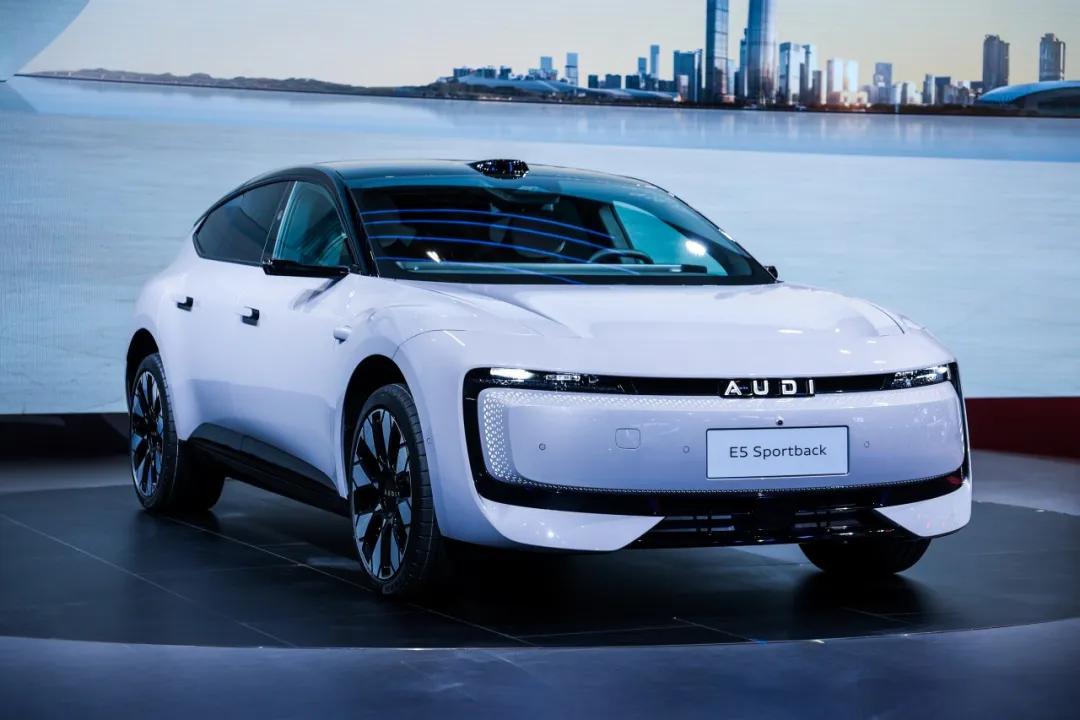
Core Viewpoint - The traditional luxury car brands represented by BBA (BMW, Benz, Audi) are facing significant challenges in the Chinese market, with local luxury brands rapidly gaining market share and altering consumer perceptions of luxury vehicles [1][3][20]. Group 1: Market Dynamics - The global sales of BBA brands are declining, with BMW and Benz experiencing the largest drops in China, with sales down 13% and 7% respectively, while Audi's sales fell by approximately 11% [1][3]. - The Chinese luxury car market is evolving, with the segment priced between 200,000 to 300,000 yuan experiencing a 92% growth from 1.982 million units in 2018 to 3.822 million units in 2024 [3][18]. - In 2024, domestic high-end brand passenger car sales are projected to reach 4.738 million units, reflecting a 2.3% year-on-year increase [3][18]. Group 2: Audi's Strategic Shift - Audi is launching a new AUDI brand in China, aiming to attract younger consumers and differentiate itself in the luxury market [2][3]. - The AUDI E5 Sportback, which debuted shortly before the Shanghai Auto Show, represents Audi's commitment to electric and intelligent vehicle technology, with a focus on local partnerships for battery and smart driving solutions [2][4][7]. - Audi's collaboration with local suppliers like CATL for battery systems and Momenta for intelligent driving technology highlights a strategic pivot towards leveraging Chinese innovation [2][9][11]. Group 3: Competitive Landscape - Traditional luxury brands are increasingly adopting Chinese smart automotive solutions, with BBA brands collaborating with local companies to enhance their technological offerings [9][10][21]. - The shift towards smart and electric vehicles is not just limited to BBA; other foreign brands are also forming partnerships with Chinese suppliers to adapt to the rapidly changing market [10][13]. - The competitive landscape is intensifying, with the Chinese market leading in the adoption of new energy vehicles, achieving over 50% penetration, while other regions lag behind [18][20]. Group 4: Future Outlook - The success of BBA brands in China is seen as critical for their global strategy, with significant investments planned for new electric models and local R&D initiatives [17][20]. - The rapid development of smart and electric vehicles in China is expected to influence global automotive trends, with Chinese solutions beginning to penetrate international markets [21].

TMT行业周报(5月第5周):关注海外AI链估值修复-20250603
Century Securities· 2025-06-03 01:34
Investment Rating - The report provides a positive outlook on the TMT sector, suggesting a focus on the recovery of overseas AI chain valuations [3]. Core Insights - Nvidia's B series shipments exceeded expectations, with Q1 FY26 revenue reaching $44 billion, surpassing guidance of $43 billion. The company anticipates Q2 FY26 revenue guidance of $45 billion (±2%). The acceleration in B series shipments is expected to boost the industry's overall outlook, particularly for domestic Nvidia supply chain companies [3]. - The DeepSeek-R1 model update has significantly improved reasoning performance, placing it among the top tier globally. The new model shows a 20% and 15% improvement in mathematical and programming capabilities, respectively, while still having limitations in multimodal recognition [3]. - The domestic EDA (Electronic Design Automation) industry is expected to accelerate its localization process due to potential service halts from U.S. semiconductor software suppliers. This could lead to increased market share for domestic companies [3]. Market Weekly Review - The TMT sector's performance from May 26 to May 30 showed a positive trend, with the computer sector up by 1.77%, media by 1.74%, and communication by 1.53%. The overall TMT sector outperformed the CSI 300 index, which declined by 1.08% [3][5]. - The top-performing sub-industries included vertical application software and other computer equipment, both up by 3.01%, while the optical components and brand consumer electronics sectors faced declines of 2.99% and 1.84%, respectively [3][5]. Industry News and Key Company Announcements - The report highlights significant events in the AI sector, including the upcoming global AI technology conference and various product launches from major companies like Apple and Tesla [17]. - DeepSeek's R1 model has been updated, enhancing its reasoning capabilities and narrowing the gap with leading international models [19]. - The report notes that the Chinese government is actively promoting AI integration in industrial applications, with financial support for companies developing industry-leading AI models [22].

Artificial:中国人工智能状况 - 2025 年第二季度要点
2025-06-02 15:44
Summary of Key Points from the AI Industry Report Industry Overview - The report focuses on the AI industry, particularly comparing advancements in AI technologies between China and the US, highlighting the competitive landscape of leading AI labs and models [6][8][38]. Core Insights - **Performance Gap**: The performance gap between US and Chinese frontier AI models has narrowed significantly, from over a year to less than three months since the release of ChatGPT in 2022 [6][8]. - **Leading Models**: As of May 2025, DeepSeek's R1 model leads among Chinese AI labs, while OpenAI's o3 is the most intelligent model overall [9][25][17]. - **Open Weights Strategy**: Chinese AI labs, particularly DeepSeek and Alibaba, have adopted an open weights strategy, which has facilitated widespread adoption of their models both domestically and internationally [18][14]. - **Model Releases**: DeepSeek and Alibaba have consistently released new models, with DeepSeek emerging as a leader in late 2024 [15][18]. Competitive Landscape - **Chinese AI Labs**: DeepSeek and Alibaba are the primary drivers of advancements in Chinese AI, with DeepSeek's R1 model being the first to compete with OpenAI's models [9][14]. - **US AI Labs**: OpenAI has seen its lead diminish as other labs like Google, xAI, and Anthropic have made significant advancements [25][23]. - **Model Intelligence**: The intelligence of leading models from both countries is closely matched, with DeepSeek R1 (May 2025) scoring 70, while OpenAI's o3 scores 68 [39]. Notable Companies - **Alibaba**: A major player in the AI space with a market cap of approximately $300 billion, focusing on open weights models and AI tooling [27]. - **DeepSeek**: A leading AI lab known for its competitive models, particularly the DeepSeek R1, which has shown rapid intelligence growth since its first release [19][21]. - **Other Players**: Companies like ByteDance, Tencent, and Baidu are also significant contributors to the AI landscape in China, each with their proprietary models and strategies [28][34]. Emerging Trends - **Text to Image Generation**: The quality of text to image models has reached parity between the US and China, with OpenAI's GPT-4o leading slightly over ByteDance's Seedream 3.0 [46][48]. - **Text to Video Models**: The US maintains a lead in text to video generation, with Google's Veo 3 achieving a significantly higher ELO than its Chinese counterparts [50][52]. - **Diversity in AI Models**: Chinese companies are competitive across various AI modalities, including language models, image generation, and video generation [44]. Additional Insights - **Model Release Frequency**: Both DeepSeek and Alibaba have released new models approximately every three months, indicating a rapid pace of innovation [18]. - **Intelligence Metrics**: The report utilizes the Artificial Analysis Intelligence Index, which incorporates multiple evaluations to assess model performance [6][10]. This summary encapsulates the key findings and insights from the AI industry report, highlighting the competitive dynamics between Chinese and US AI labs, the leading companies, and emerging trends in AI technologies.


无人再谈AI六小龙
凤凰网财经· 2025-06-02 13:49
Core Viewpoint - The article discusses the decline of the so-called "AI Six Dragons" in the face of competition from major tech companies and the emergence of new players like DeepSeek, leading to a reclassification as the "AI Four Strong" [1][2][12]. Group 1: Player Dropout - The transition from "AI Six Dragons" to "AI Four Strong" reflects the reality of some players falling behind in the large model arena [2][8]. - The initial excitement around the "AI Six Dragons" was fueled by their strong technical teams and significant early funding, but many have since lost their competitive edge [2][4]. - Companies like Zero One and Baichuan Intelligence have shifted focus away from large models, indicating a broader trend of retreat from ambitious goals [1][5]. Group 2: Commercial Challenges - The decline of the "AI Six Dragons" is primarily attributed to commercialization difficulties, with many companies unable to sustain their operations in the face of high costs and competition from larger firms [9][11]. - Major tech companies like Alibaba and ByteDance have aggressively entered the AI space, overshadowing the initial advantages held by the "Six Dragons" [11][12]. - The lack of transparency regarding revenue and business performance among the "Six Dragons" contrasts sharply with the success of OpenAI, which has seen significant growth in paid users and revenue [10][11]. Group 3: Talent Exodus - There has been a notable exodus of key executives from the "AI Six Dragons," which has diminished their ability to innovate and compete effectively [19][20]. - The departure of top talent to larger firms or new ventures reflects a declining attractiveness of the "Six Dragons" as a career choice [18][19]. - The loss of core team members is expected to impact the speed of model iterations and the companies' leverage with investors [19][20]. Group 4: Future Outlook - The article suggests that the future for the remaining "Four Strong" is fraught with challenges, as they struggle to keep pace with advancements in AI technology and face a lack of funding [8][24]. - The shift in market focus towards embodied intelligence and other AI applications further complicates the landscape for these companies [23][24]. - Historical parallels are drawn to the "AI Four Dragons" of the past, indicating that without significant changes, the current "Four Strong" may face a similar fate [25].

无人再谈AI六小龙
投资界· 2025-06-02 07:25
以下文章来源于字母榜 ,作者马舒叶 字母榜 . 让未来不止于大 作者 | 马舒叶 来源 | 字母榜 (ID: wujicaijing) 2025年行将过半,之前还热闹非凡的AI六小龙,几乎从舆论场中消失:再没有人特意提起这个称号。 De e pSe e k的冲击只是一方面。更重要的是,原本被冠以六小龙称号的队伍中,已经有人明显掉队:零一万物将超大模型交给了阿里训 练,明确不再追逐AGI,放弃预训练转向应用。"大家都看得很清楚,只有大厂能够烧超大模型。"李开复在接受《智能涌现》的采访 时这样表示。 百川智能则专注医疗垂类赛道,在字节、阿里、腾讯等大厂争相上新基础模型时,其创始人王小川曾提出百川智能的底层模型将对标 Op e nAI,但如今其基础大模型进入了静默期,不再更新。 剩下的智谱AI、Mi niMa x、月之暗面和阶跃星辰,也失去了如一条过江龙般,足以挑战乃至对抗大厂的资本和技术底气。曾经的AI六 小龙,已经在新一轮大模型竞赛中滑落成了新的"AI四小强"。 它们一面成了固守AI创业赛道的最后一道屏障,一面又试图像打不死的小强般,在De e pSe e k掀起的新一轮大模型竞赛中,重新找到自 己的定位和出路 ...

青春飞扬,爱拼敢赢
申万宏源研究· 2025-06-01 10:32
Core Viewpoint - The article emphasizes the resilience and growth potential of the Chinese capital market amidst global uncertainties, highlighting the importance of strategic preparation and the rise of new economic forces in technology [3][4][6]. Group 1: Market Resilience and Growth - The Chinese capital market is expected to experience a long-term bull market, driven by improved corporate governance, increased shareholder returns, and a focus on both investment and financing functions [4][6]. - The rise of Chinese technology companies, such as Huawei and ByteDance, is creating opportunities for growth in the new economy, with indices like the Hang Seng Tech Index and domestic innovation boards entering a new valuation era [4][6]. - External uncertainties may enhance China's international influence, with Chinese goods becoming symbols of quality and strength, which is significant for boosting domestic demand [5][6]. Group 2: Research and Development Focus - The company aims to strengthen the concept of "research products," emphasizing a customer-centric approach and the integration of policy and commercial logic in research recommendations [7][8]. - There is a focus on enhancing data capabilities and intelligent research methodologies, leveraging big data, algorithms, and computational power to improve research efficiency and accuracy [9][10]. - The company recognizes the need for foresight in research, especially in the context of artificial intelligence's growing role in quantitative investment, advocating for strategic and long-term thinking [8][10]. Group 3: Leadership and Management Philosophy - The role of leadership in the research sector is multifaceted, requiring a balance of innovation, strategic oversight, and effective management to drive the research agenda [11]. - The company emphasizes a collaborative approach to management, focusing on building a strong research ecosystem and fostering a culture of continuous improvement [11].

无人再谈AI六小龙
虎嗅APP· 2025-06-01 08:55
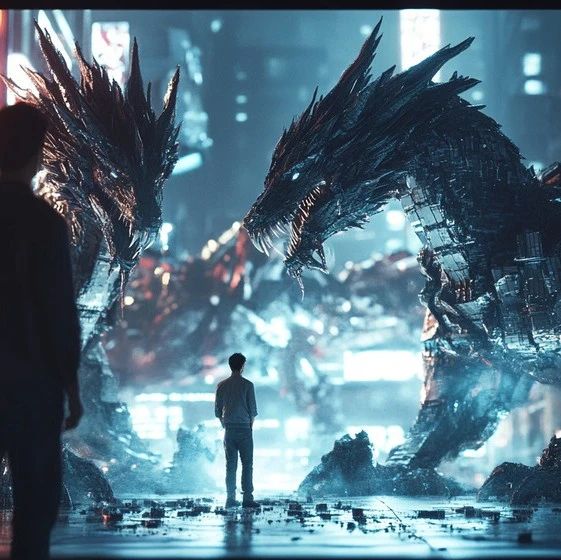
以下文章来源于字母榜 ,作者马舒叶 字母榜 . 让未来不止于大 本文来自微信公众号: 字母榜 ,作者:马舒叶,编辑:赵晋杰,题图来自:AI生成 2025年行将过半,之前还热闹非凡的AI六小龙,几乎从舆论场中消失:再没有人特意提起这个称 号。 DeepSeek的冲击只是一方面。更重要的是,原本被冠以六小龙称号的队伍中,已经有人明显掉队: 零一万物将超大模型交给了阿里训练,明确不再追逐AGI,放弃预训练转向应用。" 大家都看得很清 楚,只有大厂能够烧超大模型。 "李开复在接受《智能涌现》的采访时这样表示。 百川智能则专注医疗垂类赛道,在字节、阿里、腾讯等大厂争相上新基础模型时,其创始人王小川曾 提出百川智能的底层模型将对标OpenAI,但如今其基础大模型进入了静默期,不再更新。 剩下的智谱AI、MiniMax、月之暗面和阶跃星辰,也失去了如一条过江龙般,足以挑战乃至对抗大 厂的资本和技术底气。曾经的AI六小龙,已经在新一轮大模型竞赛中滑落成了新的"AI四小强"。 它们一面成了固守AI创业赛道的最后一道屏障,一面又试图像打不死的小强般,在DeepSeek掀起的 新一轮大模型竞赛中,重新找到自己的定位和出路。 一 从 ...
见证历史!DeepSeek 跃居全球第二 AI 实验室,R1 登顶开源王座,R2 全网催更
程序员的那些事· 2025-06-01 02:04
Core Viewpoint - DeepSeek has officially announced the completion of the R1-0528 upgrade, which significantly enhances its model performance, making it a leading open-source AI model and the second-largest AI laboratory globally [1][9][46]. Performance Enhancements - The upgraded DeepSeek-R1-0528 model exhibits performance comparable to top models like o3 and Gemini 2.5 Pro in various benchmark tests, particularly in mathematics, programming, and general logic [2][15]. - The model's accuracy in complex reasoning tasks has improved significantly, with AIME 2025 test accuracy rising from 70% to 87.5% [16]. - In benchmark tests, DeepSeek-R1-0528 achieved notable scores, such as 91.4% in AIME 2024 and 87.5% in AIME 2025 [17]. Reduction in Hallucination Rate - The hallucination rate of DeepSeek-R1-0528 has been reduced by 45%-50% compared to its predecessor, addressing previous concerns about high hallucination rates [20][24]. - This improvement allows the model to provide more accurate and reliable results in tasks such as summarization and reading comprehension [25][26]. Enhanced Functionality - DeepSeek-R1-0528 supports tool calls, enabling it to summarize articles by fetching content from links, achieving competitive scores in Tau-Bench [31]. - The model's front-end code generation capabilities have been enhanced, allowing for the rapid creation of applications with comprehensive features [33]. Distillation of Qwen3-8B - Alongside the R1 upgrade, DeepSeek has distilled the R1-0528 model's reasoning chain into a new version, DeepSeek-R1-0528-Qwen3-8B, which shows strong performance in mathematical tests, surpassing Qwen3-8B [6][37]. - The Qwen3-8B model, despite having significantly fewer parameters, demonstrates competitive performance, indicating the effectiveness of the distillation process [38]. Industry Positioning - Following the R1 upgrade, DeepSeek has been recognized as the second-largest AI laboratory globally, surpassing competitors like xAI, Meta, and Anthropic [44][46]. - The model's intelligence index score has increased from 60 to 68, reflecting a significant advancement comparable to OpenAI's improvements [46][47].
AI周报|DeepSeek更新R1模型;英伟达称H20限售二季度将产生80亿美元收入损失
Di Yi Cai Jing· 2025-06-01 01:06
Group 1: DeepSeek Model Updates - The new DeepSeek R1 model has optimized its performance to reduce "hallucination" rates by 45%-50% in tasks such as rewriting, summarization, and reading comprehension [1][3] - The updated R1 model has achieved top scores in various benchmark tests, indicating significant improvements in deep thinking capabilities and creative writing [3] Group 2: Nvidia Financial Performance - Nvidia reported Q1 2026 revenue of $44.1 billion, a 69% year-over-year increase, with net profit reaching $18.8 billion, up 26% [2] - The data center business generated $39.1 billion in revenue, reflecting a 73% year-over-year growth [2] - Nvidia anticipates an $8 billion revenue loss in Q2 due to U.S. export restrictions on H20 chips to China [2] Group 3: AI in Academia - Intology's AI scientist Zochi had a paper accepted at the prestigious ACL conference, marking the first time an AI-generated paper passed peer review at this level [4] - Zochi's paper scored 4 points, placing it in the top 8.2% of all submissions, highlighting the rapid advancement of AI in academic research [4] Group 4: Kuaishou's AI Revenue Growth - Kuaishou reported Q1 2025 revenue of 32.6 billion yuan, a 10.9% year-over-year increase, with adjusted net profit of 4.58 billion yuan [5] - Kuaishou's Keling AI generated over 150 million yuan in revenue during the quarter, with a user base exceeding 22 million [5] Group 5: Quark Health Model Achievement - Quark's health model successfully passed the national deputy chief physician qualification exam, becoming the first AI model to achieve this milestone in a serious medical context [8] - The model utilizes extensive high-quality data and multi-stage training strategies to enhance its clinical reasoning capabilities [8] Group 6: Storage Product Price Increases - Recent data indicates significant price increases for various DDR4 products, with some experiencing up to a 50% rise within a month [11][12] - The price hikes are attributed to manufacturers halting production and market speculation, as they shift focus to more advanced memory technologies [12] Group 7: Investment in Intelligent Robotics - Shanghai State-owned Capital Investment Company led a new round of investment in Zhiyuan Robotics, marking a significant milestone in the embodied intelligence sector [12][13] - Zhiyuan Robotics has achieved rapid production of humanoid robots, with a factory capable of producing over a thousand units [13]