
中国平安

Search documents
机器人租赁市场蓄势待发:今年规模或达百亿,配套保险同步探路
2 1 Shi Ji Jing Ji Bao Dao· 2026-01-05 00:37
Core Viewpoint - The collaboration between Ping An Property & Casualty, Shanghai Electric Financial Leasing, and Shanghai Electric Insurance Brokerage marks the launch of the first "insurance + leasing" policy for embodied intelligent robots in China, indicating a significant development in the robot leasing market and its associated insurance needs [1][3]. Group 1: Market Expansion - The robot leasing market is projected to reach a scale of 10 billion yuan (approximately 1.5 billion USD) by 2026, driven by mass production and platform-based operations [2]. - The CEO of Qingtian Rental highlighted that the transition from novelty to regular use of leased robots will contribute to this market growth, with high rental costs for events further supporting the market's expansion [2]. Group 2: Insurance Product Development - The newly launched insurance policy includes comprehensive coverage, such as third-party liability, product quality liability, and information leakage liability, addressing the financial risk protection needs in real commercial applications [3]. - This insurance product represents a breakthrough by integrating insurance with financing leasing, overcoming previous limitations in the robot sector [3][4]. Group 3: Collaborative Framework - The partnership establishes a "risk-sharing, data-sharing, and service co-construction" model, enhancing the efficiency and accuracy of risk management through deep integration of financial services and industrial operations [4]. - A "data usable but not visible" mechanism has been created to protect commercial secrets while allowing for effective risk assessment and optimization of equipment management [4]. Group 4: Future Plans - Ping An Property & Casualty aims to expand its insurance offerings to cover various types of robots, including industrial, service, and special robots, and develop comprehensive financial protection solutions [5]. - The company plans to collaborate with industry players and academic institutions to research and establish risk assessment standards and guidelines for insurance services in the robot sector [5].


【非银】保费“开门红”或超预期,资负共振推动股价上行——近期港股保险上涨点评(王一峰/黄怡婷)
光大证券研究· 2026-01-04 23:04
点击注册小程序 查看完整报告 特别申明: 本订阅号中所涉及的证券研究信息由光大证券研究所编写,仅面向光大证券专业投资者客 户,用作新媒体形势下研究信息和研究观点的沟通交流。非光大证券专业投资者客户,请勿 订阅、接收或使用本订阅号中的任何信息。本订阅号难以设置访问权限,若给您造成不便, 敬请谅解。光大证券研究所不会因关注、收到或阅读本订阅号推送内容而视相关人员为光大 证券的客户。 报告摘要 投资:资本市场稳中向好有望持续推动险企盈利释放 一方面,随着上市险企投资资产规模持续稳健增长以及股票仓位维持在较高水平(25H1末五家上市险企合 计9.3%的股票资产占比已是近十年最高值),权益市场稳中向好将进一步提振险企投资收益表现,进而推 动盈利释放。另一方面,未来随着险企进一步提升OCI股票配置力度,高股息策略下分红收入提升有助于 险企进一步夯实净投资收益安全垫;同时,若26年长端利率企稳态势延续(25年四季度10年期国债收益率 稳定于1.79%-1.87%区间),将利好险企新增固收资产投资收益率。 风险提示: 保费收入不及预期;资本市场大幅波动;利率超预期下行。 2026年1月2日,香港保险指数上涨3.0%,跑赢恒生 ...



北大医药股份有限公司关于公司以公开竞拍方式购买股权暨关联交易的进展公告
Shang Hai Zheng Quan Bao· 2026-01-04 20:49
Group 1 - The company has approved the acquisition of a 9.75% stake in Chongqing Daxin Pharmaceutical Co., Ltd. through a public auction, which constitutes a related party transaction [2][3][52] - The acquisition was successfully completed at a price of 22 million yuan [3] - This transaction aims to reduce reliance on leasing arrangements and enhance the stability of the company's production system [4][53] Group 2 - The company plans to apply for a total bank credit limit of 800 million yuan for 2026, providing guarantees for its wholly-owned subsidiaries [8][9] - The total guarantee amount for the subsidiaries is expected to be no more than 300 million yuan [9][16] - The board of directors has approved the financing plan, which is intended to alleviate financial pressure and lower financing costs [15][20] Group 3 - The company estimates that its daily related party transactions with Chongqing Southwest Synthetic Pharmaceutical Co., Ltd. for 2026 will not exceed 16.01 million yuan [23][39] - The company also anticipates related party transactions with China Ping An Insurance (Group) Co., Ltd. and other related parties to total no more than 57.63 million yuan [27][39] - These transactions are essential for the company's daily operations and are expected to be conducted at fair market prices [41][40] Group 4 - The company has a strategic plan to deepen its involvement in the raw material pharmaceutical industry, aiming to optimize overall profitability and achieve synergy within the industry chain [4][53][63] - The acquisition of the stake in Daxin Pharmaceutical is part of this strategy, allowing the company to directly benefit from the industry's growth [4][53] - Daxin Pharmaceutical is recognized as a key high-tech enterprise with strong production capabilities and a comprehensive quality system [63]

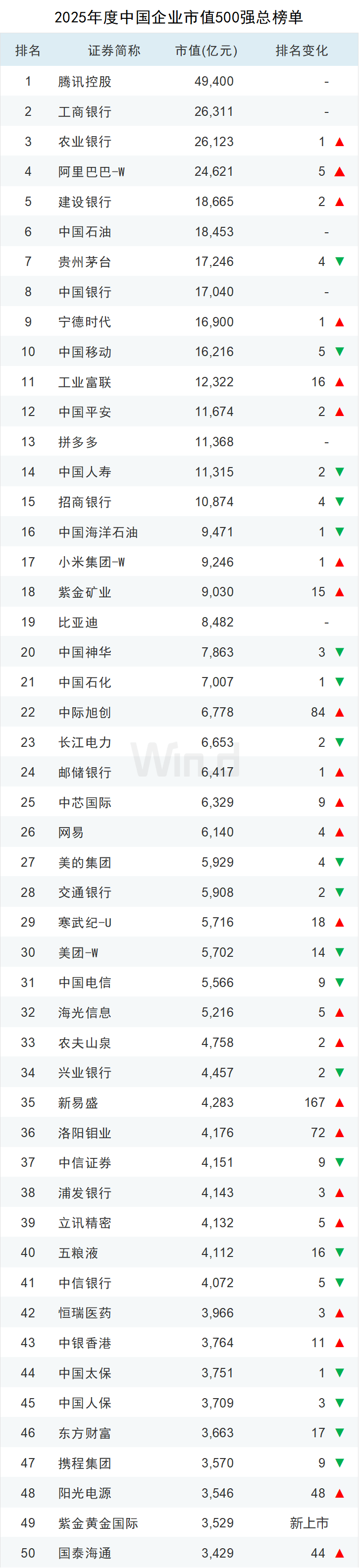
2025年度中国上市企业市值500强榜单
Sou Hu Cai Jing· 2026-01-04 17:14
Core Insights - The 2025 "Top 500 Listed Companies in China" list features Tencent Holdings, Industrial and Commercial Bank of China, and Agricultural Bank of China as the top three companies by market capitalization [1] - There are 16 companies with a market capitalization exceeding 1 trillion yuan, an increase of 6 companies compared to 2024 [1] - Alibaba and Industrial Fulian have seen significant improvements in their rankings, moving up 5 and 16 places respectively, while Agricultural Bank, China Construction Bank, CATL, and Ping An also experienced slight increases [1] Market Capitalization Summary - Tencent Holdings: 49,400 billion yuan [2] - Industrial and Commercial Bank of China: 26,311 billion yuan [2] - Agricultural Bank of China: 26,123 billion yuan (up 1 position) [2] - Alibaba-W: 24,621 billion yuan (up 5 positions) [2] - China Construction Bank: 18,665 billion yuan (up 2 positions) [2] - China Petroleum: 18,453 billion yuan [2] - Kweichow Moutai: 17,246 billion yuan [2] - China Bank: 17,040 billion yuan [2] - CATL: 16,900 billion yuan [2] - China Mobile: 16,216 billion yuan (up 5 positions) [2] - Industrial Fulian: 12,322 billion yuan (up 16 positions) [2] - Ping An: 11,674 billion yuan (up 2 positions) [2] - Pinduoduo: 11,368 billion yuan [2] Ranking Changes - Significant ranking improvements were noted for Alibaba (up 5 positions) and Industrial Fulian (up 16 positions) [1] - Agricultural Bank, China Construction Bank, CATL, and Ping An also saw minor upward movements in their rankings [1]
平安人寿:推进高质量发展 构建“保险+服务”新生态
Zheng Quan Ri Bao· 2026-01-04 16:49
Core Viewpoint - The life insurance industry in China is transitioning from a model focused on scale expansion to one emphasizing value and resilience, with key players like Ping An Life Insurance leading the way in strategic insights and practical approaches [1] Industry Trends - The life insurance sector is entering a golden development period, with premium income for life insurance reaching approximately 3.39 trillion yuan, a year-on-year increase of 11.5% [2] - Positive macroeconomic conditions, supportive policies, and increasing consumer demand for health and retirement products are driving this growth [2] Company Strategy - Ping An Life has outlined a clear strategic focus on three core areas: enhancing livelihood protection through health and retirement products, leveraging insurance funds to support the real economy, and maintaining robust risk management practices [3] Competitive Advantage - The company aims to build core competitiveness through differentiated services, addressing the evolving needs of customers for comprehensive financial and high-quality healthcare services [4] - Ping An Life is integrating financial services with healthcare and retirement solutions, creating a full-service ecosystem to meet long-term customer demands [4] Channel Development - The company is advancing channel reforms to enhance service delivery, achieving significant growth in new business value through diversified channel strategies [5] - Initiatives include training insurance consultants to transition from sales roles to professional advisors and expanding community financial services [5] Asset-Liability Management - In a low-interest-rate environment, Ping An Life emphasizes the importance of asset-liability matching to ensure stable operations [6][7] - Key measures include proactive interest rate scenario analysis, improving management systems, and transforming the liability side to offer diversified insurance products [6][7] - The company is increasing the proportion of participating insurance products, which balance interests between the company and customers, providing stable returns [7] Investment Performance - Ping An Life has demonstrated strong investment returns, receiving recognition for its excellence in long-term investment strategies [8] - The company's practices in strategic implementation and asset-liability coordination provide a clear path for high-quality development in the life insurance sector [8]

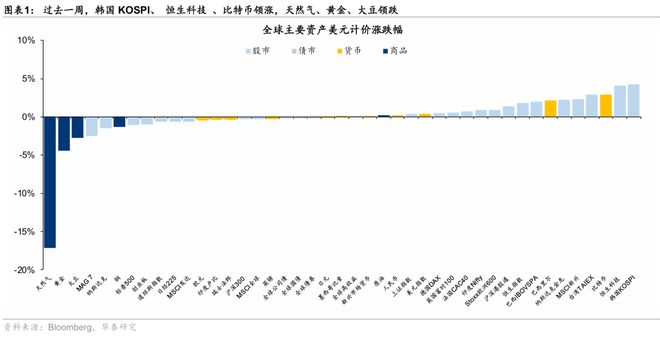
港股周观点 | 一季度“开门红”有望延续
Xin Lang Cai Jing· 2026-01-04 15:00
Group 1 - The Hong Kong stock market experienced a "good start" in 2026, driven by technology, with the Hang Seng Index rising by 2.0% and the Hang Seng Tech Index increasing by 4.3% [1][2] - The market's upward movement was primarily supported by overseas and local Hong Kong funds, as the A-share market was closed and southbound trading was inactive [1][2] - The IPO market's negative pressure on the secondary market is more of an amplifier in a weak market rather than a direct factor, with specific projects and industry conditions being more influential than the number of listings [1][2] Group 2 - The probability of successful investment in Hong Kong stocks has increased compared to November, with improved market sentiment and liquidity conditions [2][3] - The sentiment index for Hong Kong stocks dropped to 34.5, indicating a pessimistic range but closer to panic levels, suggesting a potential for recovery [2][3] - The first trading day of the year saw a significant increase in sentiment, with the index slightly recovering to 36 [2][3] Group 3 - A balanced allocation strategy is recommended, focusing on technology chains with strong performance expectations and cash flow assets [3] - The energy chain, particularly upstream resources like lithium and copper, is highlighted as a sector with favorable demand and valuation dynamics [3] - The travel chain is identified as a sector benefiting from domestic demand policies, with a focus on leading companies in hotels, airlines, and online travel agencies [3]
现代财险总裁张宗韬:中小财险公司不能用传统车险模式做新能源车险,差异化竞争才是出路
Mei Ri Jing Ji Xin Wen· 2026-01-04 14:20
Core Insights - The Chinese automotive market is experiencing significant growth, with total vehicle production and sales reaching 31.23 million and 31.12 million units respectively from January to November 2025, marking year-on-year increases of 11.9% and 11.4% [1] - New energy vehicles (NEVs) are a key growth driver, with production and sales increasing by over 30% year-on-year, and their market share approaching 50% at 47.5% [1] - Despite the growth in NEVs, the insurance sector faces challenges, with a reported underwriting loss of 5.7 billion yuan in 2024 for NEV insurance, highlighting ongoing profitability issues for smaller insurers [1][2] Industry Overview - The insurance industry is dominated by major players known as the "Big Three" (People's Insurance, Ping An, and Taikang), which maintain a strong market position due to their established brand influence and extensive networks [2] - The NEV insurance market is characterized by high premiums and high claims, creating a dilemma for many insurers regarding whether to underwrite these policies [2] - The competitive landscape is intensifying, with the "Big Three" achieving underwriting profitability through cost control measures, while smaller insurers continue to struggle with losses [2][3] Challenges for Small Insurers - Small insurers face significant hurdles in achieving underwriting profitability due to higher claim rates associated with NEVs compared to traditional fuel vehicles [2][3] - The evolving nature of driving behaviors and risks for NEVs complicates underwriting processes, as even experienced drivers may encounter unexpected risks [3] - Technical challenges related to the design and repair of NEVs, such as expensive parts and complex repair requirements, further increase claims costs for insurers [3] Strategic Recommendations - Small insurers are encouraged to adopt differentiated strategies and innovate to overcome market challenges, focusing on niche segments and enhancing technical capabilities [3][4] - A shift in strategic focus is necessary, moving away from direct competition with larger firms in established markets to developing unique value propositions [5][6] - Key strategic considerations include clear decision-making on product offerings, differentiation in customer targeting, resource allocation, and aligning operational systems with strategic goals [7][8]
“中保”跨年策划 | 寄语2026分红险:迷津虽跌宕,新潮仍澎湃!
Xin Lang Cai Jing· 2026-01-04 13:20
Core Viewpoint - The insurance industry, particularly the dividend insurance sector, is experiencing a transformation that began in late 2024 and gained momentum throughout 2025, with a focus on building confidence in "dividend expectations" as the new year begins in 2026 [1][23]. Industry Marketing Concepts - Following the "9·24" market rally in 2024, a policy-driven bull market in A-shares continued into 2025, culminating in the Shanghai Composite Index reaching 4000 points for the third time, boosting confidence in the capital market's future [2][24]. - Despite the positive market sentiment, the general public remains concerned about economic downturns and the difficulty of making money, leading to a preference for fixed-income insurance products over floating-return products like dividend insurance [2][24]. - Companies and marketers are attempting to apply the "Merrill Clock" theory to justify increasing equity asset allocations during the economic recovery phase, but it is essential to consider the current development stage of the country and the financial industry's requirements [2][24]. National Development Direction - The 14th Five-Year Plan emphasizes the development of new productive forces and the construction of a modern industrial system, with a focus on strategic emerging industries such as new energy, aerospace, and biotechnology [3][25]. - The financial sector's role is to support national strategies and new productive forces, facilitating value conversion across time and space [3][25]. Investment Strength of Insurance Companies - Dividend insurance products have lower guaranteed interest rates compared to traditional life insurance, allowing insurance companies to release more funds for long-term investments, which tests their active investment capabilities [5][27]. - The evaluation of an insurance company's investment ability is complicated by the transition to new accounting standards, making direct comparisons between listed and non-listed companies challenging [6][27]. - Key investment return metrics include net investment yield, total investment yield, and comprehensive investment yield, which reflect the company's overall investment capabilities [7][28]. Dividend Insurance Product Insights - Dividend insurance features several interest rates: guaranteed rate, illustrated rate, and client theoretical yield, with the latter two often leading to misunderstandings among clients [10][32]. - The actual dividend payout rate, which is the ratio of actual dividends distributed to illustrated dividends, is a critical metric for assessing the performance of dividend insurance products [13][34]. Comparison of Hong Kong and Mainland Dividend Insurance - Hong Kong dividend insurance has lower guaranteed interest rates but higher illustrated rates due to more flexible investment channels, raising concerns about the sustainability of high illustrated returns [14][35]. - Regulatory measures in Hong Kong aim to prevent overly aggressive investment return assumptions, promoting healthy competition and sustainable development in the insurance industry [14][35]. Client Adaptability and Suitability - The transition to dividend insurance has faced resistance from some marketers and clients who struggle to accept the concept of "floating returns," indicating a need for better education and understanding of the product [17][37]. - Certain client demographics, such as those over 65 or those with a pessimistic view of national development, may not be suitable for dividend insurance, suggesting a need for tailored product recommendations [18][38]. Conclusion - As 2026 marks the beginning of the 15th Five-Year Plan, the insurance industry is positioned to respond to national economic strategies, with dividend insurance emerging as a valuable asset allocation choice for families in the coming decade [20][41].
非银金融行业跟踪周报:看好保险2026年“开门红”,公募费改第三阶段落地-20260104
Soochow Securities· 2026-01-04 13:01
证券研究报告·行业跟踪周报·非银金融 非银金融行业跟踪周报 2026 年 01 月 04 日 证券分析师 孙婷 执业证书:S0600524120001 sunt@dwzq.com.cn 证券分析师 罗宇康 执业证书:S0600525090002 luoyk@dwzq.com.cn 行业走势 -7% -4% -1% 2% 5% 8% 11% 14% 17% 20% 23% 26% 2025/1/6 2025/5/5 2025/9/1 2025/12/29 非银金融 沪深300 相关研究 《公募基金降费第三阶段落地,引导 权益类基金发展,平滑对短债基金的 影响》 看好保险 2026 年"开门红";公募费改第三 阶段落地 增持(维持) [Table_Tag] [Table_Summary] 投资要点 2026-01-03 《低利率时代的重逢——中国分红险 发展的前世今生》 2025-12-30 东吴证券研究所 1 / 16 请务必阅读正文之后的免责声明部分 ◼ 非银行金融子行业近期表现:最近 3 个交易日(2025 年 12 月 29 日-2025 年 12 月 31 日)非银金融各子板块中仅多元金融行业跑赢沪深 ...
具身机器人“保险+租赁”保单落
Jing Ji Guan Cha Wang· 2026-01-04 12:55
Core Viewpoint - The strategic cooperation agreement signed between Ping An Property & Casualty Insurance, Shanghai Electric Leasing Co., Ltd., and Shanghai Electric Insurance Brokerage Co., Ltd. marks a significant milestone in the integration of insurance and financing leasing for embodied intelligent robots in China, representing the first successful implementation of this model in the industry [1] Group 1: Partnership and Innovation - The collaboration involves the signing of an insurance cooperation agreement for the financing leasing project of embodied intelligent robots, indicating a breakthrough in the commercial application of such technology [1] - Ping An Property & Casualty Insurance has innovatively designed comprehensive coverage that includes third-party liability, product quality liability, and information leakage liability, moving beyond traditional hardware insurance limitations [1] Group 2: Risk Management and Financial Services - The new "insurance + leasing" model addresses the issue of information asymmetry in insuring single embodied intelligent robot devices and establishes a full-chain risk control loop from manufacturing to usage to insurance [1] - This approach aims to shift insurance from a reactive "post-compensation" model to a proactive "prevention" and "intervention" model, providing sustainable financial support for the stable development of the intelligent manufacturing industry [1]