伊利股份

Search documents
乳业上市公司半年报:飞鹤、李子园、燕塘乳业等营收下滑,现代牧业等上游乳企亏损
Sou Hu Cai Jing· 2025-09-04 16:29
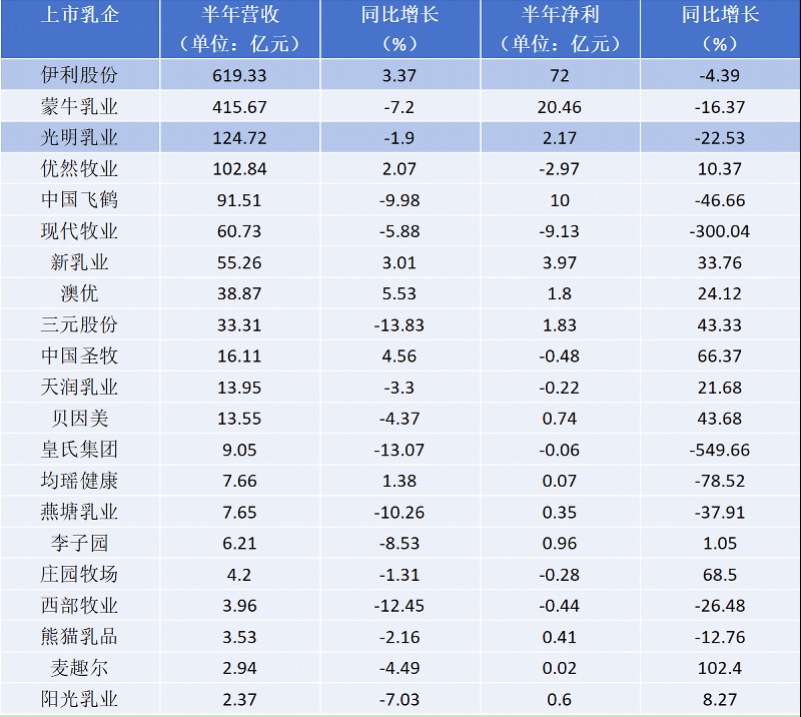
Core Viewpoint - The dairy industry is experiencing a significant divergence in performance, with leading companies like Yili achieving revenue growth while regional players face declining sales and profits [1][4][6]. Industry Overview - As of the end of August, all half-year reports for dairy listed companies in 2025 have been disclosed, revealing a stark contrast in performance amid weak demand [1]. - The industry is undergoing profound changes, shifting focus from scale expansion to quality and efficiency, emphasizing product innovation and quality improvement [2]. Performance Analysis - Among 21 major dairy listed companies, only 6 reported revenue growth, while 15 experienced declines [4]. - Yili's revenue reached 61.933 billion, marking a 3.37% increase, while Mengniu and Bright Dairy saw declines of 7.2% and 1.9%, respectively [5]. - The overall profitability of the industry is under pressure, with 7 companies reporting losses, including YouRan Dairy and Modern Dairy [6]. Business Segment Insights - Liquid milk, a traditional mainstay, continues to face challenges, with Yili's liquid milk revenue down 2.06% and Mengniu's down 11.22% [8]. - Conversely, the milk powder segment shows signs of recovery, with Yili's milk powder revenue increasing by 14.26% and Mengniu's by 2.46% [10]. Strategic Responses - Companies are enhancing cost control and efficiency to navigate challenges, with Mengniu improving its operating profit margin by 1.5 percentage points to 8.5% [13]. - There is a notable trend towards diversification and international expansion, with Yili's overseas business revenue growing by 14.4% [15]. - Regional companies are leveraging local advantages for differentiated development, with New Dairy reporting a 33.76% increase in net profit [14]. Future Trends - The dairy industry is expected to evolve towards high-end, functional, and segmented products, with a focus on infant formula and cheese [15]. - Internationalization will be a key strategy for leading dairy companies, enhancing their global competitiveness [15]. - Cross-industry integration is emerging as a trend, with a shift from merely selling products to providing health solutions [15].





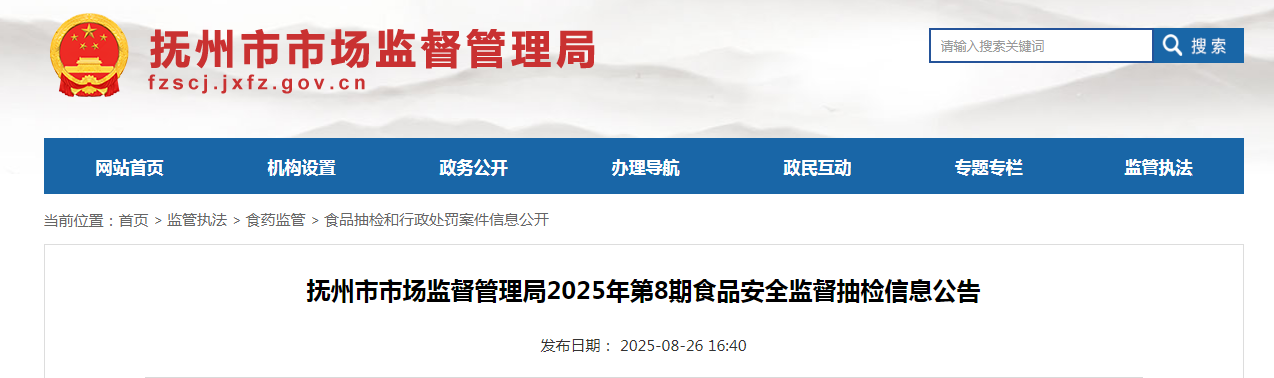
江西省抚州市市场监督管理局2025年第8期食品安全监督抽检信息公告
Zhong Guo Zhi Liang Xin Wen Wang· 2025-09-04 14:58
Core Viewpoint - The announcement from Fuzhou Market Supervision Administration reveals the results of food safety inspections, indicating that out of 43 batches tested, 36 were compliant while 7 were found to be non-compliant, primarily concerning agricultural products [2]. Group 1: Inspection Results - A total of 43 batches were inspected, with 36 passing and 7 failing the safety standards [2]. - The non-compliant products mainly included agricultural items, with specific failures related to pesticide residues and microbial contamination [2]. - Consumers are encouraged to report any non-compliant products they encounter by calling the complaint hotline "12315" [2]. Group 2: Non-Compliant Products - The non-compliant products included: - Litchi with pesticide residue exceeding the limit (0.76 mg/kg vs. 0.5 mg/kg) [2]. - Chili pepper with cadmium levels above the permissible limit (0.080 mg/kg vs. 0.05 mg/kg) [2]. - Kiwi with chlorpyrifos residue exceeding the limit (0.16 mg/kg vs. 0.05 mg/kg) [2]. - Specific companies and locations of the non-compliant products were detailed, highlighting the need for improved quality control in food production [2]. Group 3: Compliant Products - The compliant products included various food items such as cucumbers, reusable dining utensils, and cooking oils, all passing safety inspections [3][4]. - The list of compliant products reflects a range of categories, including agricultural products, restaurant supplies, and condiments [3][4]. - The compliance of these products indicates a generally positive trend in food safety within the inspected categories [3][4].
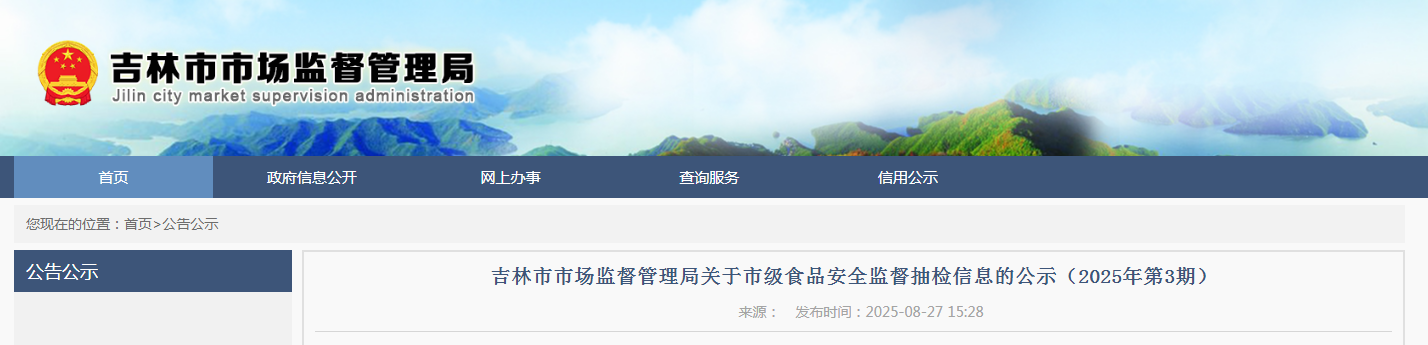
吉林省吉林市市场监督管理局关于市级食品安全监督抽检信息的公示(2025年第3期)
Zhong Guo Zhi Liang Xin Wen Wang· 2025-09-04 14:53
Summary of Key Points Core Viewpoint - The Jilin Municipal Market Supervision Administration has publicly announced the results of food safety supervision and sampling inspections for the third period of 2025, highlighting the importance of consumer awareness regarding food safety. Group 1: Inspection Results - A total of 200 batches of ordinary food samples were inspected, with 4 batches found to be non-compliant, indicating a non-compliance rate of 2% [1]. - Consumers are encouraged to report any food safety violations by calling the market supervision hotline at 12315 [1]. Group 2: Non-Compliant Products - Specific details of the non-compliant products include: - Dried yellow flowers from Jilin City, which contained excessive sulfur dioxide residues [1]. - Dried kelp from Jilin City, also found to have excessive sulfur dioxide residues [1]. - A fruit drink from Jilin City that exceeded acceptable levels of microbial counts [1]. - A hawthorn drink from Jilin City, which similarly had excessive microbial counts [1]. Group 3: Consumer Guidance - The announcement serves as a reminder for consumers to remain vigilant about food safety and to report any suspicious products or practices [1].
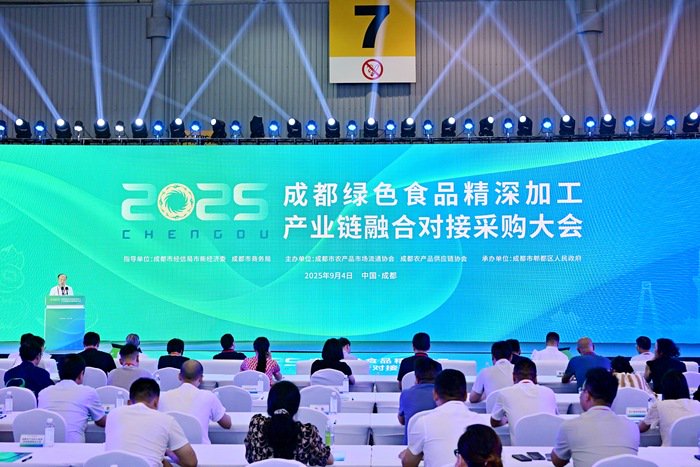
激发百亿市场新活力 共探高质量发展新路径 2025年成都绿色食品精深加工产业链融合对接采购大会在蓉成功举办
Xin Lang Cai Jing· 2025-09-04 13:19
Core Insights - The 2025 Chengdu Green Food Deep Processing Industry Chain Integration Procurement Conference was successfully held, focusing on high-quality development and chain collaboration in the food processing sector [1][3] - The event attracted over 300 representatives from the food deep processing industry, including major enterprises and procurement merchants, to explore industry cooperation opportunities [4][6] Group 1: Event Overview - The conference was part of Sichuan Province's "1+1+8" strategy aimed at strengthening the agricultural product deep processing industry chain [3] - It was organized by various governmental and industry associations, highlighting the importance of collaboration among agricultural stakeholders [3] Group 2: Participation and Engagement - Major companies such as COFCO, Yihai Kerry, New Hope, and others participated, along with local agricultural enterprises and e-commerce platforms [4][6] - The event featured a dual exhibition and sales approach, showcasing nearly 20 leading enterprises and promoting green food products [6] Group 3: Procurement Opportunities - A procurement list worth 2.95 billion yuan was released, covering 15 categories of products, including vegetables, meat, and dairy [8] - The procurement scale included 220,000 tons of vegetables and 30,000 tons of pork, indicating significant market demand [8] Group 4: Strategic Partnerships - 15 leading enterprises signed agreements during the conference, with a total procurement amount nearing 200 million yuan, focusing on green ecological products [9] - The partnerships aim to enhance supply chain collaboration and brand development within the industry [9] Group 5: Future Directions - The conference aims to enhance the "Tianfu Granary" brand and promote the integration of resources and innovation in the green food industry [9] - Future efforts will focus on creating a nationally influential "Chuan" food industry cluster and expanding market reach [9]
帮主郑重:创业板暴跌4.25%!资金猛砍算力猛吃消费,背后是三场豪赌
Sou Hu Cai Jing· 2025-09-04 12:53
Core Viewpoint - The market experienced a significant divergence, with the ChiNext index dropping by 4.25% due to a collapse in computing hardware stocks, while the consumer sector thrived, indicating a major shift in investment strategies [1] Group 1: Computing Hardware Sector - The collapse of computing hardware stocks was driven by three main issues: valuation bubble, weakened order expectations, and technological disruption [3] - Valuation bubble: Companies like Cambricon had a dynamic PE ratio exceeding 5000, while Zhongji Xuchuang's PE reached 80, which could not be supported by their earnings growth, leading to strong profit-taking by institutions [3] - Order expectations: Goldman Sachs revised its 2025 AI server sales forecast down from 31,000 units to 19,000 units, raising concerns about peak demand for computing power and compressing profit margins for hardware manufacturers [3] - Technological disruption: The emergence of domestic AI models like DeepSeek, which offer competitive performance at a fraction of the cost of traditional models, undermines confidence in the conventional "compute power" approach [3] Group 2: Consumer Sector - The consumer sector's surge was attributed to a combination of policy support, capital inflow, and favorable valuations [4] - Policy support: The implementation of the "Personal Consumption Loan Fiscal Subsidy Policy" on September 1, along with local governments issuing consumption vouchers and promoting paid leave, revitalized the consumer market [4] - Capital inflow: Significant net subscriptions to consumer ETFs, with 168 million in the last five days and 315 million in the last ten days, indicate a strategic shift of funds from high-tech stocks to consumer stocks [4] - Valuation advantage: The consumer sector's PE ratio stands at 23.1, with the food and beverage ETF tracking a PE of only 11.94, making it highly attractive compared to historical averages [5] Group 3: Investment Strategies - Investors are advised to avoid three types of stocks: those with no earnings but high concept valuations, stocks with weakened order expectations, and stocks with significant institutional outflows [6] - Conversely, investors should focus on two types of stocks: those benefiting from consumer policies, such as dairy, retail, and tourism, and bank stocks like Agricultural Bank and Industrial and Commercial Bank, which offer high dividends and low valuations [7] Group 4: Market Outlook - Despite the market's volatility, the foundation for a slow bull market remains intact, supported by clear policy backing and a stable liquidity environment [8] - The recent market movements indicate a healthy rotation of funds from overvalued sectors to undervalued ones, which could lead to a more stable and sustainable market trajectory [10]


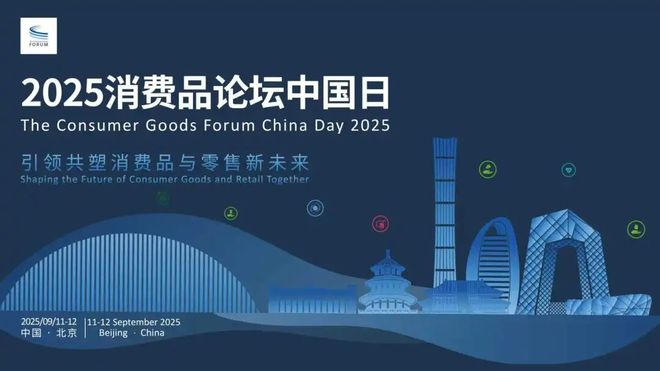
引领共塑消费品与零售新未来 | 2025 消费品论坛中国日开幕在即
Di Yi Cai Jing Zi Xun· 2025-09-04 12:25
Group 1 - The event "2025 Consumer Goods Forum China Day" will take place on September 11-12, 2025, at the Four Seasons Hotel in Beijing [2] - The agenda includes discussions on the future of Chinese consumers, innovation in the consumer industry, and the impact of AI on retail and consumer goods [6][12] - Key speakers include partners from McKinsey, KPMG, BCG, and leaders from major companies like Ant Group and Bright Dairy [7][8][9] Group 2 - The forum will feature a roundtable on food safety digitalization and the challenges and opportunities in the food safety sector [19][25] - There will be discussions on sustainable practices in the consumer goods industry, including plastic waste management and green packaging [26][28] - The event aims to promote collaboration among industry leaders to enhance food safety and sustainability in the consumer goods sector [27][30] Group 3 - The Consumer Goods Forum (CGF) is a global organization founded in 1953, uniting retail and manufacturing leaders to drive sustainable growth [39] - CGF has over 400 members from more than 70 countries, with a combined sales revenue exceeding €4.6 trillion [39] - The mission of CGF is to create better business practices that benefit both humanity and the planet [39]
超短期融资超10次,伊利股份债务压力几何?
Sou Hu Cai Jing· 2025-09-04 12:00
Core Viewpoint - In the first half of the year, Yili Co., Ltd. has returned to a growth trajectory in revenue, primarily driven by the performance of milk powder, dairy products, and frozen products, despite a continued decline in liquid milk revenue [1][3]. Financial Performance - Yili achieved operating revenue of 61.78 billion yuan, a year-on-year increase of 3.49%, with Q1 and Q2 revenues of 33.02 billion yuan and 28.91 billion yuan, respectively [3][4]. - The net profit attributable to shareholders was 7.2 billion yuan, down 4.39% year-on-year, with Q1 and Q2 profits of 4.87 billion yuan and 2.33 billion yuan, showing a quarterly improvement [3][4]. - The net profit excluding non-recurring gains and losses saw a significant increase of 31.78%, reaching 7.02 billion yuan [4][12]. - Operating cash flow decreased significantly, with a net inflow of 2.96 billion yuan, down 44.34% year-on-year, primarily due to a decline in advance payments from distributors [12][13]. Product Performance - Liquid milk revenue continued to decline, accounting for nearly 65% of total revenue in 2024, with a decrease of 12.32% year-on-year last year and a 2.06% decline in the first half of this year [6][7]. - In contrast, revenue from milk powder and dairy products increased by 14.26% to 16.58 billion yuan, while frozen products grew by 12.39% to 8.23 billion yuan, maintaining the top market share [7][8]. - The market share for infant formula reached 18.1%, up 1.3 percentage points year-on-year, while adult milk powder market share increased to 26.1%, up 1.8 percentage points [8][9]. Debt and Financing - The company has a short-term interest-bearing debt of approximately 55.2 billion yuan and has conducted 11 financing rounds this year to meet short-term cash flow needs [1][12]. - Yili has frequently engaged in short-term financing, issuing a total of 60 billion yuan in short-term financing notes in February and additional issuances throughout the year [17][19]. - The company’s total cash and short-term investments amount to approximately 36.74 billion yuan, but the debt pressure remains significant with short-term borrowings and liabilities totaling 55.2 billion yuan [14][21]. Market Position - As of September 4, Yili's stock price was 28.16 yuan per share, with a total market capitalization of 178.1 billion yuan and a TTM price-to-earnings ratio of 21.93, indicating a relatively high valuation [22].

半年盘点|过去消费者海外抢奶粉 如今中国奶粉忙着“反向出海”
Di Yi Cai Jing· 2025-09-04 11:18
Core Viewpoint - The infant formula milk powder market in China is experiencing a significant transformation, with leading companies showing recovery in performance despite an overall decline in the domestic market [1][5]. Group 1: Market Trends - The domestic milk powder market is still in a downward trend, but top companies are seeing a rebound in their performance [1]. - The infant formula industry is showing signs of improvement, with a 1.5% year-on-year increase in sales from January to July 2025 [5]. - The market is becoming increasingly competitive, prompting domestic milk powder companies to explore international markets [2][4]. Group 2: Company Performance - Ausnutria Dairy (01717.HK) reported a 65.7% year-on-year increase in overseas revenue from its goat milk powder brand, with overseas revenue share rising from 16.1% to 25.9% [2]. - Yili (600887.SH) achieved a 14.3% year-on-year increase in revenue from its milk powder and dairy products, with infant formula sales also showing double-digit growth [5]. - China Feihe (06186.HK) expanded its presence in North America, with products now in over 1,500 large supermarkets, marking a 270% increase in store count [3]. Group 3: International Expansion - More domestic milk powder companies are joining the trend of international expansion, with Mengniu Dairy (02319.HK) reporting over 20% revenue growth from its Bellamy's brand in Southeast Asia [3]. - Ausnutria plans to enter new markets in Egypt and Iraq, as well as expand into high-birth-rate regions like India and Southeast Asia [3]. - The overseas business of Ausnutria is expected to maintain high double-digit growth, potentially exceeding 1 billion yuan in revenue [3]. Group 4: Competitive Landscape - Foreign brands are also experiencing significant growth, with Danone reporting an 11.3% year-on-year increase in sales in China, North Asia, and Oceania [6]. - The market is seeing a shift towards higher concentration, with leading brands gaining market share amid a backdrop of declining birth rates [7]. - Online sales of milk powder increased by 10.2% year-on-year, while offline sales decreased by 2.1%, indicating a shift in consumer purchasing behavior [7].
半年盘点|过去消费者海外抢奶粉,如今中国奶粉忙着“反向出海”
Di Yi Cai Jing· 2025-09-04 11:00
Group 1: Market Trends - The infant formula market in China is experiencing a decline, while leading companies are seeing a recovery in performance amidst market differentiation [1][5] - Domestic milk powder companies are increasingly looking to expand overseas due to intense competition in the local market, achieving new breakthroughs in the first half of 2025 [2][4] - The overall sales of infant formula in China increased by 1.5% from January to July 2025, indicating a market recovery [5] Group 2: Company Performance - Aoyou Dairy's revenue from its goat milk powder brand, Kabrita, reached 480 million yuan overseas, a year-on-year increase of 65.7%, with overseas revenue share rising from 16.1% to 25.9% [2][3] - Yili's dairy product revenue for the first half of 2025 was 16.58 billion yuan, a 14.3% increase, with infant formula sales showing double-digit growth [5] - Mengniu Dairy reported over 20% revenue growth for its Bellamy's brand in Southeast Asia, particularly in Vietnam [3][5] Group 3: International Expansion - Aoyou Dairy plans to enter new markets such as Egypt and Iraq, while also targeting high-birth-rate regions like India and Southeast Asia, expecting to maintain high double-digit growth in overseas business [3][4] - China Feihe has successfully entered over 1,500 large supermarkets in North America, with a 270% increase in store count compared to the previous period [3][5] - The competitive landscape is shifting as more domestic milk powder brands join the race for international markets, with higher profit margins reported overseas compared to domestic sales [4][5] Group 4: Foreign Brands Performance - Danone's sales in China, North Asia, and Oceania reached 2.02 billion euros, an 11.3% increase, driven by strong demand for specialized nutrition products [6][8] - FrieslandCampina's specialized nutrition business in China saw an 18.1% revenue increase, reflecting the growing market demand [8] - A2 Milk Company reported a revenue of 1.3 billion New Zealand dollars in China and Asia, a 13.9% increase, and announced the acquisition of a factory to enhance production capacity [8]
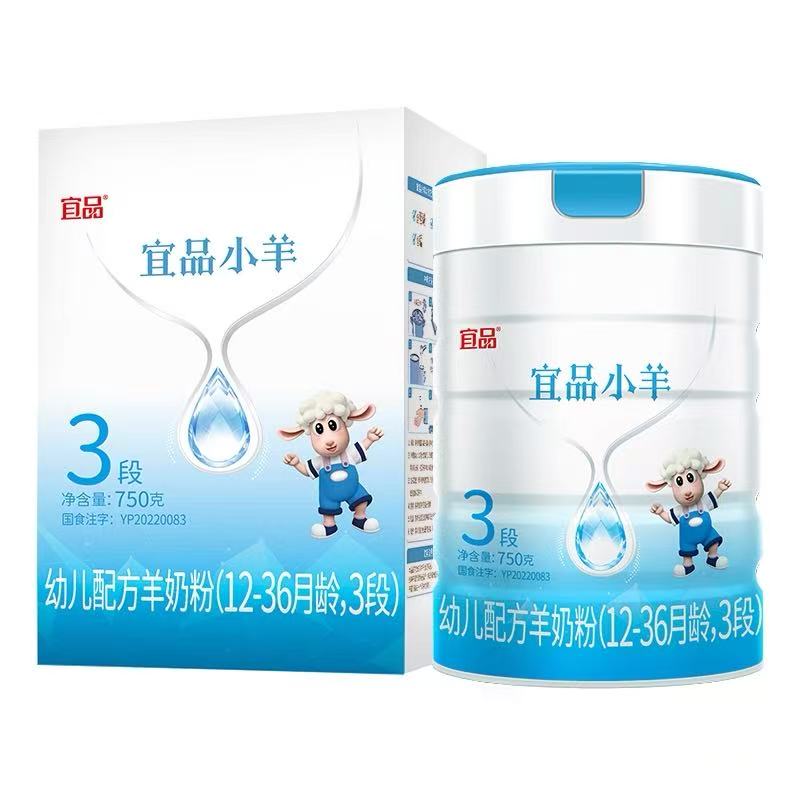
羊奶粉难撑起宜品集团的IPO野心
Xin Lang Cai Jing· 2025-09-04 10:29
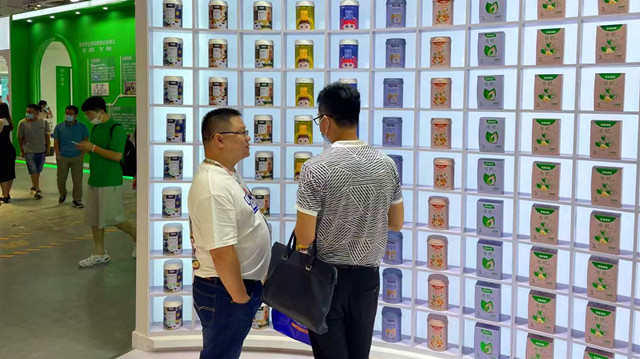
Core Viewpoint - The article discusses the growing market for goat milk powder in China, highlighting the competitive landscape and the recent IPO attempt by Yipin Nutrition Technology Group, which aims to capitalize on the niche market of goat milk products [1][3]. Company Overview - Yipin Group was established in July 2012 and offers a product range that includes infant formula goat milk powder, special medical purpose foods, and adult formula milk products [1]. - The company is recognized as the second-largest goat milk powder brand in China, with a market share of 14.0% in the goat milk powder market and 17.6% in the infant formula goat milk powder market as of 2024 [3]. Financial Performance - Yipin Group's revenue for 2022, 2023, and 2024 is reported as 1.402 billion, 1.614 billion, and 1.762 billion yuan respectively, with 806 million yuan in revenue for the first half of 2025 [3][9]. - The company's main business, infant formula goat milk powder, saw a revenue decline from 550 million yuan in the first half of 2024 to 448 million yuan in the first half of 2025, a drop of 18.5% [9]. Market Dynamics - The goat milk powder market is considered a niche segment with growth potential, especially for consumers with dietary restrictions such as lactose intolerance or milk protein allergies [5]. - The implementation of new national standards for infant formula has led to a more competitive environment, with larger brands entering the market, thereby increasing competition for smaller players like Yipin Group [6][8]. Competitive Landscape - Major dairy companies such as Yili, Mengniu, and Feihe have entered the goat milk powder market, leveraging their brand recognition and distribution capabilities to capture market share [6][8]. - The increasing awareness among consumers regarding the benefits of goat milk powder, such as lower allergenicity and better absorption, has contributed to its rising popularity [6][8]. Future Outlook - Yipin Group's ability to attract capital market interest will depend on its growth potential and market positioning amidst increasing competition and a declining birth rate in China [9].