
奇瑞汽车

Search documents
14万的「平价迈巴赫」,卖爆了
3 6 Ke· 2025-07-21 09:35
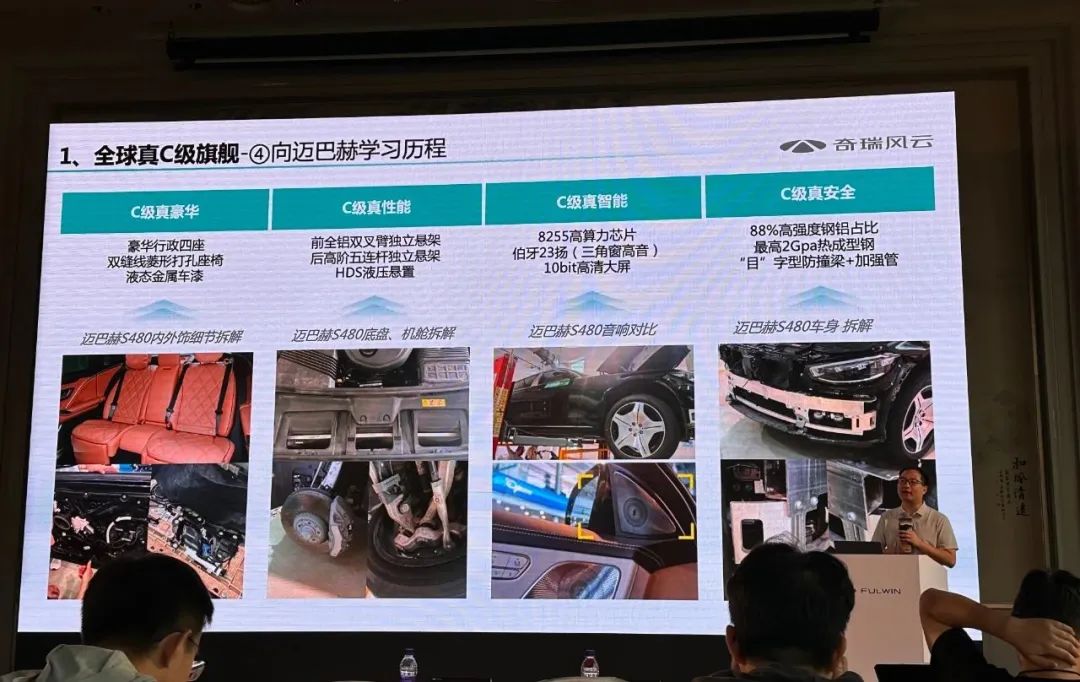
Group 1 - The automotive industry is experiencing a trend where larger vehicles are being offered at lower prices, making previously premium models more accessible to consumers [1][15][17] - The Chery Fengyun A9L, priced between 139,900 and 197,900 yuan, has gained significant traction, with over 50,000 orders placed within 24 hours of its launch [2][4][12] - The A9L is marketed as a "C-class flagship" vehicle, featuring luxury configurations typically found in higher-end models, which has attracted consumers looking for value [8][9][14] Group 2 - The competitive landscape is shifting, with domestic brands like Chery and Geely introducing models that challenge traditional luxury brands by offering similar features at lower prices [18][19] - The success of the A9L is attributed to its high cost-performance ratio, appealing to consumers who prioritize value for money in their vehicle purchases [6][7][22] - Other brands, such as NIO and Leap Motor, are also adopting similar strategies, focusing on affordability and spaciousness to capture market share [21][22]

插电混动汽车进化论:经济性带来持续繁荣,但终将因技术革命改变
Minmetals Securities· 2025-07-21 08:15
Investment Rating - The report rates the automotive industry as "Positive" [3] Core Insights - The Chinese plug-in hybrid electric vehicle (PHEV) market has experienced growth rates exceeding those of pure electric vehicles (BEVs) for over three years, driven primarily by economic factors and commuting needs [1][14] - The sustainability of the PHEV market will depend on its economic viability as the efficiency of BEVs continues to improve [1][2] - The evolution of PHEVs can be categorized into two main types: PHEVs that can directly drive the vehicle and extended-range electric vehicles (EREVs), with distinct trends in product development [2][39] Summary by Sections 1. Economic Basis of PHEV Market Prosperity - PHEVs have consistently outpaced BEVs in growth due to their cost-effectiveness and ability to meet commuting demands [1.1][14] - The main hybrid technologies utilize a series operation mode to address fuel consumption issues during commuting [1.2][21] - The efficiency of BEVs is improving, which raises questions about the long-term economic sustainability of PHEVs [1.3][31] 2. Product and Technology Evolution of PHEVs - Traditional automakers are optimizing PHEV products, focusing on cost efficiency and leveraging existing engine technologies [2.1][39] - New entrants in the market are adopting EREV strategies, which allow for greater integration with BEV technologies [2.2][46] - The market is witnessing a clear division between PHEVs and EREVs, with each catering to different consumer needs and preferences [2.3][48] 3. Long-term Outlook - The report anticipates that advancements in technologies such as autonomous driving and vehicle-to-grid (V2G) will significantly enhance the economic viability of BEVs, potentially leading to a decline in PHEV and traditional fuel vehicle demand [3.1][3.2] - By 2030, it is projected that PHEVs will capture nearly 40% of the Chinese automotive market, while their prospects in the U.S. remain limited and more favorable in Europe [2][4.1]

数据简报 | 2025年1-6月前十位轿车生产企业销售情况简析
中汽协会数据· 2025-07-21 01:48
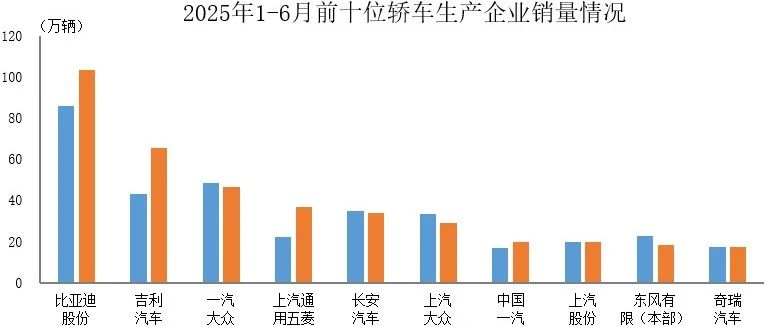
Core Insights - The top ten passenger car manufacturers sold 3.907 million units from January to June 2025, accounting for 68.9% of total passenger car sales [1] - Among these ten companies, BYD, Geely, SAIC-GM-Wuling, FAW Group, and Chery experienced varying degrees of sales growth compared to the same period last year, while other companies saw a decline in sales [1] Group 1 - The total sales volume of the top ten passenger car manufacturers reached 3.907 million units [1] - The market share of these manufacturers is 68.9% of the total passenger car sales [1] - Sales growth was observed in BYD, Geely, SAIC-GM-Wuling, FAW Group, and Chery [1] Group 2 - The article highlights the performance of the top ten manufacturers in the passenger car market [1] - It indicates a trend of sales decline for other manufacturers outside the top ten [1] - The data is sourced from the China Association of Automobile Manufacturers [2]

【走马都市圈③】郑开走大道
Zheng Zhou Ri Bao· 2025-07-21 01:47
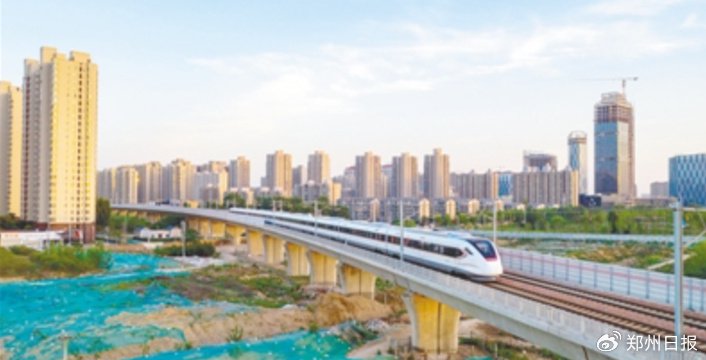
Core Viewpoint - The article emphasizes the deepening integration and collaboration between Zhengzhou and Kaifeng, highlighting the development of transportation infrastructure, industrial synergy, and cultural tourism as key drivers for regional growth and urbanization. Transportation Infrastructure - The Zhengkai Expressway, completed in 2006, symbolizes the connection between Zhengzhou and Kaifeng, facilitating closer ties between the two cities [1] - The Zhengkai Intercity Railway, with a length of 57.14 kilometers, operates 106 trains daily, creating a "half-hour living circle" for residents [4][6] - A comprehensive transportation system, including highways, railways, and public transit, enhances mobility and supports the free flow of talent and resources between the two cities [7][8] Industrial Development - The Zhengkai automotive industry cluster includes over 10 well-known car manufacturers and hundreds of parts suppliers, contributing to a projected production of 1.4 million vehicles in 2024 [11][13] - The establishment of the Zhengkai automotive industry belt aims to create a production base for 3 million vehicles, linking various economic development zones [13] - Collaborative efforts in technology and manufacturing are evident, with companies in Kaifeng and Zhengzhou working together to innovate and enhance production capabilities [14] Cultural and Tourism Integration - The integration of cultural tourism has attracted over a million visitors, with convenient travel options between Zhengzhou and Kaifeng enhancing the experience [15][19] - The development of cultural IP and joint marketing strategies is expected to boost the tourism industry in the Zhengzhou metropolitan area [19] - The establishment of a seamless travel experience, including the sale of nearly 140,000 annual tourism passes, reflects the success of the Zhengkai integration [17] Government Services and Collaboration - The launch of the "Zhengkai Same City" service window has streamlined administrative processes, allowing for efficient handling of cross-city services [21][23] - Digital integration through apps has facilitated access to services across both cities, reducing the need for physical travel [23] - Ongoing efforts to enhance collaboration in public services aim to improve the overall experience for residents and businesses in the region [24]
经济聚焦|从亮眼数据看汽车产业活力释放
Ren Min Ri Bao· 2025-07-20 00:58
Core Viewpoint - The Chinese automotive industry has achieved significant growth in production and sales, with multiple indicators showing double-digit year-on-year increases, while measures to rectify "involution" competition are being implemented effectively [1][2][4]. Group 1: Industry Performance - Total automotive production and sales reached 15.62 million and 15.65 million units, representing year-on-year growth of 12.5% and 11.4% respectively [2]. - New energy vehicle (NEV) production and sales reached 6.968 million and 6.937 million units, with year-on-year growth of 41.4% and 40.3% respectively [2]. - Automotive exports totaled 3.083 million units, showing a year-on-year increase of 10.4%, while NEV exports reached 1.06 million units, up 75.2% [2][9]. Group 2: Market Improvement and Policy Support - The domestic market for automobiles has shown significant improvement, supported by the "old-for-new" vehicle replacement policy, which has led to a cumulative subsidy application exceeding 10 million since its implementation [3][4]. - Domestic sales of automobiles reached 12.57 million units, with a year-on-year increase of 11.7%, and passenger vehicle sales were 10.95 million units, up 13.6% [4]. Group 3: Industry Regulation and Competition - The automotive industry has made progress in addressing "involution" competition, with initiatives launched to regulate data publication and curb false advertising [4]. - Major automotive companies have committed to reducing payment terms to no more than 60 days and enhancing product consistency checks [2][4]. Group 4: Localization and Strategic Transformation - Joint ventures are accelerating their localization strategies, with companies like SAIC-GM achieving significant progress in local R&D and product development [6][7]. - GAC Toyota has successfully launched its first pure electric SUV, benefiting from a comprehensive local engineering system [6]. Group 5: Internationalization and Global Integration - The Chinese automotive industry is increasingly integrating into the global market, with exports covering over 200 countries and regions [8]. - The market share of Chinese brand NEVs in overseas markets has risen from 1.8% in 2021 to 9.5% in 2024, with a further increase to 12.7% in the first five months of this year [9].
百度萝卜快跑牵手Uber出海;MiniMax入港上市;霸王茶姬重返越南;《哪吒2》阿联酋上映|一周大公司出海动态
Tai Mei Ti A P P· 2025-07-18 22:29
Group 1: Strategic Partnerships and Expansions - Baidu's autonomous driving service platform "Luobo Kuaipao" has formed a global strategic partnership with Uber to expand driverless services beyond the US and mainland China, with thousands of sixth-generation driverless cars expected to join Uber's global network by the end of this year [1] - DingTalk, a subsidiary of Alibaba, has launched its first independent AI application "7Ding" overseas, integrating AI, office collaboration, and e-commerce procurement functions to enhance business efficiency [2] - WeRide has commenced pure driverless operations of its autonomous shuttle "Robobus" in Singapore, marking a milestone for smart mobility in Southeast Asia [3] Group 2: Market Entries and Product Launches - CHAGEE (霸王茶姬) has officially re-entered the Vietnamese market with its first store opening in Ho Chi Minh City, focusing on fresh leaf milk tea and original tea series products [4] - Midea Group has signed a sponsorship deal for the 2025 Africa Cup of Nations, aiming to accelerate its investment in the African market, with plans to invest at least $50 million in local production of home appliances by early 2026 [5][6] - Chery Automobile plans to launch two new SUV models in the UK, optimizing them for the local market, following a successful sales increase in the previous year [7] Group 3: Entertainment and Cultural Exports - The Chinese animated film "Nezha 2" premiered in the UAE and is set to release in North America starting August 22, having already broken numerous box office records [8] Group 4: Overseas Manufacturing Initiatives - Changan Automobile is in the planning stage for establishing a factory in Europe, with a focus on selling electric vehicles across ten European countries by 2027 [9] - Shoujia Technology is exploring the feasibility of establishing a manufacturing base in Romania as part of its overseas growth strategy, with a significant portion of its business now coming from exports [10] Group 5: Financing and IPO Activities - XPeng Huitian has completed a $250 million Series B financing round to support the development and commercialization of its flying car [11][12] - MiniMax, backed by Alibaba, has submitted an IPO application in Hong Kong, with a valuation of approximately $4 billion [13] - Zhipu AI is considering relocating its IPO to Hong Kong, seeking to raise around $300 million [14] - Yushu Technology has initiated its IPO counseling process with CITIC Securities as the advisory firm [15]
自主品牌加速崛起 六大车企半年销量破百万
Zhong Guo Jing Ying Bao· 2025-07-18 20:47
Industry Overview - The automotive market in China showed strong performance in the first half of 2025, with production and sales reaching 15.62 million and 15.65 million units respectively, marking year-on-year growth of 12.5% and 11.4% [2] - New energy vehicles (NEVs) also saw significant growth, with production and sales reaching 6.968 million and 6.937 million units, reflecting year-on-year increases of 41.4% and 40.3% [2][5] Major Players Performance - BYD achieved sales of 2.146 million vehicles in the first half of 2025, a year-on-year increase of 33.04% [4] - SAIC Motor sold 2.053 million vehicles, with a year-on-year growth of 12.4%, maintaining positive growth for six consecutive months [4] - Chery's sales reached 1.26 million vehicles, marking a year-on-year increase of 14.5% [5] - Geely's total sales were 1.93 million vehicles, with NEV sales reaching 1.001 million units, a remarkable year-on-year growth of 73% [5] New Energy Vehicle Trends - The NEV sector continues to thrive, with companies like Geely and Chery reporting substantial increases in NEV sales, contributing to the overall market growth [6][7] - The penetration rate of NEVs in Geely reached 52% in the first half of 2025, indicating a strong shift towards electric vehicles [5] Competitive Landscape - The competition among new car manufacturers has intensified, with Leap Motor leading the new forces with 221,700 deliveries, followed by Li Auto and Xpeng with 203,800 and 197,200 units respectively [3][7] - NIO's performance was relatively stable, delivering 114,000 vehicles, a year-on-year increase of 30.57% [8] Market Dynamics - The automotive industry is experiencing a shift from aggressive price competition to a focus on quality and innovation, as companies adapt to market changes and consumer demands [9][10] - The trend of "anti-involution" is gaining traction, with major players taking steps to stabilize supply chains and maintain supplier interests [8][9] Strategic Adjustments - Companies are restructuring internally to enhance competitiveness, with SAIC integrating its brands to improve resource utilization and reduce production costs [10] - The emphasis on brand innovation and quality improvement is becoming increasingly important in the competitive landscape of the automotive industry [10]


联检科技(301115) - 2025年7月18日投资者关系活动记录表
2025-07-18 14:46
Group 1: Company Strategy and Vision - The company aims to empower quality ecology through technology, focusing on sustainable development and innovation [2] - It targets emerging fields such as new energy, dual carbon, and biomedicine, establishing a three-pronged approach of "technology breakthroughs, industry aggregation, and capital drive" [2] Group 2: Automotive Testing Services - The company has entered the automotive testing sector through the acquisition of Guanbiao Testing, providing services for new energy vehicles and components [2] - It has obtained third-party testing qualifications from major automotive manufacturers, including Jianghuai, Geely, and Chery, significantly expanding its service capabilities [2] Group 3: Consumer Goods Testing and Certification - The company is expanding its consumer goods testing through Chongqing Shiyi, covering a wide range of products including home appliances, electronics, and food [2] - It aims to create a comprehensive service system integrating testing, certification, auditing, inspection, and digital compliance for both export and domestic markets [2] Group 4: Disclosure and Compliance - The investor relations activity did not involve any undisclosed significant information [2]
华友钴业:全产业链赋能 铸就大圆柱电池材料行业领导者
Zheng Quan Ri Bao Wang· 2025-07-18 13:32
Core Insights - Huayou Cobalt Industry has established a strong position in the cylindrical battery market, with its subsidiary Bamo Technology accounting for nearly 40% of the company's total sales of cathode materials, widely used in renowned domestic and international electric vehicle brands [1][4] - The demand for large cylindrical batteries is expected to reach a scale of 100 GWh globally this year, with a projected growth of four to five times by 2030 compared to 2025 [1][5] - Huayou Cobalt Industry leverages its full industry chain advantages and technological innovations to define new industry standards for large cylindrical battery materials [1][2] Industry Positioning - The company has built an integrated industry chain from cobalt and nickel resource development, smelting processing to ternary cathode material manufacturing, providing stable and high-quality raw material guarantees for Bamo Technology [2][4] - Huayou Cobalt Industry's full industry chain layout acts as a protective barrier against raw material price fluctuations and supply chain instability, ensuring the continuous and stable mass production of high-nickel ternary cathode materials [2][3] Technological Advancements - Bamo Technology has achieved a breakthrough in the mass production of ultra-high nickel ternary cathode materials, enhancing electric vehicle range by 30 to 40 kilometers [3][5] - The company has continuously innovated in the high nickel and high voltage technology routes, establishing itself as a benchmark for technological iteration in the industry [3][5] Global Collaboration - Bamo Technology has entered the global core supply chain of power batteries through collaborations with top partners, including a six-year supply agreement with LG Energy Solution for 8 GWh of large cylindrical batteries [1][4] - The company is advancing its Hungarian factory to enhance local supply capabilities for the European new energy industry, further solidifying its global customer ecosystem [4][5] Market Outlook - The market for large cylindrical batteries is expected to reach a scale of hundreds of billions by 2030, with Huayou Cobalt Industry focusing on product high-end and international operations to secure future growth [5] - The company's strategic focus on technological breakthroughs in large cylindrical battery materials aims to meet the industry's ongoing demand for high capacity, high rate, low cost, and high safety [5]

联检科技董事长杨江金:提升跨技术整合能力 提供“检测+”一站式服务
Zhong Zheng Wang· 2025-07-18 10:44
Core Viewpoint - The company has officially changed its name from JianKe Co., Ltd. to LianJian Technology, reflecting a renewed commitment to its vision of focusing on inspection and testing services [1] Group 1: Business Transformation - The company is accelerating its strategic transformation to focus on inspection services and optimize its business structure in response to the slowing growth of the real estate and infrastructure sectors [2] - LianJian Technology has completed acquisitions of several companies, including Shiyi Quality Inspection and Guanjian Testing, to quickly enter emerging fields such as electronics and automotive components [2] - The company plans to establish an industrial fund with professional institutions to invest in inspection industry projects and explore new growth areas in sectors like new energy and intelligent manufacturing [2] Group 2: Automotive Business Development - The automotive testing services are primarily implemented through the subsidiary Guanjian Testing, which has gained third-party testing qualifications from major automotive manufacturers [3] - The company has expanded its recognition capabilities with traditional and new energy vehicle manufacturers, enhancing its service range significantly [3] Group 3: Competitive Advantage - The inspection industry is characterized by intense competition and a fragmented market, with policies supporting the consolidation of the sector [4] - The company differentiates itself through a demand-driven integrated service ecosystem and cross-domain technology integration capabilities, enhancing customer loyalty and service value [4] - The company employs a "Testing+" model to deepen customer engagement by providing comprehensive services that include not only testing but also solutions for risk management and remediation [4] Group 4: Research and International Expansion - The company is increasing its R&D investment in smart testing and AI diagnostics to build an intelligent inspection platform [5] - It is also expanding into international markets by establishing localized operational teams in regions such as Southeast Asia and the Middle East to enhance its market share [5]