
华发集团

Search documents
300376,四次控股权转让未果,第五次来了
Xin Lang Cai Jing· 2025-12-09 13:41
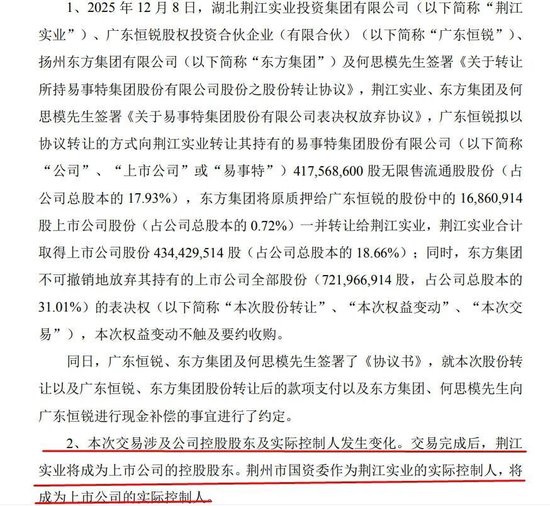
湖北荆州国资拟以24.37亿元入主A股上市公司ST易事特(300376)。 ST易事特表示,本次股份转让可充分发挥国资和民营企业各方体制机制优势,实现强强联合。 公告称,荆江实业是专业化产业运营集团企业,肩负荆州城发向市场化经营实体转型的重大战略规划任 务,已构建生物医药、建筑施工、文旅、环保等多元化业务体系;荆州城发在新能源新材料、数字经 济、生态环保等战略性新兴产业布局深厚,且具备900多亿元总资产规模,加之荆江实业300亿元资产规 模与2A+信用评级优势,不仅能为公司提供更稳定的资金保障,更可助力引入政府、产业等战略及业务 资源,加快公司战略布局,促进公司整体业务发展。 ST易事特同时公告,12月7日,东方集团、何思模与广东恒锐、广东省广物控股集团有限公司(简 称"广物集团")签署《股份转让协议之终止协议》,各方同意解除原《股份转让协议》。 回查公告,ST易事特此次控股权转让是在前四次转让未果后的第五次运作。 据公司2018年11月6日公告,公司接到当时控股股东东方集团及实际控制人何思模通知,东方集团、何 思模与珠海华发集团有限公司(简称"华发集团")签署《股权收购协议》,拟先将东方集团及一致行动 人持 ...


财务公司转型新探索,紧跟企业“出海”搭建金融桥梁
券商中国· 2025-11-25 03:49
在吴泽云看来,中国企业"出海"遇到的金融挑战主要来自三方面:一是需要在当地找到合适的金融机构支持企 业的融资、结算等金融需求。对中国企业来说,天然希望能与中资银行合作,但目前中资银行在海外的业务触 角仍较为有限,所能提供的金融服务的广度深度不够。二是中国企业在当地纳税、给当地雇员发工资等基本的 银行账户服务需要找到合适的银行提供,因为有些银行受限于业务资质和当地监管要求,并不能提供此类业 务。三是一些国家受外汇储备有限、跨境资本管制等影响,货币兑换和资金跨境汇出有一定限制。 "为解决集团'出海'所面临的金融需求困难,我们的角色就是要发挥金融桥梁的作用,提前了解当地金融业情 况,建立合作银行白名单,服务好集团'走出去'战略。" 吴泽云称。 作为企业集团的内部金融机构,财务公司是中国金融领域的小众分支。2022年至2024年一系列监管政策更 新升级,旨在引导财务公司回归服务集团的主业,强化内部金融服务属性,这一群体也迎来转型发展的重 要变革期。 证券时报·券商中国记者近日随中国财务公司协会调研团走访多家财务公司了解到,今年以来,随着不符合新 监管要求的旧业务逐步压降清退完毕,财务公司重新"轻装上阵",更多聚焦保障 ...

珠免集团重大资产重组:清仓格力房产,换55亿元现金,彻底退出房地产业务
Mei Ri Jing Ji Xin Wen· 2025-11-18 13:59
Core Viewpoint - Zhuhai Duty-Free Group Co., Ltd. (600185.SH) plans to sell 100% equity of Gree Real Estate to Toujie Holdings for approximately 5.518 billion yuan, marking a significant asset restructuring and related party transaction [1][4]. Group 1: Transaction Details - The transaction price will be paid in cash by Toujie Holdings, a state-owned enterprise under Zhuhai Investment Holdings, which focuses on corporate headquarters management, investment activities, and asset management services [1][3]. - The transaction is part of a broader strategy to accelerate the company's exit from real estate operations and focus on duty-free and consumer-related businesses [2][4]. Group 2: Financial Impact - Following the transaction, the net profit attributable to the parent company for 2024 is projected to improve from a loss of 1.515 billion yuan to a loss of 92.4 million yuan, a change of 93.90% [4][5]. - The company's operating revenue is expected to decrease from 5.277 billion yuan to 2.922 billion yuan, a decline of 44.62% for 2024 [5]. - Basic and diluted earnings per share are anticipated to improve significantly from -0.99 yuan to -0.28 yuan, reflecting a 71.72% increase [5]. Group 3: Strategic Goals - The company aims to enhance its focus on duty-free business, expand cross-border e-commerce, and improve compliance and governance structures [6]. - The restructuring is expected to strengthen the company's competitive advantages and enhance its sustainable development capabilities [2][4]. - The company plans to optimize its financial structure and restore cash dividend capabilities, aiming for long-term stable growth in shareholder returns [4][6]. Group 4: Market Position - As of November 18, the company's stock price was 7.47 yuan, with a market capitalization of 14.1 billion yuan [8]. - In the first half of 2025, the revenue composition showed that duty-free goods accounted for 61.4%, real estate for 24.43%, and other businesses for 12.4% [7].

从“卖格力”到“孵化更多格力”,解码珠海国资的长期主义
2 1 Shi Ji Jing Ji Bao Dao· 2025-11-04 13:44
南方财经记者彭敏静 珠海报道 珠海国资委转让格力电器股权并获超410亿元现金,一度让珠海国资从"幕后"走向"台前"。 "卖掉一个格力,孵化多个格力",成为"后格力时代"珠海国资的运营思路。尔后,珠海6年进行了3轮国企改革整合。从最近一轮来看,华发集团 与格力集团携手,共同组建珠海科技产业集团成为最大亮点。今年5月,珠海科技产业集团正式揭牌亮相。 11月3日,明略科技(02718.HK)在港交所敲钟上市,成为全球Agentic AI第一股。至此,珠海科技产业集团2025年内已培育推动影石创新、钧崴电 子、汉邦科技、江南新材、首航新能、劲方医药、七乐康、明略科技等8家企业上市,覆盖AI、半导体材料、高端制造、新能源、生物医药等核 心赛道。 (原标题:从"卖格力"到"孵化更多格力",解码珠海国资的长期主义) 珠海提升城市能级量级迫在眉睫。 今年以来,珠海因地制宜发展新质生产力,持续加快产业创新、科技创新、应用场景创新"三新"深度融合,努力在人工智能、低空经济、绿色能 源等方面取得新的更大突破,加速布局类脑智能、开源生态、人形机器人等新赛道,一体推进传统产业、新兴产业和未来产业发展。 从珠海的投资逻辑便可见一斑。拆解 ...
从“卖格力”到“孵化更多格力” 解码珠海国资的长期主义
2 1 Shi Ji Jing Ji Bao Dao· 2025-11-04 13:38
Core Viewpoint - Zhuhai's state-owned assets commission has transferred Gree Electric's equity, generating over 41 billion yuan in cash, marking a shift from "behind the scenes" to "front stage" for Zhuhai's state-owned assets [1] - The operational strategy post-Gree focuses on nurturing multiple enterprises from the success of Gree, with significant reforms and integrations in state-owned enterprises over the past six years [1] Group 1: Economic Context - Zhuhai, as one of China's first special economic zones, has faced challenges in economic growth and regional competition, with GDP growth of only 2.8% in the first three quarters of this year, totaling 331.85 billion yuan [2] - The city has struggled with an unoptimized economic structure and low industrial investment, lacking strategic pillar industries despite having advantages in certain sectors like home appliances [2] Group 2: Industrial Development - The establishment of Zhuhai Technology Industry Group in May 2023 is a key highlight, aiming to foster innovation and support the listing of eight companies in sectors such as AI, semiconductors, and renewable energy by 2025 [1][3] - The investment logic in Zhuhai has shifted towards nurturing high-end manufacturing and strategic emerging industries, with a focus on artificial intelligence, low-altitude economy, and green energy [3] Group 3: Investment Strategies - The Zhuhai Technology Industry Group has developed a comprehensive investment system covering the entire lifecycle of enterprises, focusing on critical technology sectors and providing "patient capital" to support hard tech companies [7] - The city has established a new productivity fund with an initial investment of 1 billion yuan, aiming to create a fund pool of 6 billion yuan to support industrial upgrades and high-value chain extensions [8] Group 4: Future Outlook - With the ongoing development of the Guangdong-Hong Kong-Macao Greater Bay Area, Zhuhai is positioned to leverage its advantages in attracting innovation resources and enhancing industrial collaboration with mainland cities [8] - The focus on nurturing more enterprises akin to Gree through strategic investments and support mechanisms is seen as a pathway for Zhuhai to achieve economic growth and competitiveness in emerging industries [6][8]
剖析智元机器人:一场关于人才与资本的博弈
虎嗅APP· 2025-10-21 09:24
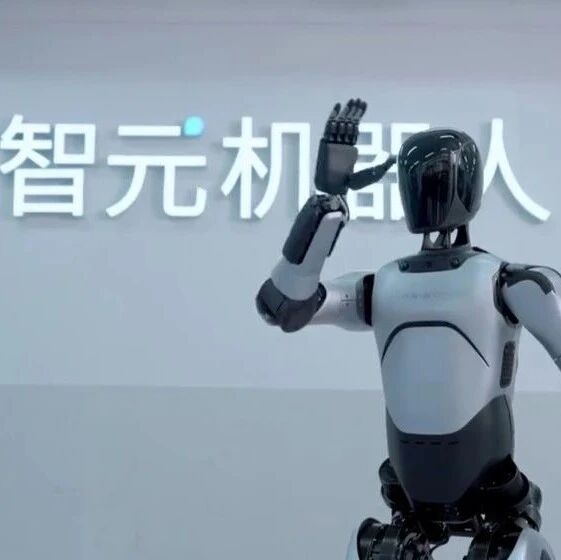
以下文章来源于AGI接口 ,作者宋思杭 AGI接口 . 出品|虎嗅科技组 作者|宋思杭 编辑|苗正卿 头图|视觉中国 数据来源:企查查、天眼查 AI卷起的财富风暴。 10月10日晚,有消息称,智元机器人计划于2026年在香港启动IPO,目标估值区间为400亿至500亿港币。对 此,虎嗅第一时间向智元机器人求证,其否认了这一消息。 与此同时,虎嗅还了解到,2024年,智元机器人的营收约1亿元规模。对此,智元方面向虎嗅透露道,2025 年智元的营收将翻几倍。就在不久前,智元刚刚发布精灵G2,目前该机器人已锁定数亿元订单。 而从2025年开始,智元机器人就一直处于风口浪尖。 值得注意的是,9月,在智元机器人官网上还公布了一份合伙人名单:其中前三位均来自华为,而他们也是 智元这家公司最重要的三名主舵手,分别手握战略、技术和商业化大权。 名单一出,在业内迅速引发关注。对比这家成立不过两年半的公司今日的估值与体量,很多人第一反应是 ——"这不就是一家浓厚的华为系公司吗?" 但若近距离观察,便能发现这家具身智能公司身上的特殊性,它不属于华为,也不像其他任何大厂。 当然,智元的创始团队里,不乏华为及科技大厂出身的高管;其行事 ...
剖析智元机器人:一场关于人才与资本的博弈
Hu Xiu· 2025-10-21 01:27
Core Insights - The article discusses the strategic positioning and organizational structure of ZhiYuan Robotics, highlighting its plans for an IPO and its unique approach to innovation and commercialization [1][2][3] Company Overview - ZhiYuan Robotics plans to launch an IPO in Hong Kong by 2026, targeting a valuation between 40 billion to 50 billion HKD, although the company has denied these claims [1] - The company is projected to generate approximately 100 million RMB in revenue in 2024, with expectations to multiply this revenue in 2025 [1] Leadership and Organizational Structure - The leadership team includes key figures from Huawei, indicating a strong influence from the tech giant, yet ZhiYuan operates independently with its own unique identity [2][3] - The company employs a "dual mechanism" for management, separating teams focused on innovation from those responsible for commercialization, allowing for both creativity and practical application [4][5] Talent Acquisition and Management Philosophy - ZhiYuan prioritizes hiring individuals with hands-on technical expertise rather than those with extensive management experience from larger corporations, aiming to foster a culture of innovation [5][6] - The company maintains a flexible organizational structure that encourages interaction between innovation and implementation teams, enhancing efficiency and output [6][7] Business Strategy and Market Positioning - ZhiYuan's business strategy is shifting from direct sales to a partner-first approach, indicating a transition from a startup to a more established company model [8][9] - The company has secured significant investments from major players like Tencent and JD.com, which not only provide capital but also enhance its supply chain and market reach [9][10] Ecosystem Development - ZhiYuan is forming a robust ecosystem by collaborating with various industry partners and establishing joint ventures, positioning itself as a platform that integrates upstream and downstream resources [12] - The company is also exploring consumer markets, having launched several robotic products on platforms like JD.com, although its primary focus remains on B2B sales [12][13]

投融资和私募基金闯入“第一梯队” 珠海能否成为“机会之城”
2 1 Shi Ji Jing Ji Bao Dao· 2025-10-16 14:24
Core Insights - Zhuhai has emerged as a "dark horse" in China's urban investment and financing landscape, ranking 15th nationally with a financing scale of 90.796 billion yuan, surpassing cities like Xiamen and Changsha [1][2] - The city has seen a significant increase in private equity fund registrations, reaching 1,917, placing it 9th in the country, indicating its attractiveness for fund management [1][5] - The investment strategy in Zhuhai focuses on "few but large" transactions, with only 549 financing deals supporting the substantial amount, reflecting the strong capital absorption capacity of major projects [2][4] Investment Dynamics - The investment amount in Zhuhai surged dramatically from 8.773 billion yuan in 2020 to 50.102 billion yuan in 2021, marking an increase of over 470% [2] - Key drivers of this investment boom include the "Hengqin Effect" and significant strategic financing from Wanda Commercial Management, which raised 6 billion USD (approximately 40 billion yuan) [2][3] Policy and Strategic Support - The "Hengqin Guangdong-Macao Deep Cooperation Zone" plan, released in September 2021, aims to develop high-tech industries, traditional Chinese medicine, cultural tourism, and modern finance, creating an attractive investment environment [3] - The strategic investment from Wanda has positioned Zhuhai prominently in the national capital market, attracting international and domestic capital for economic restructuring [3] Sector Focus - Zhuhai's investment ecosystem is increasingly centered on "hard technology," with the top three sectors being computer software, smart hardware, and new energy vehicles [5][6] - The city has a robust foundation in the software industry, with over 20 years of development, producing leading companies and fostering a mature ecosystem for AI applications [6] Cross-Regional Collaboration - Zhuhai's capital management is extending beyond its borders, exemplified by the establishment of a 10 billion yuan fund in collaboration with Wuhan, focusing on cutting-edge technology sectors [7] - This collaboration aims to leverage Zhuhai's strengths in integrated circuits and smart hardware with Wuhan's expertise in optical communication and laser technology, enhancing regional industrial synergy [7] Financial Infrastructure Challenges - Despite the growth in private equity and venture capital firms, Zhuhai's modern financial system still faces structural shortcomings, such as the absence of trust companies, limiting its capabilities in wealth management and asset securitization [8] - Recommendations include introducing trust companies to enhance asset securitization services and promoting infrastructure projects for better financial channel development [8]
大厂南下,广东站上人形机器人新风口
2 1 Shi Ji Jing Ji Bao Dao· 2025-10-16 08:46
Core Insights - The AIR (Artificial Intelligence and Robotics) industry is becoming a central field in global technological competition and industrial transformation, reshaping human production and lifestyle paradigms [1] - Financial empowerment is crucial for the development of the AIR industry, requiring a robust financial support system that includes long-term capital supply and strategic capital efficiency [1] - Guangdong is positioned as a leader in the AIR industry, leveraging its strong industrial foundation and broad application space to create a "Guangdong model" for high-quality development in the AIR sector [1] Investment Landscape - By mid-2025, global funding in the humanoid robot sector exceeded 14 billion RMB, with Chinese companies accounting for 60% of this, amounting to 8.4 billion RMB, surpassing the total funding for 2024 [1] - Guangdong enterprises, particularly from Shenzhen, are leading in this capital frenzy, with UBTECH Robotics raising over 5.5 billion HKD in the Hong Kong market, becoming the first humanoid robot stock [2] - Another Shenzhen company, Xunfei Technology, raised over 1 billion HKD through discounted share placements to enhance its R&D and global market expansion [2] Challenges and Opportunities - Despite initial commercialization successes among leading companies, the humanoid robot industry remains in its early industrialization phase, with mid-tier companies facing commercialization challenges [3] - Guangdong's reliance on imported core technologies in the robot industry chain indicates a need for improved self-sufficiency and control over the supply chain [3] - The influx of capital and favorable policies are driving innovation and market potential in Guangdong's humanoid robot industry, but breakthroughs in core components and application scenarios are necessary for establishing a competitive edge [3] Market Dynamics - The Hong Kong stock market has become a primary financing battlefield for robot companies, with limited listings for complete robot manufacturers, primarily featuring Guangdong firms [4] - UBTECH and Xunfei are the only two leading companies listed in Hong Kong, with distinct focuses on humanoid and collaborative robots, respectively [4] - The investment landscape has evolved, with significant backing from major tech firms like JD.com and Meituan, which are actively investing in multiple Guangdong humanoid robot companies [7] Strategic Investments - Major internet companies are not only providing substantial funding but also helping robot companies overcome commercial bottlenecks, facilitating the transition from concept to market [9] - The investment strategies of these tech giants emphasize the importance of commercialization capabilities rather than just technological concepts [9] - The collaboration between large firms and robot companies is fostering a regional development trend in the humanoid robot sector, enhancing the overall ecosystem [9] Future Outlook - The future of the humanoid robot industry in Guangdong hinges on the synergy between capital influx, technological breakthroughs, and commercial viability [11] - The region must focus on integrating industry capital with emerging companies to accelerate commercialization and scale production [11] - Strengthening the development of high-end algorithm talent and cross-disciplinary R&D teams is essential for enhancing Guangdong's competitiveness in the global humanoid robot market [11]
华发股份五年“蜕变”路:用“科技+”战略摆脱传统发展路径
2 1 Shi Ji Jing Ji Bao Dao· 2025-10-16 07:16
Core Viewpoint - The article highlights the transformation of Zhuhai Huafa Industrial Co., Ltd. (Huafa) from traditional real estate development to a high-quality growth model through its "Technology+" strategy, aligning with China's 14th Five-Year Plan [1][2]. Group 1: Company Strategy and Innovation - Huafa has shifted from scale expansion to quality competition, focusing on strategic layout, core market concentration, and product innovation during the 14th Five-Year Plan [1][2]. - The "Technology+Good House" product system was launched in April 2024, integrating advanced technology with residential offerings to enhance living experiences [2]. - Huafa collaborates with leading tech companies to create digital platforms for community and home management, emphasizing the upgrade of living essentials rather than merely adding tech elements [2][3]. Group 2: Market Response and Performance - Market feedback indicates positive responses to Huafa's innovative high-end projects, validating the effectiveness of its transformation strategy [3]. - The company has concentrated over 90% of its new projects in first-tier and strong second-tier cities, leveraging stable population inflows and economic vitality to mitigate industry fluctuations [5][6]. Group 3: Diversification and Risk Management - Huafa adopts a dual-driven strategy of "development and operation," balancing commercial operations, property services, and industry chain extensions to enhance resilience against cyclical risks [6][7]. - The commercial brand "Huafa Mall" has expanded to major cities, managing over 120 projects with a commercial area of 2.6 million square meters, achieving a 24% year-on-year increase in foot traffic [7]. - Huafa's property management services have diversified beyond traditional roles, achieving over 20% compound annual growth in revenue and net profit over the past five years [7][8]. Group 4: Social Responsibility and ESG Practices - Huafa maintains a commitment to shareholder returns, with a cash dividend of 0.02 yuan per share in 2025, reflecting a 31.72% payout ratio [8]. - The company has advanced 163 green building projects, reducing energy consumption and carbon emissions significantly through smart management systems [8]. - Support from its parent company, Huafa Group, enhances Huafa's "Technology+" strategy, particularly in fields like AI and robotics, which are expected to inject new productivity into real estate development [8].
