
嘉士伯

Search documents
8点1氪丨微信公关总监回应屏蔽元宝链接;vivo确认立项Vlog相机,对标大疆;贾国龙微博解禁,首发内容是速冻西兰花科普视频
3 6 Ke· 2026-02-05 00:04
Group 1 - Novo Nordisk's semaglutide sales reached 250.84 billion yuan in 2025, with a year-on-year growth of over 10% [5] - The sales breakdown includes 127.09 billion Danish kroner for Ozempic, 79.11 billion for Wegovy, and 22.09 billion for oral semaglutide [5] - In China, the total sales for all three semaglutide products amounted to 6.81 billion Danish kroner (approximately 7.49 billion yuan) [5] Group 2 - The Hong Kong High Court rejected Xu Jiayin's appeal regarding the appointment of a receiver and ordered him to pay 1.2 million HKD in legal fees by February 20 [6] - The National Healthcare Security Administration is conducting collective interviews with mental health insurance institutions to strengthen management and combat misuse of insurance funds [6][7] Group 3 - Panasonic's CFO announced potential layoffs could expand to 12,000 employees, following a previous plan to cut 10,000 jobs globally [8] - Multiple small and medium-sized banks have announced increases in deposit rates ahead of the Spring Festival, while some banks have opted to lower rates [8] Group 4 - Walmart's market capitalization surpassed 1 trillion USD, with a stock price increase of over 24% in the past year [10] - PayPal announced that Enrique Lores will take over as CEO on March 1, aiming to enhance execution efficiency and advance strategic initiatives [11] Group 5 - AMD reported a fourth-quarter net profit of 2.52 billion USD, with a year-on-year growth of 42% and revenue of 10.27 billion USD, exceeding market expectations [23] - Alphabet's fourth-quarter net profit was 34.455 billion USD, a 29.8% increase year-on-year, with total revenue of 113.83 billion USD [21]




ST西发豪掷2.9亿元全购“利润支柱” 标的公司产能利用率不足50%|并购谈
Xin Lang Zheng Quan· 2026-02-04 10:25
Core Viewpoint - ST Xifa plans to acquire a 50% stake in Tibet Lhasa Beer Co., Ltd. from Carlsberg for 292 million yuan, marking the end of a decade-long equity dispute [1] Group 1: Transaction Details - The acquisition price of 292 million yuan is only half of the assessed value of approximately 590 million yuan for the 50% stake, indicating differing evaluations and negotiation power between the parties [1] - Carlsberg has been seeking to exit since 2016, with previous attempts to transfer the stake failing [1][2] Group 2: Financial Implications - Lhasa Beer is crucial for ST Xifa's survival, contributing 390 million yuan in revenue and 102 million yuan in net profit in 2024, while ST Xifa's overall revenue was only 421 million yuan with a net profit of 26.2 million yuan [1] - The company has faced significant delays in its pre-restructuring process, with over 20 extensions, the latest being until February 25, 2026 [2] Group 3: Operational Challenges - Lhasa Beer's market share has declined from 60% to around 30%, and the company faces challenges in product structure transformation [3] - The actual production volumes for Lhasa Beer have decreased significantly, with capacity utilization rates consistently below 50% [3]

Carlsberg Net Profit Falls as Beer Consumption Declines
WSJ· 2026-02-04 07:56
Core Viewpoint - The Danish brewer is experiencing a decline in earnings as it increasingly shifts its focus towards soft drink offerings due to a decrease in consumer demand for beer [1] Group 1: Earnings Performance - Earnings have fallen for the company, indicating a challenging financial environment [1] - The reliance on soft drink products is growing as a response to the softening consumer appetite for beer [1] Group 2: Market Trends - There is a noticeable shift in consumer preferences, with a decline in beer consumption impacting the company's traditional revenue streams [1] - The company is adapting its strategy to focus more on non-alcoholic beverages in light of changing market dynamics [1]


海外看中国:消费恢复呈结构性分化
HTSC· 2026-02-04 01:21
Investment Rating - The report maintains an "Overweight" rating for the food and beverage industry [9] Core Insights - The report highlights a structural differentiation in consumer recovery across various segments, with high-end consumption showing signs of recovery while mid-range and mass-market segments lag behind [1] - Foreign brands are facing challenges due to weak demand and a trend towards "de-branding," which has led to overall performance pressure [1] - Companies achieving growth are primarily relying on their own brand strength and channel strategies [1] Alcoholic Beverages - The overseas spirits giants are experiencing performance pressure in China, with Pernod Ricard and Diageo reporting significant declines in sales [2][13] - Diageo's management remains cautious, expecting continued challenges in the market, particularly in the white liquor segment [2][14] - Rémy Cointreau's sales in China have stabilized, but internal performance shows structural differentiation [2][15] Dairy Products - Foreign brands in the dairy sector, particularly in milk beverages and nutritional products, are performing well due to strong brand management and product innovation [3][22] - The market for dairy products is expected to continue growing, especially in segments like low-temperature fresh milk and cheese [3][32] - The high import dependency in certain dairy categories presents opportunities for domestic alternatives [3][32] Soft Drinks - The soft drink industry is experiencing varied performance across segments, with carbonated drinks under pressure while energy drinks and sugar-free tea are expanding [4][33] - Coca-Cola and PepsiCo maintain high market shares in carbonated drinks but face increasing competition from local brands [4][33] - Monster's sales in China are growing rapidly, indicating a positive outlook for the energy drink segment [4][44] Beer - The beer market is under pressure due to weakened dining demand, with Budweiser experiencing a significant decline in sales [5] - Carlsberg has stabilized its performance through product adjustments, while Heineken benefits from partnerships with local brands [5] Snacks - The snack sector is seeing a weak recovery, with foreign brands struggling against local competitors [6] - Mondelez has managed to maintain steady growth in China through localized marketing strategies [6] Condiments - Foreign condiment brands are focusing on improving product value and adapting to changing consumer preferences [7] - The market is shifting towards value-oriented consumption, prompting companies to adjust their strategies [7]


运动巨头渠道策:销售下滑 门店升级丨消费参考
2 1 Shi Ji Jing Ji Bao Dao· 2026-01-20 05:10
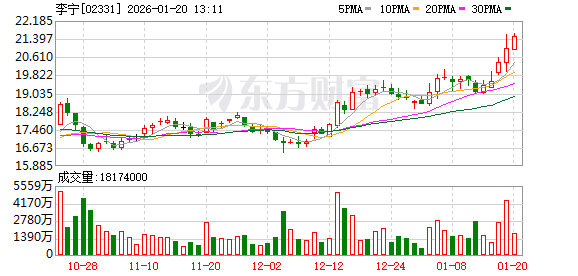
Group 1: Li Ning Company Overview - Li Ning remains optimistic about its future despite a low single-digit decline in retail sales for the fourth quarter ending December 31, 2025, excluding Li Ning YOUNG [2] - The number of sales points in China for Li Ning (excluding Li Ning YOUNG) decreased by 41 to a total of 6,091, with retail points down by 59 and wholesale points up by 33 [3] - Li Ning is investing in flagship stores, launching its first "Dragon Store" in Beijing, which is expected to create a strong synergy with the new "Honor Gold Standard" product line [3] Group 2: Market Trends and Competitors - The trend in the industry shows major brands like Nike upgrading key stores in China, with a reported 25% sales increase in upgraded locations, despite a 16% decline in overall sales [4] - Li Ning's stock price increased by 2.94% to HKD 21 per share on January 19, 2026, indicating positive market sentiment [4] Group 3: Financial Performance and Projections - Li Ning's e-commerce virtual store business remained flat, indicating stability in that segment amidst overall sales declines [2] - The company is focusing on enhancing customer experience through flagship stores, aligning with broader industry trends of investing in experiential retail [4]
全球啤酒巨头喜力换帅,掌舵人范登布林克今夏卸任
Xi Niu Cai Jing· 2026-01-19 09:15
Group 1 - Heineken's CEO, Dolf van den Brink, will step down on May 31, 2026, after over 28 years with the company, amid performance pressures [2] - The company's beer sales have faced significant declines, particularly in Europe and the US, leading to a drop in market confidence and stock price [2] - Following the announcement, Heineken's stock price fell by more than 4%, highlighting its underperformance compared to competitors Anheuser-Busch InBev and Carlsberg [2] Group 2 - The board has officially begun the search for a new CEO, with speculation about potentially breaking the tradition of internal promotions to bring in an external leader for a fresh perspective [2] - The new CEO will be tasked with executing the "Evergreen Strategy 2030," focusing on core brands and market re-engagement to meet sales and profit targets amid changing consumer demands and cost pressures [3]
Carlsberg: Expect An 8-10% EPS Growth In 2026 And 2027
Seeking Alpha· 2026-01-09 11:28
Core Insights - The stock of Carlsberg has remained flat since the previous article was published, despite experiencing a 35% share increase at one point [1] Group 1: Company Overview - Carlsberg is highlighted as a focus for investment opportunities in the European small-cap space, emphasizing a mix of dividend and growth stocks [1] - The investment group European Small Cap Ideas, led by The Investment Doctor, provides exclusive research on appealing Europe-focused investment opportunities [1] Group 2: Investment Strategy - The investment strategy includes two model portfolios: the European Small Cap Ideas portfolio and the European REIT Portfolio, aimed at capital gains and dividend income [1] - Weekly updates and educational content are provided to enhance understanding of European investment opportunities [1]

联动新一线 融媒观两江| “敢饮头啖汤”的精神让佛山焕发新魅力
Xin Lang Cai Jing· 2025-12-23 13:55
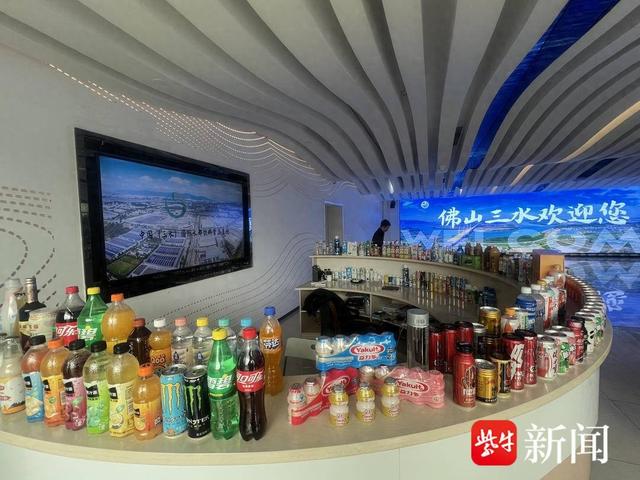
Group 1: Overview of Foshan's Development - Foshan is positioned as a "central hub" geographically, with a strategic goal to re-enter the ranks of new first-tier cities by 2025, supported by the "Recreate a New Foshan" initiative [1] - The "Ring Two Rivers" area is identified as a key strategic point for achieving high-quality development, with a focus on industrial growth and cultural tourism integration [1] Group 2: Food and Beverage Industry in Sanshui District - Sanshui District, known as "China's Beverage Capital," has attracted over 300 food and beverage enterprises, including major brands like Jianlibao and Red Bull [2][4] - The district aims for a total output value of 78.7 billion yuan in the food and beverage industry by 2024, with plans to develop a trillion-yuan industry cluster by 2027 [5] Group 3: Hydrogen Energy Industry in Nanhai District - Nanhai District is recognized as "China's Hydrogen Energy Industry Capital," with over 170 hydrogen energy companies and planned investments exceeding 60 billion yuan [7][9] - The district's hydrogen energy industry is projected to generate an annual output value exceeding 100 billion yuan upon full production [7] - Nanhai has established a comprehensive hydrogen energy industry chain, from production to application, and aims to build 176 hydrogen refueling stations by 2030 [9] Group 4: Cultural and Tourism Development in Shunde - The Ganjutan Hydropower Station, built in the 1970s, has transformed into a cultural tourism attraction, reflecting the spirit of innovation and self-reliance [11][12] - Shunde is developing the Ganjutan cultural tourism industry cluster, integrating historical resources with modern tourism experiences [12]
海通国际:全球啤酒行业发生结构性变革 中国酒企国际化尚处初级阶段
智通财经网· 2025-12-22 09:04
Core Insights - The global beer industry is undergoing a profound transformation from cyclical fluctuations to structural changes, driven by heightened health awareness and generational shifts in consumption patterns [1] - The market for traditional beer is being increasingly eroded by the rapid rise of craft and non-alcoholic beers, while soft drink sales continue to grow steadily, diverting consumers from alcoholic beverages [1] Group 1: Industry Trends - Global beer sales are projected to decline by 1% in 2024, remaining below pre-pandemic levels from 2019, with 49% of American consumers planning to reduce alcohol consumption, and this figure rises to 65% among Generation Z [1] - The Chinese market faces unique challenges, including a shift towards premiumization, the inefficacy of traditional distribution models, and intensified cross-industry competition [1] Group 2: Strategies for Chinese Companies - Chinese beer companies should focus on three main areas: enhancing quality through premiumization, optimizing cost structures via digitalization and capacity integration, and solidifying local market positions before expanding regionally [2] - Successful diversification requires meeting three core elements: category synergy, channel reuse, and brand extension, with a success rate exceeding 60% for expansions into related categories like spirits and ready-to-drink beverages [3] Group 3: Internationalization - Internationalization is crucial for overcoming domestic market limitations, with companies that have higher international exposure enjoying significant valuation premiums [4] - Chinese beer exports are currently at a nascent stage, accounting for only 2% of production in 2024, and companies should adopt a cautious approach by testing markets through exports and prioritizing investments in Belt and Road countries [4] Group 4: Investment Recommendations - The experience of global beer leaders suggests that Chinese beer companies should focus on enhancing operational efficiency, driving innovation, and pursuing steady expansion [5] - Future investments should concentrate on three main lines: value re-evaluation through operational improvements, long-term beneficiaries of structural upgrades, and pioneers in emerging categories [6]
全球啤酒变革启示:中国的三大战略进阶
Haitong Securities International· 2025-12-22 01:02
Investment Rating - The report assigns an "Outperform" rating to multiple companies in the Chinese staples sector, including Guizhou Moutai, Wuliangye, and Yanjing Beer among others [1]. Core Insights - The global beer industry is undergoing a profound transformation, shifting from cyclical fluctuations to structural changes, driven by health consciousness and generational shifts in consumption [3][10]. - In China, the beer market faces unique challenges, including a transition to value-driven consumption, the failure of traditional distribution models, and intensified cross-industry competition [17][18]. Summary by Sections Global Beer Industry Transformation - Global beer sales are projected to decline by 1% in 2024, remaining below pre-pandemic levels, with significant shifts in consumer behavior noted, particularly among younger generations [10][12]. - Health awareness is leading to a reduction in alcohol consumption, with 49% of American consumers planning to drink less, a trend that is even more pronounced among Generation Z [12][17]. Strategic Directions for Chinese Beer Companies - **Leadership and Efficiency**: Establishing a dominant position in the local market is crucial for global expansion. Companies should focus on high-end product quality, optimizing cost structures, and building strong regional brands before expanding nationally [4][19]. - **Diversification**: Successful diversification should focus on product synergy, channel reuse, and brand extension, with a high success rate in expanding into related categories like low-alcohol and soft drinks [5][37]. - **Internationalization**: Companies should adopt a cautious approach to internationalization, starting with exports and partnerships in Belt and Road countries to mitigate risks [6][7]. Investment Recommendations - The report suggests that Chinese beer companies should enhance operational efficiency, innovate product offerings tailored to local tastes, and pursue diversification and internationalization strategies that are risk-controlled [7][34]. - Key investment lines include operational improvements leading to value reassessment, beneficiaries of structural upgrades, and pioneers in emerging categories [7][34].


