
尼康

Search documents
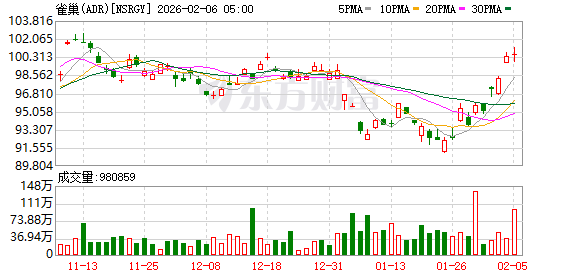
雀巢CEO再谈裁员1.6万:借助AI降低人力成本丨消费参考
2 1 Shi Ji Jing Ji Bao Dao· 2026-02-06 02:12
Group 1 - The core viewpoint of the article highlights the impact of artificial intelligence (AI) on employment, with Nestlé's CEO Phil Navratil stating that AI enables faster and more agile operations, leading to a reduction in workforce needs [2][4] - Nestlé plans to cut approximately 16,000 jobs, which is about 6% of its total workforce, over the next two years, with around 12,000 white-collar positions affected [2][5] - The layoffs will focus on the marketing sector, while the sales sector remains relatively stable [2][5] Group 2 - Nestlé's financial performance shows pressure, with total sales of CHF 65.9 billion for the first nine months of 2025, a year-on-year decline of 1.9% [5] - The organic growth rate for Nestlé was 3.3%, with a negative impact of 5.4% from currency fluctuations [5] - The Greater China region has been a significant drag on performance, with an organic growth rate of -10.4% in Q3 2025, continuing a downward trend [5][6]


全球大公司要闻 | 亚马逊谷歌资本支出激增,英伟达首次推迟游戏芯片发布
Wind万得· 2026-02-06 00:43
Group 1 - Meituan has agreed to acquire Dingdong Fresh Holding Limited for $717 million, which will make Dingdong a wholly-owned subsidiary of Meituan, enhancing its core competitive advantages on a larger platform [3] - Nvidia will not launch new gaming graphics chips this year due to a shortage of storage chips, marking the first time in thirty years, and will reduce the production of the current GeForce RTX50 series [3] - Amazon announced a capital expenditure of approximately $200 billion for 2026, exceeding market expectations, primarily for cloud infrastructure and AI technology development [3] Group 2 - Alphabet's Q4 revenue reached $113.83 billion, a year-on-year increase of 18%, with Google Cloud revenue growing by 48% to $17.66 billion [4] - NIO expects to achieve an adjusted operating profit of 700 million to 1.2 billion yuan in Q4 2025, marking its first quarterly profit [4] Group 3 - Baidu's board has approved a $5 billion share buyback plan and a dividend policy, with the first dividend expected in 2026, reflecting confidence in its growth prospects [6] - TSMC plans to invest approximately $17 billion in its Kumamoto plant for 3nm chip production, while also evaluating adjustments to its second wafer fab's process planning [6] - Guoxuan High-Tech plans to issue A-shares to raise up to 5 billion yuan for various battery projects and to supplement working capital [6] Group 4 - Samsung Electronics announced the construction of a dedicated HBM4 DRAM production line at its P4 plant, aiming to increase production capacity by nearly 20% [12] - Toyota continues to focus on hybrid vehicles after achieving six consecutive years of global sales leadership, with a projected decline in net profit for Q3 [12] - Sony Group's Q3 operating profit was 515.04 billion yen, exceeding market expectations, and it raised its full-year operating profit forecast to 1.54 trillion yen [12]



京东影像大赛评委评选开启 京东3C数码11.11带来索尼、佳能等大牌相机
Sou Hu Wang· 2026-02-04 05:26
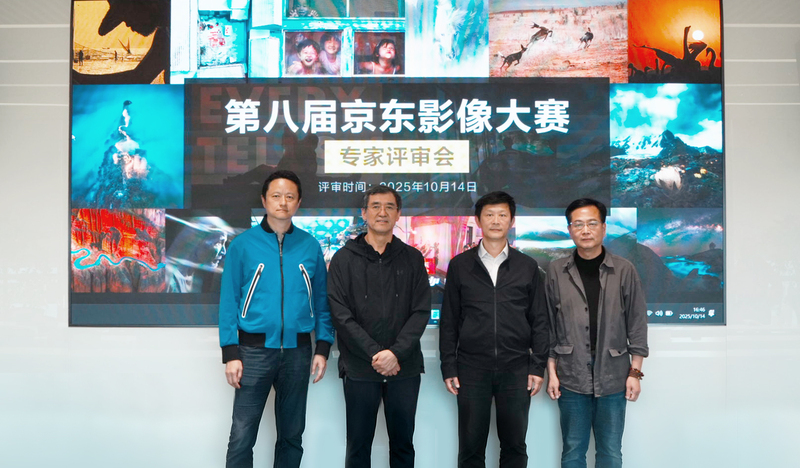
Core Insights - The 8th JD Imaging Competition has attracted over 730,000 submissions from more than 100,000 photography enthusiasts globally since its launch in June 2023, showcasing diverse perspectives on image creation [1] - The competition is currently in the professional judging phase, with significant prizes including a global travel experience and camera equipment valued at 100,000 [1] - An offline award ceremony and exhibition will be held on October 28 in Xiamen, in conjunction with the 30th National Photography Art Exhibition, enhancing the event's visibility and engagement [1][3] Group 1 - The judging panel includes prominent figures such as Li Ge, Vice Chairman of the China Federation of Literary and Art Circles, and Liu Luyun, Vice Chairman of the China Photographers Association, ensuring a professional and fair evaluation process [3] - The competition will feature a top 10 selection for both camera and mobile photography categories, with subsequent online voting on Xiaohongshu to engage the audience [3][7] - The event aims to create a platform for photographers and industry professionals to exchange ideas and inspire creativity [3] Group 2 - JD's 11.11 shopping festival has commenced, featuring collaborations with major camera brands like Sony, Canon, Nikon, DJI, and Panasonic, offering a range of high-performance photography equipment [5] - Notable products include the Sony ZV-E10L, Canon PowerShot G7 X Mark II, Nikon Z5, and DJI Air 3S, catering to various photography needs from vlogging to capturing special moments [5] - The competition and shopping festival are expected to drive consumer interest and sales in the photography equipment sector [1][5][7]


第八届京东影像大赛即日起火热开启征集 用镜头丈量世界赢五大洲环球之旅
Sou Hu Wang· 2026-02-04 05:26
按下快门,每一帧都是生活中的高光时刻。2025年6月至11月,第八届京东影像大赛如约而至。与往届 相比,本届京东影像大赛持续创新玩法,以更丰富的七大投稿主题、让更多热爱摄影的记录者共同参与 的相机及手机设备双重赛道、持续6个月的超长赛程、更权威的全球影像顾问评审阵容、五大洲环球之 旅等更富意义的奖项……吸引带动更多摄像爱好者开启拍摄行动,力求掀起全民摄影摄像热潮。 在参赛方式上,本届影像大赛多平台参赛也让投稿更加方便快捷。参与者可识别下方图虫、500px渠道 二维码参与投稿,也可以打开知乎搜索"京东影像大赛"或小红书搜索"致每一个开拍时刻"进入活动页参 与其发布的京东影像大赛活动。本次大赛作品征集时间为即日起至10月9日,并于2025年11月10日-11月 17日公示最终获奖名单。 与此同时,赛事期间京东更联合索尼、佳能、尼康、松下等大牌为用户带来更多专业相机装备,打开京 东搜"京东影像大赛"直达会场可享24期免息、国家补贴15%、大额优惠券等福利,用又好又便宜的购物 体验为参赛者提供硬核装备。 参与赢亚非欧等五大洲环球之旅 京东影像大赛大奖重磅升级 京东影像大赛自2017年首届举办,至今已成为行业内备受关注 ...
镜见湿地生灵,传递自然共生之韵
Xin Lang Cai Jing· 2026-02-02 08:44
尼康Z8:高解析记录生态细节 面对湿地生态中高速且不可预判的动态瞬间,尼康Z8以高速连拍与高解析力带来稳定支持。电子快门 下JPEG约30张/秒、RAW约20张/秒的连拍能力,可连续记录候鸟掠水、水禽起落等画面变化,不错失 任何细节;约4571万像素全画幅传感器则提供充足解析空间,即便远距离拍摄后期裁切,羽毛纹理与生 物神态依然清晰可辨,更真实呈现湿地生态之美。其先进鸟类侦测对焦系统可在复杂自然背景中快速识 别飞行或静栖鸟类主体,提高对焦成功率。同时支持8K超高清视频录制,为生态记录与科普影像创作 提供更高分辨率的动态表达方式。 湿地被誉为"地球之肾",不仅是孕育生命的生态宝库,也是人类文明孕育和发展的摇篮。2026年2月2日 世界湿地日以"湿地与传统知识:致敬文化遗产"为主题,人类文明与湿地生态和谐共生的智慧传承成为 人们讨论的核心议题。 近年来,尼康在中国市场也持续通过影像文化活动,引导摄影爱好者关注自然生态场景。通过组织多样 的生态拍摄活动,鼓励摄影爱好者以镜头观察世间生灵,让"看见"成为尊重与爱护自然的重要一步。值 此世界湿地日之际,尼康精选多款专业影像设备,适配生态拍摄的多元需求,助力创作者更从容、 ...

阿斯麦入局半导体后工序光刻,撼动佳能垄断
日经中文网· 2026-02-01 00:33
Core Viewpoint - The competition in the semiconductor lithography equipment market is intensifying, particularly in the back-end process, where Canon currently holds a dominant position. However, ASML is entering this market, posing a significant threat to Canon's market share [2][6]. Group 1: Market Dynamics - Canon entered the back-end lithography equipment market in 2011 and has nearly monopolized the sector used by semiconductor giants [2][6]. - ASML, the largest lithography equipment manufacturer, has begun to challenge Canon by launching equipment for the back-end process, which is increasingly important for enhancing the performance of advanced semiconductors [2][4]. - Nikon plans to start mass production of back-end lithography equipment by 2026, further intensifying competition in this space [2][6]. Group 2: Technological Advancements - ASML's new "XT:260" equipment reportedly has a production efficiency four times that of front-end lithography equipment and can handle thicker substrates, addressing issues related to substrate warping caused by multiple chip stacking [6]. - The demand for advanced packaging technology, which combines multiple chips like GPUs and memory, is growing, leading ASML to expand into this area [4][7]. - Canon's sales of lithography equipment are projected to reach 241 units by 2025, nearly doubling over five years, driven by the demand for back-end solutions [6]. Group 3: Industry Trends - The trend towards larger intermediate substrates is emerging, with a shift from 300mm round silicon wafers to larger square substrates to reduce waste [7]. - Companies like Panasonic are also entering the advanced packaging market, developing equipment for vertically stacked chips to meet AI semiconductor demands [7]. - The development direction for back-end technology remains unclear, requiring equipment manufacturers to be adept at capturing industry trends and demands [7].

印度芯片强国梦:越努力,越遥远?
芯世相· 2026-01-31 01:06
Core Viewpoint - The article discusses the ongoing challenges and historical context of India's semiconductor industry, highlighting the repeated failures in attracting foreign investment and technology partnerships, despite high expectations and strategic initiatives [4][10][51]. Group 1: Historical Context - India's semiconductor industry has a high starting point, with Bharat Electronics Ltd. producing silicon and germanium transistors as early as 1962, which was ahead of the global curve [14][16]. - The collaboration with Fairchild Semiconductor in the 1960s failed due to India's stringent licensing requirements and bureaucratic inefficiencies, leading to missed opportunities for technological advancement [19][22]. - The establishment of SCL in 1984, supported by significant government investment, ultimately failed due to a catastrophic fire and subsequent bureaucratic delays, resulting in a loss of competitive edge [23][25][26]. Group 2: Current Challenges - India's ambition to become a "chip superpower" is hindered by a lack of core technology and the inability to effectively utilize its resources, leading to a reliance on low-value manufacturing [27][30][51]. - Recent attempts to attract foreign investment, such as the partnership between Foxconn and Vedanta, have faltered due to India's slow policy implementation and lack of a coherent semiconductor strategy [40][50]. - The exit of Foxconn from a $19.5 billion semiconductor project underscores the fragility of India's "market for technology" approach, revealing deeper issues in the industry [51][52]. Group 3: Structural Issues - The inefficiency of India's bureaucratic system creates hidden costs for foreign companies, complicating project execution and leading to delays [82][83]. - Resource management in India is inefficient, particularly regarding water and power supply, which are critical for semiconductor manufacturing [88][93]. - Despite a large pool of engineers, the high turnover rates and focus on low-value tasks contribute to a talent drain, undermining the industry's potential [96][100]. Group 4: Future Outlook - The article emphasizes the need for India to address its foundational issues, such as infrastructure, bureaucratic inefficiencies, and talent management, to successfully develop its semiconductor industry [102][103]. - The collaboration between Intel and Tata Group is seen as a potential turning point, but the article stresses that India must demonstrate a commitment to overcoming past challenges to achieve meaningful progress [104].


徕卡相机「卖身」真相:业务单一、市场收缩,小米要做「接盘侠」?
3 6 Ke· 2026-01-28 03:40
Core Viewpoint - ACM and Blackstone Group are considering selling their controlling stake in Leica Camera, which has undergone multiple ownership changes since 1986, indicating ongoing challenges in maintaining its market position [1][3]. Group 1: Ownership and Market Position - Leica Camera is currently owned by ACM Projektentwicklung GmbH (55%) and Blackstone Group (45%), with potential new shareholders likely to become the actual controlling party [1]. - This marks the fourth time Leica has been sold, with previous ownership changes including a split from its parent company and a bankruptcy restructuring [1]. - The potential sale raises questions about the future direction of Leica, especially regarding its collaborations with companies like Xiaomi [3]. Group 2: Financial Performance - Despite the global camera market contraction, Leica reported approximately €554 million in revenue for the fiscal year 2023-2024, a 14% year-on-year increase, marking one of its highest annual revenues [4][6]. - Revenue is projected to rise by 7.6% in the fiscal year 2024-2025, indicating a positive trend in financial performance [4]. - The surge in revenue is attributed to successful collaborations with Xiaomi, particularly with the Xiaomi 12S series, which significantly boosted sales [6]. Group 3: Market Challenges - The global digital camera market is expected to reach approximately $8.23 billion by 2025, but this is still significantly lower than market sizes from a decade ago [6]. - Leica's revenue structure is heavily reliant on consumer optical products and mobile imaging collaborations, making it vulnerable to market fluctuations [6]. - Compared to competitors like Canon and Sony, which have diversified product lines, Leica's limited offerings hinder its ability to sustain growth in a shrinking market [6][9]. Group 4: Potential Buyers and Strategic Considerations - Potential buyers for Leica include private equity firms and optical companies, with Xiaomi being a notable candidate due to their successful partnership [10]. - However, acquiring Leica may not be a strategic move for Xiaomi, as the camera industry has low profitability compared to the smartphone market [10][12]. - The decision to sell Leica could lead to changes in management and strategy, impacting existing partnerships and future collaborations [15]. Group 5: Brand and Market Perception - Leica has attempted to expand its brand through various collaborations and product lines, including mobile imaging and projectors, but these efforts have not significantly enhanced its market presence [16][18]. - The brand's image has been diluted due to overexposure in collaborations, leading to a perception that Leica's high-end status is less exclusive [20]. - The future of Leica may depend on whether new ownership can revitalize its brand and adapt to market changes, or if it will continue to lose value [20].


尼康Z50 II拍视频能自动追焦吗
Xin Lang Cai Jing· 2026-01-23 06:33
Group 1 - The Nikon Z50II is an entry-level mirrorless camera featuring approximately 20.9 million pixels APS-C format CMOS sensor, significantly enhancing overall performance with the same Nikon EXPEED 7 image processor used in Z6III, Z8, and Z9 [1] Group 2 - In video recording, the Nikon Z50II supports 4K 60P and oversampled 4K 30P video specifications, as well as full HD 120P video [3] - The camera features 9 types of subject detection for autofocus, including humans, dogs, cats, birds, cars, motorcycles, bicycles, trains, and airplanes, allowing for real-time tracking focus during shooting [3]


3D打印与商业航天
2026-01-22 02:43
Summary of 3D Printing and Commercial Aerospace Conference Call Industry Overview - **Industry**: 3D Printing in Commercial Aerospace - **Key Companies**: Platinum and Huazhu are leading domestic metal 3D printing service providers in China, with significant market presence compared to foreign competitors like Germany's EOS and Nikon [2][15] Core Insights and Arguments - **Application of 3D Printing**: Widely used in manufacturing metal parts for rocket engines and satellites, addressing issues of long processing cycles, low precision, and complex structures [1][3] - **Material Costs**: Prices for commonly used materials have significantly decreased, with steel powder at 50-60 RMB/kg, aluminum alloy at 30-40 RMB/kg, and titanium alloy reduced to 200-300 RMB/kg, promoting wider application [1][5] - **Market Demand**: The commercial aerospace sector is projected to require 6,000 to 8,000 metal 3D printers annually, potentially exceeding 10,000 units when considering satellite manufacturing needs [8][11] - **Current Equipment**: The most mature 3D printing equipment is the 350 model, priced between 2.6 million to 3 million RMB, with future demand focusing on 350 and 450 models [9][10] Additional Important Content - **Production Efficiency**: 3D printing can optimize internal structures, reduce manual labor, and significantly improve yield rates, with about 80-90% of core rocket components now manufacturable via this technology [4][5] - **Emerging Markets**: The fastest-growing applications for 3D printing are in the electric vehicle and consumer electronics sectors, with major companies like Apple, Huawei, and Xiaomi adopting the technology for core components [13][14] - **Competitive Landscape**: Domestic companies are gaining ground against international firms due to more efficient and market-responsive development models, with a notable gap widening between local and foreign manufacturers [2][15] - **Future Trends**: The 3D printing industry is expected to see continued advancements in large-scale and support-free printing technologies, with Chinese companies rapidly catching up to international leaders [17][18] - **Material Market Dynamics**: Metal materials are anticipated to see the most significant growth in demand, outpacing plastics, resins, and nylon, which are primarily used for smaller applications [19] This summary encapsulates the key points discussed in the conference call regarding the advancements and market dynamics of 3D printing technology in the commercial aerospace sector.
