海光

Search documents
“国产GPU四小龙”上市潮下的生态协同:AI巨头企业牵头构建国产AI芯片全适配网络
Mei Ri Jing Ji Xin Wen· 2026-01-05 08:11
Group 1 - The domestic GPU industry is experiencing a capital surge, with the "Four Little Dragons" of domestic GPUs—Biran Technology, Moore Threads, Muxi Co., and TianShu ZhiXin—actively pursuing capital market opportunities [1] - Biran Technology officially listed on the Hong Kong Stock Exchange on January 2, 2026, becoming the leading domestic GPU stock, with an opening price increase of 82% and a market capitalization exceeding 100 billion HKD [1] - The four leading domestic GPU companies are long-term strategic partners of SenseTime, collaborating based on a "computing power supply-algorithm demand" logic, aiming for a domestic substitution strategy [1] Group 2 - The successful listing of Biran Technology marks a significant moment for domestic GPU companies, highlighting the value of their collaboration with AI software vendors [2] - SenseTime has launched the first multi-episode generative AI agent, Seko2.0, which has successfully adapted to the domestic AI chip Cambricon, achieving a critical leap in domestic computing power across various AIGC core scenarios [2] - SenseTime has established a comprehensive domestic ecosystem by deeply adapting with over ten top chip companies, including Biran Technology and Cambricon, promoting the transition of domestic AI chips from "usable" to "user-friendly" [2] Group 3 - SenseTime has built a full-link cooperation system from computing power supply to scene implementation, collaborating with various domestic partners to provide high-performance domestic computing power at low costs [3] - The MTT S series GPU from Moore Threads has completed full adaptation with SenseTime's SenseCore large device, undergoing industrial-grade testing in training and inference of large models [3] - SenseTime has also launched the industry's first real-time video generation inference framework, LightX2V, which supports multiple domestic chips through a highly compatible plugin model [3] Group 4 - SenseTime's ability to act as a "connector" for domestic chip adaptation is rooted in its comprehensive technical capabilities, from computing power scheduling to application optimization [4] - The collaboration with Cambricon has led to significant enhancements in inference performance, with improvements exceeding three times through hardware-friendly innovations [4] - SenseTime's proprietary heterogeneous interconnection technology and scheduling platform have achieved unified training capabilities across various acceleration cards, significantly shortening training cycles [4] Group 5 - The technological advancements in domestic adaptation have translated into accessible product experiences, such as the Seko multi-episode generative AI agent showcasing efficient video creation capabilities [5] - Applications like Xiaohuanxiong are optimized for personal PCs and domestic terminals, providing secure and high-precision AI services [5] - New products like the Daxiao robot and RuYing marketing AI agent leverage the collaborative advantages with domestic chips to promote the domestic substitution process in various fields [6]
新开普:“星普大模型”已与海光CPU处理器、DCU加速卡系列完成深度适配认证
Mei Ri Jing Ji Xin Wen· 2025-12-25 04:14
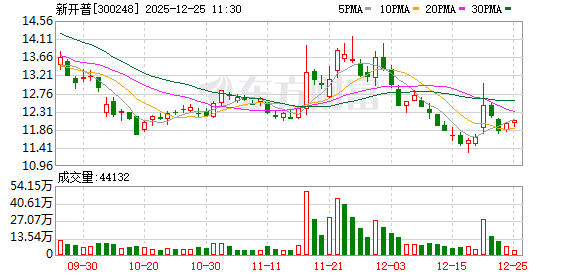
Group 1 - The company has launched the "Xingpu Large Model," which has completed deep adaptation certification with Haiguang CPU processors and DCU accelerator card series [2]


光合组织:全力托举伙伴,共筑AI计算新生态
Feng Huang Wang· 2025-12-20 14:27
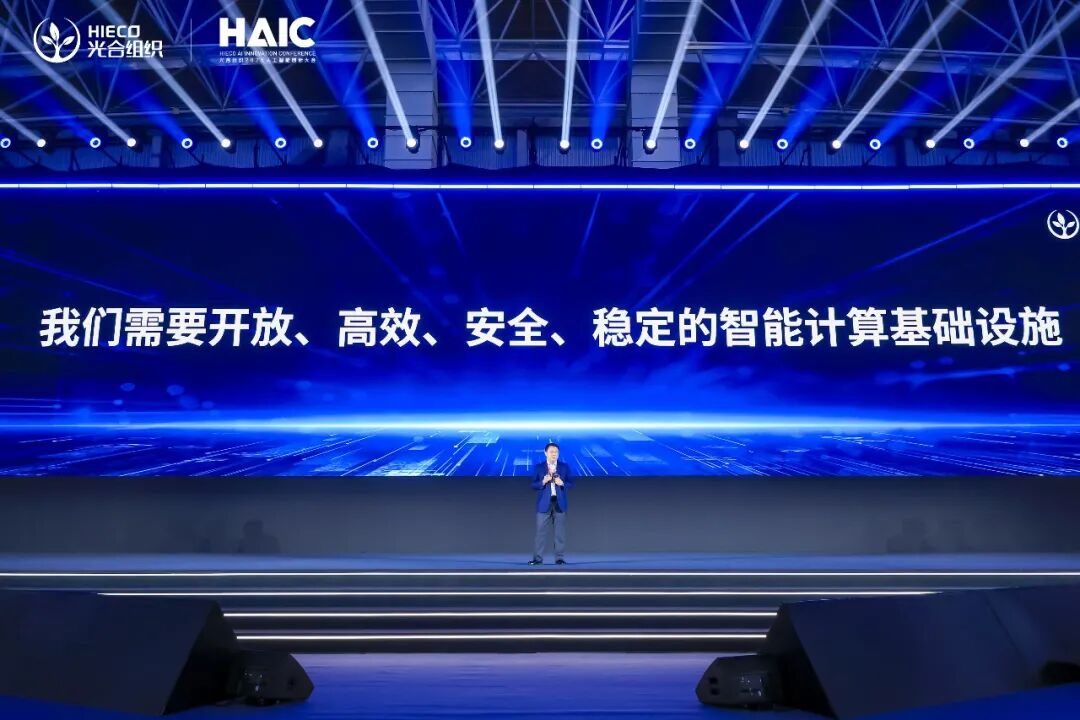
Core Insights - The article emphasizes the shift in the AI computing industry from chaotic competition to collaborative ecosystems, as highlighted by the "refusal of internal competition" advocated by the director of the National Advanced Computing Industry Innovation Center, Li Jun [2][3] - This transition is crucial as AI becomes a central battleground in global technological competition, addressing the urgent need for self-controlled computing power ecosystems [2][3] Industry Challenges - AI computing power demand is increasing at an annual rate of over 40%, yet the industry faces severe internal competition characterized by long supply chains and homogenized competition among companies [2][3] - Many companies pursue a "large and comprehensive" approach but struggle to achieve excellence, leading to a distorted bidding environment where "the more one loses, the more likely they are to win" [2][3] Structural Issues - The internal competition stems from structural contradictions in the global computing power landscape, where the urgent need for self-controlled computing power is hindered by incompatibility among different vendors' chips and systems [3] - Small and medium enterprises face barriers to entry in AI projects due to high costs and equipment incompatibility, necessitating a unified interface standard and collaboration mechanisms [3] Proposed Solutions - Li Jun proposed five measures to support partner growth, focusing on collaboration among core enterprises and manufacturers to develop high-end processors and a full-stack product matrix [3][4] - The measures include building joint laboratories, sharing resources, and enhancing market access through regional AI innovation centers, creating a closed-loop ecosystem from technology development to market implementation [3][4] Early Achievements - The HAIC2025 conference showcased over 50 innovative results from the cooperative ecosystem, demonstrating the collaborative innovation capabilities of the open ecosystem [4] - Companies like Yike and Haiguang have successfully explored new markets through deep collaboration, validating the commercial value of division of labor [4] Ecosystem Value - The organization has over 6,000 partners and 28 physical ecosystem adaptation centers, creating a closed-loop industry ecosystem centered on self-control [5] - This ecosystem allows each enterprise to find precise positioning, fostering a positive cycle of core technology breakthroughs and industry scale [5] Strategic Shift - The exploration by the organization represents a reconstruction of the AI computing industry's development model, advocating for resource sharing and collaborative mechanisms to enable domestic computing power to iterate and optimize in real scenarios [6] - The call for a shift from "zero-sum competition" to "positive-sum competition" is essential for building a robust foundation for computing power in the AI industry [6]
中科曙光:尽管重组终止 海光与曙光仍将深化协同并共同构建完整算力产业链
Xin Lang Cai Jing· 2025-12-10 10:59
Core Viewpoint - Despite the termination of the restructuring, Haiguang and Sugon will deepen their collaboration while maintaining the independence of the listed company [1] Group 1: Company Collaboration - Haiguang focuses on CPU and DCU chips and has established a leading position in core chips in China [1] - Sugon specializes in interconnection, networking, scheduling, software, computing services, storage, and liquid cooling, holding a leading position domestically [1] - Both companies aim to build a complete computing power industry chain through collaboration, focusing on integrated computing infrastructure and high-end chip design [1]

宝德、吉天、海光分揽579万大单,海关总署原子荧光光度计采购项目落槌
仪器信息网· 2025-12-10 09:08
Core Viewpoint - The Customs General Administration announced the bidding results for the 2025 atomic fluorescence spectrometer procurement project, with a total of 42 units, a budget of 14.67 million yuan, and an actual winning bid amount of 5.79 million yuan [1]. Summary by Relevant Sections - **Procurement Overview** - The project includes the procurement of 42 atomic fluorescence spectrometers with a total budget of 14.67 million yuan and an actual winning bid amount of 5.79 million yuan [1]. - **Winning Bidders** - The winning companies are Baode, Jitian, and Haiguang, with Baode winning 22 units, Jitian winning 12 units, and Haiguang winning 8 units [1]. - **Detailed Bid Results** - Baode: 22 units of model BAF-2000, budgeted at 4.84 million yuan, winning bid total of 1.31 million yuan - Haiguang: 7 units of model HGLF-S2, budgeted at 4.2 million yuan, winning bid total of 1.89 million yuan - Haiguang: 1 unit of model AFS8530, budgeted at 300,000 yuan, winning bid total of 135,000 yuan - Jitian: 11 units of model SA-50, budgeted at 4.95 million yuan, winning bid total of 2.27 million yuan - Jitian: 1 unit of model SA-50, budgeted at 380,000 yuan, winning bid total of 188,000 yuan [3]. - **Bid Package Status** - The "Atomic Fluorescence Spectrometer Procurement Project Package 01" was canceled due to insufficient bidders, with fewer than three participants [2].

第二波DeepSeek 冲击:V3.2 改写中国云生态与芯片生态的推理经济学
2025-12-08 15:36
Summary of DeepSeek V3.2 Conference Call Industry Overview - The conference call discusses the **Chinese Internet Industry**, specifically focusing on the **AI market** and the impact of the **DeepSeek V3.2** release on the ecosystem [1][20]. Key Points and Arguments 1. **DeepSeek V3.2 Release**: - The launch of DeepSeek V3.2 marks the beginning of the second wave of "DeepSeek impact" in the domestic AI market, providing near-state-of-the-art open-source inference capabilities at moderate domestic prices [1][20]. - The model API prices have been reduced by **30-70%**, and long-context inference may save **6-10 times** the workload [1][3]. 2. **Technical Enhancements**: - DeepSeek V3.2 retains the mixed expert (MoE) architecture of V3.1 but introduces the DeepSeek Sparse Attention mechanism (DSA), which reduces long-context computation complexity and maintains performance in public benchmarks [2][24]. - The model is designed for "agent" construction, integrating "thinking + tool invocation" in a single trajectory, trained on approximately **1,800 synthetic agent environments** and **85,000 complex instructions** [2][24]. 3. **Economic Impact**: - The DSA mechanism improves inference speed by **2-3 times** and reduces GPU memory usage by **30-40%** when processing **128k tokens** compared to V3.1 [3][24]. - The input/output pricing for V3.2 is set at **$0.28** and **$0.42** per million tokens, respectively, significantly lower than previous models [3][19]. 4. **Beneficiaries in the AI Ecosystem**: - Key beneficiaries identified include **cloud operators** (e.g., Alibaba Cloud, Tencent Cloud, Baidu Smart Cloud) and **domestic chip manufacturers** (e.g., Cambricon, Hygon) [13][14]. - The release is expected to drive demand for domestic chips and AI servers, reducing execution risks for Chinese AI buyers [14][16]. 5. **Competitive Positioning**: - DeepSeek V3.2 is positioned as a price disruptor in the large language model API market, with pricing significantly lower than similar models globally, while maintaining high intelligence levels comparable to **GPT-5** and others [26][27]. - The Chinese models are noted for their attractive value proposition, with higher intelligence scores and lower costs compared to U.S. counterparts [27][29]. Additional Important Content - The report emphasizes the shift towards domestic hardware support, with V3.2 optimized for non-CUDA ecosystems, including Huawei's CANN stack and Ascend hardware [14][24]. - The model's capabilities are expected to enhance the efficiency and economic viability of AI SaaS developers and vertical industry applications, such as coding and legal assistance [16][24]. - The analysis indicates a significant evolution from V3.1 to V3.2, with a **22% increase** in the Artificial Analysis intelligence index and over **50% reduction** in effective token pricing [17][19]. This summary encapsulates the critical insights from the conference call regarding the implications of DeepSeek V3.2 on the Chinese AI landscape and its competitive positioning within the global market.




计算机行业月报:手机端AI应用加速,DeepSeek将加大预训练规模-20251208
Zhongyuan Securities· 2025-12-08 09:22
计算机 分析师:唐月 登记编码:S0730512030001 tangyue@ccnew.com 021-50586737 证券研究报告-行业月报 强于大市(维持) 计算机相对沪深 300 指数表现 资料来源:中原证券研究所,聚源 -17% -11% -4% 2% 8% 15% 21% 28% 2024.12 2025.04 2025.08 2025.12 计算机 沪深300 相关报告 《计算机行业年度策略:AI 应用加快,全球格 局重塑中》 2025-12-01 《计算机行业分析报告:十五五规划建议的信 息科技领域内容解读》 2025-10-31 《计算机行业月报:鸿蒙迎来重要升级,AI 算 力需求多元化趋势明显》 2025-10-23 联系人:李智 预训练规模 ——计算机行业月报 发布日期:2025 年 12 月 08 日 风险提示:国际局势的不确定性;海外 AI 产业竞争格局变化带来市 场调整风险。 本报告版权属于中原证券股份有限公司 www.ccnew.com 请阅读最后一页各项声明 第1页 / 共50页 手机端 AI 应用加速,DeepSeek 将加大 投资要点: 电话: 0371-65585629 ...






8000万仪器中标数据背后,原子吸收光谱的“竞争迷局”
仪器信息网· 2025-11-23 03:57
Core Viewpoint - The article discusses the development and market dynamics of atomic absorption spectrometers in China, highlighting the increasing presence of domestic manufacturers while noting the continued dominance of imported brands in terms of revenue [3][8]. Group 1: Market Performance - In the first nine months of 2025, there were 236 successful bids for atomic absorption spectrometers, totaling approximately 80 million, with an average price of about 340,000 [3]. - Domestic manufacturers accounted for 52% of the successful bids by quantity, indicating a growing recognition and competitive position in the market [6]. - However, in terms of bid value, imported manufacturers held a significant 68% share, while domestic manufacturers only captured 32%, reflecting a gap in high-end product performance and brand value [8]. Group 2: Competitive Landscape - The early applications of atomic absorption spectrometers in China were primarily in metallurgy and geology, but have since expanded to various fields including environmental, food, and pharmaceutical industries [9]. - The most significant procurement volumes were from the health system and industrial enterprises, each accounting for 21%, followed by higher education institutions at 17% [9]. - Different manufacturers exhibit distinct competitive advantages in various sectors, with domestic company Puxi leading in bid quantity and competing strongly against imported brands [11]. Group 3: Manufacturer Insights - Puxi is noted for having the highest number of successful bids, particularly in higher education, industrial enterprises, and environmental systems, showcasing its competitive edge [11]. - Beijing Haiguang has maintained a strong market presence in the geology sector, being one of the earliest producers of atomic absorption instruments in China [11]. - Popular models in the market include those from both domestic and imported brands, indicating a diverse competitive environment [12]. Group 4: Future Outlook - The article suggests that while domestic manufacturers are rising, imported brands still dominate the high-end market, necessitating a strategic focus on enhancing product technology and reducing reliance on low-price competition [12].

我国光刻胶技术新突破!半导体材料ETF应声上攻3%,机构:A股有效突破还得等科技!沪指上涨0.8%,逼近4000点
Ge Long Hui· 2025-10-27 02:20
Group 1 - The core market sentiment is positive, with the Shanghai Composite Index rising by 0.8% to 3981 points, approaching the 4000 mark, driven by gains in semiconductor materials and related ETFs [1] - The semiconductor materials ETF and the Sci-Tech semiconductor ETF saw increases of 3.22% and 2.21%, respectively, indicating strong investor interest in this sector [1][4] - Notable stock performances include Jingrui Electric Materials with a 17.10% increase and a year-to-date gain of 89.04%, highlighting significant growth potential in the semiconductor materials space [2] Group 2 - Recent breakthroughs in the photoresist field have led to the development of industrial solutions that significantly reduce lithography defects, enhancing the competitiveness of domestic semiconductor companies [3] - TSMC, Cambricon, and Haiguang reported impressive Q3 results, with Wentai Technology achieving record-high semiconductor business revenue and a net profit increase of 279.29% year-on-year and 389.69% quarter-on-quarter, reflecting a booming semiconductor industry [3] - The approval of IPOs for domestic AI chip companies, including Muxi Technology and Moer Thread, indicates a growing interest and investment in the AI semiconductor sector [3] Group 3 - The semiconductor industry is experiencing a strong inflow of capital, with the Sci-Tech semiconductor ETF seeing a net inflow of 3 billion yuan over the past 20 days, suggesting robust investor confidence [4] - Key companies in the semiconductor production equipment sector include Northern Huachuang and Zhongwei Company, which are part of the semiconductor materials ETF that has also seen significant inflows [4]
计算机行业月报:鸿蒙迎来重要升级,AI算力需求多元化趋势明显-20251023
Zhongyuan Securities· 2025-10-23 09:55
Investment Rating - The report maintains an investment rating of "Outperform the Market" for the computer industry [2] Core Views - The domestic software industry showed a revenue growth of 12.6% year-on-year for the first eight months of 2025, with a total revenue of 9.64 trillion yuan, indicating a continuous recovery trend [10][11] - The AI server market demand in China is increasingly concentrated in the internet sector, reflecting the impact of domestic chip localization trends on market competition [3] - The HarmonyOS 5 has surpassed 20 million terminal devices, with an upcoming significant upgrade to HarmonyOS 6 expected to enhance system capabilities [2][32] Summary by Sections Industry Data - The software industry experienced a profit growth of 13.0% year-on-year for the first eight months of 2025, with total profits reaching 13,186 billion yuan, outpacing revenue growth by 0.4 percentage points [11] - The IC design sector was the highest-performing sub-industry, with a year-on-year growth of 17.7% for the same period [15] - The domestic AI chip market is projected to grow from 21 billion USD to 38 billion USD by 2025, with a notable increase in the market share of domestic chip manufacturers [34] Localization - The localization of domestic chips is accelerating, with the AI chip localization rate increasing from 34% in the second half of 2024 to 35% in the first half of 2025 [33] - Huawei's HarmonyOS has become the second-largest mobile operating system in China and the third globally, with a market share of 17% in Q2 2025 [45][46] - The EDA sector is experiencing increased activity, with domestic companies like Huada Empyrean enhancing their product offerings to meet local demand [59][68] Computing Power - The demand for AI servers is expected to concentrate among internet companies, leading to a decrease in supply concentration [3] - OpenAI has signed significant supply agreements with major chip manufacturers, indicating a diversification in chip demand [3] - The report highlights the rapid growth of domestic AI chip companies, with notable revenue increases for companies like Cambricon and Haiguang [39][41] AI - DeepSeek has made significant advancements in optimizing AI models for domestic chips, addressing ecological barriers posed by CUDA [3] - The report emphasizes the importance of collaboration between software and hardware in the AI industry, particularly in the context of domestic chip development [3][5]