
爱立信

Search documents
调研速递|世嘉科技接待国信证券、天弘基金等机构调研 详解主营业务及对外投资进展
Xin Lang Zheng Quan· 2026-01-22 08:53
Group 1 - The core business of the company is divided into two main segments: mobile communication equipment and precision box systems [2] - The mobile communication equipment segment includes RF devices and antennas, primarily serving outdoor macro base stations with clients like ZTE, Ericsson, and others [2] - The precision box systems segment covers elevator car systems and other specialized equipment, utilized in various industries including elevator manufacturing and medical devices, with notable clients such as Schindler and Thermo Fisher [2] Group 2 - The company currently holds a 20% stake in the target company, with plans to increase its share and achieve control still in the planning stage [3] - The investment will provide financial support for the target company's expansion, facilitate customer resource sharing, and utilize excess production capacity [4] - The target company specializes in optical communication technology, focusing on the R&D, production, and sales of optical communication products, including optical modules and active optical cables [5]

世嘉科技(002796) - 2026年1月22日投资者关系活动记录表
2026-01-22 08:26
Group 1: Company Overview - The company specializes in mobile communication equipment and precision box systems, with key products including RF devices and antennas primarily used in outdoor macro base stations [1] - Major clients include telecommunications equipment integrators such as ZTE, Ericsson, and Japan Electric Power [1] Group 2: Investment Progress - As of January 14, 2026, the company disclosed an investment of 120 million CNY, acquiring a 20% stake in the target company [2] - Future plans include increasing the shareholding to achieve control over the target company, although no binding agreements have been signed yet [2] Group 3: Synergistic Effects of Investment - The investment will provide financial support for the target company's expansion and development [2] - There will be a sharing of customer resources between the listed company and the target, enhancing complementary and synergistic benefits [2] - The company plans to utilize its surplus production capacity to assist the target company's expansion [2] Group 4: Target Company Product Information - The target company focuses on optical communication technologies, specializing in the R&D, production, and sales of optical communication products such as optical modules and AOC [2] - The product range includes optical modules covering 100G to 800G and 1.6T series [2]
美利信涨0.17%,成交额2.08亿元,近3日主力净流入-4443.21万
Xin Lang Cai Jing· 2026-01-08 07:26
Core Viewpoint - The company, Meilixin Technology Co., Ltd., is strategically positioning itself in the liquid cooling sector to meet the growing demand for efficient heat dissipation driven by the explosive growth in global data centers, high-performance computing, and artificial intelligence [2] Company Overview - Meilixin was established on May 14, 2001, and went public on April 24, 2023. The company specializes in the research, production, and sales of aluminum alloy precision die-casting parts in the communication and automotive sectors [7] - The revenue composition of the company is as follows: automotive components 64.79%, communication structural parts 29.88%, and other components 5.33% [7] Business Strategy - The company has established a strategic focus on liquid cooling technology, which is applicable in three main areas: new energy vehicles, communication heat dissipation, and data centers. This initiative aims to provide customized solutions to meet market demands for efficient cooling [2] - Meilixin is a core supplier of aluminum alloy precision die-casting parts for major communication equipment manufacturers, including Huawei and Ericsson, making it one of the most competitive companies in this field [3] Financial Performance - As of September 30, 2025, Meilixin reported a revenue of 2.82 billion yuan, representing a year-on-year growth of 8.93%. However, the net profit attributable to shareholders was -215 million yuan, a significant decrease of 347.98% compared to the previous year [8] - The company has distributed a total of 25.27 million yuan in dividends since its A-share listing [9] Shareholder Information - As of September 30, 2025, the number of shareholders for Meilixin was 17,800, a decrease of 9.35% from the previous period. The average number of circulating shares per person increased by 10.32% to 6,108 shares [8]
5300亿!中国移动2025全年采购额,寒风凛凛
Xin Lang Cai Jing· 2025-12-15 13:34
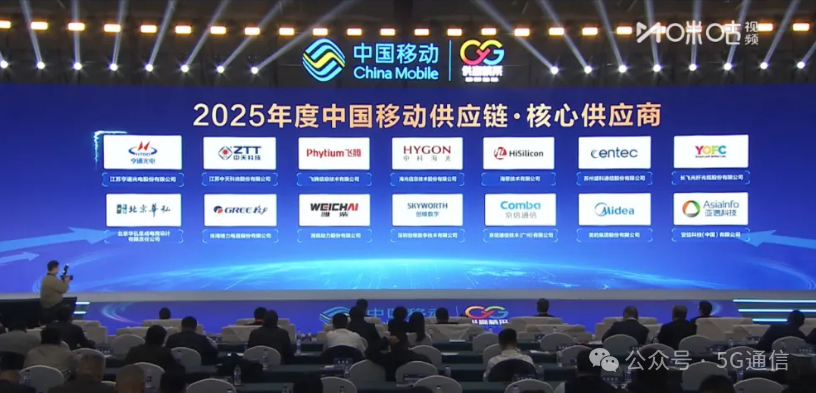
Core Insights - China Mobile disclosed an annual procurement exceeding 530 billion yuan, with over 17,000 signed suppliers, indicating a shrinking market [1][20] - The capital expenditure (CAPEX) trend shows a decline from 92 billion yuan in H1 2022 to 58.4 billion yuan in H1 2025, a decrease of over 30% [4][22] - The CAPEX for H1 2025 is projected to account for 51.8% of the total investment by the three major operators [4][9] Procurement Scale - Annual procurement amount exceeds 530 billion yuan, with over 17,000 suppliers [1][20] - The supplier classification includes 10 strategic suppliers, 14 core suppliers, and 299 excellent (A-level) suppliers [1][20] CAPEX Trends - CAPEX is expected to decrease from 151.2 billion yuan in 2024 to 138.5 billion yuan in 2025, a decline of 8.5% [4][22] - Despite the overall decline, CAPEX remains a significant portion of the three operators' total investment [4][22] Supplier Classification - The core suppliers list includes notable companies such as Haiguang Information, HiSilicon, and Feiteng, indicating a push towards a self-controlled supply chain [5][23] - Strategic suppliers like FiberHome are recognized for their deep collaboration with China Mobile, emphasizing future technological advancements [5][24] Investment Logic - China Mobile plans to invest 37.3 billion yuan in computing power, representing 25% of its capital expenditure, with no upper limit on investment based on market demand [6][25] - The focus on computing power investment reflects its importance as a core competitive weapon for the future [6][25] Domestic Supply Chain Acceleration - The supplier classification highlights a clear trend towards domestic suppliers, with many core suppliers being key players in the domestic innovation industry [7][25] - The domestic AI chip's procurement success indicates strong support for local manufacturing [6][27] Industry Restructuring - The classification system aims to reshape the entire industry chain, focusing on technology, security, and efficiency [11][28] - Companies in the "strategic" tier will collaborate with China Mobile on cutting-edge technologies like 6G and AI [11][29] Future Game Rules - The emphasis on specialization means companies with technical advantages in niche areas will be favored [12][30] - Stricter domestic requirements will continue to strengthen, favoring local suppliers [13][30] - Innovation capabilities will become a critical criterion for companies aiming for the "strategic" tier [14][30] Survival Guide for Suppliers - Suppliers aiming for a larger share in the existing market should strive to meet the standards of core suppliers [15][31] - Those looking to capitalize on new market opportunities should focus on becoming strategic suppliers in emerging technologies [16][31] - Enhancing domestic capabilities will be essential for suppliers seeking international support [17][31]


传英特尔(INTC.US)接近以16亿美元收购AI芯片初创公司SambaNova
智通财经网· 2025-12-13 01:20
Core Viewpoint - Intel is in advanced negotiations to acquire AI chip startup SambaNova Systems for approximately $1.6 billion, including debt, with a potential deal expected as early as next month [1][2] Group 1: Acquisition Details - The acquisition of SambaNova Systems, based in Palo Alto, California, aims to enhance Intel's AI product line and is considered a strategic move at a discounted price [2] - SambaNova was valued at $5 billion during a $676 million funding round led by SoftBank's Vision Fund 2 in 2021 [2] - SambaNova has signed letters of intent with other potential financial investors, indicating it may explore alternative financing options [1] Group 2: Company Performance and Strategy - Intel's stock has surged approximately 60% since the U.S. government announced it would hold a 10% stake in the chip manufacturer [2] - Following the announcement, Intel's stock price fell by 4.3% to $37.81, with a market capitalization of $180 billion [2] - Intel has decided to halt its plans to spin off its networking division, opting instead to operate it as an internal business unit for better growth prospects [2] - This strategic shift reflects CEO Pat Gelsinger's evolving transformation strategy since taking office in March, focusing on layoffs and divesting non-core businesses [2] - Intel has also terminated discussions with Ericsson regarding the potential acquisition of a stake in NEX, which was part of its earlier plans to seek strategic investors for its networking division [2]

消息称华为、中兴获得越南合同,供应5G设备
Feng Huang Wang· 2025-11-28 01:42
Core Points - Huawei and ZTE have secured multiple 5G equipment supply contracts in Vietnam this year, indicating a strengthening relationship between China and Vietnam [1] - The U.S. has imposed tariffs on Vietnamese goods, leading to a cooling of relations, while Vietnam has increasingly adopted technology from Chinese companies [1] - Although Ericsson and Nokia have obtained contracts for Vietnam's 5G core infrastructure, Chinese companies are winning smaller projects in public procurement [1] - A consortium including Huawei won a $23 million 5G equipment contract shortly after the U.S. announced tariffs on Vietnamese goods [1] - ZTE has also secured at least two contracts, with one recently finalized, totaling over $20 million for 5G antenna orders [1] - The timing of these contracts has raised concerns among Western officials regarding their potential impact on trust in Vietnam's networks and access to U.S. advanced technology [2] Company and Industry Summary - Chinese companies, particularly Huawei and ZTE, are expanding their presence in Vietnam's telecommunications sector amid geopolitical tensions [1][2] - The contracts won by Chinese firms have become a topic of discussion among Western officials, highlighting concerns over technology trust and influence in Vietnam [2] - Major Western competitors like Ericsson and Nokia are still active in the market, but the growing success of Chinese firms indicates a shift in Vietnam's technology partnerships [1][2]


国能新材拟冲刺北交所IPO:上半年净利增136%,客户涵盖华为、比亚迪
Sou Hu Cai Jing· 2025-11-28 01:28
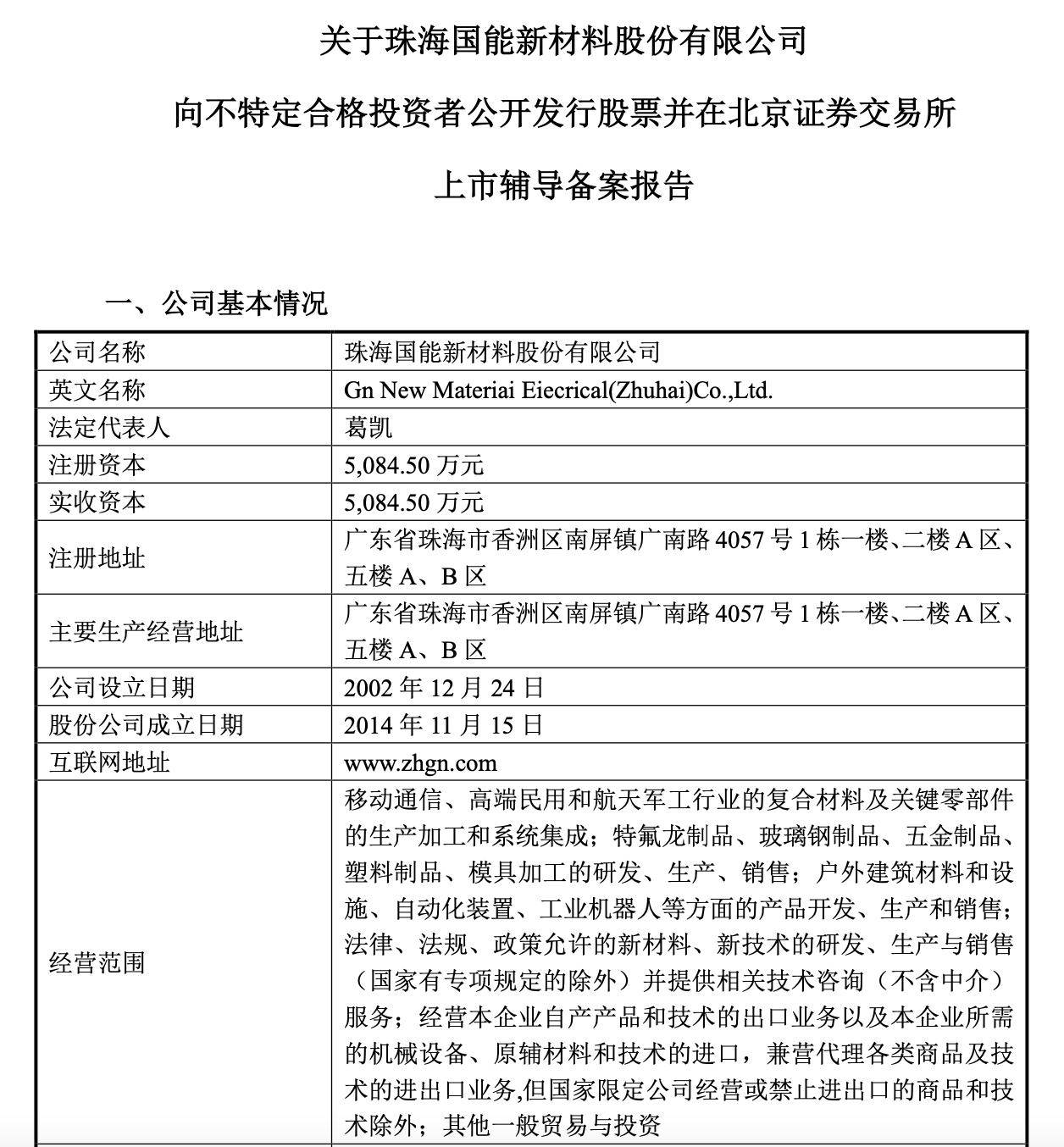
Company Overview - The company is Zhuhai Guoneng New Materials Co., Ltd., established on December 24, 2002, and became a joint-stock company on November 15, 2014 [2][4]. - The registered capital is 50.845 million yuan, and the actual capital is also 50.845 million yuan [2]. - The company is located in Zhuhai, Guangdong Province, and specializes in the production and processing of composite materials for mobile communication, aerospace, and military industries [2][4]. Business Focus - Guoneng New Materials is recognized as a national-level specialized and innovative "little giant" enterprise focusing on key basic materials and core component product technology development for strategic emerging industries such as mobile communication and radar communication [4]. - Main products include high-frequency and high-speed copper-clad laminates for radar communication, base station antenna covers widely used by major telecom companies like Huawei and Ericsson, and composite structural components for power and energy storage batteries [4]. Financial Performance - In the first half of 2025, the company achieved a revenue of 92.452 million yuan, representing a year-on-year growth of 55.41% [5][6]. - The net profit attributable to shareholders was 23.812 million yuan, showing a significant increase of 136.01% year-on-year [5][6]. - The gross profit margin for the period was 47.08%, and the basic earnings per share were 0.47 yuan [6].

独家专访DWS全球研究主管Johannes Mueller:AI革命与投资大变局
2 1 Shi Ji Jing Ji Bao Dao· 2025-11-21 02:17
Group 1: AI and Economic Impact - The current AI hype may be slightly overestimated in the short term, while its long-term benefits could be underestimated, particularly in relation to labor market changes and demographic shifts [2][3] - Historical evidence suggests that transformative technologies require time to develop supporting infrastructure and skills before realizing their full potential [1][2] - The key question remains whether AI can enhance global productivity to justify the substantial investments made, particularly by U.S. companies [2][3] Group 2: Market Dynamics and Valuation - Concerns exist regarding the high concentration of a few stocks in the U.S. market, which accounts for one-third of the total market share, raising questions about future market performance [4] - The current market has absorbed many positive expectations, leading to a cautious outlook on whether future conditions will meet these optimistic projections [4] - The valuation of U.S. stocks is considered high compared to historical averages, prompting investors to seek opportunities in markets like China and Europe [6][7] Group 3: Investment Opportunities - Chinese and European markets are gaining attention as potential investment alternatives due to their relatively lower valuations compared to the U.S. market [6][7] - The "DeepSeek moment" highlights the emergence of competitive technology sectors in China, suggesting that significant investment opportunities may exist outside the U.S. [7][8] - European companies in sectors such as pharmaceuticals, defense, and luxury goods may offer attractive investment prospects despite the region not being a leader in AI technology [8] Group 4: Future Market Considerations - The market is expected to reflect fundamental economic performance over time, despite potential short-term volatility and panic [9][10] - Future market drivers will likely shift focus back to economic fundamentals, especially as inflation data does not yet show significant impacts from tariffs [9][10] - The potential for lower market returns in the coming years is acknowledged, as stock market gains have outpaced corporate profit growth in the early 2020s [10]
调研速递|通宇通讯接待中邮基金等2家机构 卫星通信“星—地—端”全链条布局引关注
Xin Lang Zheng Quan· 2025-11-19 10:18
Core Insights - Tongyu Communication is a leading enterprise in the communication antenna and RF device sector, focusing on the development, production, and sales of base station antennas, RF devices, and microwave antennas, providing comprehensive solutions for global mainstream mobile communication operators and equipment integrators [2] Company Overview and Strategic Direction - The company has established a strong position in the market, covering 2G to 5G network standards, with domestic clients including China Mobile, China Telecom, and China Unicom, and international partners such as Ericsson, Nokia, and Samsung [2] - As of June 2025, the company holds over 700 authorized patents in the RF communication field, indicating a robust commitment to technology research and development [2] - The strategic focus is on a dual-driven approach of "communication antennas + satellite communication," accelerating research into 6G and low-orbit satellite internet [2] Core Business Progress - In the satellite communication sector, the company has established a comprehensive product system covering the entire "star-ground-end" chain, with significant advancements in low-orbit satellite applications [3] - The company is actively involved in the development of ground station terminals, satellite communication payloads, and terminal applications, with a focus on dynamic antennas for high-speed communication services [3] - The filter business is primarily export-oriented, with a stable customer base including Ericsson, while the microwave antenna products are designed for high-performance point-to-point transmission in complex electromagnetic environments [4] MACRO WIFI Product Development - The MACRO WIFI products are designed for open areas, featuring long-range coverage and high concurrent access capabilities, with successful partnerships established in Australia and ongoing product certification in approximately 18 countries [5] Future Outlook - The company is optimistic about the future of its satellite communication business, anticipating continued market competitiveness and participation in national satellite internet infrastructure development over the next three years [6] - Long-term prospects include the integration of satellite communication with emerging low-altitude economies, with expectations that prior investments in technology and capacity will translate into actual orders and performance contributions [7]

光的景气度上行:量增价优
GOLDEN SUN SECURITIES· 2025-11-16 10:01
Investment Rating - The report maintains a "Buy" rating for key companies in the optical module industry, including Zhongji Xuchuang and Xinyi Sheng [10]. Core Viewpoints - The optical module industry is experiencing a "volume increase and price increase" trend, driven by high global computing power demand, particularly for 1.6T optical modules, which have seen significant price increases [1][19]. - The retail price of 1.6T optical modules has risen from approximately $1200 at launch to over $2000, indicating a strong supply-demand imbalance [2][20]. - The price decline of 800G and lower-speed optical modules has slowed, with some products stabilizing or even increasing in price due to sustained demand and improved production capabilities [3][24]. Summary by Sections Demand Drivers - The demand for 1.6T optical modules has been continuously revised upward by major overseas clients, leading to a tight supply-demand relationship and significant price increases [2][20]. - The limited number of manufacturers capable of mass-producing 1.6T optical modules, primarily top companies like Zhongji Xuchuang and Xinyi Sheng, contributes to the supply constraints [2][23]. Price Trends - The price decline for 800G and lower-speed optical modules has slowed, with the market experiencing a unique situation where demand growth outpaces historical price declines [3][25]. - The transition of 800G optical modules from development to accelerated mass production is stabilizing prices, with suppliers focusing on cost control and production capacity [3][25]. Capital Expenditure and Industry Expansion - Major cloud service providers are increasing their capital expenditures, with Google raising its 2025 capex guidance from $85 billion to $91-93 billion, indicating strong ongoing demand for computing power [4][29]. - Optical module manufacturers are actively expanding production capacity to meet the growing demand, with improvements expected in the supply of core optical chips and components [4][29]. Investment Recommendations - The report recommends focusing on key players in the computing power supply chain, particularly in the optical module sector, including Zhongji Xuchuang and Xinyi Sheng, as well as related companies in optical devices and cooling solutions [8][13].


