
东吴证券

Search documents
中国光伏估值,因马斯克重塑?
2 1 Shi Ji Jing Ji Bao Dao· 2026-02-06 12:10
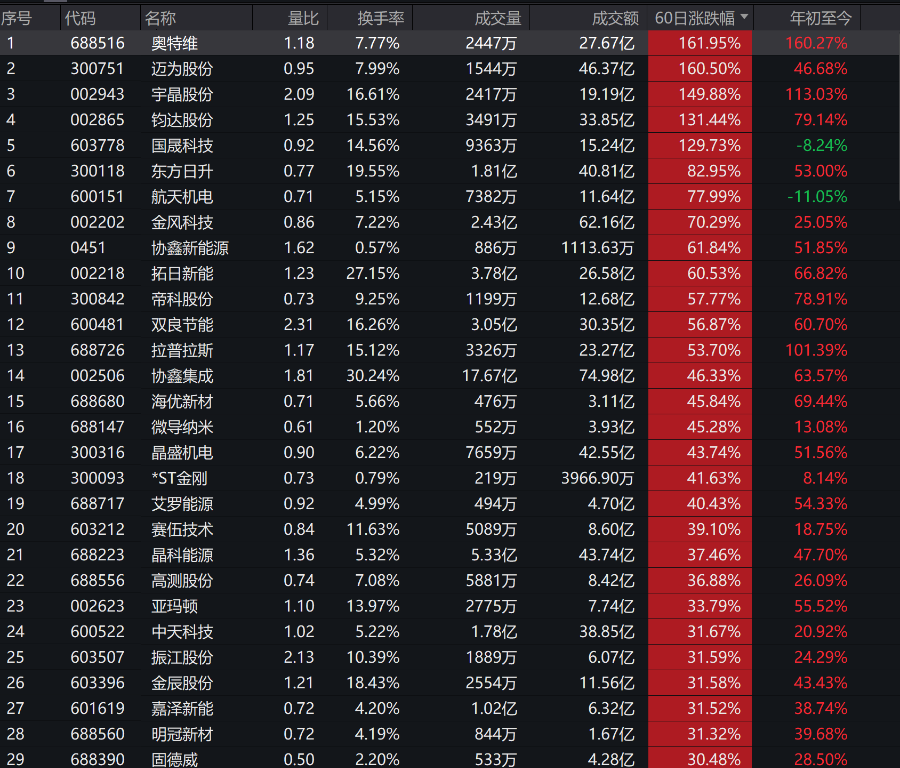
Core Viewpoint - Elon Musk's recent statements and activities have significantly influenced the A-share photovoltaic sector, leading to a surge in stock prices for various companies in this industry [2][3][5]. Group 1: Market Reaction - On January 23, 2026, 24 photovoltaic stocks reached their daily limit up, with the photovoltaic index rising by 7.46%, outperforming the overall market [2]. - Following Musk's remarks about the potential of solar energy in China, several companies, including JinkoSolar and TCL Zhonghuan, saw their stock prices rapidly increase [3][6]. - The A-share photovoltaic sector experienced a collective surge, with stocks like Aotaiwei and Maiwei doubling in price over a two-month period [6]. Group 2: Industry Fundamentals - Despite the recent stock price increases, many photovoltaic companies are still facing financial difficulties, with nearly 70% of 75 companies reporting losses for 2025 [4]. - The photovoltaic industry is currently at a low point, and while some companies are seeing a narrowing of losses, this has not translated into positive market sentiment [4][12]. - The concept of "space photovoltaics" has emerged as a potential new growth area for the industry, driven by the need for new market opportunities amid intense competition in ground-based solar energy [10][13]. Group 3: Future Prospects - Analysts predict that the space photovoltaic market could reach significant sizes, with estimates suggesting a potential market space of 200 billion yuan if 10,000 satellites are launched annually [10]. - Musk's exploration of Chinese photovoltaic companies signals a demand for support from the Chinese supply chain for his space energy ambitions [10][12]. - The push for space photovoltaics may compel companies to focus on new technologies and product quality, potentially leading to a return to value development in the industry [14].



芦哲、王洋(芦哲系东吴证券首席经济学家、中国首席经济学家论坛理事)
Xin Lang Cai Jing· 2026-02-06 11:20
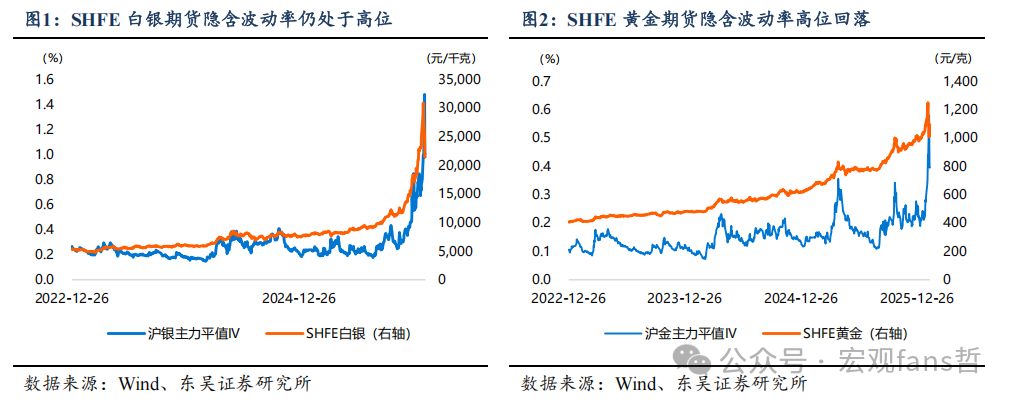
Core Viewpoints - Silver futures have ended their limit down, indicating that the current liquidity shock is largely over. Since November 2025, silver has become a leading indicator of bullish sentiment in the commodity market, alongside gold and copper, activating a rotation sequence in commodities [2][12] - The recent decline in silver futures has triggered a liquidity risk contagion in the commodity market, leading to widespread sell-offs in related sectors. The opening of the limit down on February 3rd suggests a relief in market risks [2][12] Market Events - On February 3, 2026, the Shanghai Futures Exchange (SHFE) silver futures opened limit down, closing at 21,446 CNY/kg, a decline of 16.71%. The London silver spot price was 79.2 USD/oz, with the SHFE silver futures premium dropping from 29.8% at the end of January to 7.46% by February 3 [1][11] - On February 4, the SHFE silver main contract night session rose by 5.93%, closing at 22,393 CNY/kg [1][11] Volatility Analysis - The implied volatility of silver futures remains high, with a peak of 148% on February 2, indicating that while the limit down has been lifted, the market still needs to stabilize from liquidity risks. Gold futures also show elevated volatility, suggesting that both metals require time to fully absorb the liquidity shock [3][13] Commodity Market Dynamics - The core logic of the commodity market remains unchanged despite liquidity shocks. Some commodities, which were mispriced due to liquidity risks, may return to their fundamental pricing logic as the market stabilizes. The 2026 asset allocation report highlights three main lines for the commodity market post-liquidity shock [4][14] - Precious metals are expected to enter a consolidation phase after a period of broad increases, supported by long-term narratives such as the weakening of global sovereign currency credit and the "de-dollarization" trend [4][17] Non-Ferrous Metals - Non-ferrous metals like copper and aluminum are expected to benefit from structural changes in demand driven by new economic sectors such as AI and renewable energy. Despite recent adjustments due to liquidity shocks, the fundamental pricing mechanisms for these metals remain robust [5][18] Chemical Sector - The chemical sector is anticipated to see continued improvement in market conditions, driven by supply-side adjustments and structural changes in demand. The sector is becoming a key area for capital inflows, despite recent declines linked to precious metals [6][19] New Energy Metals - New energy metals, particularly lithium carbonate, are expected to gradually move towards supply-demand balance, supported by policy adjustments and demand growth. The sector remains a focal point for bullish investment opportunities [7][20]

东吴证券(601555) - 东吴证券股份有限公司2025年度第四期短期融资券兑付完成的公告
2026-02-06 08:31
证券代码:601555 股票简称:东吴证券 公告编号:2026-002 东吴证券股份有限公司 2025 年度第四期短期融资券兑付完成的公告 本公司董事会及全体董事保证本公告内容不存在任何虚假记载、误导性陈述 或者重大遗漏,并对其内容的真实性、准确性和完整性承担法律责任。 东吴证券股份有限公司(以下简称"公司")于2025年6月18日 成功发行东吴证券股份有限公司2025年度第四期短期融资券,发行总 额为人民币15亿元,票面利率为1.68%,期限为232天,兑付日期为2026 年2月5日。 2026年2月5日,公司完成兑付本期短期融资券本息共计人民币 1,516,017,534.25元。 特此公告。 东吴证券股份有限公司董事会 2026 年 2 月 7 日 ...
东吴证券:首次覆盖奇瑞汽车(09973)给予“买入”评级 多品牌协同拓展增长边界
智通财经网· 2026-02-06 06:46
Group 1: Core Insights - Dongwu Securities projects Chery Automobile's net profit attributable to shareholders for 2025-2027 to be 18.4 billion, 21.1 billion, and 25.4 billion yuan respectively, with a PE ratio of 14, 11, and 8 times for the same period [1] - The company is recognized as a global technology-oriented automotive enterprise, transitioning towards globalization and intelligence, with a clear ownership structure involving state-owned, strategic investors, and management [1] - Chery's financial performance is bolstered by its strong momentum in new energy vehicles and stable export position, leading to improved financial data [1] Group 2: Brand Strategy - Chery's main brand targets the mainstream market with high cost-performance and diverse powertrain options, while its sub-brands cater to specific segments such as travel, high-end users, and younger demographics [2] - The Jietu brand focuses on travel and light off-road SUVs, while the Xingtu brand targets mid-to-high-end consumers [2] - The iCAR brand is aimed at the younger, personalized electric vehicle market, and the Zhijie brand emphasizes smart experiences through collaboration with Huawei [2] Group 3: Export Strategy - Chery has a phased export strategy starting from developing markets, focusing on key markets like Russia, and expanding into Europe [3] - The Tiggo series is central to Chery's export strategy, offering a mix of internal combustion engine (ICE) and plug-in hybrid electric vehicles (PHEV) to adapt to different regional markets [3] - The company employs a localized approach in its overseas operations, utilizing a dealer authorization system and local assembly to meet market demands [3] Group 4: Technological Development - Chery plans to integrate its subsidiaries and R&D functions by 2025 to enhance its research capabilities [4] - The company adopts a dual-track strategy of self-research and collaboration with leading technology partners like Huawei and Horizon [4] - Chery's vehicle platform strategy includes both traditional fuel and new energy platforms, structured by price range and technology path [4]
东吴证券:首次覆盖奇瑞汽车给予“买入”评级 多品牌协同拓展增长边界
Zhi Tong Cai Jing· 2026-02-06 06:45
Group 1: Core Insights - Dongwu Securities projects Chery Automobile's net profit attributable to shareholders for 2025-2027 to be 18.4 billion, 21.1 billion, and 25.4 billion yuan respectively, with a higher valuation expected due to strong growth in new energy and stable export position [1] - Chery Automobile, established in 1997, is transitioning towards globalization and intelligence, supported by a clear equity structure involving state-owned, strategic investors, and management [1] - The company has a diversified brand system with five major brands catering to various market needs, including a focus on high cost-performance for the main brand and a high-end brand targeting mid-to-high-end users [2] Group 2: Export Strategy - Chery's export strategy has evolved from developing markets to key markets like Russia and now expanding into Europe, with a focus on risk management in these regions [3] - The Tiggo series is central to Chery's export products, utilizing multiple energy forms and configurations to adapt to different regional markets, with fuel vehicles forming the core of overseas sales [3] - The company employs a localized approach in its overseas operations, utilizing a dealer authorization system and local assembly to meet market demands [3] Group 3: Technological Development - Chery plans to integrate its subsidiaries and R&D functions by 2025 to enhance its research capabilities, adopting a dual approach of self-research and collaboration with leading technology partners [4] - The company has developed a platform-based vehicle manufacturing capability, with a structure that accommodates both traditional fuel and new energy platforms [4] - Chery introduced the "Falcon Intelligent Driving" solution in March 2025, emphasizing its commitment to smart technology development [4]
东吴证券:维持百胜中国“买入”评级 质地稳健的高股息龙头
Zhi Tong Cai Jing· 2026-02-06 05:52
Core Viewpoint - Dongwu Securities has adjusted the profit forecast for Yum China (09987) for 2026-2027 to $1.043 billion and $1.144 billion, respectively, from previous estimates of $989 million and $1.059 billion, with a new profit forecast for 2028 at $1.263 billion, reflecting year-on-year growth of 12.24%, 9.69%, and 10.41% [1] Group 1: Financial Performance - For the full year of 2025, system sales and total revenue increased by 4% each, while Q4 saw a 7% and 9% increase, respectively, exceeding previous expectations [1] - Adjusted net profit for 2025 increased by 2% year-on-year, with Q4 showing a significant 24% increase, attributed to automation systems, lean operations, and optimized raw material prices [2] - Restaurant profit margins improved, with KFC and Pizza Hut showing respective profit margin increases of 0.5 and 0.8 percentage points in 2025 [2] Group 2: Store Expansion - By the end of 2025, the total number of stores reached 18,100, with net additions of 1,706 and 587 stores for the year and Q4, respectively [3] - KFC and Pizza Hut store counts were 13,000 and 4,200, with annual net increases of 1,349 and 444 stores [3] Group 3: Same-Store Sales - Overall same-store sales increased by 1% for the full year and 3% for Q4, with KFC and Pizza Hut both showing a 1% increase in same-store sales for the year [4] - KFC's same-store sales and transaction volume increased by 3% in Q4, while Pizza Hut's same-store sales increased by 1% [4] Group 4: Future Outlook - The company anticipates exceeding 20,000 stores by 2026, with over 3,000 stores by 2030, and plans for capital expenditures of $600-700 million [5] - The company plans to return $1.5 billion to shareholders in 2025, with a dividend yield of nearly 8% [5]
东吴证券:维持百胜中国(09987)“买入”评级 质地稳健的高股息龙头
智通财经网· 2026-02-06 05:52
Core Viewpoint - Dongwu Securities has adjusted the profit forecast for Yum China (09987) for 2026-2027 to $10.43 billion and $11.44 billion, respectively, from previous estimates of $9.89 billion and $10.59 billion, with a new profit forecast for 2028 at $12.63 billion, reflecting year-on-year growth of 12.24%, 9.69%, and 10.41% [1] Group 1: Financial Performance - In 2025, the total system sales and total revenue increased by 4% year-on-year, with Q4 showing a 7% and 9% increase, respectively, exceeding previous expectations [1] - Adjusted net profit for 2025 increased by 2% year-on-year, with Q4 showing a significant 24% increase, attributed to automation systems, lean operations, and improved raw material prices [2] - The operating profit for KFC in 2025 increased by 8% year-on-year, while for Pizza Hut, it rose by 19%, with restaurant profit margins improving for both brands [2] Group 2: Store Expansion - By the end of 2025, the total number of stores reached 18,100, with a net addition of 1,706 stores for the year, including 1,349 KFC stores and 444 Pizza Hut stores [3] Group 3: Same-Store Sales - Overall same-store sales increased by 1% for 2025, with Q4 showing a 3% increase, marking three consecutive quarters of positive year-on-year growth [4] - KFC's same-store sales for Q4 increased by 3%, while Pizza Hut's same-store sales showed a 1% increase, indicating a focus on value products [4] Group 4: Future Outlook - The company plans to exceed 20,000 stores by 2026, with a capital expenditure of $6-7 billion and a shareholder return of $1.5 billion in 2025 [5] - The dividend yield is projected to be nearly 8%, with a significant portion of new stores being franchise locations [5]
新规落地两周,杠杆盘理性回归
2 1 Shi Ji Jing Ji Bao Dao· 2026-02-06 03:17
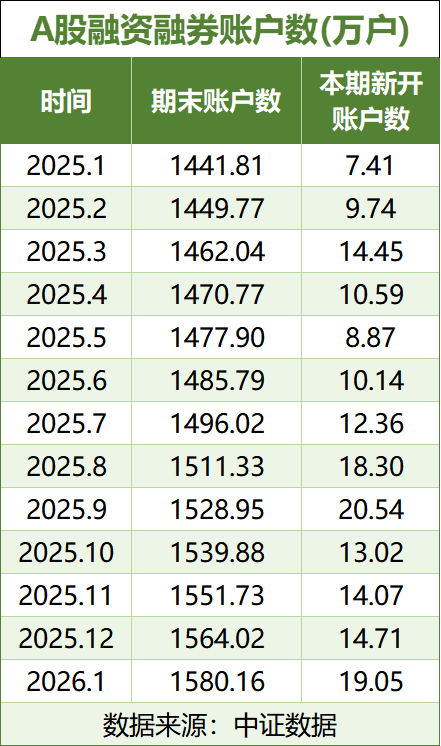
Group 1 - The A-share market experienced a "good start" in January 2026, with leveraged funds entering the market rapidly, leading to a record high in margin financing and securities lending balance [1][2] - In January, the number of new margin trading accounts reached 190,500, a month-on-month increase of 29.5% and a year-on-year increase of 157% [2][3] - As of the end of January, the total margin financing and securities lending balance reached 2.72 trillion yuan, marking a historical peak [2][6] Group 2 - The increase in new accounts and margin balance reflects a shift in market sentiment from cautious to proactive, driven by the profit effect of rising markets and long-term capital inflows [2][12] - The margin trading balance has been on an upward trend since the "9.24" market event, reaching 2.72 trillion yuan in January 2026 [8] - Despite the record high in margin balance, the overall leverage level in the market remains healthy, with key risk monitoring indicators significantly below historical high-risk periods [13][15] Group 3 - The market saw a significant increase in trading activity, with the total margin trading transaction amount reaching 640 billion yuan in January [6] - The adjustment of financing margin ratios, which increased from 80% to 100%, is viewed as a measure to cool down the market and prevent overheating of leveraged funds [13][15] - Following the implementation of the new financing regulations, the growth rate of margin balance has slowed, indicating a rational cooling of leveraged trading [12][13]
14万亿GDP背后的江苏金融力量
Xin Hua Ri Bao· 2026-02-05 23:10
Core Insights - The Jiangsu provincial government emphasizes the importance of financial support for the real economy, aiming to build a strong financial province that aligns financial services with industrial development [1] Group 1: Economic Growth and Financial Performance - Jiangsu's GDP reached 14.2 trillion yuan, with an average annual growth rate of 5.7% [1] - By 2025, the province's new social financing scale is projected to reach 3.2 trillion yuan, an increase of 316.7 billion yuan year-on-year, maintaining the top position in the country [2] - As of the end of 2025, the RMB loan balance in Jiangsu is expected to reach 28.25 trillion yuan, with an average annual growth rate of 12.8% from 2021 to 2025, consistently outpacing the nominal GDP growth rate [2] Group 2: Financial System and Innovation - Jiangsu is focused on enhancing the financial system to support a modern industrial framework, with provincial financial enterprises' total assets exceeding 15 trillion yuan, doubling since the end of 2018 [4] - The establishment of the Jiangsu National Financial Group and the Jiangsu Rural Commercial Bank aims to optimize the management of state-owned financial capital and improve financial services [4] - The province has introduced various financial products and services tailored to meet the diverse needs of the real economy, including a multi-layered financial supply system for technology enterprises [3] Group 3: Support for Enterprises - By the end of 2025, the loan balance for private enterprises in Jiangsu is expected to be around 8 trillion yuan, with inclusive small and micro loans exceeding 4 trillion yuan [3] - The province has implemented innovative financing models, such as the "Torch Innovation Credit Loan + Trade Financing" to address the financing challenges faced by technology companies [2] Group 4: Financial Ecosystem and Risk Management - Jiangsu is committed to creating a favorable financial ecosystem by enhancing information sharing and collaboration among various departments, establishing a coordinated financial regulatory mechanism [8] - The province has conducted 122 financial service events in 2025, benefiting over 53,000 small and micro enterprises, and has set up 105 new financial service points for private enterprises [7] - Recent measures have been introduced to optimize the financial ecosystem, focusing on improving the financial business environment and enhancing the legal framework for finance [8]


固德电材系统(苏州)股份有限公司首次公开发行股票并在创业板上市提示公告
Xin Lang Cai Jing· 2026-02-05 19:12
登录新浪财经APP 搜索【信披】查看更多考评等级 有效报价是指网下投资者的报价不低于发行人和主承销商确定的发行价格,且未作为最高报价部分被剔除,同时符合 发行人和主承销商事先确定且公告的其他条件。在初步询价期间提交有效报价的网下投资者方可且必须参与网下 申购。主承销商已聘请北京中银(南京)律师事务所对本次发行和承销进行全程见证,并将对网下投资者资质、询 价、定价、配售、资金划拨、信息披露等有关情况的合规有效性发表明确意见。 8. 投资风险提示安排:初步询价结束后,如发行人和主承销商确定的发行价格超过《发行公告》中披露的网下投资者 剔除最高报价部分后剩余报价的中位数和加权平均数以及剔除最高报价后公募基金、社保基金、养老金、年金基 金、保险资金和合格境外投资者资金报价中位数和加权平均数的孰低值,或本次发行定价对应市盈率高于同行业上 市公司二级市场平均市盈率(中证指数有限公司发布的同行业最近一个月静态平均市盈率),发行人和主承销商将在 网上申购前发布《固德电材系统(苏州)股份有限公司首次公开发行股票并在创业板上市投资风险特别公告》(以下 简称"《投资风险特别公告》"),详细说明定价合理性,提示投资者注意投资风险。 ...

