
索菲亚

Search documents
如何看2025年10月消费数据
2025-11-16 15:36
Summary of Conference Call Records Industry Overview - The furniture industry is currently in a bottoming phase due to declining real estate sales and the reduction of subsidies, with a focus on quality companies like Gujia and Xilinmen, as well as operational turning points for companies like Oppein and Sophia [1][2] - During the Double Eleven shopping festival, cultural office supplies, daily necessities, and tobacco and alcohol sales grew by 13.5%, 7.4%, and 4.1% respectively, with pet supplies performing exceptionally well [1][3] - The retail sales of consumer goods in October increased by 2.9% year-on-year, with commodity retail growing by 2.8% and the catering industry by 3.8% [1][6] Key Insights and Arguments - The furniture retail sector saw a year-on-year growth of 9.6% in October, but this was a slowdown compared to September. The decline in building materials and home appliances sales was significant, with drops of 8.3% and 14.6% respectively [2] - The hotel sector benefited from the release of business travel demand and strong cultural tourism demand, with October's RevPAR remaining flat year-on-year but exceeding expectations in the weeks following the holiday [1][9] - The overall retail sales of consumer goods in October reached 4.6 trillion yuan, with supermarkets growing by 4.7% and department stores by only 1% [6] Investment Opportunities - For 2026, there is a focus on opportunities in overseas manufacturing and brand expansion, with domestic demand expected to recover in a lower interest rate environment. Recommended stocks include Xiangxin, YK Medical, Meiyingsen, Zhongxing Co., and Jiayi Co. [1][5] - The retail sector is expected to see improvements in companies like Yonghui and Bubugao in the fourth quarter and next year [7] - The hotel sector is projected to have a favorable supply-demand relationship in 2026, with recommendations for stocks like Shoulv Jinjiang, Atour, and Huazhu [10] Other Important Insights - The duty-free sector has shown strong performance, with significant growth in sales and average transaction value following new policy implementations [1][11][12] - The automotive sector experienced a decline in retail sales in October, with a total of 425.5 billion yuan, down 6.6% year-on-year, while wholesale sales of passenger vehicles increased by 7.5% [13][14] - The white goods sector is currently facing challenges due to reduced subsidies, but there are still investment opportunities in leading companies like Midea, Haier, and Gree, which are expected to have strong performance in the medium to long term [23][24][26][27] Conclusion - The overall consumer data for the coming year is expected to show a positive trend, with structural growth in certain sectors like the three-wheeled vehicle business of Aima Technology contributing positively to overall consumption [28]




索菲亚:目前公司已拥有29家海外经销商,业务遍及加拿大、澳大利亚、阿联酋、越南等23个国家及地区
Mei Ri Jing Ji Xin Wen· 2025-11-14 09:08
Core Viewpoint - The company is actively expanding its overseas market presence, with a focus on tailored strategies that respect local market conditions and consumer habits [1]. Group 1: Overseas Market Expansion - The company currently has 29 overseas distributors, covering 23 countries/regions including Canada, Australia, UAE, Vietnam, and Thailand [1]. - The company collaborates with quality overseas developers and contractors to provide customized solutions for approximately 132 engineering projects across 32 countries/regions [1]. - Future plans include deepening engineering business development and retail channel expansion while adapting to local market characteristics [1]. Group 2: Operational Strategy - The company emphasizes the importance of not blindly expanding in overseas markets, instead focusing on local operational strategies that align with market development rhythms [1]. - Continuous improvement of the operational system to meet local demands is a priority for the company as it seeks to capitalize on overseas market opportunities [1].

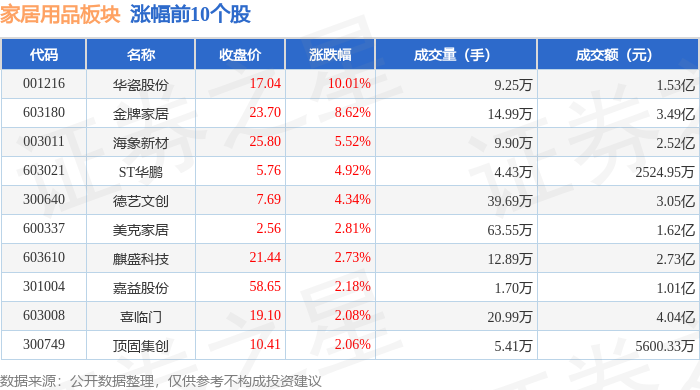
家居用品板块11月14日涨0.15%,华瓷股份领涨,主力资金净流出8330.61万元
Zheng Xing Xing Ye Ri Bao· 2025-11-14 08:51
Group 1 - The home goods sector increased by 0.15% on November 14, with Huaci Co., Ltd. leading the gains [1] - The Shanghai Composite Index closed at 3990.49, down 0.97%, while the Shenzhen Component Index closed at 13216.03, down 1.93% [1] - Huaci Co., Ltd. saw a closing price of 17.04, with a significant increase of 10.01% and a trading volume of 92,500 shares [1] Group 2 - The home goods sector experienced a net outflow of 83.31 million yuan from institutional funds, while retail investors saw a net inflow of 193 million yuan [2] - The trading data indicates that major stocks like Jinpai Home and Huaci Co., Ltd. had varying levels of net inflow and outflow from different investor categories [3] - Jinpai Home had a net inflow of 39.79 million yuan from institutional investors, while Huaci Co., Ltd. experienced a net outflow of 56.26 million yuan [3]



索菲亚(002572):Q3盈利能力稳步改善
Xin Lang Cai Jing· 2025-11-13 08:39
Core Insights - The company reported a revenue of 2.5 billion in Q3 2025, a decrease of 10% year-on-year, while the net profit attributable to shareholders was 360 million, an increase of 1% year-on-year, and the net profit after deducting non-recurring items was 300 million, a decrease of 15% year-on-year [1] Financial Performance - For the first three quarters of 2025, the company achieved a revenue of 7 billion, down 8% year-on-year, with a net profit of 700 million, down 26% year-on-year, and a net profit after deducting non-recurring items of 720 million, down 18% year-on-year [2] - In Q3 2025, the company's gross profit margin was 36.83%, an increase of 0.97 percentage points year-on-year, and the net profit margin was 15.3%, an increase of 1.54 percentage points year-on-year, indicating improved profitability [2] Brand and Channel Analysis - Brand performance: - Sophia: 1,793 dealers, 2,561 specialty stores; revenue of 6.35 billion from January to September 2025, with an average transaction value of 22,511 [2] - Milan: 528 dealers, 556 specialty stores; revenue of 300 million from January to September 2025, with an average transaction value of 17,662 [2] - Simmi: 132 dealers, 134 specialty stores [2] - Huahai: 222 dealers, 270 specialty stores; revenue of 81 million from January to September 2025 [2] - Channel performance: - Integrated channel: Revenue of 1.39 billion from January to September 2025, with 283 cooperative companies covering 221 cities and 728 sample stores [2] - Retail integrated business: 2,473 cooperative companies covering 1,482 markets and 2,375 sample stores [2] - Overseas channel: 29 overseas dealers covering 23 countries/regions, with partnerships for 132 projects in 32 countries/regions [3] Market Trends and Strategy - The domestic market is shifting from new housing to the existing housing market due to real estate adjustments, requiring the industry to focus on the existing housing sector over the next three to five years [3] - Consumer spending habits are changing, moving from traditional necessities to areas that provide emotional value, necessitating product development and marketing strategy adjustments [3] - The company remains optimistic about maintaining growth despite economic slowdowns, drawing on experiences from developed countries [3] Profit Forecast - The profit forecast has been adjusted, with expected net profits for 2025, 2026, and 2027 at 1.05 billion, 1.16 billion, and 1.31 billion respectively, corresponding to P/E ratios of 13X, 11X, and 10X [4]
索菲亚(002572):Q3盈利能力稳步改善
Tianfeng Securities· 2025-11-13 07:16
Investment Rating - The investment rating for the company is "Buy" with a target price not specified [5] Core Views - The company's Q3 2025 earnings show steady improvement in profitability, with a revenue of 2.5 billion, a decrease of 10% year-on-year, and a net profit attributable to shareholders of 360 million, an increase of 1% year-on-year [1] - The company is adjusting its profit forecast and maintains a "Buy" rating based on the performance in Q1-Q3 2025, expecting net profits of 1.05 billion, 1.16 billion, and 1.31 billion for 2025-2027, with corresponding P/E ratios of 13X, 11X, and 10X [4] Financial Performance - For the first three quarters of 2025, the company reported a total revenue of 7 billion, a decrease of 8% year-on-year, and a net profit of 700 million, a decrease of 26% year-on-year [1] - The gross margin for Q3 2025 was 36.83%, an increase of 0.97 percentage points year-on-year, and the net profit margin was 15.3%, an increase of 1.54 percentage points year-on-year [1] - The company has a total market capitalization of approximately 13.16 billion and a circulating market capitalization of about 8.91 billion [6] Brand and Channel Analysis - The company operates several brands, including Sophia, Milan, and others, with a total of 1,793 distributors and 2,561 specialty stores for Sophia, generating a revenue of 6.35 billion from January to September 2025 [1][2] - The integrated decoration channel generated 1.39 billion in revenue from January to September 2025, with 283 cooperative decoration companies and 728 sample stores [2] Market Trends - The domestic market is shifting from new housing to the existing housing market, with a need for the industry to focus on the renovation sector over the next three to five years [3] - Consumer spending habits are changing, moving away from traditional needs to areas that provide emotional value, indicating a need for the industry to adapt its marketing strategies [3]
贝壳旗下品牌被窝胜诉 家装行业侵权乱象仍在
Bei Jing Shang Bao· 2025-11-12 15:47
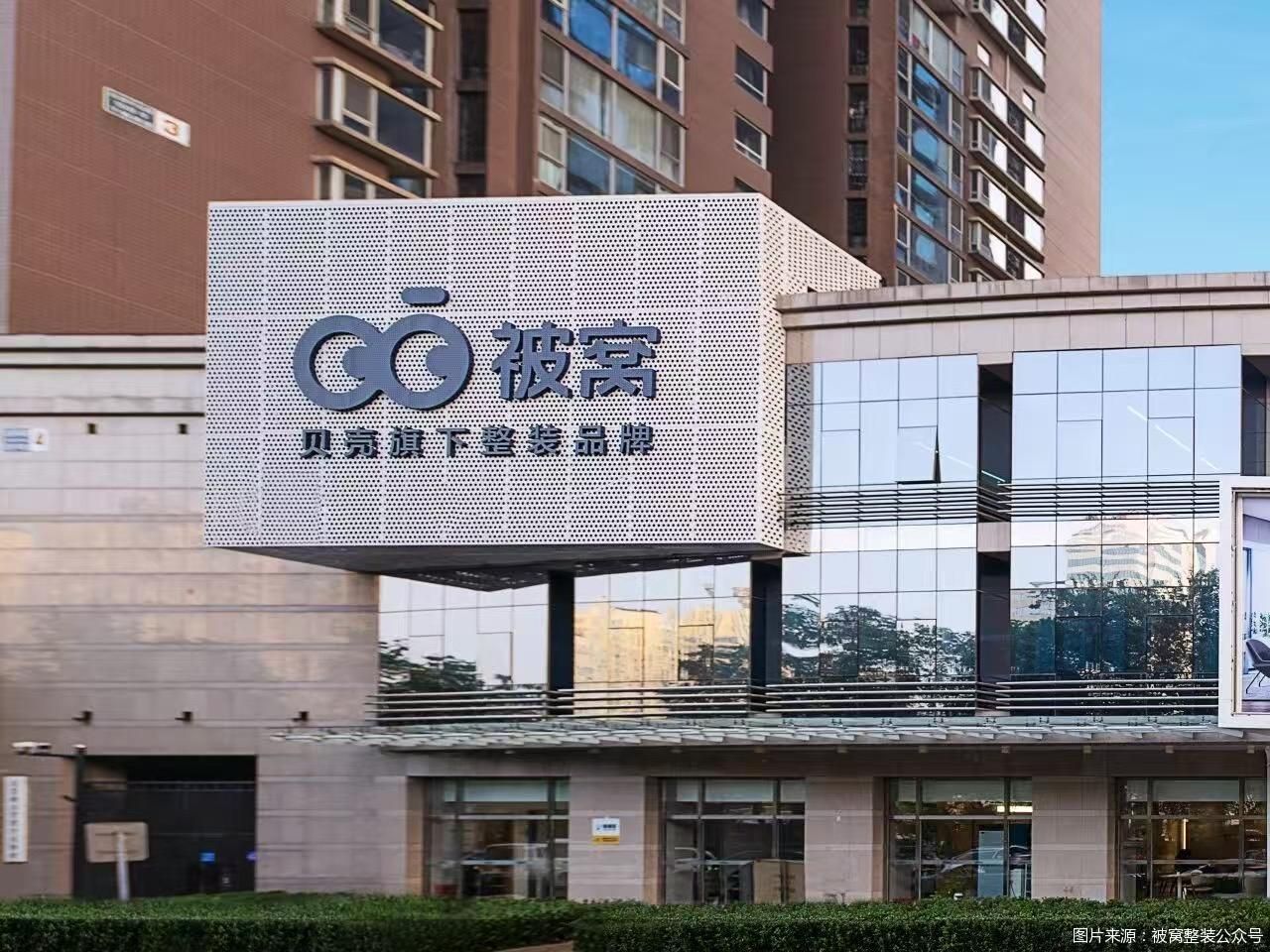
Core Viewpoint - The case of trademark infringement and unfair competition involving Beike's brand "Beiwow" highlights the increasing challenges of brand protection in the home furnishing industry, with a growing number of similar disputes emerging in recent years [1][2][3] Group 1: Infringement Cases - The court ruled that Shangqiu Beiwow Mingsai Decoration Engineering Co., Ltd. must cease its infringing activities and pay economic damages of 50,000 yuan for violating Beike's trademark rights [2] - Similar infringement cases have been reported in the home furnishing industry, including a 3.8 million yuan compensation ruling against a defendant infringing on the "Jiumu" brand [3] - Other brands like Sophia, Shangpin Home, and Meike Home have also faced trademark infringement issues, indicating a rising trend in such disputes within the industry [3] Group 2: Causes of Infringement - The primary driver of frequent brand infringement is profit motivation, as counterfeit brands can quickly attract consumers and reduce market entry costs [4] - Some infringing companies directly copy the names and branding of legitimate brands, exploiting consumer trust for profit [4] - The unique business model of the home furnishing industry, which often involves extensive dealer networks, complicates brand management and increases infringement risks [4] Group 3: Consumer Awareness and Market Environment - Consumer lack of awareness regarding genuine brand identification exacerbates the issue, as many rely solely on brand names and appearances when making purchasing decisions [5] - The prevalence of counterfeit brands is particularly pronounced in smaller cities and offline markets, where consumers may unknowingly choose imitation products due to price considerations [5] - Industry leaders emphasize the need for a clean consumption environment and call for the expulsion of counterfeit sellers from retail spaces [5] Group 4: Regulatory and Industry Response - There is a call for enhanced regulatory measures to strengthen intellectual property protection, including improving trademark registration processes and increasing penalties for infringement [6] - The "Intellectual Property Protection System Construction Project Implementation Plan" aims to establish a comprehensive protection network by 2027 [6] - Companies are encouraged to proactively develop comprehensive brand protection strategies as part of their long-term development plans [6] Group 5: Collaborative Efforts - Addressing the issue of infringement requires a collective effort from consumers, industry associations, and the media to promote awareness and report violations [7] - The establishment of a secure payment system by Beike, in collaboration with CITIC Bank, aims to protect consumer funds during renovation projects [7] - Experts suggest that a collaborative approach among businesses, government, and society is essential to foster a fair competitive environment and promote high-quality economic development [7]
又一品牌维权胜诉 家装乱象如何破
Bei Jing Shang Bao· 2025-11-12 13:01
Core Viewpoint - The home furnishing industry is facing a significant challenge with frequent trademark infringement and unfair competition disputes, highlighting the need for stronger brand protection measures [1][4][8]. Group 1: Legal Cases and Outcomes - Beike's brand "Beiwow" won a trademark infringement case against Shangqiu Beiwow Mingsai Decoration Engineering Co., which was ordered to cease infringing activities and pay 50,000 yuan in damages [3][4]. - The court found that the defendant's use of the "Beiwow" mark in signage and advertising could confuse consumers, constituting trademark infringement and unfair competition [3][4]. - Other notable cases include a 3.8 million yuan compensation ruling against a defendant infringing on the "Jiumu" brand and a 300,000 yuan ruling against a company infringing on the "Oppein" brand [4]. Group 2: Industry Trends and Challenges - The frequency of trademark infringement cases in the home furnishing sector is on the rise, particularly in emerging fields like integrated and customized home furnishing [4][6]. - Factors contributing to this trend include the low cost and high profit potential of imitating established brands, as well as the challenges of managing brand identity across a wide network of distributors [5][6]. - The complexity of the home furnishing industry, with its diverse product categories, increases the risk of infringement due to insufficient cross-category trademark protection [6]. Group 3: Consumer Awareness and Behavior - Many consumers lack the knowledge to distinguish between genuine and counterfeit brands, often relying on brand names and appearances for their purchasing decisions [7]. - This information asymmetry allows counterfeit brands to mislead consumers, particularly in offline stores and smaller cities [7]. - Consumer awareness initiatives are necessary to help individuals recognize authentic brands and report infringements [9]. Group 4: Regulatory and Policy Recommendations - There is a call for enhanced regulatory measures to combat trademark infringement, including improving the intellectual property protection system and increasing penalties for violators [8]. - The government aims to establish a comprehensive intellectual property protection network by 2027, with a focus on cross-regional enforcement collaboration [8]. - Companies are encouraged to proactively develop brand protection strategies as part of their long-term business plans [9].
渤海证券研究所晨会纪要(2025.11.11)-20251111
BOHAI SECURITIES· 2025-11-11 01:29
Macro and Strategy Research - In October 2025, China's exports decreased by 1.1% year-on-year, while imports increased by 1.0%, resulting in a trade surplus of 90.074 billion USD [2][3] - The decline in export growth is attributed to high base effects and seasonal factors, but the overall decrease is considered manageable [2] - Looking ahead, the easing of US-China trade tensions and stable global manufacturing PMI suggest that export uncertainties have significantly reduced [3] Price Data Analysis - In October 2025, the Consumer Price Index (CPI) turned positive with a notable increase driven by rising food prices and core inflation influenced by international gold prices [4][5] - The Producer Price Index (PPI) saw a narrowing year-on-year decline, with improvements in key industries such as coal and photovoltaic equipment due to ongoing capacity management [5][6] Fund Research - The equity market saw most major indices rise, with the Shanghai Composite Index increasing by 1.08% [7] - Bond ETF scales reached new highs, indicating strong investor interest in fixed-income products [7][8] - The average return for equity funds was positive, with quantitative funds leading the gains [8] Industry Research - The light industry and textile sectors are under pressure from export declines, with furniture and clothing exports down by 12.66% and 15.96% respectively in October [11][12] - New government policies aimed at accelerating digital transformation are expected to enhance the competitiveness of these sectors in the medium term [11] - The computer industry reported a revenue of 935.835 billion CNY in the first three quarters of 2025, with a year-on-year growth of 9.14%, driven by strong performance in software development and IT services [13][14]
家居五金行业专家会
2025-11-11 01:01
Summary of the Conference Call on the Home Hardware Industry Company Overview - **Company**: Henkel Group - **Industry**: Home Hardware - **Market Size**: Approximately 70 billion RMB, with basic hardware accounting for about 60% of the market share [6][7] Key Points and Arguments Sales and Profit Growth - **Sales Growth**: Henkel Group's overall sales in October 2025 increased by over 30% year-on-year, with basic hardware contributing about 60% of sales but only 40% of gross profit [1][3] - **Profit Contribution**: Storage, kitchen, and outdoor home products combined accounted for 10% of sales but contributed 60% of overall gross profit, indicating a significant optimization in profit structure [1][3] Future Growth Expectations - **Growth Drivers**: The company expects to maintain rapid growth in the coming year due to: - Fully automated factories improving production efficiency and quality stability - Cost control measures allowing for a 3-5% reduction in costs - Expansion into lower-tier cities and towns to increase market share in mid-to-low-end products [1][3][24] - **Market Penetration**: Henkel's market share is currently less than 1/20 of the total market, indicating substantial growth potential [1][6] Product Performance - **Product Categories**: Basic hardware has a gross margin of over 40%, while storage and kitchen products are performing particularly well on e-commerce platforms [2][3] - **New Product Development**: Continuous product iteration and patent protection strategies are in place to counter imitation challenges, maintaining a 3-6 month lead over competitors [1][9] Regional Growth - **Regional Performance**: - Central and Eastern China show mid-level growth, while Northwestern, Northeastern, and Northern China are experiencing rapid growth. - Coverage in county and town markets is below 40%, presenting a significant opportunity for expansion [10][11] Competitive Landscape - **Market Position**: Henkel has a competitive advantage over rivals like Dongtai due to a larger number of terminal outlets, with over 15,000 C-end outlets compared to Dongtai's fewer than 3,000 [8] - **Challenges**: The company faces challenges from imitation but has strategies in place to mitigate these risks through innovation and patent protections [9][10] Pricing Strategy - **Pricing Trends**: The pricing strategy varies across product types, with potential price reductions in basic hardware and higher-end storage and kitchen products. However, overall gross margins are expected to remain stable [5][24] Inventory and Sales Performance - **Inventory Levels**: Core distributors are experiencing a 15-20% increase in inventory pressure, while smaller distributors face a 5% increase, indicating manageable inventory levels [15] - **Sales Performance of New Stores**: Mature stores in the old renovation segment generate annual sales of 300,000 to 500,000 RMB, with profit margins reaching up to 100% [21][19] Future Strategies - **Expansion Plans**: The company plans to open 10,000 old renovation stores over the next two years, currently operating around 130-140 stores [18][24] - **Unicorn Factory**: The new factory is expected to enhance production capacity and reduce costs, with a projected gross margin increase of over 10% upon full operation by August 2026 [22][23] Key Performance Indicators - **Focus Areas**: Future growth will focus on whole-house renovation projects, further penetration into tier-three and tier-four markets, and the cloud business, which is expected to grow by 50% next year [24][25] Additional Important Insights - **Market Dynamics**: The home hardware industry is resilient despite pressures from the real estate sector, driven by adjustments in profit structures and increased demand for hardware components in furniture design [7] - **Collaborations**: Partnerships with major clients like Oppein and Sophia are expected to grow, with projections of increasing their contribution to 15-20% of total sales by Q4 2025 [20]
兔宝宝20251107
2025-11-10 03:34
Summary of the Conference Call for Rabbit Baby (兔宝宝) Company Overview - Rabbit Baby was established in 1992 and went public in 2005, headquartered in Zhejiang. The company primarily focuses on decorative materials and custom home decoration materials, mainly operating under the ODM model, collaborating with upstream suppliers to produce boards. The revenue is mainly derived from three segments: decorative materials (over 40%), brand licensing (over 20% gross margin), and custom home products (over 20% gross margin) [4][5][10]. Industry Insights - The man-made board industry includes plywood, fiberboard, and particleboard, with plywood holding over 60% market share. The market size for man-made boards in China is approximately 700 billion RMB, with about 30% related to furniture manufacturing. Although demand has recently declined due to the real estate market, long-term growth is expected due to renovation needs in the existing housing market [6][8]. Key Points and Arguments - **Market Expansion Strategy**: Rabbit Baby is expanding its market share through a channel penetration strategy, particularly in the white-label product sector, by establishing relationships with carpenters and increasing store presence in rural markets. This strategy has proven effective, especially in the custom furniture sector, where collaboration with small furniture manufacturers is expected to increase revenue share from this channel to over 30% by 2024 [2][12]. - **Performance and Financial Health**: The company has shown steady revenue growth and increased profits in the first three quarters, partly due to investment gains from the listing of Hanhai Group. The average net profit margin over the past decade is around 7%, with a return on equity (ROE) of approximately 19% [2][5]. - **Competitive Landscape**: The man-made board industry is highly fragmented, with around 10,000 companies and a total capacity of 300 million cubic meters. Leading companies like Wan Hua and Feng Lin are relatively concentrated, but the overall market remains dispersed. Rabbit Baby benefits from brand recognition and environmental certifications, appealing to health-conscious young consumers [7][8]. - **Shift in Consumer Preferences**: There is a notable shift from retail to custom home and furniture manufacturing channels, driven by younger consumers preferring ready-made or custom furniture. This trend has led Rabbit Baby to adapt its sales strategy, focusing more on partnerships with custom furniture manufacturers [9][12]. - **Adoption of ODM Model**: The company employs an ODM model to achieve asset-light operations, facilitating rapid expansion and quality control while enhancing brand premium. This model allows Rabbit Baby to maintain a strong market position despite the competitive nature of the industry [3][11]. Future Outlook - **Profit Forecast**: The projected net profit for Rabbit Baby from 2025 to 2027 is estimated at 750 million RMB, 880 million RMB, and 960 million RMB, respectively. The current valuation suggests an attractive dividend yield, making Rabbit Baby a potential investment opportunity [13]. Additional Insights - The company is actively expanding its presence in rural markets, where demand remains strong despite urban market challenges. The collaboration with over 20,000 small furniture manufacturers indicates significant growth potential in this segment [12]. This summary encapsulates the key insights and strategic directions of Rabbit Baby, highlighting its market positioning, financial performance, and future growth prospects in the man-made board industry.
