青岛啤酒

Search documents
食品饮料行业双周报:CPI同比转正,食饮板块预期修复-20251124
Guoyuan Securities· 2025-11-24 02:43
Investment Rating - The report maintains a "Recommended" investment rating for the food and beverage industry [4] Core Insights - The food and beverage sector in A-shares has shown a 1.34% increase over the past two weeks, outperforming major indices such as the Shanghai Composite Index by 5.41 percentage points [12] - The Consumer Price Index (CPI) turned positive in October, with a year-on-year increase of 0.2%, indicating a potential recovery in consumer sentiment [3][62] - The report highlights a structural shift in dairy imports towards high-value products, driven by changing consumer preferences for low-fat, high-protein, and organic options [7][62] Summary by Sections 1. Market Review - A-shares in the food and beverage industry rose by 1.34% from November 10 to November 21, outperforming the Shanghai Composite Index by 5.41 percentage points [12] - Within the sector, dairy (+6.67%), processed foods (+2.60%), and liquor (+2.52%) saw the highest gains, while soft drinks (-4.27%), health products (-2.25%), and snacks (-1.02%) experienced declines [12] 2. Key Data Tracking - The average price of fresh milk in major production areas is 3.03 yuan/kg, down 2.9% year-on-year [39] - The national market price for pork is 23.13 yuan/kg, reflecting a year-on-year decrease of 19.7% [44] - The price of PET (water bottle grade) is 6,100 yuan/ton, down 3.9% year-on-year [44] 3. Key Events Tracking - The October CPI data showed a year-on-year increase of 0.2%, with food prices decreasing by 2.9% [3][62] - Retail sales in October grew by 2.9% year-on-year, with significant increases in the sales of grain, oil, and beverages [3][62] - Dairy imports have returned to positive growth, driven by strong demand for high-end products [7][62] 4. Important Company Announcements - Yili Group plans to maintain a cash dividend payout ratio of no less than 75% over the next three years [63] - Huangtai Liquor's major shareholder intends to increase their stake in the company through market purchases [63] 5. Investment Recommendations - For liquor, focus on high-end brands with strong market positions such as Kweichow Moutai and Wuliangye [8][65] - In the consumer goods sector, consider companies in the snack and energy drink markets, as well as those benefiting from the recovery of the dairy and restaurant supply chains [8][65]





近一个月超140只个股评级调整 食品饮料行业上调最多
Zhong Guo Zheng Quan Bao· 2025-11-21 22:20
近期A股市场存量资金博弈特征愈发明显,板块轮动节奏加快。近一个月,券商密集调整个股评级,超 50只个股获上调评级,食品饮料行业的标的最多;同时,超90只个股被下调评级,涉及汽车、化工等多 个行业。 食品饮料行业方面,招商证券11月3日发布研报表示,巴比食品第三季度收入增长提速,店效延续改 善,将个股评级由增持上调至强烈推荐;西麦食品、妙可蓝多、东鹏饮料个股评级均由增持上调至买 入;青岛啤酒、千味央厨个股评级均由持有上调至增持;甘源食品个股评级由中性上调至优于大市。 受益于终端需求逐步回暖,电子行业有望迎来估值修复与成长契机。在电子行业中,晶晨股份、中微公 司、源杰科技、水晶光电、绿联科技个股评级均由增持上调至买入。 对于2026年电子行业投资策略,中原证券表示,展望2026年,AI算力需求持续景气,云侧AI算力硬件 基础设施仍处于高速成长中,AI眼镜、具身智能、智能驾驶等端侧AI创新百花齐放;AI推动半导体周 期继续上行,存储器或迎来超级周期,半导体自主可控有望加速推进。 超90只个股被下调评级 近一个月,券商还下调92只个股评级,涵盖25个行业。其中,汽车、食品饮料、基础化工行业被下调评 级的个股数量居前, ...
“品质零售·融聚共生”绘就产业高质量发展新图景2025北京零售商品博览会盛大启幕!
Jing Ji Guan Cha Wang· 2025-11-21 10:47
Core Insights - The 2025 Beijing Retail Goods Expo aims to create a high-end exchange platform for the retail industry, focusing on resource integration, trend analysis, and innovation display [1] - The expo's theme is "Quality Retail · Integration and Coexistence," emphasizing the connection between various stakeholders in the retail supply chain to stimulate industry upgrades and consumer potential [1] Group 1: Event Overview - The expo covers an exhibition area of over 6,000 square meters, featuring more than 100 quality exhibitors and showcasing 200 innovative products across key consumer sectors such as imported food, dairy beverages, and daily necessities [1] - Notable brands participating include North Ice, Mengniu, Yili, Qingdao Beer, and others, highlighting the diverse appeal and innovative vitality of the retail industry [1] Group 2: Industry Significance - The retail sector is identified as a foundational industry crucial for national economic stability, influencing production guidance, consumption expansion, employment absorption, and livelihood security [2] - The China Commercial Association emphasizes its role in bridging government and enterprises, promoting the reform and development of the commercial circulation industry [2] Group 3: High-Quality Development - High-quality development is highlighted as a primary task for modernization in China, requiring the retail industry to move beyond single products and markets towards a more integrated, green, and intelligent platform [2] - Industry experts discuss challenges such as insufficient digital transformation and supply chain inefficiencies, advocating for a focus on consumer needs and embedding products into daily life for sustainable growth [4] Group 4: Innovative Practices - Companies like North Ice and 京客隆 are implementing innovative strategies such as digital communication channels and community-focused business models to enhance brand engagement and consumer experience [4][6] - The introduction of transparent supply chains and cultural elements in product development is seen as a way to attract younger consumers and rejuvenate traditional markets [6] Group 5: Supporting Activities - The expo includes various supporting events like the New Consumption Summit and retail procurement meetings, aimed at fostering precise supply-demand matching and deepening industry dialogue [7] - The event serves as a platform for showcasing retail innovation and building consensus on development paths, contributing to the high-quality growth of the retail sector and supporting Beijing's status as an international consumption center [7]
食品饮料行业2025年前三季度业绩分析:成本红利消退,收入加速下行
Zhongyuan Securities· 2025-11-20 08:28
Investment Rating - The industry maintains a "Market Perform" investment rating, indicating that the industry index is expected to fluctuate between -10% to 10% relative to the CSI 300 index over the next six months [60]. Core Insights - Since 2021, the revenue growth rate of the food and beverage industry has shown a stepwise decline, with a further slowdown in growth recorded in the first three quarters of 2025. The industry recorded a revenue growth of 0.18% in the first three quarters of 2025, a decline of 2.29 percentage points compared to the first half of the year [9][10]. - The industry has experienced a continuous increase in gross profit margins in recent years, peaking in 2024. However, since 2025, the gross profit margin has started to decline due to the fading cost advantages. The operating cost growth has outpaced revenue growth, leading to increased cost pressures [8][26]. - The report highlights a significant change in the expense structure of listed companies, with a reduction in sales expenses and a focus on internal control management. The research indicates that while sales expenses have decreased, R&D investments have remained stable [42][50]. - Profitability indicators for the food and beverage sector have been on the rise since 2021 but have started to decline in 2025 due to slowing revenue growth and the diminishing cost advantages. The net profit margin and return on equity have both decreased in the first three quarters of 2025 compared to the previous year [51][54]. Summary by Sections Revenue Growth - The food and beverage industry has seen a stepwise decline in revenue growth since 2021, with a recorded growth of 0.18% in the first three quarters of 2025, down 2.29 percentage points from the first half of the year [9][10]. - Sub-sectors such as snacks and soft drinks have shown strong growth, while others like prepared foods and white spirits have experienced revenue declines [10][19]. Cost and Profitability - The gross profit margin of the food and beverage sector peaked in 2024 but has started to decline in 2025 due to rising costs outpacing revenue growth. The gross profit margin was recorded at 49.53% in the first three quarters of 2025, down 1.39 percentage points year-on-year [26][54]. - The report indicates that the cost growth has exceeded revenue growth by 2.83 percentage points in the first three quarters of 2025, leading to increased cost pressures [27][31]. Expense Management - There has been a notable shift in the expense management of listed companies, with a reduction in sales expenses and a focus on internal control, resulting in a significant decrease in management expense ratios [42][46]. - The sales expense ratio has decreased from 12.35% in 2021 to 11.07% in the first three quarters of 2025, reflecting a more cautious approach to market investments [42][44]. Investment Opportunities - The report recommends focusing on investment opportunities in sub-sectors such as soft drinks, health products, baking, yeast, compound seasonings, and snacks, which are expected to perform well despite the overall industry slowdown [57].
青岛啤酒回应终止收购即墨黄酒:仍会考虑新并购
Xi Niu Cai Jing· 2025-11-19 06:40
Core Viewpoint - The acquisition plan of Jimo Yellow Wine by Qingdao Beer has failed, raising concerns about the company's diversification strategy and future growth opportunities [2][4]. Company Strategy - Qingdao Beer had high hopes for the acquisition of Jimo Yellow Wine, as it would provide seasonal product complementarity, with beer consumption peaking in summer and yellow wine in autumn and winter [2]. - Despite the failed acquisition, Qingdao Beer’s chairman stated that the company's diversification strategy remains unchanged, and they will consider new acquisition opportunities in the future [2]. Financial Performance - Qingdao Beer reported a revenue of 32.138 billion yuan in 2024, a decrease of 5.3% year-on-year, marking the first decline in both revenue and sales since the pandemic [4]. - For the first three quarters, the company achieved a revenue of 29.366 billion yuan, with a year-on-year growth of 1.41%, and a net profit attributable to shareholders of 5.274 billion yuan, up 5.7% year-on-year [4]. - However, in the third quarter, revenue saw a slight decline of 0.17%, and the growth rate of net profit attributable to shareholders dropped to 1.62% [4]. Market Context - The beer industry is entering a phase of stock competition, making it imperative for Qingdao Beer to find new growth avenues beyond its core business [4]. - The failure of the Jimo Yellow Wine acquisition highlights the challenges faced by Qingdao Beer in its pursuit of diversification and growth [4].


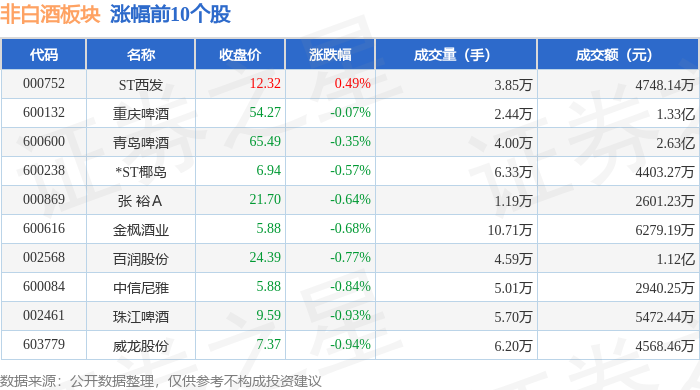
非白酒板块11月18日跌0.95%,燕京啤酒领跌,主力资金净流出1.09亿元
Zheng Xing Xing Ye Ri Bao· 2025-11-18 08:04
Market Overview - The non-liquor sector experienced a decline of 0.95% on November 18, with Yanjing Beer leading the drop [1] - The Shanghai Composite Index closed at 3939.81, down 0.81%, while the Shenzhen Component Index closed at 13080.49, down 0.92% [1] Stock Performance - Key stocks in the non-liquor sector showed varied performance, with ST Xifa closing at 12.32, up 0.49%, while other notable declines included Caijing Beer down 2.41% to 12.14 and Huichuan Beer down 2.41% to 12.15 [2] - The trading volume and turnover for selected stocks indicated significant activity, with Chongqing Beer recording a turnover of 1.33 billion and ST Xifa at 47.48 million [1][2] Capital Flow - The non-liquor sector saw a net outflow of 109 million from major funds, while retail investors contributed a net inflow of 115 million [2] - Detailed capital flow data showed that ST Xifa had a net inflow of 671,900 from major funds, while other stocks like ST Yedao experienced significant outflows [3]


青岛啤酒2025年第三季度业绩说明会问答实录
Quan Jing Wang· 2025-11-18 05:41
Core Viewpoint - Qingdao Beer is committed to maintaining its diversified development strategy despite the termination of the acquisition of Jimo Huangjiu, and will continue to explore new project opportunities in the future [2] Group 1: Company Strategy and Performance - The company is actively integrating the beverage business acquired from Qingdao Beverage Group, focusing on operational synergy with its beer business [2] - The company has implemented a market value management system to enhance overall market capitalization, including stock buybacks and increased cash dividends [2] - In the first three quarters of 2025, the company achieved a revenue of RMB 29.37 billion and a net profit of RMB 5.27 billion, indicating good growth in various operational metrics [5] Group 2: Market Conditions and Challenges - The beer industry is facing challenges with "difficult profit growth" despite a slow recovery in market demand, prompting the company to optimize product structure and enhance operational management [2] - The company has successfully positioned itself as the top-selling beer brand during the recent Double 11 shopping festival, indicating strong market performance [3] Group 3: Future Outlook - The company is optimistic about its overall performance for 2025, focusing on high-quality development and market expansion [4][5] - The company is actively investing in online channels, particularly in instant retail, to capitalize on emerging sales opportunities [3]
从“量大”到“质强” 中国啤酒行业如何实现破局?
Jing Ji Ri Bao· 2025-11-18 05:38
Core Insights - The Chinese beer industry has evolved significantly over the past century, transitioning from traditional brewing to industrial production, and has been the world's largest producer and consumer of beer since 2002 [1][2][3] - The industry is now facing a period of stock competition, with a need for innovation and quality improvement to maintain international competitiveness [1][4] Historical Development - The first Chinese brewery was established in Harbin in 1900, followed by others in major cities, leading to the emergence of local brands [2] - The beer industry saw rapid growth post-1949, with significant expansion in production and variety, particularly after the implementation of the "beer special project" in 1985 [2][3] - By 1993, China surpassed Germany in beer production, and by 2002, it became the world's largest beer producer with a total output of 24.03 million tons [2][3] Market Dynamics - The industry has entered a phase of stock competition since 2013, with a decline in traditional beer demand due to demographic shifts and changing consumer preferences towards healthier options [3][4] - The proportion of consumers aged 60 and above has increased, while the main consumer group (ages 20-40) has decreased, leading to a natural decline in beer production [3] Competitive Landscape - The market is highly concentrated, with major brands like China Resources, Tsingtao, and Yanjing holding over 70% of the market share [4] - Companies are shifting focus from expansion to high-quality development, adapting to new consumer trends and demands [4][5] Consumer Trends - There is a noticeable shift in consumer preferences towards high-end, refined, and diversified beer products, prompting companies to innovate in flavors and marketing strategies [5][6][9] - The rise of craft beer reflects a growing consumer desire for unique flavors and experiences, with many new entrants in the market [12][13] Pricing and Revenue - The average selling price of beer has become a key driver for revenue growth, with companies targeting the premium market segment [8] - Major brands have reported significant growth in mid-to-high-end product sales, indicating a successful transition towards premiumization [8] Sustainability and Innovation - The industry is increasingly focusing on sustainability, with initiatives aimed at reducing carbon emissions and improving water efficiency [21][22][23] - Companies are investing in advanced technologies and practices to enhance production efficiency and environmental responsibility [25][26] Supply Chain Challenges - The beer industry faces challenges related to raw material supply, particularly barley and hops, which are heavily imported [30][35][36] - Efforts are being made to improve domestic production and quality of these essential ingredients to ensure supply chain security [35][36] Future Outlook - The industry is expected to continue evolving with a focus on innovation, quality, and sustainability, aiming to enhance its global competitiveness [37][38] - There is a strong emphasis on cultural branding and international market penetration to elevate the global presence of Chinese beer brands [38]


【高质量发展产业调研】啤酒业破局
Jing Ji Ri Bao· 2025-11-18 01:03
啤酒,一种由麦芽、水、啤酒花和酵母通过特定酿造工艺制成的酒精饮品。中国啤酒产业发展至今 已逾百年,经历了从传统酿造到工业化生产的重大转变。自2002年以来,我国连续位居世界啤酒生产国 和消费国榜首。到2013年,我国啤酒产量为5062万吨,达到历史最大生产规模。 "推动中国制造向中国创造转变、中国速度向中国质量转变、中国产品向中国品牌转变",习近平总 书记提出的"三个转变",为推动我国产业结构转型升级、打造中国品牌指明了方向,同样对推动啤酒产 业高质量发展具有重要的指导意义,促使啤酒企业注重技术创新、质量提升和品牌建设。 在存量竞争态势愈发突出、消费需求日益分化多元的当下,啤酒行业如何创新求变,在"量大"的基 础上进一步实现"质强",打造国际影响力?记者进行了深入调研。 存量竞争 走进哈尔滨啤酒博物馆,一眼百年。乘"时光列车"重回百年老街,不知不觉被牵入历史深处。1900 年,一名俄国商人瞅准中东铁路开工的商机,在当时的国际性商埠哈尔滨开设了中国第一家啤酒厂乌卢 布列夫斯基啤酒厂,这是哈尔滨啤酒集团有限公司的前身。3年后,英德商人在青岛建立啤酒厂;外国 资本也陆续在北京、上海、广州等地建厂,催生五星、五羊等早 ...
啤酒业破局
Jing Ji Ri Bao· 2025-11-17 22:10
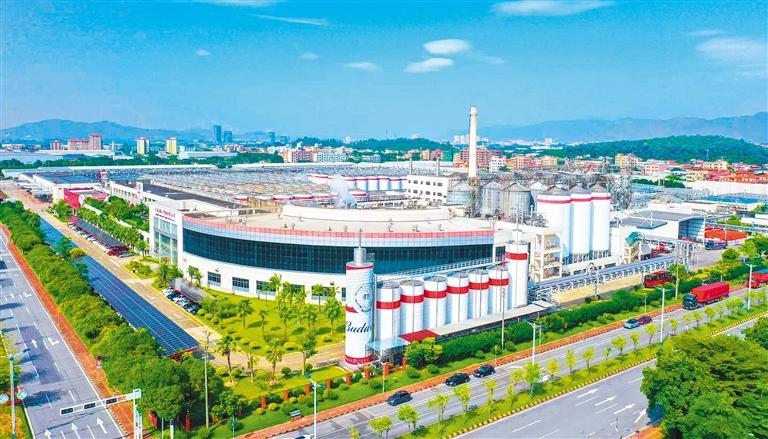
Core Viewpoint - The Chinese beer industry is transitioning from a phase of rapid growth to one of quality improvement and brand building, driven by changing consumer preferences and market dynamics [3][5][6]. Industry Development - The Chinese beer industry has evolved significantly over the past century, becoming the world's largest producer and consumer of beer since 2002, with a peak production of 50.62 million tons in 2013 [2][4]. - The industry has seen a shift from traditional brewing to industrial production, with major policy support since the 1980s leading to a rapid increase in production capacity and the emergence of numerous regional brands [4][5]. Market Dynamics - The beer market is now characterized by intense competition and a focus on quality over quantity, as traditional beer consumption declines and health-conscious trends rise among consumers [5][6]. - By 2023, the proportion of the population aged 60 and above reached 21.1%, while the main consumer demographic (ages 20-40) decreased from 35% to 28%, indicating a shift in market dynamics [5]. Consumer Trends - There is a growing demand for high-end, diverse, and premium beer products, with companies focusing on innovation and brand differentiation to meet these evolving consumer preferences [10][11][12]. - The rise of craft beer reflects a broader trend towards product differentiation and unique consumer experiences, with major brands entering the craft beer space [14][15]. Strategic Initiatives - Major beer companies are implementing high-end strategies, with products priced above 10 yuan gaining traction, and some brands even entering the ultra-premium market [10]. - Companies are also focusing on product diversification to cater to different consumer segments, with a notable increase in the variety of beer offerings [11][12]. Technological Advancements - The industry is leveraging digital and smart manufacturing technologies to enhance production efficiency and reduce carbon emissions, with companies like Qingdao Beer leading the way in smart factory initiatives [30][31]. - The adoption of instant retail models is reshaping sales channels, allowing for rapid delivery and increased consumer engagement [16][17]. Sustainability Efforts - The beer industry is increasingly focused on achieving carbon neutrality and sustainable practices, with initiatives aimed at reducing water and energy consumption throughout the production process [21][22][23]. - Companies are collaborating with upstream and downstream partners to promote green practices across the entire value chain, including the use of low-carbon packaging and transportation methods [26]. Challenges and Opportunities - The industry faces challenges related to raw material dependency, particularly for barley and hops, which are largely imported, impacting supply chain security [34][35]. - There is a need for innovation in product development to create globally recognized Chinese beer brands, emphasizing the importance of cultural elements in marketing strategies [36][37][38].