商汤科技

Search documents
中国大模型市场规模快速增长 开源驱动应用向纵深突破
Zheng Quan Shi Bao Wang· 2025-08-20 07:59
Core Insights - The AI large model market is experiencing significant growth driven by policy support and rapid application penetration, with the market size in China expected to reach 1.69 billion RMB in 2024 [1] - The development of AI applications is expanding market opportunities, with various sectors utilizing large model platforms for productivity enhancement and customer service [2] - Investment in the AI large model sector is increasing, with notable collaborations and funding announcements indicating a strong interest in commercializing AI technologies [3] Market Size and Growth - The Chinese large model development platform market is projected to reach 1.69 billion RMB in 2024, indicating a robust growth trajectory [1] - The market for Chinese enterprises going abroad in large model platforms is expected to reach 860 million RMB in 2024, highlighting the global expansion of Chinese AI applications [2] - The smart computing market in China is anticipated to reach 25.9 billion USD by 2025, with a year-on-year growth of 36.2% [4] Investment Trends - In 2024, there are expected to be 1,156 investment cases in the AI industry in China, with a total disclosed investment amount nearing 85 billion RMB [3] - The average investment amount in A and B rounds has exceeded 100 million RMB, indicating a trend towards early-stage investments in the AI sector [3] - Major investments include a 250 million USD convertible bond agreement between Meitu and Alibaba, focusing on AI technology and e-commerce collaboration [3] Key Players and Market Dynamics - The top six players in the AI large model platform market include Baidu Smart Cloud, Alibaba Cloud, SenseTime, Zhipu AI, Telecom AI, and Xiyu Technology [2] - Companies like Zhongshu Ruizhi and Shenzhou Digital are also noteworthy for their investments in RAG technology and early launches of large model platforms [2] - The AI large model market is expected to see a surge in multi-modal models and generative AI, with enterprise penetration rates projected to exceed 30% by 2025 [4]

预见2025:《2025年中国智慧交通行业全景图谱》(附市场规模、竞争格局、细分市场发展现状等)
Qian Zhan Wang· 2025-08-20 04:42
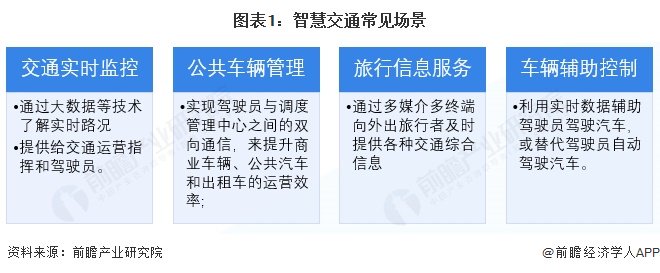
Industry Overview - The concept of smart transportation has evolved from intelligent transportation systems (ITS) to incorporate advanced technologies such as IoT, cloud computing, and big data, enhancing real-time traffic data services [1][2] - Smart transportation aims to improve traffic efficiency through integrated applications of information technology, data communication, and control systems [1][2] Industry Chain Analysis - The smart transportation industry chain includes upstream components like algorithm design, chip parts, data centers, and sensing devices; midstream focuses on infrastructure and services; and downstream applications cover smart highways, public transport, and smart ports [5][7] - Key players in the industry include traditional security companies, internet firms, and algorithm providers, with notable companies like Hikvision, Tencent, and Baidu involved in various segments [7] Industry Development Status - Transportation fixed asset investment in China reached 3.9 trillion yuan in 2023, with expectations to maintain high levels in 2024 [17] - The market size for urban intelligent transportation projects (excluding parking) is projected to be approximately 5.46 billion yuan in 2024, with a slight decrease from 2023 [19][20] Market Size and Growth - The smart transportation market in China has grown from 97.3 billion yuan in 2016 to 236.7 billion yuan in 2023, with projections to exceed 240 billion yuan in 2024 [25][26] - The average project size for urban intelligent transportation projects has remained stable between 200 million to 250 million yuan in recent years [20] Competitive Landscape - Major players in the smart transportation sector include telecommunications and internet companies, with China Mobile and China Telecom leading in project bids, accounting for over 22% of the total bid amounts [27][29] - The competitive landscape is characterized by a mix of regional players, with pilot projects concentrated in coastal areas like East China and South China [31][33] Future Trends - The smart transportation market is expected to grow significantly, driven by policy support, technological integration, and increasing urbanization, with projections indicating the market could exceed 300 billion yuan by 2030 [34]

阿里通义千问再放大招
21世纪经济报道· 2025-08-20 01:45
Core Viewpoint - The article discusses the rapid advancements in multimodal AI models, particularly focusing on Alibaba's Qwen series and the competitive landscape among various domestic companies in China, highlighting the shift from single-language models to multimodal integration as a pathway to achieving Artificial General Intelligence (AGI) [1][3][7]. Group 1: Multimodal AI Developments - Alibaba's Qwen-Image-Edit, based on the 20B parameter Qwen-Image model, enhances semantic and visual editing capabilities, supporting bilingual text modification and style transfer [1][4]. - The global multimodal AI market is projected to reach $2.4 billion by 2025 and $98.9 billion by the end of 2037, indicating significant growth potential in this sector [1][3]. - Major companies, including Alibaba, are intensifying their focus on multimodal capabilities, with Alibaba's Qwen2.5 series demonstrating superior visual understanding compared to competitors like GPT-4o and Claude3.5 [3][5]. Group 2: Competitive Landscape - Other domestic firms, such as Step and SenseTime, are also launching new multimodal models, with Step's latest model supporting multimodal reasoning and complex inference capabilities [5][6]. - The rapid release of various multimodal models by companies like Kunlun Wanwei and Zhiyuan reflects a strategic push to capture developer interest and establish influence in the multimodal domain [5][6]. - The competition in the multimodal space is still in its early stages, providing opportunities for companies to innovate and differentiate their offerings [6][9]. Group 3: Challenges and Future Directions - Despite advancements, the multimodal field faces significant challenges, including the complexity of visual data representation and the need for effective cross-modal mapping [7][8]. - Current multimodal models primarily rely on logical reasoning, lacking strong spatial perception abilities, which poses a barrier to achieving true AGI [9]. - The industry is expected to explore how to convert multimodal capabilities into practical productivity and social value as technology matures [9].

阿里通义千问再放大招 多模态大模型迭代 加速改写AGI时间表
2 1 Shi Ji Jing Ji Bao Dao· 2025-08-20 00:08
Core Insights - The article highlights the rapid advancements in multimodal AI models, particularly by companies like Alibaba, which has launched several models in a short span, indicating a shift from single-language models to multimodal integration as a pathway to AGI [1][6][9] - The global multimodal AI market is projected to grow significantly, reaching $2.4 billion by 2025 and an astonishing $98.9 billion by the end of 2037, showcasing the increasing importance and demand for these technologies [1][6] Company Developments - Alibaba's Qwen-Image-Edit, based on the 20 billion parameter Qwen-Image model, focuses on semantic and appearance editing, enhancing the application of generative AI in professional content creation [1][3] - The Qwen2.5 series from Alibaba has shown superior visual understanding capabilities, outperforming models like GPT-4o and Claude3.5 in various assessments [3] - Other companies, such as Stepwise Star and SenseTime, are also making strides in multimodal capabilities, with Stepwise Star's new model supporting multimodal reasoning and SenseTime's model improving interaction performance [4][5] Industry Trends - The competition in the multimodal AI space is intensifying, with multiple companies launching new models and features aimed at capturing developer interest and establishing influence in the market [5][6] - The industry is witnessing a collective rise of Chinese tech companies in the multimodal field, challenging the long-standing dominance of Western giants like OpenAI and Google [6][7] - Despite the advancements, the multimodal field is still in its early stages compared to text-based models, facing significant challenges in representation complexity and semantic alignment [7][9]
阿里通义千问再放大招,多模态大模型迭代加速改写AGI时间表
2 1 Shi Ji Jing Ji Bao Dao· 2025-08-19 12:21
Core Insights - The article highlights the rapid advancements in multimodal AI models, particularly by companies like Alibaba, which has launched several models in a short span, indicating a shift from single-language models to multimodal integration as a pathway to AGI [1][2][3] Industry Developments - Alibaba's Qwen-Image-Edit, based on a 20 billion parameter model, enhances semantic and appearance editing capabilities, supporting bilingual text modification and style transfer, thus expanding the application of generative AI in professional content creation [1][3] - The global multimodal AI market is projected to grow significantly, reaching $2.4 billion by 2025 and an astonishing $98.9 billion by the end of 2037, indicating strong future demand [1] - Major companies are intensifying their focus on multimodal capabilities, with Alibaba's Qwen2.5 series demonstrating superior visual understanding compared to competitors like GPT-4o and Claude3.5 [3][4] Competitive Landscape - Other companies, such as Stepwise Star and SenseTime, are also making strides in multimodal AI, with Stepwise Star's new model supporting multimodal reasoning and SenseTime's models enhancing interaction capabilities [4][5] - The rapid release of multiple multimodal models by various firms aims to establish a strong presence in the developer community and enhance their influence in the multimodal space [5] Technical Challenges - Despite the advancements, the multimodal field is still in its early stages compared to text-based models, facing significant challenges in representation complexity and semantic alignment between visual and textual data [8][10] - Current multimodal models primarily rely on logical reasoning, lacking strong spatial perception abilities, which poses a barrier to achieving embodied intelligence [10]
蔚来全新ES8亮相在即,早盘大涨近8%领跑恒生科技指数ETF(513180)一众持仓股
Mei Ri Jing Ji Xin Wen· 2025-08-18 02:13
Group 1 - Hong Kong's three major indices opened higher on August 18, with mixed performance in tech stocks and a general rise in Chinese brokerage stocks [1] - The Hang Seng Tech Index saw a significant increase, reaching nearly 1.5%, with notable gains in stocks like NIO, JD.com, NetEase, and SenseTime [1] - NIO's G318 battery swap station officially commenced operations, marking the completion of the G318 battery swap route, which spans 2,950 kilometers and includes 15 stations [1] Group 2 - Southbound funds recorded a net inflow of over HKD 35.8 billion on the previous Friday, setting a new historical high [2] - The Hang Seng Tech Index ETF (513180) includes 30 leading tech stocks in Hong Kong, focusing on the AI industry chain, with potential key players like Alibaba, Tencent, and BYD [2] - Investors without a Hong Kong Stock Connect account can access Chinese AI core assets through the Hang Seng Tech Index ETF (513180) [2]

洞察 2025:中国人工智能代理行业竞争格局及市场份额(附市场集中度、企业竞争力评价等)
Sou Hu Cai Jing· 2025-08-12 13:31
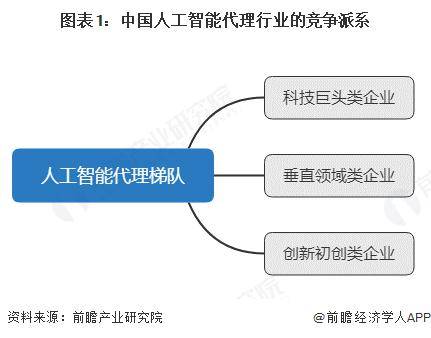
Group 1 - The Chinese artificial intelligence agency industry has formed a clear competitive hierarchy, with significant head effects and rapid emergence of vertical fields and new enterprises. The competition is mainly divided into three tiers: technology giants, vertical field enterprises, and innovative startups [1][3] - Representative companies in different tiers have diverse business layout directions, with technology giants and vertical field enterprises focusing on B-end markets, while startups emphasize C-end markets [3][4] - The market concentration in the AI agency sector is high, with CR4 at approximately 78% and CR5 at about 88%, indicating a typical "Matthew effect" where the head is concentrated while the tail is dispersed [5] Group 2 - The market share concentration varies by application area, with the highest concentration in government applications (CR3 at 60%) and the lowest in intelligent customer service (CR3 at 40%) due to lower market entry barriers [7] - The market is categorized by technology types, including reflexive agents, goal-driven agents, and self-learning agents, with self-learning agents experiencing the highest growth rate, particularly in medical diagnosis and scientific research [9] - Major companies are adopting a "multi-point flowering, collaborative development" strategy, with Baidu focusing on digital humans and intelligent collaboration platforms, while Huawei emphasizes government and industrial applications [11][12] Group 3 - The competitive landscape of the Chinese AI agency industry is characterized by an oligopolistic structure, with major players like Baidu, Alibaba, Tencent, Huawei, and ByteDance holding over 80% market share [13] - Second-tier companies such as iFlytek, SenseTime, and CloudWalk are focusing on vertical scenarios like education and finance, leveraging industry know-how for survival [14] - The industry is transitioning from a "technology race" to an "ecosystem positioning + scenario profitability" phase, with increased competition leading to a potential consolidation of startups due to tightening financing and high computing costs [14]




我们去全球首家机器人4S店看了看
财联社· 2025-08-12 08:35
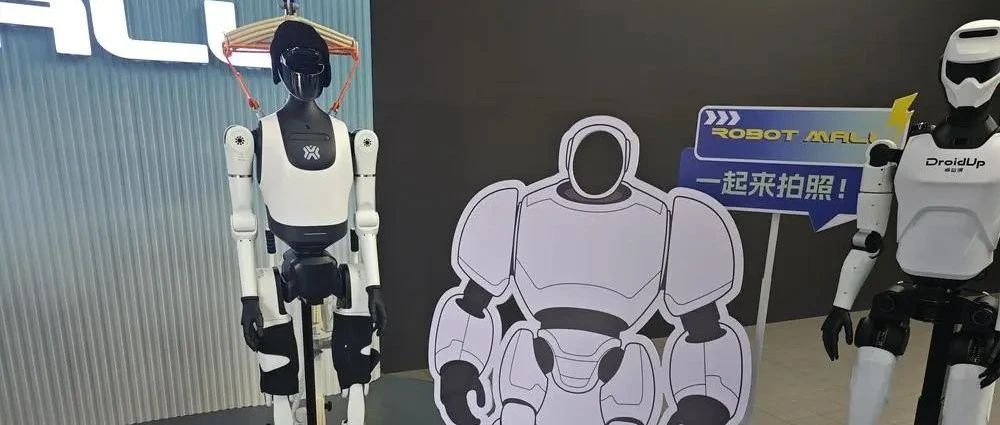
Core Viewpoint - The opening of the world's first humanoid robot 4S store in Beijing signifies a growing market for robotics and artificial intelligence, providing a platform for consumers to purchase, service, and experience various types of robots [2][21]. Group 1: Store Overview - The Robot Mall spans 4,000 square meters and features four distinct areas: Intelligent Manufacturing Selection Area, Future Interaction Area, Smart Maintenance Area, and Exclusive Consensus Area [6]. - The store showcases products from over 40 domestic robot manufacturers, totaling 50 different types of robots, categorized into five functional areas: humanoid robots, industrial applications, health care, home services, and interactive experiences [11]. Group 2: Product Offerings - The price range for robots varies widely, from several thousand yuan to several million yuan, with affordable desktop AI robots being the current sales leaders, priced between 300 to 3,500 yuan after discounts [12][14]. - Educational companion robots are priced between a few thousand to ten thousand yuan, with specific models like the "Wukong" priced at 3,820 yuan [13]. Group 3: Sales and Distribution - For personal purchases, robots are delivered directly from the warehouse, while corporate purchases involve signing a sales contract and arranging for production and delivery [20]. - The store aims to address the pain points of robot companies in transitioning from technology development to practical application, acting as a bridge between manufacturers and consumers [21]. Group 4: Future Plans - The 2.0 version of the robot 4S store is set to open in November, promising an immersive experience and accommodating more enterprises compared to the current version [20].
自动驾驶已至商业化前夕 华为、腾讯等跨界“逐鹿”
Xin Hua Wang· 2025-08-12 05:48
Core Viewpoint - The commercialization of "driverless" autonomous driving technology is approaching, with companies like Baidu and Pony.ai actively testing and preparing for operations in designated areas like Beijing's Yizhuang [1][8]. Group 1: Autonomous Driving Technology - The "driverless" autonomous driving technology is transitioning from laboratory experiments to real-life applications, supported by government encouragement and increasing user acceptance [1][8]. - Baidu's autonomous driving system treats all orders equally, avoiding the "order picking" phenomenon common in traditional ride-hailing services [3][8]. - The safety of autonomous vehicles is emphasized, with Baidu adhering strictly to traffic regulations, as nearly 96% of traffic accidents are attributed to speeding or non-compliance with speed limits [3][8]. Group 2: User Experience and Acceptance - Users report a better experience with driverless Robotaxis compared to traditional ride-hailing services, citing comfort and simplicity in the booking process [2][3]. - The frequency of use among early adopters is high, with some users taking rides multiple times a week for commuting purposes [2][3]. Group 3: Industry Competition and Investment - Major tech companies like Huawei and Tencent are increasing their investments in autonomous driving, with Huawei's automotive business unit employing over 7,000 personnel, 70-80% of whom are focused on autonomous driving research [5][6]. - Tencent is developing cloud-based solutions tailored for the smart automotive industry, enhancing the infrastructure needed for autonomous driving [7][8]. Group 4: Regulatory Environment - The Chinese government is actively promoting the development of autonomous driving through various policies and regulations, with nearly 30 related policies announced in the first half of 2023 [8][9]. - New regulations are being established to manage data security and operational standards for autonomous vehicles, indicating a structured approach to integrating these technologies into urban environments [8][9]. Group 5: Future Outlook - The industry is nearing a tipping point for the commercialization of autonomous driving, with ongoing improvements addressing pain points and enhancing user experience [8][9]. - The potential for autonomous driving to transform urban mobility is recognized, with expectations for significant changes in how people travel in the future [8][10].


特朗普:英特尔CEO必须立即辞职,没有其他解决办法;蔚来高管:反对向理想用户泼脏水,有人把祸水往蔚来身上引;微信重申没有已读功能
雷峰网· 2025-08-08 00:33
Key Points - Trump demands immediate resignation of Intel CEO due to serious conflicts of interest related to investments in Chinese tech companies totaling at least $200 million from 2012 to 2024 [4] - NIO executive expresses opposition to negative comments directed at Li Auto users, emphasizing the need for legal action to protect user rights [7][8] - ZhiJie announces independent operation with over 10 billion investment and plans to expand R&D team to 5,000 [10] - WeChat reiterates that it will not introduce a read receipt feature, emphasizing user experience without social pressure [12][13] - Baidu plans to release an upgraded reasoning model by the end of August, expected to surpass OpenAI's capabilities [16] - OpenAI officially launches GPT-5, claiming it to be the most advanced model with significant improvements in various fields [35] - Apple becomes the first company to establish a complete chip supply chain in the U.S., increasing its investment commitment to $600 billion [36] - Tata Motors appoints CFO P.B. Balaji as the new CEO of Jaguar Land Rover, indicating a shift towards cost control and efficiency [38][39] - Microsoft announces layoffs of 15,000 employees, with CEO Nadella expressing regret over the decision [41] - Samsung implements a five-day in-office work policy in the U.S., introducing a tool to track employee attendance [42]