
安踏集团

Search documents
提升品牌形象 贡献专业力量(中国品牌日)
Ren Min Ri Bao· 2025-05-18 21:45
Group 1: Agricultural Bank of China - Agricultural Bank of China has implemented high-quality financial services to stimulate market vitality, with personal loan balance reaching 9.27 trillion yuan and credit card "old-for-new" consumption amounting to 154.9 billion yuan as of March [1] - The bank focuses on enhancing customer experience and has increased personal loan issuance while aligning with consumption-boosting policies, creating a service system that integrates policy coordination, scene integration, and technological empowerment [1] - The bank's branding emphasizes its commitment to common prosperity and sustainable development, aiming to provide modern financial services to a wide range of urban and rural customers [1] Group 2: Postal Savings Bank of China - Postal Savings Bank of China has focused on enhancing service quality for the real economy, with nearly 100,000 technology-based enterprises served and a financing balance exceeding 600 billion yuan as of March [3] - The bank's green loan balance reached 910.71 billion yuan, growing by 6.01% compared to the end of the previous year, indicating a commitment to carbon neutrality goals [3] - The bank has also made significant strides in inclusive finance, with agricultural loans totaling 2.4 trillion yuan and inclusive small and micro enterprise loans reaching 1.67 trillion yuan, leading among state-owned banks [3] Group 3: Vivo - Vivo has launched a flagship smartphone featuring self-developed chips and advanced imaging capabilities, showcasing its commitment to technological innovation [8] - The company emphasizes a human-centered approach, developing features for visually and hearing-impaired users, and plans to explore frontiers in 6G, AI, and robotics [8] - Vivo aims to integrate technology into everyday life, ensuring that innovations serve practical needs and enhance user experience [9] Group 4: Anta Group - Anta Group reported record revenue in its 2024 financial report and has acquired the German outdoor brand Jack Wolfskin to enhance its brand portfolio [11] - The company has invested approximately 2 billion yuan in R&D in 2024, with a total of 20 billion yuan over the past decade, indicating a strong focus on innovation [11] - Anta is developing targeted retail formats to improve consumer experience, including "Super Anta," which offers a comprehensive shopping experience for families [12] Group 5: Qingdao Beer - Qingdao Beer has maintained a strong focus on product quality, winning multiple awards and emphasizing its commitment to quality through its "good people brew good beer" philosophy [13] - The brand is innovating by transitioning to high-end, intelligent, and green production methods, while also enhancing consumer engagement through immersive experiences [13] - Qingdao Beer is integrating traditional Chinese culture into its branding, launching products with cultural significance to appeal to global consumers [14] Group 6: Hailiang Education Technology - Hailiang Education Technology is leveraging AI to enhance educational resources in rural areas, with its AI model covering 28 provinces and serving 400,000 teachers and students [15][16] - The company aims to improve educational quality through a comprehensive solution that includes over 120 products and services, focusing on operational efficiency [16] - Hailiang's initiatives in rural education emphasize collaboration with local governments and communities to uplift educational standards [16]



涨价后,迪卡侬的日子不好过了
Hu Xiu· 2025-05-14 08:51
Core Viewpoint - Decathlon is facing significant challenges in the Chinese market, with rumors of selling a 30% stake in its China operations and a decline in profitability, indicating a shift from its original value proposition to a more expensive product range that alienates its core customer base [2][3][4]. Group 1: Financial Performance - Decathlon's total revenue for 2024 was €16.2 billion, a slight increase of 3.8%, while net profit fell to €787 million, a year-on-year decline of 15.47%, marking the lowest profit in four years [2]. - From 2022 to 2024, the average selling price of Decathlon's products increased from ¥128.81 to ¥196.32, representing a 52% rise [5]. Group 2: Market Positioning and Strategy - Decathlon has transitioned from being a budget-friendly outdoor goods retailer to a brand perceived as both expensive and unattractive, losing its appeal to price-sensitive consumers [3][4]. - The company has initiated a brand refresh and is focusing on high-end product lines, aiming to cater to middle-class consumers by offering smaller, more specialized stores in urban areas [9][11]. Group 3: Competitive Landscape - The outdoor equipment market is seeing a trend of rising prices across various brands, with many local brands experiencing price increases of 25% to 65% [13]. - High-end outdoor brands have been capitalizing on market demand, with significant revenue growth reported by competitors such as Anta and Lululemon in the Chinese market [15][16]. Group 4: Brand Image and Consumer Perception - Decathlon's shift towards higher-priced products has led to consumer backlash, with critiques highlighting the brand's decline in value perception [6][7]. - The company is attempting to enhance its brand image through marketing efforts, including sponsorship of major sporting events and partnerships with well-known athletes [10]. Group 5: Leadership Changes - In 2024, Decathlon announced a leadership change, replacing CEO Barbara Martin Coppola with Javier López, suggesting potential dissatisfaction with the effectiveness of the company's recent transformation efforts [8].
18家运动品牌,2024年1.3万亿营收里的最新行业格局
3 6 Ke· 2025-05-14 00:38
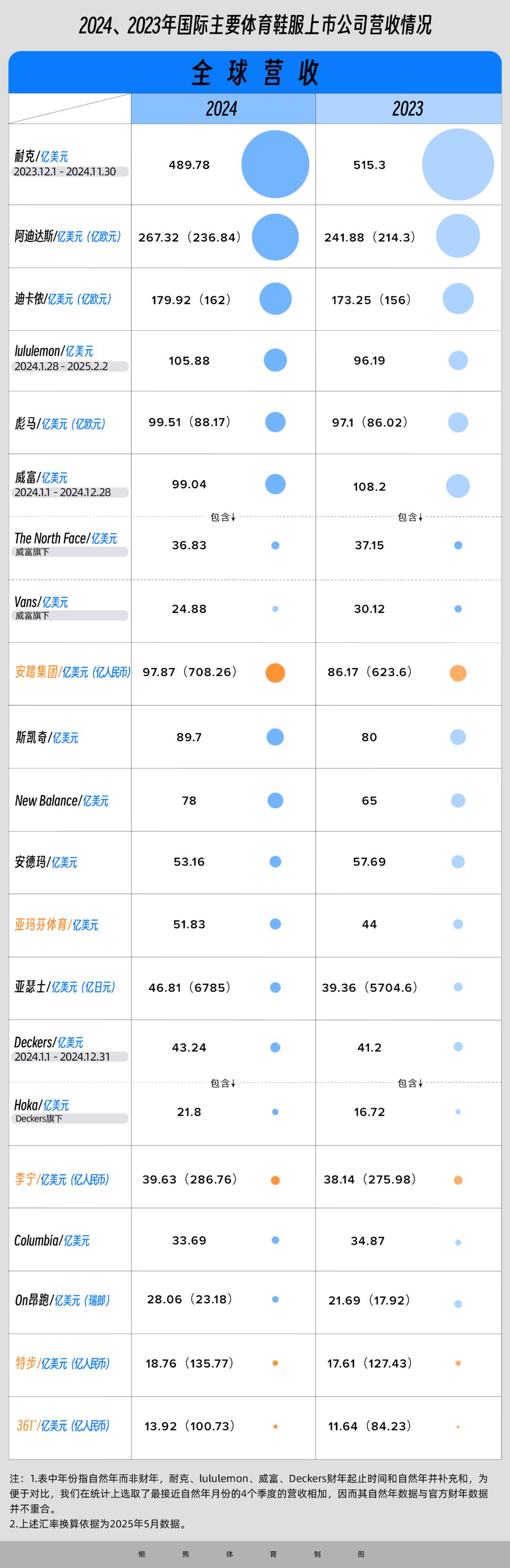
Core Insights - The sports footwear and apparel industry demonstrates resilience amid a sluggish global economic recovery and differentiated consumer demand, outperforming other sectors [1][2] - The analysis includes 19 brands/groups, primarily publicly listed companies, with revenue data for the 2024 calendar year, adjusted for fiscal year discrepancies and currency fluctuations [1][2] Global Market Overview - Total global revenue for the 18 brands/groups in 2024 is approximately $183.61 billion, reflecting a 3.78% increase from 2023 [8] - Nike and Adidas remain the dominant players, while Lululemon has surged to third place, surpassing Puma and VF Corporation [6][7] - The industry structure remains stable, with a leading tier of Nike and Adidas, followed by a growing middle tier including Decathlon, Anta, VF, and Lululemon [7][8] Chinese Market Insights - The total revenue for the Chinese market is estimated at around $37 billion for 2024, with an 8.8% year-over-year growth, outpacing global growth [14] - Anta Group leads the Chinese market, with significant contributions from its multi-brand strategy, while Nike retains the top position for single-brand revenue [14][15] - The competitive landscape in China features intense rivalry among brands like Anta, Li Ning, Adidas, and FILA, with Puma also showing growth [14][15] Growth Drivers - Running remains the highest growth segment in the sports footwear and apparel industry, with brands like HOKA and On experiencing significant revenue increases [15][16] - Outdoor brands, particularly those appealing to the middle class, are also thriving, driven by a shift in consumer identity and preferences [16] Future Considerations - The industry faces challenges related to brand positioning in either stock or incremental competition, necessitating strategic decisions on growth potential and market dynamics [17] - Established brands are undergoing transformations while new entrants must navigate consumer expectations and market integration [17]





不断提质升级、履行社会责任、扩大国际影响 激发中国品牌的澎湃动能(中国品牌日)
Ren Min Ri Bao· 2025-05-12 22:17
Group 1 - The core viewpoint emphasizes the importance of brand building for high-quality development and meeting the needs of people's better lives, as highlighted by President Xi Jinping's call for transforming Chinese manufacturing into Chinese brands [1] - The 2024 China Enterprise 500 list shows that the total revenue of the listed companies reached 110 trillion yuan in 2023, indicating a strong growth trajectory for Chinese brands [1] Group 2 - Innovation is identified as the primary driving force for development, with Chinese brands focusing on continuous innovation to enhance product differentiation and value [2] - Anta, a well-known brand in the sports goods industry, has achieved over 1 million pairs in sales within three months for its new running shoes, showcasing successful product innovation [2] - Anta aims to transform cutting-edge technology into consumer products, enhancing accessibility and quality [2] Group 3 - Technological innovation is bringing new experiences, as demonstrated by Ant Financial's launch of the Agentar platform, which provides financial institutions with a one-stop intelligent development tool [3] - Runze Technology is enhancing brand experience through technological innovation in smart computing infrastructure, supporting the digital transformation of industries [3] - Renhe Group has implemented a "smart factory" model, transitioning from traditional to intelligent pharmaceutical manufacturing, showcasing the effectiveness of digital production [4] Group 4 - Chinese brands are actively fulfilling social responsibilities and enhancing brand reputation by integrating traditional culture into their products, as seen with brands like Wuliangye and Yunnan Baiyao [4] - China Postal Savings Bank and other financial institutions are providing tailored services to small and micro enterprises, demonstrating a commitment to meet diverse consumer needs [5] Group 5 - The construction of a strong brand nation is emphasized, with a call for Chinese brands to leverage opportunities and enhance their global influence [6] - China National Nuclear Corporation is expanding international cooperation and promoting its nuclear energy brands globally, establishing partnerships with over 60 countries [7] - Moutai is enhancing its international market presence, achieving over 5 billion yuan in international sales for the first time in 2024, reflecting its growing cultural influence [7] Group 6 - China Energy Construction Group is advancing brand management by integrating brand building with operational processes, aiming to create world-class brands [8] - The quality of products is crucial for brand reputation, as demonstrated by the quality control measures implemented by Xifeng Group in its production processes [8] Group 7 - The commitment to enhancing innovation capabilities and breaking through development bottlenecks is expected to lead to the emergence of more century-old brands and iconic products in China [9]
特朗普逼着斯凯奇卖身救命
Hu Xiu· 2025-05-09 02:53
看似业绩还在平稳增长的背后,关税压力、供应链成本飙升及消费疲软正在成为压垮"美国鞋王"斯凯奇 的"隐形杀手"。 斯凯奇现任董事长罗伯特·格林伯格及核心管理团队将全员留任,私有化后的战略重心将转向"供应链弹 性建设",包括在越南增设自动化工厂、在墨西哥布局区域配送中心。 斯凯奇方面对虎嗅表示,私有化目前对于中国市场的组织架构不会有影响。彭博社指出,此次私有化将 帮助斯凯奇缓解关税压力。在没有上市公司报告的要求后,公司将能够采取措施,使其免受关税影响。 机构普遍观点,斯凯奇选择此时私有化,实为规避上市公司监管压力,以便在关税风波中掌握更大的经 营自主权。 供应链转移阵痛 关税引发的连锁反应正在撕裂全球供应链。为此买单的不只有消费者。2025年4月,特朗普政府宣布对 进口鞋类征收最高达46%的"对等关税",而美国超过90%的鞋类依赖进口,耐克50%的鞋类产自越南, 阿迪达斯39%的产能集中于越南工厂,斯凯奇60%的产能依赖亚洲供应链。其中,中国和越南是其重要 的生产地。 如此加征关税直接导致鞋类企业成本暴涨,利润率腰斩。原本1100元的一双球鞋涨至1700元,高性价比 的优势不再。 财报显示,斯凯奇2024年净利润 ...
安踏全球化方法论十八条
Jing Ji Guan Cha Bao· 2025-05-03 01:53
Group 1: Internationalization Stages - Anta Group's internationalization consists of three stages, starting with acquiring the trademark rights for the international brand FILA in 2009, demonstrating its capability to operate international brands in the domestic market [1] - The second stage involved acquiring brands like Descente and Kolon, culminating in the successful acquisition and operation of the Finnish sports group Amer Sports, showcasing Anta's diversified management, global resource allocation, and brand operation capabilities [1][2] Group 2: Brand Management and Empowerment - Anta adjusts management teams of acquired brands and empowers them with its foundational capabilities, including channels, logistics, production, marketing, and digitalization, particularly through the Direct-to-Consumer (DTC) model [2] - The core of brand operation is finding brand positioning, where Anta evaluates the role of the brand within its multi-brand strategy before and after acquisition, ensuring alignment with the group's overall brand positioning [3] Group 3: Brand Value and Scarcity - The process of acquiring and operating brands reflects Anta's deep understanding of brand value, which is built on long-term connections between products and consumers, emphasizing the importance of brand memory [5] - The essence of overseas mergers and acquisitions for Chinese companies is to acquire scarcity, whether in qualifications, channels, markets, technologies, or brands, requiring a profound understanding of the market [6] Group 4: Globalization Challenges and Strategies - The third step in Anta's globalization is the internationalization of its main brand, which involves a lengthy investment period without immediate revenue increases, testing its ability to establish brand recognition from scratch in international markets [7][8] - Entering overseas markets requires building local teams to understand market ecosystems and consumer habits, which is a complex task beyond merely finding agents to sell products [10] Group 5: Long-term Investment and Learning - The journey from "0 to 1" in globalization involves a long trial-and-error process that may last several years, often resulting in initial losses but potentially leading to significant revenue growth as experience and model validation accumulate [12] - The Middle East market is identified as a potential second foothold for Anta's globalization efforts [13] Group 6: Organizational Structure and Entrepreneurial Spirit - Anta employs a brand responsibility system for globalization, balancing the roles of headquarters and regional companies while addressing the challenges of management structure adjustments during the initial phase of globalization [15][16] - The entrepreneurial spirit is crucial in the globalization process, with successful global companies treating globalization as a new venture, driven by a culture of risk-taking and a deep-rooted global mindset [16]
跑鞋赛道拥挤,索康尼独力支撑特步有点难
Xin Lang Cai Jing· 2025-04-30 08:54
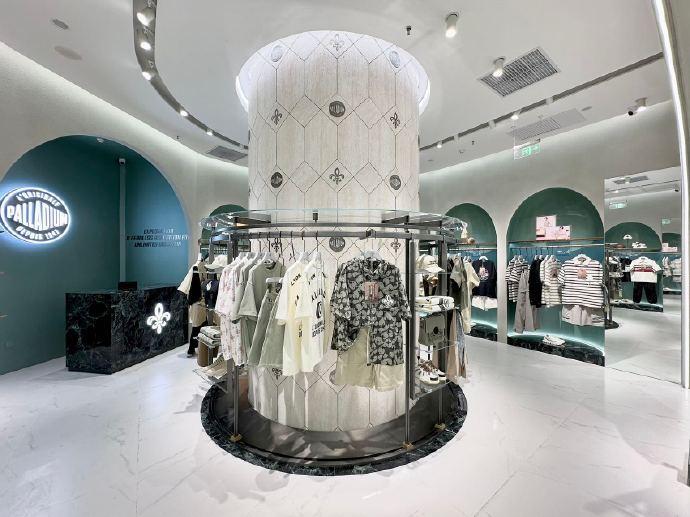
Core Viewpoint - Xtep International has reported a mid-single-digit year-on-year growth in retail sales for its main brand in the first quarter of 2025, with a notable performance from its Saucony brand, which saw retail sales in China increase by over 40% year-on-year [1][4] Brand Performance - The company has established a brand matrix with its main brand targeting the mass sports market, while Saucony and Merrell focus on professional sports, and K-Swiss and Palladium cater to the fashion sports market [2][4] - Saucony became the first new brand within the group to achieve profitability in 2023, while K-Swiss and Palladium are still in the process of narrowing losses [2][4] - In December 2023, Xtep acquired 40% of Saucony's intellectual property rights in China, enhancing its control over the brand [2] Market Dynamics - The running market in China is experiencing robust growth, with a potential consumer base of 400 million, but competition is intensifying among brands [7][11] - Xtep's running shoes are priced between 400 to 700 RMB, with some competition in the over 1000 RMB segment from emerging brands like HOKA and Salomon [7][11] Financial Insights - Xtep plans to raise approximately 9.85 billion HKD through share placements and bond issuance to further develop its main brand and Saucony's direct-to-consumer business model [8][11] - Despite a significant revenue increase for Saucony, its contribution to the overall revenue remains below 10%, with the main brand still accounting for 123.27 billion RMB in revenue [8][11] Strategic Focus - The company is concentrating resources on its main brand and the running segment, indicating a strategic shift towards enhancing its presence in the running market [4][5] - Xtep is also exploring multi-category development, including investments in basketball and tennis, but these initiatives will take time to scale [12]
可持续产品占比超三成 安踏剑指2050年“碳中和”
Hua Er Jie Jian Wen· 2025-04-29 04:19
第56个"世界地球日"当天,安踏集团正式对外披露《2024年度ESG(环境、社会及管治)报告》。 2024年,安踏集团可持续产品占比突破30%,可持续包装占比提升至36%。集团经过全生命周期碳足迹 评估的产品达34款,其中26款为碳中和认证产品。 相比打造更多0碳"样板产品",安踏现阶段的减碳思路侧重于挖掘常规商品的可持续路径。 举例而言,安踏明星跑鞋马赫5通过使用更高比例的再生涤纶纱线,生产加工、运输分销阶段更多使用 绿色能源等方式,降低约36%的碳排放。 平均每双马赫5的碳足迹从前一代的12.37kgCO2e 降低至7.88kgCO2e。 该产品据查去年销量超过百万,合计减碳量达到4400吨,相当于种植了24万棵棕榈树,或回收再生1.24 亿个500毫升的塑料空瓶。 材料是鞋服行业生产过程中碳排放的主要环节。近年来,安踏也在同步探索源头减碳的更好方式。 据了解,安踏是首家把碳捕捉的技术规模化应用到产品中的运动品牌。 地球日新品ANTAZERO轻量风暴甲冲锋衣通过应用碳捕科技,替代部分源头石油的使用,较比前代碳 排放降低约35%。 2024年全年,安踏范围一直接温室气体排放量下降11.1%至7580吨二氧化 ...
44年老品牌,3亿卖了
投中网· 2025-04-23 06:35
以下文章来源于东四十条资本 ,作者曹玮钰 东四十条资本 . 聚焦股权投资行业人物、事件、数据、研究、政策解读,提供专业视角和深度洞见 | 创投圈有趣的灵魂 将投中网设为"星标⭐",第一时间收获最新推送 有44年历史的Jack Wolfskin(狼爪),户外圈的老面孔了。 近年企业做CVC,做收购已经形成了一股风气。 作者丨 曹玮钰 来源丨 东四十条资本 44年的全球户外老品牌Jack Wolfskin(狼爪),正在经历第四次卖身。 近日,安踏集团宣布以2.9亿美元 (折合人民币21亿)从全球最大的高尔夫球杆制造商卡拉威(Callaway)母公司Topgolf Callaway 手中,全资收购 德国户外品牌Jack Wolfskin(狼爪)。交易预计于2025年第二季度末或第三季度初完成。 这一收购依然引发了不小的市场关注,但这只是安踏这些年对跨国品牌"买买买"的其中一步棋罢了。与5年前震惊业界的46亿欧元对亚玛芬体育的世纪 收购相比,2.9亿美元的小交易显得划算且轻车熟路。 对于一家已经卖身三次的老品牌,值得期待的反而是这家"老户外"接下来在安踏的"魔改"下会焕发出怎样的生机,毕竟安踏已经对狼爪抛出了"大众户 ...
摩卡壶鼻祖被卖了
投资界· 2025-04-17 16:07
以下文章来源于并购最前线 ,作者杨继云 并购最前线 . 投资界(PEdaily.cn)旗下,专注并购动态 欢迎加入投资界读者群 华人出手。 作者 I 杨继云 报道 I 投资界-并购最前线 投 资 界 - 并 购 最 前 线 获 悉 , 已 有 近 百 年 历 史 的 摩 卡 壶 制 造 商 —— 比 乐 蒂 Bi a l e tti 将 被 收 购,买方是香港华人企业家St e phe n Che n g创办的投资机构Nu o Ca pit a l。 消息显示,双方已完成对收购协议的签署,Nu o Ca pit a l收购比乐蒂近79%的股份,收购 价格约为5300万欧元(约合4. 3亿人民币)。此次收购预计将于六月底完成,而作为交易 的一部分,比乐蒂将从米兰证券交易所退市。 至此,这个意大利咖啡壶品牌经过岁月洗礼,从国民家庭标配到经营困境丛生,最终将 正式完成卖身。 一个意大利国民老品牌 迎来华人新东家 19 93年,一个名为阿方索·比乐蒂的意大利商人提出了"Moka Ex pr e ss "的想法,推出世 界上第一个制作咖啡的摩卡壶,并由其创立的比乐蒂(Bi a l e tti)公司开始制造与销售。 从那 ...