联想控股

Search documents
1元出售三文鱼业务,佳沃食品甩包袱
Bei Jing Shang Bao· 2025-06-23 14:34
Core Viewpoint - Jiawo Food has taken a significant step to alleviate the burden of long-term losses from its salmon business by transferring 100% of the equity of Beijing Jiawo Zhencheng Technology Co., Ltd. to a related party, Jiawo Pinxian (Beijing) Enterprise Management Co., Ltd. for a nominal price of 1 yuan, effectively divesting its salmon-related operations from the listed company structure [2][3]. Group 1: Business Operations and Financial Performance - Jiawo Zhencheng was the core operational entity for the salmon business, primarily managing the breeding, processing, and sales of salmon through its Chilean subsidiary, Australis [3]. - The acquisition of Australis in 2019 for approximately $920 million was significantly beyond Jiawo Food's financial capacity at the time, leading to reliance on debt for the purchase [3]. - Following the acquisition, the international demand for salmon plummeted, resulting in Jiawo Food's performance turning from profit to loss in 2019, with the salmon business reporting a gross margin of -12.2% in 2020 [3][4]. - Over the five years from 2018 to 2022, 33 out of 96 breeding centers owned by Australis were found to be overproducing, leading to a total excess production of 81,000 tons, necessitating a reduction in output and further impacting business performance [3]. Group 2: Financial Losses and Debt Management - Since the acquisition of Australis, Jiawo Food has recorded continuous losses for six consecutive years, totaling over 4.3 billion yuan, with a net asset value of -301 million yuan in 2022, resulting in a delisting risk warning [4]. - In 2024, the salmon business faced insolvency with a debt-to-asset ratio of 110.76%, contributing to a 256.39% year-on-year decline in net assets to -443 million yuan [4]. - After divesting the salmon business, Jiawo Food managed to reduce its debt-to-asset ratio from 104.92% to 12.56%, temporarily escaping the delisting risk [5]. Group 3: Strategic Recommendations - Following the divestiture of the loss-making salmon business, experts suggest that Jiawo Food should actively seek new growth opportunities and cultivate a second growth curve to enhance profitability and stabilize its market position [7][8]. - Analysts emphasize the need for Jiawo Food to adjust its market strategy to build sustainable core competitiveness, focusing on consumer demand to restructure its product, channel, and cost systems [8].



研判2025!中国裸眼3D显示器行业发展历程、产业链、市场规模、竞争格局及未来前景展望:裸眼3D显示器规模不断扩张,行业将向高分辨率方向发展[图]
Chan Ye Xin Xi Wang· 2025-06-21 02:38
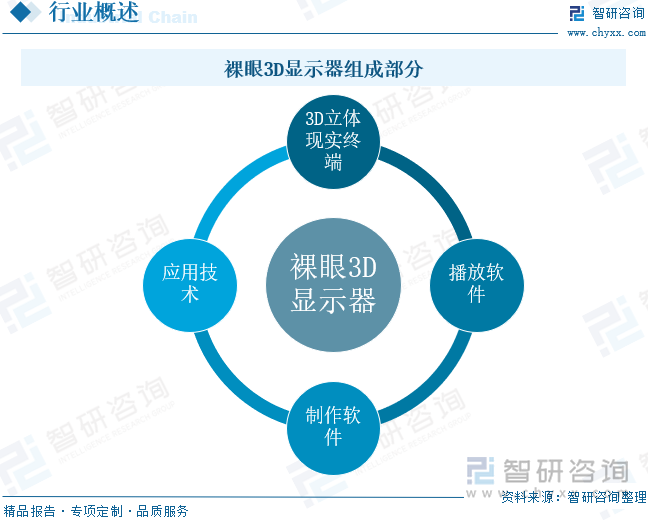
Core Viewpoint - The naked-eye 3D technology has achieved significant breakthroughs in optical technology, dynamic eye-tracking systems, and artificial intelligence algorithms, leading to its rapid commercialization and widespread application across various sectors such as advertising, creative design, medical imaging, education, and digital entertainment [1][16]. Industry Overview - Naked-eye 3D displays utilize the parallax effect of human vision to create realistic three-dimensional images without the need for auxiliary devices [3]. - The industry consists of four components: 3D display terminals, playback software, production software, and application technology, integrating various high-tech fields [3]. Market Growth - The Chinese naked-eye 3D display market is projected to reach approximately 2.991 billion yuan in 2024, with an expected growth to 9.555 billion yuan by 2033, reflecting a compound annual growth rate (CAGR) of 13.77% [1][16]. - The global naked-eye 3D display market is estimated to be around 1.2 billion USD in 2024, with a forecasted increase to 3.5 billion USD by 2033, indicating a CAGR of 12.63% [14]. Technology and Development - The main technologies used in naked-eye 3D displays include barrier technology and lenticular lens technology, each with its advantages and limitations [5][6]. - The industry has undergone four development phases since the 21st century, from technological exploration to market expansion, with significant milestones achieved by companies like BOE and Lenovo [7][14]. Industry Chain - The upstream of the naked-eye 3D display industry includes raw materials such as optical materials and display panels, while the midstream focuses on production and integration [10]. - The downstream applications encompass consumer electronics, commercial displays, professional fields, and emerging scenarios like the metaverse [10]. Competitive Landscape - The industry features a diverse competitive landscape, with companies like BOE and TCL leading in panel manufacturing, while Lenovo establishes a foothold in the consumer market with its ThinkVision series [18]. - Domestic manufacturers emphasize cost-effectiveness and localized services, differentiating themselves from international competitors like Sharp and Samsung [18]. Future Trends - The industry is witnessing a shift towards high-resolution and large-screen applications, with advancements in 8K ultra-high-definition naked-eye 3D technology [24]. - There is a growing integration of naked-eye 3D technology with VR/AR, creating new immersive experiences across various sectors, including education and healthcare [25][26].

拉卡拉筹划港股上市背后:难掩业绩下滑困境,破局之路在何方?
Xin Lang Cai Jing· 2025-06-20 00:34
Core Viewpoint - Lakala is planning to issue H-shares and list on the Hong Kong Stock Exchange, which has led to a significant increase in its stock price, but the company faces challenges such as declining revenue and compliance risks [1][3][11]. Company Overview - Lakala Payment Co., Ltd. was established in 2005 and became the first digital payment company listed on the A-share market in April 2019 [4]. - The company holds a payment license issued by the central bank and operates various payment services [4]. Recent Developments - Lakala announced its plan for overseas share issuance and listing on the Hong Kong Stock Exchange, with discussions ongoing with relevant intermediaries [3][4]. - Following the announcement, Lakala's stock price surged, with a peak increase of 16.16% on June 17, but later experienced a decline of 6.28% by June 19 [3]. Financial Performance - In Q1, Lakala reported a revenue of 1.299 billion yuan, a year-on-year decrease of 13.01%, and a net profit of 101 million yuan, down 51.71% [11]. - For the full year 2024, the company expects a revenue of 5.759 billion yuan, a decrease of 2.96%, and a net profit of 351 million yuan, down 23.26% [11]. - The company’s cross-border payment transaction volume reached 49.2 billion yuan in 2024, a year-on-year increase of 14% [4]. Market Position and Challenges - Lakala's cross-border payment transactions accounted for only about 1.2% of its total payment transaction volume of 4.22 trillion yuan last year, indicating limited contribution to overall performance [4]. - The company faces intense competition from major players like PingPong, Alipay, and WeChat Pay, which dominate the market [4][11]. - Lakala's efforts to transition from traditional payment services to comprehensive financial technology services have encountered significant challenges [11]. Compliance and Governance Issues - Lakala has been reducing its registered capital, with a decrease from 788.08 million yuan to 776.66 million yuan in April 2023, marking the second reduction this year [7]. - The company has faced multiple compliance issues, including fines for regulatory violations, which could pose challenges for its future listing in Hong Kong [9][11]. - The company’s major shareholder has been frequently reducing their stake, raising concerns about governance and stability [8][9]. Shareholder Structure - The largest shareholder of Lakala is Legend Holdings, holding 26.54% of shares, followed by Chairman Sun Taoran with 7.01% [5].

九富深耕港股十年,境内外一站式服务受青睐
Ge Long Hui· 2025-06-18 02:42
Group 1: Market Overview - The Hong Kong stock market has experienced a strong surge since the beginning of the year, with a significant increase in the number of IPOs and total fundraising amount from January to May, with 27 new stocks listed, marking a substantial year-on-year increase [1] - Multiple factors, including the implementation of various policies by the central and Hong Kong regulators and the continuous influx of domestic and foreign capital, have contributed to the robust performance of the Hong Kong stock market, further solidifying its status as a global financial center [1] Group 2: Company Profile - Jiufu - Jiufu has established itself as a leader in the financial public relations industry, successfully managing the first "A + H simultaneous issuance" and the first "full circulation issuance of H shares and A shares" in the domestic market [3] - The company has actively expanded into overseas markets, becoming the first domestic financial public relations company to set up a branch in Hong Kong, enhancing its cross-border service capabilities [3] - Jiufu has played a significant role in the Hong Kong IPO service sector, assisting 7 out of the 27 companies that have gone public this year, including Jiangsu Hongxin, which is recognized as the "first stock of Jiangsu supermarket" [3][4] Group 3: Client Base and Services - Jiufu's client base spans major sectors such as consumer goods, TMT, automotive manufacturing, and biomedicine, with notable projects including the IPO of China Resources Beverage, the largest drinking water company in China, and Jitu Express, the first express delivery company to go public [4] - The company has maintained long-term relationships with over 70 Hong Kong-listed companies, including major state-owned enterprises and industry leaders, with a significant proportion of clients having engaged Jiufu for over five years [5][6] - Jiufu's methodology and efficient operational model have made it a preferred partner for clients seeking strategic advice and overseas service implementation [6] Group 4: Future Outlook - According to Deloitte China, the Hong Kong market is expected to attract more large A-share listed companies, leading domestic enterprises, and overseas companies to go public, with an estimated 80 new stocks expected to be listed in 2025, further boosting fundraising activities [6] - Jiufu aims to continue its commitment to becoming the most respected capital market value operation service provider in China, assisting enterprises with global perspectives in attracting top-tier capital and achieving overseas capital operations [6]
联想控股:共踏中国人工智能产业“主升浪”
Cai Jing Wang· 2025-06-13 05:55
Core Insights - The article emphasizes the significant opportunity presented by AI, particularly through large model technologies like DeepSeek, which lower industry entry barriers and shift focus towards vertical applications [1] - Lenovo Holdings has a long-standing commitment to AI, having invested in over 270 AI-related companies, and aims to leverage its experience to foster innovation and application in the sector [4][6] Group 1: Company Strategy and Investments - Lenovo Holdings has invested in over a thousand tech companies across various fields, including AI, semiconductors, and biotechnology, establishing a comprehensive investment strategy over 25 years [4] - The company has supported AI enterprises through various means, including business model development and resource integration, exemplified by its early investment in iFlytek, which has become a leader in AI voice technology [3][4] - Lenovo Holdings has developed a full-stack layout in AI, with over 270 AI-related companies and more than 140 focused on practical applications [6] Group 2: AI Applications and Innovations - The application of AI in manufacturing has shown significant results, such as reducing production scheduling time from 6 hours to 1.5 minutes and improving delivery efficiency by over 20% [7] - Lenovo Holdings' investments in AI-driven healthcare technologies, like xTrimo and Huixiang Technology, demonstrate the potential for AI to enhance efficiency and accuracy in medical diagnostics [9] - The company believes that successful AI implementation requires a combination of theoretical advancements and practical applications, emphasizing the importance of real-world testing and feedback [10][11] Group 3: Future Outlook and Challenges - The AI market in China is projected to exceed 700 billion yuan by 2025, with generative AI expected to have an application rate of 83% in 2024, leading to significant breakthroughs in smart manufacturing [10] - Lenovo Holdings acknowledges the challenges of high investment and low short-term returns in the AI sector but remains optimistic about future commercial viability and user value realization [10] - The company stresses the need for collaboration between foundational research and application to ensure the competitiveness of China's AI industry on a global scale [11]
“光PPT就做了上百页”!上海三大产业先导基金再出手17只子基金,五倍乘数效应将撬动近800亿元社会资本
Hua Xia Shi Bao· 2025-06-12 03:23
Core Viewpoint - The establishment of private equity funds by insurance giants coincides with a competitive investment race initiated by local industry guiding funds, particularly in Shanghai, which has seen significant activity in this area [1][5]. Group 1: Investment Overview - Shanghai's three major guiding industry mother funds announced the selection results for their second batch of sub-funds, with 17 sub-funds chosen, including two integrated circuit funds, ten biomedicine funds, and five artificial intelligence funds, with a total intended investment of 4.15 billion yuan and a total fund size of 24.15 billion yuan, achieving a leverage ratio of 5.82 times [1][2]. - The total scale of the three guiding industry mother funds established last July reached 89 billion yuan, with the first batch of 12 ecological cooperation funds committing 6.7 billion yuan, resulting in a total fund size of 25 billion yuan and a leverage ratio of 3.73 times [1][5]. Group 2: Sub-Fund Details - The two integrated circuit sub-funds focus on the local integrated circuit industry chain, aiming to build an "industry capital + state-owned capital collaborative" ecosystem to strengthen Shanghai's competitive advantage in the global integrated circuit industry [3][4]. - The ten biomedicine sub-funds are managed by various investment firms, aiming to incubate industry leaders and address key technological bottlenecks within the biomedicine sector [3][4]. - The five artificial intelligence sub-funds include managers with diverse strategies, from regional development enablers to global innovation connectors, all contributing to a comprehensive ecosystem for AI development [4][5]. Group 3: Strategic Focus - The selection of the second batch of sub-funds emphasizes policy guidance and industry needs, focusing on three main criteria: depth of industry chain binding, alignment with policy direction, and resource integration and strategic collaboration capabilities [5]. - Shanghai is accelerating the development of three leading industries: integrated circuits, biomedicine, and artificial intelligence, with a combined industry scale reaching 1.8 trillion yuan [5].
联想控股副总裁于浩:在技术变革中锚定“长期主义”
Xin Hua Cai Jing· 2025-06-10 01:07
Core Viewpoint - Lenovo Holdings emphasizes the importance of "long-termism" in navigating the rapidly changing global industrial and technological landscape, particularly in fields like artificial intelligence, semiconductors, and new energy [2][3]. Financial Performance - Lenovo Holdings reported a total revenue of RMB 512.81 billion for 2024, marking a year-on-year increase of 17.61% - The net profit reached RMB 7.683 billion, a significant year-on-year increase of 1119.52% - The net profit attributable to shareholders was RMB 133 million, recovering from a loss of RMB 3.874 billion in 2023 [2]. R&D and Innovation Strategy - The company has set a historical high for R&D investment in 2024 at RMB 15.8 billion, reflecting its commitment to innovation [4]. - Lenovo Holdings has developed a unique path for technology industrialization, focusing on long-term independent innovation and aligning with national strategies [4]. Market Position - Lenovo Group holds a 25.9% market share in global PC shipments in the first quarter of 2024, maintaining its position as the world's leading PC manufacturer [4]. - The revenue share from non-PC businesses has increased to 47% as of the 2024/25 fiscal year, indicating a successful diversification strategy [4]. Focus Areas - Lenovo Holdings is concentrating on three key areas: new materials, new energy, and intelligent sensing, through its Forward Technology Research Institute [7]. - The research institute aims to identify and develop cutting-edge technologies and facilitate their commercialization [7]. Collaborative Efforts - The company has established a collaborative network with top universities and research institutions to drive technological breakthroughs in emerging industries [7]. - Lenovo Holdings is leveraging its Japanese channel resources to create a dual-circulation open innovation system, focusing on introducing advanced materials processing technologies [8]. AI Strategy - Lenovo Holdings is positioning itself in the AI sector by forming partnerships across various verticals, including education, healthcare, and manufacturing, to create a comprehensive AI ecosystem [9]. - The company has invested in over 270 AI-related enterprises, establishing a closed-loop ecosystem from algorithm development to practical application [9][10]. Future Aspirations - Lenovo Holdings aims to nurture more outstanding AI companies that not only serve the domestic market but also expand their global influence [11].

一周快讯丨浦口区高质量发展母基金招GP;盐城首支S基金诞生;300亿并购基金来了
FOFWEEKLY· 2025-06-08 04:12
Core Viewpoint - The article highlights the establishment and recruitment of various mother funds across multiple cities in China, focusing on sectors such as robotics, new energy, integrated circuits, new materials, artificial intelligence, and low-altitude economy [1][4][10]. Fund Establishment - Several cities including Shenzhen, Nanjing, and Tianjin have announced the establishment or registration of funds, primarily targeting sectors like biopharmaceuticals, smart healthcare, high-end medical devices, and integrated circuits [1]. - The China Pacific Insurance Company has launched a new merger and acquisition private equity fund with a target size of 30 billion yuan and an initial size of 10 billion yuan [2]. Specific Fund Initiatives - The Jintan District Industry Innovation Development Mother Fund is seeking general partners (GPs) with a total scale of 10 billion yuan, focusing on five new industries including new energy and new medical technology [3]. - The Pukou District High-Quality Development Mother Fund is also recruiting GPs, emphasizing investment in strategic emerging industries such as integrated circuits and artificial intelligence [4]. - The Shanghai State-owned Assets Fund has selected 17 sub-funds, with a total investment amount of 4.15 billion yuan, focusing on integrated circuits and biomedicine [6]. Investment Strategies - The Hangzhou High-tech Zone plans to establish an industry investment fund and an intellectual property fund, focusing on smart IoT, biomedicine, and green energy [9]. - The Yangzhou Biopharmaceutical Industry Fund has been set up with a total scale of 1.5 billion yuan, targeting innovative drug development and high-end medical devices [10]. - The Nanjing Biomedical Valley is seeking fund managers for a specialized fund focusing on medical engineering and biomedicine, with a maximum scale of 300 million yuan [12]. New Fund Launches - The first S fund in Yancheng has been established to support technology innovation and modern industrial system construction [13][14]. - The Shenzhen Artificial Intelligence Terminal Industry Fund has been set up with a total investment of 1.44 billion yuan, focusing on equity investment and asset management [19]. - The first QFLP fund in Fangchenggang has been registered, targeting strategic emerging industries such as healthcare and advanced manufacturing [20]. Collaborative Efforts - The Qianhai Dinghui Deep Hong Kong Co-investment Fund has been established to focus on artificial intelligence and biotechnology, promoting deep collaboration between Shenzhen and Hong Kong [21]. - The Tianjin Chip Fire Integrated Circuit Venture Capital Fund has been officially registered, aiming to support the development of the integrated circuit industry [22]. Regulatory Developments - The Guangdong Provincial Government has issued a management method for government investment funds, emphasizing performance evaluation and management fees [23].


企业创新迎政策利好:强化激励 推动人才优势转化为创新动能
Nan Fang Du Shi Bao· 2025-06-06 13:48
Core Viewpoint - The article emphasizes the importance of enterprises in driving technological innovation and economic development, highlighting the recent release of the "Opinions on Improving the Modern Enterprise System with Chinese Characteristics" by the Central Committee of the Communist Party of China and the State Council [1] Group 1: Innovation and Enterprise Role - Enterprises are recognized as key players in the integration of technology and industry, essential for promoting new productive forces [1] - The "Opinions" aim to enhance the innovation capabilities of enterprises by transitioning from a scale-speed model to a quality-efficiency model [1] Group 2: Innovative Organizational Forms - The article discusses the need for enterprises to establish new research institutions and collaborative innovation mechanisms, encouraging large enterprises to share resources with small and medium-sized enterprises [2] - It highlights the challenges in the innovation process, particularly the "valleys of death" that new technologies face from conception to commercialization [2] Group 3: Efficient Allocation of Innovation Elements - The "Opinions" propose improving the allocation mechanisms for innovation elements, including talent and technology, and fostering collaboration between enterprises and research institutions [3] - The article provides examples of successful collaborations, such as the partnerships between companies and universities that have led to significant technological advancements [4][5] Group 4: Incentive Mechanisms for Innovation - The article stresses the importance of establishing innovation-oriented incentive mechanisms that empower project teams and encourage long-term value creation [6] - It mentions the role of talent in driving innovation and the need for companies to cultivate a culture of innovation through effective talent management [6][7] Group 5: Future Outlook - The article concludes that the "Opinions" will further enhance the innovation capabilities of various enterprises, creating a conducive environment for innovation and growth tailored to different types of companies [7]
一周产业基金|险资发布300亿元并购基金;全国首批首只央企创投母基金落地
Mei Ri Jing Ji Xin Wen· 2025-06-06 10:35
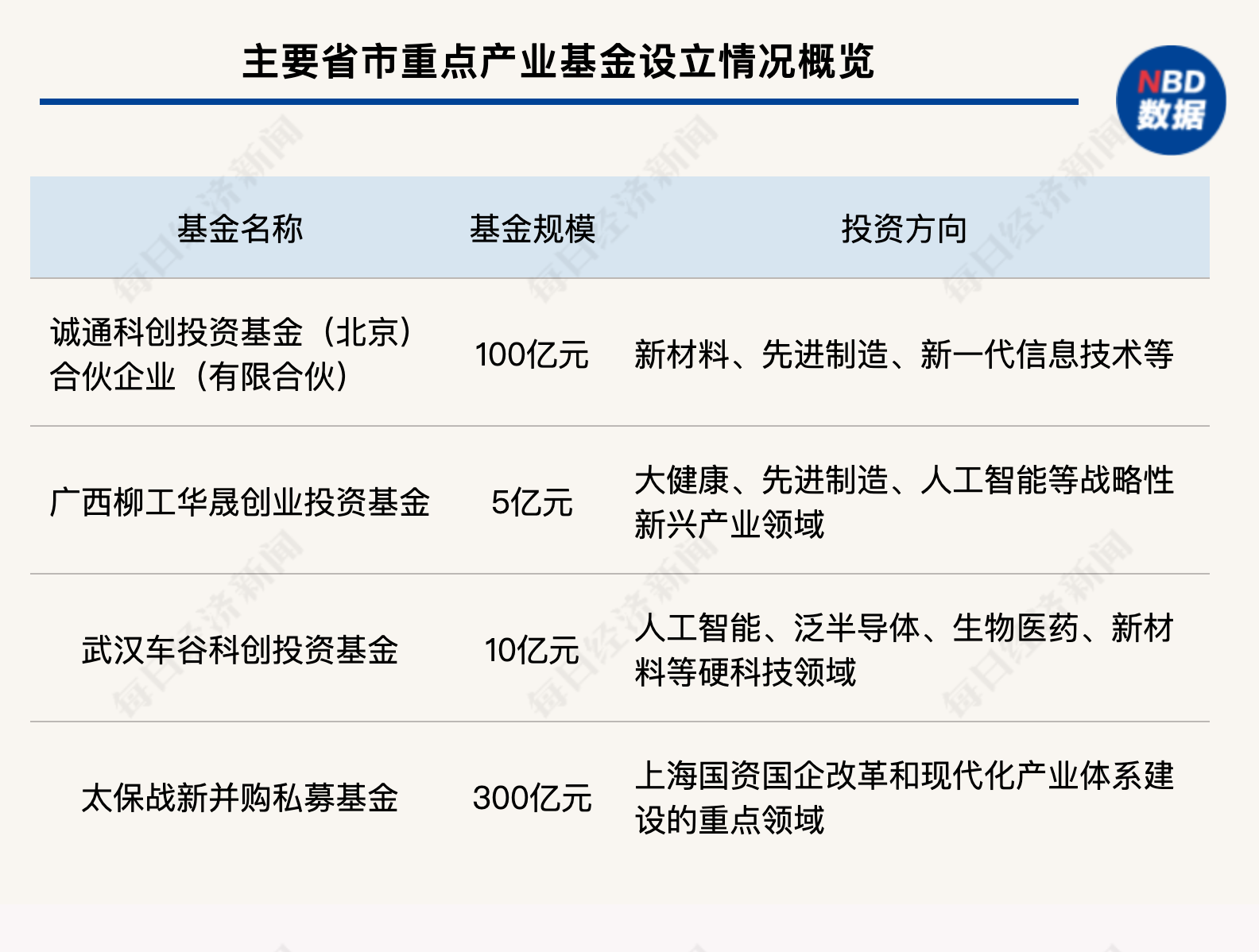
Group 1 - The first central enterprise venture capital mother fund, "Chengtong Science and Technology Investment Fund (Beijing) Partnership (Limited Partnership)," has been established with an initial scale of 100 billion yuan and a planned total scale of 300 billion yuan, focusing on new materials, advanced manufacturing, and new generation information technology [2][10] - Shanghai's three leading industry mother funds have selected 17 sub-funds from 79 applicants, with a total investment amount of 41.5 billion yuan and a total fund scale of 241.5 billion yuan, achieving a leverage ratio of 5.82 times [3] - China Pacific Insurance has launched a new merger and acquisition fund with a total scale of 500 billion yuan, including a target scale of 300 billion yuan for the "Taibao New Merger and Acquisition Private Fund," focusing on Shanghai's state-owned enterprise reform and modernization of the industrial system [4] Group 2 - The first Qualified Foreign Limited Partner (QFLP) fund in Fangchenggang, Guangxi, has been established with a total scale of 500 million yuan and an initial scale of 100 million yuan, targeting strategic emerging industries such as health and advanced manufacturing [6] - The first S fund in Yancheng has been successfully established, focusing on technology and healthcare sectors, supporting quality enterprises in their growth phases through a "project + sub-fund" investment approach [7] - The Wuhan Chegu Science and Technology Investment Fund has completed registration with a total scale of 10 billion yuan, focusing on hard technology fields such as artificial intelligence and biomedicine, with a long-term investment horizon of 12 years [8]