
SK On

Search documents
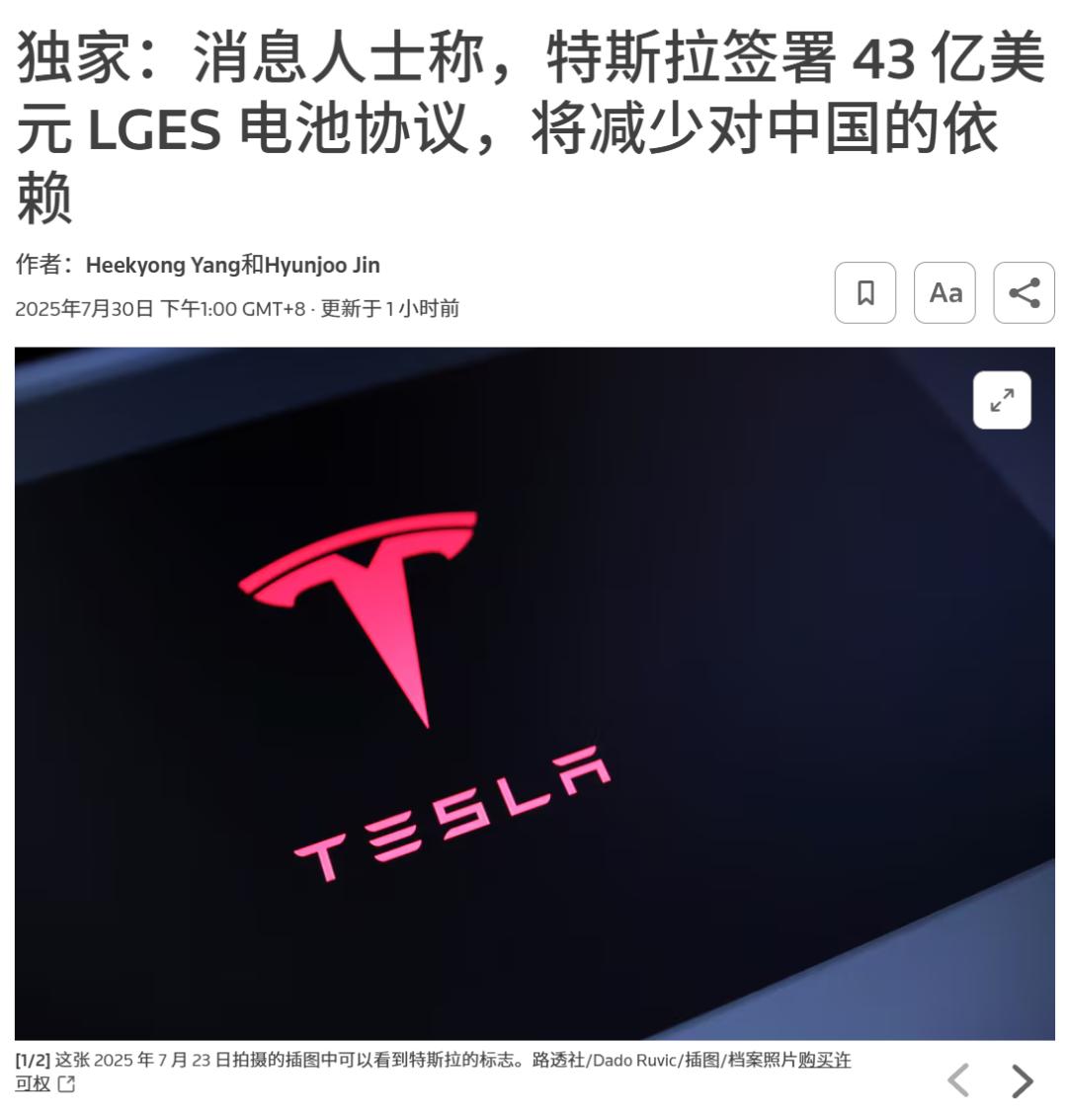
花 300 亿采购 LG ,特斯拉凭啥不买中国电池了?
3 6 Ke· 2025-08-04 23:34
Group 1 - Tesla signed a $4.3 billion battery supply agreement with LGES, indicating strong financial capability [1] - The decision to partner with LGES instead of Chinese battery suppliers is likely influenced by U.S. tariffs aimed at reducing reliance on Chinese lithium iron phosphate batteries [4][6] - U.S. tariffs have increased Tesla's costs by $300 million, particularly impacting its energy business due to reliance on imported batteries from China [6][9] Group 2 - The U.S. tariff structure includes a total of 40.9% on imported storage batteries from China, which has prompted Tesla to seek local suppliers [9][16] - Despite the shift to LGES, Tesla may still rely on key materials sourced from China, as processing of essential minerals predominantly occurs there [13][15] - The choice of LGES allows Tesla to avoid direct tariff issues while still indirectly sourcing materials from China [15][16] Group 3 - Tesla's strategy reflects a broader trend of moving towards localized production in response to tariff pressures, moving away from a global supply chain model [16][25] - The U.S. has recognized that existing trade agreements may not effectively promote domestic manufacturing, leading to increased scrutiny and potential tax implications for foreign suppliers [22][26] - Chinese suppliers face significant challenges in establishing operations in the U.S. due to regulatory hurdles and the need for compliance with U.S. laws [26][29]


宁德时代与三方共建租车行业换电生态,小马智行在上海浦东启动Robotaxi服务丨汽车早参
Mei Ri Jing Ji Xin Wen· 2025-08-04 23:15
Group 1 - CATL collaborates with Shenzhou Car Rental and others to establish a battery swap ecosystem in the car rental industry, aiming to deploy over 100,000 battery swap vehicles this year [1] - The partnership signifies a deeper commitment to the battery swap model, enhancing user experience and potentially driving growth in the electric vehicle sector [1] - The collaboration is expected to improve charging convenience for electric vehicle users and stimulate technological advancements in the industry [1] Group 2 - Faraday Future (FF) responds to plagiarism allegations regarding its FX Super One model, asserting it was developed in collaboration with Chinese partners [2] - The controversy may impact FF's brand image and market trust, especially given its existing financial and delivery pressures [2] - The incident highlights the importance of intellectual property protection in the domestic electric vehicle industry, potentially prompting companies to focus more on original design [2] Group 3 - Pony.ai launches its Robotaxi service in Shanghai, marking a significant step in the commercialization of autonomous driving [3] - The service operates regularly, enhancing public confidence in autonomous technology and increasing market attention on the company [3] - This development is expected to promote policy support and collaboration within the smart driving industry, benefiting related sectors like high-precision mapping and vehicle networking [3] Group 4 - South Korean battery manufacturers' global market share declines to 16.4%, down 5.4 percentage points year-on-year, despite a 37.3% increase in battery usage for electric and hybrid vehicles [4] - The decline reflects challenges in cost control and technological iteration faced by major South Korean battery firms [4] - Chinese battery manufacturers continue to expand their market share, reinforcing expectations of their dominant position in the global supply chain [4]

机构:上半年韩国电池制造商全球市占率下降 宁德时代以37.9%位居第一
Ge Long Hui A P P· 2025-08-04 04:01
Group 1 - The core viewpoint of the article highlights the significant growth in battery usage for electric vehicles, plug-in hybrid vehicles, and hybrid vehicles, totaling 504.4 GWh in the first half of the year, representing a 37.3% increase compared to the same period last year [1] - The market share of South Korean battery manufacturers LG Energy Solution, SK On, and Samsung SDI has decreased to 16.4%, down by 5.4 percentage points from the previous year [1] - Chinese battery manufacturers are continuing to expand their market share, with CATL maintaining its global leadership position, achieving a battery usage of 190.9 GWh and a market share of 37.9% [1]
130万吨,磷酸铁扩产潮起
高工锂电· 2025-08-01 11:09
Core Viewpoint - The article highlights the ongoing expansion of phosphate iron production capacity in response to the surging demand for lithium iron phosphate (LFP) batteries, driven by the growth in both the electric vehicle and energy storage markets [6][7]. Group 1: Industry Expansion - Four major projects in phosphate iron production are set to add a total of 1.3 million tons of supply to the market, signaling a new wave of expansion in the lithium iron phosphate industry [3][4]. - The projects include: - Andar Technology's 450,000 tons per year phosphate iron lithium precursor project in Guiyang, which will increase its total precursor capacity to over 600,000 tons [4]. - Hunan Youneng's additional 150,000 tons phosphate iron production line, raising its total capacity in Guizhou to 300,000 tons [5]. - Huayou Group's 600,000 tons phosphate iron project, aiming to become one of the largest phosphate iron production bases in China [5]. - Yingda Lithium's 100,000 tons per year lithium-ion battery positive material phosphate iron lithium precursor project [3]. Group 2: Market Demand - The demand for lithium iron phosphate materials is robust, with shipments reaching 1.61 million tons in the first half of 2025, a 68% year-on-year increase, accounting for 77% of total positive material shipments [6]. - In the power market, the installed capacity of lithium iron phosphate batteries reached 223.1 GWh in the first half of 2025, a 71% increase, with a market share of 77.4% [6]. - The energy storage market also saw significant growth, with domestic shipments of lithium batteries exceeding 120% year-on-year growth for two consecutive quarters, and lithium iron phosphate batteries capturing over 85% of the market share [6]. Group 3: Industry Concentration - The trend of market concentration among leading companies is becoming more pronounced, with many smaller firms being pushed out due to technological and cost disadvantages [7]. - Leading companies such as Hunan Youneng, Andar Technology, and Huayou Group are expanding their production capabilities, supported by stable orders and strong market positions [7][10]. - The industry is undergoing a structural adjustment phase, balancing capacity clearance and high-end product development [7]. Group 4: Price Trends and Global Competition - The price of lithium iron phosphate materials is expected to recover, with projections indicating a return to over 40,000 yuan per ton by the end of 2025 or early 2026 [8]. - International companies, including LG Energy Solution, Samsung SDI, and SK On, are intensifying their focus on lithium iron phosphate batteries, aiming to catch up with Chinese firms [9]. - LG Energy Solution has secured a $4.3 billion supply project, which represents 23.2% of its projected 2024 sales, marking a significant milestone for its lithium iron phosphate business [9].
近5GWh!南网等4企获储能订单
行家说储能· 2025-07-29 12:20
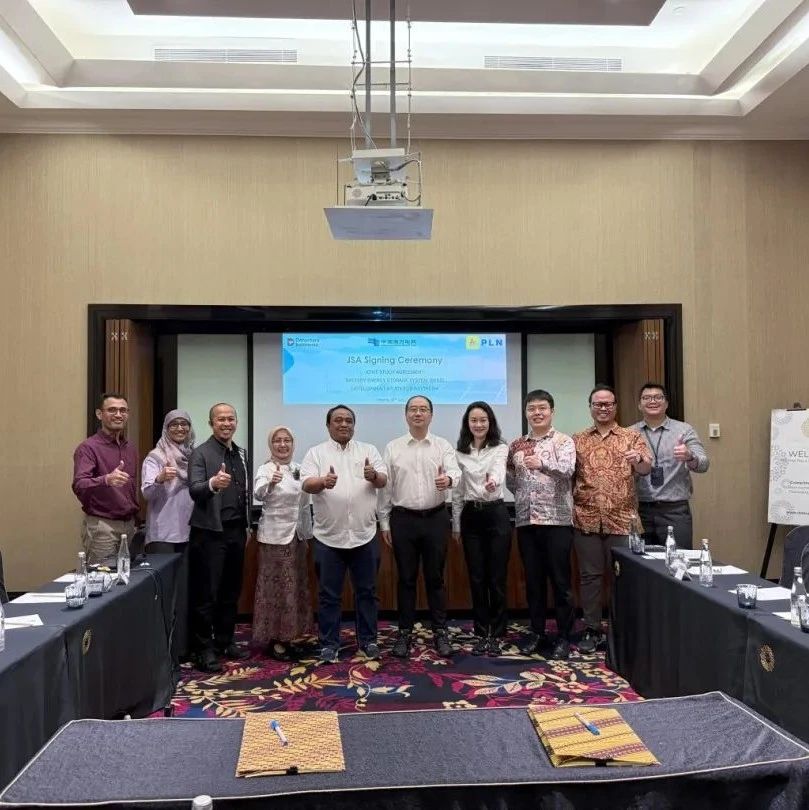
Core Insights - Multiple companies have recently announced significant collaborations in the energy storage sector, totaling 4.874 GWh of storage orders [1] Group 1: South China Power Grid and Indonesia - South China Power Grid International (Hong Kong) has signed an agreement with Indonesia's state electricity company to jointly research energy storage development in Indonesia, focusing on five key areas: development planning, investment policies, pricing mechanisms, technical solutions, and safety standards [2][4] - This collaboration aims to enhance the efficiency of energy storage projects in Indonesia and accelerate its low-carbon transition, serving as a model for energy storage development in Southeast Asia [4] Group 2: Samsung SDI - Samsung SDI has won 2.574 GWh of energy storage orders by securing six out of eight projects in the first round of public bidding by the South Korean government [5] - The total project capacity is 3.39 GWh across various regions, with an estimated project value of approximately 1 trillion KRW (7.25 million USD, about 51.5 billion RMB) [5] - Samsung SDI's competitive edge in the bidding process was attributed to its advantages in non-price criteria, which accounted for 40% of the evaluation [5][6] Group 3: Fluence and Invenergy - Fluence has partnered with independent power producer Invenergy to construct the Hashknife project in Navajo County, Arizona, which includes 475 MW of solar power and 1.9 GWh of energy storage [7] - The project will be developed in two phases, with the first phase starting in 2024 and expected to be operational by 2026, while the second phase will begin this year and is expected to be operational by 2027 [8] - The project will utilize Fluence's Gridstack and Gridstack Pro lithium-ion storage solutions, with total economic investment projected at 53 million USD [9] Group 4: Tesla - Tesla is currently operating a 185 MW solar plus 400 MWh battery energy storage system (BESS) project in Lincoln County, Nevada [10] - In the second quarter of 2025, Tesla deployed 9.6 GWh of battery storage products, with a total deployment of approximately 20 GWh in the first half of the year [11] - Tesla's Shanghai Gigafactory has produced its 1,000th Megapack energy storage system in less than six months, which will be shipped to Europe [11]

超高镍三元材料“突围”锂电下半场竞赛!
起点锂电· 2025-07-26 06:29
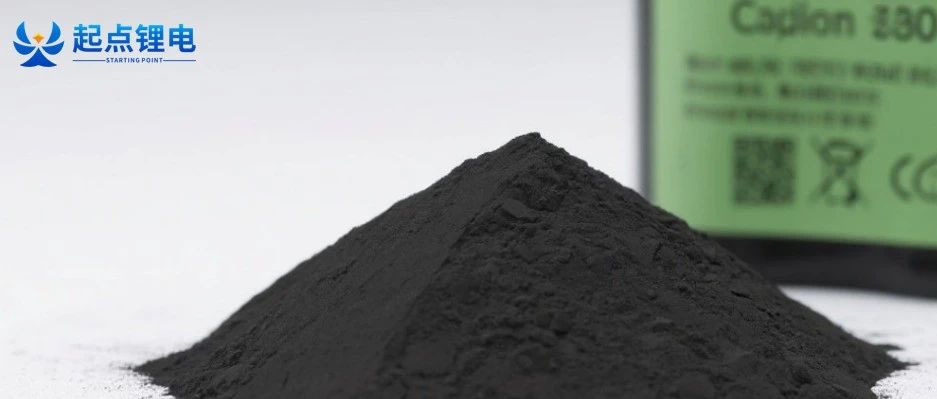
Group 1 - The core viewpoint of the article emphasizes the clear direction of upgrades and iterations in cathode materials for lithium batteries, particularly focusing on lithium iron phosphate (LFP) and nickel-cobalt-manganese (NCM) systems, driven by market demands for high performance and long cycle life [2][4] - The upgrade paths for lithium iron phosphate materials include self-renewal through technology to enhance packing density and formula adjustments to create manganese-based cathode materials, with lithium manganese iron phosphate and lithium-rich manganese-based materials being popular directions [2][4][5] - Data from the 起点研究院 (SPIR) indicates that in May 2025, the installation volume of lithium iron phosphate power batteries exceeded 80% of the total, with a total installation volume of 227 GWh from January to May, highlighting the growing dominance of LFP batteries [2][12] Group 2 - The development path for high-nickel NCM materials is confirmed, focusing on three main aspects: high nickel content, high voltage, and single crystal structures, which enhance energy density and reduce costs [4][5][6] - High-nickel NCM materials are categorized into four levels based on nickel content, with ultra-high nickel materials exceeding 90% nickel content, such as Ni90, Ni95, and Ni98 [8][9] - The domestic production capacity of ultra-high nickel NCM materials is accelerating, with companies like 容百科技 (Rongbai Technology) and 巴莫科技 (Bamo Technology) leading the market, as evidenced by a 170% increase in shipments of ultra-high nickel products in 2024 [10][11][30] Group 3 - The demand for ultra-high nickel NCM materials is driven by four major end markets: electric vehicles, 3C digital products, low-altitude flying, and robotics, with electric vehicles maintaining a steady market share of around 18.5% for NCM batteries [12][13][14] - In the 3C digital sector, high-end devices require batteries with high discharge rates and endurance, leading to increased demand for ultra-high nickel NCM materials [14][15] - The robotics market is expected to see significant growth, with humanoid robots requiring batteries with energy densities above 300 Wh/kg, where ultra-high nickel NCM materials provide a competitive advantage [15][16] Group 4 - The mass production of large cylindrical batteries is accelerating the shipment of ultra-high nickel NCM materials, with companies like 宁德时代 (CATL) and 亿纬锂能 (EVE Energy) leading the development of high-nickel cylindrical batteries [20][21] - The market for large cylindrical batteries is projected to grow significantly, with an expected annual compound growth rate of 38.6% from 2024 to 2030 [22] - Solid-state batteries are also a key technology for ultra-high nickel materials, with major companies planning to integrate ultra-high nickel cathodes into their solid-state battery designs [24][25] Group 5 - The competitive landscape for ultra-high nickel NCM materials is dominated by leading companies in China, which holds over 60% of the global market share, with major players including 容百科技, 巴莫科技, and 当升科技 [27][28][29] - 容百科技 is projected to achieve a sales volume of 120,000 tons of NCM materials in 2024, with a significant increase in the share of ultra-high nickel products [30] - 巴莫科技 and 当升科技 are also expanding their production capacities and partnerships, indicating a robust growth trajectory in the ultra-high nickel segment [31][33]
韩国媒体电动汽车火灾报道被指“双标”
Ren Min Wang· 2025-07-25 01:38
Core Viewpoint - The recent fire incident involving the Hyundai IONIQ 5 electric vehicle in South Korea highlights a disparity in media reporting between domestic and imported electric vehicle fires, suggesting a double standard in the portrayal of safety issues related to electric vehicles [1][2]. Group 1: Incident Details - A fire occurred in an underground parking lot in Cheonan, South Korea, involving a Hyundai IONIQ 5 electric vehicle equipped with a battery produced by SK On, with no reported injuries [1]. - This incident is not isolated; previous fires involving the IONIQ 5 have been reported, including one in August 2022 causing over 20 million KRW (approximately 100,000 RMB) in damages and another in March 2023 that resulted in driver injuries [1]. Group 2: Media Reporting Discrepancies - South Korean media tends to use vague terms like "electric vehicle fire" without specifying the manufacturer or battery supplier when reporting on domestic electric vehicle incidents, contrasting with detailed reporting on imported vehicle fires [1][2]. - In a previous incident involving imported electric vehicles, the media emphasized the use of "Chinese batteries," fostering a perception that Chinese battery safety is inferior to that of South Korean products [2]. Group 3: Statistical Insights - From 2018 to 2024, 89% of electric vehicle fires in South Korea involved batteries from domestic manufacturers, with 126 out of 139 incidents linked to South Korean companies such as LG Energy Solution, SK On, and Samsung SDI [2]. - Experts have criticized the narrative that Chinese batteries are inferior, arguing that such claims lack evidence and contribute to bias against electric vehicles [2].
一代锂电设备霸主难逃周期轮回|深度
24潮· 2025-07-23 23:48
Core Viewpoint - The lithium battery industry is experiencing a significant downturn, impacting even leading companies like XianDao Intelligent, which has seen a dramatic decline in revenue and profit [1][3][6]. Financial Performance - XianDao Intelligent's revenue has decreased for four consecutive quarters, with a net profit of 286 million yuan in 2024, down 83.88% year-on-year, and continuing to decline by 35.30% in Q1 2025 [1][3]. - The overall revenue of 108 Chinese lithium battery companies fell by 11.87% in 2024, with net profit dropping by 67.27%, marking two consecutive years of significant decline [3][4]. - Key financial metrics for 2024 include total assets of 29,092.41 million yuan (up 6.17%), total liabilities of 16,721.07 million yuan (up 7.31%), and a net profit of 651.92 million yuan (down 67.27%) [5]. Industry Trends - The lithium battery industry's rapid growth phase is over, with a historic downturn affecting both domestic and international players [3][6]. - Major international battery manufacturers, including LG Energy Solution and SK On, reported losses in Q4 2024, indicating widespread challenges across the sector [6]. - The global lithium battery market is projected to grow significantly, with a compound annual growth rate of 25.2% expected from 2024 to 2030 [28]. Company Strategy - XianDao Intelligent is focusing on high-end production capabilities, particularly in solid-state batteries, which are seen as the future of battery technology [12][15]. - The company has secured over 100 million yuan in orders for solid-state battery equipment in 2024, indicating a strategic pivot towards advanced technologies [12][13]. - XianDao Intelligent has established a global presence, with operations in multiple countries and a significant increase in overseas revenue, which reached 2.831 billion yuan in 2024, accounting for 23.88% of total revenue [30][31]. Customer Relationships - The relationship with major clients, particularly CATL, has been crucial for XianDao Intelligent, although recent share reductions by CATL have raised concerns about future collaboration [16][17]. - The company has faced challenges with customer payment cycles, as evidenced by an increase in accounts receivable turnover days to 278.98 days in 2024, indicating delayed payments [21][22]. Market Dynamics - The lithium battery industry is witnessing a wave of project cancellations and delays, with significant investments being halted or re-evaluated due to market conditions [36][37]. - The competitive landscape is shifting, with domestic companies facing overcapacity issues while international players are more cautious in their expansion strategies [39][40].

FirstEnergy Names Christopher Lopez as Vice President of Labor Relations
Prnewswire· 2025-07-22 15:01
AKRON, Ohio, July 22, 2025 /PRNewswire/ -- FirstEnergy Corp. (NYSE: FE) today announced the appointment of Christopher (Chris) Lopez as Vice President of Labor Relations, effective July 28. Lopez brings more than 30 years of experience in labor and employment law, litigation and corporate legal strategy to the role. He will report to Karen McClendon, FirstEnergy Senior Vice President and Chief Human Resources Officer.Lopez has held senior leadership positions across a range of industries, including energy, ...


388亿元!韩国股民扫货中国资产!买了哪些股?
Zheng Quan Shi Bao· 2025-07-21 15:53
Group 1 - Korean investors have significantly increased their investment in Chinese assets, with a cumulative trading volume exceeding $5.4 billion (approximately 38.8 billion RMB) in 2023, making China their second-largest overseas investment destination after the United States [1] - The net inflow of Korean funds into the Chinese stock market has reversed a year-long trend of net outflows, achieving a net inflow of over $200 million [1] - Popular Hong Kong stocks among Korean investors include Xiaomi Group-W, BYD Company, CATL, Alibaba-W, Lao Pu Gold, and Pop Mart, indicating a strong interest in key Chinese companies [1] Group 2 - The attractiveness of Chinese assets to Korean investors has increased due to the presence of comparable companies in Korea, such as LG Energy, SK On, and Samsung SDI in the battery sector, leading to heightened interest in CATL [2] - Investors are actively comparing BYD with Tesla, noting a significant difference in price-to-earnings ratios, which has sparked discussions about the valuation discrepancies between the two companies [2] - Despite optimism about BYD, some investors express concerns regarding its cash flow, inventory, and potential export challenges, highlighting a mix of sentiment in the investment community [2] Group 3 - The global dominance of Chinese battery manufacturers is evident, with CATL, BYD, and LG Energy ranked as the top three battery manufacturers in Q1 2023, and Chinese firms holding six of the top ten positions with over 60% market share [3] - Korean investors have expressed dissatisfaction with local battery manufacturers, particularly in light of CATL's advancements, such as the introduction of sodium batteries, which pose competitive challenges [3] - The differing battery technologies between China and Korea are noted, with Chinese LEP batteries gaining traction due to their safety and performance improvements, while Korean manufacturers are focusing on NCM batteries [3] Group 4 - The recovery of the Chinese stock market since last year has attracted global capital, including Korean investments, reflecting a renewed interest in China's economic fundamentals and competitive positioning in global supply chains [4] - The appeal of Chinese assets is attributed to reasonable valuation recovery and the country's innovation and market potential in sectors like new energy and high-end manufacturing [4] - The interaction and competition between Chinese and Korean investors in the supply chain highlight a broader trend of global capital seeking opportunities in emerging industries [5]