小米汽车

Search documents
11月多家新能源汽车销量大增,零跑、小鹏、小米完成全年目标
高工锂电· 2025-12-11 11:10
Core Insights - The article highlights the surge in the electric vehicle (EV) market driven by the impending end of the new energy vehicle purchase tax exemption policy, leading to a year-end consumption peak [2][3] - The battery supply chain is experiencing a rare high production rhythm in December, with material prices rising across the board, prompting several battery companies to announce or plan price increases [2][8] Group 1: Market Performance - In November, the production and sales of new energy vehicles reached 1.88 million and 1.823 million units respectively, both showing a year-on-year increase of 20%, with a penetration rate exceeding 53% [2] - From January to November, cumulative production and sales of new energy vehicles reached 14.907 million and 14.78 million units, respectively, with year-on-year growth exceeding 31% and a penetration rate of 47.5% [2] - Several major automakers, including Li Auto and NIO, have achieved or exceeded their annual sales targets ahead of schedule due to consumer demand driven by the tax policy change [3][4] Group 2: Sales Growth and Market Concentration - Notable sales growth in November includes Leap Motor with a 75.1% year-on-year increase, and Xiaomi Auto with a 99.7% increase [4] - The top fifteen new energy vehicle manufacturers collectively sold 14.072 million units from January to November, representing a year-on-year growth of 32.6% and accounting for 95.2% of total sales [5] - The top three manufacturers (BYD, Geely, SAIC) hold a combined market share of 50.5%, indicating a strengthening head effect in the market [5] Group 3: Battery Production and Pricing - The battery production in December is expected to remain stable at around 220 GWh, marking the first time since late 2022 that production has not decreased in December [6] - The demand from non-power sectors is contributing significantly to the overall production stability, supporting high operational levels in the supply chain [7] - Battery companies are initiating price increases due to rising raw material costs, with Dejia Energy announcing a 15% price hike effective December 16 [9][10]





【快讯】每日快讯(2025年12月11日)
乘联分会· 2025-12-11 08:38
Domestic News - Jilin Province's 14th Five-Year Plan suggests transforming the traditional automotive industry towards new energy smart connected vehicles, enhancing the petrochemical industry, and promoting green and high-end development in metallurgy and building materials [7][8] - Jiangsu Province's 14th Five-Year Plan emphasizes boosting consumption in automobiles, home appliances, and smart terminals, while enhancing public service spending to increase residents' consumption capacity [9] - Shijiazhuang's 14th Five-Year Plan focuses on accelerating the development of key areas such as automotive electronics and enhancing the resilience and safety of industrial supply chains [10] Automotive Industry Developments - Volkswagen and XPeng's first collaborative model is set to launch on December 31, with a development cycle of only 18 months, featuring a size of 4853*1852*1566 mm and a maximum power of 170 kW [11] - Leado Automotive has launched a flexible upgrade winter benefit activity, offering limited-time discounts on rental orders during the winter season [12] - GAC's V2G project has achieved a cumulative discharge of over 1 million kWh, with a total participation of 100,000 vehicles [13] - Xiaomi Automotive has published a patent for a fuel level display method aimed at improving the driving experience by reducing fuel level fluctuations [14] - Changan Automobile has rolled out its 30 millionth vehicle, aiming for 5 million units by 2030, with over 60% being new energy vehicles [15] International News - VinFast delivered over 23,000 vehicles in Vietnam in November [16] - Toyota will incorporate Wolfspeed's silicon carbide devices into its onboard charging systems for electric vehicles [17] - Nissan has signed a cooperation agreement with Wayve to integrate AI technology into its ProPILOT series for advanced driving assistance systems [18] - Stellantis plans to launch a small electric Fiat car named Topolino in the U.S., with a top speed of 45 km/h and a range of 75 km on a single charge [19] Commercial Vehicles - A new remote electric bus has been launched in Beijing, marking a strategic partnership between the remote new energy commercial vehicle group and a local transport company [22] - Faurecia has been approved to establish an intelligent transmission innovation center, enhancing its technological capabilities in the commercial vehicle sector [23] - Dongfeng Liuzhou has partnered with HTWO Guangzhou to deliver 100 hydrogen fuel cell trucks, marking a significant step in the large-scale application of hydrogen fuel vehicles [24] - Dongfeng's new fourth-generation small truck, the T7 series, is set to be launched on December 13 [25][26]

大电池增程会是未来主流吗?
数说新能源· 2025-12-11 06:31
Group 1: China's Energy Landscape - China's reliance on imported crude oil has increased, with self-sufficiency dropping to 28% as of 2023, down from 39.4% in 2015 [1] - The primary use of crude oil in China is for transportation, accounting for 53.6% of consumption, followed by chemical products (28.9%) and industrial use (8%) [1] - China has a significant advantage in coal resources and a leading position in the global photovoltaic (PV) industry, with the cost of solar components at 0.7 yuan/W and total installation costs under 1.8 yuan/W [1] Group 2: Photovoltaic Potential - If 10% of China's desertified land (approximately 168,000 square kilometers) were covered with PV panels, it could generate 18.9 trillion kWh annually, exceeding the projected total electricity generation of 10 trillion kWh for 2024 [2] Group 3: Economic Comparison of Energy Sources - The cost of gasoline derived from crude oil is approximately 2.86 yuan per liter, leading to a driving cost of 0.14-0.28 yuan per kilometer for gasoline vehicles [3][4][5] - In contrast, the cost of electricity for electric vehicles (EVs) is between 0.5-1 yuan per kWh, resulting in a driving cost of 0.08-0.16 yuan per kilometer, which is more economically favorable as it supports domestic distribution [6] Group 4: Electric Vehicle Challenges - The current infrastructure for public charging stations is insufficient during winter months, leading to increased wait times for charging [6][9] - To meet the commuting needs in first-tier cities, EV batteries should ideally be designed with a capacity of 80-100 kWh to counteract winter range reduction [7] Group 5: Battery Size Considerations - Increasing battery size to 200 kWh may lead to resource and financial waste, as larger batteries significantly increase vehicle weight and cost [12] - The current trend is towards larger battery packs in range-extended electric vehicles (REEVs), with models like the Li Auto L6 and others increasing battery capacities to meet consumer demands [17][18] Group 6: Market Trends - The market for REEVs is evolving, with manufacturers increasing battery sizes to enhance electric driving capabilities while maintaining the option for range extension [18]

盘点2025:造车新势力盈利能力大揭秘
Xin Lang Cai Jing· 2025-12-10 10:52
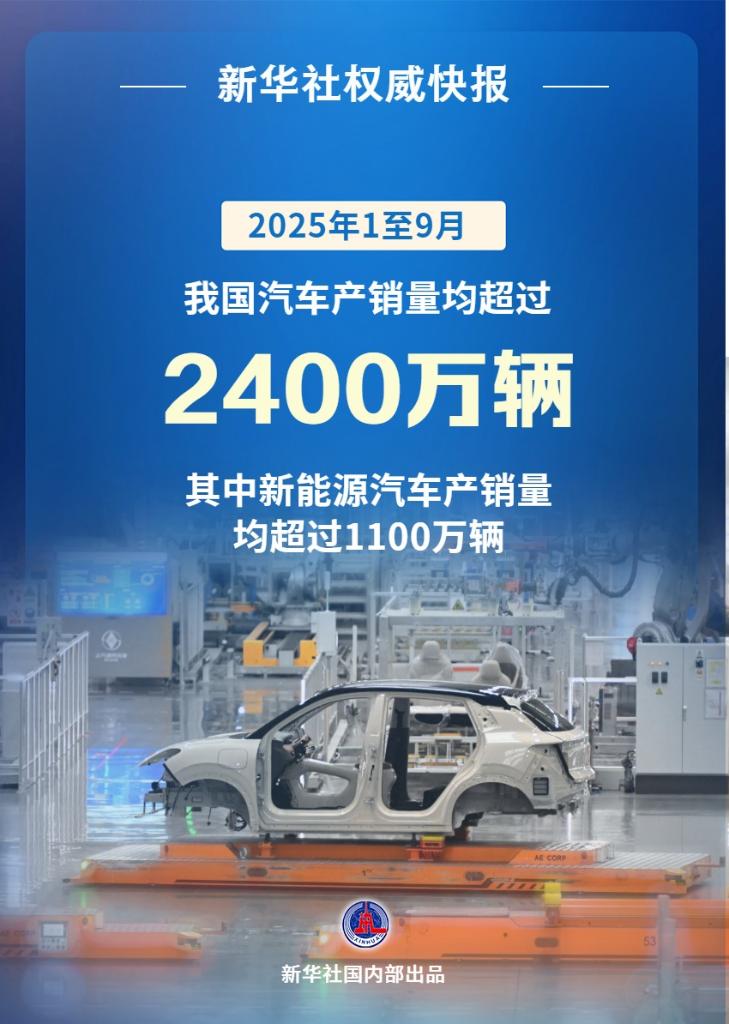
文|新能源观 2025年前9个月,我国新能源汽车产销量便双双突破千万辆,再次迎来了一个历史性的转折点。 图/2025年1-9月新能源车产销双超1100万辆 几乎是在同一个时间节点,昔日"卖一辆亏一辆"的新造车品牌们,或扭亏为盈或亏损大幅收窄,并向盈利发起猛攻。 近期,头部新造车品牌披露的三季报显示,除了率先实现盈利的理想汽车出现了短期承压、由盈转亏的情况,其他几位头部玩家的财报都相对亮眼。 其中,零跑汽车在2025年上半年成功扭亏为盈后,三季度持续盈利;小米汽车在三季度斩获了首季盈利;小鹏和蔚来虽然仍处于亏损当中,但亏损大幅收 窄,并多次明确2025年四季度为盈利冲刺节点。 从"烧钱换市场"到"价值创造"的跨越,新造车品牌们似乎正在告别持续亏损的阵痛期。而这背后,是技术自研与产品布局的双重突破。 1. 新造车头部企业摆脱"越卖越亏"魔咒? "一季度每卖一辆车亏损4.9万元,二季度每卖一辆车亏损6.39万元""平均每卖一辆车亏超8万元""每个季度亏损约50亿元"……昔日,"卖一辆亏一辆,卖得越 多亏得越多"被看成是新造车品牌们最大的标签之一。 然而,随着新能源汽车产销规模的不断突破,以及市场渗透率的进一步提升, ...
中国孕育新能源智造加速度,乐道385天完成10万辆交付里程碑
Zhong Guo Qi Che Bao Wang· 2025-12-10 09:19
国家能源局统计数据显示,在刚刚结束的国庆中秋假期,新能源汽车充电量创下历史同期新高,这一数据侧面反映我国新能源汽车市占率与使用率加 速提升。从数据来看,2024年我国新能源汽车保有量达3140万辆,较"十三五"末增长5倍多。另一方面,《新能源汽车产业发展规划(2021—2035年)》 目标提出,到2025年新能源汽车新车销售量应达到汽车新车销售总量的20%左右,而今年前8月该数据已达45.5%,这意味着产业规划目标已大幅超额完 成。 新能源汽车的发展对我国经济与全球市场都有着显著贡献。数据显示,我国新能源汽车整车消费超过2万亿元,带动产业链上下游发展,形成了巨大 的经济社会效益;而在30万元以上的中高端产品层面,中国品牌涌现出一批可圈可点的车型,成功打破BBA在这一价位区间的主导地位,实现"规模领 先"向"价值引领"的转型。 我国新能源汽车的快速发展,源于国内超大规模市场、完善供应链、强工程化能力、快技术迭代、企业家精神,以及国家战略支持与基建"超前布 局"。这种全方位创新突破,重塑全球汽车产业竞争格局与供应链,为世界贡献"中国样板"。在此背景之下,一批出色的新能源汽车企业不断涌现出来, 包括最先入局新能源市 ...

【新能源周报】新能源汽车行业信息周报(2025年12月1日-12月7日)
乘联分会· 2025-12-10 08:39
Industry Information - The 2025 Guangzhou Auto Show concluded with new energy vehicles (NEVs) surpassing 50% of total exhibits for the first time, with 629 out of 1,085 vehicles being NEVs, reflecting a significant growth in the sector [8][9] - A meeting on the standardization of power battery recycling was held in Ningde, emphasizing the importance of establishing a comprehensive standard system to support the high-quality development of the new energy industry [8] - A half-solid-state lithium battery energy storage project in Inner Mongolia has successfully connected to the grid, marking a milestone in the commercialization of half-solid-state storage technology [9] - CATL announced that 1,000 battery swap stations will be operational before the Spring Festival, enhancing the infrastructure for electric vehicles [9] - The Ministry of Industry and Information Technology encourages leading companies in solar, wind, lithium batteries, and NEVs to expand internationally [10] - In October, the total import and export value of automotive goods reached $25.31 billion, a year-on-year increase of 9.5% [12] - CATL's 587Ah battery cells have shipped 2GWh, with an expected total shipment of 3GWh for the year, indicating a successful entry into large-scale commercial production [12] - The first China-New Zealand dialogue on new energy vehicles was held, aiming to strengthen cooperation in the sector [12] - Huawei's automotive solutions saw a significant increase in sales, with over 180,000 units sold in November, marking an 80% month-on-month growth [13] - The user satisfaction index for China's NEV industry reached 80 points in 2025, showing steady improvement in quality and performance [14] Policy Information - Hebei Province has introduced new electricity pricing regulations, reducing charging costs by over 50% during off-peak hours [23] - The Guangdong province announced a total of 18.87 million yuan in subsidies for electric vehicle charging infrastructure in 2023, significantly higher than the previous year's funding [24] - A new plan in Hangzhou aims to achieve "full coverage of charging facilities" by 2030, enhancing the infrastructure for electric vehicles [25][26] - The National Development and Reform Commission has released a list of eligible projects for infrastructure REITs, including charging facilities [28] - Jilin Province announced a total of 54.32 million yuan in subsidies for electric vehicle battery swap stations for 2024 [30] Company Information - SAIC Motor has extended its purchase tax subsidy for the new MG4 model until December 28, 2025 [41] - Lantu Motors reported over 20,000 vehicle deliveries in November, setting a new record [41] - Leap Motor achieved a record high of 70,327 vehicle deliveries in November, reflecting a 75% year-on-year increase [41] - Xiaomi's automotive deliveries exceeded 40,000 units in November, surpassing its annual target of 350,000 units [42]

新能源汽车购置税减半征收倒计时,17家主流车企推出“兜底”方案
Hua Xia Shi Bao· 2025-12-10 06:56
Core Viewpoint - The Chinese new energy vehicle (NEV) market is experiencing a significant shift as the long-standing purchase tax exemption policy is set to change, prompting automakers to introduce "tax guarantee" schemes to encourage consumers to purchase vehicles before the policy change takes effect [3][5][6]. Group 1: Policy Changes and Market Reactions - The purchase tax exemption for NEVs, in place since September 2014, will transition to a 50% reduction starting January 1, 2026, with a cap of 15,000 yuan per vehicle [5][9]. - Over 17 major automotive brands have launched "tax guarantee" programs, promising to cover the tax difference for consumers who place orders before the end of 2025 but receive their vehicles in 2026 due to manufacturer delays [3][6][7]. - The cost difference for consumers purchasing NEVs is significant; for example, a vehicle priced at 300,000 yuan will save approximately 26,500 yuan in taxes if purchased in 2025, compared to 13,300 yuan in 2026, resulting in a 13,200 yuan increase in cost [5][6]. Group 2: Industry Dynamics and Consumer Behavior - The introduction of "tax guarantee" programs is a strategic response to potential consumer hesitation due to the impending tax changes, with many customers now preferring to order vehicles this year to avoid higher costs [6][7]. - The average delivery time for popular models is around 10 weeks, which could lead to order cancellations without the tax guarantee, thus stabilizing orders for manufacturers [8][9]. - The market is witnessing a shift from reliance on policy incentives to a focus on internal market dynamics, with NEV sales surpassing 50% of total new car sales for the first time in October 2025 [9][10]. Group 3: Future Market Outlook - The reduction of policy support indicates a transition to competition based on technological innovation, cost control, and brand value rather than subsidies and price wars [12]. - The new regulations set to take effect in 2026 will raise the bar for qualifying NEVs, potentially affecting around 30% of current plug-in hybrid models that may not meet the new standards [10][11]. - Industry experts predict a slowdown in sales growth for 2026, with wholesale volumes expected to increase by only 3% compared to 11% in 2025, reflecting the challenges posed by the changing subsidy landscape [11][12].

【月度排名】2025年11月厂商销量排名快报
乘联分会· 2025-12-09 08:46
Core Viewpoint - The domestic narrow passenger car market in China experienced a retail sales decline in November 2025, with a total of 2.225 million units sold, representing a year-on-year decrease of 8.1% and a month-on-month decrease of 1.1%. However, the cumulative sales from January to November reached 21.483 million units, showing a year-on-year growth of 6.1% [2][3]. Sales Performance - In November 2025, the sales breakdown by vehicle type showed that sedans sold 1.007 million units (down 10.0% year-on-year), MPVs sold 86,000 units (down 16.8%), SUVs sold 1.132 million units (up 5.6%), and NEVs sold 1.321 million units (up 4.2%) [3][4]. - The cumulative sales for the year until November were 9.831 million sedans (up 5.3%), 953,000 MPVs (up 0.1%), 10.699 million SUVs (up 7.3%), and 11.472 million NEVs (up 19.6%) [3][4]. Market Trends - The penetration rate of new energy vehicles (NEVs) in the domestic market reached 59.4% in November, with a penetration rate of 79.6% among domestic brands and 38.8% in the luxury segment [4]. - The analysis indicates that the retail growth rate for the year has followed a "low in the beginning, high in the middle, and flat at the end" trend, with new policies stabilizing the market and controlling price competition [2][4]. Manufacturer Rankings - In November 2025, BYD led the sales with 474,921 units (down 5.8% year-on-year), followed by Geely with 310,428 units (up 24.1%), and Chery with 262,475 units (down 3.6%) [7][9]. - For the cumulative sales from January to November, BYD also ranked first with 4.131 million units (up 10.4%), followed by Geely with 2.788 million units (up 41.8%) [8][10]. NEV Manufacturer Performance - In November 2025, BYD again led the NEV wholesale sales with 474,921 units (down 5.8% year-on-year), while Geely and Chery followed with 187,798 units (up 53.4%) and 111,577 units (up 54.0%) respectively [11][13]. - Cumulatively, BYD maintained its lead in NEV sales with 4.131 million units (up 10.4%) from January to November, while Geely's NEV sales surged by 97.4% to 1.534 million units [13][15].




智驾国产芯片格局变化
2025-12-08 15:36
Summary of Conference Call Records Industry Overview - The records focus on the autonomous driving chip landscape in the Chinese automotive industry, highlighting various companies' strategies and developments in self-driving technology and chip utilization. Key Points by Company NIO - NIO's self-driving solution utilizes fully self-developed technology, primarily promoting a world model, but currently lags in effectiveness. The main task for next year is to improve the connectivity rate of the parking-to-parking function and handle complex cases. The Lido and Firefly series are expected to continue using NVIDIA solutions [1][3]. Xpeng Motors - Xpeng's mid-to-high-end models will feature the self-developed Turing chip with a computing power exceeding 1,000 TOPS. The focus is on the iteration of VLA and world models, deeply integrating the BL module. The Turing chip will also be used in the Robotic business line to optimize Robot Taxi efficiency and safety [1][5]. Li Auto - Li Auto's self-developed M100 Schumacher chip is expected to enter mass production in Q2 2026, debuting in high-end models. The AD Max system will feature a mix of M100 and Horizon solutions, while the AD Pro system will continue with Horizon but may upgrade to the G6H version. The algorithm will firmly follow the VOL route [1][5]. Xiaomi - Xiaomi plans to use NVIDIA's 42 series chips in high-end models, while the self-developed Xuanjie O2 chip will be temporarily shelved due to regulatory challenges. The algorithm will be upgraded to address key issues, adopting a structure similar to Tesla's, focusing on world models and language models to solve parking and urban commuting challenges [1][6]. BYD - BYD will upgrade its high-end solutions to NVIDIA's Orin solution, debuting in the Yangwang U8 model. The terminal solution, Tianyi Cloud B1, will have two versions, one continuing with the Orin 3OX low-cost solution and another possibly using Horizon's G6P. BYD plans to significantly adopt the Orin solution and phase out Horizon [1][7]. Chery - Chery's 2026 autonomous driving plan includes multiple tiers. The Falcon 500 series will primarily use Horizon and Qualcomm platforms, while the Falcon 700 series will adopt a dual Orin X platform. The Falcon 900 series will utilize the Sora Ultra platform [1][4][9]. Geely - Geely's autonomous driving layout spans low, mid, and high-end models. Low-end models will mix Black Sesame 1,000 and Horizon Orin chips, while mid-range models will use single and dual Orin X chips. High-end models will feature Soar and dual Soar chips, debuting in flagship models like Zeekr 001 [1][10]. Great Wall Motors - Great Wall's autonomous driving solutions are categorized into low, mid, and high computing power platforms. The low computing power platform will use TI TDA 4VH and Horizon GLM chips, while the mid computing power platform will collaborate with Momenta. The high computing power platform will include dual Orin X and Soar, with Soar expected to replace dual Orin X in 2026 [1][11]. Market Trends - By 2026, companies like BYD, Chery, Geely, and Great Wall, along with joint ventures like Toyota and Volkswagen, are expected to become significant third-party chip purchasers. Volkswagen plans to accelerate its smart vehicle process, heavily adopting Horizon's G6P and G6M solutions [1][12]. Cost Trends - The cost of mid-range platforms, such as BYD's Tianlian B1, is projected to decrease by about 10% in 2026, dropping to around 7,000 yuan. Low-end solutions like Horizon GO6M will see annual hardware cost reductions of 5%-7%. High-end solutions like Orin and Sol are expected to have limited cost reductions, primarily relying on software supplier price drops and increased shipment volumes [1][14][16]. Chip Development - The records indicate a growing trend towards self-developed chips in high-end vehicles to enhance profit margins and optimize resource allocation. In contrast, low-end vehicles will continue to utilize third-party solutions for cost efficiency and quality assurance [1][26]. Conclusion - The autonomous driving sector in China is rapidly evolving, with various companies adopting different strategies for chip development and algorithm integration. The competition is intensifying, particularly in the high-end market, where self-developed solutions are becoming more prevalent.

新势力前高管去直播“卖菜”了
第一财经· 2025-12-08 13:24
Core Viewpoint - The article discusses the career transition of Xu Jiyi, who has moved from the automotive industry to becoming a rural agricultural influencer, highlighting the challenges and opportunities in both sectors [3][5]. Group 1: Xu Jiyi's Career Transition - Xu Jiyi has taken on a new role as a rural agricultural influencer after leaving his previous position at Extreme Automobile, where he served as the public relations head [3][5]. - His new venture involves creating a personal brand focused on agricultural products, aiming to integrate resources and establish a business model [3][5]. - Xu's departure from Extreme Automobile followed a period of significant challenges for the company, including layoffs and financial difficulties, leading to its operational halt [5][6]. Group 2: Insights on the Automotive Industry - The automotive industry is described as highly competitive, with intense price wars and a significant number of new entrants facing elimination [4][5]. - Despite the challenges, the market for electric vehicles remains expansive, with sales growth exceeding 30%, and the industry is undergoing a transformation driven by smart technology [3][5]. - Xu Jiyi's outspoken criticism of competitors, such as Xiaomi Auto, reflects the high stakes and public scrutiny within the automotive sector [4][5]. Group 3: Reflections on Agricultural Sector - Xu Jiyi expresses that selling agricultural products is more challenging than selling cars, emphasizing the complexities of the agricultural market [6]. - His current work routine includes producing short videos, conducting live streams, and visiting production sites, indicating a hands-on approach to his new role [6]. - The article highlights the personal fulfillment Xu finds in his new career, contrasting it with his previous experiences in the automotive industry [6].