德勤

Search documents
德勤中国TMT行业主管合伙人程中:企业的AI化已成趋势,重构过程要经历四个阶段
Mei Ri Jing Ji Xin Wen· 2025-07-29 14:40
Group 1 - The core viewpoint emphasizes the imbalance between value extraction and risk management in the context of generative AI, highlighting the need for companies to act quickly to harness AI's potential for sustainable business value [1] - Deloitte China suggests that effective generative AI governance requires clear responsibilities, enhanced skills, and a comprehensive risk management process throughout the AI lifecycle [1][2] - Companies are shifting from questioning whether to adopt generative AI to focusing on how to implement it effectively, with a critical need to prioritize investments in verifiable return cases [1][2] Group 2 - The AI transformation process in enterprises typically involves four stages: establishing an AI strategic vision, pilot exploration, deep integration into core business processes, and financial mapping [2] - During the pilot exploration phase, companies face challenges in quantifying value and ensuring collaboration between IT and business departments [2][3] - The final financial mapping stage connects AI investments directly to financial metrics, although companies still encounter difficulties in quantifying indirect benefits like customer satisfaction [2] Group 3 - A "light architecture" approach is recommended, which encapsulates AI capabilities as API services to reduce the burden of core system reconstruction [3] - Companies should maintain flexibility in technology selection and establish agreements with technology vendors to mitigate costs associated with potential technology shifts [3] Group 4 - The concept of "illusion" in AI outputs, which can mislead business decisions, is identified as a significant risk, necessitating the establishment of a "trustworthy AI framework" to implement multi-layered defenses [4][5] - Structural illusions, which manifest in seemingly accurate outputs that are actually based on flawed data, should be prioritized for resolution due to their high risk [5] Group 5 - The board of directors is advised to redefine the value boundaries of "human-machine" collaboration, positioning AI as an "enhancement tool" rather than a replacement [6] - In media applications, AI should initially be deployed in low-risk scenarios, with ongoing training and feedback mechanisms to improve its reliability [6] Group 6 - Effective AI governance should transition from a passive to an active approach, involving clear strategic goals, dedicated governance teams, and the use of explainable AI technologies [7] - Companies are encouraged to integrate AI into their core operations rather than treating it as an add-on, which can enhance revenue through improved customer satisfaction and compliance [8]
直击WAIC 2025 | 专访德勤TMT行业主管合伙人程中:有效的AI治理范式应从被动向主动转变
Mei Ri Jing Ji Xin Wen· 2025-07-28 13:49
Core Insights - The imbalance between value extraction and risk management in generative AI has become a critical gap for enterprises to bridge [1] - Deloitte emphasizes that generative AI governance is not an option to delay, and companies must act quickly to clarify responsibilities, enhance skills, and integrate risk management throughout the AI lifecycle [1] Group 1: AI Investment and ROI - The AI transformation process typically involves four stages: establishing an AI strategic vision, pilot exploration, deep integration into core business processes, and financial mapping [4] - In the initial stage, there is often a significant gap between management's ROI expectations and reality, with departments pursuing projects independently [4] - The final stage involves linking AI investments directly to financial metrics, although companies still face challenges in quantifying indirect benefits like customer satisfaction [4] Group 2: AI Architecture and Cost Management - Traditional enterprises face challenges such as complex legacy systems and limited budgets, which can be addressed through "light architecture, soft integration, and distributed evolution" [5] - Light architecture involves encapsulating AI capabilities as API services to reduce the need for core system overhauls [5] - Companies should maintain flexibility in technology selection and establish flexible contracts with technology vendors to mitigate cost risks associated with technology shifts [5] Group 3: Addressing AI Illusions and Black Box Issues - "Illusions" in AI outputs can mislead business decisions and compliance, necessitating a multi-layered defense strategy [6] - Structural illusions, which often appear in AI-generated tables and data analyses, should be prioritized for resolution due to their high risk of misleading decision-makers [6] - To quantify hidden costs from these illusions, companies can assess model output accuracy and operational data impacts [6] Group 4: Risk Mitigation in High-Stakes Scenarios - In high-stakes environments like healthcare and finance, a systematic approach to building illusion mitigation mechanisms is recommended [7] - A mixed architecture of small models and expert rules is suggested for better reliability in regulated fields [7] - Detailed logging capabilities are essential for traceability and accountability in AI outputs [7] Group 5: Strategic AI Governance - Effective AI governance should transition from passive to proactive, with clear strategic goals and dedicated governance teams [11] - Companies should adopt explainable AI technologies and data governance tools to ensure transparency and control [11] - Cultivating employee AI literacy is crucial for fostering a responsible AI usage culture [11] Group 6: AI Security and Revenue Impact - Companies should integrate AI into a unified architecture rather than treating it as an add-on to legacy systems [12] - A secure AI system can enhance customer satisfaction and loyalty, indirectly boosting revenue [12] - Real-world examples show that integrating AI into cybersecurity can significantly reduce response times and downtime, leading to revenue growth [12]


贸易骤降、库存积压、消费疲软,美国经济面临系统性风险
Di Yi Cai Jing· 2025-07-28 12:21
Core Viewpoint - The U.S. economy in 2025 is facing significant challenges, including a sharp decline in trade volume, weak consumer spending, inventory surplus, and monetary policy uncertainty, which may lead to deflationary downturns or even recession [1][13]. Trade Volume Decline - In May 2025, U.S. container imports fell to 2,177,453 TEU, a 9.7% decrease from April and a 7.2% decline year-over-year [2]. - Industry analyst John Macao predicts a potential 25% reduction in U.S. container shipping volume, equating to a $510 billion decrease in annual business activity [2]. - The decline in trade volume is attributed to global supply chain adjustments and policy uncertainties, with tariff instability prompting businesses to import early, leading to a "whipsaw effect" in trade data [2]. Port Activity and Inventory Management - The Port of Los Angeles experienced its busiest month in June 2025, with an 8% year-over-year increase in cargo volume, following significant declines in May [3]. - The fluctuations in port activity are driven by geopolitical and tariff policy changes rather than economic recovery, highlighting supply chain vulnerabilities [3]. - Companies are utilizing Vendor Managed Inventory (VMI) to manage inventory levels, but this strategy may transfer risks to banks and financial institutions, increasing systemic risk if demand remains weak [4]. Consumer Spending and Economic Indicators - Consumer confidence in the U.S. has significantly weakened, with the Conference Board's index dropping to a near five-year low in April 2025 [5]. - Retail sales growth was only 0.68% annualized in the first half of 2025, with actual retail sales declining by 1.75% in the second quarter, indicating a recessionary trend [6]. - Personal Consumption Expenditures (PCE) data also reflect a similar downward trend, with negative growth observed in early 2025 [6]. Economic Outlook and Monetary Policy - The Leading Economic Index (LEI) fell by 0.3% in June 2025, with a cumulative decline of 2.8% over six months, indicating a significant loss of economic momentum [7]. - The Federal Open Market Committee (FOMC) maintained the federal funds rate at 4.25%-4.50%, reflecting concerns over inflation and growth [8]. - Market signals indicate a growing expectation for interest rate cuts, with the 10-year Treasury yield stable at 4.35% and the 2-year yield dropping to 3.84% [8][9]. Global Trade Context - The decline in U.S. trade volume is part of a broader global economic slowdown, with the WTO revising its global goods trade growth forecast from 3% to -0.2% for 2025 [10]. - The tightening of global financial conditions and high external debt levels in developing countries create a "perfect storm," increasing the risk of debt crises [11]. Systemic Risks and Policy Uncertainty - The combination of inventory surplus and weak consumer demand poses significant risks to the U.S. economy, with estimates indicating the current inventory surplus is the largest since 2008 and 2020 [12]. - Frequent adjustments to U.S. tariff policies disrupt supply chains and erode business confidence, potentially leading to further declines in trade volume and consumer spending [13].
专访德勤孙晓臻:抢占“AI+健康”制高点,寻找差异化生死时速
2 1 Shi Ji Jing Ji Bao Dao· 2025-07-27 07:59
Core Insights - The AI application in healthcare and pharmaceuticals is rapidly transitioning from a "technical concept" to "scaled implementation," with the Chinese AI healthcare market expected to exceed 20 billion yuan by 2025 and 100 billion yuan by 2030, reflecting a compound annual growth rate (CAGR) of 43.2% [1][2] - The global AI pharmaceutical market is projected to surpass 50 billion USD, with significant growth anticipated in drug discovery and medical imaging, which together account for over 50% of the market [3][4] - AI is seen as a growth engine in the healthcare and pharmaceutical sectors, with innovative models emerging under scenario-based support, although commercialization still requires validation [4][5] Market Trends - The AI+ healthcare market is experiencing rapid growth, with an expected annual compound growth rate exceeding 29%, and the market size projected to reach 70 billion USD by 2032 [3][4] - Major pharmaceutical companies are shifting focus from merely following trends to seeking differentiated new targets or optimizing existing ones to establish genuine technological barriers in international markets [1][2] Investment Landscape - Despite macroeconomic adjustments, leading companies in the AI+ healthcare sector continue to attract investment, with significant funding rounds reported, such as Insilico Medicine's 123 million USD Series E financing [4][5] - The investment logic is transitioning from early speculation to a focus on platform capabilities and commercial viability [4][5] AI's Role in Drug Discovery - AI significantly enhances efficiency in target discovery by integrating multi-omics, literature, and databases, thereby shortening the "concept to validation" cycle [2][6] - AI can systematically evaluate the druggability of targets, optimizing resource allocation at earlier stages [2][6] Clinical Trial Dynamics - AI has improved the success rate of Phase I clinical trials from 40%-65% to 80%-90%, but regulatory requirements pose challenges for dynamic learning algorithms [6][7] - The trend is shifting towards a "small and fast" pipeline strategy, emphasizing rapid validation and decision-making, which is being adopted by both AI startups and traditional pharmaceutical companies [7][8] Evaluation of AI Platforms - The focus of pharmaceutical companies is shifting from the quantity of pipelines to the learning capabilities and sustainable output of AI platforms [8][9] - Key metrics for evaluating AI platforms include the breadth and quality of training datasets, cross-target generalization ability, and the actual conversion rates of generated molecules [8][9] Future Outlook - The integration of AI in healthcare is expected to lead to more collaborative models between traditional pharmaceutical companies and AI startups, blurring the lines between the two [7][9] - The ability to create a closed-loop validation system, including automated experimental platforms, is becoming a critical factor in assessing the long-term value of AI platforms [9]
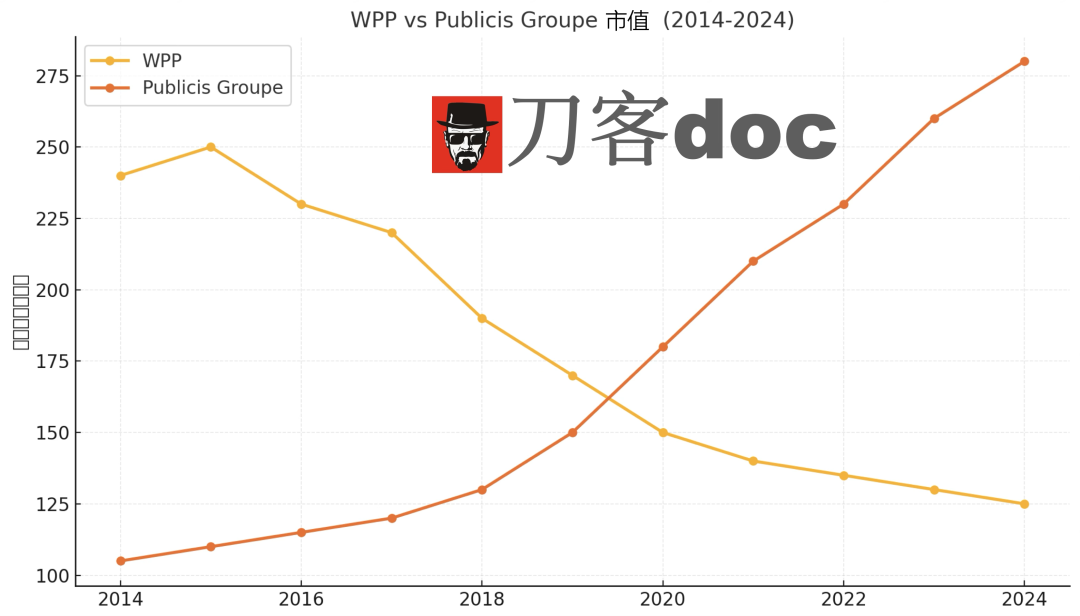
阳狮的教科书,WPP的错题集
Hu Xiu· 2025-07-27 06:38
Core Insights - The global advertising industry is undergoing a significant restructuring by 2025, with two distinct paths emerging: one focusing on scale through mergers and acquisitions, and the other leveraging technology and AI for efficiency and agility [2][3][4] - The competition between scale and speed represents a strategic choice that can determine the success or failure of companies in the industry [4] Company Performance - Public financial reports reveal contrasting performances between major players: Publicis Groupe (阳狮) reported a net income of €3.617 billion in Q2, a year-on-year increase of 4.6%, while WPP experienced a revenue decline of 5.5% in the same period [7][8] - Publicis has raised its organic revenue growth forecast to nearly 5%, while WPP has downgraded its annual forecast to a negative growth of 3% to 5% [7][8] Strategic Choices - Publicis has made significant investments in technology and data, positioning itself as a platform-driven growth company, while WPP has struggled with debt reduction and brand integration, appearing to be reactive rather than proactive [15][31] - The acquisition of Sapient in 2014 marked a pivotal moment for Publicis, allowing it to integrate technology and digital transformation into its core services, while WPP's strategy remained conservative, focusing on optimizing traditional research businesses [17][30] Data and Technology - The acquisition of Epsilon for $4.4 billion allowed Publicis to establish a stronghold in first-party data, which is becoming increasingly critical in the advertising landscape due to privacy regulations and the decline of third-party cookies [32][35] - Epsilon's data capabilities have significantly enhanced Publicis's revenue structure, with digital income rising from less than 30% to over 50% [47] AI and Platformization - Publicis has introduced the Marcel platform to enhance internal collaboration through AI, while also investing €300 million over three years in AI research and data platform upgrades [56][63] - WPP has also developed its own technology platform, OpenX, but lacks the proprietary data assets that Publicis has secured, limiting its competitive edge [65][51] E-commerce and Retail Media - Publicis has recognized the shift towards retail media advertising, acquiring companies like Profitero and Corra to enhance its capabilities in e-commerce solutions [76][77] - Retail media advertising is projected to account for over 20% of global ad spending by 2024, indicating a significant growth opportunity for companies that can adapt quickly [74] Industry Dynamics - The advertising industry is facing competition not only from traditional players but also from consulting firms and tech giants, which are increasingly encroaching on advertising budgets [84][85] - The success of Publicis raises critical questions about whether advertising holding companies must evolve into technology companies to remain relevant in the changing landscape [87]
世邦魏理仕李凌:服务在穗企业“坐广州、卖全球”
2 1 Shi Ji Jing Ji Bao Dao· 2025-07-24 11:10
Group 1 - The "City Partner" initiative in Guangzhou aims to foster long-term cooperation between the city and enterprises, focusing on mutual benefits and resource integration [2][3] - The first batch of 15 city partner companies includes prominent firms like CBRE, Deloitte, and Didi Group, representing various sectors including modern services and emerging industries [2][3] - CBRE views the "City Partner" program as a strategic opportunity to combine international experience with local practices, enhancing its long-term development in China [2][3] Group 2 - Major sporting events are seen as pivotal for urban development, with past events like the 2008 Olympics and 2010 Asian Games significantly impacting local economies and urban landscapes [3][4] - CBRE plans to leverage its role as a "city brain" to organize thematic salons and collaborate with various professional institutions to boost industry and resource focus in Guangzhou [4][5] - The company aims to facilitate sustainable development by promoting a "venue+" model for post-event operations, integrating commercial and cultural tourism elements [4][5] Group 3 - CBRE intends to act as a "招商引擎" (investment engine) during the event, attracting flagship stores to core business districts to showcase Guangzhou's culinary and tourism appeal [5][6] - The focus will be on the "12218" modern industrial system, particularly the 21 strategic emerging industries, to align international enterprises with local projects [5][6] - CBRE will establish a dedicated service network for Guangzhou, enhancing efficiency in attracting investments and supporting local enterprises' growth [5][6] Group 4 - CBRE emphasizes the importance of "connection" in commercial real estate, aiming to integrate global resources with local needs to enhance collaboration [6][7] - The company has experience in planning and investment for major cities worldwide, which will be applied to Guangzhou's development [6][7] - CBRE plans to attract high-quality brands that align with urban upgrades and the event economy, capitalizing on the international exposure from the games [7][8] Group 5 - The 15th National Games is positioned as a critical moment for the restructuring of China's commercial real estate market, with potential for both immediate and long-term benefits for Guangzhou [8] - The event is expected to enhance the city's operational capabilities and leave a lasting legacy beyond the games themselves [8] - CBRE aims to help Guangzhou achieve commercial prosperity and asset appreciation throughout the event cycle, reinforcing its role as a city development partner [8]

德勤因嘉能可审计工作遭英国监管机构调查
news flash· 2025-07-23 11:46
Core Viewpoint - Deloitte is under investigation by the UK's Financial Reporting Council (FRC) regarding its audit work for Glencore and its UK subsidiaries from 2013 to 2020, specifically whether it adequately considered the risks of legal and regulatory violations [1] Group 1 - The FRC announced the investigation on July 22, indicating concerns over Deloitte's auditing practices [1] - Glencore and its UK subsidiaries have been subject to investigations by UK government agencies for misconduct [1]

德勤:就业担忧加剧 英国消费者信心近三年来首次大幅下降
智通财经网· 2025-07-21 10:40
Group 1 - The core viewpoint of the article highlights a significant decline in the UK consumer confidence index, marking the first drop in nearly three years, attributed to increased concerns over job security and high inflation [1][2] - Deloitte's survey indicates that the consumer confidence index fell by 2.6 percentage points to 10.4% in Q2 2024, the lowest level since Q1 2024 [1] - Concerns over a slowing labor market are leading consumers to worry about job security and income growth, compounded by high inflation and living costs affecting attitudes towards personal debt [1] Group 2 - Companies are reportedly less willing to hire due to three main factors: increased employment taxes, higher minimum wages, and potential legal changes that would make it harder to dismiss new employees [1] - The unemployment rate in the UK rose to 4.7%, the highest level since 2021, while inflation in June reached 3.6%, the highest since January 2024 [1] - GfK's consumer sentiment survey presents a slightly different picture, showing a decline in consumer confidence in the latter half of last year, but a rebound to the highest level since December last month [1][2] Group 3 - Deloitte's survey involved 3,200 consumers conducted between June 13 and June 16, focusing on six key issues related to employment security, job opportunities, income, debt, children's welfare, and overall health and well-being [2] - Another economic survey indicated a 3.9 percentage point increase, although it remains 18.4 percentage points lower than a year ago [2] - Deloitte's chief economist noted that while economic activity has slowed in recent months, rising business confidence suggests resilience in the economy amid geopolitical uncertainties [2]
助企出海,数字天河赋能计划正式启动
Sou Hu Cai Jing· 2025-07-18 16:47
Group 1 - The "Digital Tianhe Empowerment Plan" was officially launched to assist enterprises in going global, with the first event focusing on enhancing international market information acquisition capabilities [1][3] - The initiative aims to integrate top global resources and build a "digital bridge" for companies seeking to expand internationally [3][4] - The program is spearheaded by the Tianhe Central Business District Management Committee in collaboration with seven other organizations, aiming to create a closed-loop ecosystem addressing the challenges faced by small and medium-sized enterprises in digital service exports [3][4] Group 2 - The training session featured industry experts sharing practical insights, including strategies for identifying global market opportunities and ensuring compliance in international trade [3] - The United Nations International Trade Centre introduced its "Global Trade Services Platform" to Bay Area enterprises, offering free access to information collection, market insights, and capacity building services [3][4] - The Tianhe Central Business District is recognized as one of the first national digital service export bases, tasked with exploring new paths in digital trade and empowering enterprises for globalization [4]

企业文化转型升级:包容性、技术性与归属感
3 6 Ke· 2025-07-14 04:14
Group 1 - Amazon's AI recruitment tool exhibited gender bias, favoring male candidates due to historical data skewed towards male applicants [1] - The tool was developed to streamline the hiring process but was ultimately disbanded after revealing its discriminatory tendencies [1] - The incident highlights the potential risks of AI in recruitment, emphasizing the need for careful oversight and modification of algorithms to prevent bias [1] Group 2 - The integration of AI into organizations is reshaping workplace culture, with a focus on the importance of inclusivity and diversity [2][3] - A report by Mercer indicates that only 33% of employees foresee positive changes in their workload due to AI and automation, suggesting a disconnect between technology adoption and workplace processes [2] - Companies are encouraged to create inclusive AI and technology to foster a positive workplace culture and address inherent biases [2] Group 3 - DEI (Diversity, Equity, Inclusion) principles are becoming critical indicators of corporate social responsibility, with companies like Yum China implementing initiatives to support diverse employees [4][5] - Recent trends show a decline in DEI momentum, with major companies like Microsoft and Boeing disbanding their DEI departments, raising concerns about the future of inclusivity in corporate environments [5][6] - The effectiveness of DEI initiatives is questioned, with calls for a deeper understanding of how workforce composition reflects customer needs [6][8] Group 4 - The concept of "belonging" is emerging as a crucial aspect of DEI, emphasizing meaningful connections between employees and organizations [16][17] - A Gallup study indicates that 59% of the global workforce engages in "quiet quitting," highlighting the impact of a lack of belonging on employee engagement and productivity [17] - Companies are urged to maintain a focus on human elements even as they embrace AI technologies, ensuring that employees feel valued and connected [19]