
华硕

Search documents
字节发布AI手机 端侧智能产业链下一个增长引擎点火
Ge Long Hui· 2025-12-01 07:47
Core Insights - ByteDance's AI assistant "Doubao" has officially entered the smartphone market with the launch of the Doubao Phone Assistant technology preview version [1] - The product features a high-permission Agent capability that allows for system-level permissions and cross-application execution of complex commands, marking a significant shift in interaction paradigms from "clicking icons" to "intent recognition" [1] - The collaboration between ByteDance and ZTE signifies a new phase of ecological synergy between consumer electronics manufacturers and internet giants, with expectations of a global AI smartphone penetration rate exceeding 35% by 2026 [1] Company Collaboration - ByteDance leads the integration of the Doubao large model and AI interaction functionality, while ZTE is responsible for hardware development, manufacturing, and overall integration [1] - The initial batch of devices is approximately 30,000 units, with the second-generation product already in the planning stage for a mid-2026 release [1] Market Analysis - CITIC Securities notes that the partnership between ZTE and Doubao will drive growth in upstream and downstream orders within the industry chain [1] - Huachuang Securities emphasizes that the deep integration of the Doubao large model as a system-level capability will significantly expand the application boundaries of AI models, facilitating the deployment of AI functionalities in more scenarios [1] - Guolian Minsheng's electronic team indicates that the release of ByteDance's AI phone is just the first step, with upcoming AI products from META, Rokid, and OAI expected to follow suit [1] Beneficiary Companies - AI smartphones: ZTE, Xiaomi, Transsion [1] - AI PCs: Lenovo, ASUS [1] - AI glasses: META, Rokid, Thunderbird [1] - Other AI terminals: Google, OAI [1]

CES2026超前瞻:AI是核心议题,中国企业或将再度霸展
3 6 Ke· 2025-12-01 04:09
Core Insights - CES 2026 is set to showcase significant advancements in AI technology, with major companies like Siemens, Caterpillar, AMD, and Lenovo focusing on AI in their presentations [5][8][19] - The event will highlight a variety of AI hardware products, including AI glasses, AI PCs, AI smartphones, and humanoid robots, indicating a strong trend towards AI integration in consumer electronics [18][19] - Chinese brands are expected to dominate CES, showcasing their technological innovations across various categories, reflecting their growing influence in the global market [40][41] AI as the Central Theme - AI will be the overarching theme of CES 2026, with confirmed keynote speeches from industry leaders emphasizing its importance [5][19] - Companies like Siemens will demonstrate how AI and digital twin technology can transform manufacturing and infrastructure [8] - Lenovo plans to unveil innovations related to AI-driven experiences, including applications in sports and personalized user interactions [11] PC and Gaming Innovations - Intel, AMD, and NVIDIA are anticipated to launch new products, including Intel's Panther Lake mobile processors and AMD's R9 9950X3D processor with enhanced cache capabilities [19][21] - The introduction of new gaming processors and graphics cards is expected to attract significant attention from the gaming community [21][22] Display Technology Competition - Major TV manufacturers, including TCL and Hisense, are expected to showcase advancements in RGB display technology, competing with international brands like LG and Samsung [25][26] - The CES 2026 will feature a variety of display technologies, including Micro RGB LCD and Mini LED, highlighting the competitive landscape in the display sector [25][26] Smart Cleaning Devices - Chinese smart cleaning brands are set to unveil new products, including robotic vacuums and lawn mowers, reinforcing their leadership in the global smart cleaning market [27][30] - The focus will be on comprehensive cleaning solutions that leverage AI and advanced navigation technologies [30] Accessory and Audio Innovations - Accessory brands like Baseus and Ugreen are expected to expand their product lines beyond traditional charging devices, venturing into audio and smart home solutions [31][34] - The introduction of high-end audio products and smart home security devices will be a key focus for these brands at CES 2026 [36] AI Glasses and New Hardware - AI glasses are anticipated to be a major highlight, with various brands competing in this emerging category [38] - The presence of established players and new entrants in the AI hardware space will create a dynamic showcase of innovative products [39] Chinese Brands' Dominance - Chinese companies are projected to play a pivotal role at CES, with a significant share of exhibitors and a focus on technological innovation rather than just cost competitiveness [40][41] - The event serves as a platform for Chinese brands to demonstrate their rapid product development and engineering capabilities across multiple tech sectors [40][41]




行稳致远 |《资本周期》读后感
Xin Lang Cai Jing· 2025-11-28 13:36
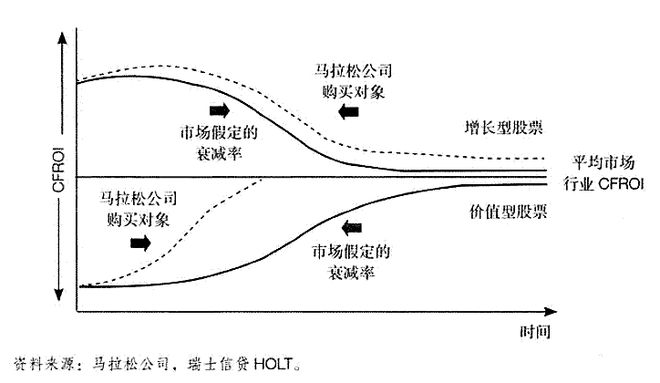
Core Viewpoint - Marathon Capital focuses on two types of investment opportunities: "sustained advantage" (growth type) and "turnaround" (value type) companies, utilizing a framework called "return decay rate" to identify these investments [1][6]. Group 1: Investment Type A - Sustained Advantage - Investment Type A refers to companies that can maintain returns above market expectations for an extended period, often mispriced by the market due to short-term issues [3][6]. - A notable example is Apple during the period from 2014 to 2016, where its stock was undervalued due to temporary performance declines following Steve Jobs' death, leading to significant long-term gains for investors like Warren Buffett [3][6]. Group 2: Investment Type B - Turnaround - Investment Type B consists of companies in traditional industries that are overlooked by the market but possess certain advantages, with returns improving faster than general market expectations [6]. - The turnaround often occurs during periods of extreme pessimism, where market consolidation or the exit of weaker competitors creates favorable conditions for the remaining companies [6]. Group 3: Investment Patience and Timing - Successful investments require patience, as the majority of the time is spent waiting for the company to deliver strong performance, with the actual realization of returns being a small fraction of the investment period [10][14]. - The case of Pop Mart illustrates that the best buying opportunities often arise during periods of short-term performance decline and market pessimism, as seen when its stock price fell significantly in 2022 [10][12]. Group 4: Historical Investment Examples - The investment journey of Pop Mart shows that despite an 80% decline in stock price over two years, a subsequent recovery led to a fivefold return after holding for over four years [9][10]. - Warren Buffett's investment in BYD, where he bought shares at HKD 8 and saw a tenfold increase within a year, exemplifies the potential for significant returns despite long periods of underperformance [13][14].
AI热潮引爆存储器需求 华邦、威刚等大咬商机
Jing Ji Ri Bao· 2025-11-27 23:30
Core Insights - Major PC brands like Dell, HP, and Lenovo warn of a significant shortage in memory chips due to the surge in demand driven by AI applications, indicating a real supply crunch for the upcoming year [1][2] - The rising costs of high-bandwidth memory (HBM) and other storage components are expected to impact product pricing and overall PC costs [1][2] Group 1: Industry Impact - The AI boom is causing a dramatic increase in demand for memory chips, leading to a supply shortage that is described as the most severe in 20 years [3] - Major memory manufacturers such as Samsung, SK Hynix, Micron, and Kioxia have reported that their products are sold out for the next year, with supply constraints expected to last until at least 2026 [2][3] Group 2: Company Responses - Dell's COO noted unprecedented cost increases across all product lines, indicating that these pressures will ultimately be passed on to consumers [1] - HP's CEO anticipates significant challenges in the second half of next year and is considering price increases while also exploring alternative supply strategies [1][2] - Lenovo has begun stockpiling memory chips, with its CFO describing the current cost surge as unprecedented [2]
从小米到惠普,多家科技公司警告“内存短缺”,戴尔电话会称“从未见过成本上涨如此之快”
美股IPO· 2025-11-27 03:38
Core Viewpoint - The technology industry is facing a memory chip supply crisis driven by the demand for AI infrastructure, leading to unprecedented cost increases across various electronic products [3][5]. Group 1: Cost Increases and Supply Shortages - Dell and Lenovo have reported unprecedented cost increases, with Dell's COO stating that the company has "never seen costs rise at this pace" [3][6]. - HP's CEO anticipates significant challenges in the second half of 2026, indicating that the company may raise prices as necessary due to rising memory costs, which account for 15% to 18% of a typical PC's cost [3][6]. - Counterpoint Research predicts a 50% increase in memory module prices by the second quarter of next year, with Xiaomi already raising flagship device prices due to the memory chip shortage [4][6]. Group 2: AI's Impact on Memory Chip Production - The shortage is attributed to a reallocation of chip production capacity towards AI systems, with manufacturers prioritizing high-margin products for AI over more common memory types [5][6]. - Major AI chip supplier NVIDIA is influencing manufacturers to focus on advanced systems for AI data centers, which may limit production of automotive and electronic products through 2026 [5][6]. Group 3: Manufacturer Responses to Supply Crisis - Manufacturers like Lenovo and ASUS are increasing their memory inventories by approximately 50% to mitigate supply risks, while Xiaomi has secured supply agreements for 2026 [6][7]. - Xiaomi's management acknowledges potential price increases to offset rising memory costs, emphasizing a focus on product structure optimization rather than just volume growth [6][7]. - Apple remains relatively optimistic, managing costs effectively despite slight upward pressure on memory prices [6][7]. Group 4: Market Valuation and Supplier Dynamics - The supply constraints have led to a surge in valuations for top memory manufacturers, with Samsung, SK Hynix, and Micron experiencing significant stock price increases [7]. - SK Hynix has sold its entire memory chip product line for the upcoming year, while Micron expects supply tightness to persist until 2026 [7]. - The competition for AI infrastructure is driving up costs across the consumer electronics supply chain, impacting energy bills and overall production costs [7].





全球“内存荒”加剧
财联社· 2025-11-27 03:20
Core Viewpoint - The article highlights a significant anticipated shortage of storage chips due to the surge in demand driven by artificial intelligence infrastructure, which is expected to lead to a 50% increase in memory prices by the second quarter of 2026 [1]. Group 1: Industry Challenges - Major U.S. consumer electronics manufacturers, including Dell and HP, have warned of rising costs and potential price increases for consumers due to tight DRAM and NAND flash supply [2][3]. - The competition for AI infrastructure is exacerbating supply challenges, with leading memory manufacturers like Samsung, SK Hynix, and Micron experiencing significant stock price increases and supply constraints [4]. - The shortage of storage chips is expected to impact production across various sectors, including automotive and consumer electronics, as manufacturers prioritize supply for AI-related products [5]. Group 2: Company Responses - Dell's COO noted unprecedented cost increases and indicated that the company is adjusting product configurations and may raise prices [2]. - HP's CEO mentioned that memory costs account for 15% to 18% of total PC costs and that the company is taking cautious measures to manage performance guidance [3]. - Xiaomi reported a decline in smartphone gross margins due to rising component costs and is considering price increases while focusing on product optimization [6]. - Lenovo is leveraging its scale to capture market share amid rising costs, with its memory inventory reportedly 50% higher than previous years [6]. - ASUS is also stockpiling components and plans to maintain stable prices during the holiday season [7]. Group 3: Market Outlook - Analysts predict that the global storage chip market is entering a "super cycle," with multiple manufacturers raising prices, which may further intensify the price increase trend [8]. - The current supply constraints are expected to drive innovation and push China towards greater self-sufficiency in key technology sectors [8].
用AI提升生产力,美国PC巨头裁员6000人
Guan Cha Zhe Wang· 2025-11-26 09:12
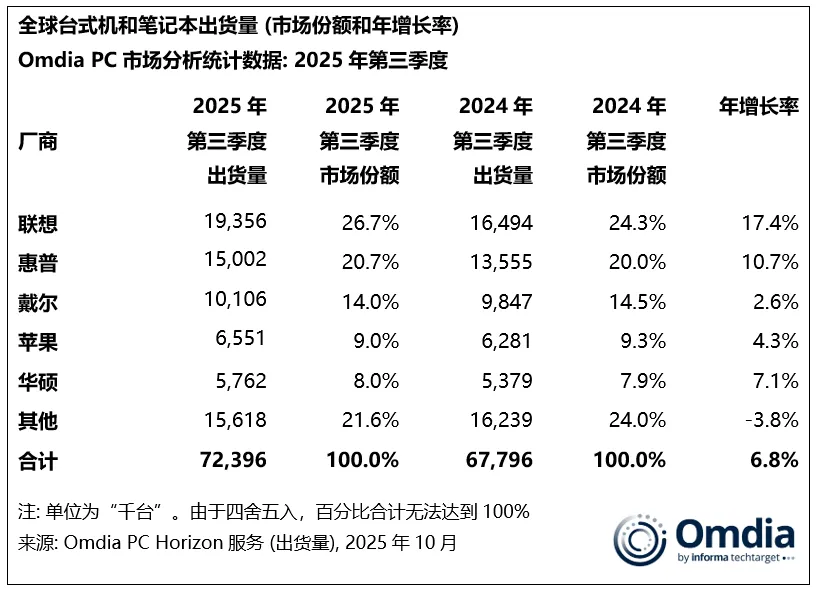
Group 1 - HP plans to lay off 4,000 to 6,000 employees globally by the end of fiscal year 2028, representing up to 10% of its workforce [1] - The layoffs are part of a restructuring plan aimed at streamlining operations and adopting artificial intelligence, expected to save at least $1 billion annually [1] - The restructuring will incur approximately $650 million in costs, with about $250 million allocated for the fiscal year starting November 1, 2026 [1] Group 2 - For Q4 ending October 31, HP reported revenue of $14.6 billion, a 4% year-over-year increase, slightly above analyst expectations [2] - Net profit for the same quarter was $795 million, or $0.84 per share, up from $763 million, or $0.80 per share, in the previous year [2] - The personal systems segment, which includes desktops and laptops, generated $10.35 billion in revenue, an 8% increase, while the printing segment saw a 4% decline to $4.27 billion [2] Group 3 - HP's PC business growth is attributed to strong consumer demand for upgrades following the end of Windows 10 support, with projected PC shipment growth of 6.6% in 2025, but a decline of 2.2% in 2026 [2] - According to Omdia, global shipments of desktops, laptops, and workstations are expected to grow by 6.8% year-over-year in Q3 2025, reaching 72 million units [2] - Lenovo led the market with a 17% year-over-year increase in shipments, followed by HP with an 11% increase [3][4] Group 4 - HP's adjusted earnings per share for the current fiscal year are expected to be between $2.90 and $3.20, below the analyst average estimate of $3.32 [4] - For the first fiscal quarter ending in January, HP anticipates adjusted earnings per share of $0.73 to $0.81, also below analyst expectations [4] - Rising costs of computer storage chips are identified as a key factor affecting HP's performance guidance, potentially impacting profit margins [5]
零时差直播“黑五”购物节 美、法、韩等30国好物上线天猫国际
Zhong Guo Jing Ji Wang· 2025-11-25 03:34
Core Insights - The "Black Friday" shopping festival has seen significant participation from over 30 countries, with Tmall International facilitating live shopping experiences for Chinese consumers [1][3] - More than 20,000 overseas brands and over 8 million imported products were available on Tmall International during the "Black Friday" event, with discounts as low as 20% [2] - Tmall International has established a three-tier quality control system in collaboration with national quality inspection agencies to ensure the authenticity of imported goods [3] Group 1 - Tmall International hosted over 1,700 global buyers for 100 hours of live streaming from major cities including Los Angeles, Paris, and Seoul, allowing consumers to shop in real-time [1] - Major brands such as Samsonite, COACH, and Swarovski participated in the live shopping event, offering competitive pricing compared to overseas markets [1][2] - The platform featured exclusive product launches and promotions from niche brands, enhancing the shopping experience for consumers [1] Group 2 - Specific product examples include the Microsoft ROG Xbox Ally priced at 4,464 RMB after discounts, and the Louis Vuitton Neverfull available for 13,999 RMB [2] - Tmall International's "Black Friday" event emphasized the availability of luxury items at reduced prices, with discounts on high-end brands like MaxMara and LOEWE [2] - The platform's market share as a leading cross-border e-commerce site is reinforced by its extensive selection of brands from over 110 countries [3]
混合式AI战略价值兑现 联想为PC业务找到新出路
Ge Long Hui· 2025-11-21 20:17
Core Insights - Lenovo's PC market share has reached a historic high of 25.6%, up from 23.7% in the previous fiscal year, driven by strong performance in high-margin segments and AI PCs contributing 33% of total shipments [1][2] Group 1: Financial Performance - Lenovo's Intelligent Devices Group (IDG) revenue grew by 12% year-on-year to $15.1 billion, with operating profit increasing by 11% to $1.1 billion [2] - The company has maintained its leading position in the global PC market, with a shipment increase of 17.3% [2][5] Group 2: AI Integration - AI PCs are expected to drive market upgrades, with an estimated 10% of PCs being replaced by AI PCs this year [5] - Lenovo is positioning itself as a technology company that integrates hardware, software, and services, focusing on Hybrid AI that combines public and private intelligence [4] Group 3: Market Strategy - Lenovo's strategy includes a diverse product line encompassing PCs, tablets, smartphones, and IoT devices, aiming for a unified ecosystem [4] - The company is expanding its manufacturing capabilities in Saudi Arabia, which will enhance its operational efficiency and reduce costs [6][8] Group 4: Demographic Insights - The young population in Saudi Arabia, with 71% under the age of 35, presents significant demand for consumer electronics and technology [7] Group 5: Future Innovations - Lenovo plans to unveil a personal super-intelligent assistant at the CES 2026, enhancing device capabilities to understand and anticipate user needs [8]

英特尔入华40周年:18A工艺量产,将为中国客户提供“点菜式”选择
Guan Cha Zhe Wang· 2025-11-21 14:28
Core Insights - Intel's CEO Chen Lifang delivered a speech in Chinese at the 2025 Intel Technology Innovation and Industry Ecosystem Conference, emphasizing the company's commitment to collaboration in the AI wave and celebrating 40 years in the Chinese market [1][2] - The conference gathered over 3,000 attendees, including clients and industry partners, to discuss building an intelligent, integrated, and green industry ecosystem [1] - Intel announced the mass production of its Intel 18A process at the Arizona Fab 52 plant, achieving a 30% increase in transistor density and a 15% performance improvement at the same power consumption compared to the previous generation [2][3] Company Developments - The third-generation Core Ultra processor, based on the new 18A process, features significant performance enhancements, including over 50% improvement in CPU performance and graphics performance [3] - Intel's Xeon 6+ processors, also based on the 18A process, are set to be released in the first half of 2026, marking a new era of efficiency in server processors [3] - The Intel 18A process is expected to be the foundation for Intel's next three generations of PC and data center products, with ongoing development of even more advanced processes like Intel 14A [3] Industry Trends - The conference showcased over 1,000 industry ecosystem collaboration results, highlighting innovations in AI PCs, generative AI applications, and data center solutions [4] - Intel's collaboration with local partners led to the launch of a dual-processor liquid-cooled server, enhancing reliability and efficiency while reducing energy consumption and operational costs [4] - The Chinese market is positioned as a global leader in digitalization, with Intel focusing on four development directions: digitalization, intelligence, integration, and globalization [5]
