
地平线

Search documents
地平线苏箐:未来三年 自动驾驶行业将告别范式迭代狂飙
Zhong Guo Jing Ying Bao· 2025-12-11 04:28
Core Insights - The autonomous driving industry is expected to transition from rapid paradigm shifts to a phase of extreme optimization over the next three years, as stated by a veteran in the field [2][3] - The release of FSD V12 in 2024 is seen as a watershed moment for the industry, marking a significant technological breakthrough that could resolve long-standing bottlenecks [2][3] - Current deep learning technologies are showing signs of reaching their limits, and without breakthroughs in AGI theory, the industry may face a prolonged period of optimization rather than innovation [3][4] Industry Trends - The FSD V12's end-to-end architecture breaks existing barriers by extending deep learning applications from perception to decision-making, completing a technological revolution [3] - The paradigm shift allows for shared development frameworks and sensor configurations between L2 and L4 systems, enhancing collaboration and efficiency [3] - The industry is advised to focus on maximizing the potential of existing technologies, with an emphasis on improving chip performance and model capacity [4] Strategic Directions - The company plans to achieve a tenfold increase in computing power for each generation of AD products, supporting a tenfold scale of system evolution [3] - There is a focus on making L2 systems accessible to a broader market, targeting a price point that allows for wider adoption [4] - The ultimate goal remains to create machines that can replace human drivers, emphasizing the importance of endurance and precision in the industry’s long-term efforts [4]

自动驾驶迈向规模化商用,国产芯片与生态协同成破局关键
Zhong Guo Jing Ji Wang· 2025-12-11 01:56
Core Insights - The transition of autonomous driving from technology-driven to value-driven is highlighted, with domestic chips and ecosystem collaboration being key to industry breakthroughs [1][4] Group 1: Commercialization of Autonomous Driving - A clear scene stratification for the commercialization of autonomous driving has been established, with different companies following differentiated development paths based on specific scenarios [4] - In the last-mile logistics sector, the CTO of New Stone Technology emphasized that cost reduction is the primary principle of the logistics industry, supported by four core capabilities: deep insight into logistics scenarios, breakthroughs in technical algorithms, self-built hardware and production capabilities, and compliance with regulatory operations [4] - The founder and CEO of Xing Shen Intelligent pointed out that the value of autonomous driving extends beyond replacing drivers to achieving full automation of the entire logistics process, with four core elements necessary for commercial success: extreme cost reduction, improved operational performance, enhanced deployment efficiency, and data security [4] Group 2: Long-Distance Truck Transportation - The CEO of Ying Che Technology noted that while truck users are sensitive to costs, they will invest if the solution provides significant safety, cost, and revenue returns, with the current intelligent driving system offering a return on investment period of 10 to 24 months [4] - The CEO of Carl Power described long-distance logistics as the "artery of the national economy," stating that logistics efficiency significantly impacts a country's competitiveness, with logistics costs in China being about 14% of GDP, more than double that of developed countries [4] Group 3: Robotaxi Market - In the Robotaxi sector, the founder of GoGoX and Amigo identified the aging taxi driver demographic and outdated vehicles in Hong Kong as key pain points, with plans to convert 1,000 taxis into Robotaxis using Horizon's technology [5] - The average monthly revenue for a single taxi license in Hong Kong is HKD 20,000, and the conversion to autonomous operation could transform the local transportation market [5] Group 4: Ecosystem Collaboration and Chip Development - The success of autonomous driving commercialization relies on deepening ecosystem collaboration, with the rise of domestic chips providing dual benefits of cost reduction and supply chain security [5] - The founder and CEO of Horizon defined the company's role as providing chips and tools while promoting cooperation across various sectors, including logistics and mining [5] - The Chief Ecosystem Officer of Horizon highlighted that the BPU chip has seen a performance increase of 1,000 times over 10 years, with the latest 6P chip offering 560 TOPS of computing power, essential for deploying large models in vehicles [5]
引领技术高标,共议普惠路径:2025地平线技术生态大会首日解码智驾破局之道
Zhong Guo Jin Rong Xin Xi Wang· 2025-12-11 01:53
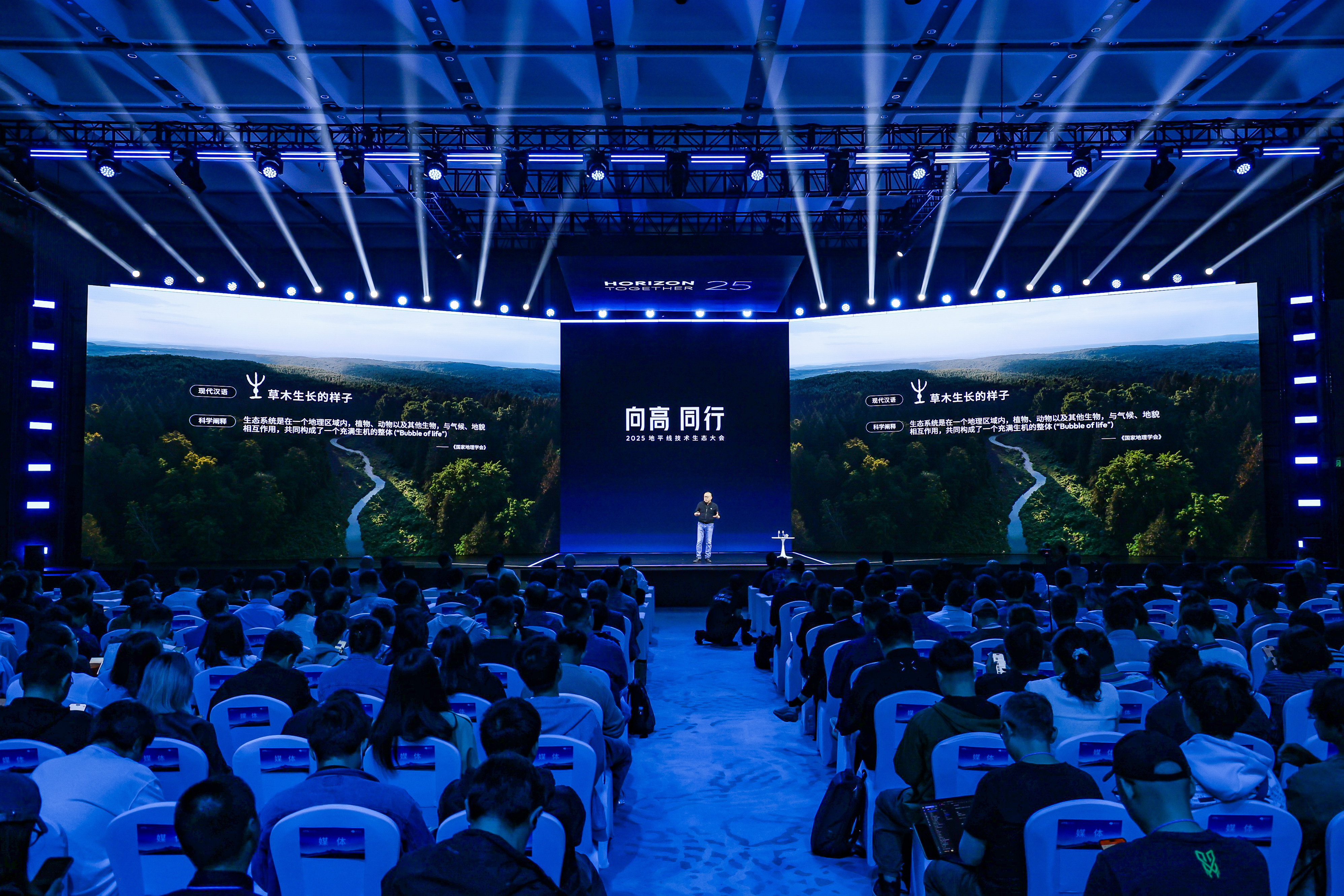
Core Insights - The 2025 Horizon Technology Ecosystem Conference in Shenzhen focuses on accelerating the mass adoption of all-scenario assisted driving, emphasizing the importance of experience, cost, safety, and policy collaboration for commercial success [1][2] - The conference highlights the shift of intelligent driving from technological breakthroughs to large-scale accessibility, with the urban NOA (Navigation on Autopilot) being a critical battleground for success [1] Industry Trends - The Chinese technology platform is becoming a core variable in the global automotive industry's transformation driven by intelligence [4] - Companies like Volkswagen emphasize the necessity of building core capabilities in China to lead in the new energy vehicle era, with software becoming central to automotive business [5][7] Collaborative Ecosystem - Local automakers are forming strategic partnerships to enhance intelligent driving experiences, with a focus on shared vision and risk [11][12] - The integration of local ecosystems is crucial for Chinese companies to achieve global competitiveness in intelligent driving [8][9] User Trust and Safety - Establishing user trust and safety is identified as a core issue for the industry, with safety being prioritized over experience and cost [26] - The importance of human-like interaction in systems is emphasized as a means to build trust among users [27] Cost Optimization - The industry anticipates a cost tipping point in 2025, driven by hardware restructuring and software paradigm shifts [28] - The collaboration between hardware advancements and new algorithm paradigms is seen as essential for reducing costs and enhancing system performance [28]

北汽集团将与地平线共同推出城区辅助驾驶系统
Xin Lang Cai Jing· 2025-12-10 23:59
Group 1 - The core point of the article is that BAIC Group is establishing a deep collaborative R&D mechanism with Horizon Robotics to enhance its "Yuanjing AI Central Brain" technology [1] - BAIC Group plans to develop a full-scenario urban NOA (Navigation on Autopilot) system based on two Horizon Journey 6M chips [1] - The new NOA system will be prioritized for deployment in the latest products under BAIC's self-owned brands [1]

地平线冲进 10 万级市场,认为智驾是新时代的 “自动挡”
晚点Auto· 2025-12-10 15:45
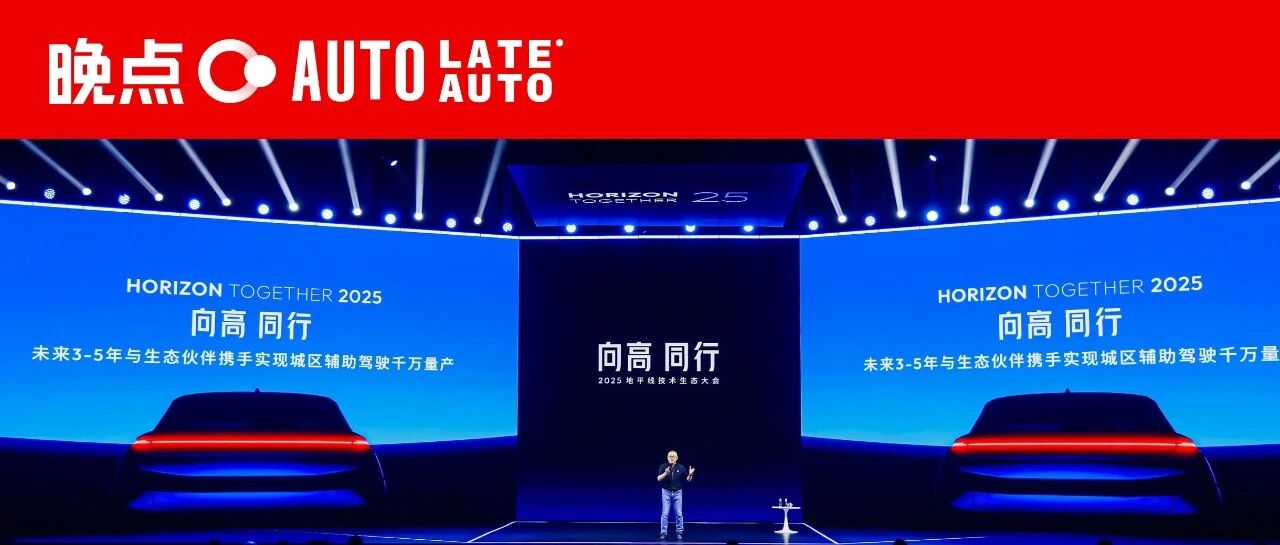
Core Insights - Horizon aims to implement advanced urban driving assistance in vehicles priced below 70,000 yuan, targeting a market where 50% of passenger car sales fall under 130,000 yuan [3][4] - The company plans to collaborate with major manufacturers to achieve a production scale of 10 million units within three to five years, leveraging its self-developed driving algorithms [3][4] - Horizon's ambition is to make advanced driving assistance a standard feature, akin to automatic transmissions, rather than a luxury add-on [4][10] Market Context - The current market for vehicles under 100,000 yuan lacks advanced urban driving features, presenting a significant growth opportunity for Horizon [3][4] - Competitors like BYD, Geely, and Chery have introduced simpler driving assistance features but have not ventured into advanced urban driving solutions [4][9] - The competitive landscape is intensifying, with companies like Momenta and Qualcomm entering the market with rapid advancements in chip development [4][9] Technological Development - Horizon's strategy involves developing its own HSD (High-level Driving) solutions to increase market share and reduce costs through economies of scale [10][11] - The company aims for a tenfold increase in computing power and model capacity with each new generation of chips, with the upcoming Journey 7 series expected to launch alongside Tesla's next-generation AI5 chip [10][11] - The Journey 6 series is crucial for Horizon's strategy, as it is designed to support urban NOA (Navigation on Autopilot) and is expected to meet the rising demand for higher computing power in the industry [11][12]
观察 | 高阶辅助驾驶下沉10万元级车型 技术普惠要让尖端技术成大多数人日常
Zhong Guo Jing Ying Bao· 2025-12-10 15:37
Core Insights - The core message emphasizes the importance of making advanced technology accessible to the general public, moving from innovation to widespread adoption in the smart automotive sector [2][6]. Industry Trends - The automotive industry is transitioning from electric vehicle development to intelligent driving, with a consensus on the importance of smart driving technology [3]. - The introduction of high-level intelligent driving features is expected to create popular models, driving further adoption of smart driving technology [3]. Technological Developments - Horizon's new BPU architecture "Riemann" and the HSD Together collaboration model were showcased, indicating a shift towards scalable and affordable smart driving solutions [2][5]. - The company aims to cover a wide range of vehicle price points with its new chips, from low-power models to high-performance variants, thereby reducing development costs for automakers [3][5]. Strategic Vision - Horizon positions itself as a key player in the smart automotive ecosystem, aiming to create a collaborative environment rather than just being a hardware provider [4]. - The company aspires to replicate the successful "software + chip" ecosystem model seen in the PC era, focusing on mutual empowerment and value creation within the industry [4]. Market Dynamics - By 2025, over 50% of passenger cars in China are expected to be priced below 130,000 yuan, yet advanced driving features are primarily found in vehicles above 200,000 yuan [4]. - The goal is to democratize high-level intelligent driving features, making them available in more affordable vehicles, thus enhancing user experience across different price segments [4][6]. Challenges Ahead - The transition to mass adoption of high-level intelligent driving will require overcoming challenges related to user experience consistency, sustainable business models, and user education regarding technology use [5]. - The success of Horizon's strategy will depend on its ability to deliver reliable and cost-effective solutions that meet user expectations while fostering a healthy ecosystem of partners [5][6].
定位“不造车的特斯拉”,地平线靠生态赢
华尔街见闻· 2025-12-10 10:12
Core Viewpoint - Horizon aims to democratize advanced driving assistance systems (ADAS) by making them accessible in vehicles priced around 100,000 yuan, targeting mass production of millions within 3 to 5 years [1][30]. Group 1: Strategic Positioning - Horizon is positioning itself as an "enabler" rather than a "disruptor," contrasting with Tesla's vertical integration approach by focusing on an open ecosystem for smart driving technology [4][5]. - The company emphasizes a "Wintel-style" soft-hard integration technology path, aiming to provide a foundational computing platform for the industry [4][9]. - Horizon's strategy reflects a shift from "high pursuit" to "high collaboration," promoting shared technological advancements across the industry [6][8]. Group 2: Market Impact and Collaborations - Horizon's chips have surpassed 10 million units shipped, with one in three smart cars in China utilizing their technology [2][26]. - The company has established deep collaborations with major domestic brands, such as Chery, to enhance the adoption of its HSD (Horizon City Driving) solution [12][13]. - Horizon's partnerships with global Tier-1 suppliers like Bosch and Continental validate its technology and business model on an international scale [15][26]. Group 3: Technological Advancements - Horizon's BPU (Brain Processing Unit) architecture has evolved significantly, achieving over 1000 times performance improvement in ten years, surpassing traditional Moore's Law [18]. - The latest Riemann architecture enhances computational capabilities, supporting advanced applications in both smart driving and robotics [18][20]. - The introduction of the fourth-generation AI-driven compiler "Tiangong Kaiwu" improves model performance by 20% and reduces compilation time from hours to minutes [19]. Group 4: Business Model Innovation - Horizon's "HSD Together" model allows partners to access modularized services, significantly reducing development costs and time by up to 90% [24]. - The company aims to create an ecosystem that is "more open than open," facilitating widespread adoption of its technologies across various applications, including robotaxis and consumer robots [24][25]. - Horizon's approach to not manufacturing vehicles but instead providing a robust computing platform is seen as a new industrial relationship model, promoting collaboration over competition [15][26]. Group 5: Future Outlook - Horizon is set to compete directly with Tesla's next-generation AI chip, marking a significant milestone in its technological race [33][34]. - The company is committed to making advanced driving technologies accessible to the mass market, particularly in the 100,000 yuan vehicle segment, which constitutes over 50% of the Chinese passenger car market [30][31]. - Horizon's vision of "high collaboration" aims to democratize smart technology, positioning it as a key player in the global physical intelligence revolution [34][35].
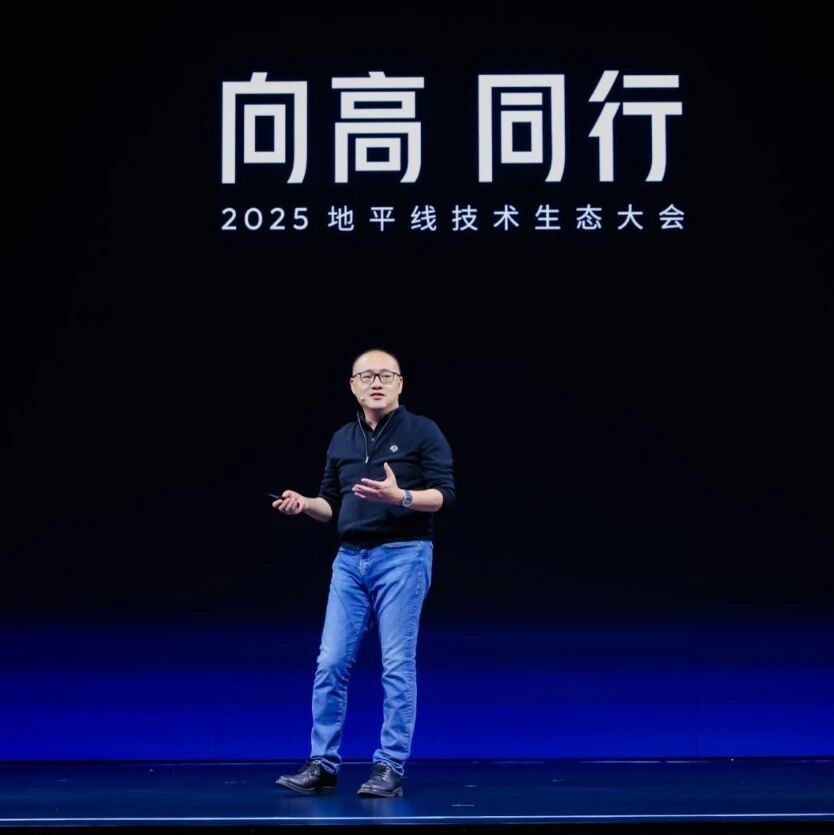
决胜智驾“关键一跃”:行业实践者齐聚地平线技术生态大会,共商普惠之道
机器人圈· 2025-12-10 09:37
Core Viewpoint - The 2025 Horizon Together conference emphasizes the transition of intelligent driving technology from breakthroughs to widespread adoption, with a focus on urban NOA (Navigation on Autopilot) as a critical battleground for commercial success [3][6]. Group 1: Industry Insights - The consensus at the conference is that 2025 marks a pivotal point for intelligent driving, with urban NOA's large-scale adoption being essential for commercial success, hinging on experience, cost, safety, and policy collaboration [3][6]. - The founder and CEO of Horizon, Dr. Yu Kai, highlighted two pillars for breaking through: advancing underlying computing technology and building an open ecosystem with partners to convert high-level driving experiences into scalable user value [3][6]. - The automotive industry is urged to move away from isolated breakthroughs to a collaborative approach that shares value across the entire chain, as stated by Fu Bingfeng, Executive Vice President of the China Association of Automobile Manufacturers [6]. Group 2: Global Collaboration - The intelligent wave is driving a deep restructuring of the global automotive industry, with Chinese technology platforms becoming a core variable in this process [7]. - Thomas Ulbrich, CTO of Volkswagen Group China, emphasized that to lead in the new energy vehicle era, companies must build core capabilities in China, where software is becoming central to automotive business [9]. - The trend of intelligent driving is increasingly defining brand value, with global markets showing growing interest in intelligent cabins and driving assistance features, as noted by Yang Dongsheng, Senior Vice President of BYD [12]. Group 3: Local Development and Collaboration - Local automakers are accelerating the large-scale implementation of top-tier intelligent experiences through deep collaboration [17]. - Su Jun, Vice President of Chery Automobile, discussed the strategic partnership with Horizon, focusing on creating unique designs and brand spirit through advanced technology [19]. - Yang Xinglong from FAW Bestune highlighted the necessity of collaboration with leaders like Horizon to navigate the intelligent transformation, showcasing a clear path of technology co-research and ecosystem building [21]. Group 4: Future Challenges and Opportunities - Jiang Haipeng from Great Wall Motors predicted a technological inflection point around 2028, emphasizing the need for specialized computing architectures to meet future challenges [23]. - Su Linke from Deep Blue Automotive highlighted the rapid success of their L06 model, showcasing the value of collaboration with Horizon in achieving high-quality autonomous driving solutions [26]. - The CEO of CARIZON, Han Hongming, shared insights on how international giants are integrating into China's innovation ecosystem through new collaborative models [28]. Group 5: Key Consensus from the Forum - The forum identified three core consensus points: safety is paramount, user trust is built through human-like interactions, and cost optimization will be driven by hardware restructuring and software paradigm shifts [35][36][37]. - The emphasis on safety as the foundation for user trust was reiterated, with a focus on ensuring system stability in everyday scenarios [35]. - The discussion highlighted that cost reduction is a result of collaborative advancements in hardware and software, with a call for performance iteration and system integration to drive down costs while maintaining high standards [38].
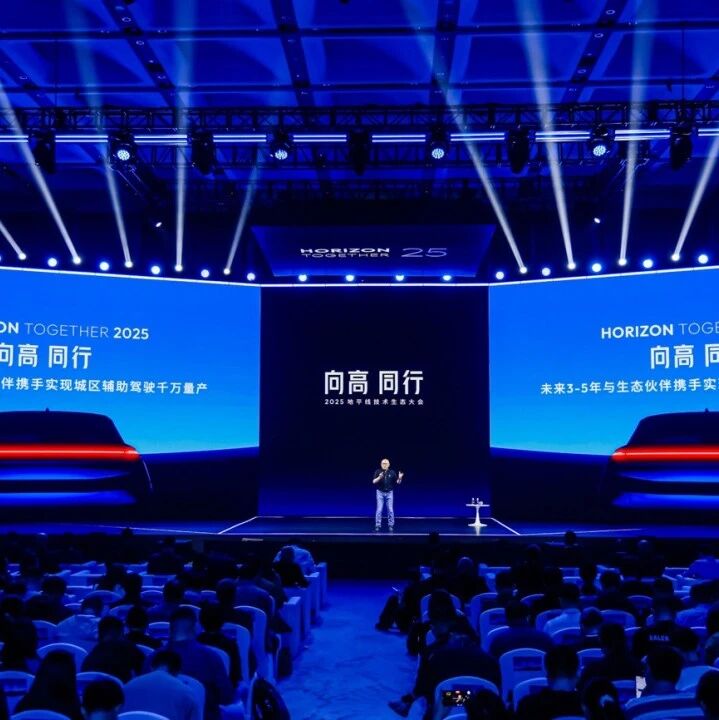
当千亿参数撞上5毫米芯片
Tai Mei Ti A P P· 2025-12-10 03:19
Core Insights - The global tech industry is experiencing a shift from cloud-based AI to edge AI, driven by the limitations of cloud dependency and the need for real-time processing in critical applications [1][4][18] - The current trend emphasizes the development of smaller, more efficient AI models that can operate independently on edge devices, rather than relying on large cloud models [16][18] Group 1: Challenges of Cloud Dependency - Cloud-based AI systems face significant latency issues, which can be detrimental in time-sensitive applications like autonomous driving [2][4] - Privacy concerns arise from the need to transmit sensitive data to cloud servers, making edge computing a more attractive option for users [2][4] Group 2: The Shift to Edge AI - The industry is moving towards a "cloud-edge-end" architecture, where complex tasks are handled by cloud models while real-time tasks are managed by edge devices [7][18] - Edge AI must overcome the "impossible triangle" of high intelligence, low latency, and low power consumption, necessitating innovative solutions [7][8] Group 3: Techniques for Edge AI Implementation - Knowledge distillation is a key technique that allows smaller models to retain the intelligence of larger models by learning essential features and reasoning paths [8][10] - Extreme quantization reduces model size and increases speed by compressing model weights, allowing for efficient processing on edge devices [10][11] - Structural pruning eliminates redundant connections in neural networks, further optimizing performance for edge applications [10][11] Group 4: Hardware Innovations - The "memory wall" issue in traditional architectures leads to inefficiencies, prompting the development of specialized architectures that integrate storage and computation [11][13] - Companies are exploring dedicated chip designs that optimize performance for specific AI tasks, enhancing efficiency in edge computing [13][14] Group 5: Industry Evolution - The focus is shifting from general-purpose AI models to specialized models that excel in specific applications, improving reliability and performance [15][16] - The Chinese AI industry is collectively recognizing the importance of practical applications over sheer model size, leading to a more grounded approach to AI development [16][18]

地平线苏箐:曾一度看不到自动驾驶太多希望...
自动驾驶之心· 2025-12-10 00:04
以下文章来源于RoboX ,作者RoboX RoboX . 从AI汽车到机器人,我们关注最具潜力的超级智能体! 作者 | RoboX 来源 | RoboX 原文链接: 地平线苏箐演讲全文提炼:自动驾驶的曙光、痛苦与轮回 点击下方 卡片 ,关注" 自动驾驶之心 "公众号 戳我-> 领取 自动驾驶近30个 方向 学习 路线 >>自动驾驶前沿信息获取 → 自动驾驶之心知识星球 本文只做学术分享,如有侵权,联系删文 演讲者:苏箐 | 地平线副总裁&首席架构师 演讲时间 :2025.12.9 演讲场合 :2025地平线技术生态大会 全文提炼如下: 今年,我们确实能看到自动驾驶的技术路径是比较清晰的,但也会看到有更难的问题在前面。你知道这些问题能解掉,但应该怎么解今天还不知道。 绝大多数行业外的人,可能并不理解自动驾驶团队面临的困难和压力。这种智力和体力的双重压榨极度痛苦,因为有SOP的时间压在那儿,然后又有方法论的变化, 还有各种corner case需要去解。 在稠密的世界里连续运行的时候,所有的case都需要解决,这就是这个行业非常痛苦的地方。 曙光:重大分水岭的出现 我刚准备加入地平线的时候,和余凯博士聊过几次, ...
