中国移动

Search documents
广州移动与深度机智、钛虎机器人签署全面合作协议 共建具身智能协同创新生态
Guang Zhou Ri Bao· 2026-02-12 03:31
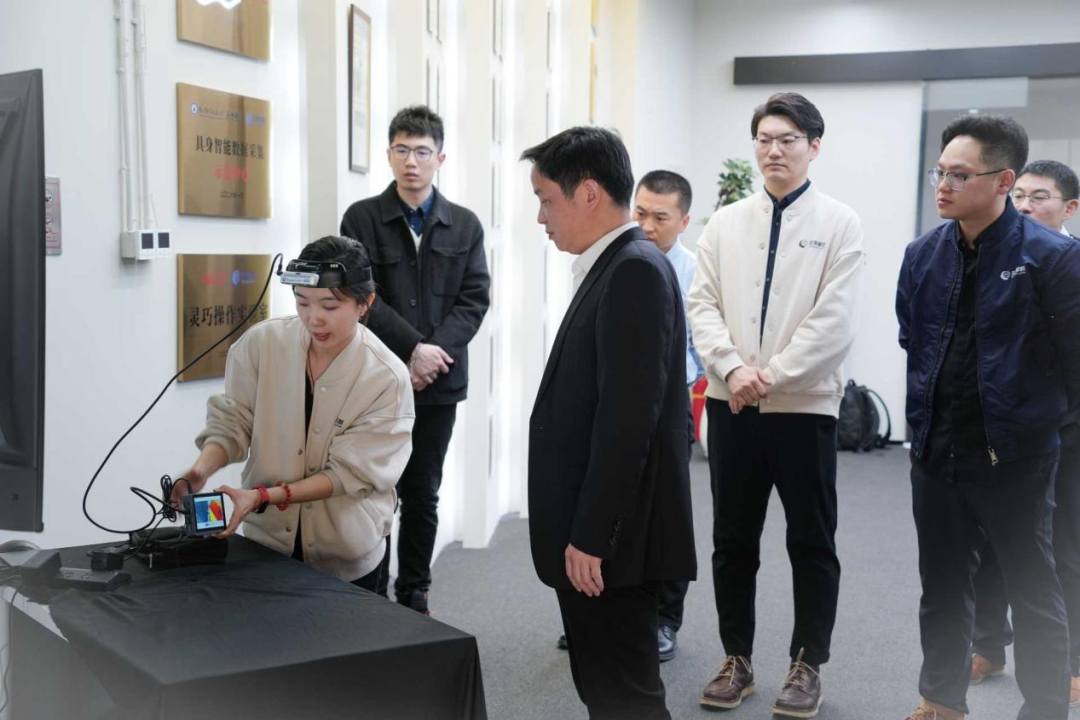
Core Viewpoint - The collaboration between China Mobile Guangdong, Deep Intelligence, and Titanium Robot aims to accelerate the application of embodied intelligence technology across various sectors, establishing a benchmark for new productivity in the industry [1][3]. Group 1: Partnership and Objectives - The signing ceremony for the comprehensive cooperation agreement took place at Beijing Zhongguancun College, attended by key representatives from all three companies [1]. - This partnership is a significant manifestation of China Mobile's "industry-investment synergy" strategy, focusing on integrating robotic capabilities with communication infrastructure [1][3]. - The three parties will jointly establish an Embodied Intelligence Empowerment Center to create a collaborative system that integrates robotic bodies, intelligence models, 5G networks, and industry applications [3][5]. Group 2: Technical Collaboration - The collaboration will focus on joint research and development in key areas such as embodied intelligent robot platforms, high-dynamic physical interaction, multi-modal perception decision-making, and remote collaborative control [5]. - The integration of 5G low-latency communication, network slicing, and edge computing will be explored to develop solutions for typical scenarios in research, industrial manufacturing, and energy park operations [5]. - The partnership aims to foster an open and collaborative industrial innovation ecosystem, injecting new momentum into the integration of artificial intelligence and the real economy [5].



中国移动:立体化建设推动廉洁文化深入人心
Zhong Yang Ji Wei Guo Jia Jian Wei Wang Zhan· 2026-02-12 03:16
Core Viewpoint - China Mobile emphasizes the importance of strengthening integrity culture as a foundational project to promote a corruption-free environment, aiming to create a "Clean Mobile" brand through systematic education and innovative activities [1][2][3] Group 1: Education and Awareness - The company implements a comprehensive education model that includes various learning methods such as "guided learning" by the party committee and "in-depth learning" by party members to build a strong foundation against corruption [1] - Annual themed anti-corruption education activities have been conducted for 14 consecutive years, enhancing the integrity awareness of all employees through systematic and continuous education [2] Group 2: Cultural Integration and Resources - The company aims to create local integrity culture brands by integrating regional cultural heritage with red education resources, establishing physical venues for integrity culture education [3] - An online platform called "Red Cloud Collection" is being developed to consolidate resources from national red culture bases, providing quality digital content related to integrity themes [3] Group 3: Innovation in Education - The company promotes advanced models of integrity culture by leveraging its strengths in technology, such as 5G and big data, to enhance the visibility and impact of integrity culture [3] - Various communication channels, including WeChat and online university platforms, are utilized to disseminate integrity culture effectively to grassroots levels [3]
咪咕悦看春节送福利:30天免费会员+免费流量,打造文剧融合新体验
Huan Qiu Wang Zi Xun· 2026-02-12 02:44
Core Viewpoint - The article highlights the launch of a new promotional campaign by Migu Yuedu (formerly Migu Reading) to enhance user engagement during the Spring Festival, offering a 30-day free membership experience to access a wide range of digital content [1][11]. Group 1: Strategic Upgrade - Migu Yuedu has undergone a strategic upgrade, officially rebranding from Migu Reading to Migu Yuedu on January 29, 2026, expanding its content offerings to include both literature and short dramas [3]. - The platform aims to create a new integrated experience by combining reading and viewing, focusing on user satisfaction and immersive content consumption [3][13]. Group 2: User Experience Enhancements - The upgraded platform provides users with 30GB of dedicated data each month, addressing concerns about data usage while streaming content [6]. - Migu Yuedu features a dual-channel system, "Book City" and "Theater," which includes over 16,000 micro-short dramas and a vast collection of licensed literature, covering popular genres [6]. - The platform employs intelligent recommendation algorithms to seamlessly integrate literature and short drama content, enhancing user experience [6][8]. Group 3: Target Audience and Inclusivity - Migu Yuedu has implemented features catering to various age groups, including an "Elderly Mode" with larger fonts and simplified navigation for older users, as well as special content for students [10]. - The platform's initiatives reflect a commitment to bridging the digital divide and addressing the cultural needs of diverse user demographics [10][14]. Group 4: Cultural Engagement and Long-term Strategy - The promotional activities align with national reading initiatives, aiming to cultivate digital content consumption habits among the public [11][14]. - Migu Yuedu seeks to establish a complete ecosystem that connects literature and visual content, reinforcing its competitive edge in the micro-short drama and digital reading sectors [13]. - The company is dedicated to contributing to cultural dissemination and industry upgrades, positioning itself as a leader in the digital cultural landscape [13][14].
【广发宏观文永恒】技术浪潮驱动,产业范式重构:中长期宏观环境展望
郭磊宏观茶座· 2026-02-12 02:09
Core Viewpoint - Each technological revolution initially enhances production efficiency, subsequently leading to changes in economic structure, industry patterns, and asset allocation models. The driving force behind technology's evolution from inception to widespread adoption is not merely a breakthrough in a single technology, but rather the penetration, diffusion, and deep integration of new technologies within the economic system [1][13]. Group 1: Technological Revolution Phases - Since the Industrial Revolution, global economies experience a "great wave" driven by significant technological clusters approximately every 50-60 years, establishing a new "technology-economy paradigm" that optimizes production, organization, and management models [2][17]. - Each technological revolution can be divided into two main phases: the Installation Period and the Deployment Period. The Installation Period is characterized by infrastructure reconstruction, trial-and-error business models, and financial capital accumulation, further divided into the outbreak and frenzy stages. The Deployment Period features comprehensive technology dissemination and the establishment of economic paradigms, further divided into the synergy and maturity stages [2][17]. Group 2: Capital Forms and Their Roles - The "great wave" theory distinguishes between two forms of capital: financial capital and production capital. Financial capital is adept at trend identification, flexibility, speculation, and short-term profit orientation, while production capital focuses on industry realization, stability, path dependence, and long-term investment orientation. During the Installation Period of technological revolutions, financial capital typically takes the lead, while production capital assumes a dominant role during the Deployment Period [3][20]. Group 3: Economic Impacts of Technological Revolutions - In the Installation Period of a technological revolution, the overall economy may face pressure, and the differentiation between new and old industries may widen. New technologies are still in the nurturing phase and may not broadly stimulate related industries, employment, or productivity [5][29]. - During the Deployment Period, overall economic pressure is expected to ease, and the differentiation between new and old industries may narrow. New technologies become widely applied, leading to new products, business forms, and industries, which can create new employment forms [5][30]. Group 4: Global Dynamics and Catch-Up Opportunities - The "great wave" theory indicates that the Installation Period of each technological revolution provides critical catch-up windows for latecomer countries. Historical examples include Germany and the U.S. surpassing the U.K. before World War II, and the post-war rise of Japan and other economies [7][40]. - Latecomer countries can leverage their "latecomer advantage" by utilizing labor cost and technology transfer advantages to achieve leapfrog development, mastering key core technologies that drive the development of leading industries [7][40]. Group 5: Future Implications and Trends - The emergence of AI as the core technology of the sixth technological revolution is expected to enhance productivity across all sectors, breaking traditional growth bottlenecks. The scenario of AI's application is anticipated to evolve significantly, particularly in countries with favorable conditions for technology integration [10][12]. - The theory also suggests that macroeconomic policies should promote overall rebalancing, including actively expanding total demand and ensuring employment stability during the technological revolution's Installation Period [12][13].

中央企业“AI+”专项行动深化部署会召开找准定位发挥优势 为推动人工智能产业高质量发展贡献力量
Xin Lang Cai Jing· 2026-02-12 02:01
Core Insights - The State-owned Assets Supervision and Administration Commission (SASAC) emphasizes the importance of integrating artificial intelligence (AI) into central enterprises to enhance their strategic role and support national development goals [1][2]. Group 1: AI Development Initiatives - The SASAC has been actively promoting the "AI+" initiative among central enterprises, focusing on aligning with AI technology trends to achieve high-value application scenarios and enhance data sharing [2]. - Key enterprises such as China Mobile and China Telecom participated in discussions on AI technology frontiers and its integration with the real economy, providing insights for technological innovation and ecosystem development [1]. Group 2: Responsibilities and Strategic Goals - Central enterprises are urged to enhance their sense of responsibility and urgency in developing the AI industry, aligning with global technological and industrial changes [3]. - There is a strong emphasis on independent innovation, particularly in overcoming key core technologies and advancing large model technologies to transition from prototypes to market-ready products [3]. - The need for effective investment in computing power and the collaborative development of "computing power + electricity" is highlighted to strengthen the foundational capabilities of the AI industry [3].
智通港股通资金流向统计(T+2)|2月12日
智通财经网· 2026-02-11 23:32
Core Insights - Tencent Holdings (00700), Southern Hang Seng Technology (03033), and Xiaomi Group-W (01810) ranked as the top three in net inflow of southbound funds, with net inflows of 1.792 billion, 0.571 billion, and 0.412 billion respectively [1] - The top three in net outflow of southbound funds were Yingfu Fund (02800), Hang Seng China Enterprises (02828), and Kuaishou-W (01024), with net outflows of -4.553 billion, -1.380 billion, and -0.576 billion respectively [1] - In terms of net inflow ratio, Huaxia Hang Seng Technology (03088), Southern East Selection (03441), and Anhui Wantuo Expressway (00995) led the market with ratios of 90.53%, 74.02%, and 68.27% respectively [1] - The top three in net outflow ratio were Southern Hong Kong Stock Connect (03432), Fuyao Glass (06865), and Baize Medical (02609) with ratios of -100.00%, -59.27%, and -53.09% respectively [1] Net Inflow Rankings - Tencent Holdings (00700) had a net inflow of 1.792 billion, representing a 12.21% increase, closing at 560.000 (+2.28%) [2] - Southern Hang Seng Technology (03033) saw a net inflow of 0.571 billion, with a 6.77% increase, closing at 5.300 (+1.34%) [2] - Xiaomi Group-W (01810) recorded a net inflow of 0.412 billion, with a 9.45% increase, closing at 35.200 (+0.06%) [2] Net Outflow Rankings - Yingfu Fund (02800) experienced the highest net outflow of -4.553 billion, with a -22.13% decrease, closing at 27.220 (+1.72%) [2] - Hang Seng China Enterprises (02828) had a net outflow of -1.380 billion, representing an -11.37% decrease, closing at 93.940 (+1.56%) [2] - Kuaishou-W (01024) faced a net outflow of -0.576 billion, with a -10.25% decrease, closing at 69.300 (-2.74%) [2] Net Inflow Ratio Rankings - Huaxia Hang Seng Technology (03088) led with a net inflow ratio of 90.53%, with a net inflow of 47.6883 million, closing at 6.875 (+1.33%) [3] - Southern East Selection (03441) followed with a net inflow ratio of 74.02%, with a net inflow of 18.0421 million, closing at 11.600 (+1.13%) [3] - Anhui Wantuo Expressway (00995) had a net inflow ratio of 68.27%, with a net inflow of 5.6553 million, closing at 13.340 (-0.07%) [3]



中国移动评级下调,股价微涨资金流出
Jing Ji Guan Cha Wang· 2026-02-11 22:55
Core Viewpoint - China Mobile (600941) has shown steady growth in recent performance but faces competitive pressure from internet giants in the AI and cloud business sectors, leading to a downgrade in institutional ratings and a slight increase in stock price with net capital outflow [1]. Stock Performance - Institutional Rating Adjustment: UBS has downgraded China Mobile's rating from "Buy" to "Neutral," lowering the target price from HKD 100 to HKD 81, citing stable dividends but a lack of valuation catalysts [2]. - Stock Price and Capital Flow: As of February 5, 2026, China Mobile's stock price increased by 0.45% with a trading volume of CNY 1.04 billion, but there was a net outflow of CNY 106 million in the last three days, indicating short-term market divergence [2]. Operational Performance - Q3 Performance: For the first three quarters of 2025, the company reported revenue of CNY 794.7 billion (up 0.4% year-on-year) and a net profit of CNY 115.4 billion (up 4.0% year-on-year), with 5G customer numbers reaching 622 million. Capital expenditure is controlled within the initial guidance of CNY 151.2 billion, with expectations of a steady decline over the next 2-3 years [3]. - Dividend Policy: UBS forecasts a dividend yield of approximately 7-8% for 2026, with a potential increase in the payout ratio, although the annual compound growth rate of earnings is low (around 2%), suggesting that the dividend outlook is already reflected in the stock price [3]. Business Development - AI and Cloud Business Layout: Revenue from mobile cloud services has shown good growth, with rapid increases in direct income from AI. The company emphasizes that cloud services are the foundational computing power for the AI era, driving the upgrade from "cloud to intelligence" [4]. Industry Policy and Environment - Communication Industry Trends: Policies supporting low-altitude economy and computing infrastructure (such as the guidelines released by ten departments on the construction of a low-altitude economy standard system) may indirectly support the telecommunications sector, although attention must be paid to the progress of technology implementation [5].
中国联通人事调整:董昕接棒董事长 王利民转任中国电科
Nan Fang Du Shi Bao· 2026-02-11 14:39
Group 1 - The core point of the announcement is the election of Dong Xin as the Chairman of China Unicom's eighth board of directors, with a term consistent with the current board [1] - Dong Xin holds a Master's degree in Accounting Management and a Doctorate in Business Administration, and has extensive management and telecommunications industry experience [3] - Dong Xin has held various significant positions within China Mobile, including Vice General Manager and Chief Accountant, and currently serves as the Chairman and Party Secretary of China Unicom [3] Group 2 - The announcement also notes the removal of former Vice General Manager Wang Limin's information from the China Unicom official website, indicating his new role as Deputy Secretary of the Party Leadership Group at China Electronics Technology Group [3][4] - Wang Limin has a background in management and has held various leadership roles within China Unicom before transitioning to his current position [4]

湾财晚报|“春节档”茅台领涨;机器人租赁火了 订单排到3月;何飚履新广电总局副局长
Nan Fang Du Shi Bao· 2026-02-11 14:31
Group 1 - Hangzhou United Rural Commercial Bank received a fine of 11.1 million yuan due to inadequate loan management and inaccurate data reporting, marking the first major penalty in the banking sector for the year [2] - The bank is currently in a critical period for its IPO guidance and has stated that it has largely rectified the issues and is improving its long-term management mechanisms [2] - The bank's asset scale is nearly 600 billion yuan, and it is under scrutiny regarding its compliance and governance structure following the penalty [2] Group 2 - Guangdong's insurance industry achieved a premium income of 570 billion yuan in 2025, reflecting a year-on-year growth of 6.68%, with total claims paid out reaching 218.4 billion yuan, up 8.82% [3] - The insurance sector is playing a significant role as a financial stabilizer for the economy, contributing to the economic strength of Guangdong province [3] Group 3 - Coca-Cola reported Q4 revenue of $11.822 billion, a 2% increase, with net profit at $2.316 billion, up 5%, although below market expectations [4] - For the full year 2025, Coca-Cola's revenue reached $47.941 billion, also a 2% increase, while net profit surged 23% to $13.137 billion [4] - The growth in Q4 was driven by a 4% increase in concentrate sales and a 1% rise in price/product mix [4] Group 4 - NetEase reported Q4 revenue of 27.5 billion yuan, a slight increase of 3%, with total annual revenue reaching 112.6 billion yuan, up 7% year-on-year [10] - The company's net profit attributable to shareholders was 33.8 billion yuan, reflecting a 13.8% increase, with significant R&D investment of 17.7 billion yuan [10] - AI has become a core capability for NetEase, significantly enhancing production efficiency and player interaction experiences [10] Group 5 - The robot rental market is experiencing a peak in business as the Chinese New Year approaches, with orders extending into March due to high demand [12] - Various robot rental companies are preparing for major events like the Spring Festival Gala, showcasing different technological innovations [12]

【热点赛道速递】AIDC估值逻辑为啥变了?
和讯· 2026-02-11 10:51
Core Viewpoint - The data center industry is undergoing a profound restructuring driven by advancements in artificial intelligence technology and the ongoing national computing power strategy, shifting from a "real estate logic" centered on cabinet rental to a "computing power logic" focused on computing power delivery [1][4][5]. Group 1: Industry Reconstruction - The underlying logic of the industry is fundamentally changing, with data centers evolving from traditional Internet Data Centers (IDCs) to AI Data Centers (AIDCs), which are fundamentally different entities [1][18]. - AIDCs focus on high-density GPU computing clusters rather than cabinet quantity and rack rate, necessitating systemic upgrades in power supply, cooling technology, and network architecture [1][3]. - The demand for computing power is becoming the core engine driving industry growth, with China's intelligent computing power expected to reach approximately 10,373 EFLOPS by 2025, growing at a rate significantly higher than traditional cloud computing [1][22][26]. Group 2: Key Factors - Electricity is defined as the "first principle" of data centers, with grid access capacity becoming the decisive factor for new projects due to long expansion cycles and complex approvals [2][33]. - Liquid cooling technology has transitioned from an optional choice to a necessity, with its penetration rate in new AIDC projects expected to increase significantly, while older air-cooled data centers face accelerated asset depreciation [2][37]. - The demand for low-latency networks driven by AI inference is reshaping the value of data center locations, with high-grade data centers in major cities like Beijing, Shanghai, and Shenzhen maintaining premium pricing [2][43]. Group 3: Industry Chain Analysis - The AI wave is driving a collaborative evolution across the upstream hardware, midstream operations, and downstream applications, with high technical barriers and significant demand elasticity in the upstream segment [3][48]. - The future winners in the industry will be "computing power service providers" that efficiently convert underlying computing power into customer business value, shifting profit functions from "cabinet quantity × rental rate" to "deliverable computing power × energy efficiency × service added value" [3][74]. - Key considerations for evaluating data center projects and companies include real electricity access capability, liquid cooling deployment conditions, service focus on training or inference scenarios, and whether the business model is cabinet rental or computing power sales [3][81]. Group 4: Market Scale and Growth - The transition from IDC to AIDC is reshaping the growth curve of computing power demand, with AI computing power expected to grow at an annual rate of 50% [16][20]. - By 2028, China's intelligent computing power is projected to achieve approximately 168% growth from 2025 levels, indicating new development opportunities for data centers [22][26]. - The demand structure is shifting from primarily training to real-time inference scenarios, which is reshaping the spatial distribution and profitability models of data centers [1][26].