西部超导

Search documents
中方收紧稀土出口审查,中稀有色涨停!有色ETF华宝(159876)盘中拉升1.6%续创新高!获资金净申购5640万份
Xin Lang Cai Jing· 2026-01-07 05:41
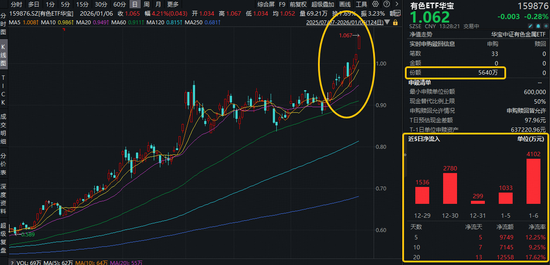
今日(1月7日)揽尽有色金属行业龙头的有色ETF华宝(159876)早盘活跃,场内价格盘中涨超 1.6%,续刷上市新高,午后随市盘整,当前在水面附近震荡,现跌0.28%,实时成交额超6900万元,半 日成交已逼近昨日全天成交额,有望继续放量突破上市高点! ETF放量突破上市高点,或为资金买点信号!截至发稿,有色ETF华宝(159876)获资金实时净申购 5640万份,此前5日连续获资金净流入,合计金额9749万元。伴随火热的行情,资金火速进场布局! | 序号 | 名称 | 涨跌幅 ▼ | 两日图 | 申万一级行业 | 甲力二级行业 | 申万三级行业 | 总市值 | 成交额 | | --- | --- | --- | --- | --- | --- | --- | --- | --- | | 1 | 中穆有色 | 10.00% | ANTALLAND | 有色合腰 | 小金属 | 楊士 | 215亿 | 14.67亿 | | 2 | 中国图土 | 6.01% | ไ | 有色含風 | 小全属 | 梅士 | 5501Z | 37.44Z | | 3 | 兴财银储 | 5.26% | The first of th ...


招商证券:航空发动机与燃机双轮驱动 高温合金步入高景气成长赛道
Zhi Tong Cai Jing· 2026-01-07 03:09
招商证券发布研报称,高温合金作为先进金属材料体系的"皇冠明珠",是航空发动机、燃气轮机及核电 装备等关键领域的核心承力材料,其性能直接决定高端装备的推力、效率与寿命。近年来,受"两机专 项"、国产大飞机C919批产、燃气轮机国产化突破及"双碳"战略驱动,我国高温合金产业链进入加速阶 段。伴随航空发动机换代列装、燃机与核电项目密集投产,行业景气度将持续上行。建议聚焦航空发动 机及燃机核心供应链,维持行业投资评级"推荐"。 招商证券主要观点如下: 风险提示:技术验证进度不及预期、主机厂认证周期延长、原料价格波动、军机与燃机项目节奏调整、 资金与政策支持不确定等 近年行业需求呈爆发式增长,2017-2023年产量从1.9万吨增至4.9万吨(CAGR17.1%),需求量从2.1万吨 增至5.2万吨(CAGR16.8%),供需缺口逐步收窄。2024年产量预计达5.7万吨(同比+16.3%),航空航天 (55%)和电力(20%)为核心需求领域。长期看,航空发动机换代列装、商用飞机国产化、燃气轮机突破等 因素将推动2025-2030年行业年均需求超5.65万吨,其中燃气轮机、航空、汽车为主要增长点。 供给侧:产能扩张与国产 ...

超导指数盘中上涨2%,成分股普涨
Mei Ri Jing Ji Xin Wen· 2026-01-07 02:16
Core Viewpoint - The superconducting index experienced a 2% increase, indicating a positive trend in the sector with all constituent stocks showing gains [1] Group 1: Stock Performance - Baoshen Co. saw an increase of 8.71% [1] - Western Superconducting Technologies rose by 5.59% [1] - Baili Electric, Tebian Electric, and Jinbei Electric reported increases of 4.32%, 4.04%, and 2.77% respectively [1]


卫星产业回调,资金逆势加仓!中金首席刘中玉:卫星制造与发射领域迎来业绩兑现期
Jin Rong Jie· 2026-01-07 02:01
1月7日,卫星产业ETF(159218)迎来回调,开盘跌3.68%,成份股涨跌互现,中科星图、中国卫星、航天环宇跌超6%,北方导航涨超6%,北斗星通、海 格通信、航天电子、西部超导跟涨。资金逆势加仓趋势明显,根据Wind level2实时行情预估,卫星产业ETF(159218)净流入超1亿。 2025年是卫星产业引发关注的元年,资金关注度显著提升,卫星产业ETF(159218)近五日揽金近8亿,近十日份额增幅100%。卫星产业在政策突破、技术 验证与资本赋能的共同驱动下,正在实现从技术探索阶段向加速发展阶段的跃迁。 卫星产业持续走高,其上涨是否透支了未来涨幅?中金公司军工机械首席刘中玉指出,板块进入加速成长期,未来业绩兑现有望消化板块高估值。建议把握 波动节奏,关注回调机会。 以下观点整理自1月6日中金公司军工机械首席刘中玉路演《卫星板块热度走高,2026年机会怎么看》。 【路演核心观点】 近期卫星板块领涨市场,主要来源于政策、产业和资本三个维度共同催化。 产业处加速成长初期,不宜用静态估值,需动态追踪产业变化,未来随业绩兑现将逐步消化高估值。 制造与发射能力正迈向规模化,有望支撑行业从"资源争夺"向"全球商 ...
商业航天“星火”加速燎原 产业链公司“透底”业务进展及技术突破
Shang Hai Zheng Quan Bao· 2026-01-06 17:56
Core Insights - The commercial aerospace sector in the A-share market is rapidly expanding, with several companies reporting progress in product delivery and profitability in satellite manufacturing and rocket components [1][2] - Companies are actively positioning themselves through technological advancements and strategic partnerships to capitalize on the growth opportunities in the commercial aerospace industry [1] Group 1: Order Delivery and Revenue Growth - Companies are beginning to achieve stable small-batch deliveries in their commercial aerospace businesses, with projections for significant revenue growth in the coming years [1] - Chaojie Co. expects its commercial aerospace-related revenue to grow rapidly by 2026, driven by the completion of key rocket models and increased market demand [1] - The manufacturing of rocket structural components is a critical segment of the commercial aerospace supply chain, with Chaojie Co. set to complete its riveting production line by mid-2024, capable of producing 10 rockets annually [1] Group 2: Product Development and Market Positioning - Jiuzhiyang has successfully sold products such as fiber amplifiers and tracking cameras for commercial aerospace applications, focusing on economic and reliable solutions [2] - Longsheng Technology's subsidiary has developed several core precision components for commercial aerospace, including satellite solar wing hinges and attitude control mechanisms [2] - Blues Technology has leveraged its expertise in consumer electronics to supply satellite ground receiver components and has developed ultra-thin photovoltaic glass modules for space applications [2] Group 3: Technological Ecosystem and Collaboration - The initial increase in orders signals robust growth in the commercial aerospace sector, supported by ongoing technological breakthroughs and collaborative ecosystem development [3] - ZTE is working on a star-ground integrated communication network for 6G, collaborating with domestic operators and satellite companies to validate NTN technology [3] - Companies like Qiji Precision and Chengdu Huami are focusing on developing satellite communication systems and high-performance chips to support commercial aerospace needs [4][5]




高温合金行业深度:航空发动机换代与燃气轮机国产化下的确定性增长(附53页PPT)
材料汇· 2026-01-06 16:00
Group 1 - High-temperature alloys are critical materials in aerospace engines, gas turbines, and nuclear power equipment, directly influencing thrust, efficiency, and lifespan of high-end equipment [2][3] - The high-temperature alloy industry in China is accelerating due to the "Two Aircraft Special Project," the mass production of the C919 aircraft, breakthroughs in gas turbine localization, and the "dual carbon" strategy [2][4] - Nickel-based alloys dominate the market, accounting for 80% of demand, with deformation alloys making up 75% of production by 2024 [3][21] Group 2 - The production of high-temperature alloys in China increased from 19,000 tons in 2017 to 49,000 tons in 2023, with a CAGR of 17.1%, while demand rose from 21,000 tons to 52,000 tons, with a CAGR of 16.8% [4][34] - By 2024, production is expected to reach 57,000 tons, with aerospace (55%) and power generation (20%) as the main demand sectors [4][34] - The annual average demand for high-temperature alloys is projected to exceed 56,500 tons from 2025 to 2030, driven by factors such as the replacement of aircraft engines and the localization of commercial aircraft [4][39] Group 3 - The global high-temperature alloy market is expected to exceed $30 billion by 2025, with China's market projected to reach 120 billion yuan, growing at over 15% annually [5] - Domestic production capacity is expected to exceed 60,000 tons by 2025, but there remains a 30% supply gap for high-end products [5][6] - The domestic localization rate is anticipated to rise from less than 40% in 2020 to about 65% by 2025, supported by policies under the 14th Five-Year Plan [5][6] Group 4 - The industry is characterized by a "technology-driven, strong players" dynamic, with an expected annual compound growth rate of 15% from 2025 to 2027 [6] - Leading companies are achieving breakthroughs in niche markets, with notable revenue growth reported by companies such as Western Superconducting and Steel Research [6][8] - The competitive landscape shows a high concentration in upstream and a diverse midstream, with major players in the upstream segment like Fushun Special Steel [5][6] Group 5 - High-temperature alloys are primarily used in aerospace, accounting for over 50% of total demand, and are critical for the performance of advanced aircraft engines [26][34] - The demand for high-temperature alloys in gas turbines is expected to exceed 151,000 tons from 2025 to 2030, driven by domestic and international power generation needs [40][44] - The military sector is also a significant driver, with domestic naval gas turbines reaching international standards, enhancing the capabilities of the People's Navy [62]

商业航天深度报告:技术收敛引爆奇点,蓝海市场破晓已至
Guoxin Securities· 2026-01-06 13:51
Investment Rating - The report maintains an "Outperform" rating for the commercial aerospace industry [1] Core Insights - The commercial aerospace sector in China is transitioning from a "state-led" model to a "private-led, cost-prioritized" model, marking a significant shift in business dynamics [3] - The report identifies 2024-2025 as a pivotal period for the explosion of commercial aerospace in China, driven by the launch of national and commercial satellite constellations [3] - Four key technological convergences are driving a "cost revolution" in the industry, significantly reducing launch costs [4] Summary by Sections 1. Industry Overview - The commercial aerospace industry is experiencing a policy-driven boom, with technological convergence leading to explosive demand across the supply chain [6][8] 2. Core Drivers - The report highlights four technological advancements: 1. Reusable launch vehicles reducing costs from $50,000/kg to $200/kg [4] 2. Liquid oxygen-methane as the next-generation fuel, enhancing reusability [4] 3. Industrialized manufacturing through 3D printing, reducing production time and costs [4] 4. Commercial off-the-shelf (COTS) components replacing expensive aerospace-grade chips, significantly lowering satellite costs [4] 3. Market Demand - The report anticipates a significant increase in launch demand, estimating a need for approximately 8,750 tons of launch capacity in China from 2026 to 2030, translating to a market potential of several hundred billion yuan [4] 4. Investment Opportunities - The report suggests focusing on high-barrier, high-elasticity segments of the industry, including: 1. Engine manufacturing and materials like high-temperature alloys and titanium [4] 2. Satellite manufacturing, particularly in advanced components like phased array T/R modules [4] 3. Downstream applications, including high-performance antennas and baseband chips for consumer electronics [4] 5. Competitive Landscape - The report notes a dual-polarity competitive landscape between China and the U.S., with the industry moving towards maturity [6]
商业航天深度报告:技术收敛引爆“奇点”,蓝海市场破晓已至
Guoxin Securities· 2026-01-06 12:20
Investment Rating - The report maintains an "Outperform" rating for the commercial aerospace industry [1]. Core Insights - The commercial aerospace sector is transitioning from a "state-led" Old Space model to a "private-led, cost-first" New Space model, driven by a shift from cost-plus to fixed-price contracts, which compels companies to innovate and reduce costs [3][22]. - The report identifies 2024-2025 as a critical inflection point for China's commercial aerospace market, with significant developments such as the launch of national and commercial satellite constellations [3][36]. - Four key technological convergences are driving a "cost revolution" in the industry, including advancements in launch vehicle reusability, next-generation fuels, industrialized manufacturing processes, and the use of commercial off-the-shelf (COTS) components [4][30]. Summary by Sections 1. Industry Overview - The commercial aerospace industry is experiencing explosive growth due to supportive policies and technological convergence [8]. - The shift from traditional aerospace to commercial aerospace is marked by a fundamental restructuring of business models and production relationships [10][17]. 2. Policy and Market Dynamics - The report highlights a favorable policy environment for commercial aerospace in China, with significant government support and a projected demand for approximately 8,750 tons of launch capacity from 2026 to 2030, translating to a market worth thousands of billions [4][28]. - The report emphasizes the importance of low-cost launch capabilities and the maturity of reusable rockets as critical factors for market growth [4][36]. 3. Investment Opportunities - The report suggests focusing on high-barrier, high-elasticity segments of the industry, such as rocket engines, satellite manufacturing, and downstream applications [4][36]. - Key areas of investment include engine materials, satellite payloads, and consumer-grade components that are expected to see significant demand growth [4][36]. 4. Industry Trends and Competitive Landscape - The competitive landscape is characterized by a bipolar structure between the US and China, with the industry moving towards maturity [6]. - The report notes that the US commercial space sector, led by companies like SpaceX, is dominating the market, while China's commercial space sector is rapidly evolving [35][38]. 5. Technological Innovations - The report identifies significant technological breakthroughs in reusability, manufacturing processes, and the use of advanced materials as key drivers of cost reduction in the industry [30][32]. - The transition to liquid oxygen-methane as a preferred fuel and the adoption of 3D printing technologies are highlighted as pivotal advancements [30][32].
民航将成为我国航空制造业重要增量
HTSC· 2026-01-06 08:58
Investment Rating - The report maintains a positive outlook on the civil aviation manufacturing industry, indicating it will become a significant growth area for China's aerospace manufacturing sector [1][5]. Core Insights - The civil aviation manufacturing sector is expected to mirror the success of the U.S. aerospace industry, where commercial aircraft manufacturing is a major source of revenue and profit for companies like Boeing and GE Aviation [2][55]. - The C919 aircraft is set to lead the development of China's civil aviation manufacturing industry, with a production capacity expected to reach 200 units per year by 2029 [3][56]. - The aftermarket for civil aviation in China is projected to be vast, with the country potentially becoming the largest single aviation market globally by 2044 [4][5]. Summary by Sections Civil Aviation Manufacturing Growth - Civil aviation manufacturing in China is anticipated to grow significantly, driven by the C919's commercial operations and the development of a domestic supply chain [1][5]. - The report highlights that the domestic aviation manufacturing industry is beginning to catch up, with a focus on increasing the localization rate of components [3][4]. C919 Aircraft Development - The C919 aircraft, with over 1,000 orders, is expected to enhance production and delivery capabilities, marking a significant milestone in China's aviation history [3][56]. - The aircraft's production model involves a high degree of localization, with over 50% of its components sourced domestically [3][56]. Aftermarket Opportunities - The civil aviation aftermarket in China is projected to expand, with an increase in the number of approved civil aviation products and components [4][5]. - The report notes that the penetration of domestic materials is expected to rise, helping airlines reduce procurement costs and improve supply chain reliability [4][5]. Investment Opportunities - The report suggests focusing on investment opportunities within the civil aviation manufacturing supply chain, including companies involved in aircraft body manufacturing, materials, engines, and onboard equipment [5]. - Key companies mentioned include AVIC Xi'an Aircraft Industry, AVIC Harbin Aircraft Industry, and various suppliers of materials and components [5].


商业航天热度持续攀升,通用航空ETF基金(561660)涨超5%
Xin Lang Cai Jing· 2026-01-06 06:45
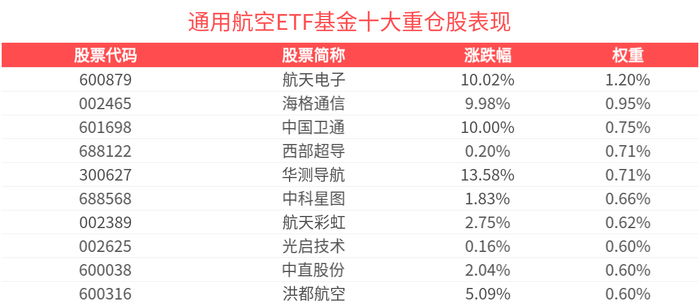
Core Viewpoint - The general aviation theme index in China is experiencing significant growth, with a strong performance from constituent stocks and an optimistic outlook for the commercial space industry in 2026 [1][2]. Group 1: Market Performance - As of January 6, 2026, the China General Aviation Theme Index (931855) rose by 4.62%, with notable increases in constituent stocks such as Huace Navigation (300627) up by 13.58%, Aerospace Electronics (600879) up by 10.02%, and Beidou Star (002151) up by 10.01% [1]. - The General Aviation ETF (561660) increased by 5.17%, marking its third consecutive rise, with the latest price reported at 1.34 yuan [1]. Group 2: Industry Developments - The year 2026 is anticipated to be a significant year for China's commercial space sector, with multiple rocket launches expected, including the first flight of a 5-meter diameter reusable rocket and the Long March 10甲 rocket preparing for its first orbital flight [1]. - Several medium to large commercial rockets, such as Tianlong 3, Gushenxing 2, and others, are poised for their inaugural launches in 2026 [1]. - The IPO process for commercial space companies is accelerating, with at least 10 companies currently initiating their IPOs [1]. Group 3: Market Sentiment - Zhongyin Securities believes that the commercial space theme is entering a "warming" phase, supported by improved top-level design and new policy backing, which clarifies the development blueprint for the industry and enhances market confidence in its long-term growth [1]. - The trading activity in the General Aviation ETF was robust, with a turnover rate of 24.55% and a transaction volume of 16.62 million yuan, indicating active market participation [1].